
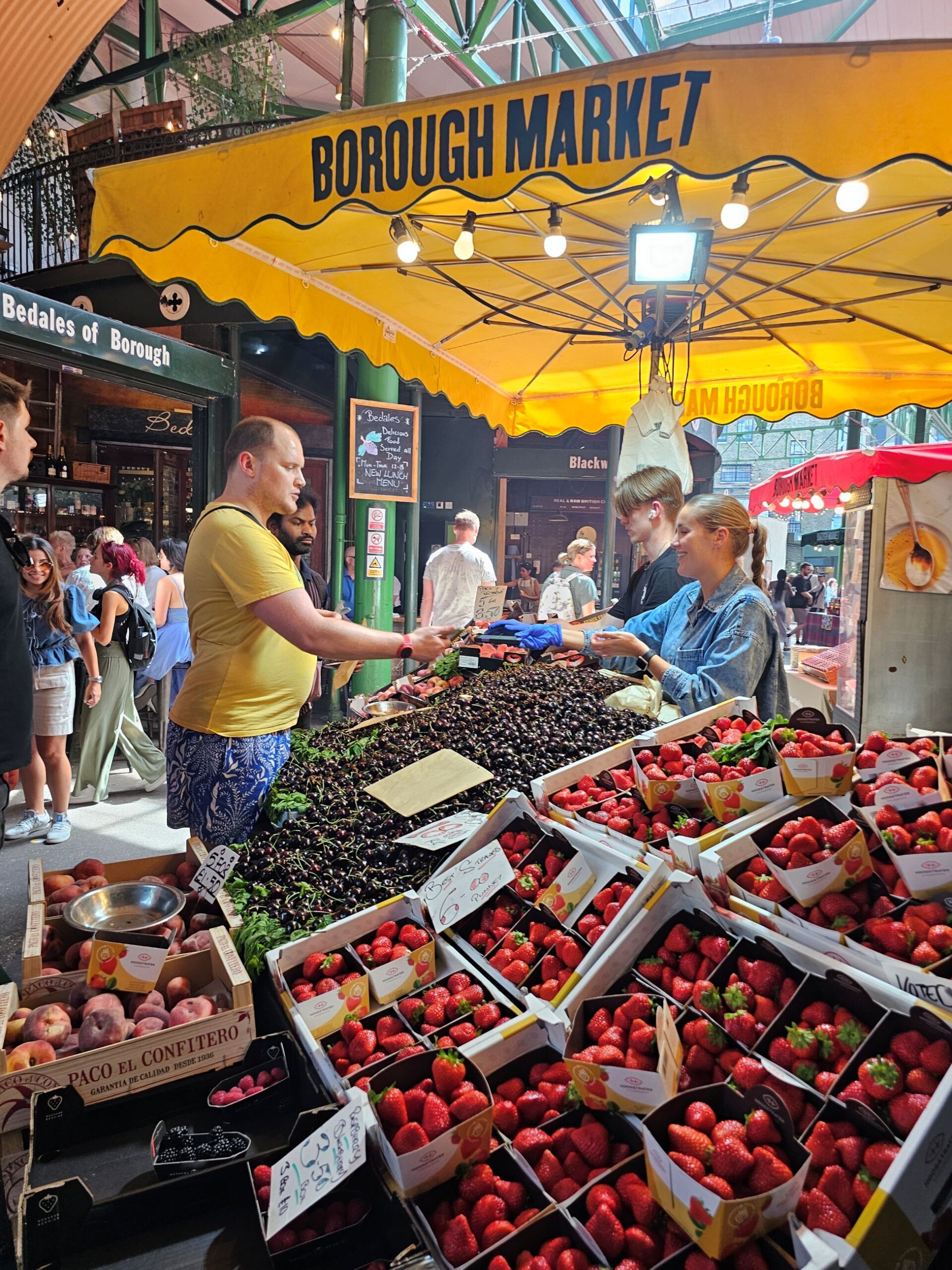
In a city as vast and diverse as London, few places capture its culinary spirit as vividly as Borough Market. Located near London Bridge, Borough Market is more than a tourist attraction—it is a living institution, a working market, and a meeting point of tradition and innovation.
For centuries, this market has served Londoners with fresh produce, meat, fish, bread, and specialty goods. Today, it stands as one of the city’s most celebrated food destinations, attracting chefs, office workers, locals, and international travelers alike. Whether you visit for a quick snack or spend hours tasting your way through its stalls, Borough Market offers an immersive experience that feels authentically London.

A Market With a Thousand-Year History
Borough Market’s origins date back to at least the 12th century, making it one of London’s oldest food trading sites. Positioned strategically near the River Thames and London Bridge, it became a natural distribution point for produce entering the city.
Over time, the market evolved alongside London itself. Fires, urban redevelopment, industrial expansion, and modern restoration all shaped its current form. Yet despite these transformations, Borough Market has retained its identity as a place rooted in quality ingredients and independent traders.
Today, the Victorian iron-and-glass structure that houses the market blends industrial heritage with vibrant food culture, creating a space that feels both historic and alive.


Location and Urban Context
Borough Market sits in Southwark, just steps from London Bridge Station. This location places it within walking distance of major landmarks such as:
- The Shard
- Southwark Cathedral
- The River Thames
- Tate Modern
- Shakespeare’s Globe
Because of this central position, Borough Market often becomes a natural stop between sightseeing destinations. It works equally well as a lunch break, a dinner plan, or a culinary detour during a long walking day in London.


First Impressions: Energy, Aroma, and Movement
Stepping into Borough Market can feel overwhelming in the best possible way. The air carries the scent of grilled meats, fresh bread, spices, coffee, and seafood. Vendors call out gently to customers, and queues form in front of popular stalls.
The energy is constant but not chaotic. There is a rhythm to the market: people taste, chat, move on, and circle back. It feels social and communal rather than commercial.
The covered structure provides protection from London’s unpredictable weather, allowing the market to function year-round.

What to Eat at Borough Market
One of the market’s greatest strengths is its diversity. Unlike themed food halls, Borough Market does not focus on one cuisine. Instead, it celebrates global flavors while maintaining a strong British foundation.
British Classics
Traditional British cheeses, freshly baked pies, sausage rolls, and Scotch eggs are staples. Fishmongers display oysters and seafood on ice, connecting directly to Britain’s maritime heritage.
International Flavors
You’ll find Spanish tapas, Ethiopian stews, Middle Eastern wraps, French pastries, Italian pasta, and much more. The market reflects London’s multicultural identity, offering authentic tastes rather than diluted versions.
Artisan Producers
Beyond ready-to-eat food, Borough Market is home to specialty producers. Artisan bread, handmade chocolates, small-batch preserves, and organic vegetables are sold alongside premium olive oils and charcuterie.
Many stalls offer samples, encouraging slow exploration rather than rushed consumption.


The Social Experience of Borough Market
What makes Borough Market special is not only the food, but the interaction. Vendors are often passionate about their products, explaining origins and preparation methods. Customers engage in conversation rather than simply transacting.
Standing at a communal table eating grilled cheese or oysters, you share space with strangers from around the world. It is informal, inclusive, and distinctly London.
Best Time to Visit
Borough Market operates throughout the week, but Saturday is the busiest and most energetic day. For a more relaxed experience, weekday mornings are ideal.
Arriving just before lunch avoids the longest queues while still offering full selection. If you prefer photography or slower browsing, early hours provide better lighting and fewer crowds.


Seasonal Character
The market changes subtly with the seasons. In winter, you’ll find warming soups, mulled drinks, and hearty comfort foods. In summer, fresh berries, lighter salads, and outdoor seating areas become more prominent.
This seasonality reinforces Borough Market’s identity as a working food market rather than a static attraction.
Observing London Through a Food Lens
Visiting Borough Market offers insight into London’s food culture and values. Sustainability, small-scale production, and global openness are evident in the vendors’ offerings.
It also reveals the city’s social diversity. Business professionals, tourists, families, chefs, and students all converge here, creating a cross-section of urban life.


Why Borough Market Remains Essential
In a city filled with food halls and trendy pop-ups, Borough Market endures because it feels authentic. It does not chase novelty for its own sake. Instead, it balances tradition and innovation, offering both heritage stalls and contemporary concepts.
For travelers, it provides an edible introduction to London—one that is hands-on, flavorful, and deeply rooted in place.

Practical Information
Name: Borough Market
Location: 8 Southwark Street, London SE1 1TL, United Kingdom
Nearest Station: London Bridge
Type: Historic food market
Best Time to Visit: Weekday late morning for fewer crowds
Ideal For: Lunch, food exploration, artisan shopping, cultural experience
Brindisa Tapas Kitchen Bar, London Borough Market
Richard Haward’s Oysters, A Classic Oyster Bar at London Borough Market