
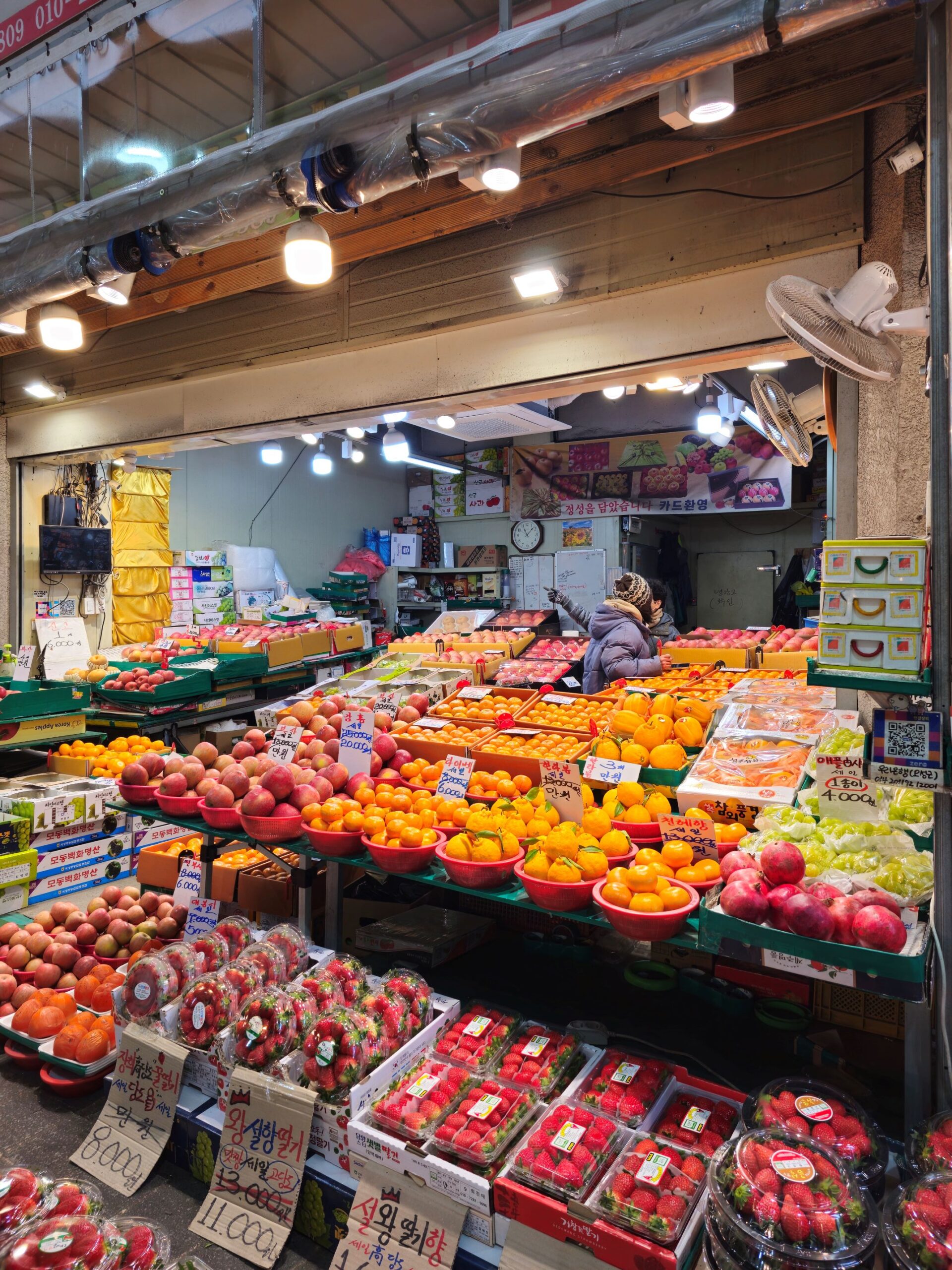
While Seoul dazzles with high-rise skylines and all-night cafés, there’s another side of the city that wakes long before sunrise — the Cheongnyangni Fruit and Vegetable Wholesale Market (청량리 청과물 도매시장). Located in Jegi-dong, Dongdaemun-gu, this sprawling marketplace has supplied the city’s restaurants, hotels, and grocery stores for more than half a century. Long before office lights turn on, this neighborhood hums with the rhythm of trade: the clatter of crates, the hiss of trucks unloading, and the scent of fresh greens in the cool dawn air.
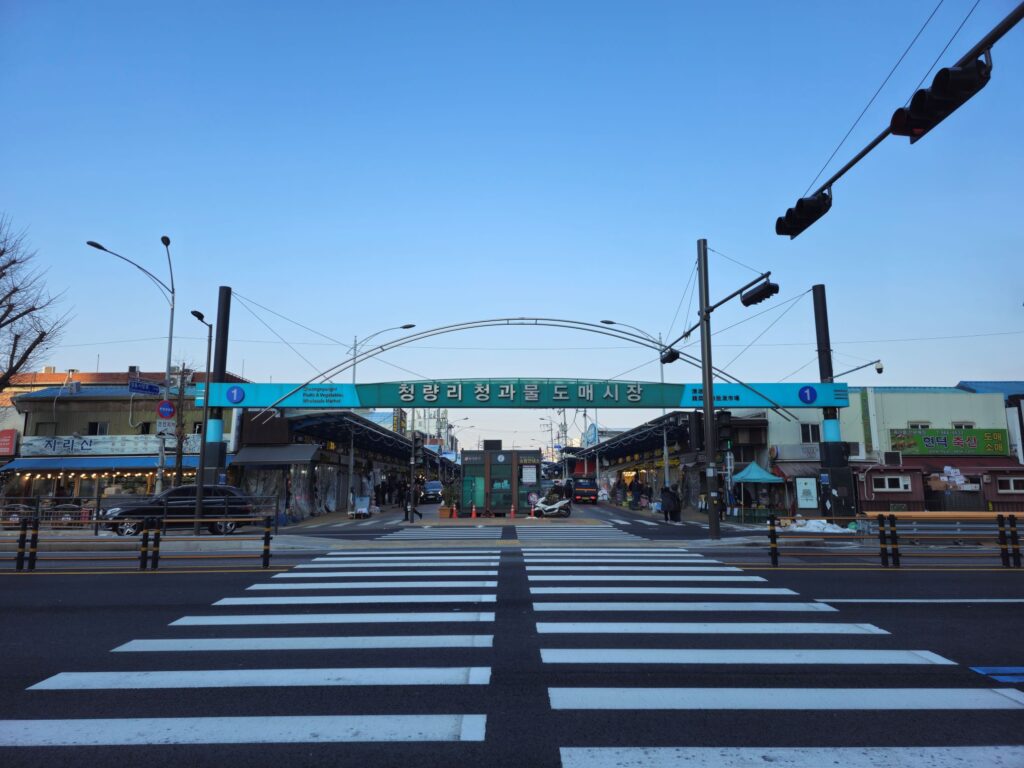
A Century-Old Market That Feeds Seoul
The Cheongnyangni market began taking shape in the late 1950s, when Seoul’s population surged and the city’s eastern districts became vital trade corridors linking the capital with farmlands in Gangwon-do, Gyeonggi-do, and Chungcheong-do.
Since 1958, the market has grown into one of Seoul’s largest distribution centers for agricultural produce, working hand in hand with farmers and merchants across the country. Unlike the highly systemized Garak Market, Cheongnyangni retains its human scale and old-Seoul charm — narrow alleys, neon-lit stalls, and the faint echo of auction calls drifting through the morning air.
Despite modernization all around — from KTX trains at nearby Cheongnyangni Station to department stores and cafés — this market remains a living heritage site, representing continuity and craftsmanship in the way Seoul eats.
The Pulse of the Market: Life Before Dawn
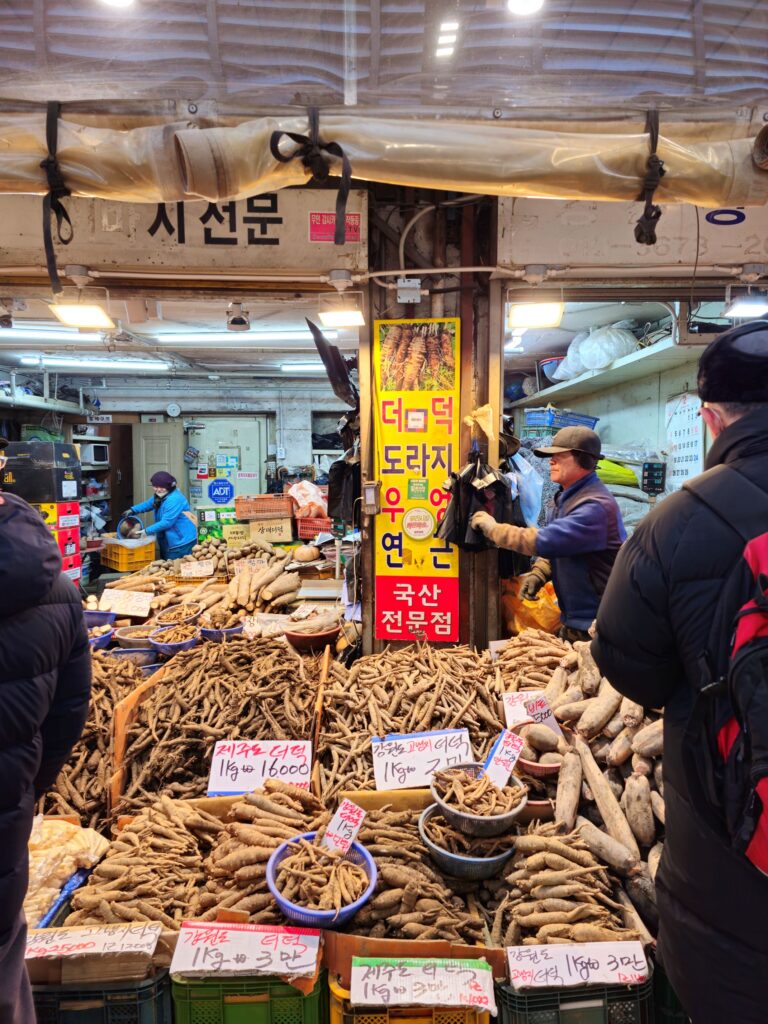
Arrive between 3:00 AM and 7:00 AM, and you’ll see the market at its peak. Trucks packed with apples, cabbages, lettuce, and melons arrive from across Korea. Vendors in rubber aprons shout greetings and prices while forklifts weave between aisles carrying crates piled high.
The light is harsh and bright, the air thick with the smell of damp cardboard and soil — yet it feels electric, alive. There’s a sense of urgency mixed with routine; everyone knows their role.
Auctioneers and wholesalers handle bulk orders for restaurants and distributors, while smaller vendors prepare for the retail crowd that will arrive later in the morning.
By 8 AM, the hectic pace eases. Retail customers — neighborhood residents, small grocers, and curious food lovers — begin strolling through, buying seasonal fruits and vegetables at 30–50% lower prices than supermarkets. Vendors are friendlier then, often offering a taste of fresh strawberries or a slice of melon as they chat about the harvest.
What to Expect Inside
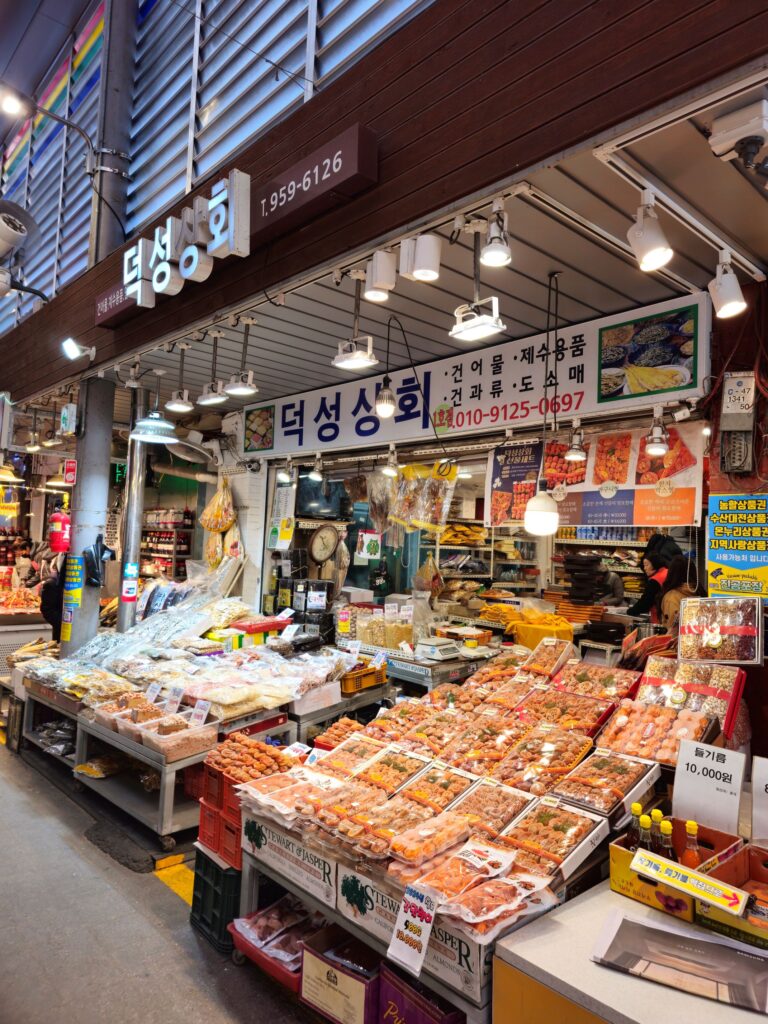
Cheongnyangni Fruit and Vegetable Wholesale Market stretches across several alleys, with each section offering something distinct.
- Fruit Section: Depending on the season, you’ll find Korean pears, apples from Andong, Jeju tangerines, strawberries, cherries, and grapes from Yeongdong. During autumn, persimmons and jujubes dominate the aisles, and boxes of Naju pears glisten under fluorescent light.
- Vegetable Section: Stalls brim with napa cabbage, radishes, perilla leaves, bean sprouts, spring onions, and seasonal greens — the staples of Korean kitchens. In winter, the smell of kimchi-making ingredients fills the air.
- Imported Produce: Avocados, lemons, blueberries, and asparagus for international restaurants are increasingly common.
- Packaging Stores: A must for small business owners — here you can buy wrapping paper, boxes, and baskets in bulk.
Each purchase comes with a bit of conversation — the kind that’s disappearing in modern retail.
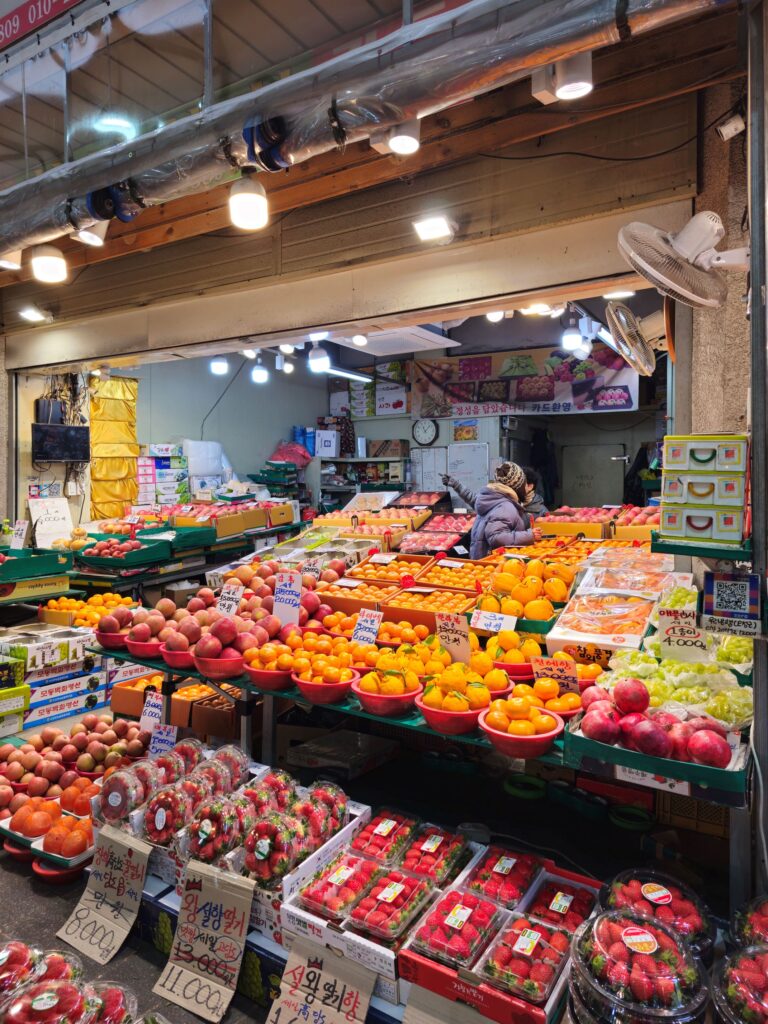
My Visit: Immersed in Color and Chaos
When I visited one cold morning in early spring, the market was already buzzing before dawn. Forklifts rolled past in narrow lanes, crates stacked higher than my head. Vendors worked briskly but cheerfully, calling out to familiar buyers. A middle-aged woman trimming spinach looked up and said, “새벽에 와야 진짜 시장이지 — only at dawn you see the real market.”
She was right. The colors were almost overwhelming — emerald-green cabbages, bright orange persimmons, the deep red of Korean apples. A vendor handed me a wedge of pear so sweet and crisp it almost sparkled. Another man, slicing radishes, laughed when I asked how early he started his day. “밤 10시에 나와요. 시장은 밤부터 시작해요.” (I come out at 10 PM. The market begins at night.)
As the sun rose, the fluorescent lights dimmed slightly, and a golden hue filled the space. A small food stall nearby began selling fish cake skewers (odeng) and seaweed rice rolls (gimbap) — breakfast for the vendors who had already been working eight hours.
The energy shifted from intense to calm, and by 9 AM, the aisles felt almost peaceful. It’s a beautiful cycle that repeats daily — chaotic energy turning into quiet contentment.
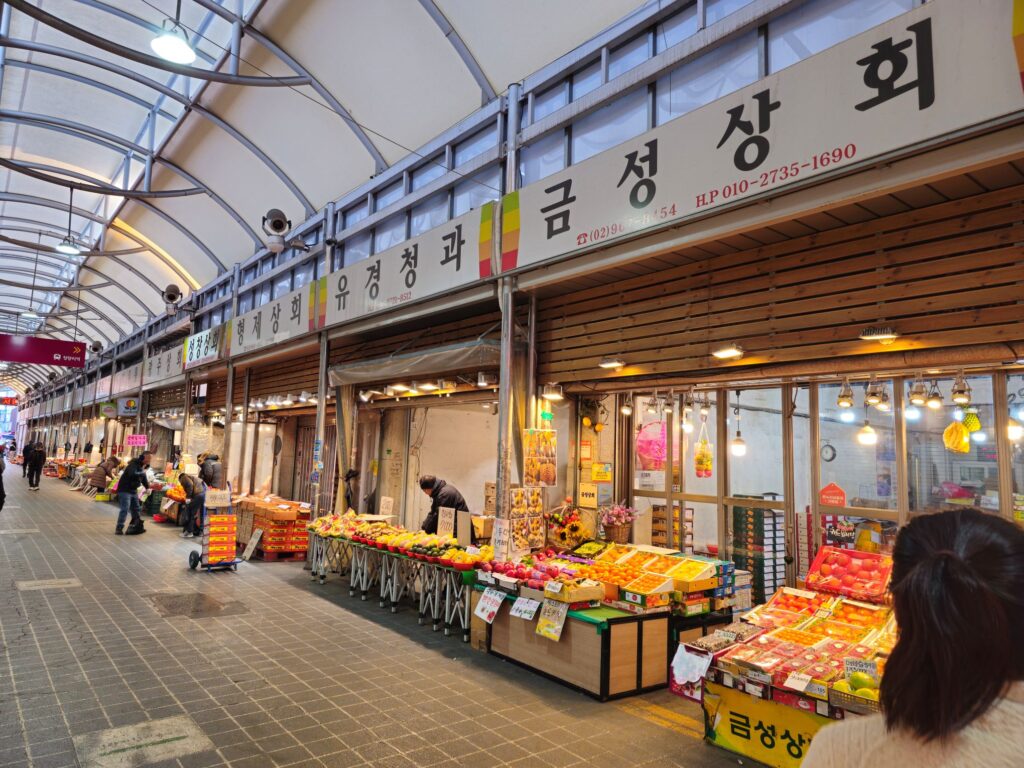
Visiting Tips for First-Timers
- Best Time to Visit:
• Wholesale hours: Roughly 9:00 PM to 11:00 AM (peak trading 3–7 AM)
• Retail hours: Around 9:00 AM to 7:00 PM, depending on stall - Bring Cash: Most stalls are still cash-based, though a few accept mobile payments.
- Footwear: Wear closed, non-slip shoes — the floor is often wet.
- Ask Before Taking Photos: Vendors are generally friendly but appreciate respect during busy hours.
- Combine with Nearby Attractions: After visiting, explore Gyeongdong Herbal Medicine Market or have breakfast around Cheongnyangni Station.
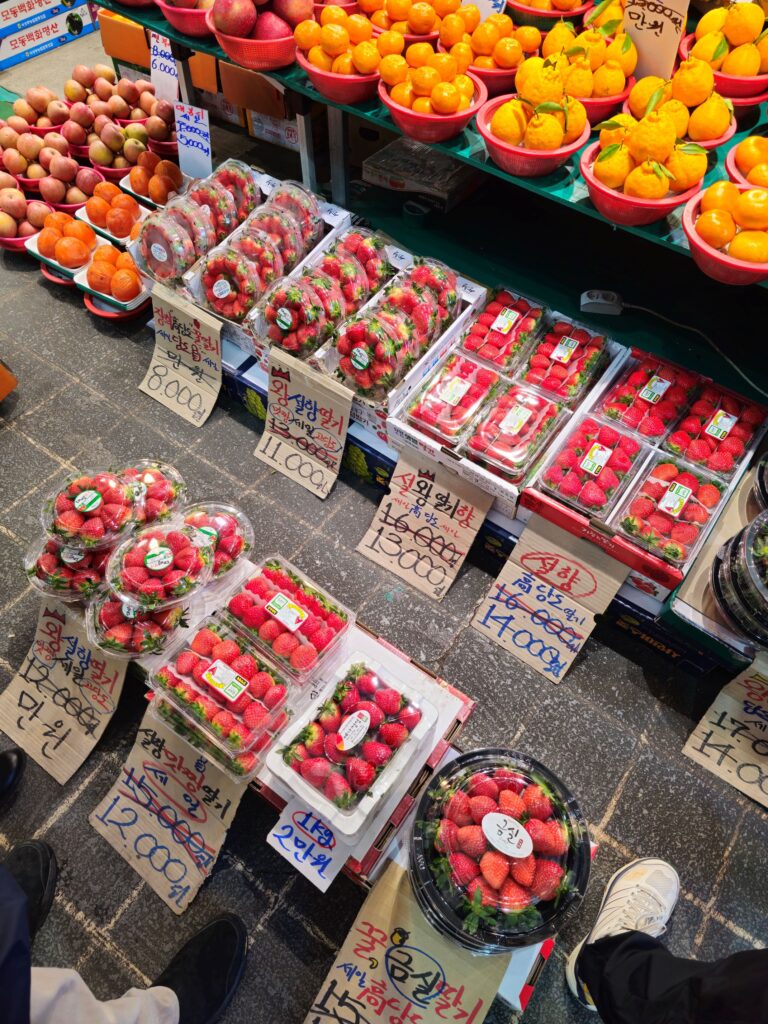
Why Cheongnyangni Market Matters
Cheongnyangni isn’t just a place to buy fruits and vegetables — it’s a living record of Seoul’s resilience. It represents a part of the city that’s grounded in labor, community, and continuity.
Every crate of produce here tells a story of a farmer’s effort, a driver’s long night, and a vendor’s dedication to keeping Seoul fed. It’s where the city’s daily meals begin, unseen yet essential.
For visitors, it’s a rare opportunity to experience Seoul not as a tourist, but as a participant in its everyday rhythm — to witness the heartbeat of the city’s food chain up close.
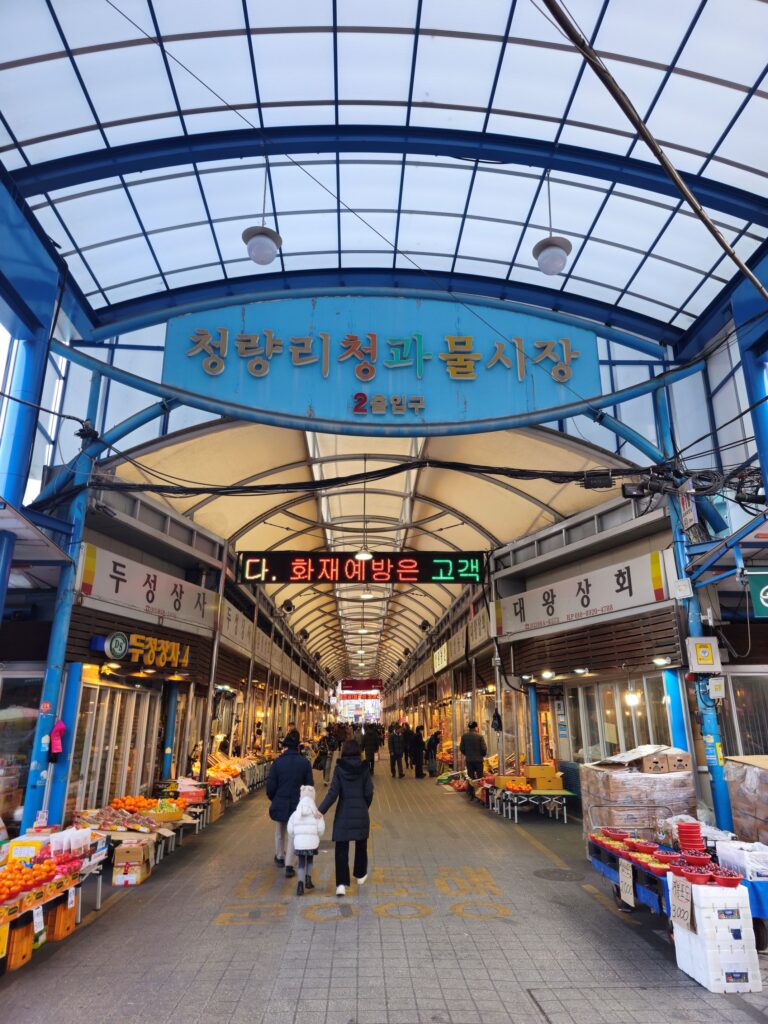
Key Information
- Name: Cheongnyangni Fruit and Vegetable Wholesale Market (청량리 청과물 도매시장)
- Address: 4 Wangsan-ro 33-gil, Jegi-dong, Dongdaemun-gu, Seoul, South Korea (서울특별시 동대문구 왕산로33길 4)
- Phone: 02-962-1650
- Established: 1958
- Operating Hours:
• Wholesale: Approx. 21:00 – 11:00
• Retail: Approx. 09:00 – 19:00
(Hours vary by shop; some stalls open continuously from 03:00 to 21:00) - Nearest Subway: Cheongnyangni Station (Line 1 / KTX / Gyeongchun Line), Exit 4 — about 7 minutes on foot
- Specialties: Domestic and imported fruits, fresh vegetables, packaging materials, bulk pricing
Dongdaemun Design Plaza (DDP): A Landmark made by Zaha Hadid
Gyeongdong Hanwoo (경동한우), A Beloved Spot for Marinated Pork Ribs near Jegidong Station