
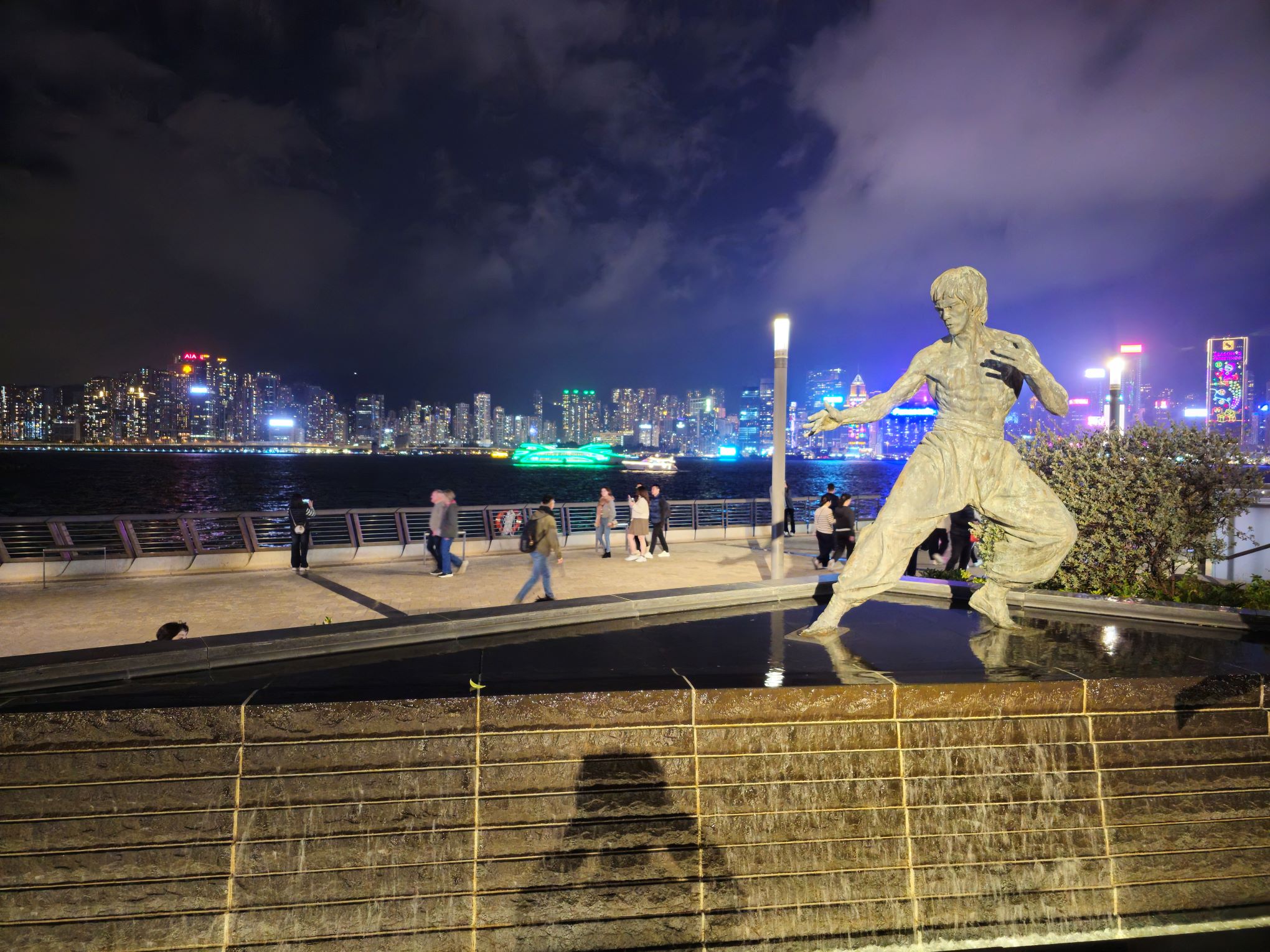
The Avenue of Stars announces itself before you arrive. Walking south from the Tsim Sha Tsui hotel area toward the harbor, the skyline across the water becomes visible between the buildings — and then the promenade opens up, the full width of Victoria Harbour in front of you, the Hong Kong Island towers rising on the other side, and the particular quality of light on the water that Hong Kong produces at any hour of day or night.
I walked the Avenue of Stars on the evening of my arrival — checking into the YMCA Salisbury Hotel, dropping luggage, and heading directly to the waterfront before anything else in Hong Kong. It was the right instinct. The harbor view from the Tsim Sha Tsui promenade is the experience that most clearly communicates what Hong Kong is — not a single landmark, not a famous building, but a skyline of extraordinary density and scale, seen from water level, from the correct distance.
This guide covers the Avenue of Stars and the broader Tsim Sha Tsui waterfront — what it is, what’s worth knowing before visiting, and how to experience it at its best.
What Is the Avenue of Stars?
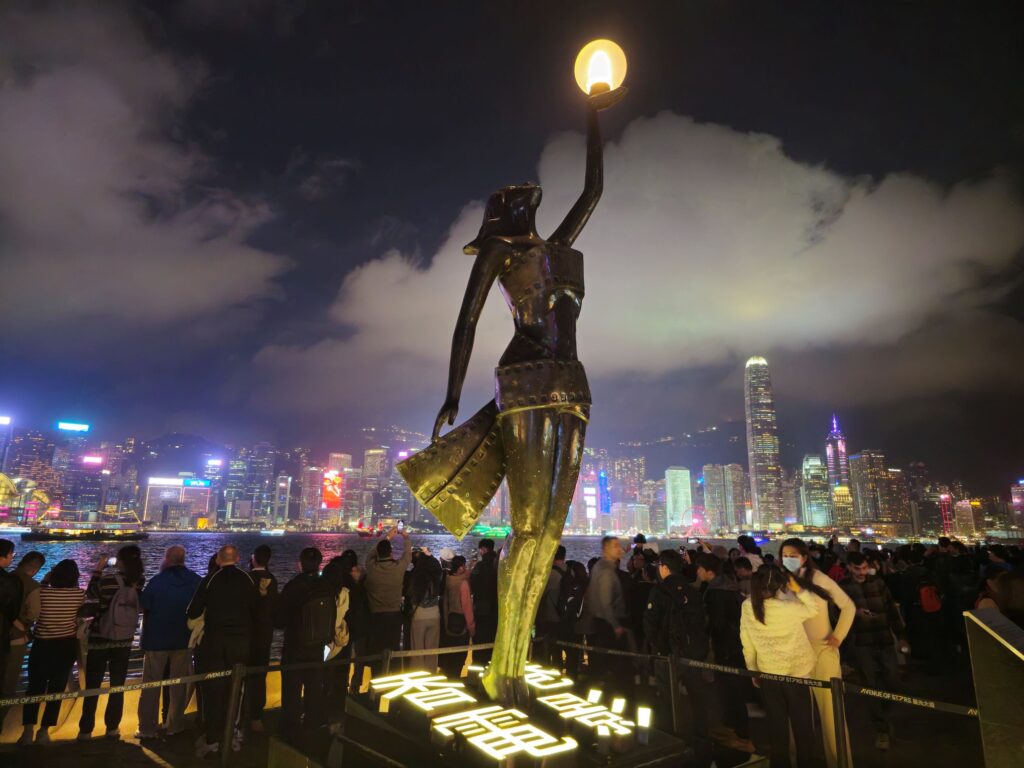
The Avenue of Stars (星光大道) is a waterfront promenade on the southern shore of the Tsim Sha Tsui peninsula — Hong Kong’s equivalent of Hollywood’s Walk of Fame, celebrating the Hong Kong film industry with bronze handprints, star plaques, and sculptures dedicated to the actors, directors, and producers who defined one of Asia’s most significant cinema traditions.
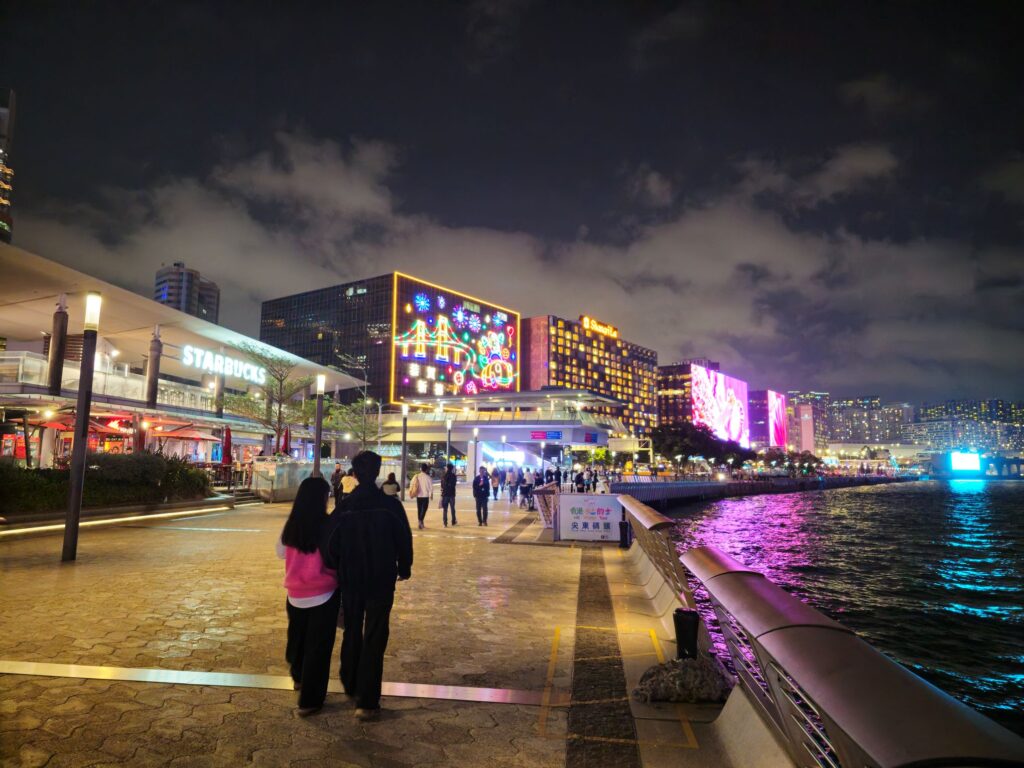
The promenade runs approximately 440 meters along the harbor waterfront, from the Star Ferry pier westward past the Hong Kong Cultural Centre and toward the Space Museum. It was originally opened in 2004, extensively renovated between 2017 and 2019, and reopened with improved facilities, new art installations, and enhanced viewing platforms that give better sightlines across the harbor.
The film industry celebration is the official purpose of the promenade — but the reason most people visit is the harbor view. The Avenue of Stars is the finest static vantage point for Victoria Harbour on the Kowloon side, and the renovation has made it more comfortable and more visually interesting than the original version.
Getting There
From Tsim Sha Tsui hotels: Walking distance from virtually all accommodation in the neighborhood — the southern edge of Tsim Sha Tsui is the harbor, and the Avenue of Stars runs along it. From the YMCA Salisbury Hotel, the promenade is a two-minute walk.
From Tsim Sha Tsui MTR: Exit L6 or exit toward Salisbury Road, then walk south to the harbor — approximately 8–10 minutes.
From the Star Ferry Pier: The Star Ferry pier sits at the western end of the Avenue of Stars — arriving by Star Ferry from Central deposits you directly at the promenade entrance.
From Jordan/Mong Kok: MTR to Tsim Sha Tsui station, then walk south — approximately 10–12 minutes total.
The Hong Kong Film Industry Connection
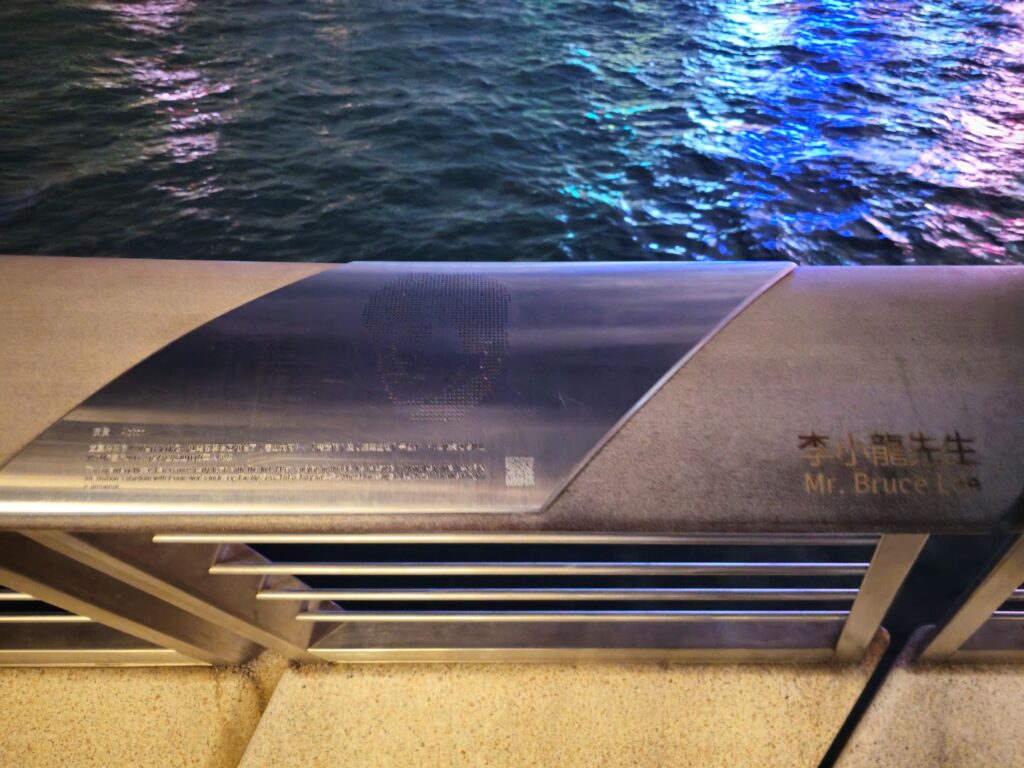
The Avenue of Stars celebrates Hong Kong cinema — one of the world’s great film traditions, producing some of the most influential action, martial arts, and drama films of the 20th century. The promenade’s handprint plaques, star plaques, and sculptures honor the actors, directors, and other figures who made Hong Kong cinema what it was.
Key figures honored:
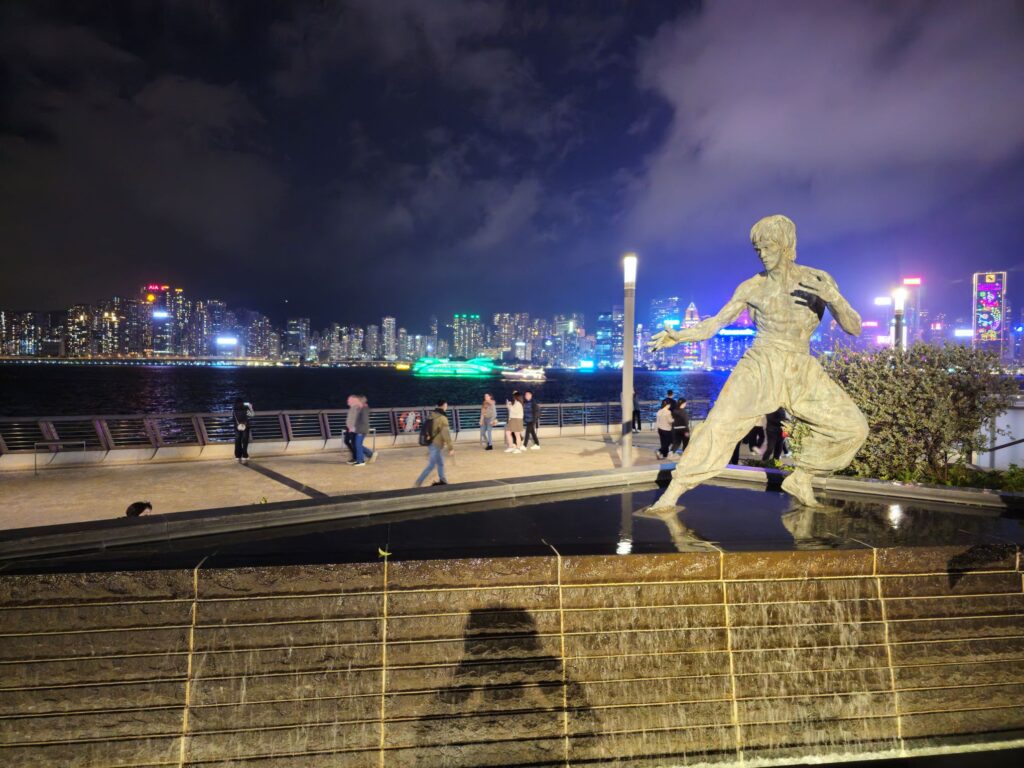
Bruce Lee (李小龍): The most internationally recognized figure in Hong Kong cinema — the bronze statue of Lee in his iconic fighting stance has become the most photographed element of the Avenue of Stars. The statue was installed as part of the renovation and represents the global impact of Hong Kong’s martial arts film tradition. Lee’s work in the early 1970s brought Hong Kong cinema to international attention and remains the cultural touchpoint most visitors associate with the tradition.
Jackie Chan (成龍): Hong Kong’s other globally recognized cinema export — the actor and filmmaker whose blend of martial arts and physical comedy defined a specific Hong Kong film style. Chan’s handprint is among the most visited on the promenade.
John Woo (吳宇森): The director whose Hong Kong action films of the 1980s and 1990s — The Killer, Hard Boiled, A Better Tomorrow — defined the heroic bloodshed genre and influenced international filmmakers from Quentin Tarantino to the Wachowskis.
Anita Mui (梅艷芳): One of Hong Kong’s most beloved entertainers — singer and actress whose career spanned two decades and whose cultural impact extended well beyond cinema. The memorial to Mui on the promenade reflects her status in Hong Kong popular culture.
Chow Yun-fat (周潤發): The actor who became the defining face of Hong Kong’s heroic bloodshed cinema — his collaborations with John Woo producing some of the most acclaimed Hong Kong films of the period.
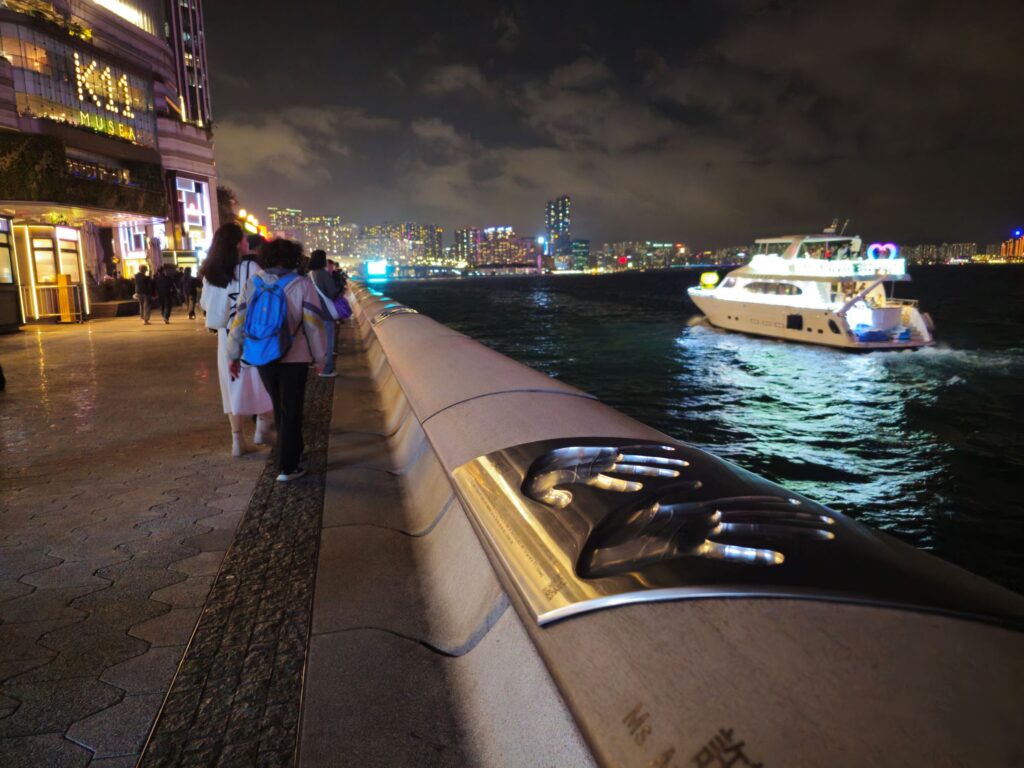
The handprint plaques — bronze imprints of celebrities’ hands embedded in the promenade surface — are the primary physical form of the film industry tribute. Walking the length of the promenade and reading the names provides a survey of Hong Kong cinema’s significant figures across several decades.
The Harbor View: The Primary Experience
The film industry celebration is the official purpose of the Avenue of Stars. The harbor view is the reason it matters.
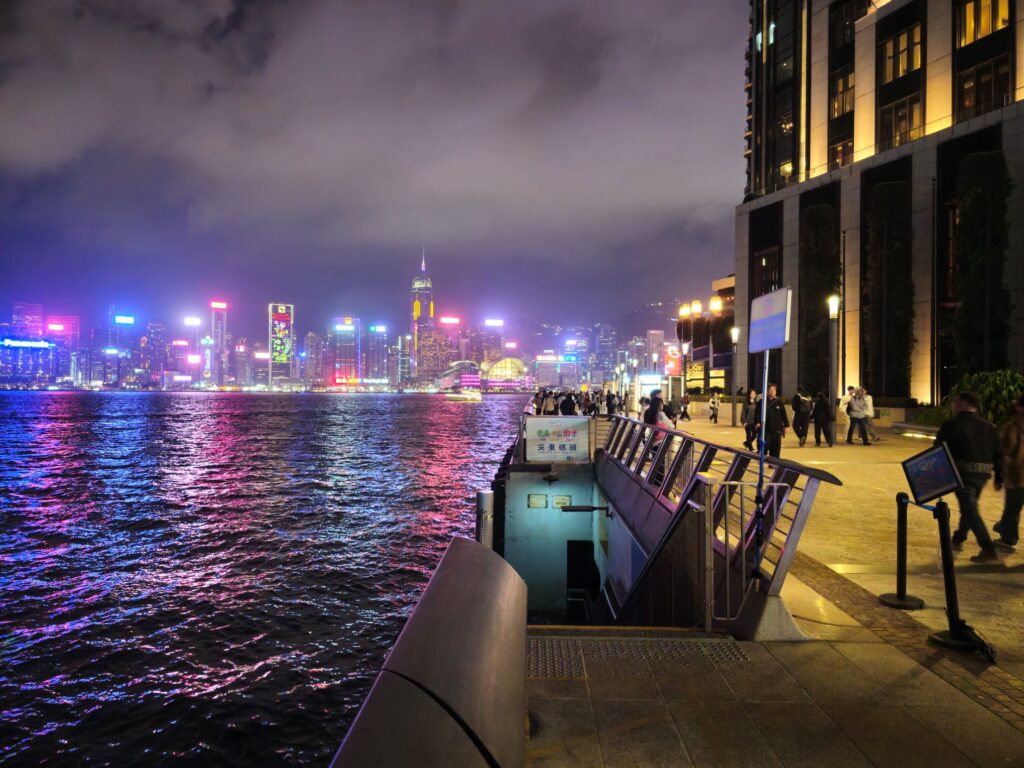
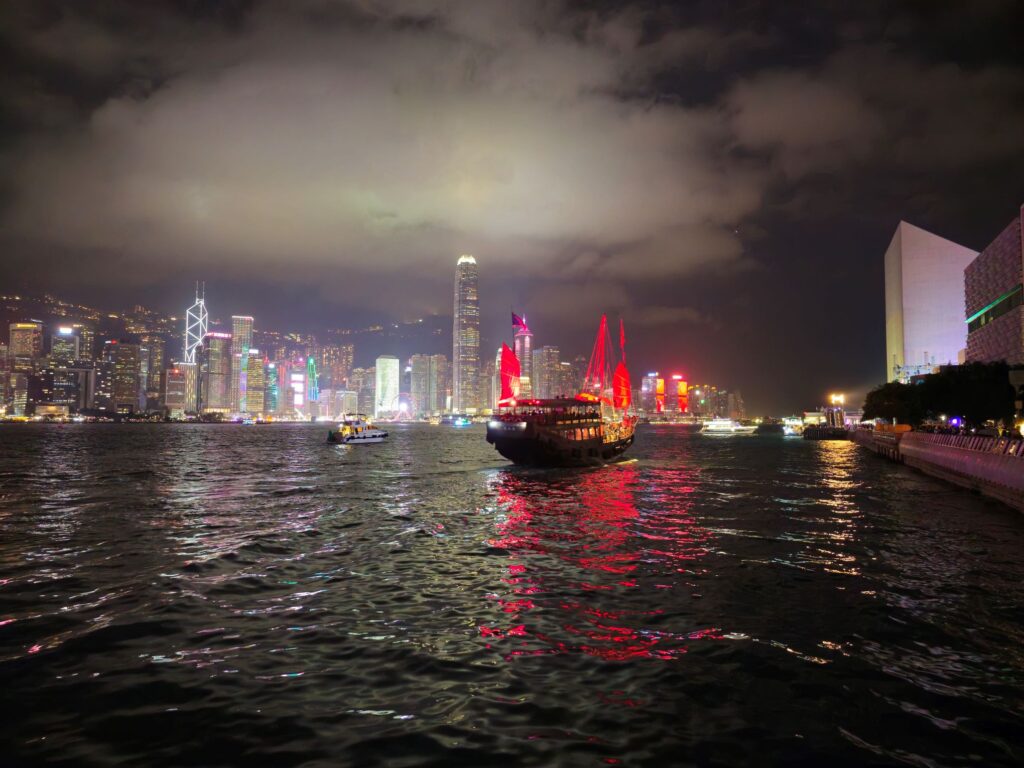
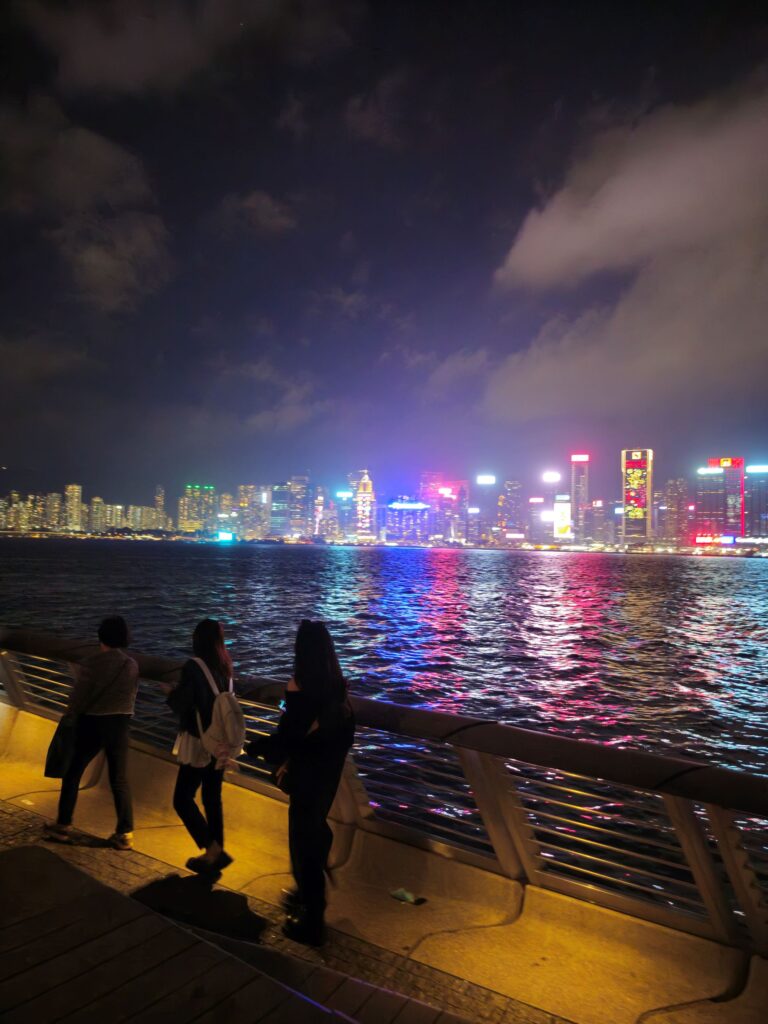
Victoria Harbour from the Tsim Sha Tsui promenade is one of the world’s great urban views — not the most dramatic (the Peak provides that), not the most elevated, but the most complete at human scale. Standing at the railing, the full width of the harbor is visible: the water between, the Hong Kong Island towers rising from the shore on the other side, and the particular density of the Central and Wan Chai skyline that makes this view specific to Hong Kong.
The skyline across the harbor rewards extended looking rather than a quick photograph and departure. The towers are individually identifiable by their distinctive forms — the HSBC Building’s exposed structure, the Bank of China Tower’s geometric angles, the IFC’s tapering height, and the dozens of residential and commercial towers that fill in the gaps. From the Tsim Sha Tsui side, the entire waterfront is visible simultaneously: a continuous wall of towers from Kennedy Town in the west to Quarry Bay in the east, climbing the hillside behind.
What changes at different times:
Morning: Clean light on the towers, the harbor relatively quiet, the promenade used by joggers and locals before the tourist crowds arrive. The sharpest views and the most local atmosphere.
Afternoon: Full daylight on both skylines, the harbor active with vessels, the promenade busiest with visitors. The most crowded version but the most visually complete in terms of light.
Golden hour: The light on the towers shifts to warm amber as the sun drops — the most photographically rewarding period, particularly in January when the winter light creates longer golden hours than summer.
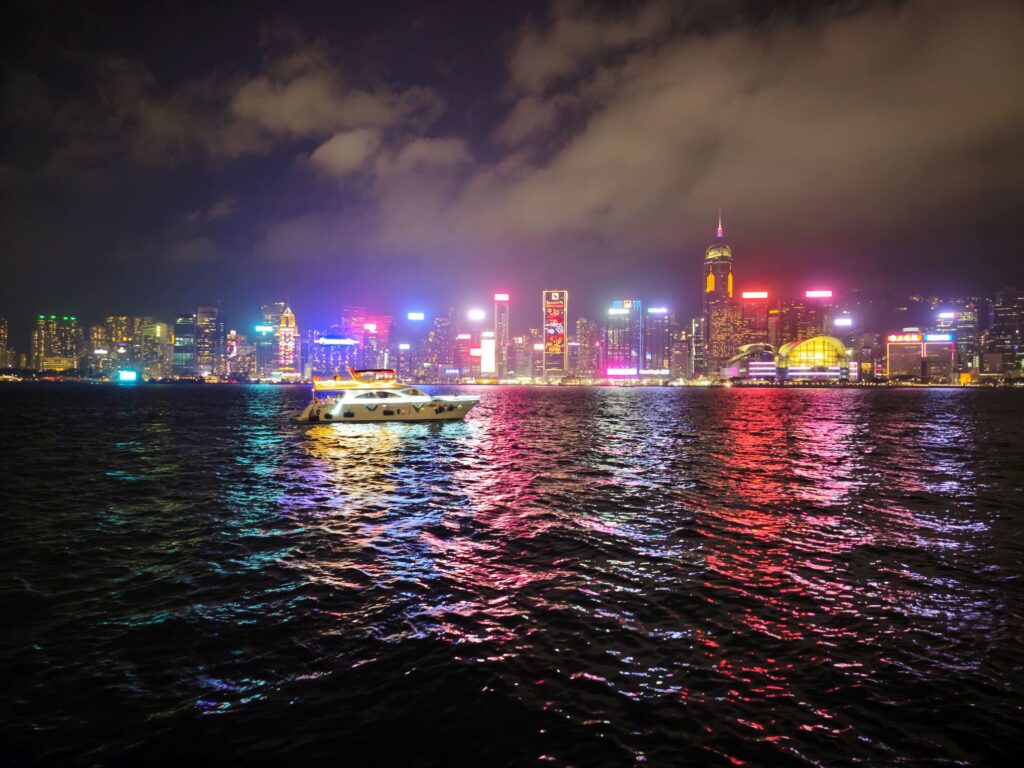
Evening: The Symphony of Lights at 8pm transforms the promenade from a viewing point to a gathering — hundreds of people facing the harbor as the buildings illuminate simultaneously. The most atmospheric and communal version of the harbor view.
Night: After the Symphony of Lights crowd disperses, the promenade quiets and the illuminated skyline reflects in the harbor water below. The most intimate version of the harbor view available on the Tsim Sha Tsui side.
The Symphony of Lights
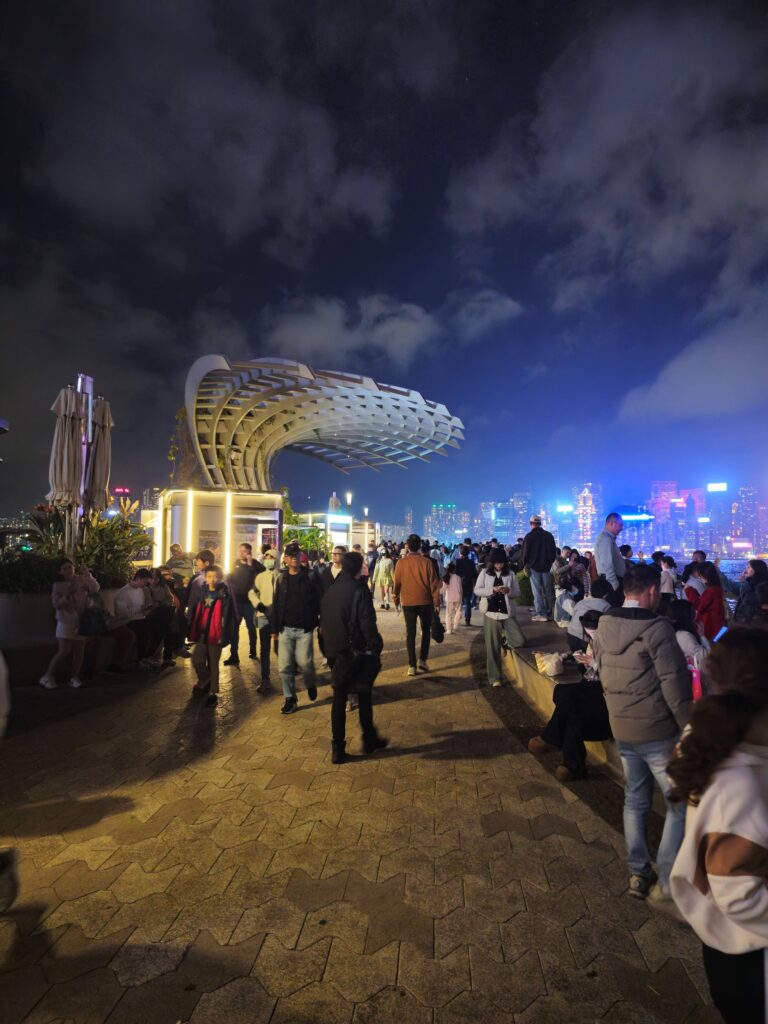
The Symphony of Lights (幻彩詠香江) — the nightly 8pm harbor light and laser show — transforms the Avenue of Stars into Hong Kong’s most communal evening gathering. Every evening without exception, visitors and locals position themselves along the promenade railing beginning around 7:45pm, facing the harbor. At 8pm exactly, the music begins and the buildings across the water illuminate in sequence.
The show runs approximately 15 minutes and involves buildings on both sides of the harbor — the Hong Kong Island towers providing the primary visual display while searchlights sweep across the sky and lasers reach across the water. The coordination between buildings, the scale of the visual field, and the experience of watching it surrounded by hundreds of other people all facing the same direction creates a specific collective atmosphere.
Positioning for the best view: The viewing platforms added during the 2019 renovation give elevated sightlines above the promenade railing level — worth using for unobstructed views of the full harbor. The section of promenade between the Cultural Centre and the Space Museum provides the widest field of view; the section near the Star Ferry pier is more crowded but still good.
Arrive by 7:45pm: The promenade fills from approximately 7:30pm. Finding a good position at 7:55pm is possible but requires navigating around the crowd; arriving earlier allows unhurried positioning.
The crowd is part of the experience: The Symphony of Lights viewed alone would be impressive. Viewed with hundreds of other people who have all gathered specifically for this moment — the collective anticipation before 8pm, the shared response to the opening of the show — is something different. The communal dimension is not incidental to the experience.
The Art Installations
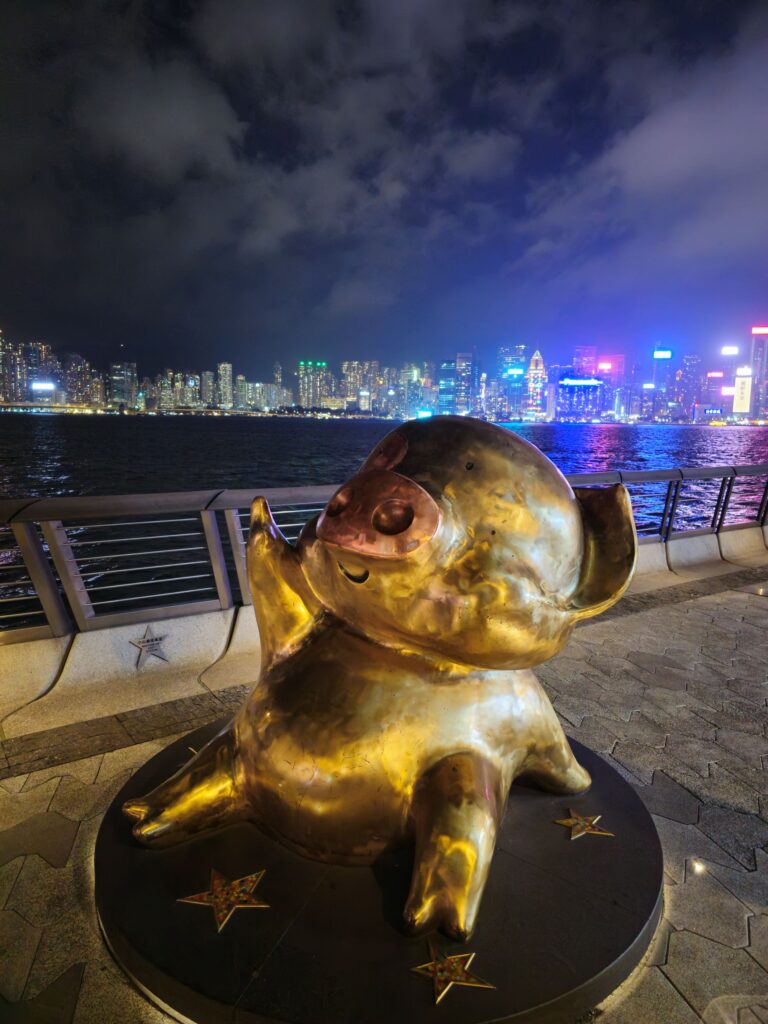
The 2019 renovation added several significant public art installations to the Avenue of Stars that reward attention beyond the film industry plaques:
The kinetic sculpture installations along the promenade respond to movement and light — interactive elements that give visitors something to engage with beyond the passive viewing of plaques. These installations are most interesting for visitors with children and for those who want to engage with the promenade as a designed space rather than a viewing platform.
The lighting elements integrated into the promenade surface and the railing structure illuminate the walkway after dark — creating a visual continuity between the promenade itself and the illuminated skyline across the water. The renovation’s lighting design is more considered than the original promenade’s, and the result is a more coherent nighttime experience.
The viewing platforms at several points along the promenade elevate visitors above the railing level — giving sightlines over the harbor that the ground-level railing partially obscures. Worth using, particularly for the Symphony of Lights.
Walking the Full Promenade
The Avenue of Stars connects to a broader waterfront walk that extends beyond the formally designated promenade:
West of the Star Ferry Pier: The reclaimed land waterfront continues west of the Star Ferry pier past the Hong Kong Cultural Centre toward the Space Museum — a continuation of the harbor walk with slightly fewer visitors than the promenade proper.
East of the Avenue of Stars: The waterfront promenade extends east from the formal Avenue of Stars designation through the Tsim Sha Tsui East area — a quieter section of the harbor walk with fewer tourists and more local users. The East Tsim Sha Tsui waterfront has good harbor views in a less crowded environment.
The full walk: Walking from the Space Museum in the west to the East Tsim Sha Tsui waterfront area in the east — covering the full Tsim Sha Tsui harbor frontage — takes approximately 40–45 minutes at a relaxed pace. This extended walk gives the most complete picture of the Tsim Sha Tsui waterfront and is particularly good at times when the Avenue of Stars itself is most crowded.
The Bruce Lee Statue: A Closer Look
The bronze Bruce Lee statue — installed as part of the 2019 renovation — has become the most photographed element of the Avenue of Stars, generating a queue of visitors waiting for photographs throughout the day and evening.
The statue depicts Lee in the fighting stance most associated with his screen persona — the raised fist, the particular weight distribution that his martial arts background produced. The casting quality is high; the proportions and the gesture are accurate. Standing in front of it gives a sense of Lee’s physical dimensions that photographs of the statue don’t fully communicate.
For visitors with a specific interest in Bruce Lee’s work and legacy, the statue is a meaningful point of contact with Hong Kong’s cinema history. For visitors who know Lee primarily as a cultural reference, the statue is still worth seeing — it’s well-made, positioned with the harbor as a backdrop, and represents something specific about how Hong Kong cinema influenced global culture.
Photography: The queue for a photograph in front of the statue is longest in the afternoon — arriving early morning or after 8pm reduces the wait considerably. The harbor backdrop behind the statue works best with the late afternoon light hitting it from the west.
Avenue of Stars vs Victoria Peak: Comparing the Harbor Views
Both the Avenue of Stars and Victoria Peak offer harbor views — understanding the difference helps plan which to prioritize and when:
| Avenue of Stars | Victoria Peak | |
|---|---|---|
| Height | Ground level (water level) | 396 meters above sea level |
| View type | Horizontal, across the harbor | Panoramic, looking down |
| Scale | Intimate | Comprehensive |
| Accessibility | ✅ Free, immediate | Requires tram/bus journey |
| Best time | Evening (Symphony of Lights) | Late afternoon/evening |
| Crowds | Moderate (Symphony of Lights peak) | High (peak season) |
| Unique quality | Harbor at human scale | City from above |
The honest answer: Both are worth visiting — they provide genuinely different versions of the Hong Kong visual experience. The Avenue of Stars gives the harbor at human scale, with the buildings across the water at eye level. Victoria Peak gives the entire city from above, the harbor a ribbon of water between two urban masses.
For visitors who can only choose one: the Avenue of Stars for the Symphony of Lights experience and the communal harbor view; Victoria Peak for the comprehensive panoramic view and the architectural drama of the ascent. For visitors with time for both: the Avenue of Stars in the evening, Victoria Peak on a separate afternoon/evening.
Practical Tips
Best time for photographs: Early morning (before 9am) for the promenade without crowds and the cleanest light on the Hong Kong Island towers. Late afternoon for the golden hour light. Evening for the Symphony of Lights.
Symphony of Lights positioning: Arrive by 7:45pm at the latest. The elevated viewing platforms give the best unobstructed sightlines. The section between the Cultural Centre and the Space Museum provides the widest view.
Bruce Lee statue queue: Shortest in the early morning and after 8pm. The afternoon queue can be significant.
Admission: The Avenue of Stars and the promenade are completely free. The Symphony of Lights is free. No tickets, no booking required for any element of the experience.
Weather: The promenade is fully exposed to the harbor breeze — comfortable in January’s cool temperatures, potentially cold after dark. A light jacket is appropriate for extended evening visits.
Connecting to Temple Street: After the Symphony of Lights, walking north on Nathan Road from the promenade area to Temple Street Night Market takes approximately 15–20 minutes — a natural evening sequence that combines the harbor experience with the market experience.
The Star Ferry connection: The Star Ferry pier sits at the western end of the Avenue of Stars — the most atmospheric way to arrive or depart is via the Star Ferry, which places you directly on the promenade immediately after crossing the harbor.
The Avenue of Stars as a First Hong Kong Experience
For visitors arriving in Tsim Sha Tsui and wanting an immediate orientation to what Hong Kong is, the Avenue of Stars on the first evening — as I visited it on my arrival day — provides the most direct answer.
The harbor view communicates scale. The density of the towers across the water communicates intensity. The mix of people on the promenade — local families, visitors from across Asia and beyond, photographers with tripods, children running along the railing — communicates the city’s particular energy. And the Symphony of Lights at 8pm provides a structured moment of collective appreciation for the skyline that gives the first evening a satisfying endpoint.
No museum, no temple, no shopping mall communicates what Hong Kong is as efficiently as 20 minutes on the Avenue of Stars in the evening. Start here.
Final Thoughts
The Avenue of Stars is the place where Hong Kong most clearly announces itself — the harbor view, the skyline density, the communal gathering for the Symphony of Lights, and the particular human-scale perspective on a city that’s most often photographed from above or across.
Walk it in the morning for the quiet version. Walk it in the late afternoon for the golden hour version. Be there at 7:45pm for the Symphony of Lights version. And understand that the harbor view from the Tsim Sha Tsui promenade — free, accessible, requiring nothing more than walking to the water’s edge — is one of the finest urban experiences available anywhere in the world.
Start at the Star Ferry pier. Walk east along the promenade. Stay for 8pm. Walk back along the water after the show.
That’s the Avenue of Stars done correctly.
Tsim Sha Tsui Travel Guide: The Best Neighborhood in Hong Kong for First-Timers
Hong Kong 4-Day Itinerary: The Perfect First-Timer’s Guide