
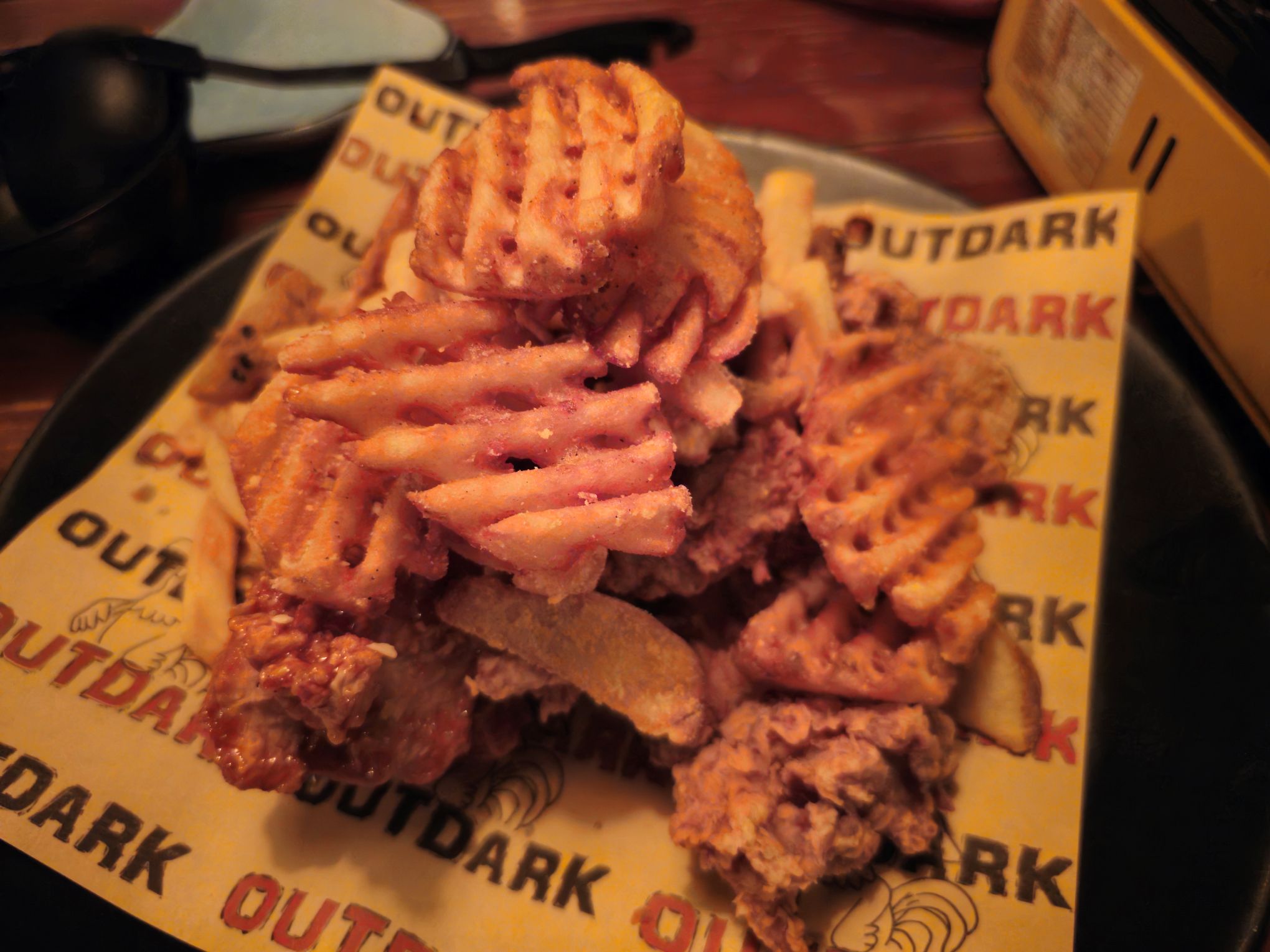
There comes a point in any multi-day Hong Kong trip — usually around day three — when the appetite for Cantonese food, however excellent, needs a reset. Not because the food has been bad — it hasn’t — but because the palate, saturated with the clean savory flavors of Cantonese cooking, begins to crave something spiced, fermented, and differently built. On the evening that this moment arrived during my January trip, I was in Tsim Sha Tsui, and I went to Outdark.
The Korean fried chicken was exactly what the moment required. The spicy tofu udon that followed it was better than expected. And the experience of eating Korean food in Hong Kong — specifically in Tsim Sha Tsui, where the Korean restaurant density is the highest in the city — confirmed what Hong Kong’s Korean food scene consistently delivers: quality that goes considerably beyond the generic Korean-food-abroad approximation.
This review covers Outdark Tsim Sha Tsui honestly — the restaurant, the food, and who should make the visit.
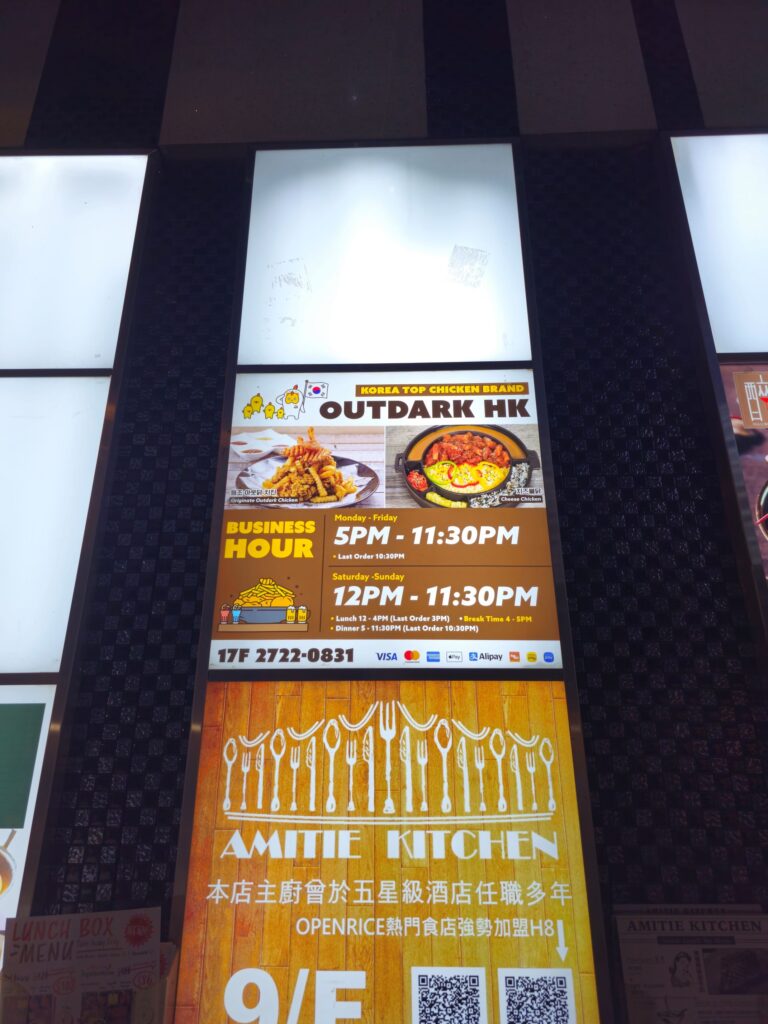
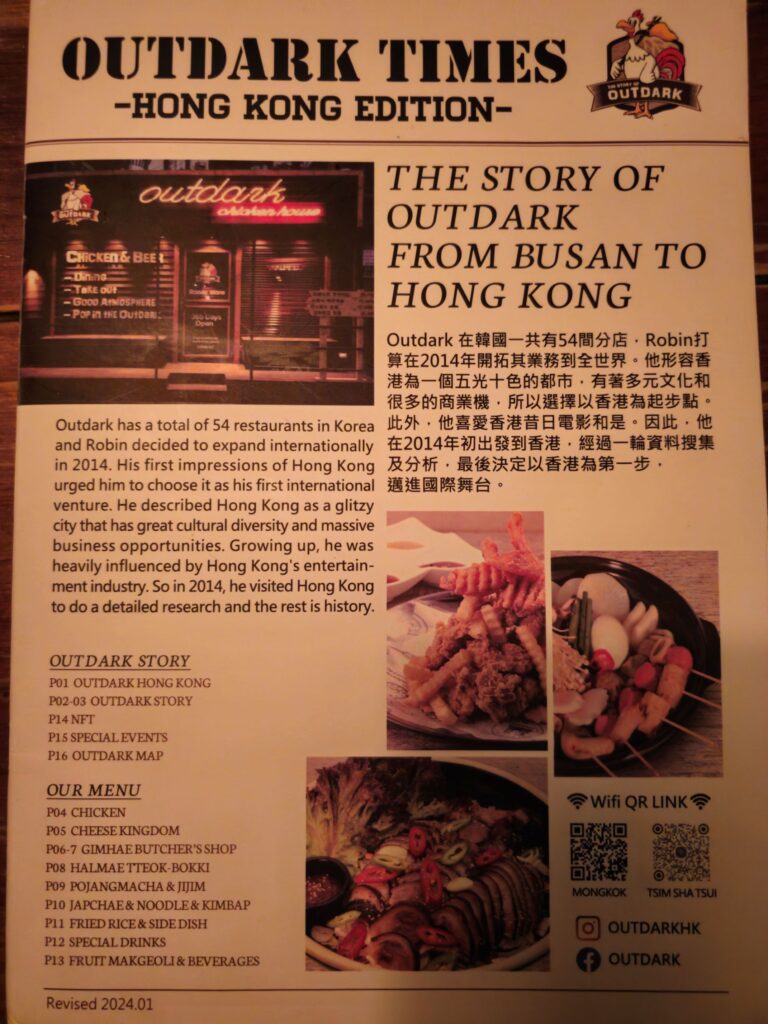
Background: Outdark in Hong Kong’s Korean Food Scene
Outdark is a Korean restaurant concept operating multiple locations across Hong Kong, specializing in Korean fried chicken and Korean-influenced comfort food. The brand occupies the middle ground between a casual chicken delivery operation and a full-service Korean restaurant — comfortable seating, a broader menu than a dedicated chicken shop, and an atmosphere calibrated for a relaxed dinner rather than a quick meal.
The Tsim Sha Tsui branch is the most conveniently located for visitors staying in the southern Kowloon hotel area — a practical dinner option that doesn’t require a harbor crossing or an MTR journey when Cantonese food fatigue sets in after a day of tourist Hong Kong.
In the context of Hong Kong’s Korean food scene — concentrated most densely in Tsim Sha Tsui and Causeway Bay — Outdark represents the fried chicken specialist dimension of a scene that also includes dedicated Korean BBQ restaurants, soondubu houses, and Korean pub operations like Maru. The fried chicken at Outdark is the reason to visit; the broader menu provides options for those who want more than chicken.
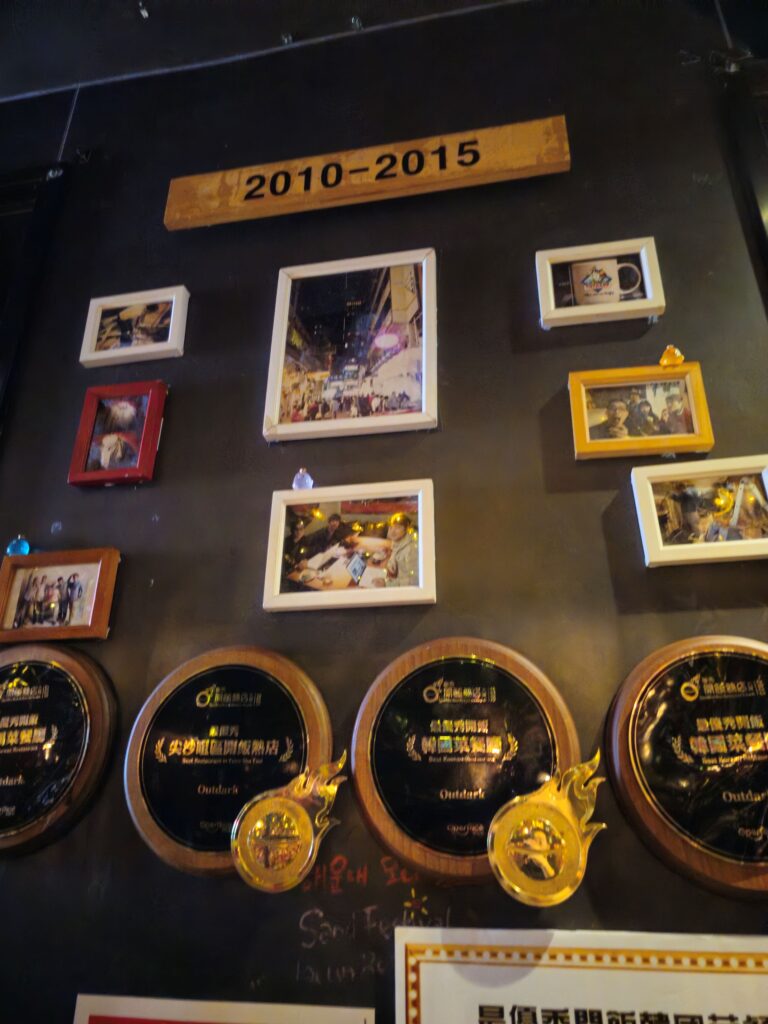
Getting There
From Tsim Sha Tsui hotels: Walking distance from most Tsim Sha Tsui accommodation — confirm the specific branch address on Google Maps, as Outdark has multiple Hong Kong locations and the Tsim Sha Tsui branch address is the relevant one.
From Tsim Sha Tsui MTR: Short walk from the station — Google Maps handles the specific routing to the current branch location.
The natural timing: Outdark works well as a dinner stop after an evening on the harbor promenade — the Symphony of Lights at 8pm, then dinner at Outdark, fits naturally into a Tsim Sha Tsui evening.
The Restaurant
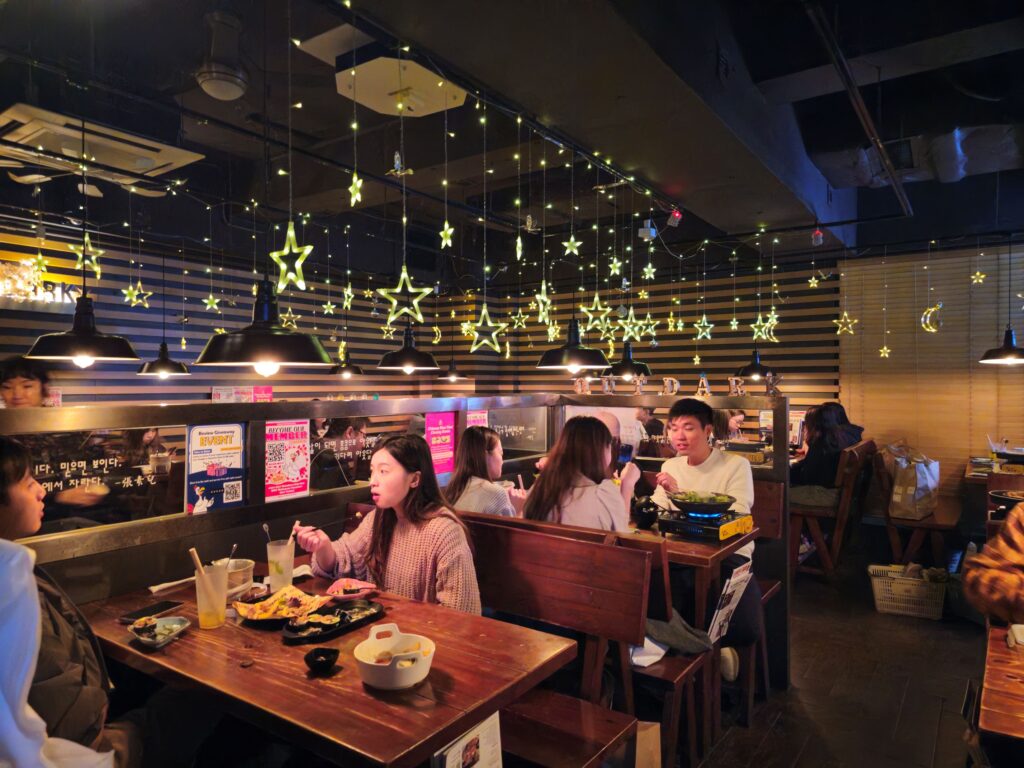
The Tsim Sha Tsui Outdark occupies a mid-range restaurant space — comfortable seating for groups and couples, a menu that’s available in Korean, Chinese, and English, and an atmosphere that’s lively without being overwhelming. It’s designed for a relaxed dinner rather than a quick meal, which reflects the Korean pub-restaurant format that the chicken-and-beer chimaek culture produces.
The interior is contemporary Korean casual — clean lines, adequate lighting, the kind of design that functions well without being particularly distinctive. It’s a restaurant you go to for the food rather than the space, which is the correct priority for what Outdark is trying to do.
The Food
Korean Fried Chicken (한국식 치킨)
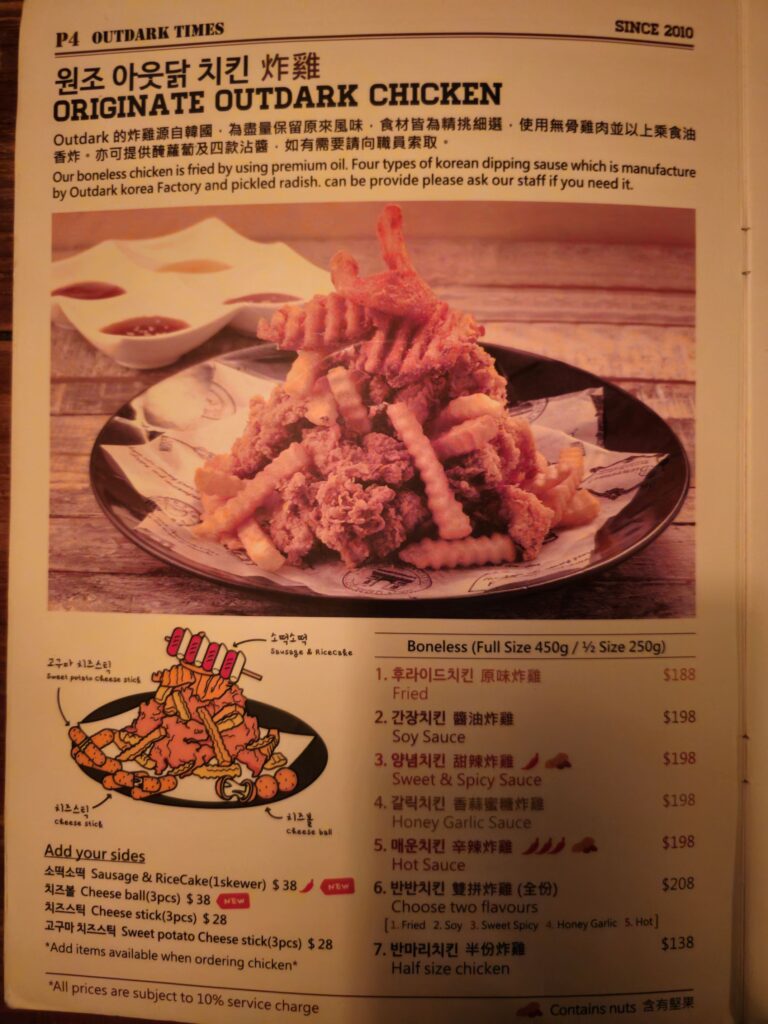
The primary reason to visit Outdark — and the dish that most clearly demonstrates what distinguishes Korean fried chicken from other fried chicken traditions.
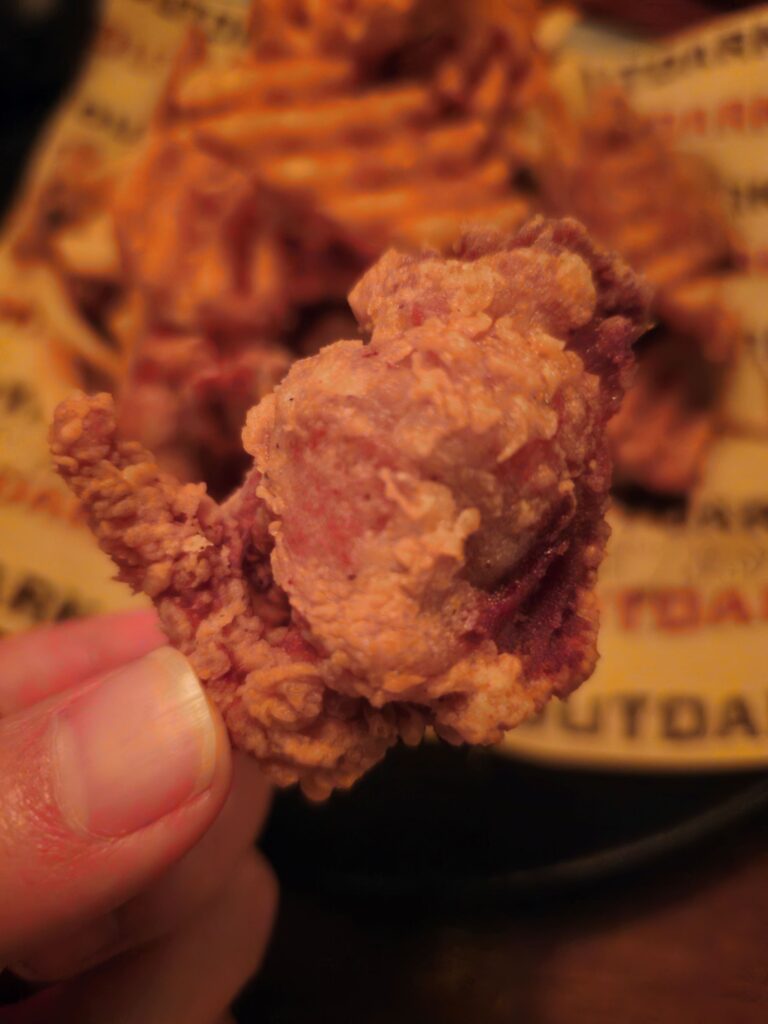
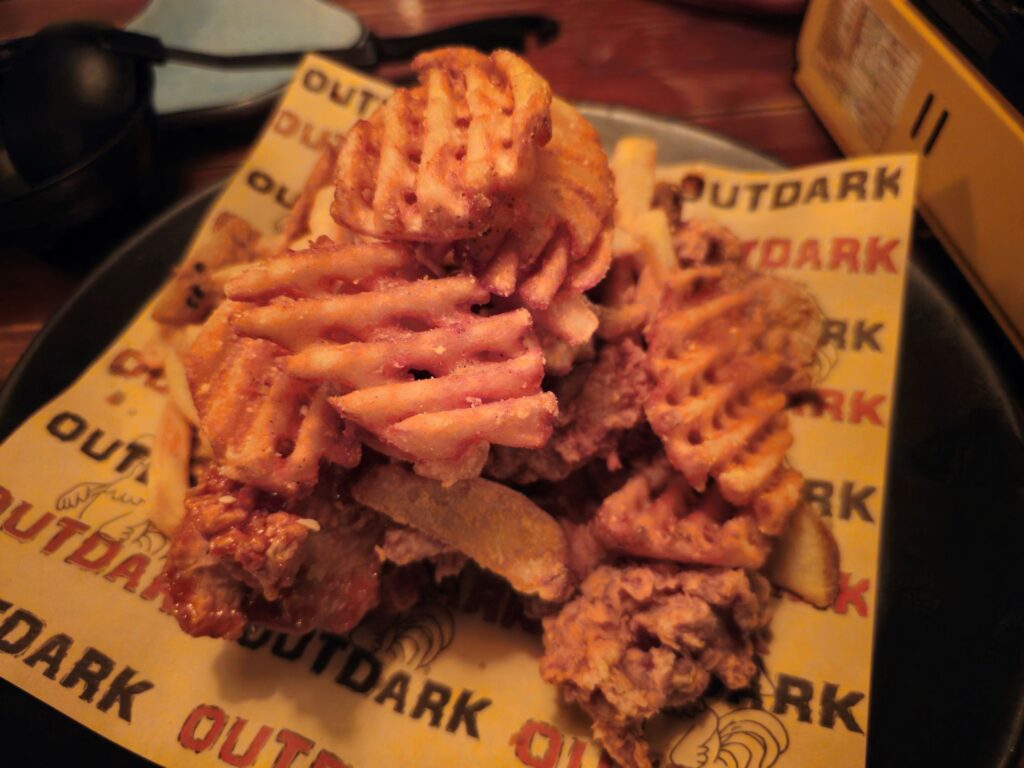
Korean fried chicken is double-fried: the first fry cooks the meat through at a lower temperature; the chicken then rests before a second fry at higher temperature that crisps the exterior to a crunch that’s significantly more resilient than single-fry methods produce. The double-frying technique creates an exterior crust that stays crisp longer, holds up to sauce application without immediately softening, and produces the particular thin-skinned crunch that defines the form.
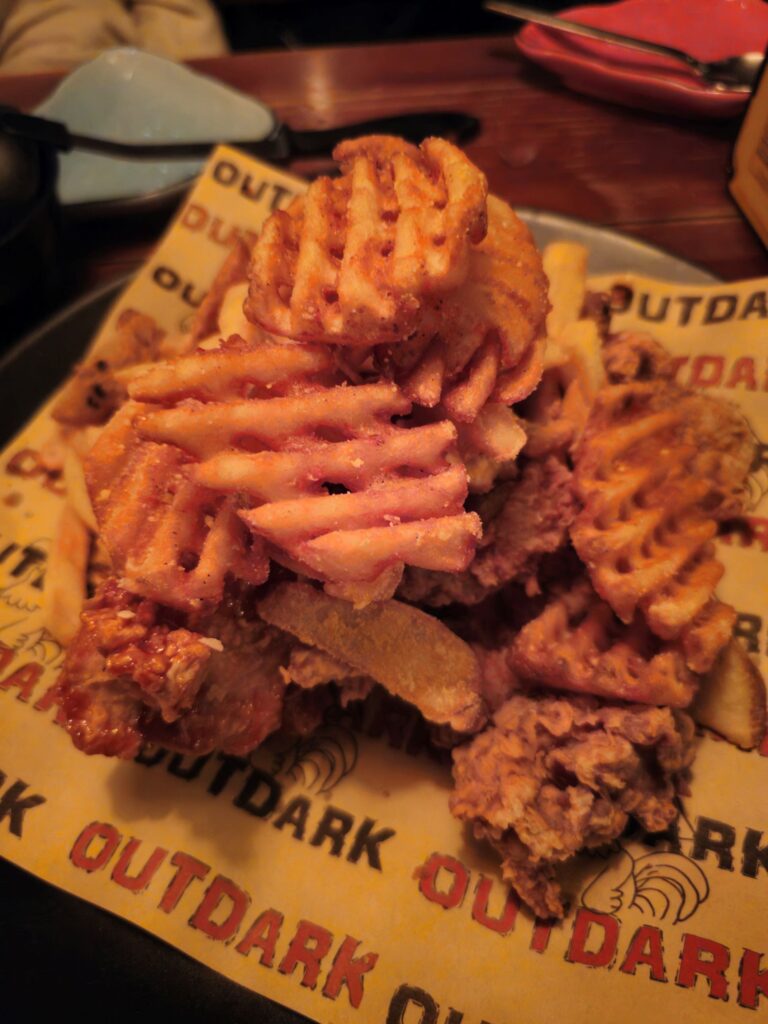
Original (후라이드): The unsauced version — the purest expression of the double-frying technique, with only a light salt seasoning after the second fry. The exterior crunch is immediate and substantial; the skin is thin and crisp throughout; the meat inside is juicy from the controlled frying temperatures. This is the version that most clearly demonstrates the technique — no sauce to compensate for inadequate frying, no coating to provide texture that the fry didn’t achieve. Outdark’s original version is correctly made: the crunch is real, the skin is thin, the meat is cooked through without being dry.
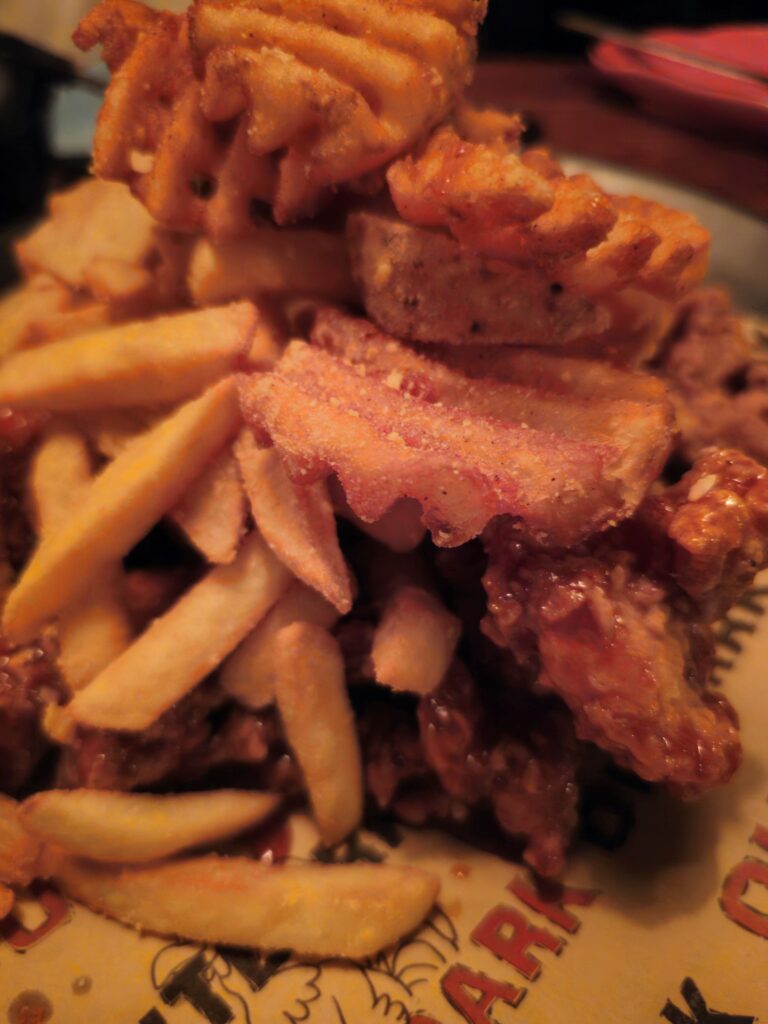
Yangnyeom (양념): The sweet and spicy sauced version — the version most associated with Korean fried chicken internationally. Outdark’s yangnyeom sauce coats the fried chicken in a lacquered glaze that is simultaneously sticky, sweet, spicy, and deeply savory. The sauce ratio is calibrated correctly: enough to coat every surface of the chicken without pooling at the bottom of the serving dish or overwhelming the crisp exterior it’s applied to.
Eating yangnyeom chicken requires accepting that the sauce will soften the crust slightly — an unavoidable trade-off that the best yangnyeom chicken manages by applying the sauce immediately before serving rather than letting it sit. Outdark’s version handles this timing correctly; the crunch, while reduced by the sauce, is still present in the first few bites.
Half and half: Ordering half original and half yangnyeom — a standard Korean fried chicken order — allows the comparison between the two styles within a single meal. Recommended for first-time visitors who want to understand both approaches.
Spicy Tofu Udon (얼큰두부우동)
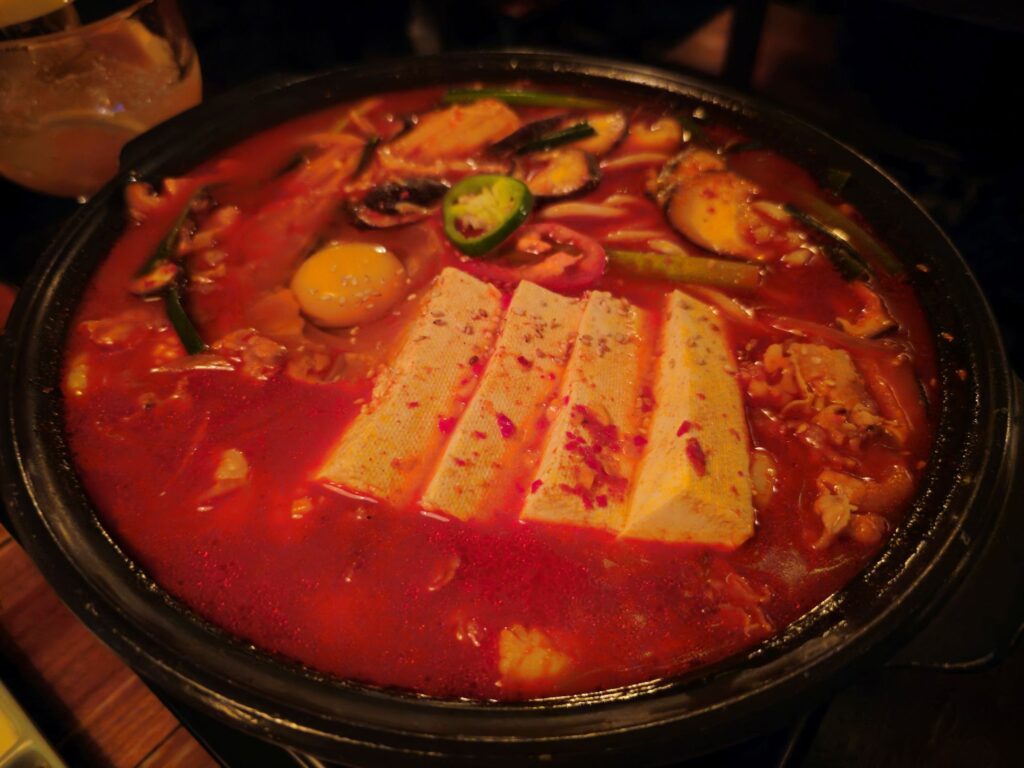
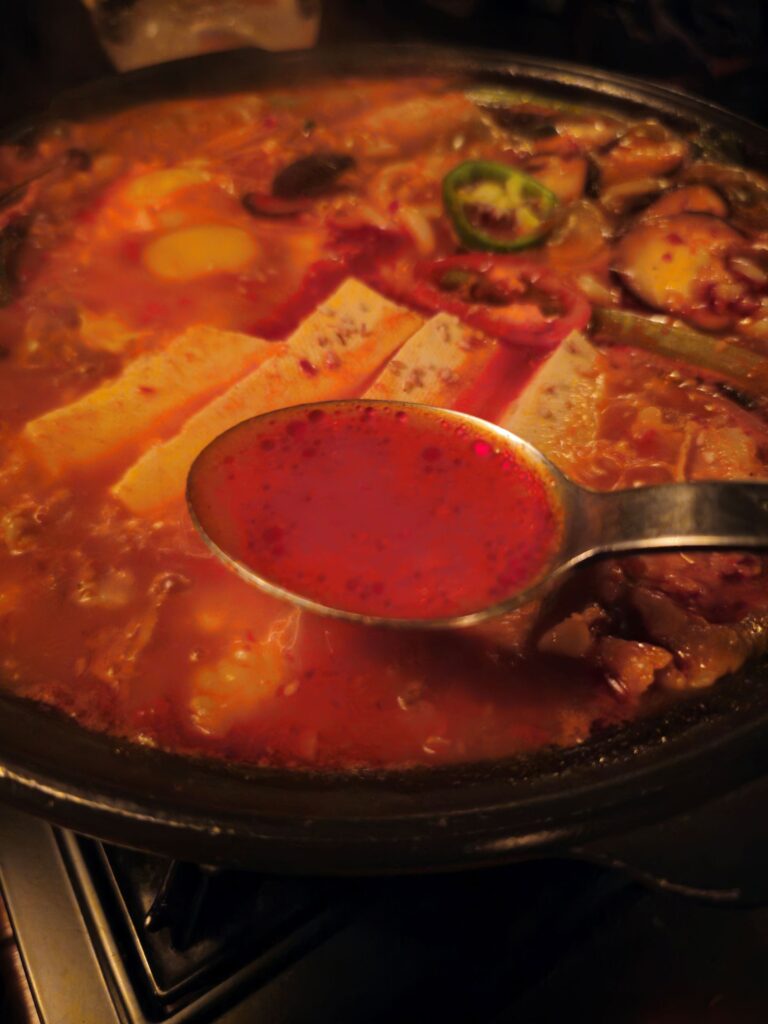
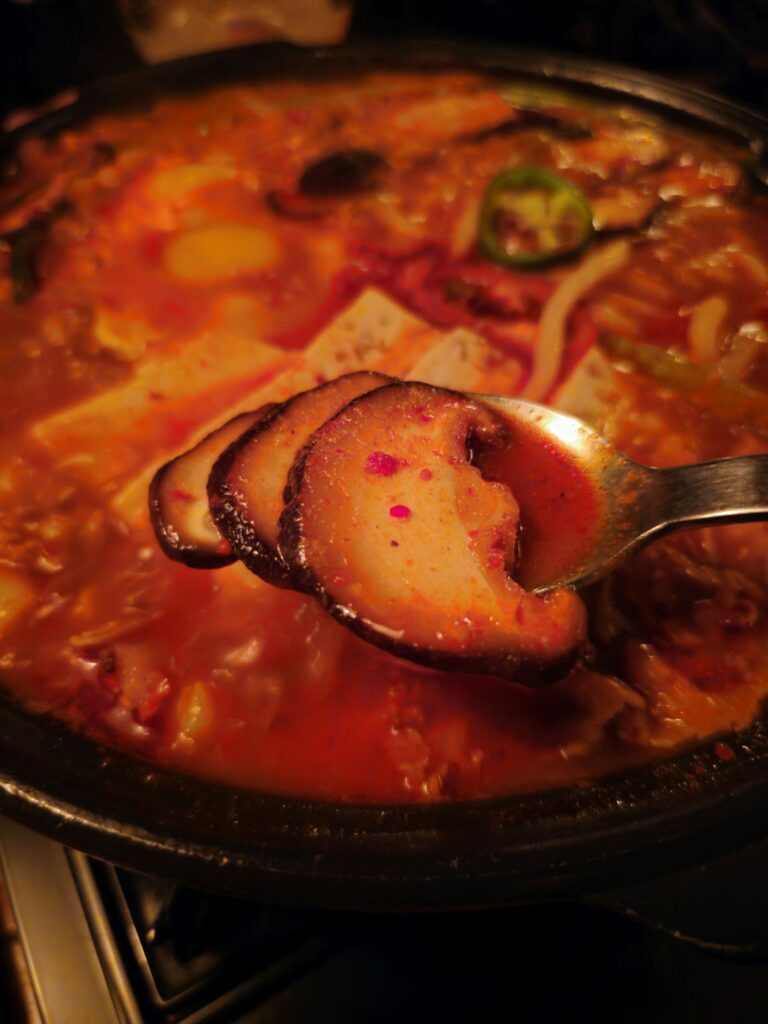
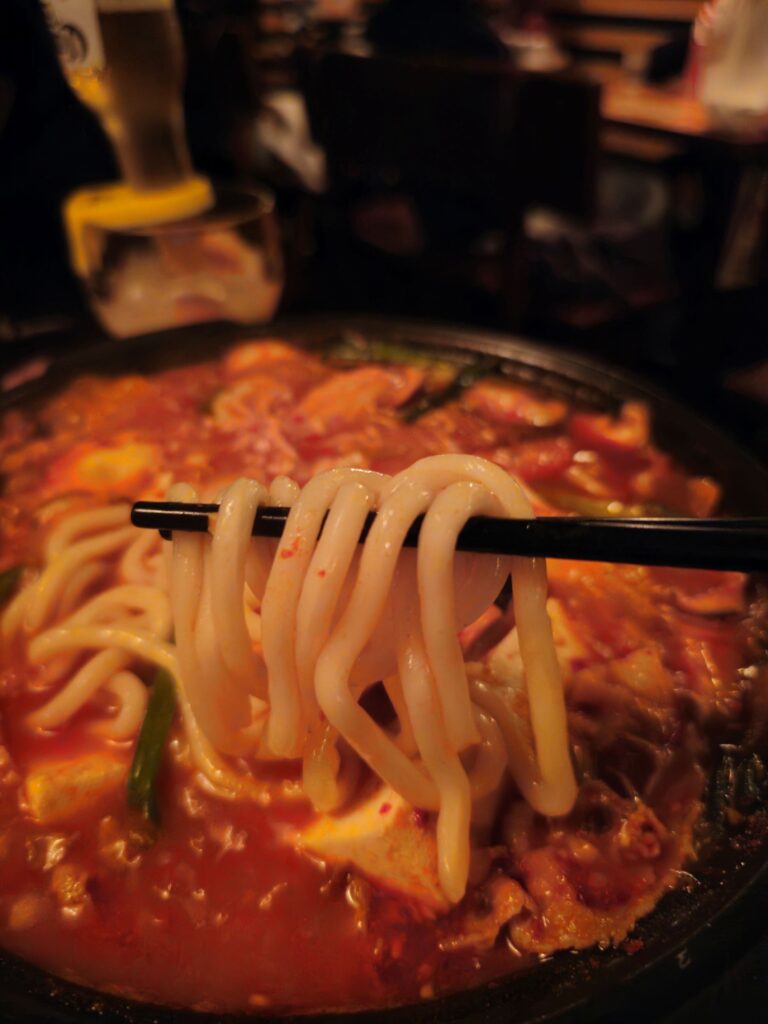
The Korean-Japanese hybrid that rounds out the Outdark menu for visitors who want something alongside or instead of the chicken. The dish combines udon noodles — thick, chewy, Japanese in construction — with a Korean spiced broth built from gochujang and doenjang, topped with silky soft tofu.
The result is a dish that doesn’t exist in either Korean or Japanese cooking but makes complete sense in Hong Kong’s Korean restaurant context: the Korean flavor profile applied to a Japanese noodle format, producing something that’s more interesting than either source tradition would have produced independently.
The broth has the characteristic Korean fermented depth — the gochujang providing heat and sweetness, the doenjang providing the savory funk that distinguishes Korean broth from other Asian spiced soups. The udon absorbs this broth differently from thin Korean noodles; the thickness means more broth clings to each noodle, making each bite more intensely flavored than a thinner noodle would be.
The soft tofu — added in generous portions — breaks apart in the broth as the meal progresses, creating a creaminess that tempers the spice and provides textural contrast to the chewy udon. The combination works better than its components suggest it should.
Spice level: The dish as served is moderately spicy — present heat without overwhelming the other flavors. For visitors who want more heat, asking for additional gochugaru is worth requesting; for those who want less, the tofu and udon together temper the spice significantly.
The Chimaek Pairing
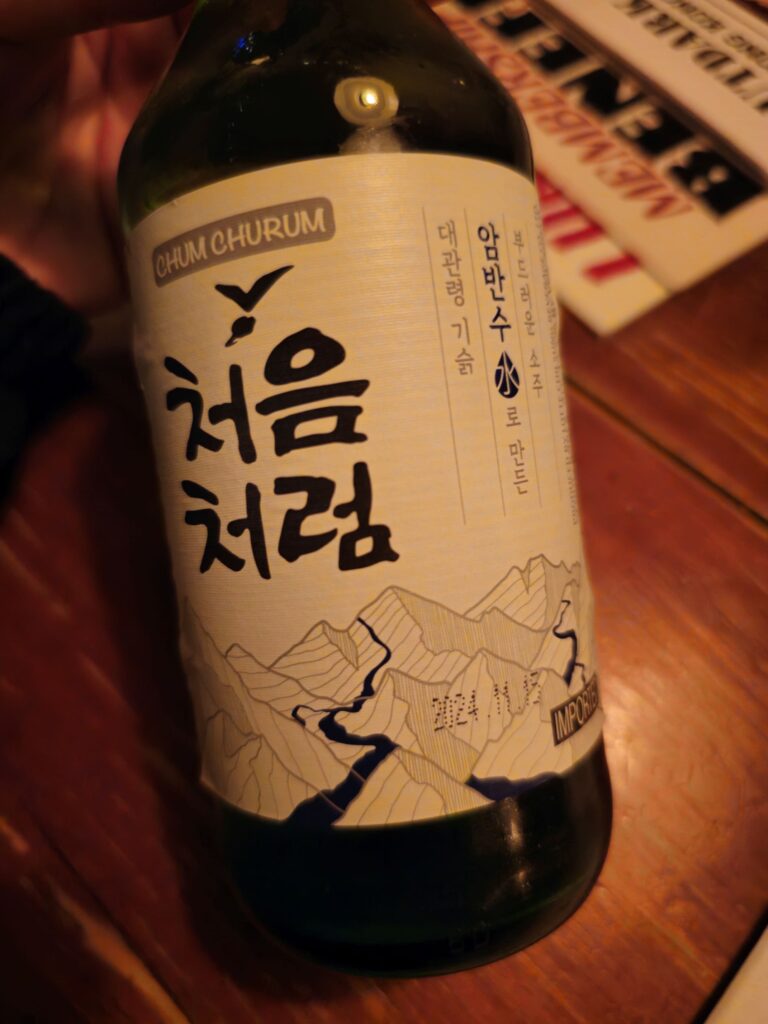
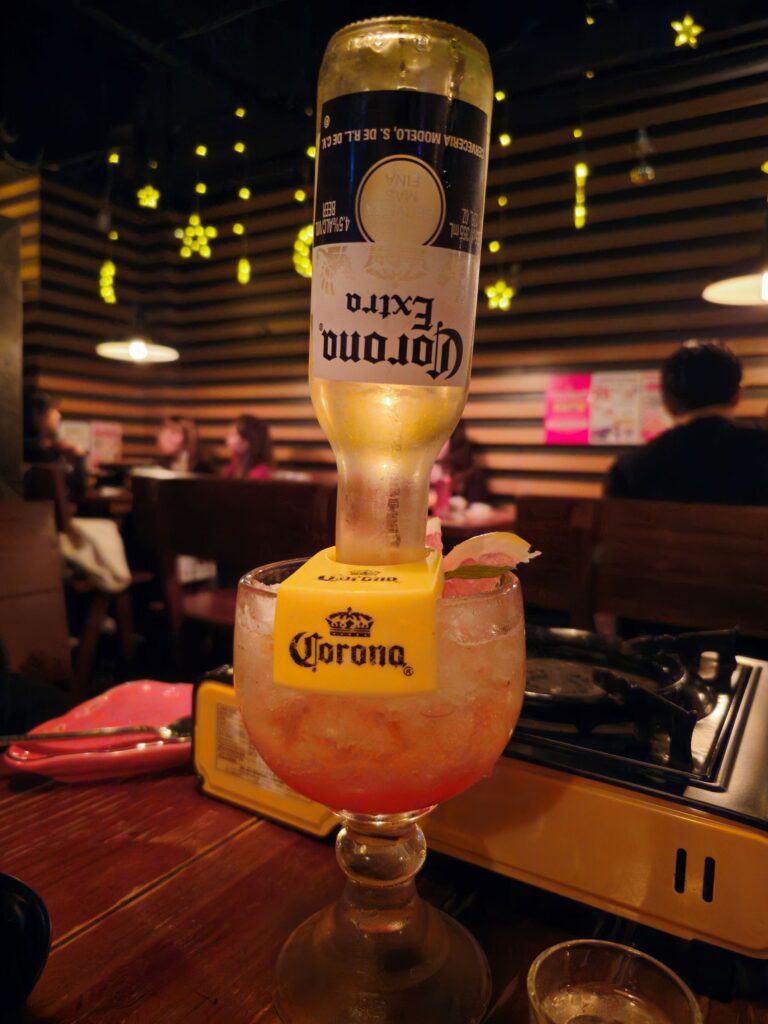
Chimaek (치맥) — the Korean cultural practice of eating fried chicken with beer — is the natural pairing at Outdark. The beer selection covers the standard Korean options (Hite, Kloud, Terra) alongside international lagers, and the combination of the yangnyeom chicken’s sweet-spicy sauce with a cold lager is as effective as its reputation suggests.
Korean beer is often criticized for its neutral flavor profile — lighter and less hoppy than craft beer equivalents. Within the chimaek context, this neutrality is a feature rather than a flaw: a beer that doesn’t compete with the yangnyeom sauce’s complexity is a better pairing than one that does.
The somaek combination — soju mixed into beer — is available for those who want to experience the Korean drinking culture dimension of the meal. The mixing ratio varies by preference; the standard is approximately 3:7 soju to beer.
Outdark vs Hong Kong’s Other Korean Fried Chicken Options
Hong Kong has numerous Korean fried chicken operations — delivery-focused brands, casual restaurants, and dedicated chicken shops scattered throughout the city. Understanding where Outdark sits in this landscape helps contextualize the recommendation:
| Outdark | Dedicated Chicken Shops | Delivery-Only | |
|---|---|---|---|
| Dining experience | ✅ Sit-down restaurant | Counter/casual | None |
| Menu breadth | Broader (chicken + Korean food) | Chicken-focused | Chicken-focused |
| Quality | ✅ Consistent | Variable | Variable |
| Atmosphere | Restaurant | Casual | N/A |
| Best for | Dinner destination | Quick meal | Home/hotel |
For visitors who want Korean fried chicken as a dinner rather than a snack, Outdark’s restaurant format and broader menu make it the more complete option relative to dedicated chicken shops.
Korean Food Fatigue Management: Why Outdark Fits Into a Hong Kong Trip
The role of Korean food in a Hong Kong trip is worth addressing directly — not as a replacement for Cantonese food but as a deliberate palate change that makes returning to Cantonese food the next day more pleasurable.
After consecutive days of dim sum, wonton noodles, char siu, and cha chaan teng, the palate benefits from the different flavor architecture of Korean cooking: the fermented funk of gochujang and doenjang, the clean heat of gochugaru, the sweetness of the yangnyeom sauce. These flavors engage different taste receptors than Cantonese cooking’s clean savory profile, and the contrast makes both traditions more vivid when experienced sequentially.
The practical recommendation: one Korean meal during a four-to-five day Hong Kong trip, positioned when the appetite for Cantonese food is at its most saturated. For visitors staying in Tsim Sha Tsui, Outdark provides this reset conveniently, without requiring a harbor crossing or a significant journey.
Practical Tips
Order half and half: Half original, half yangnyeom allows the comparison between the two styles within a single order — the natural first-visit approach.
Eat the original first: The original unsauced chicken is at its best immediately after frying, before any cooling. Eating it first — then moving to the yangnyeom — preserves the crunch at its peak.
The chimaek pairing: Korean beer with yangnyeom chicken is the culturally correct pairing and tastes exactly as described. Order it.
The spicy tofu udon alongside: The two dishes together — chicken and udon — constitute a complete meal. The udon’s broth and tofu provide a warming counterpoint to the chicken.
Timing: Outdark works well as a dinner stop from around 6pm — early enough to eat before the restaurant fills, late enough that the kitchen is at full production pace.
Location confirmation: Outdark has multiple Hong Kong locations — confirm the Tsim Sha Tsui branch address on Google Maps before heading there, as branch locations occasionally change.
Final Thoughts
Outdark delivers what Korean fried chicken in Hong Kong should deliver: the double-frying technique done correctly, the yangnyeom sauce calibrated at the right ratio, the chimaek pairing available and appropriate. The spicy tofu udon is better than it needs to be — a dish that earns its place on the menu rather than just filling it.
As a palate reset during a multi-day Hong Kong Cantonese food itinerary, Outdark provides exactly the right kind of contrast: different spice architecture, different fermentation profile, different textural approach. The next morning’s dim sum will taste more vivid for it.
Go for the chicken. Order half original, half yangnyeom. Drink Korean beer with it. Eat the spicy tofu udon alongside. And return to Cantonese food the next morning with a renewed appetite.
Korean Food in Hong Kong: A Guide to the City’s Best Korean Restaurants
Hong Kong Food Guide: What to Eat and Where