

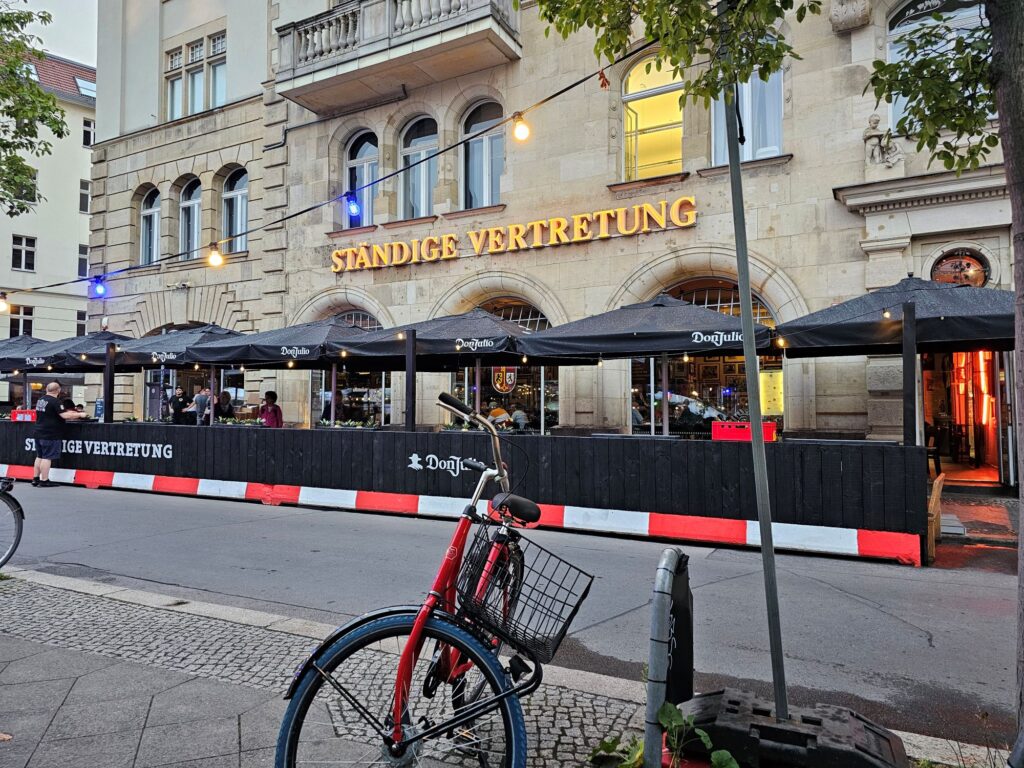
If you are searching for a restaurant in Berlin that offers more than just food—something layered with history, politics, and bold regional flavors—Ständige Vertretung is one of the most distinctive dining experiences in the city. Located near Friedrichstraße along the River Spree, this iconic restaurant, affectionately called “StäV” by locals, brings the spirit of the Rhineland to the German capital. It is loud, nostalgic, hearty, and unapologetically traditional.
This is not minimalist fine dining. This is Germany in its full-bodied, beer-filled, history-saturated form.
The Historical Meaning Behind the Name
The name “Ständige Vertretung” translates to “Permanent Representation.” During Germany’s division (1949–1990), West Germany did not maintain an official embassy in East Berlin. Instead, it operated a “permanent representation” office as a political compromise.
The restaurant takes its name from that diplomatic institution, and the symbolism is intentional. Inside, the walls are covered with framed newspaper headlines, political cartoons, historic photographs, and portraits of German politicians and journalists. It feels like stepping into a living archive of post-war German history.
Dining here is not just about eating—it’s about sitting inside a narrative of reunification, identity, and political memory.
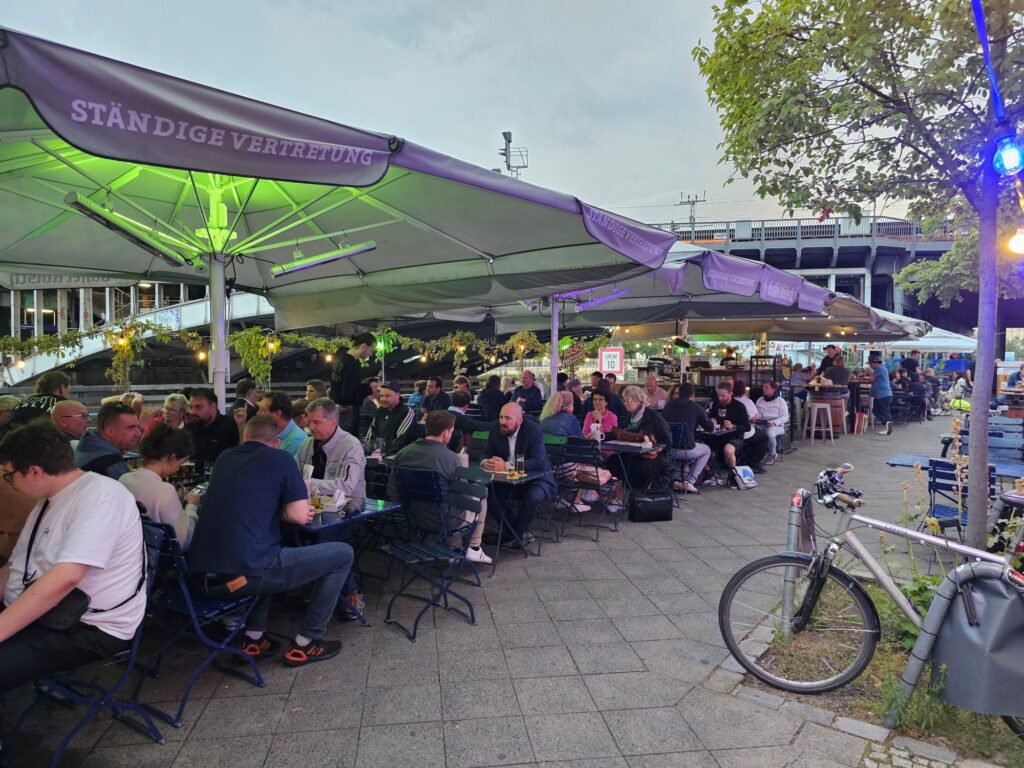
Atmosphere: Lively, Packed, and Authentic
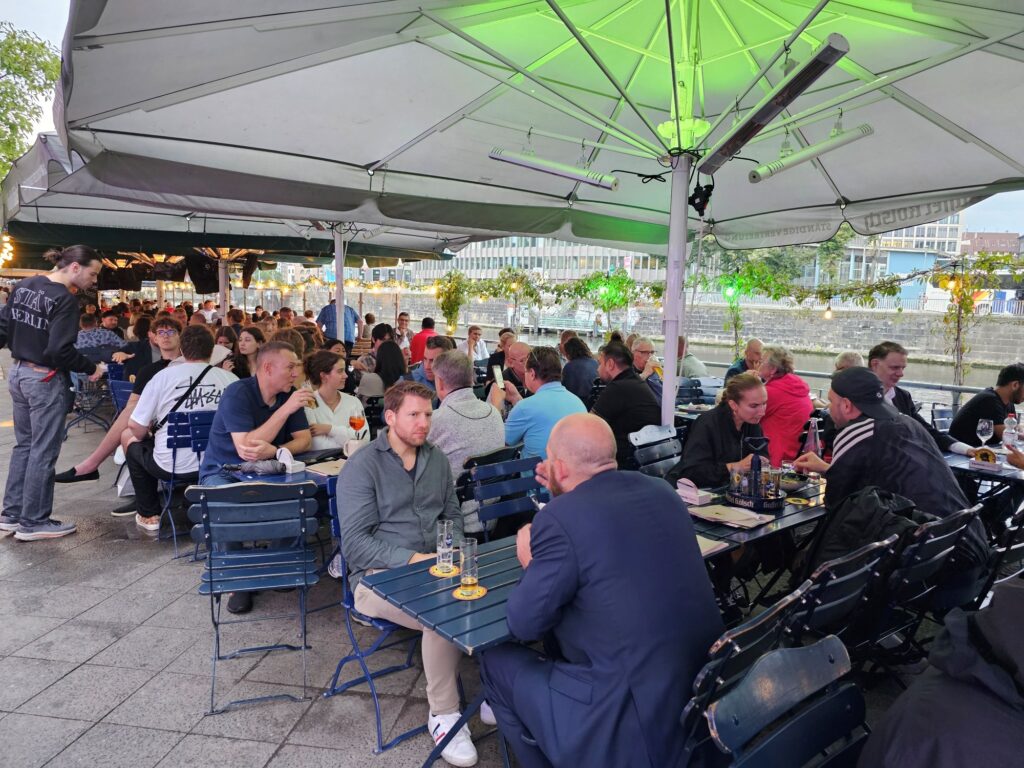
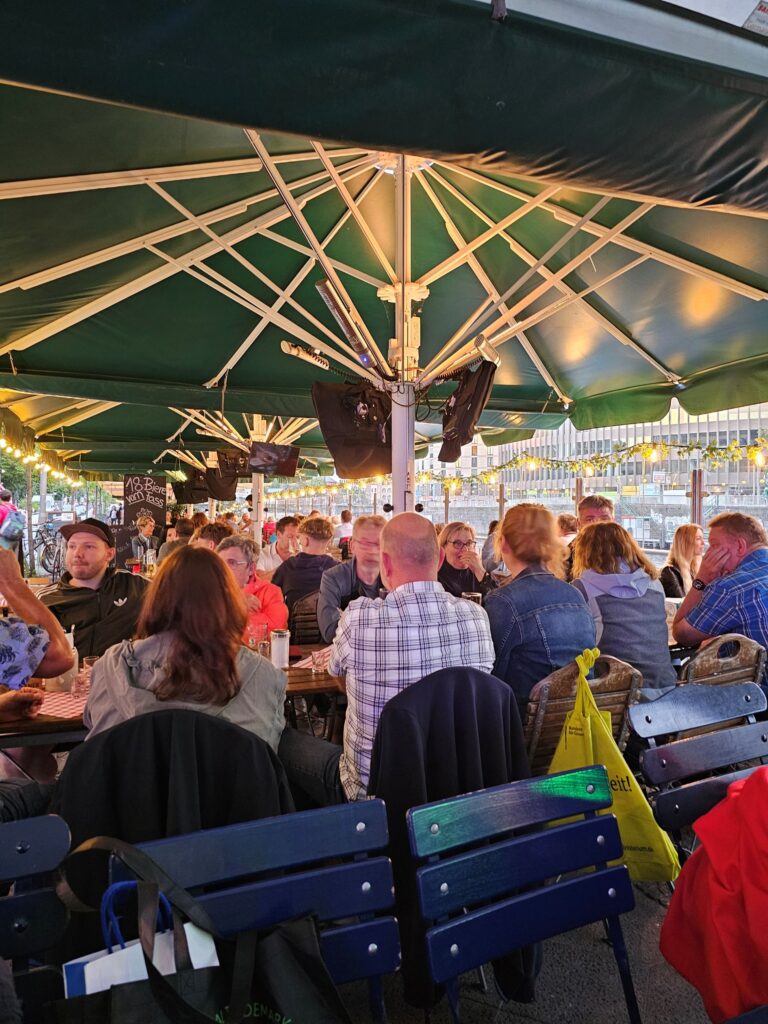
The interior is warm and bustling. Wooden tables sit close together. Conversations overlap. Beer glasses clink constantly. The décor is dense with memorabilia, giving the space a layered and slightly chaotic charm.
It feels like a cross between a political club, a Rhineland beer hall, and a traditional German tavern.
If you prefer quiet elegance, this may not be your style. But if you enjoy energy, authenticity, and local character, you will feel completely immersed.
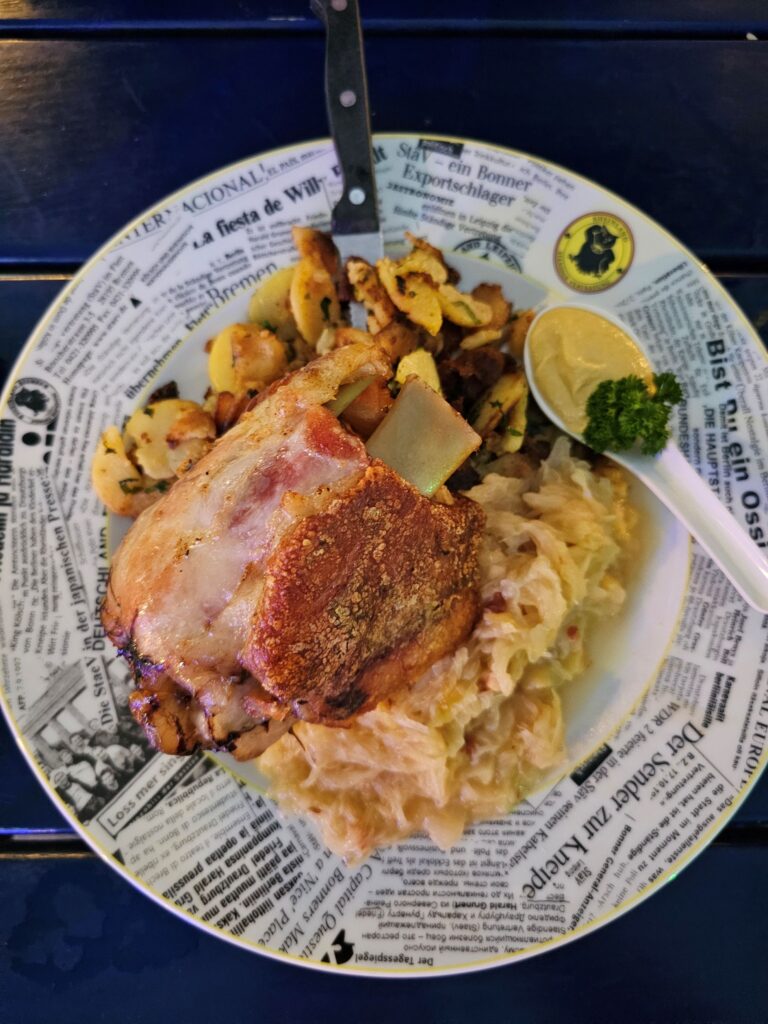
Schweinshaxe: The Star of the Table
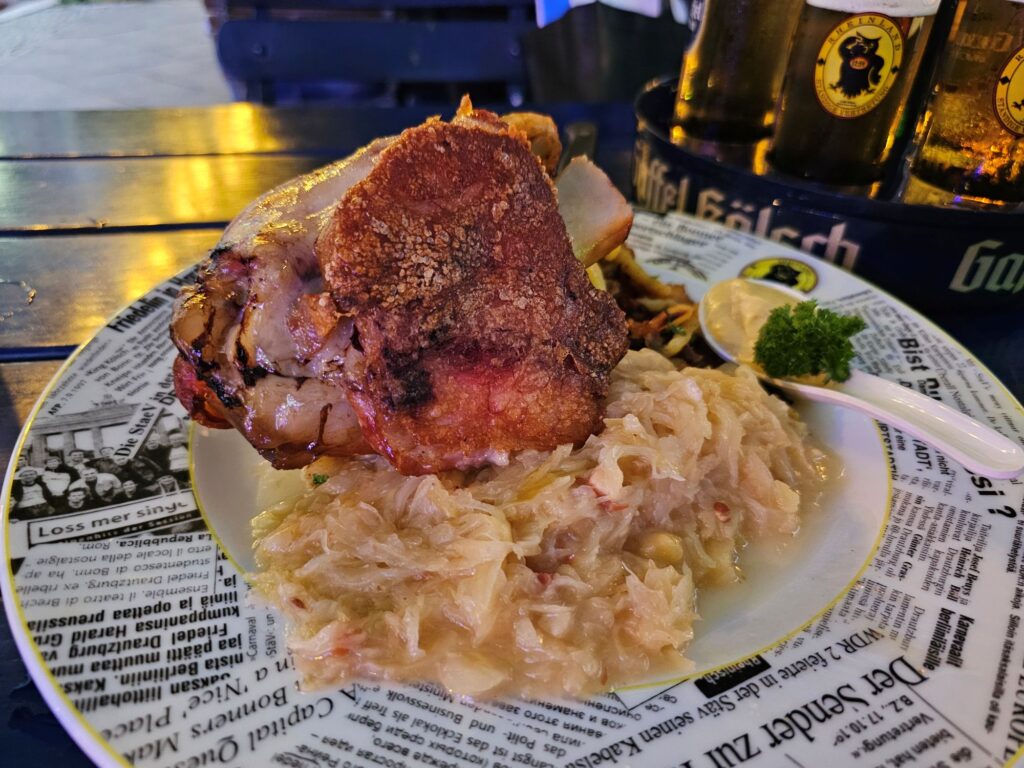
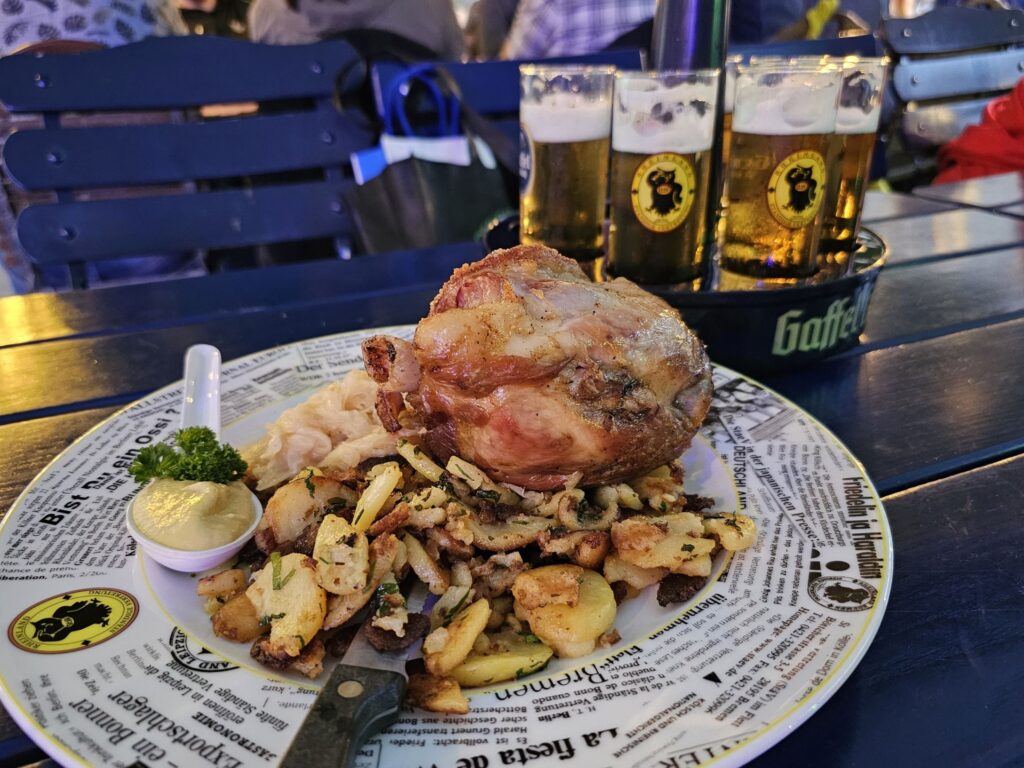
One of the most celebrated dishes at Ständige Vertretung is Schweinshaxe—often translated as pork knuckle or pork hock. However, that translation barely captures its cultural significance.
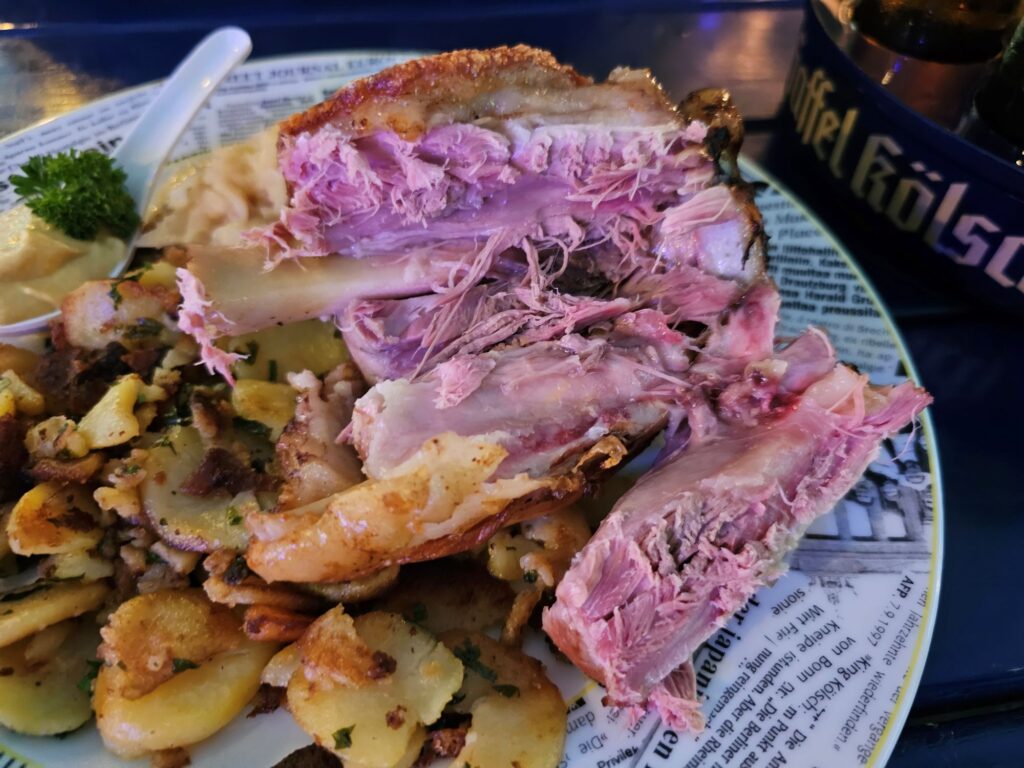
Schweinshaxe is deeply rooted in German culinary tradition, particularly in Bavaria and southern regions. It is made from the lower portion of the pig’s leg, a cut that contains bone, fat, and thick skin. The preparation is what transforms it into something extraordinary.
How Schweinshaxe Is Prepared
The pork knuckle is typically:
- Seasoned generously with salt, pepper, and caraway.
- Slowly roasted for several hours.
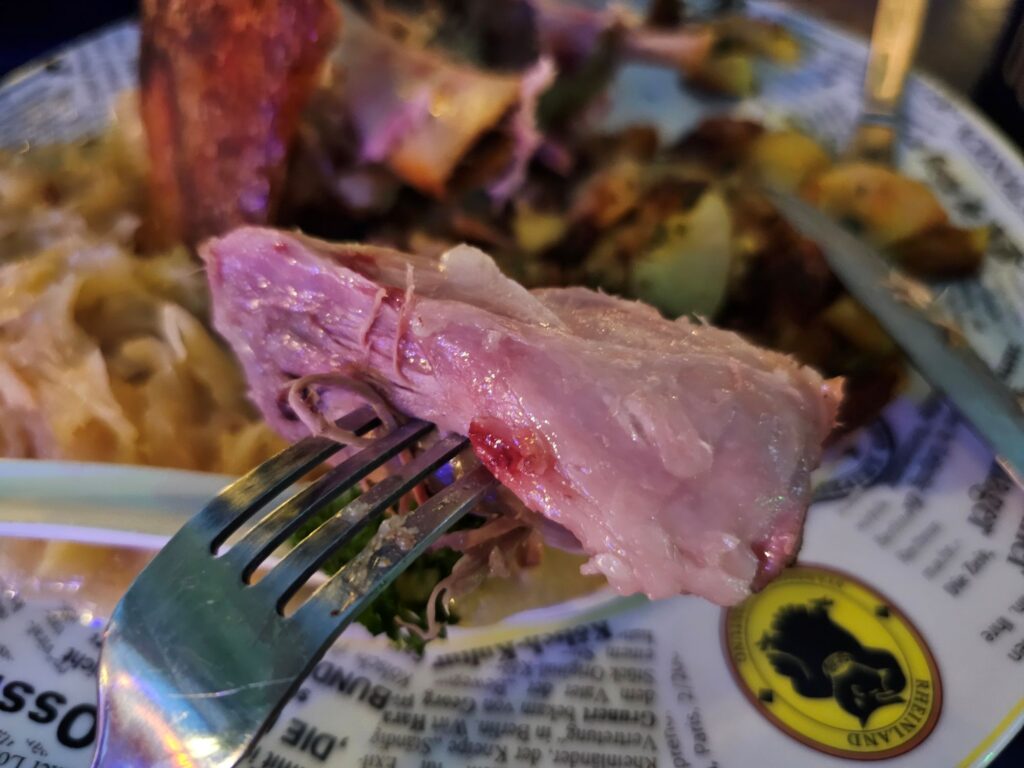
- Cooked until the interior becomes fork-tender.
- Finished at high heat to achieve a crackling, crispy outer skin.
The result is a dramatic contrast in texture:
- Shatteringly crisp skin
- Rich, juicy meat beneath
- Deep savory flavor from slow roasting
The outer crust, known as “Kruste,” is often the most coveted part. When done properly, it cracks audibly under your knife.
At Ständige Vertretung, Schweinshaxe is usually served with sauerkraut and potato dumplings (Knödel) or mashed potatoes. The tanginess of the sauerkraut balances the richness of the pork, while the dumplings absorb the flavorful gravy.
This is not a light meal. It is indulgent, filling, and intensely satisfying.
Cultural Meaning of Schweinshaxe
In Germany, Schweinshaxe represents traditional comfort food. It is often associated with festivals, beer halls, and communal dining. It pairs naturally with beer and is meant to be shared—or at least admired by neighboring tables.
When you order Schweinshaxe at StäV, expect a generous portion. It often becomes the centerpiece of the table.
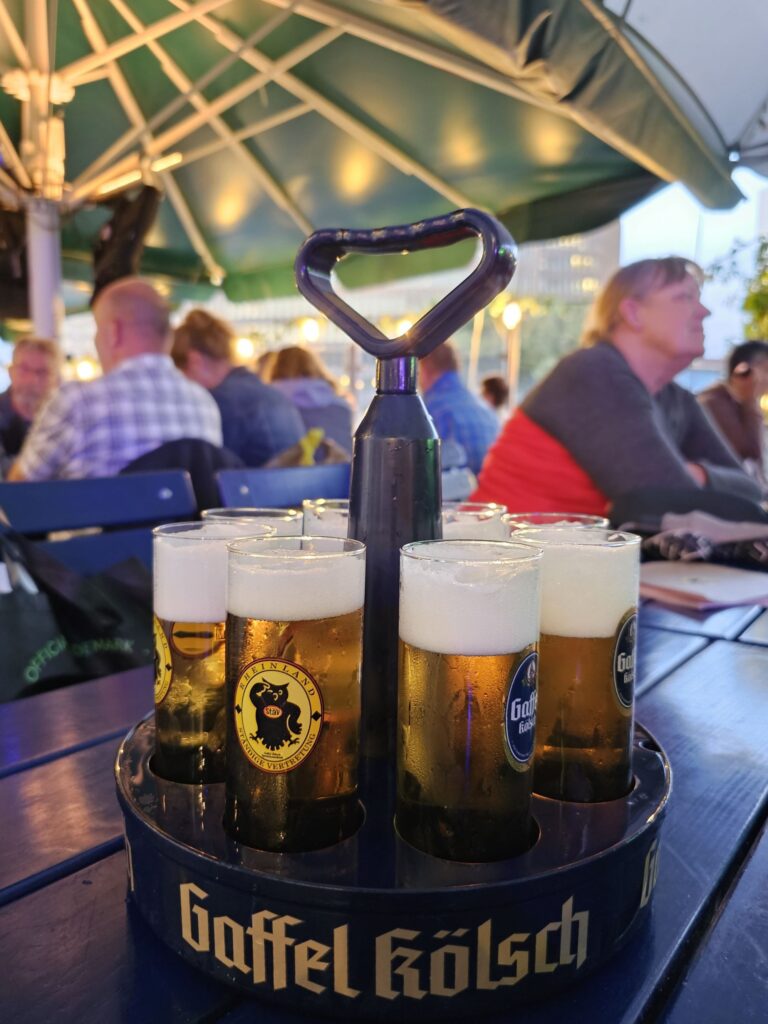
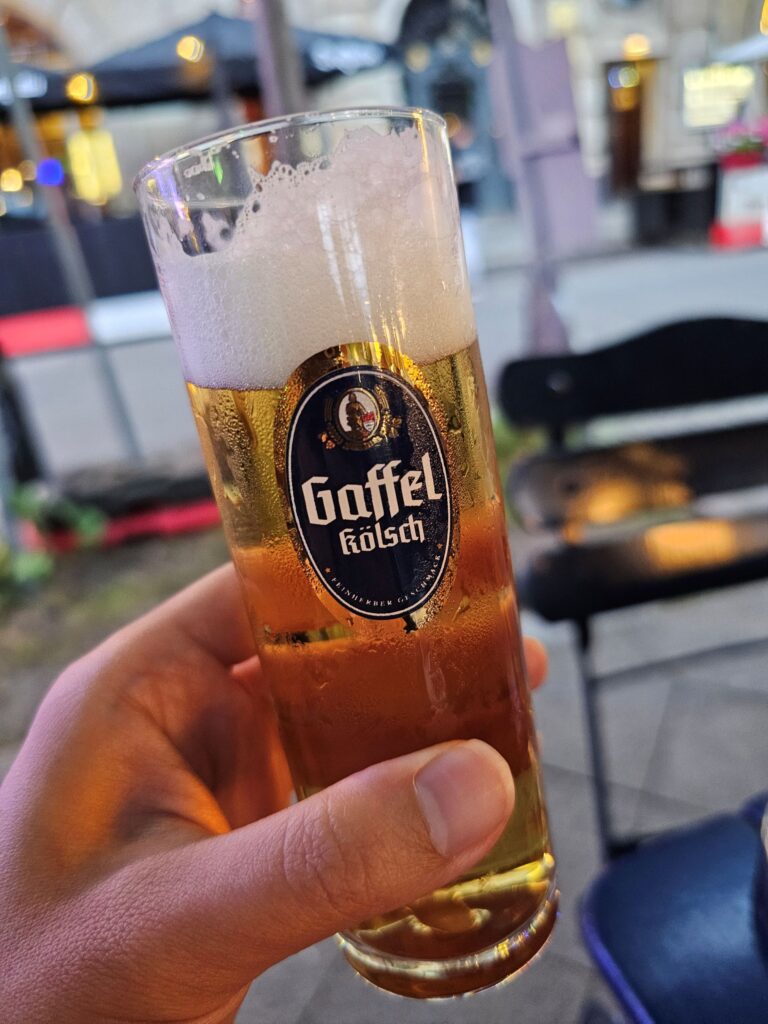
Kölsch Beer: A Rhineland Identity
Although you are in Berlin, Ständige Vertretung specializes in Rhineland cuisine, especially dishes and drinks from Cologne (Köln). That is why Kölsch beer is central to the experience.
Kölsch is a pale, top-fermented beer brewed in Cologne. It is lighter and more refreshing than many Bavarian beers, with a crisp and slightly fruity character.
It is traditionally served in a slender 0.2-liter glass called a “Stange.” The smaller size encourages frequent refills, keeping the beer cold and fresh.
At StäV, staff may automatically replace your empty Kölsch with a new one unless you place a coaster over your glass—a traditional signal that you are finished.
The pairing of Schweinshaxe and Kölsch is deliberate:
- The beer’s lightness cuts through the richness of the pork.
- The carbonation refreshes the palate between bites.
It is a balanced and classic German combination.
Other Menu Highlights
Beyond Schweinshaxe, the menu offers other traditional Rhineland specialties:
- Rheinischer Sauerbraten (marinated pot roast in sweet-sour sauce)
- Bratwurst with mustard and sauerkraut
- Potato pancakes
- Hearty seasonal soups
- Cold platters with rye bread
Portions are generous. Flavors are bold. Presentation is traditional rather than modern.
Vegetarian options are available but limited compared to meat dishes.
Price Expectations
For central Berlin, prices are reasonable.
- Main dishes: approximately €20–€32
- Kölsch beer: €3–€5 per glass
- Full meal with drinks: around €30–€45 per person
Considering the location near Friedrichstraße and the generous portion sizes, it offers good value.
Best Time to Visit
Dinner hours between 6 PM and 9 PM are busiest. Reservations are strongly recommended, especially on weekends.
If you prefer a slightly calmer atmosphere, lunchtime is a good option.
Because the restaurant is popular with both tourists and locals, walk-ins during peak hours may face waiting times.
Who Should Visit Ständige Vertretung?
This restaurant is ideal for:
- Travelers interested in German political history
- Food lovers seeking authentic traditional cuisine
- Groups of friends sharing beer and hearty meals
- Visitors wanting a lively Berlin dining memory
It may not suit those looking for minimalist, quiet fine dining.
Practical Information
Name: Ständige Vertretung
Address: Schiffbauerdamm 8, 10117 Berlin, Germany
Cuisine: Rhineland / Traditional German
Signature Dish: Schweinshaxe
Signature Drink: Kölsch beer
Reservation: Recommended
Final Thoughts
Ständige Vertretung Berlin is more than a restaurant. It is a place where German history, regional identity, and hearty cuisine intersect. From the walls filled with political memorabilia to the towering plate of Schweinshaxe and continuously refilled Kölsch glasses, the experience feels unapologetically German.
If you want to understand Germany not only through museums but through food and atmosphere, StäV offers a deeply satisfying and culturally rich stop in Berlin.
Brandenburger Tor, Berlin: A Complete Travel Guide to Germany’s Most Iconic Landmark
Memorial to the Murdered Jews of Europe, Berlin