

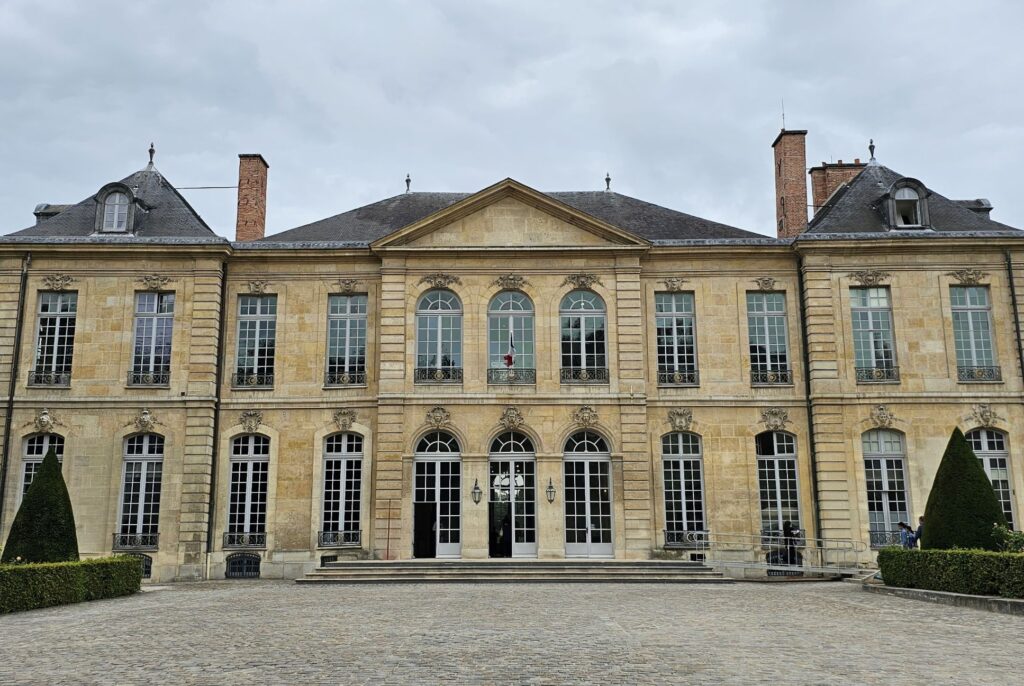
Paris, the city of lights and art, offers countless treasures, but few are as captivating and intimate as the Musée Rodin. Housed in the elegant Hôtel Biron, an 18th-century mansion nestled in the 7th arrondissement, this museum is dedicated to the works of Auguste Rodin, one of the most influential sculptors in modern art history. A visit here promises not only a deep dive into Rodin’s extraordinary legacy but also a tranquil experience within beautifully landscaped gardens that offer an oasis from the bustling city.
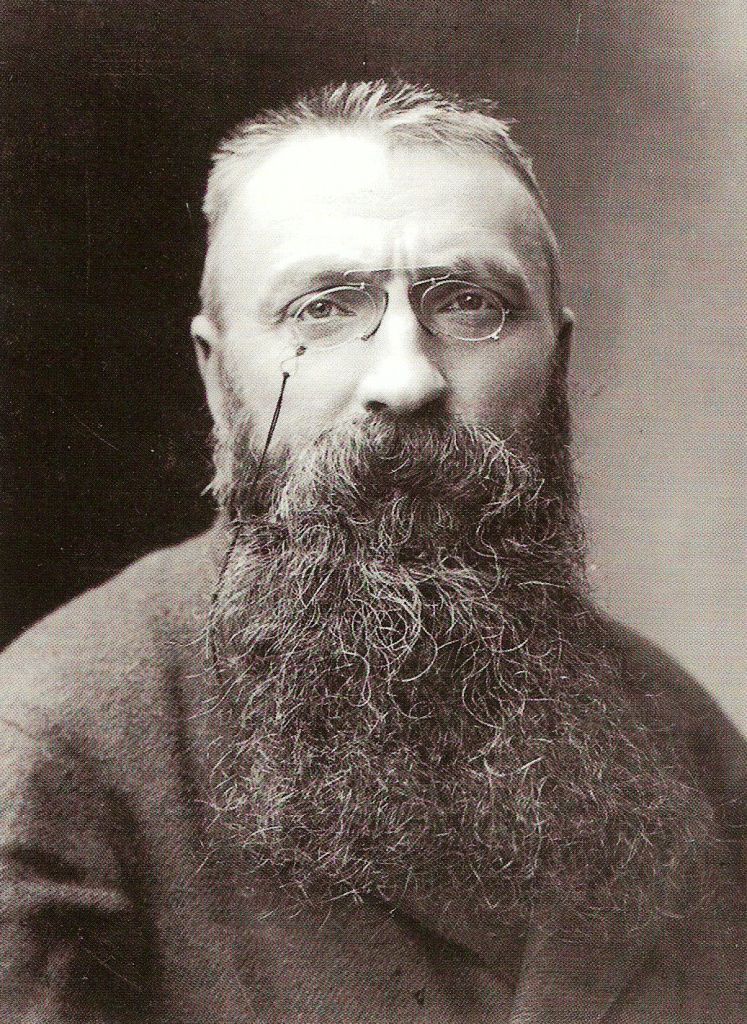
Who Was Auguste Rodin?
François-Auguste-René Rodin (1840–1917) is widely regarded as the father of modern sculpture. Though initially rejected by the prestigious École des Beaux-Arts, Rodin’s persistence and distinct style would eventually revolutionize Western sculpture. His innovative techniques focused on realism and emotional expression, marking a departure from the neoclassical traditions that dominated the 19th century.
Rodin’s work reflected his deep understanding of human anatomy and his desire to express psychological depth. His influences ranged from classical antiquity to Renaissance masters like Michelangelo. Rodin was also deeply inspired by literature, mythology, and religion. Throughout his career, he produced an extensive body of work that continues to resonate with modern audiences. His relationship with fellow sculptor Camille Claudel—both romantic and artistic—played a significant role in his life and artistic evolution.

Musée Rodin Experience
The Musée Rodin opened in 1919, just two years after the artist’s death, in accordance with his wishes. Rodin had donated his entire collection to the French state—this included not only his finished sculptures but also drawings, studies, and plaster casts. Today, Musée Rodin houses more than 6,000 sculptures, 8,000 drawings, 10,000 old photographs, and 7,000 objets d’art.
Inside the Hôtel Biron, visitors can wander through high-ceilinged rooms filled with works like The Kiss, The Age of Bronze, and Eternal Springtime. Many pieces are accompanied by sketches and preliminary studies, allowing you to understand Rodin’s creative process. Musée Rodin also hosts exhibitions on related artists, particularly Camille Claudel, who played a crucial role in Rodin’s artistic journey.

Must-See Masterpieces
The Gates of Hell (La Porte de l’Enfer)
Among the most compelling works at the Musée Rodin is The Gates of Hell. This monumental bronze portal was commissioned in 1880 for a planned decorative arts museum and inspired by Dante’s Inferno. Rodin worked on it obsessively for decades, incorporating over 180 figures, many of which would later become standalone masterpieces.
The composition is chaotic yet masterfully orchestrated. Figures twist, fall, and cling to one another in a writhing sea of torment and desire. From The Thinker, who sits contemplatively at the top, to the damned souls struggling below, every figure embodies intense emotion. It’s a piece that rewards close inspection—each detail contributes to the overall narrative of damnation and human vulnerability. It’s not merely a visual experience but a psychological one, inviting viewers to confront themes of mortality, guilt, and existential dread.
The Three Shades (Les Trois Ombres)
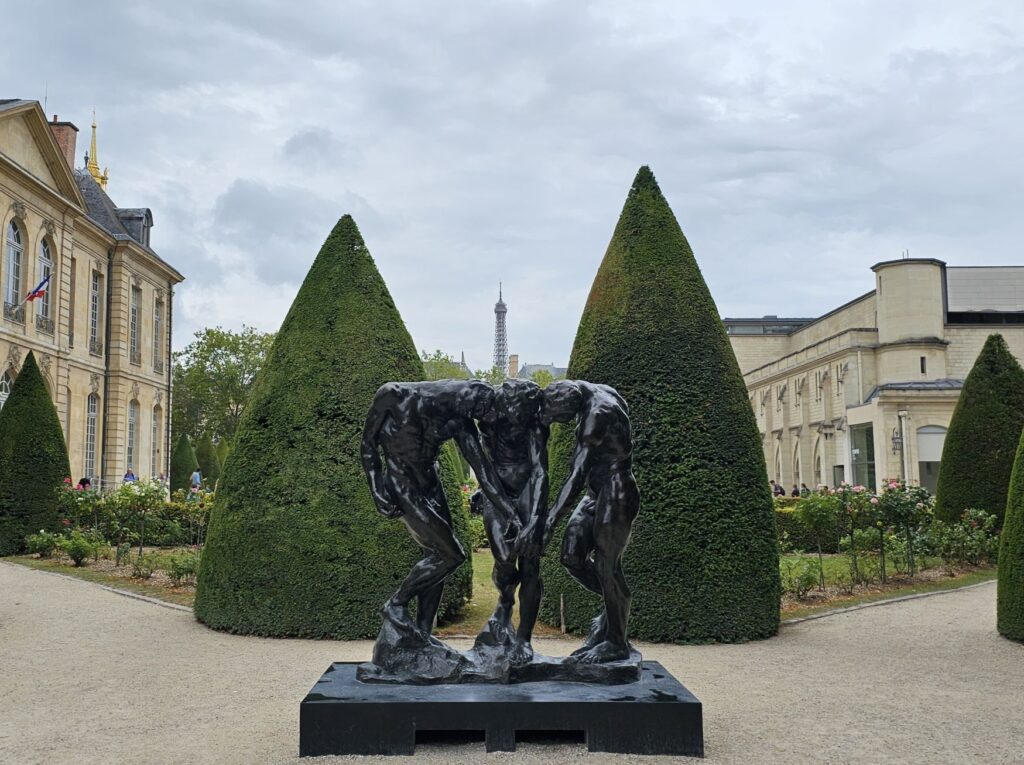
Standing prominently above The Gates of Hell are The Three Shades, three identical male figures cast from a single mold. Arranged to lean toward one another in a circle, they form a dramatic centerpiece above the portal. Their unified gesture—arms outstretched and fingers pointing downward—directs the viewer’s attention to the infamous inscription: “Abandon hope, all ye who enter here.”
What makes The Three Shades particularly powerful is their embodiment of despair. The downward tilt of their heads, the muscular tension in their bodies, and the synchronized choreography of their posture evoke a chilling sense of doom. They appear both unified and fragmented, almost spectral in their mirroring. Rodin’s use of repetition magnifies their psychological impact, emphasizing a sense of eternal recurrence and inescapable fate. They are not just ornamental; they serve as sentinels of suffering, marking the gateway into Dante’s vision of hell.

The Burghers of Calais (Les Bourgeois de Calais)
Commissioned in 1884, this sculpture commemorates an episode during the Hundred Years’ War when six citizens of Calais surrendered themselves to the English to save their city. Rodin defied the norms of monumental sculpture by portraying the men not as idealized heroes, but as individuals burdened by fear, pride, sorrow, and resignation.
Each figure stands on equal footing—literally and symbolically—without a pedestal, inviting viewers to walk around and empathize with each burgher’s inner turmoil. Their poses and facial expressions reveal a spectrum of emotional complexity: one covers his face in anguish, another clasps his hands in prayer, while another trudges forward in weary resolve. Rodin’s attention to individual psychology was groundbreaking, turning public art into a meditation on human dignity and sacrifice.
The Kiss (Le Baiser)
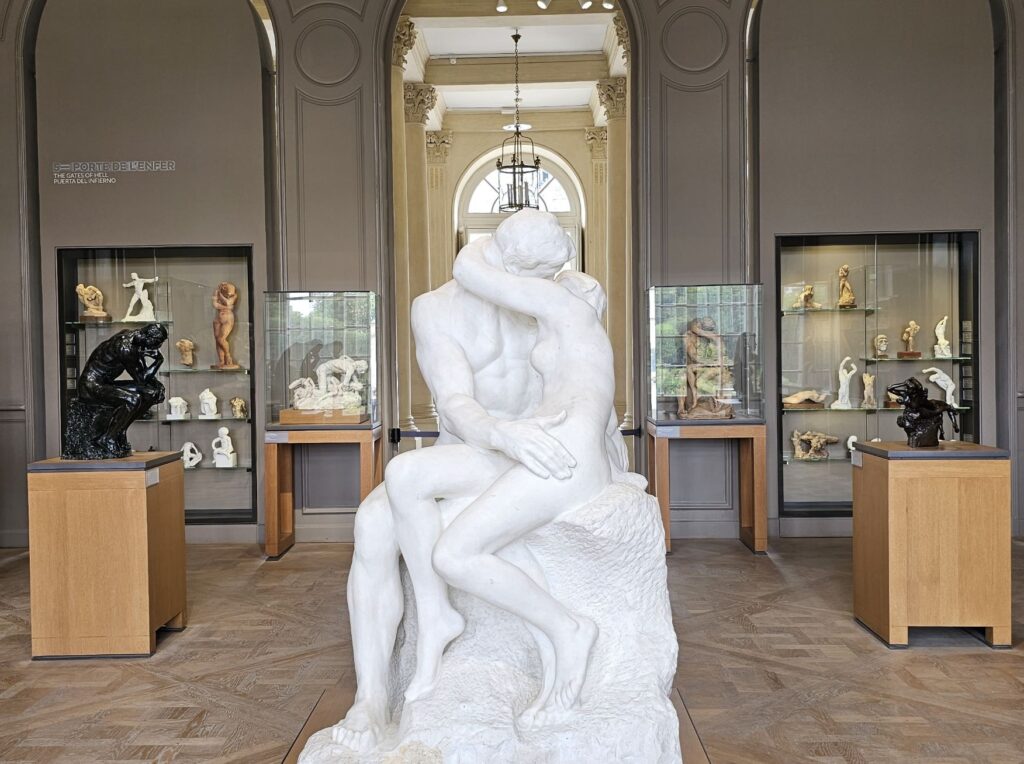
A sensuous marble piece derived from Dante’s Inferno, The Kiss portrays Paolo and Francesca, doomed lovers caught in an eternal embrace. The sculpture is lauded for its graceful contours and emotional warmth, contrasting the despair seen in The Gates of Hell. Their lips don’t touch, preserving a sense of yearning and suspended passion.
The smooth, flowing lines of their intertwined bodies highlight Rodin’s mastery of form and emotion. Light dances across the marble, enhancing the tactile sensuality of skin and muscle. Their passion is palpable, yet there’s an undertone of tragedy—viewers familiar with their story know that this moment is their eternal punishment. The subtle balance between desire and doom encapsulates Rodin’s genius in depicting the human condition.


The Sculpture Garden
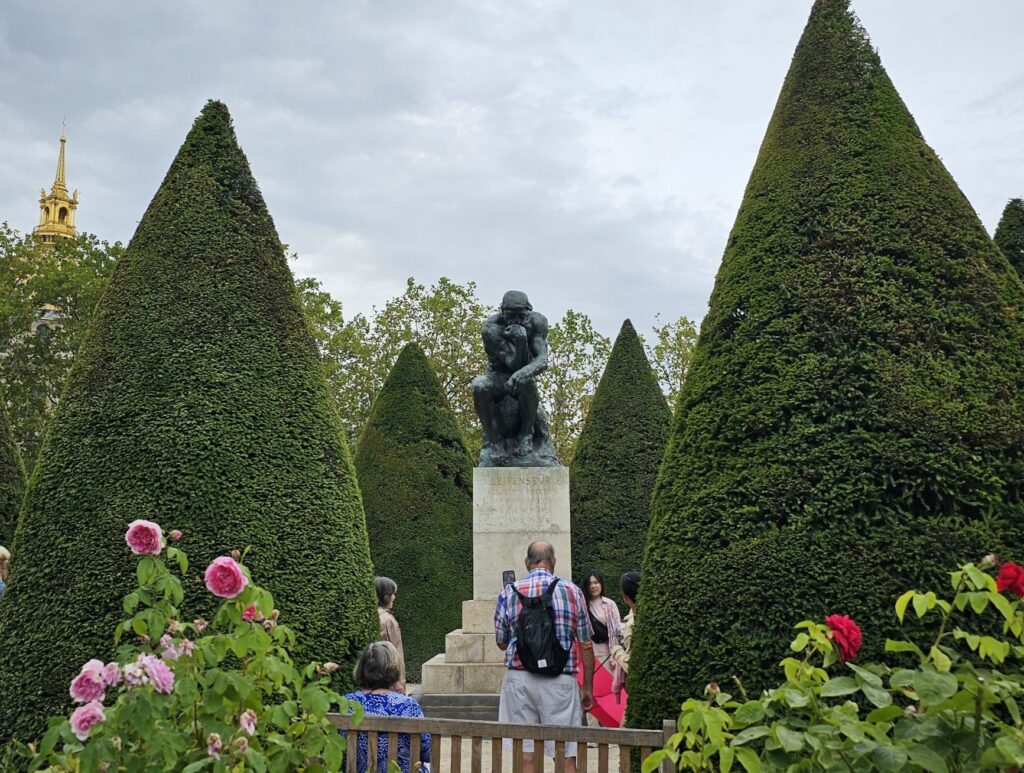
Musée Rodin’s three-hectare garden provides a breathtaking backdrop for many of Rodin’s largest and most famous bronzes. Visitors can take a leisurely stroll among rose-lined paths and well-manicured hedges, encountering works like The Thinker, The Walking Man, and Monument to Balzac. The lush setting offers a serene and reflective atmosphere, making it a favorite for both art lovers and casual visitors.
In spring and summer, the garden bursts with color, while autumn adds a poetic golden hue to the bronzes. A café located near the garden offers refreshments, allowing you to soak in the art and nature with a coffee in hand.

Free Entry with the Paris Museum Pass
For those using the Paris Museum Pass, admission to the Musée Rodin is free, making it an excellent addition to your Paris itinerary. The pass also covers many other top museums and monuments, so it’s a cost-effective way to explore the city’s rich cultural offerings. Just show your pass at the entrance—there’s no need to queue for tickets.
Personal Reflections
My visit to the Musée Rodin was both intellectually stimulating and emotionally profound. Arriving mid-morning, I found the galleries quiet, with the sunlight casting soft shadows across the sculptures. Seeing The Kiss up close, I was amazed by the tenderness carved in stone. Walking into the garden, the sight of The Thinker framed by greenery and blue skies felt almost surreal.
Later, standing before The Gates of Hell, I was drawn into its vortex of anguish and motion. Each figure seemed alive, locked in a moment of existential dread. I was especially struck by The Three Shades perched ominously above the gates. Their mirrored forms and pointing hands created a powerful emotional crescendo—one that lingered long after I stepped away. Unlike larger, crowded museums, Musée Rodin allows space for quiet observation. The tranquility of the garden and the emotional intensity of the sculptures created a powerful contrast that lingered with me long after I left.


Final Thought
The Musée Rodin is more than a museum—it’s a journey through the human soul, carved in bronze and marble. Whether you’re an art historian or a casual traveler, this intimate museum offers a chance to engage deeply with timeless themes of love, despair, courage, and introspection. Rodin’s sculptures are not only masterpieces of form, but vessels of feeling and thought that continue to move viewers across generations. Nestled in one of the most charming corners of Paris, it’s a place that speaks softly but leaves a lasting impression. If you’re seeking an art experience that is both personal and profound, the Musée Rodin should not be missed.

Practical Information
- Address: 77 Rue de Varenne, 75007 Paris, France
- Opening Hours: Tuesday to Sunday, 10:00 AM – 6:30 PM (last admission at 5:45 PM); closed Mondays
- Admission Fee: €15 for adults; free with Paris Museum Pass; free on the first Sunday of each month from October to March
- Nearest Metro: Varenne (Line 13) or Invalides (Lines 8, 13, RER C)
- Website: https://www.musee-rodin.fr
Why Consider the Paris Museum Pass?