
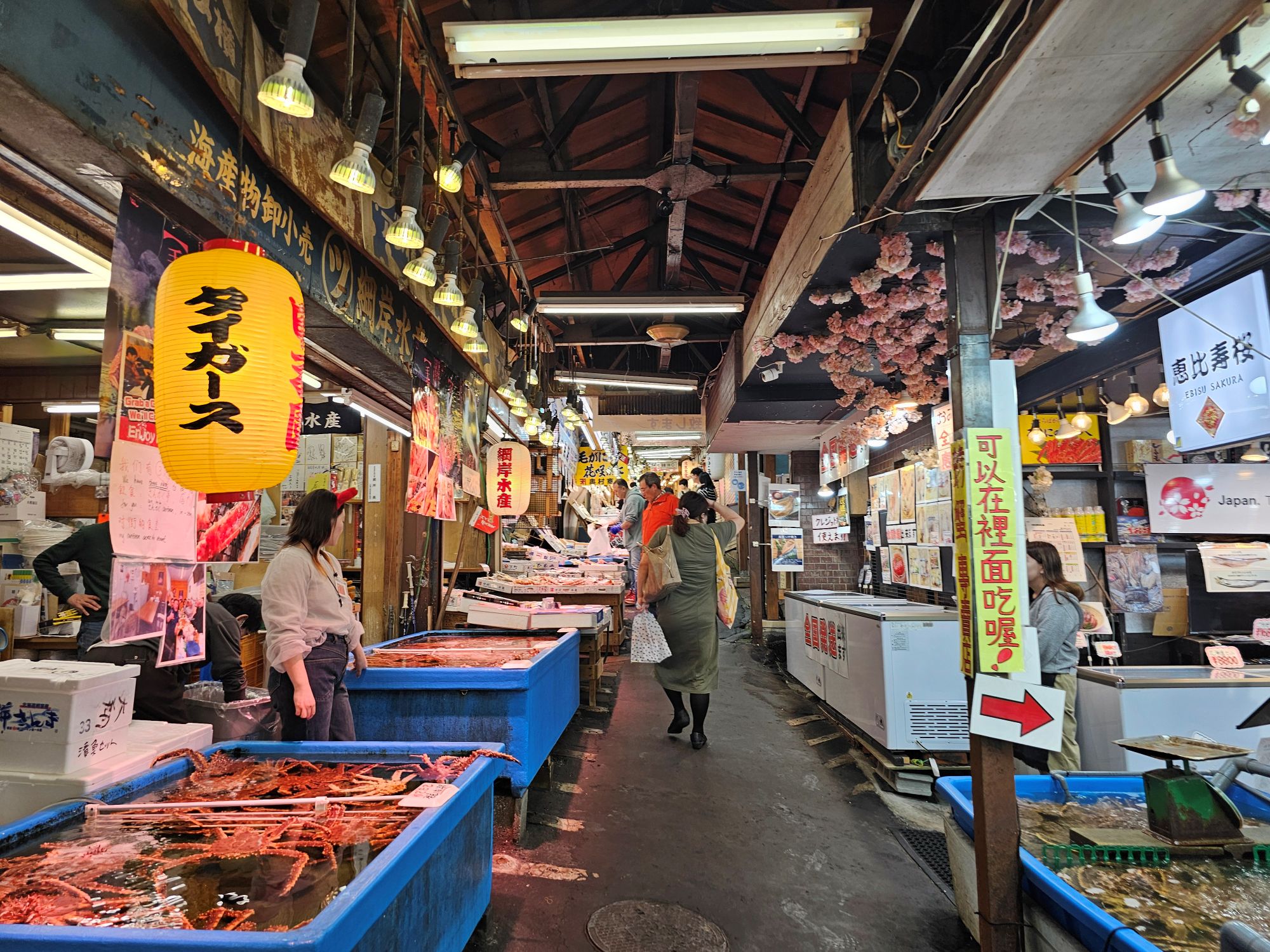
When visiting Otaru, most travelers immediately think of the romantic canals and European-style buildings that line the streets. But only a minute away from JR Otaru Station lies a very different side of the city—one that is vibrant, noisy, delicious, and deeply rooted in Hokkaido’s everyday life. This is the Otaru Sankaku Market, a compact but incredibly energetic seafood market where the colors, sounds, and aromas of Otaru come together in the most authentic way. It is a place where locals shop, tourists explore, and fishmongers proudly display the freshest catch of the morning. What makes this market special is not just the food—it’s the entire atmosphere, a mix of the old Showa-era warmth and Hokkaido’s coastal culture.
A Market with History and Heart
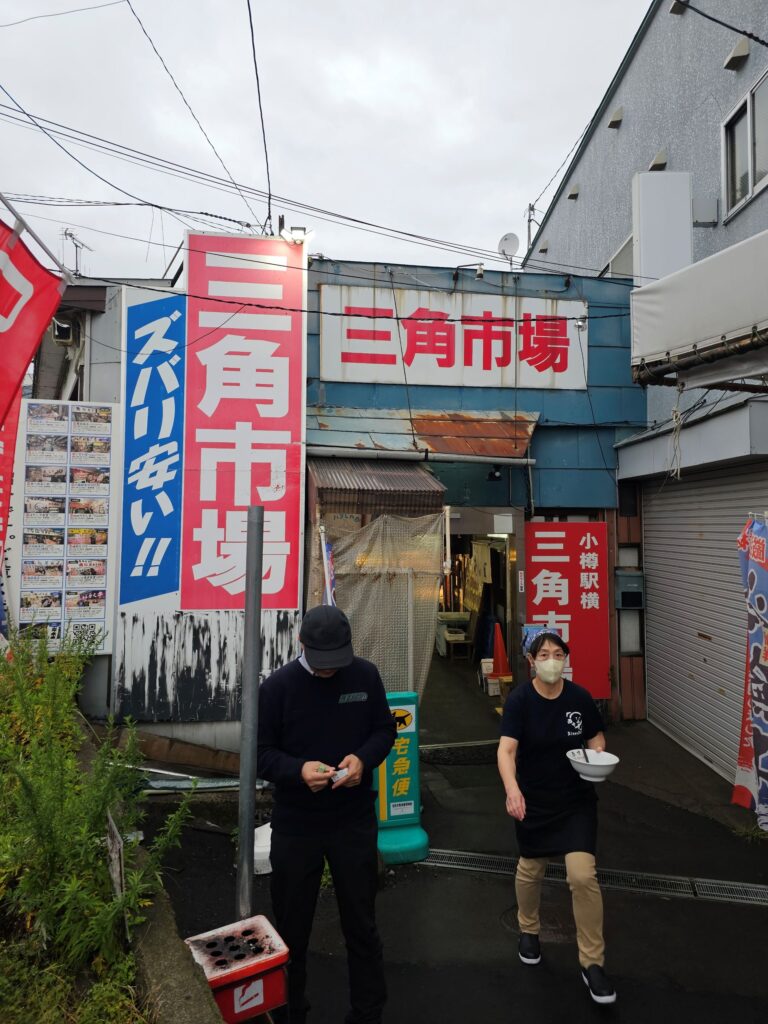
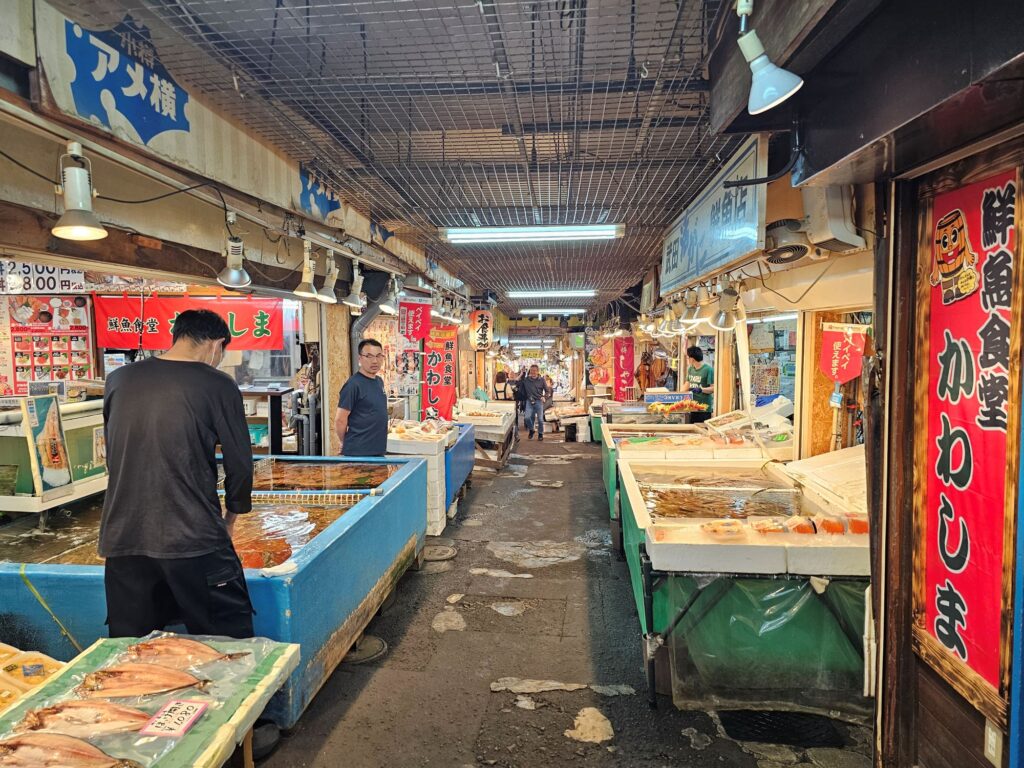
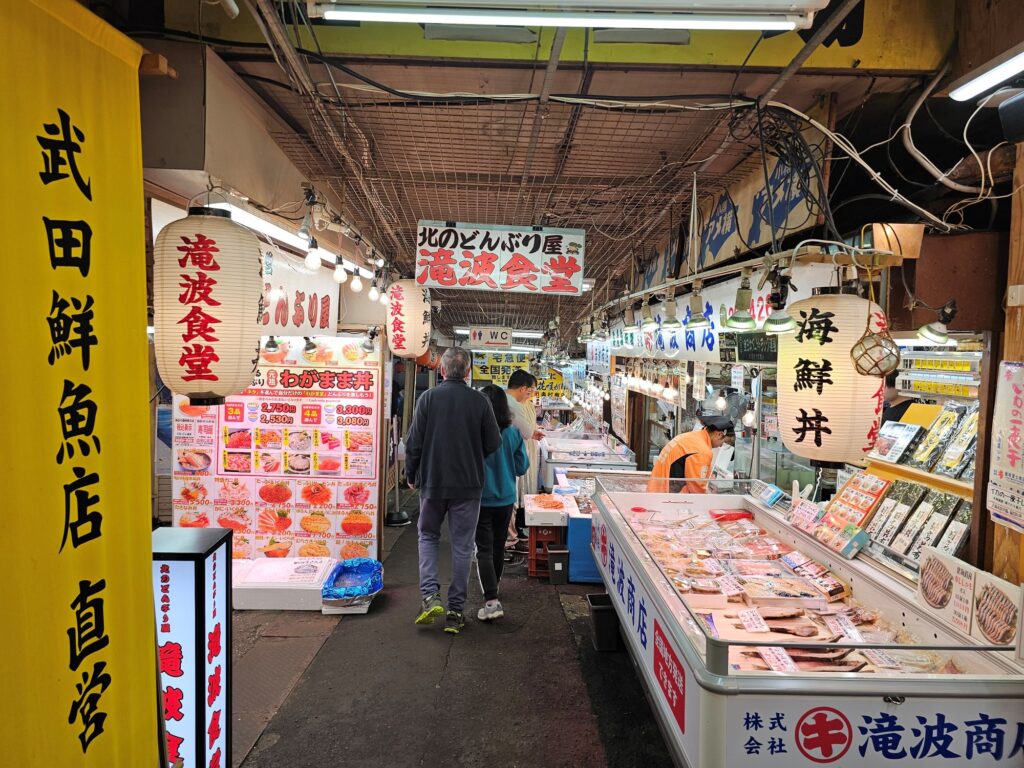
The origins of Sankaku Market date back to the late 1940s, when the area around Otaru Station first began to recover after the war. A few small stalls appeared along the triangular-shaped land near the railway, taking advantage of its position as a busy transit hub. Over time, the stalls grew into permanent shops and eateries, eventually forming the market we see today. Despite being modest in size—just about 200 meters in total length with narrow lanes barely wide enough for two people to pass comfortably—the market packs in an impressive variety of seafood, produce, and traditional Japanese grocery items.
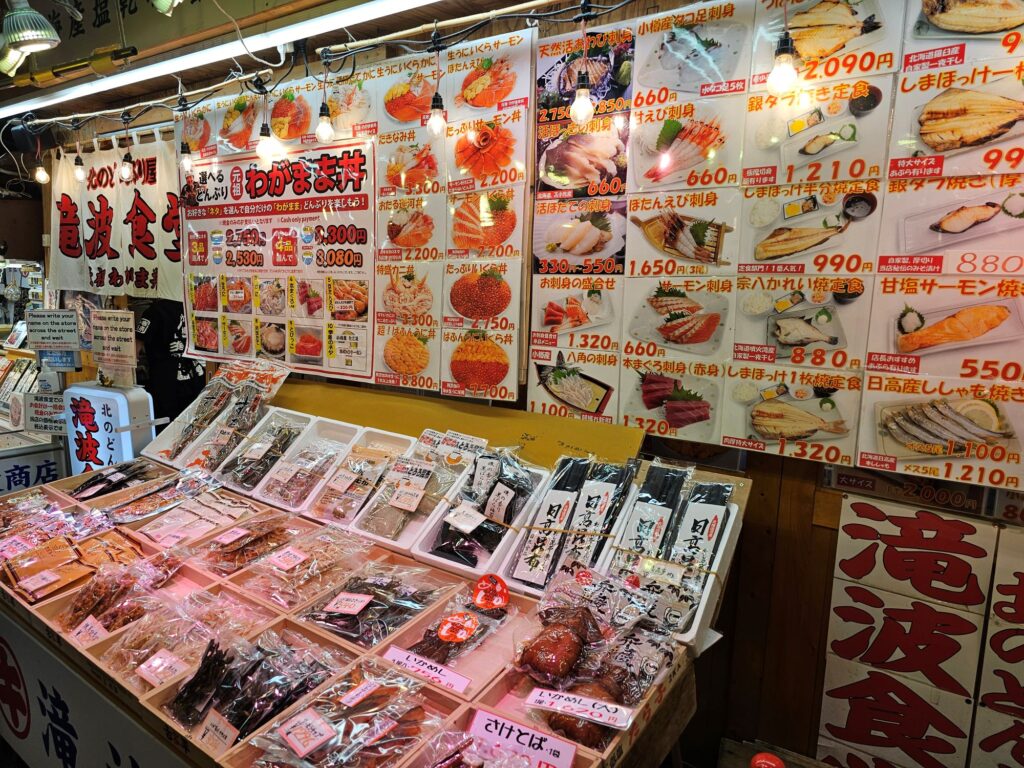
What’s charming about the market is how unchanged it feels. Old-fashioned signboards, handwritten price tags, low ceilings, and friendly banter between shopkeepers and visitors give the market a nostalgic Showa-era vibe. The “triangle” shape of the original marketplace gave rise to the name Sankaku, and although parts of the market have been renovated, the layout and humble charm remain intact. It feels like a place where time has slowed down just enough to preserve the warmth of earlier decades.
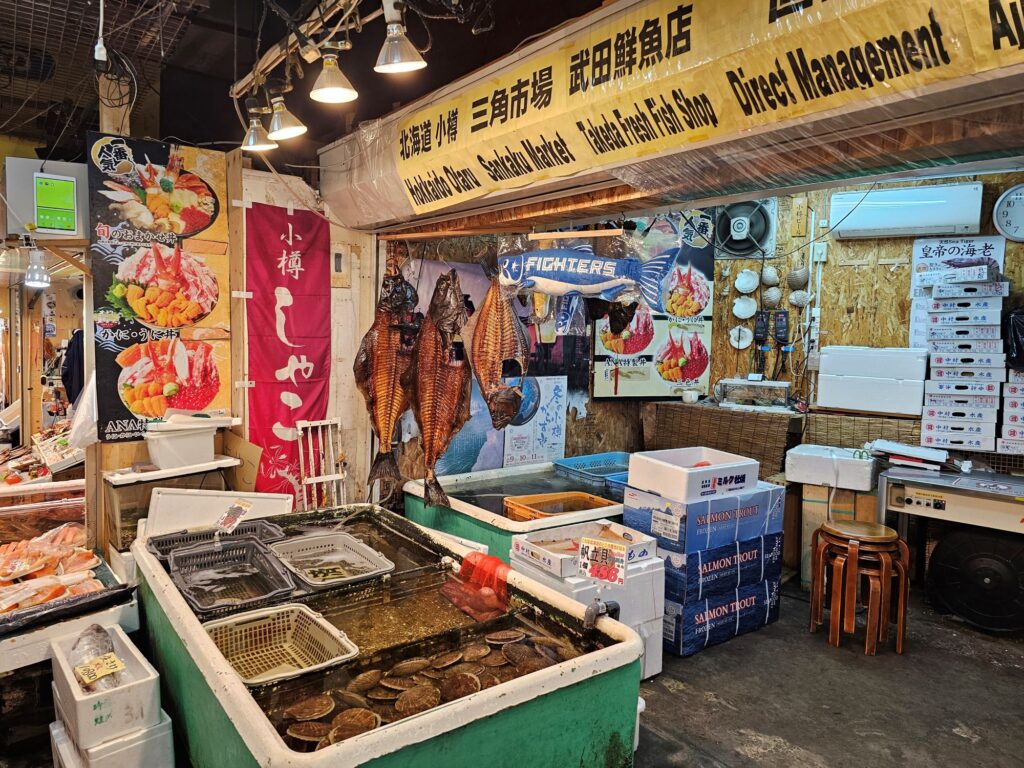
First Impressions: A Burst of Color, Aroma, and Liveliness
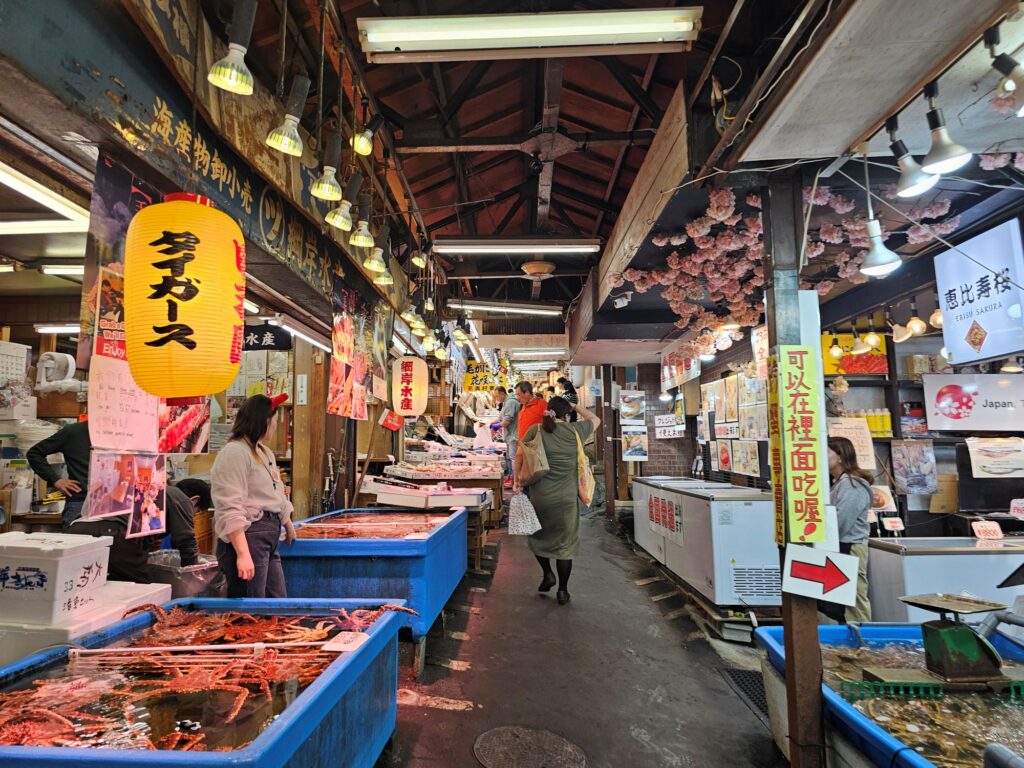
Stepping into the market is like entering another world. The entrance is small, but the moment you cross it, everything becomes more vivid: the deep red of king crabs stacked in tall coolers, the glistening orange pearls of ikura, the creamy yellow of uni piled high in wooden trays. Fishmongers call out in bright voices, promoting their freshest items of the day. The unmistakable scent of the sea lingers in the air—fresh but never overwhelming—because the seafood truly is that fresh.
The aisles are narrow, so you often have to walk single-file or gently squeeze past other visitors, but that’s part of the charm. It doesn’t feel cramped; instead, it feels intimate, like being welcomed into the daily routines of local merchants. The overhead lights reflect off the fish scales and ice, making everything sparkle in its own rustic way. Every few meters, you’ll hear different accents—Japanese locals asking for recommendations, Korean tourists discussing which donburi to try, and travelers from around the world taking photos of enormous crabs they’ve never seen before.
It’s chaotic in the best way possible—full of life, full of movement, and full of the sounds that define a real market.
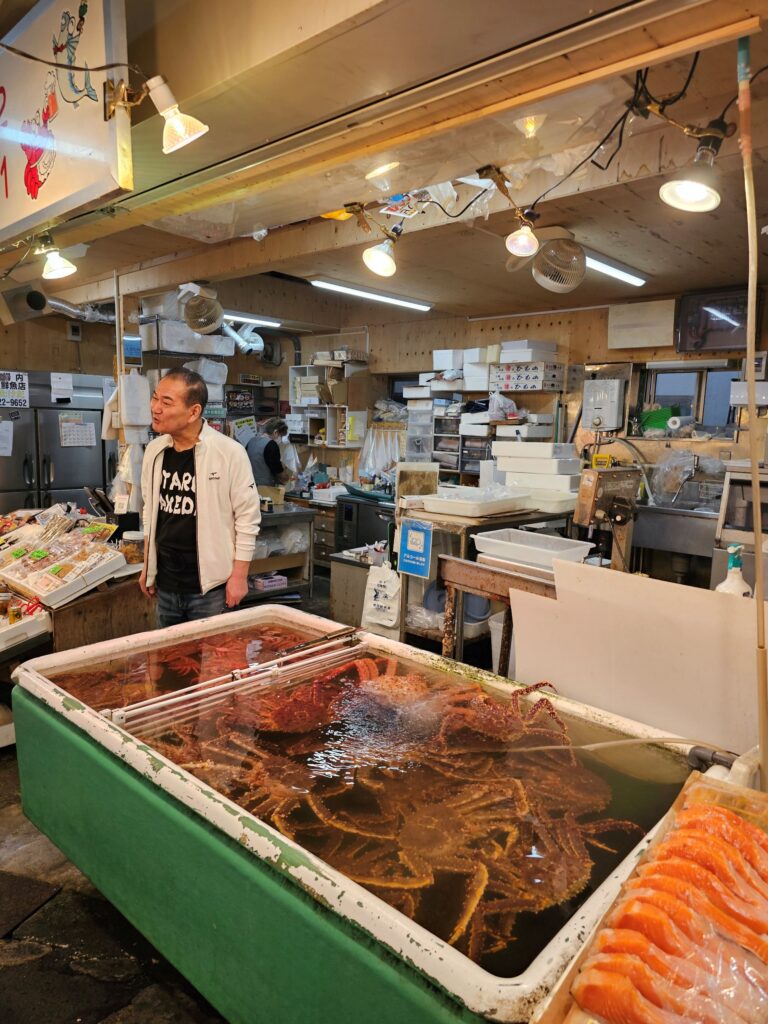
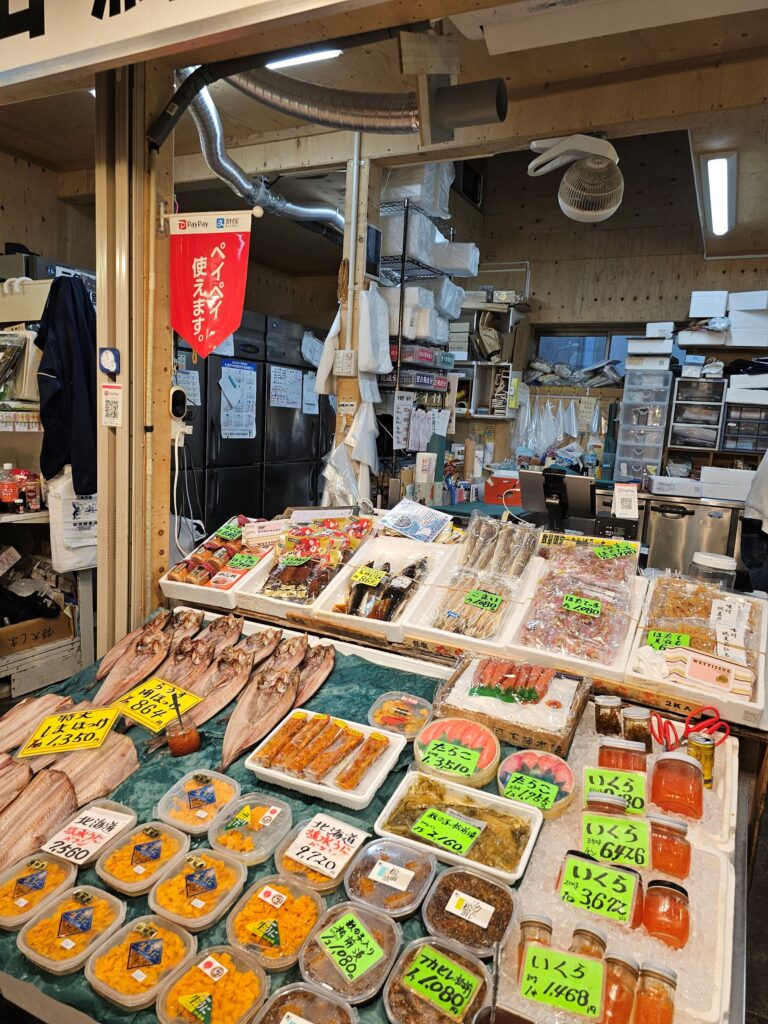
The Seafood Temptations: Endless Choices for Every Taste
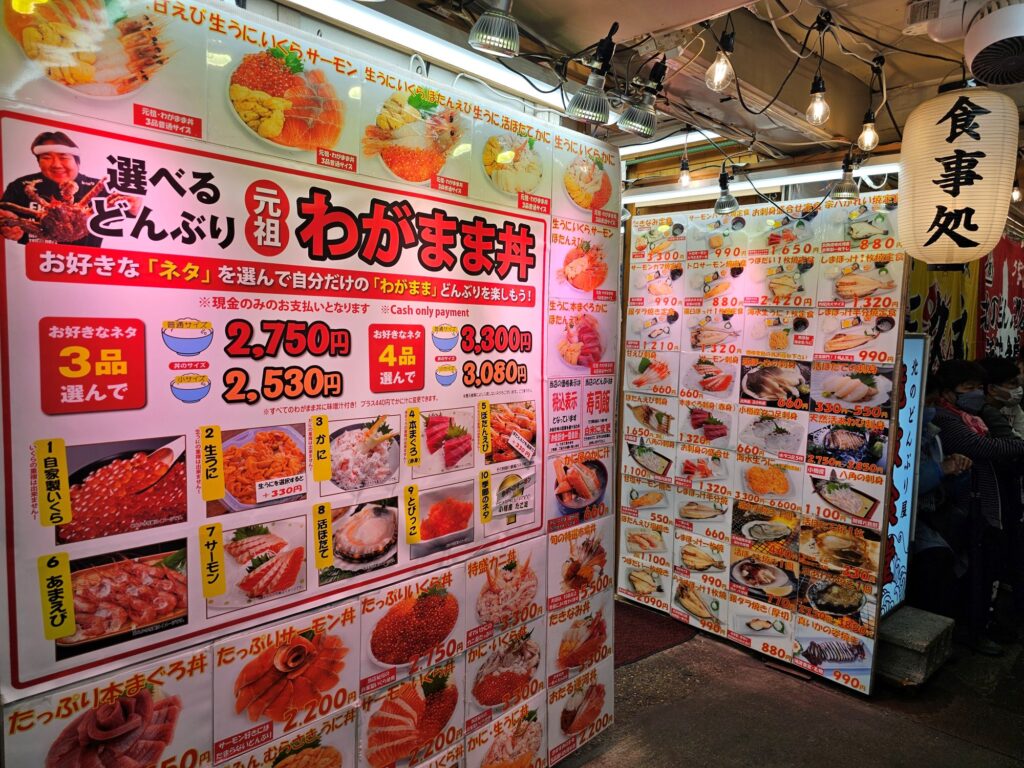
One of the biggest reasons people visit Sankaku Market is the seafood donburi, and the choices feel endless. Nearly every eatery offers bowls topped with uni, ikura, crab, scallops, salmon, shrimp, or a luxurious combination of all of them. The seafood is often prepared on the spot, and at some stores, you can pick your ingredients directly from the display cases.
Uni & Ikura Bowls
Hokkaido is famous for its uni and ikura, and Sankaku Market serves some of the freshest you’ll find. The uni is creamy and rich, almost buttery, melting instantly when it touches your tongue. The ikura bursts with a gentle, salty sweetness that pairs perfectly with warm rice.
Grilled Seafood
While donburi bowls are the highlight, many stalls offer grilled options:
- thick Hokkaido scallops grilled with soy sauce
- freshly cut salmon slices
- buttery crab legs lightly torched for aroma
The smell alone will pull you toward the nearest seat.
Whole Crabs to Bring Home
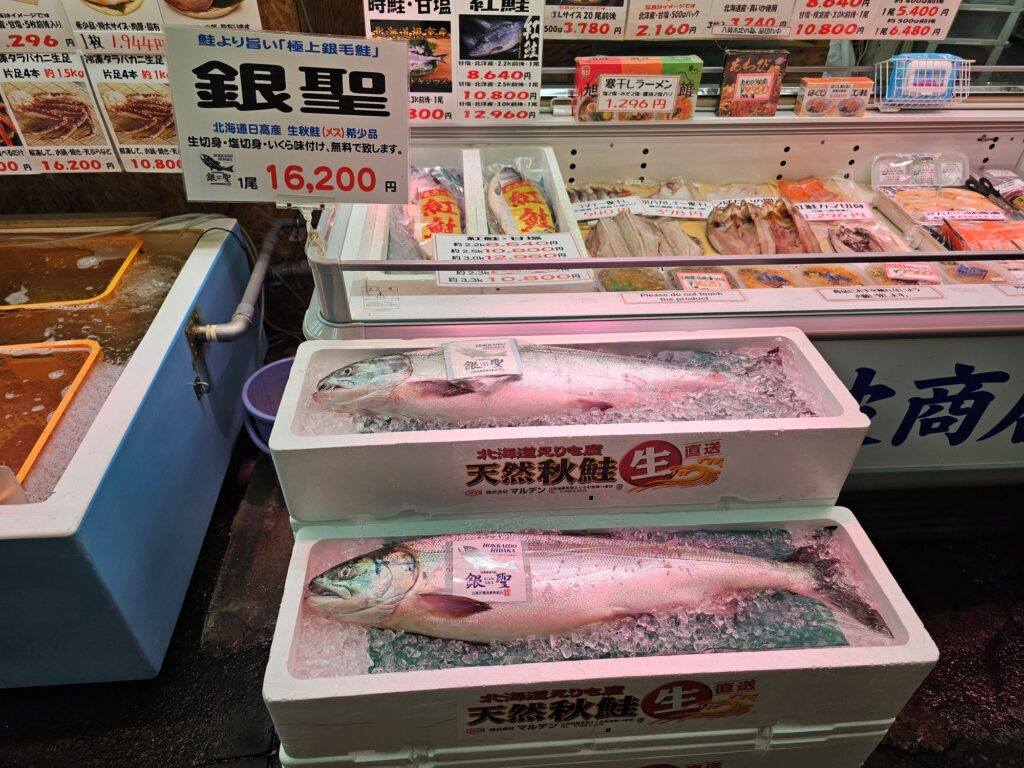
The king crabs on display are massive and impressive, often positioned right at the front of each shop. Many visitors buy them to take home or have them shipped to other parts of Japan. Shopkeepers will gladly guide you through the best choices depending on season and budget.
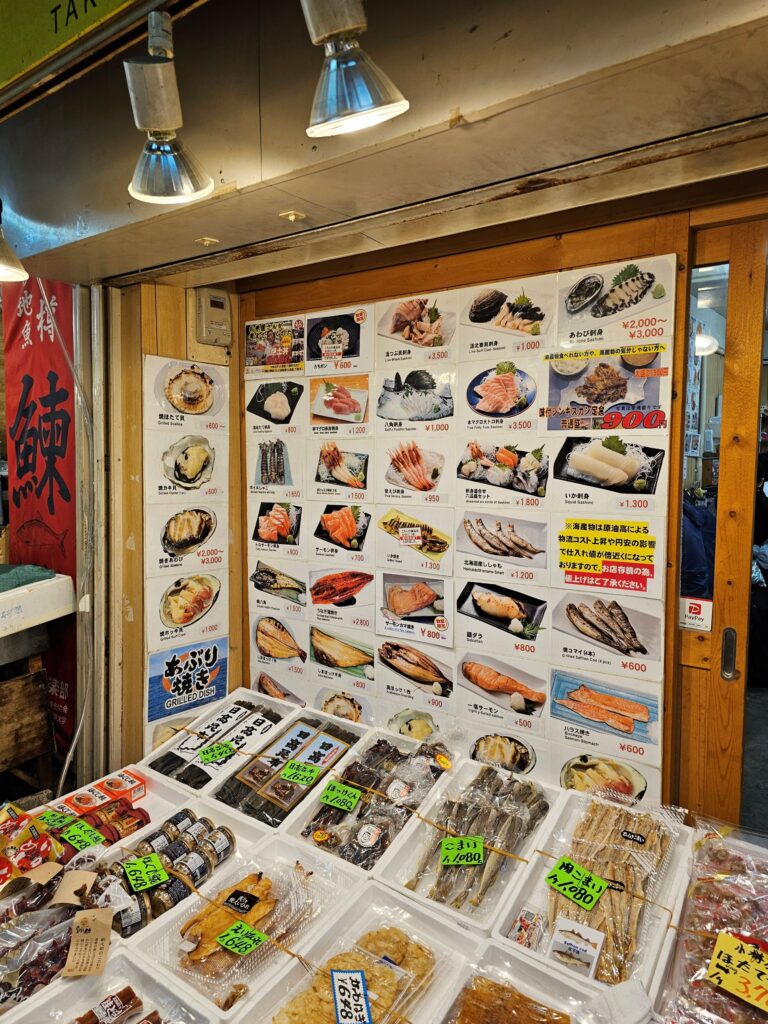
Dining Inside the Market: Small, Cozy, Authentic
The eateries inside Sankaku Market are small—usually only a few seats at a counter or a couple of tiny tables. But this intimacy adds to the experience. Sitting down inside the market, with fishmongers calling out meters away and the sounds of chopping, stirring, and grilling echoing around you, feels dramatically different from dining in a typical restaurant. It’s raw, real, and full of charm.
The menus are often displayed on the walls with colorful photos, making it easy to order even if you don’t speak Japanese. And despite the small size, the service is friendly and efficient. Many shop owners have been running their stalls for decades, and they take pride in helping visitors enjoy their signature dishes.
Personal Experience: Wandering, Tasting, and Enjoying the Market
When I visited Sankaku Market, I arrived early in the morning, just as the shops were beginning to open. The air felt crisp, and the seafood displays were still being arranged. I could still see ice being poured into trays, crates being opened, and vendors chatting with each other as they prepared for the day.
I ordered a seafood donburi bowl topped with uni and ikura. The uni was unbelievably smooth, and the ikura had that perfect pop that only fresh roe can deliver. The rice underneath held the warmth just long enough to blend beautifully with the toppings. Eating this while surrounded by the sounds of the market made the meal even more enjoyable.
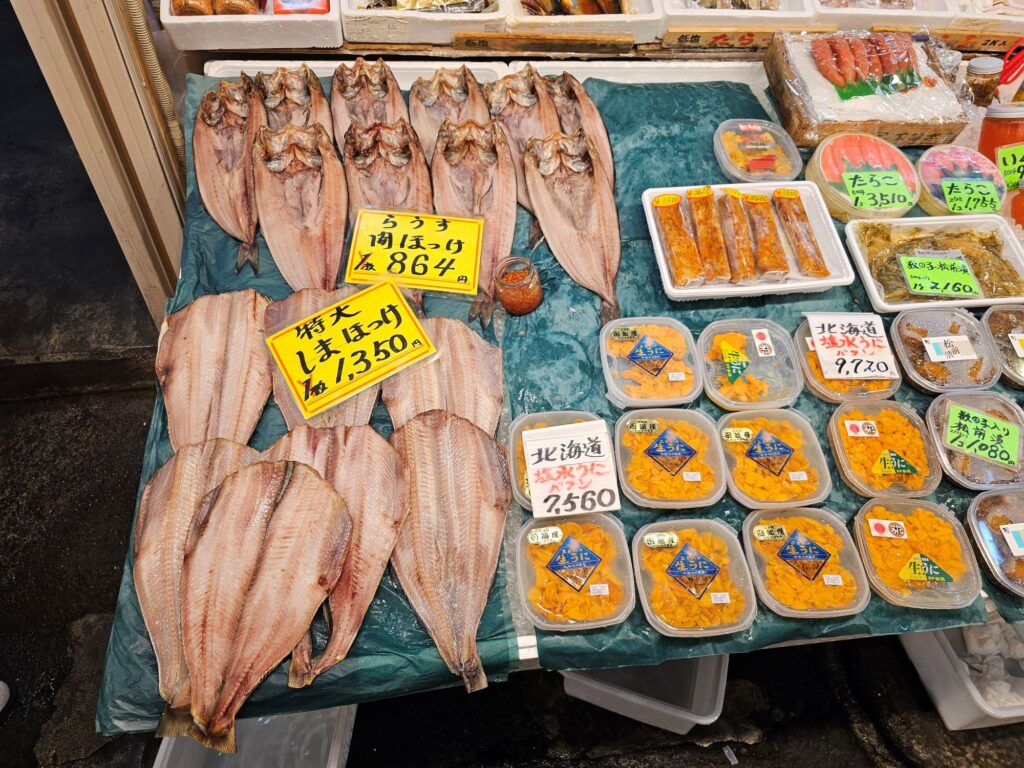
After finishing my bowl, I walked through the aisles again, this time more leisurely. I stopped at a store selling dried seafood and picked up some scallops as souvenirs. The shopkeeper kindly explained which ones were best for gifting and how to store them. Another vendor offered a quick taste of his pickled salmon—sharp, fresh, and full of flavor.
Every interaction felt warm and welcoming.
Tips for Visiting
- Go early: You’ll get the freshest picks and fewer crowds.
- Bring cash: Some shops accept cards, but cash is still the easiest method.
- If buying seafood to take home, ask about shipping—they’ll pack it professionally.
- Plan for at least 1 hour, more if you intend to eat a full meal.
- Look for the signature dishes: uni–ikura donburi, grilled scallops, fresh crab.
Why Otaru Sankaku Market Is Worth Visiting
Sankaku Market delivers something that you can’t find in large, commercialized fish markets. It’s small but bursting with personality. It’s simple but full of heart. The seafood is unmatched, the atmosphere is vibrant, and the people who work there add genuine warmth to the experience. Whether you’re a passionate seafood lover or simply curious about local life in Hokkaido, this market is one of the must-visit places in Otaru.
Practical Information
Name: Otaru Sankaku Market (小樽三角市場)
Address: 稲穂3丁目10, Otaru, Hokkaido 047-0032
Access: 1–2 minutes on foot from JR Otaru Station
Hours: Vary by shop, but many open from early morning
What to Expect: Fresh seafood, donburi restaurants, dried seafood shops, local grocery stalls
Otaru Canal & Otaru Beer Warehouse No.1: A Journey Through Hokkaido’s Nostalgic Port
LeTAO Main Store in Otaru: The Sweetest Landmark of Hokkaido