
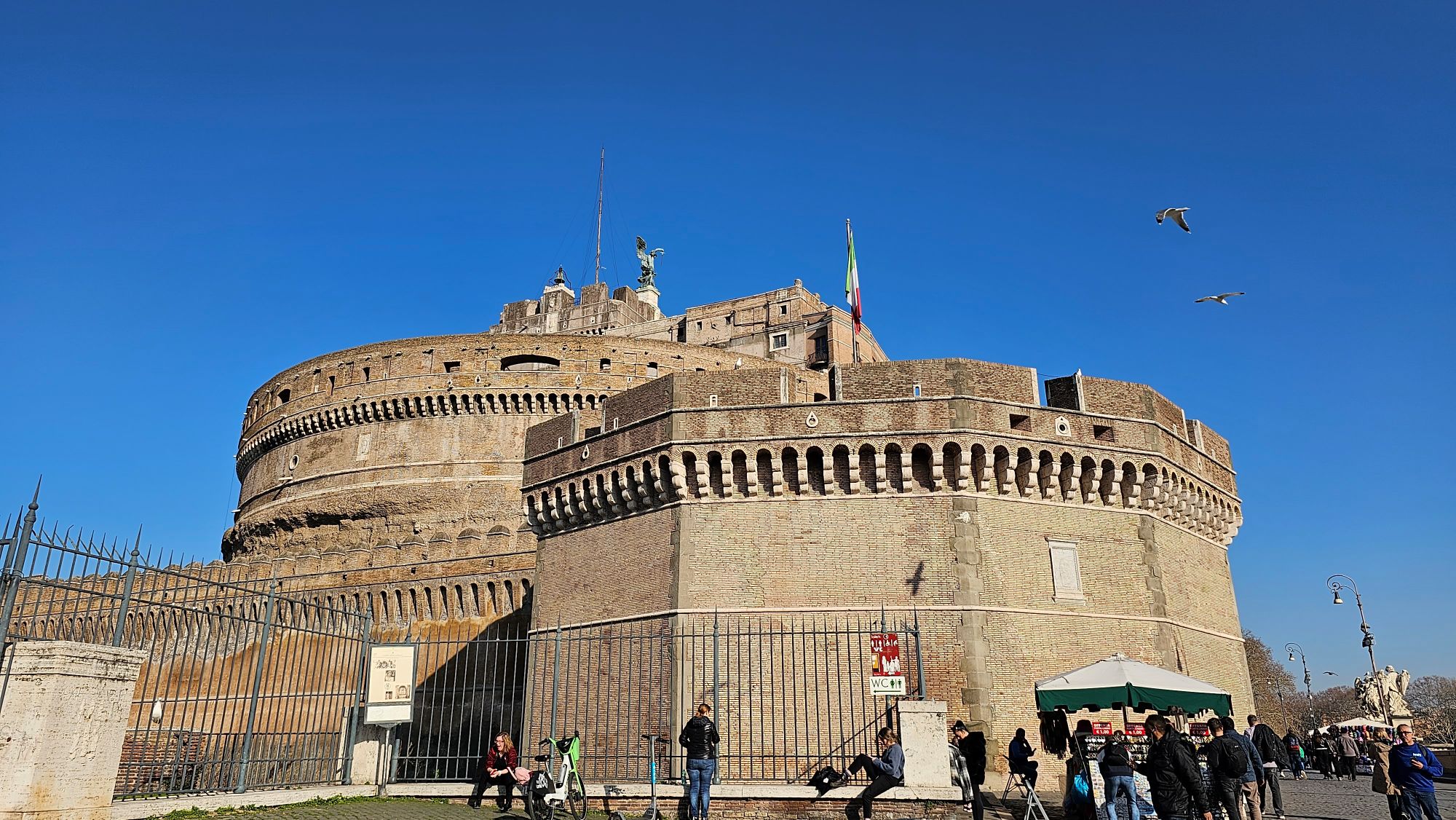
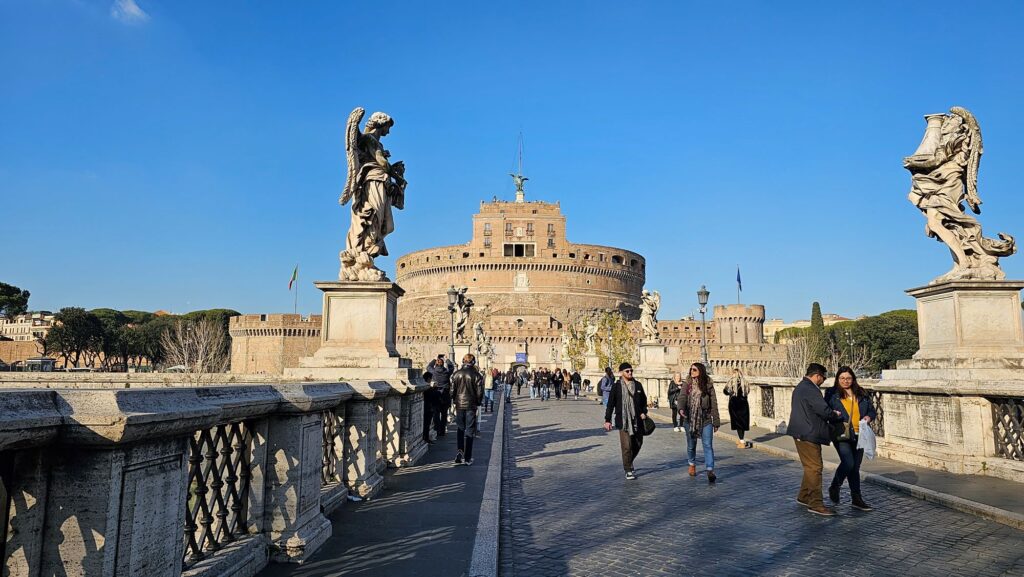
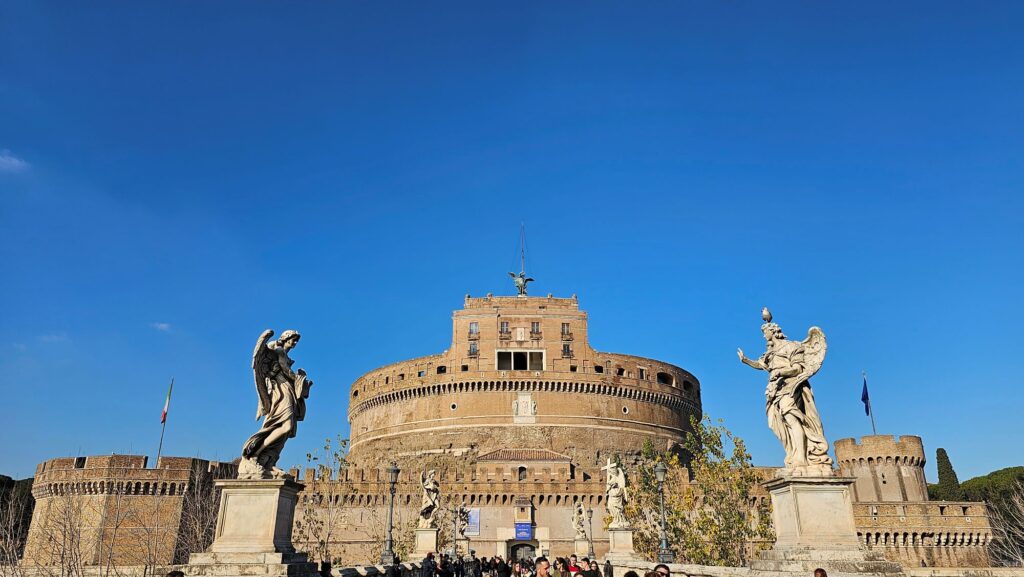
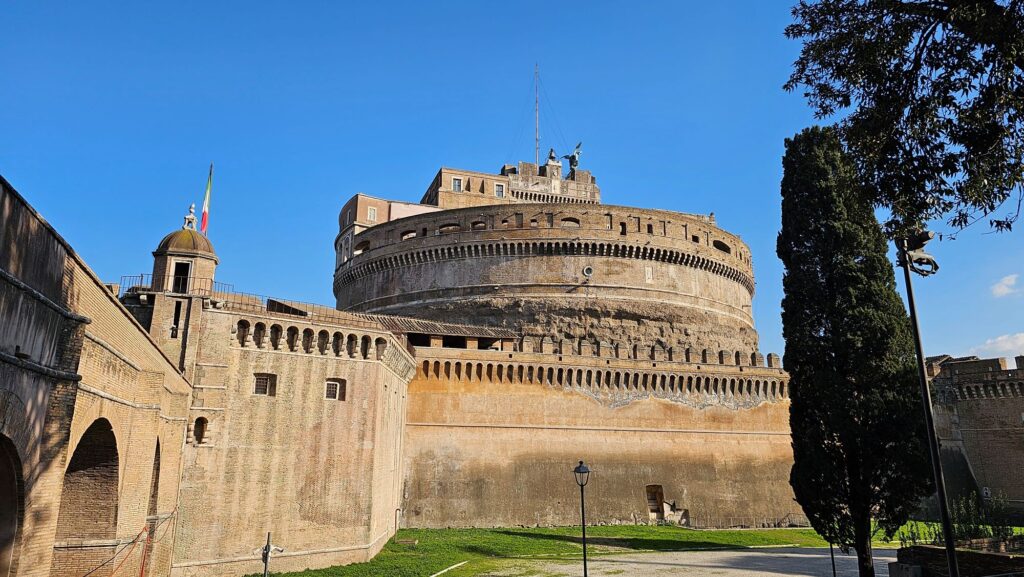
There are few monuments in Rome that encapsulate the city’s layered history as vividly as Castel Sant’Angelo, a structure that has evolved from imperial mausoleum to papal fortress, from prison to palace, and now stands as one of the Eternal City’s most captivating museums. Rising beside the Tiber River and facing the elegant Ponte Sant’Angelo, the castle is a symbol of Rome’s ability to reinvent itself across centuries. On the outside, its massive circular shape hints at defensive might, but once inside, you discover an extraordinary labyrinth of ramps, courtyards, frescoed rooms, secret corridors, and breathtaking terraces—all carrying stories that span almost 2,000 years.
The Beginning: Hadrian’s Vision for Eternal Rest
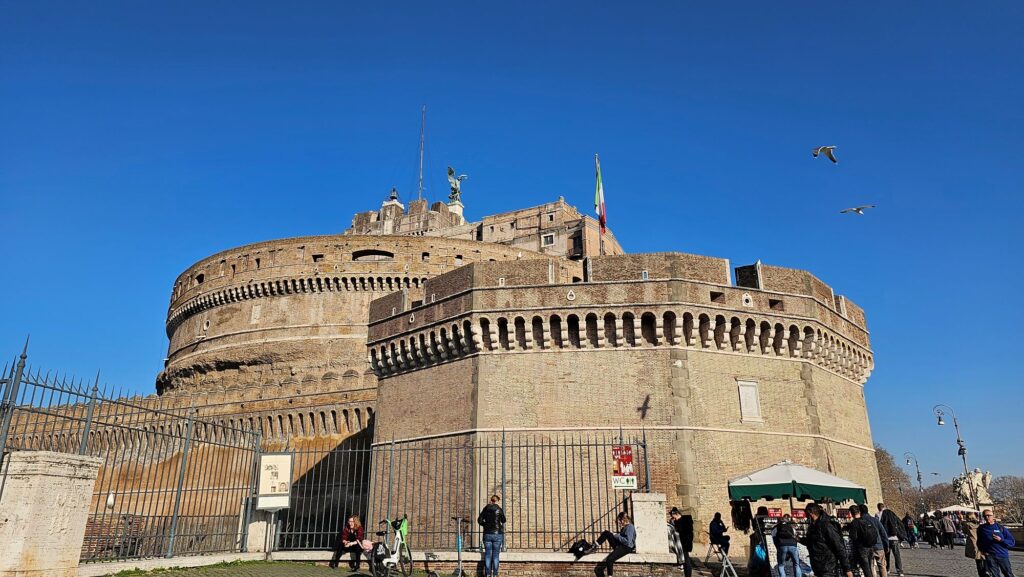
Castel Sant’Angelo was originally constructed as the mausoleum of Emperor Hadrian, one of the most culturally minded leaders of ancient Rome. Between AD 135 and 139, Hadrian ordered a monumental tomb for himself and his successors—a circular design inspired by the Mausoleum of Augustus yet grander, heavier, and more imposing. In its original state, the mausoleum was astonishingly elegant: marble-clad walls, decorative friezes, massive columns, and a bronze quadriga statue crowning the structure.
It was not merely a burial site but a statement of imperial authority and the Roman belief in eternal remembrance. Several emperors were laid to rest here, including Hadrian and Antoninus Pius, until the decline of the empire turned this once-sacred mausoleum into a structure better suited for defense.
From Tomb to Fortress: A Shift Driven by Turbulent Times
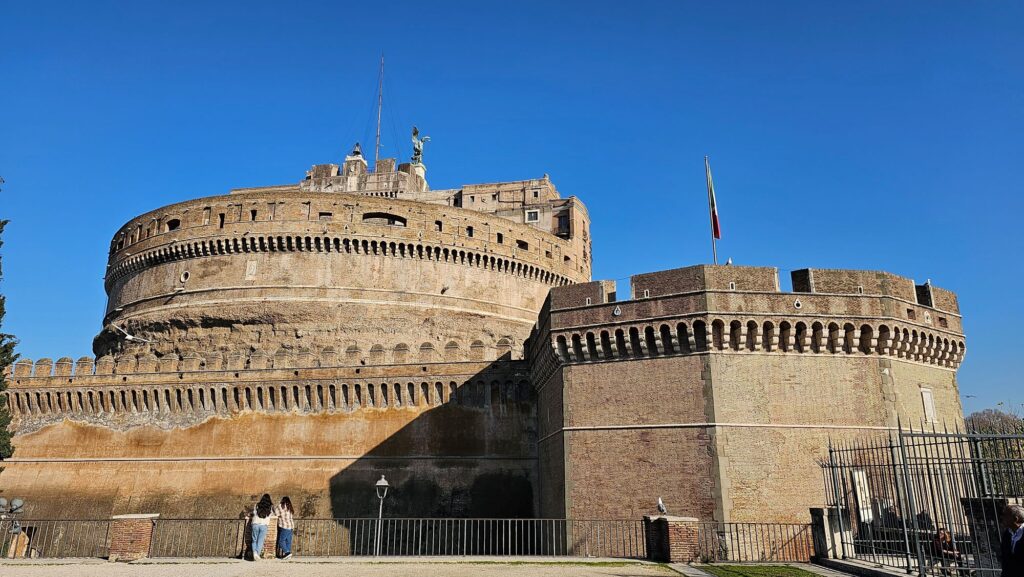
By the 5th century, Rome faced repeated invasions and political chaos. As the city’s defensive needs grew, Hadrian’s mausoleum—situated strategically by the river—became a natural military outpost. The elegant decorations were stripped away, replaced with thick stone walls, battlements, and arrow slits. Its circular design, originally intended as a peaceful resting place, now served perfectly as a defensive fortification.
Over the centuries, popes reinforced the structure even further. Castel Sant’Angelo eventually became part of the city’s defensive perimeter, integrated into the Vatican’s security network. When you walk through its sloped military ramp today—one of the castle’s most atmospheric features—you can visualize medieval soldiers carrying weapons upward, preparing for sieges or guarding the popes.
The Papal Stronghold: Refuge in Times of Danger
One of the most intriguing aspects of Castel Sant’Angelo is its deep connection to the Vatican. In the 13th century, Pope Nicholas III built the Passetto di Borgo, a raised secret passageway linking the Vatican directly to the castle. Measuring roughly 800 meters, this corridor allowed popes to flee from danger in complete secrecy.
This passage became crucial during several dramatic moments, most famously in 1527, when the Sack of Rome devastated the city. Pope Clement VII escaped to Castel Sant’Angelo through the Passetto as imperial troops stormed through the streets. The fortress walls protected him for weeks, while much of Rome was destroyed.
When you walk through the papal apartments inside the castle, you see surprisingly ornate rooms: Renaissance paintings, lavish fireplaces, gilded ceilings, and papal symbols. It’s surreal to stand in such refined chambers, knowing that just outside these rooms lie stone corridors, cells, and military walkways. The contrast reveals the dual purpose of Castel Sant’Angelo—luxury and fear intertwined in the same walls.
The Dark Side: Prison, Torture, and Political Intrigue
Despite its beauty, Castel Sant’Angelo also carries a heavy, somber history. For centuries, it served as one of the most feared prisons in Rome. Many political opponents, intellectuals, and heretics were imprisoned in the damp, windowless cells that still exist today.
Some notable stories include:
- Giordano Bruno, the philosopher, was imprisoned here before his execution.
- Benvenuto Cellini, the Renaissance sculptor, famously escaped the castle—an event dramatized in his memoirs.
- Prisoners were often interrogated in small torture chambers, and executions were publicly performed in the nearby square.
This darker dimension of the castle adds emotional weight as you walk through the narrow cells and cold stone rooms. It’s impossible not to imagine the pain, fear, and human stories embedded in these walls.
The Legend of the Archangel Michael
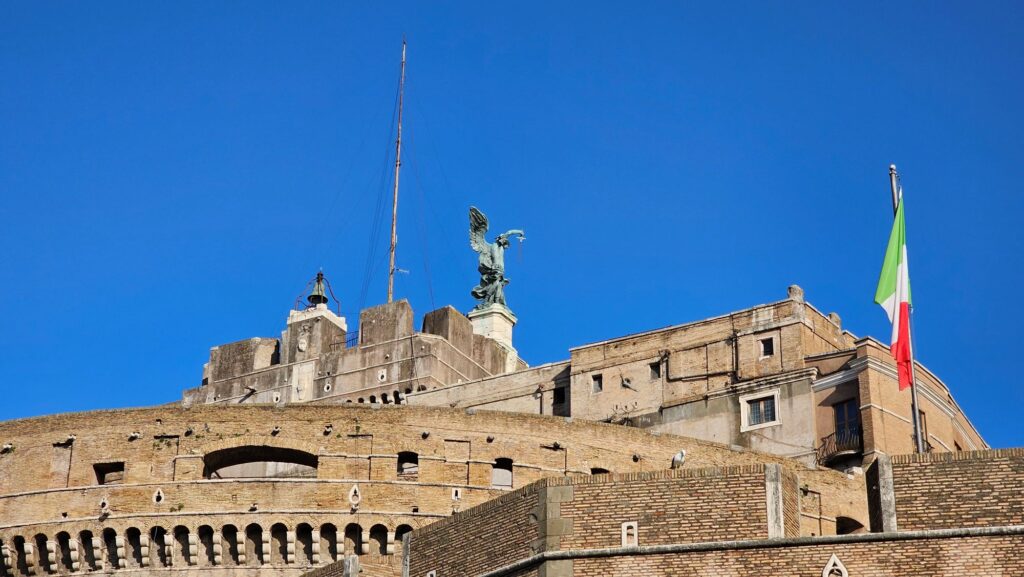
The name “Castel Sant’Angelo” comes from a dramatic legend dating back to AD 590, when Rome was ravaged by a deadly plague. According to tradition, Pope Gregory the Great led a solemn procession through the city, praying for divine intervention. As the procession reached Hadrian’s Mausoleum, the pope witnessed a vision of the Archangel Michael appearing above the structure, sheathing his sword to signal the end of the plague.
The sighting was taken as a divine message, and the building became associated with angelic protection. A series of angel statues have crowned the castle ever since. The current bronze statue, created in 1753, stands powerfully atop the terrace—its wings spread, its sword lowered, and its gaze directed toward the city. Seeing the statue up close feels almost mystical, especially against the Roman sky.
Wandering Through the Castle: A Multi-Layered Experience
One of the joys of exploring Castel Sant’Angelo is how each level reveals a different historical identity. The visit unfolds almost like a film, each section giving you a sudden shift in atmosphere and perspective.
The Military Ramps
A spiraling, steep walkway leads from the lower levels to the upper floors. Originally designed for transporting the emperor’s ashes, it later became an access point for soldiers. The dim lighting and echoing footsteps make the journey feel mysterious and ancient.
Courtyards and Cannon Terraces
As you ascend, you pass through open areas with cannons, artillery platforms, and views of the Tiber. These terraces remind you of the structure’s centuries-long role as the city’s defensive backbone.
Papal Apartments
The most surprising part of the castle is the lavish papal rooms. Frescoes depicting mythological scenes, vibrant Renaissance colors, and intricately carved ceilings create a dazzling contrast with the rough stone corridors outside. You feel as if you’ve stepped into a palatial residence rather than a fortress.
The Angel Terrace
The highlight of the entire visit is the panoramic terrace. From here, Rome reveals itself in breathtaking 360-degree views:
- St. Peter’s Basilica appears close enough to touch
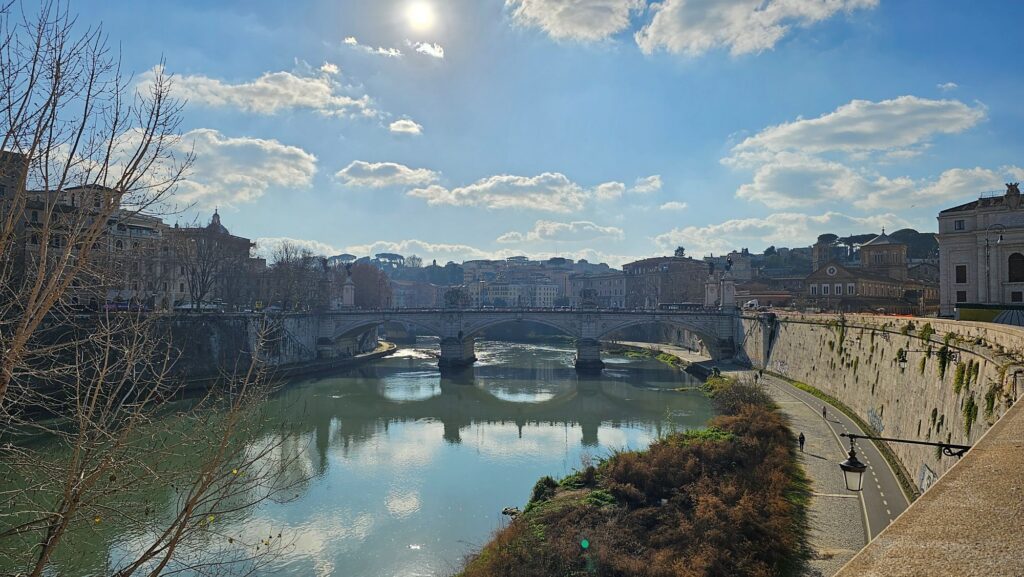
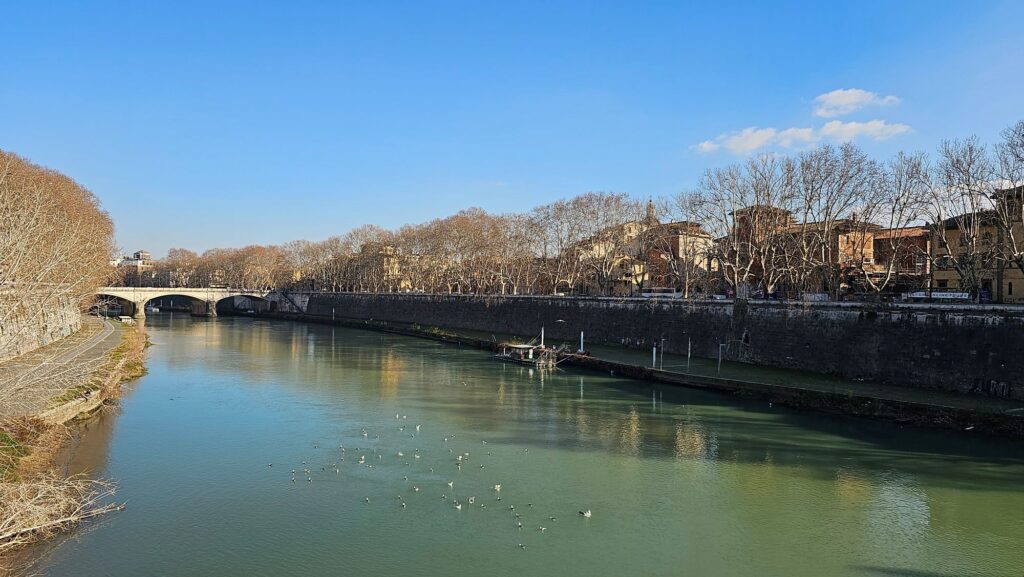
- The curve of the Tiber River glitters below
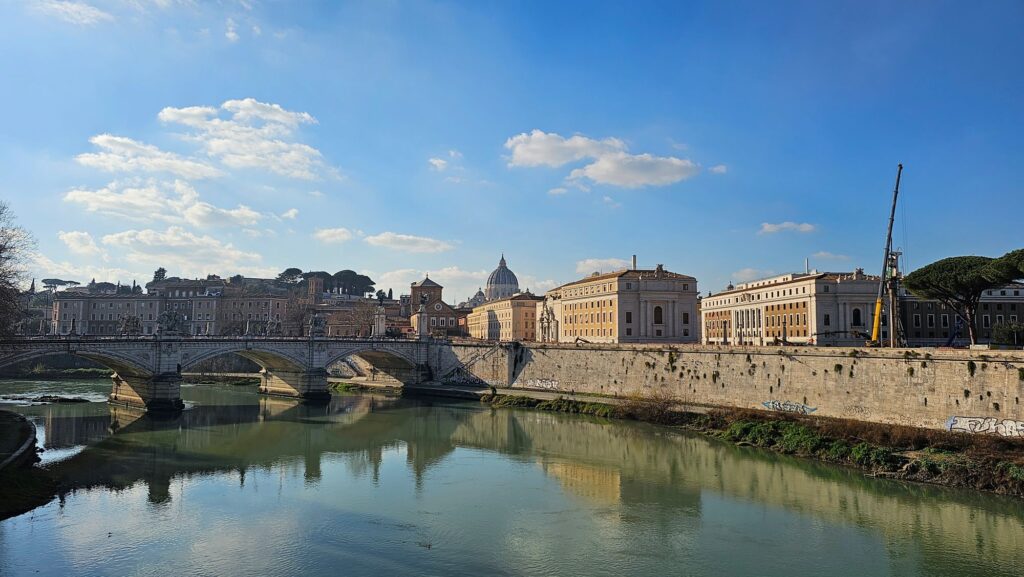
- Ponte Sant’Angelo aligns gracefully with the water
- Dome after dome stretches across the skyline
- The rooftops of Rome glow golden in late afternoon light
Sunset on this terrace is one of the most magical experiences in the city.
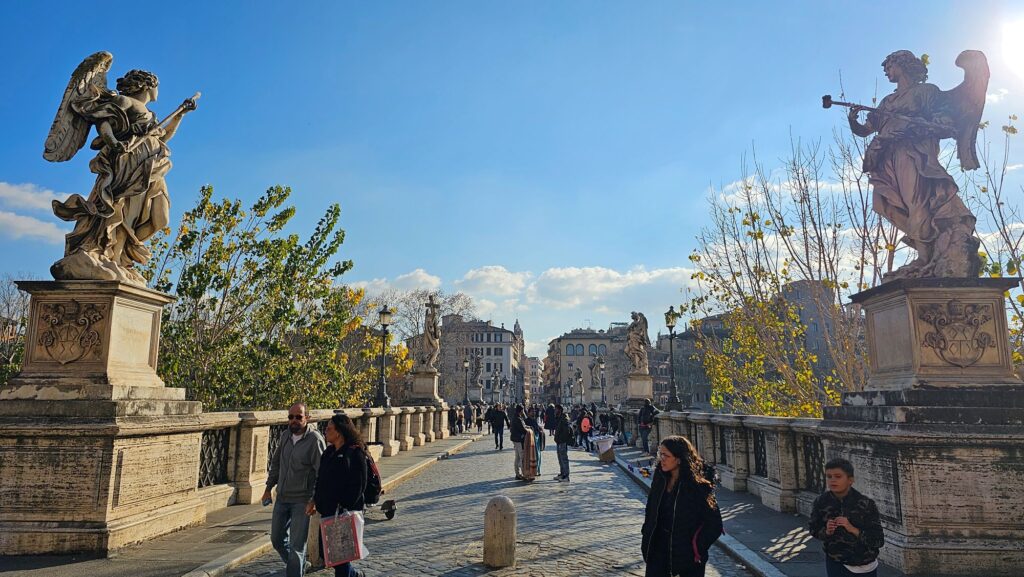
Ponte Sant’Angelo: The Bridge of Angels
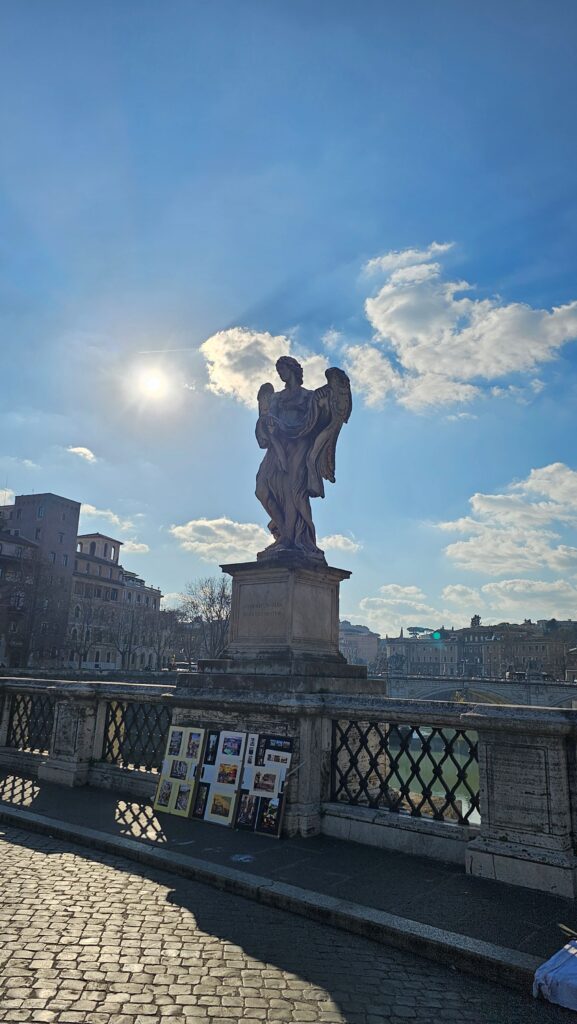
Approaching the castle means crossing the stunning Ponte Sant’Angelo, originally built by Hadrian. Today the bridge is decorated with ten angel statues, each holding a symbol of Christ’s Passion. Designed by Bernini and sculpted by his students, these angels bring elegance and spirituality to the walkway.
The bridge is especially beautiful during early morning and evening hours, when the light reflects on the river and the statues cast long shadows. Many visitors spend as much time admiring the bridge as they do exploring the castle itself.
Tips for Visiting
- Go early or late afternoon for fewer crowds.
- Sunset offers extraordinary photos from the terrace.
- Wear comfortable shoes—lots of stairs and uneven stone floors.
- Visit the bridge both before and after the castle to capture different lighting.
- If possible, pair your visit with a walk toward St. Peter’s Basilica for a perfect half-day itinerary.
Practical Information
Name: Castel Sant’Angelo (Mausoleum of Hadrian)
Address: Lungotevere Castello, 50, 00193 Rome, Italy
Opening Hours: Approximately 9:00–19:30 (varies seasonally)
Ticket Price: Around €14
Nearest Metro: Lepanto or Ottaviano (Line A)
Best For: History lovers, architecture enthusiasts, panoramic photographers
Vatican Museums, Rome: A Journey Through Faith, Power, and Eternal Beauty
Pincian Hill, Rome: Where the Sunset Paints the Eternal City