
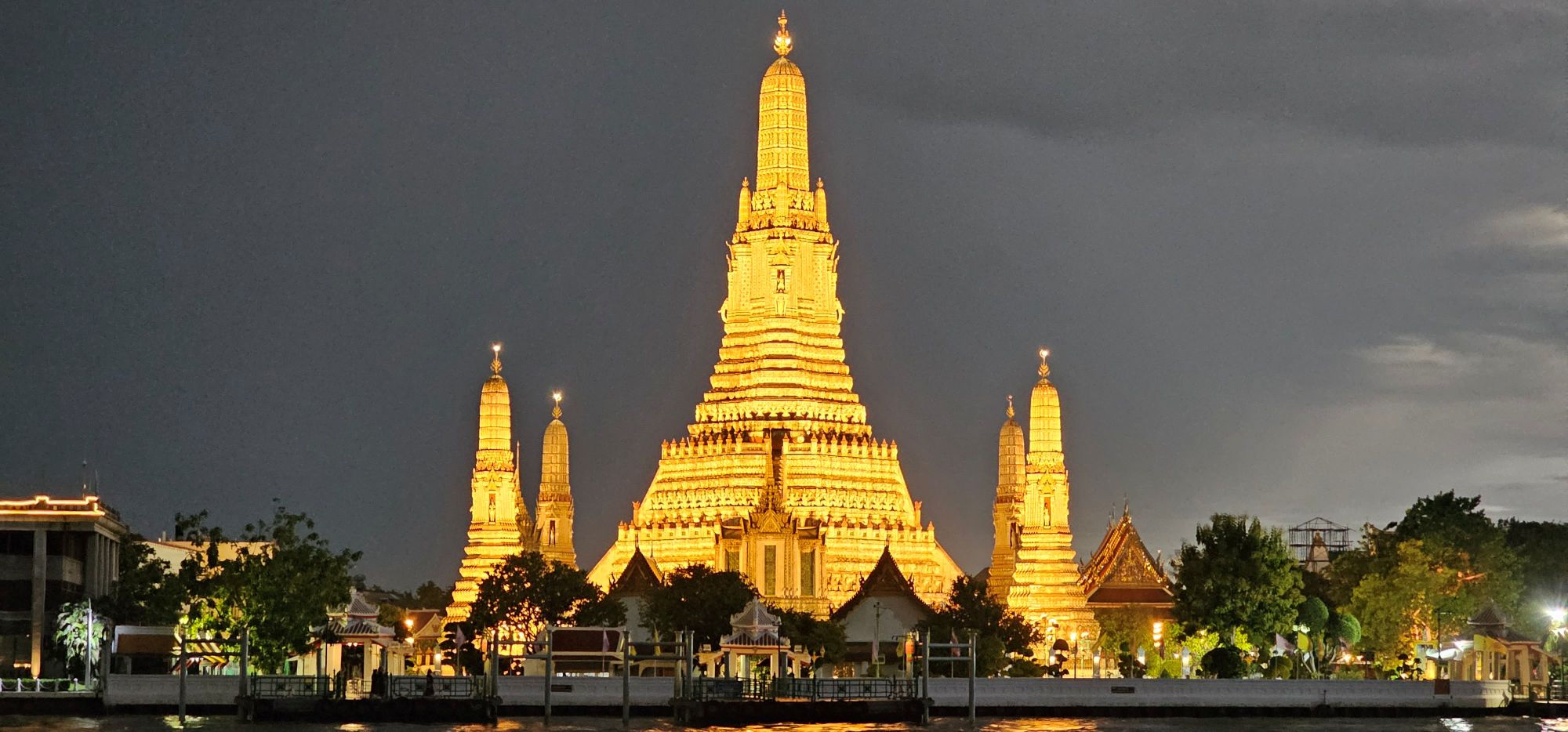
Bangkok is a city that operates on its own logic. The traffic moves in ways that shouldn’t work but somehow do. Street food served from a cart on a corner beats restaurants that took months to book. A massage that costs less than a coffee in most cities leaves you feeling better than anything a five-star spa in Europe has managed. I’ve been multiple times, staying in the Sukhumvit and Thong Lo area, and each visit has confirmed the same thing: Bangkok rewards people who stop trying to optimize it and just let the city happen.
This 5-day itinerary covers the temples and markets that deserve their reputation, the food culture that makes Bangkok one of the world’s great eating cities, and the massage and spa scene that has no real equivalent anywhere else. It also reflects how I actually spent my time here — which involved considerably more time in restaurants and on massage tables than in any guidebook would strictly recommend.
Before You Go: Quick Essentials
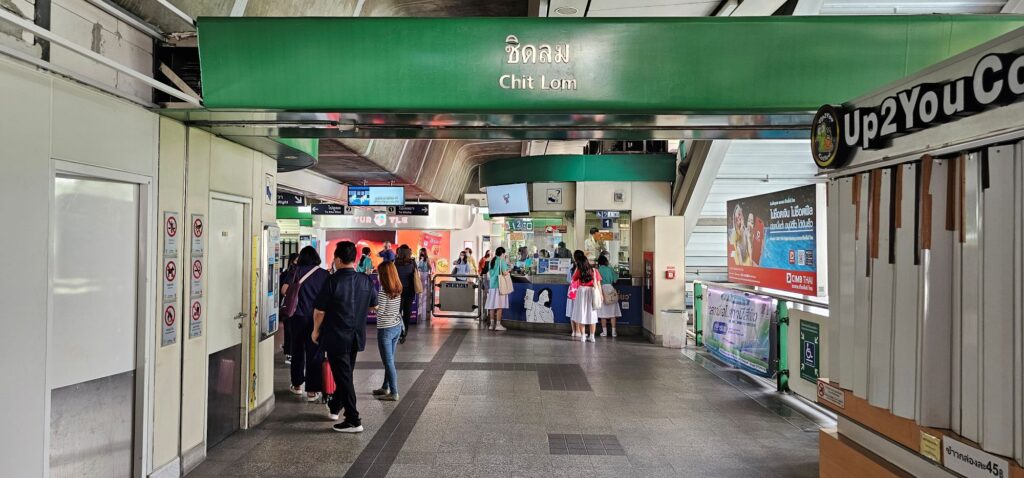
Getting around Bangkok Bangkok’s traffic is genuinely bad — legendarily, consistently, at-all-hours bad. The single most important transport decision you’ll make is staying close to the BTS Skytrain or MRT Metro lines and using them as your primary transport. Both systems are clean, air-conditioned, cheap, and operate well above the traffic below.
The BTS Skytrain covers the main tourist and commercial areas: Sukhumvit, Silom, Siam, and the riverside. The MRT covers additional areas including Chinatown (Wat Mangkon station) and connects to the BTS at interchange points. Get a Rabbit Card (BTS) for the Skytrain — a rechargeable card that saves time at the machines.
Taxis are metered and inexpensive by international standards — always insist on the meter rather than a fixed price negotiated before departure. Grab (Southeast Asia’s equivalent of Uber) is reliable, shows the price upfront, and is often the most convenient option for journeys off the rail network.
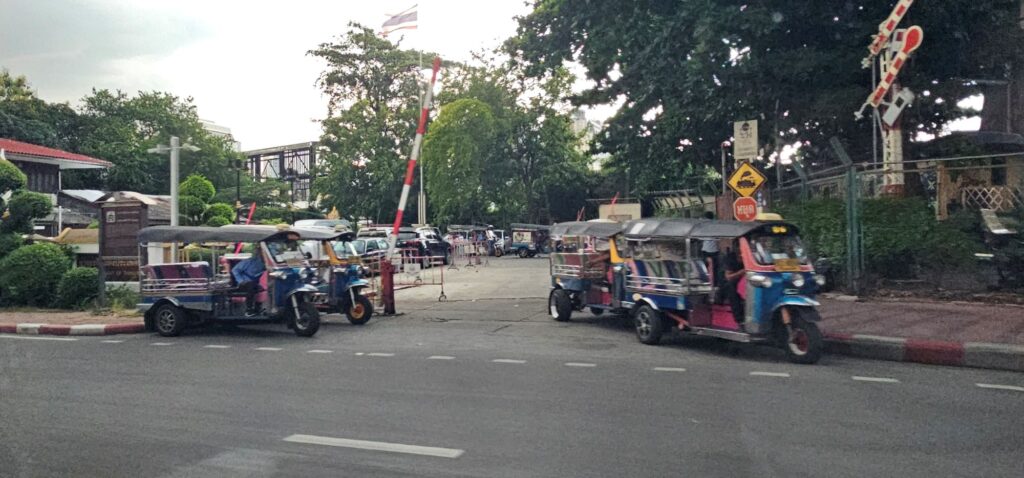
Tuk-tuks are a Bangkok experience rather than a practical transport option — they’re slower than taxis, negotiated fares are almost always higher than a metered taxi for the same journey, and they’re most useful for short, fun rides between nearby points. Don’t use them for serious transit.
River transport: The Chao Phraya Express Boat runs along the river between the Grand Palace/Wat Pho area and the BTS riverside stations (Saphan Taksin). It’s cheap, scenic, and avoids the road traffic entirely — the most pleasant way to reach the temple district from Sukhumvit.
Weather Bangkok is hot year-round — 30–35°C is the baseline, with high humidity making it feel warmer. The cool season (November–February) is the most comfortable: slightly lower temperatures, lower humidity, and minimal rain. The hot season (March–May) is intense. The rainy season (June–October) brings daily afternoon downpours that typically last an hour — not a reason to avoid the city, but worth planning around.
Practical tips
- Dress code applies at all temples — shoulders and knees must be covered; sarongs are available for hire at major temples
- Always carry small bills for street food, tuk-tuks, and market shopping
- Tap water is not safe to drink — bottled water is cheap and available everywhere
- Download Grab before arrival — it’s the most reliable way to get a fair price on taxi journeys
- Most ATMs charge a foreign transaction fee — withdraw larger amounts less frequently
Where to Stay: Sukhumvit and Thong Lo
Sukhumvit is the most practical base for most Bangkok visitors — a long boulevard stretching east from central Bangkok, served by the BTS Skytrain the entire length, with hotels at every price point and the city’s best concentration of international restaurants and bars.
Thong Lo (Sukhumvit Soi 55) and Ekkamai (Soi 63) are the most interesting sub-neighborhoods within Sukhumvit — upscale, creative, with excellent independent restaurants, coffee shops, and bars that reflect Bangkok’s most international and design-conscious side. Staying in this area means being slightly further from the temple district (30–40 minutes by BTS and river boat) but considerably more immersed in the Bangkok that the city’s own residents actually inhabit.
Silom is the alternative base — closer to the temple district, more central, and well-connected by both BTS and MRT. Good choice if temples and the historic center are the priority.
Day 1 — The Temple District: Grand Palace, Wat Pho, and Wat Arun
Give your first full day to Bangkok’s temple district — the historic core of the city on the west bank of the Chao Phraya River, where the density of significant architecture within a small area is matched by few places in Asia.
Grand Palace and Wat Phra Kaew
The Grand Palace (Phra Borom Maha Ratcha Wang) is the most visited site in Bangkok and the ceremonial heart of the Thai monarchy — a complex of buildings, courtyards, and temples covering 218,000 square meters, built from 1782 onward when Bangkok became the capital. It’s overwhelming on first sight: gilded spires, mosaic-covered walls, and the extraordinary detail of the decorative work covering every surface.
Within the palace complex, Wat Phra Kaew (the Temple of the Emerald Buddha) is the most sacred temple in Thailand. The Emerald Buddha — a 66cm seated figure carved from a single piece of jade (not emerald), draped in one of three gold costumes changed by the King with each season — sits at the top of a high altar inside an elaborately decorated bot (ordination hall). Photography inside is not permitted; the atmosphere of the space, filled with worshippers and the smell of incense, is unlike any other temple in Bangkok.
The mural paintings depicting the Ramakien (the Thai version of the Indian Ramayana epic) running the full perimeter of the Wat Phra Kaew courtyard walls are extraordinary — 178 sections covering the entire story, meticulously maintained and vivid in color.
Practical: Book tickets online if possible to avoid the queue. Dress code strictly enforced — sarongs available for hire at the entrance if needed. Go early (opens 8:30am) to beat the worst of the heat and crowds.
Wat Pho
A short walk from the Grand Palace, Wat Pho is Bangkok’s largest temple complex and home to the Reclining Buddha — a 46-meter long, 15-meter high gilded figure that fills the entire length of its building. The scale of it, and the quality of the inlaid mother-of-pearl decoration on the soles of the feet (depicting the 108 auspicious characteristics of the Buddha), make it one of the most impressive single objects in Bangkok.
Wat Pho is also the traditional home of Thai massage — the Wat Pho Thai Traditional Massage School operates within the complex and is one of the most reputable massage establishments in the city. A traditional massage here costs more than a street shop but significantly less than a hotel spa, and the quality is reliably high. Book in advance or arrive early.
The wider temple complex at Wat Pho — beyond the Reclining Buddha building — is extensive and largely overlooked by visitors rushing through. Spend time in the courtyards between the smaller chedis (pagodas), where the atmosphere is calmer and the architecture is equally detailed.
Wat Arun
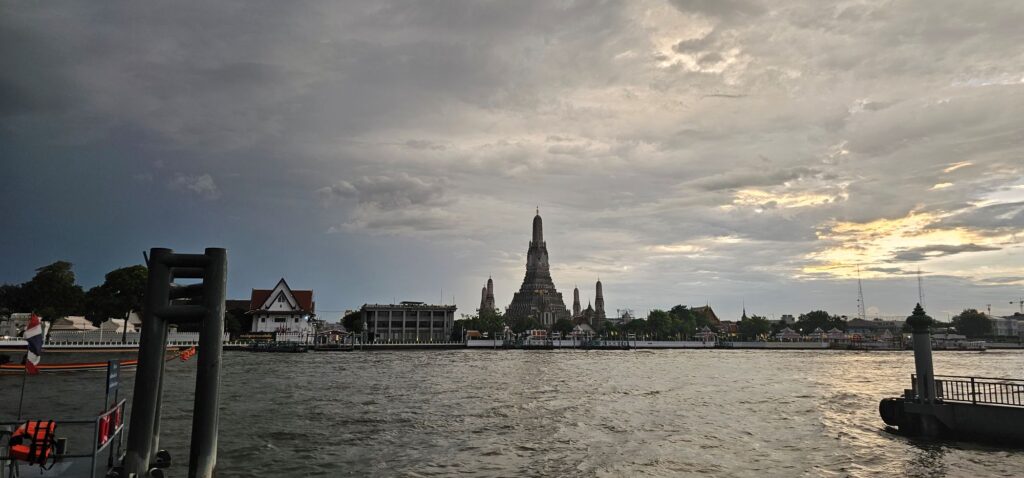
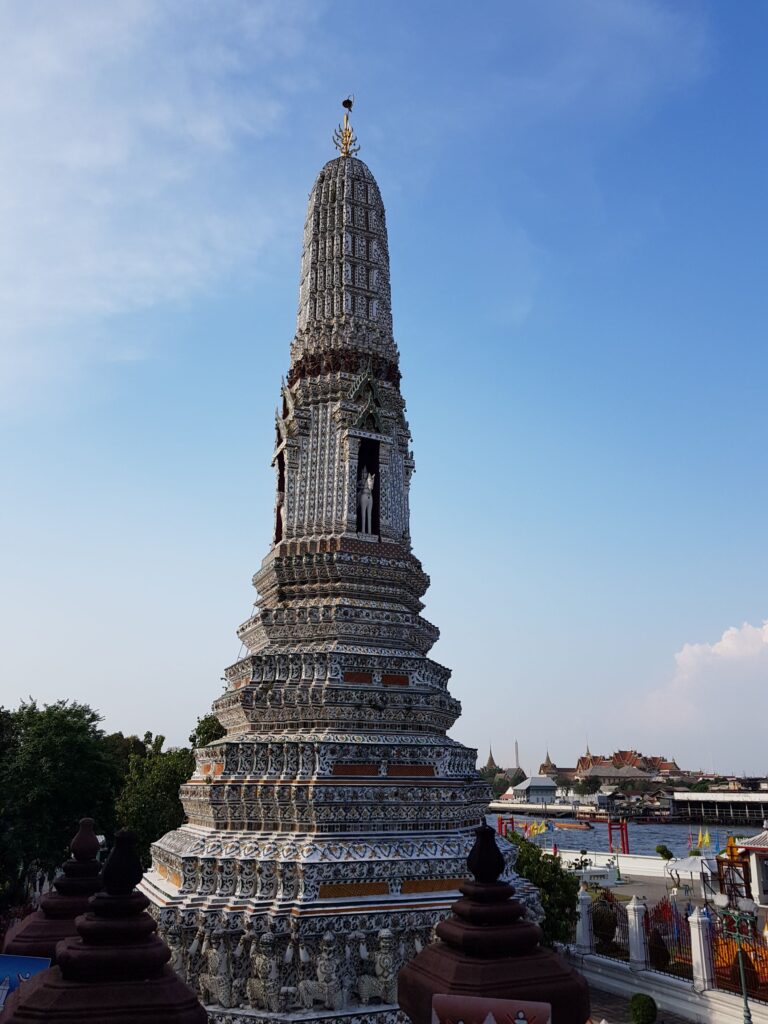
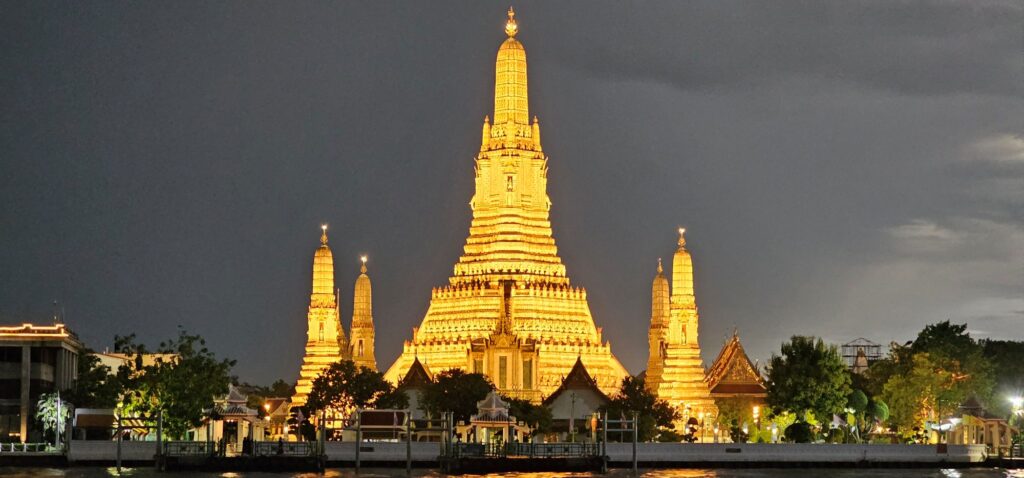
Cross the river by the short ferry from Tha Tien pier (a few minutes and almost free) to reach Wat Arun — the Temple of Dawn, named for the god Aruna and for the sight of the temple at sunrise, when the light catches the porcelain and seashell mosaic covering the central prang (tower). The central prang rises 70 meters above the river and the climb to the upper terraces — steep steps, no handrails — rewards with views across the Chao Phraya to the Grand Palace complex on the opposite bank.
Wat Arun is best photographed from the Wat Pho side of the river at golden hour — the temple illuminated at dusk, reflected in the water, is one of Bangkok’s finest views. The interior of the complex is quieter and less crowded than the Grand Palace and Wat Pho, and worth a slower visit.
🗓 Local tip for Day 1: The temple district is best visited early morning (before 10am) when the heat and crowds are most manageable. Plan to be finished by noon and spend the hottest part of the day somewhere air-conditioned — a long lunch, a museum, or your first massage.
Day 2 — Markets: Chatuchak, Chinatown, and the River
Chatuchak Weekend Market
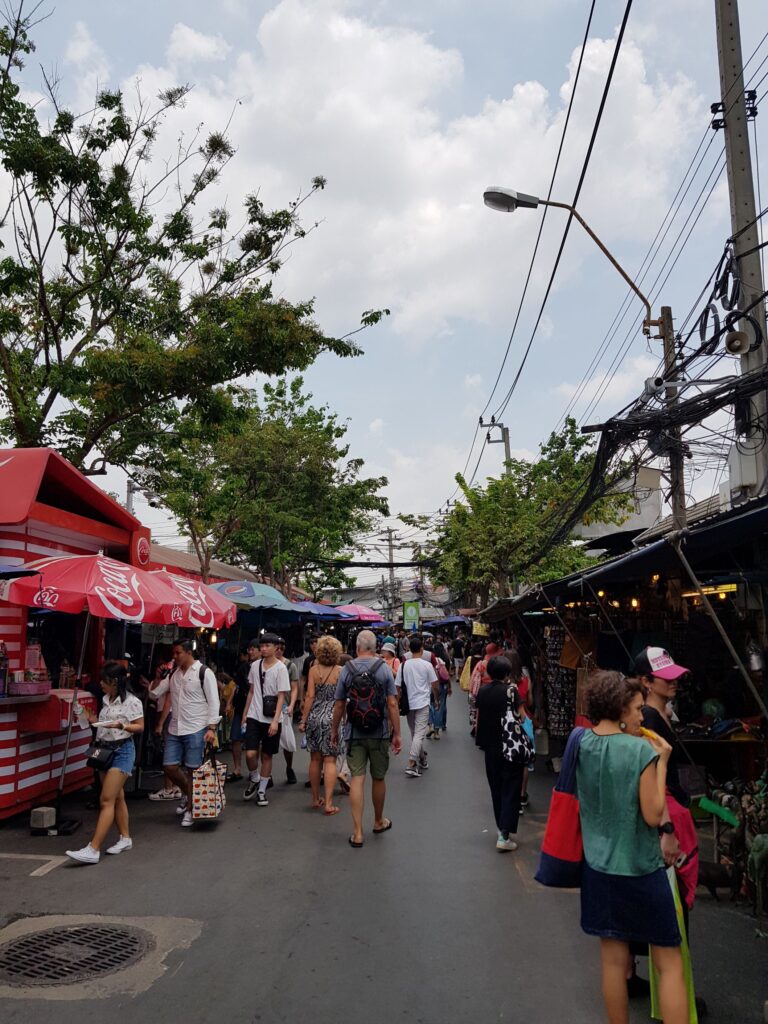
Chatuchak Market (JJ Market) — open Saturday and Sunday only — is one of the largest markets in the world: over 15,000 stalls covering 35 acres, selling everything from vintage clothing and antique furniture to live animals, handmade ceramics, street food, and plants. Getting lost is inevitable and part of the experience.
The market is divided into numbered sections by category — a rough map helps orient you, but the best approach is to wander without a fixed plan and stop at whatever catches your eye. Section 2–4 (antiques and collectibles), Section 7 (ceramics and pottery), and Section 18–19 (vintage clothing) are the most interesting for browsing.
Go early — the market opens at 9am and the heat by noon is significant. The BTS to Mo Chit station or MRT to Chatuchak Park puts you at the entrance.
Food at Chatuchak: The market has excellent street food throughout — grilled meats, mango sticky rice, fresh coconut ice cream, and pad thai from stalls that have been in the same spot for years. Eat as you browse rather than sitting down for a formal lunch.
Chinatown (Yaowarat)
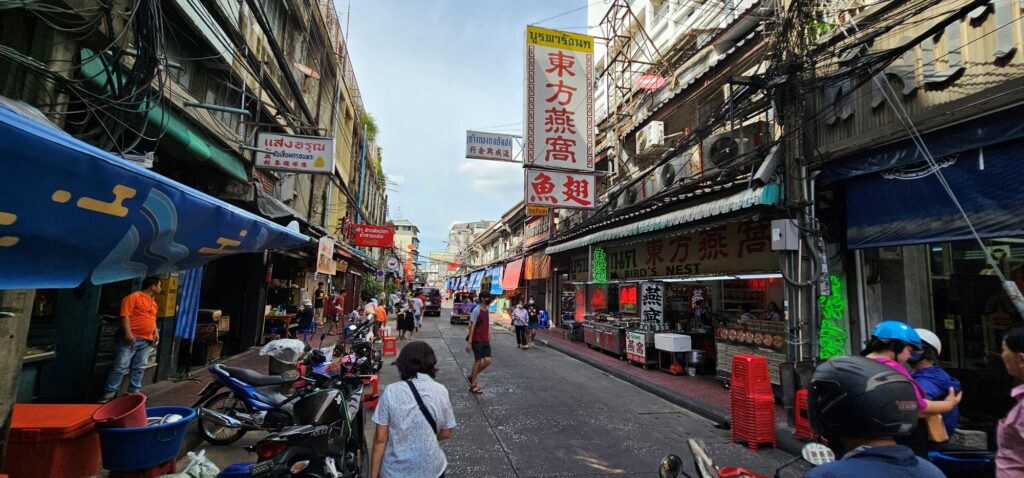
Bangkok’s Chinatown — centered on Yaowarat Road — is one of the oldest and most atmospheric parts of the city, settled by Chinese immigrants in the late 18th century and still operating as a working commercial and residential district layered with gold shops, herb merchants, temples, and some of the best street food in Bangkok.
The area is best visited in the evening when the street food stalls set up along Yaowarat Road and the surrounding lanes — grilled seafood, roast duck, dim sum, and an overwhelming variety of Chinese-Thai hybrid dishes served at pavement tables. The atmosphere from around 6pm is electric — busy, loud, fragrant, and distinctly unlike anywhere else in the city.
Wat Traimit in Chinatown houses the world’s largest solid gold Buddha — a 3-meter, 5.5-ton seated figure discovered accidentally in the 1950s when the plaster covering of what had appeared to be an ordinary statue cracked during a move, revealing solid gold underneath.
Chao Phraya River at Sunset
Take the express boat or a longtail boat charter along the Chao Phraya at sunset — the river at golden hour, with temples on the banks, traditional wooden houses on stilts, and the modern city skyline rising behind, is one of Bangkok’s most atmospheric experiences. The Asiatique The Riverfront — an open-air mall on the riverside with restaurants, bars, and a Ferris wheel — is a pleasant place to end the evening.
🗓 Local tip for Day 2: Chatuchak is Saturday and Sunday only — plan your Bangkok days accordingly. If you arrive on a weekday, the smaller Or Tor Kor Market adjacent to the Chatuchak complex operates daily and has excellent fresh produce and prepared food.
Day 3 — Luxury Bangkok: Rooftop Bars, Malls, and Fine Dining
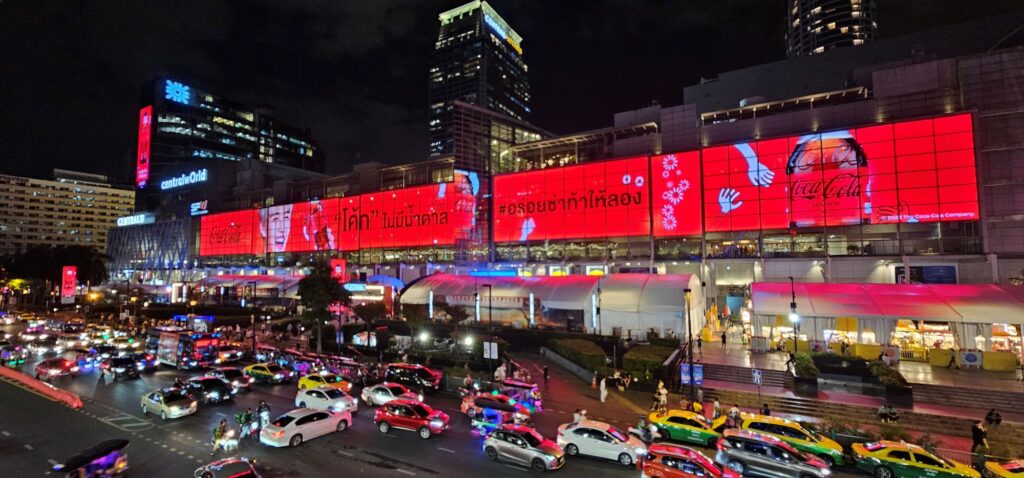
This is the side of Bangkok that travel guides underplay and repeat visitors tend to spend most of their time in — the city’s extraordinary concentration of world-class hotels, rooftop bars, high-end malls, and genuinely exceptional restaurants at prices significantly below what equivalent experiences cost in London, Tokyo, or New York.
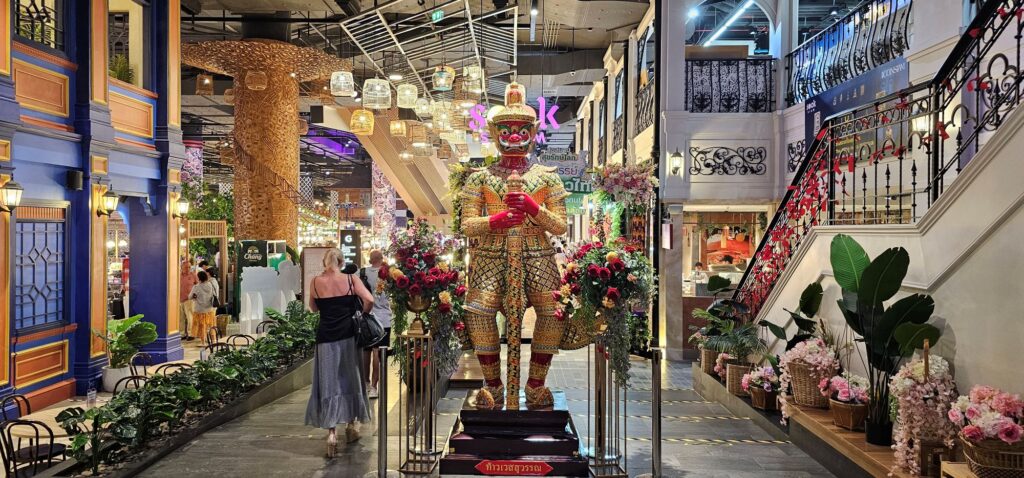
IconSiam
IconSiam — on the west bank of the Chao Phraya, reached by free shuttle boat from the BTS Saphan Taksin station — is Bangkok’s most ambitious shopping mall: 525,000 square meters of retail, restaurants, and the extraordinary SookSiam on the ground floor, a recreation of a traditional Thai floating market with regional food and craft stalls from all 77 Thai provinces.
It’s worth visiting as much for the architecture and spectacle as for the shopping — the atrium is genuinely impressive, and SookSiam is one of the best places in Bangkok to try regional Thai food from outside the capital. The riverside terrace restaurants offer good views of Wat Arun across the water.
EmQuartier and Thong Lo
The EmQuartier mall in Sukhumvit is Bangkok’s finest high-end shopping destination — connected to the BTS Phrom Phong station, with three towers linked by spiral ramps and the Helix restaurant and bar complex wrapping around the outside. The food options here range from Japanese to European to Thai and cover every price point from food court to fine dining.
Thong Lo (Sukhumvit Soi 55) is Bangkok’s most design-conscious neighborhood — the streets between the BTS station and the soi running off the main road are packed with independent coffee shops, concept restaurants, and bars that reflect the most international version of Bangkok. Spend an afternoon walking the neighborhood and eating at whatever looks good.
Rooftop Dining
Bangkok’s rooftop bar and restaurant scene is exceptional — the combination of a dramatic skyline, warm evenings, and prices significantly below comparable experiences in other major cities makes it genuinely worth building into an itinerary rather than treating as an optional extra.
Several rooftop experiences stand out: the Vertigo and Moon Bar at the Banyan Tree Hotel (61st floor, open-air, 360-degree views), Octave Rooftop Bar at the Bangkok Marriott Hotel Sukhumvit (panoramic Sukhumvit views, more accessible price point), and the Sky Bar at Lebua (made famous by The Hangover Part II, genuinely spectacular setting above the Chao Phraya).
Book in advance for dinner; walk-ins are possible for drinks only at most venues.
Michelin-Starred Bangkok
Bangkok has a remarkable concentration of Michelin-starred restaurants across all price points — including multiple starred street food stalls that serve exceptional food for under ฿100 per dish. The city’s Michelin Guide covers everything from Jay Fai (starred street food, famously difficult to get a booking) to multi-course fine dining at hotel restaurants.
For accessible Michelin-quality Thai food without the complexity of booking months ahead, the Gaggan Anand restaurant (progressive Indian cuisine, regularly listed among Asia’s best restaurants) and Le Du (modern Thai cuisine using local seasonal ingredients) represent Bangkok’s finest dining at prices that feel reasonable by international standards. Book well in advance for either.
🗓 Local tip for Day 3: Bangkok’s best rooftop bars have dress codes — smart casual at minimum, no flip-flops or singlets. Check before you go and dress accordingly.
Day 4 — Lumphini Park, Silom, and Bangkok’s Massage Culture
Lumphini Park
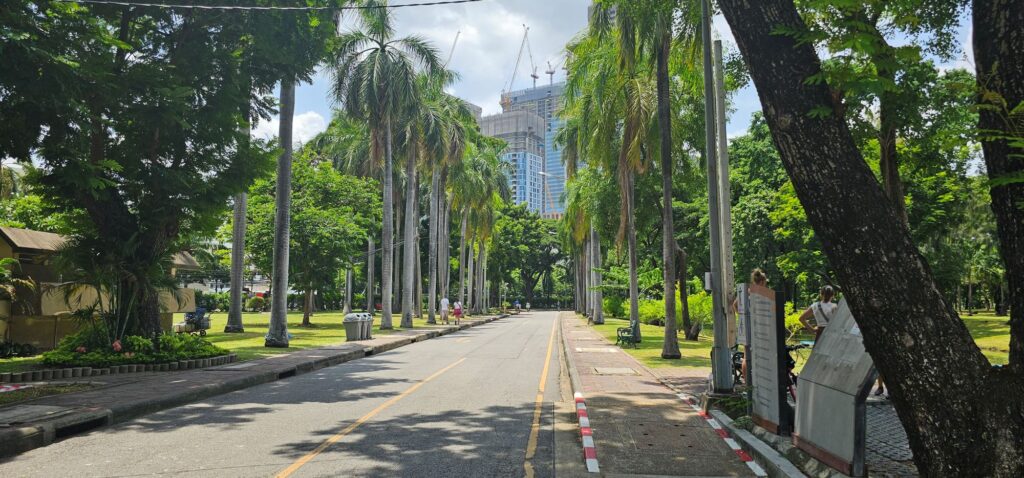
Start the morning at Lumphini Park — Bangkok’s largest central park, 57 hectares of green space in the middle of the city surrounded by the Silom and Sathorn business districts. Early morning in Lumphini is one of Bangkok’s most distinctive experiences: the park fills with people doing tai chi, aerobics classes, jogging, badminton, and the occasional group of older men playing traditional Thai music under the trees.
The park is also home to a large population of water monitors — large lizards that wander the paths and waterways with complete indifference to the humans around them. Seeing a 1.5-meter monitor lizard walk past a group of people doing yoga is a very Bangkok experience.
The best time to visit is before 8am, when the park is at its most lively with morning exercisers and the temperature is still manageable.
Silom and Patpong
Silom Road is Bangkok’s financial district by day and one of its liveliest areas by night. The Patpong Night Market — running between Silom and Suriwong roads — is one of Bangkok’s most famous (and most tourist-facing) night markets: rows of stalls selling the full range of Thai souvenirs, fake goods, and street food, with the bars of the Patpong entertainment district operating on either side.
It’s worth visiting once for the experience and the street food, with eyes open about the tourist premium on most goods.
Bangkok’s Massage Culture: A Practical Guide
This deserves its own section because Bangkok’s massage scene is genuinely exceptional and navigating it well makes a significant difference to the experience.
Street massage shops — the shopfront operations lining the streets of Sukhumvit, Silom, and tourist areas — range from excellent to mediocre. The price is low (฿200–400 for a traditional Thai massage, ฿300–500 for oil massage) and the quality is highly variable. A useful indicator: shops that are busy with local customers tend to be better than empty shops with aggressive touts at the door.
What to order:
- Traditional Thai massage (Nuad Thai) — fully clothed, no oil, involves stretching and pressure point work. Intense, occasionally uncomfortable, and deeply effective for muscle tension. Typically 1–2 hours.
- Oil massage (Aromatherapy/Swedish) — table massage with oil, more relaxing and gentler than traditional Thai. Better for first-timers or those who prefer less intensity.
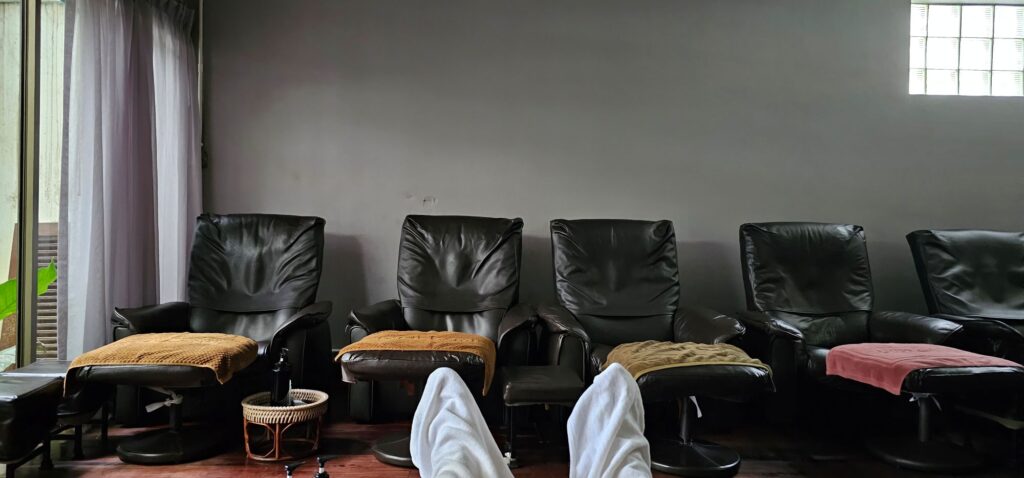
- Foot massage — reflexology-based foot and lower leg massage, done seated. 1 hour is the standard duration, excellent value and very relaxing.
Spa-format massage (2+ hours, dedicated spa environment, premium products) represents a significant step up in experience from street shops and is still dramatically cheaper than equivalent spa treatments in most other countries. Hotel spas charge more but offer the most controlled environment; independent day spas in Thong Lo and Ekkamai offer the best combination of quality and value.
I consistently spent more time in massage shops than in temples on Bangkok visits — a prioritization that I’d recommend to anyone who finds the city’s heat and pace genuinely exhausting.
🗓 Local tip for Day 4: For traditional Thai massage, 2 hours is better than 1 — the therapist has time to work through the full body properly. Book in advance at better shops, particularly for evening slots.
Day 5 — Khao San Road, Street Food, and Final Bangkok
Khao San Road
Khao San Road is Bangkok’s most famous backpacker street — a 400-meter stretch of guesthouses, bars, restaurants, street food stalls, and shops that has been the entry point for budget travelers to Southeast Asia for decades. It’s loud, chaotic, and relentlessly tourist-facing — and worth a visit for exactly that reason, as a particular kind of travel culture made physical.
The surrounding streets — particularly Phra Athit Road along the river — are considerably more interesting: quieter, with good independent cafés and restaurants, and a more local atmosphere than Khao San itself. The riverside at Phra Athit at sunset, with the temples on the opposite bank visible across the water, is one of Bangkok’s more peaceful moments.
Bangkok Street Food: What to Eat
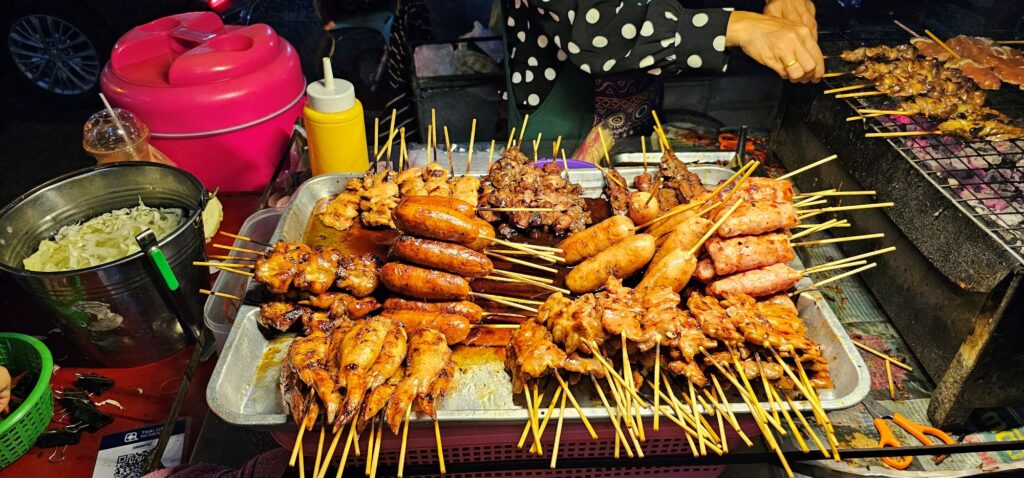
Bangkok’s street food culture is one of the finest in the world — the range, quality, and value of what’s available from carts, market stalls, and shophouse kitchens across the city is matched nowhere else.
Essential dishes:
- Pad Thai — stir-fried rice noodles with egg, tofu or shrimp, bean sprouts, and crushed peanuts. The version from a street cart that’s been making it for 20 years beats most restaurant versions
- Tom Yum Goong — hot and sour prawn soup, arguably Thailand’s most famous dish. The version at a simple restaurant is often better than the hotel interpretation
- Som Tam — green papaya salad, pounded in a mortar, varying from mild to intensely spicy. Order your spice level carefully
- Khao Man Gai — poached chicken over rice, served with broth and a ginger-garlic sauce. Bangkok’s most underrated comfort food
- Mango sticky rice (Khao Niao Mamuang) — sweet sticky rice with fresh mango and coconut cream. The best versions use perfectly ripe Nam Dok Mai mango in season (April–June)
- Boat noodles — small bowls of intensely flavored broth with rice noodles and meat, traditionally served from boats on the canals. Now found in dedicated boat noodle restaurants — Boat Noodle Alley near Victory Monument is the most famous concentration
Where to eat:
- Or Tor Kor Market near Chatuchak: finest fresh produce and prepared food market in Bangkok
- Yaowarat Road (Chinatown) after dark: grilled seafood and Chinese-Thai street food
- Thong Lo and Ekkamai area: best independent restaurants in the city
- Any busy shophouse restaurant where locals are eating: the most reliable indicator of quality in Bangkok is a full room of Thai customers
Practical Tips for Bangkok
- Heat: Plan indoor activities (malls, museums, long lunches) for the 11am–3pm window — the hottest part of the day
- BTS/MRT: Stay on the rail network as much as possible — Bangkok traffic is genuinely bad and taxis can take 3x longer than the Skytrain for the same journey
- Grab app: Download before arrival — the most reliable way to get fair taxi pricing
- Temple dress code: Carry a light scarf or sarong — it takes up no space and saves time at temple entrances
- Street food hygiene: Look for busy stalls with high turnover, freshly cooked food, and visible preparation. Avoid anything that’s been sitting out
- Bargaining: Expected at markets, not in malls or restaurants with printed menus
- Massage tipping: 50–100 baht tip for a good massage is standard and appreciated
Final Thoughts
Bangkok is a city that resists optimization. The traffic will defeat your plans. The heat will slow you down. A massage that was supposed to be one hour will become two. The street food you stopped for will turn into a meal that takes longer than expected. And somehow, at the end of every day in Bangkok, the city has given you more than the itinerary promised.
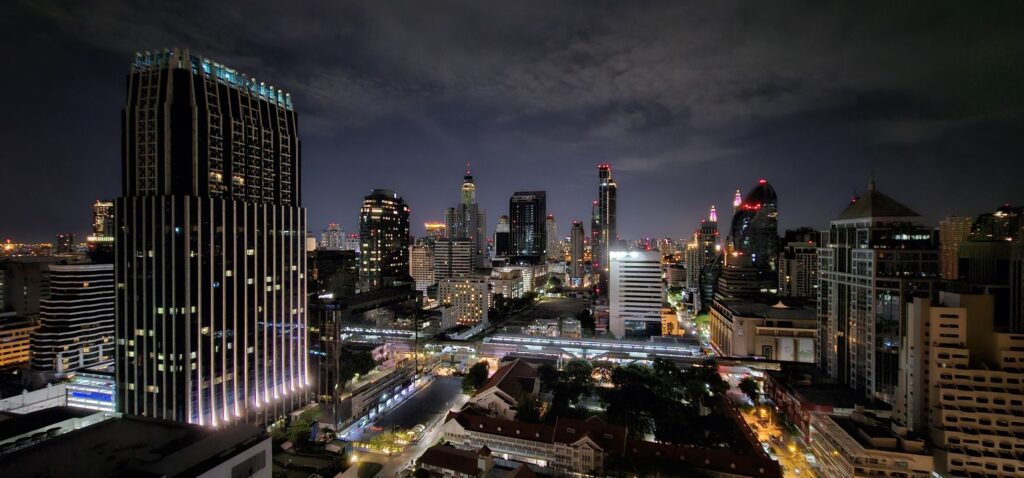
Go to the temples early. Eat everything. Get a massage every day if you can. And spend at least one evening on a rooftop watching the city light up below — Bangkok from above, at night, is one of the great urban spectacles.
Sindhorn Midtown Hotel Bangkok: A Stylish Urban Oasis in the Heart of Bangkok