
Wellington Street in Central has a particular quality in the early evening — the office workers have largely dispersed, the tourist crowds haven’t yet arrived for the Soho dinner rush, and the street settles into a brief calm between its two busiest periods. It was in this window that I found Tsim Chai Kee: a narrow shopfront, a short queue on the pavement, and inside, the smell of flounder broth and the particular steam of a kitchen producing the same bowl it has been producing for decades.
I ate the wonton noodle soup. It took perhaps 12 minutes from sitting down to finishing the broth. It was one of the best things I ate in Hong Kong.
This review covers Tsim Chai Kee honestly — the restaurant, the bowl, the experience, and why it represents Hong Kong’s wonton noodle tradition at its most essential.

Background: Wellington Street’s Most Famous Noodle Shop
Tsim Chai Kee (沾仔記) has been operating on Wellington Street in Central for decades — a tiny operation that has built a following among food critics, Michelin inspectors, and the lunchtime office workers of Central who queue outside daily. The restaurant received a Michelin Bib Gourmand designation — recognition for exceptional value rather than fine dining — which accurately captures what Tsim Chai Kee is: not a luxury experience, but a specific kind of excellence that doesn’t require luxury to achieve.
The restaurant does one thing. It does it definitively. This is the model that Hong Kong’s best food institutions follow, and Tsim Chai Kee follows it with more consistency than most.

Getting There
From Central MTR (Exit D1): Walk south along Pedder Street, then turn right onto Des Voeux Road and left onto Wellington Street — Tsim Chai Kee is at approximately number 98, on the right side walking west. Approximately 8 minutes on foot.
From AKVO Hotel: A few minutes’ walk through the Central streets — Wellington Street is one of the neighborhood’s primary food streets and easy to navigate on foot.
From Tai Cheong Bakery: The two are within a few minutes’ walk of each other — wonton noodles at Tsim Chai Kee followed by an egg tart at Tai Cheong is one of Central’s most satisfying consecutive food experiences.
From Lan Fong Yuen: Approximately 5 minutes on foot — another natural pairing for a Central food walk.

The Restaurant
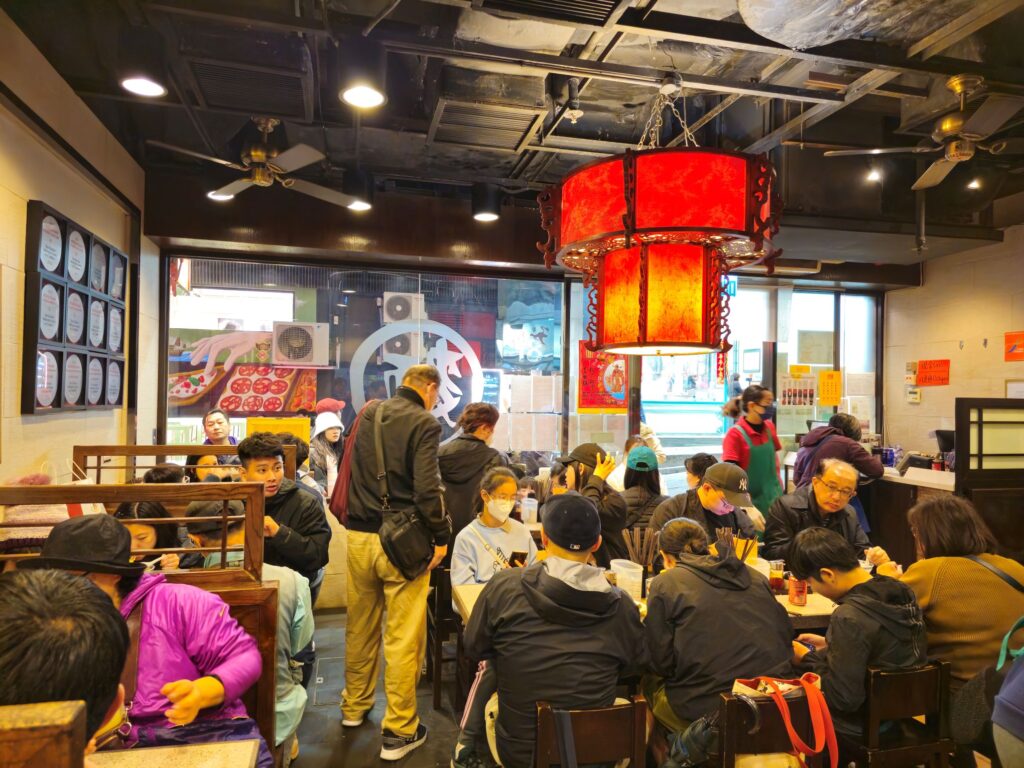
Tsim Chai Kee is small — a narrow shopfront that seats perhaps 15 people at a counter and a few small tables. The interior is functional: stools at a counter, small tables with basic seating, the kitchen visible through the service window where the bowls are assembled. Nothing decorative, nothing designed for atmosphere. The atmosphere comes from the operation itself.
The kitchen is the center of the restaurant — a compact space producing bowls at a continuous pace, the staff moving with the practiced efficiency of people who have made this bowl thousands of times. Watching the preparation through the service window while waiting for a seat gives a preview of the care that goes into what appears to be a simple operation.
Arrival and Seating
Tsim Chai Kee does not take reservations. Arrive, assess the situation, wait if necessary.
Queue: At lunchtime — the restaurant’s busiest period — the queue extends onto the pavement. It moves faster than it looks: the restaurant’s turnover is rapid, driven by the pace of the kitchen and the brevity of the eating experience. Evening visits, as mine was, typically have shorter waits than the midday peak.
Seating: You may share a table with other diners — standard practice at Hong Kong noodle shops. The counter seating is functional for solo diners; the small tables accommodate pairs. Being seated where space is available rather than at a preferred table is the norm.
The pace: From sitting to ordering to receiving the bowl takes minutes. From starting the bowl to finishing it — if you’re eating correctly, at the temperature the broth demands — takes perhaps 10–12 minutes. Tsim Chai Kee is not a restaurant for extended meals; it’s a restaurant for a specific, focused eating experience at a specific, fast pace.

The Menu
The menu at Tsim Chai Kee is short — a focused selection of noodle preparations built around the wonton noodle soup as the primary offering.
The core order:
- Wonton noodle soup (雲吞麵): The essential order — egg noodles, wontons, broth
- Wonton soup (雲吞湯): Wontons and broth without noodles — for those who want the wontons and broth without the noodle component
- Dry noodles (撈麵): Noodles without broth, with sauce
Sizes: Standard and large — the standard is a modest portion calibrated to the dish’s intended role as a focused eating experience rather than a filling meal. The large adds more noodles.
The correct order for a first visit: Wonton noodle soup, standard size, soup (not dry). This is the dish.

The Bowl: A Component Analysis
The Noodles
The egg noodles at Tsim Chai Kee are thin, yellow from the egg content, and treated with an alkaline solution that gives them the characteristic springy texture of Hong Kong wonton noodles. The alkalinity creates a slight resistance when bitten — not hardness, but a firmness that bounces back rather than yielding — that distinguishes proper Hong Kong wonton noodles from other thin egg noodle traditions.
The portion is deliberately small — a modest handful of noodles that complements the wontons and broth rather than dominating either. Hong Kong wonton noodle soup is a balanced dish: the noodles, wontons, and broth are in a specific ratio that the portion size reflects. Over-noodling the bowl would change the balance.
The noodles are cooked immediately before serving — the brief cooking time required by their thin construction means they go from raw to perfect in seconds, and the kitchen’s pace reflects this. Eating them quickly, while they’re still at the correct temperature and before they absorb the broth and soften, produces the best version of the noodle experience.
The Wontons
The wontons at Tsim Chai Kee are the reason the restaurant has the reputation it does — and the element that most clearly differentiates an excellent wonton noodle shop from a merely adequate one.
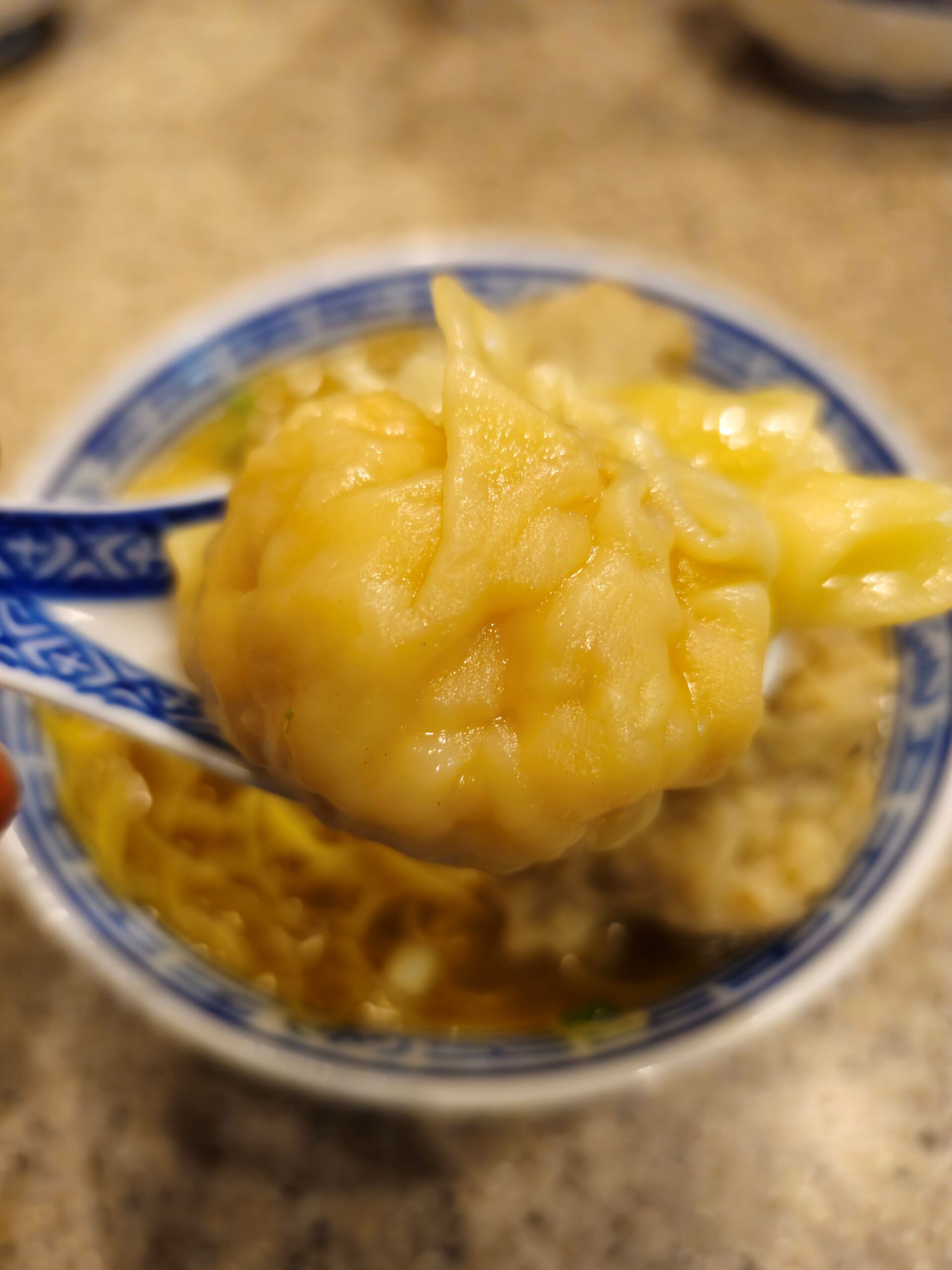
Size: Large — generous enough that the filling is immediately apparent through the wrapper and substantial enough to have textural presence alongside the noodles.
Wrapper: Thin and translucent — the prawn filling is visible through the wrapper, indicating the correct thickness. Thin wonton wrappers require careful technique to achieve: too thin and they tear; the calibration that allows the filling to show through while remaining structurally sound is a technical achievement.
Filling: Whole prawn — not prawn paste, not minced prawn, but a whole prawn (or a substantial portion of one) wrapped inside the wonton. The difference is immediately apparent in the eating: whole prawn has a firm, clean texture and an unmistakably fresh prawn flavor that prawn paste doesn’t approach. This is the indicator of a wonton noodle shop that takes its product seriously.
The wrapper in the broth: As the wontons sit in the hot broth, the wrapper softens slightly while remaining intact — creating a texture that’s simultaneously delicate and substantial. The interaction between the soft wrapper and the firm prawn filling produces the textural contrast that makes a good wonton worth eating.
Number per bowl: Three to five wontons per standard bowl — enough to provide the textural and flavor contrast throughout the bowl without overwhelming the noodles or the broth.
The Broth
The broth is where Tsim Chai Kee’s craft is most concentrated — and the element that most clearly separates this bowl from the versions available in lesser establishments.
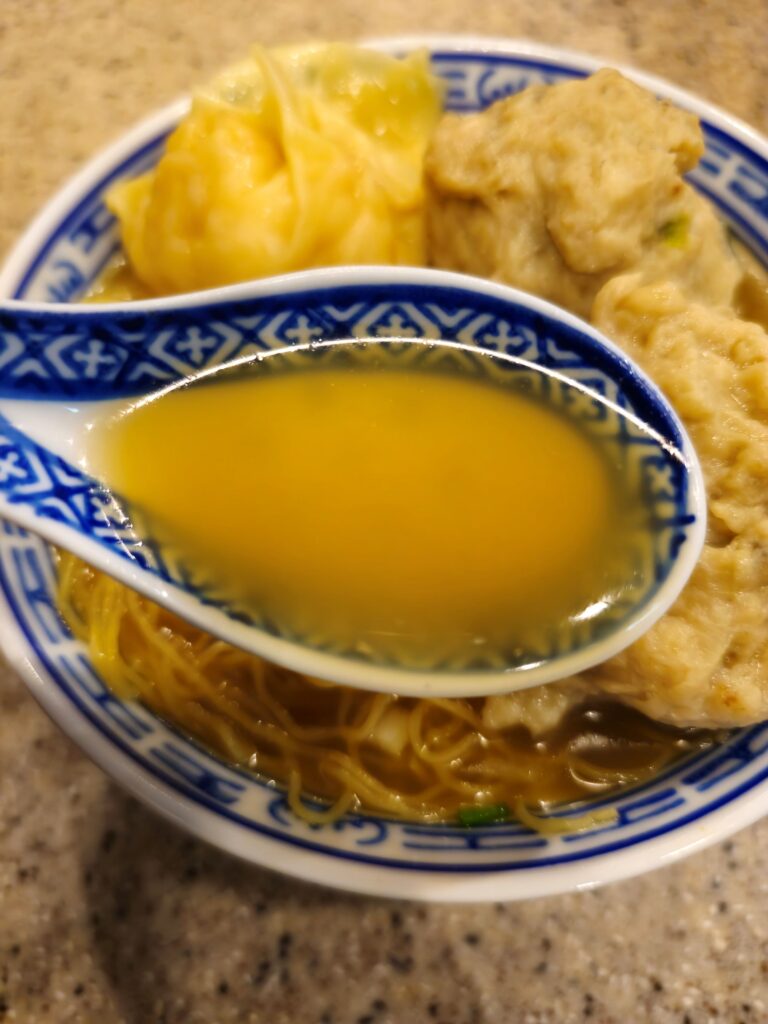
Base: Dried flounder (大地魚) and shrimp roe (蝦子) — the traditional Hong Kong wonton noodle broth base that produces a clear, intensely savory liquid with a specific maritime depth that chicken or pork broth doesn’t approach. The flounder provides umami; the shrimp roe adds a particular concentrated seafood intensity that is the defining flavor of authentic Hong Kong wonton noodle soup.
Color: Clear golden-amber — the clarity indicates proper stock-making technique. A cloudy broth indicates rushed production or inferior ingredients; the clarity of Tsim Chai Kee’s broth reflects the time and care invested in producing it.
Flavor: Intensely savory without being salty — the seasoning amplifies the natural flavors of the flounder and shrimp roe rather than masking them with added salt. The broth has depth — the specific depth that comes from properly made stock rather than seasoning shortcuts — and a finish that lingers after the bowl is finished.
Temperature: Served properly hot — hot enough to keep the noodles at the correct temperature throughout the bowl, hot enough that the wontons continue to cook slightly in the broth after delivery. The temperature management in a wonton noodle bowl is not incidental; it’s part of the technique.
The Complete Bowl
The first sip of broth — taken before touching the noodles or wontons — establishes the baseline. The flounder and shrimp roe flavor is immediately present; the clarity of the liquid amplifies rather than mutes the intensity. The broth at Tsim Chai Kee tastes like the thing it’s made from in a way that shortcuts don’t achieve.
The first wonton — lifted with chopsticks, the thin wrapper draped around the firm prawn filling — demonstrates the ratio. The wrapper offers minimal resistance; the prawn inside is firm and clean. The combination of wrapper, filling, and broth in a single bite is the essential Hong Kong wonton experience.
The noodles, eaten quickly while still springy, provide the vehicle — the neutral, textured base that the wontons and broth articulate against. The three components in combination produce something that is, within the constraints of its form, complete.

The Eating Experience
Eating wonton noodle soup correctly requires a specific approach — not elaborate ritual, but an awareness of the dish’s temperature sensitivity and the correct pace.
Start with the broth: A spoon of broth before anything else establishes the flavor baseline and confirms the temperature.
Eat the wontons early: The wontons are at their best when the broth is hottest — the wrapper at its most delicate, the filling at its firmest. Leaving them until the broth has cooled changes the experience.
Eat the noodles quickly: The noodles absorb the broth and soften as the meal progresses. The springy texture that makes them worth eating is a 5-minute window from when the bowl arrives.
Finish the broth: At Tsim Chai Kee, the broth is worth finishing — not as a gesture of politeness but because the liquid at the bottom of the bowl, concentrated by the noodles and wontons that have cooked in it, is different from the broth at the top. Worth drinking.
Total eating time: 10–12 minutes for a standard bowl eaten at the correct pace. This is not a criticism of the experience — it’s the experience. Wonton noodle soup is not a leisurely meal; it’s a focused, specific eating experience that delivers its value in a compressed window.

Tsim Chai Kee vs Mak’s Noodle: The Wellington Street Comparison
Mak’s Noodle (麥奀記) — another celebrated wonton noodle shop on Wellington Street, within a few doors of Tsim Chai Kee — is the natural comparison. Both are on the same street, both are well-regarded, and the proximity makes a direct comparison possible.
| Tsim Chai Kee | Mak’s Noodle | |
|---|---|---|
| Broth | Deeper, more intense | Lighter, more delicate |
| Wontons | Larger, whole prawn | Smaller, well-made |
| Noodle portion | Standard | Notably small |
| Price | Modest | Modest |
| Queue | Shorter evenings | Variable |
| Michelin | Bib Gourmand | Bib Gourmand |
The honest comparison: Tsim Chai Kee’s broth has more depth and intensity; Mak’s broth is lighter and more delicate. Neither approach is objectively better — they represent different calibrations of the same form. Tsim Chai Kee’s wontons are larger and more generously filled; Mak’s portion is famously small.
For a first-time Wellington Street visit: Tsim Chai Kee for the intensity of the broth and the generosity of the wontons. For a comparison visit: eat at both and form your own assessment of which calibration you prefer. They’re a few doors apart.

Practical Tips
Evening visits: Less crowded than the lunchtime peak — more manageable queue, similar food quality. Evening is an underused time at Tsim Chai Kee.
Order clearly: The essential order is wonton noodle soup (雲吞麵), soup version (not dry). Communication is primarily by pointing at the menu if needed — the staff at Tsim Chai Kee are experienced with non-Cantonese speakers.
Eat quickly: The bowl’s quality degrades as it cools. Start with the broth, eat the wontons, eat the noodles — in that sequence, at the pace the temperature demands.
Cash or Octopus: Check current payment options before visiting. Cash has traditionally been preferred; Octopus card acceptance has expanded throughout Hong Kong’s restaurant scene.
Combine with Tai Cheong: The two are within walking distance — wonton noodles followed by egg tart is one of Central’s better consecutive food experiences. The savory-then-sweet sequence works well.
Don’t over-order: One bowl of wonton noodle soup is the correct order. The dish is a specific, focused experience rather than a meal with multiple courses. If still hungry after finishing, the egg tart at Tai Cheong is a few minutes away.

Why Tsim Chai Kee Matters
In a city with exceptional food at every price point, Tsim Chai Kee represents something specific: the application of decades of accumulated craft to a dish with no room for complexity or distraction. The broth has to be right. The wontons have to be right. The noodles have to be right. There is nothing else on the bowl to hide behind if any of the three fail.
That Tsim Chai Kee gets all three right — consistently, across the years of operation that have built its reputation — is a form of excellence that doesn’t announce itself loudly. A tiny shopfront on Wellington Street, a short menu, a bowl that takes 12 minutes to eat. The excellence is in the bowl.
Final Thoughts
The wonton noodle soup at Tsim Chai Kee is the bowl that most clearly answers the question of what Hong Kong wonton noodle soup is supposed to be: clear flounder broth at the correct temperature, springy egg noodles in the correct proportion, whole-prawn wontons in thin translucent wrappers. Nothing added, nothing removed, nothing compromised.
Eat it in the evening when the queue is shorter. Start with the broth. Eat quickly. Finish the broth at the bottom. Walk to Tai Cheong for an egg tart.
It takes 20 minutes. It’s one of the best 20 minutes available in Central.
Wonton Noodles in Hong Kong: A Complete Guide
Hong Kong Food Guide: What to Eat and Where