
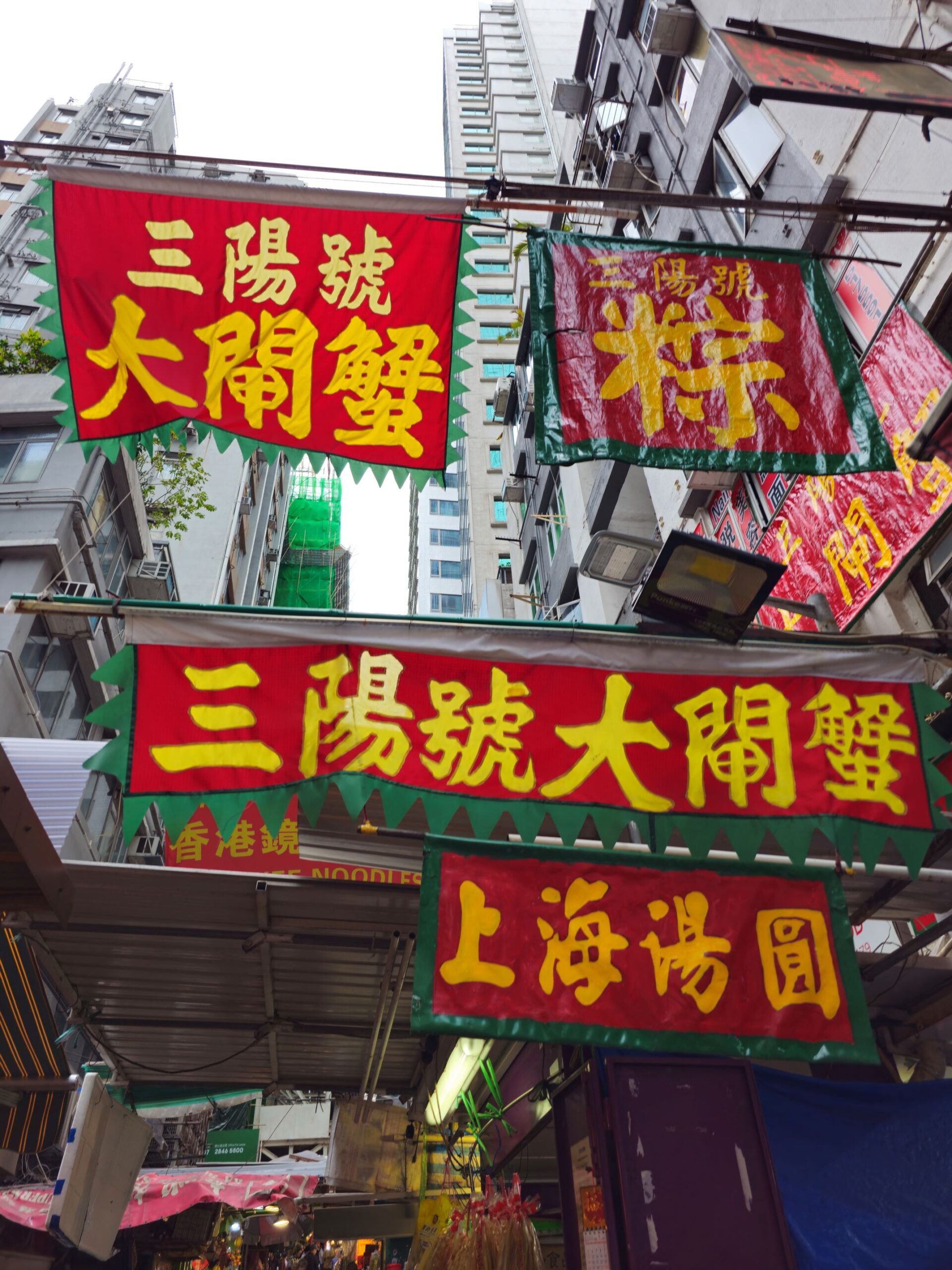
Central has two faces. The first is the one most visitors see — the financial towers, the Mid-Levels Escalator, the restaurants of Soho, the bars of Lan Kwai Fong. The second is the one that exists one block behind the main thoroughfares, in the narrow lanes that the city’s development hasn’t yet fully absorbed. Graham Street Market is the clearest surviving example of this second face — a traditional wet market operating in the heart of one of the world’s most expensive real estate markets, selling fresh fruit, vegetables, meat, and produce from narrow lanes lined with stalls that have been here, in some form, for over 150 years.
I found the market during my time in Central — walking through the lanes connecting Wellington Street to the escalator area and encountering something that stopped me mid-step: narrow lanes lined with produce stalls on both sides, the vendors arranging fresh stock, the smell of cut fruit and vegetables mixing with the particular compressed atmosphere of a traditional Hong Kong street market operating at full capacity. It was one of the most unexpectedly moving food experiences of the trip — not because the produce was exceptional, but because the whole scene felt like a direct connection to how Central has always lived beneath its financial surface.
What Is Graham Street Market?
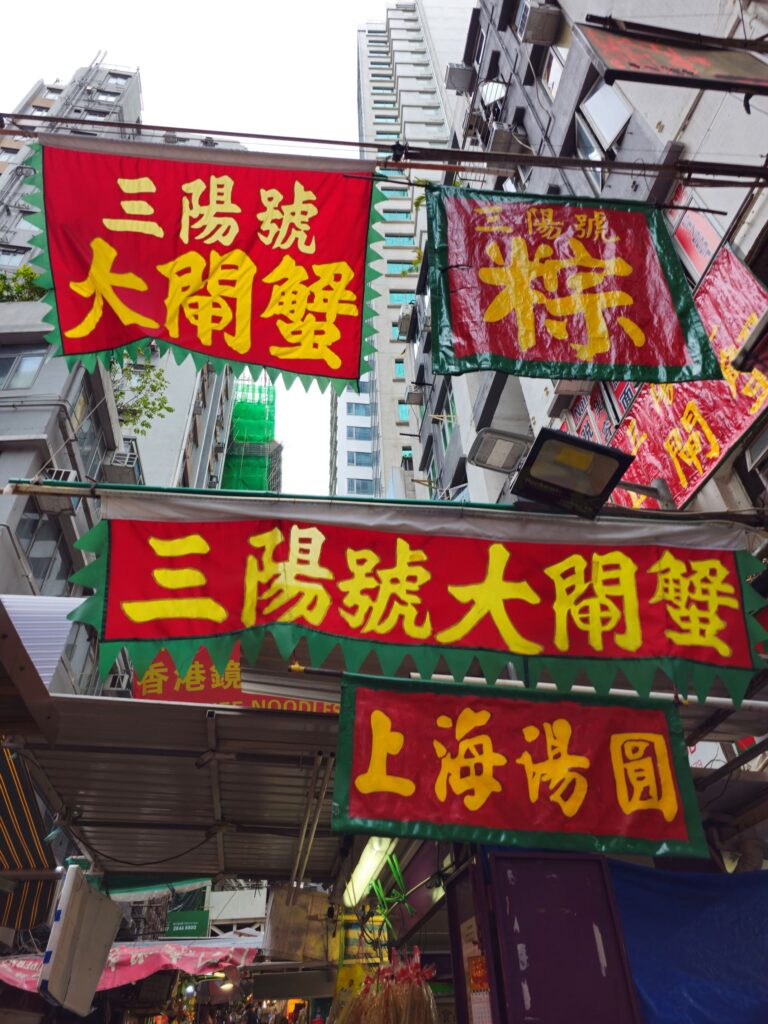
Graham Street Market (嘉咸街街市) is one of Hong Kong’s oldest surviving street markets — a traditional wet market operating on Graham Street and the surrounding lanes (Gage Street, Peel Street, and the connecting alleys) in the Central neighborhood of Hong Kong Island. The market has been operating in this area since the 1840s, making it one of the longest continuously running markets in Hong Kong.
The term “wet market” refers to the traditional Asian market format — fresh produce, meat, fish, and seafood sold from open stalls with water used throughout the day for cleaning, creating the characteristic damp pavement that gives the format its name. Graham Street Market covers the full range of traditional wet market categories: fresh vegetables, tropical and seasonal fruits, tofu and bean curd products, dried goods, eggs, and various other everyday food items.
The market operates in the open lanes rather than in a dedicated market building — stalls occupy the pavements and portions of the narrow streets themselves, creating the compressed, layered atmosphere that traditional Hong Kong street markets produce and that covered or air-conditioned markets can’t replicate.
Getting There
From Central MTR (Exit D1): Walk south along Pedder Street then turn right onto Des Voeux Road. Graham Street runs south from Queen’s Road Central — follow it uphill from the Queen’s Road Central intersection and the market stalls begin within the first block. Approximately 8–10 minutes from the MTR.
From AKVO Hotel (Central): A short walk through the Central streets — Graham Street is one of the neighborhood’s connecting lanes between the lower Central commercial area and the Soho/Mid-Levels Escalator zone. Approximately 5–8 minutes on foot.
From the Mid-Levels Escalator: The escalator passes through the Soho area immediately above Graham Street Market — descending from the escalator to Graham Street and walking downhill through the market is one of the most natural approaches, combining the escalator experience with the market discovery in a single downhill walk.
From Lan Fong Yuen: The market is a few minutes’ walk from Gage Street where Lan Fong Yuen operates — the two are natural consecutive stops for a Central morning walk.
The Market: What to Expect
The Physical Space
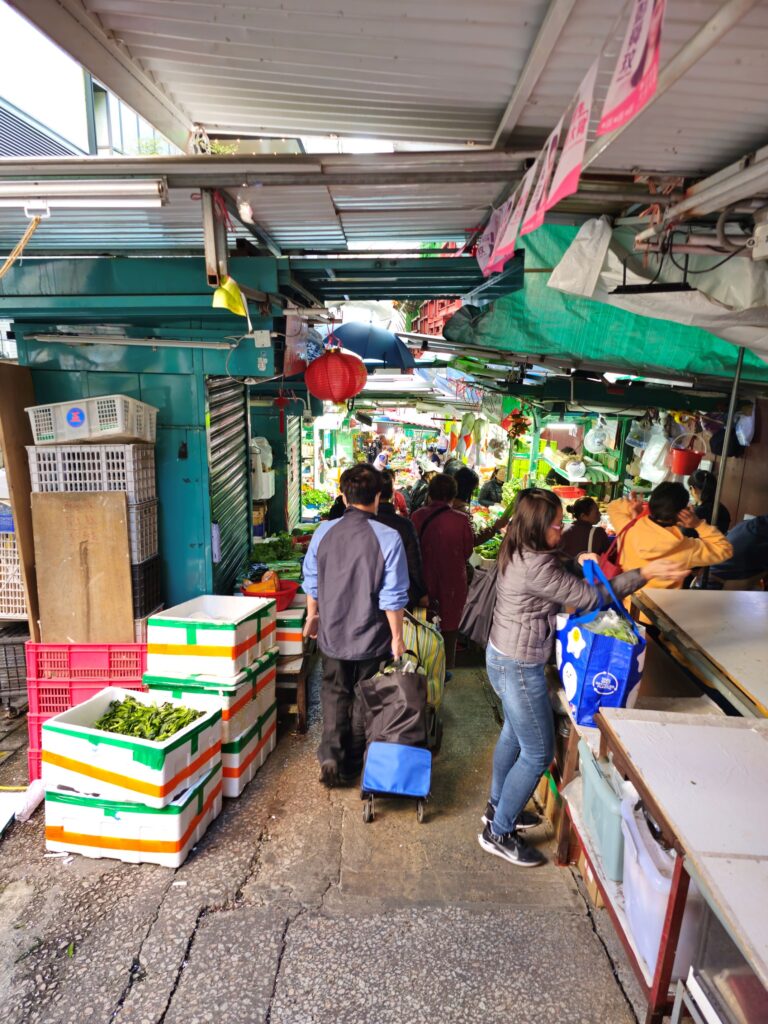
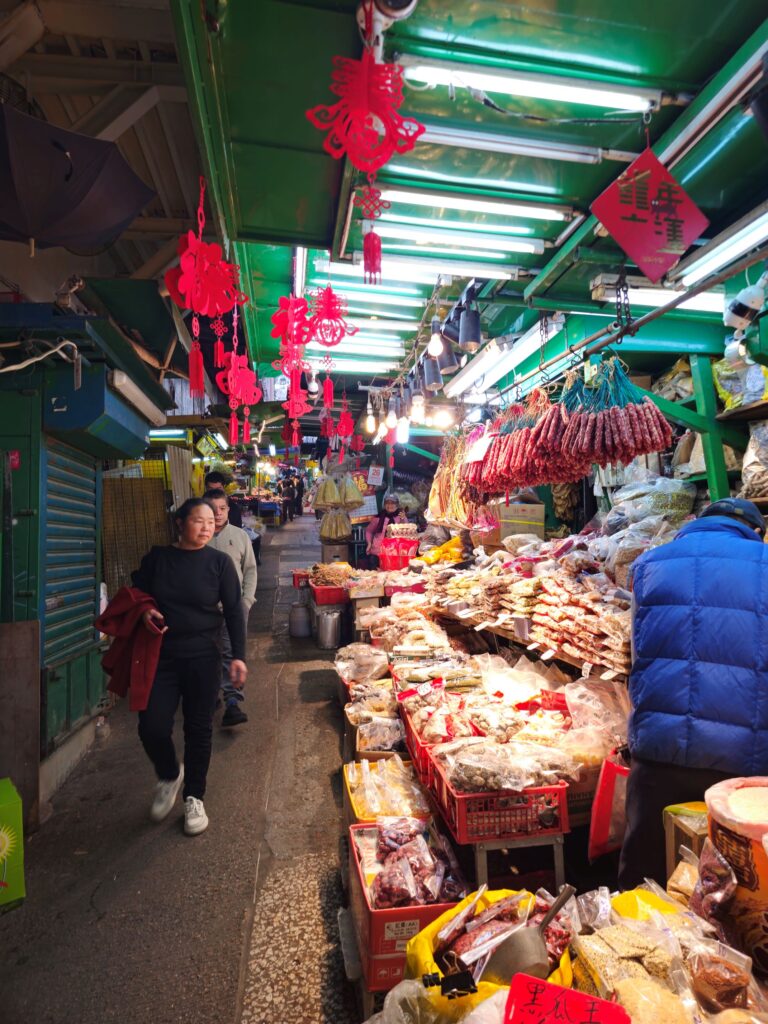
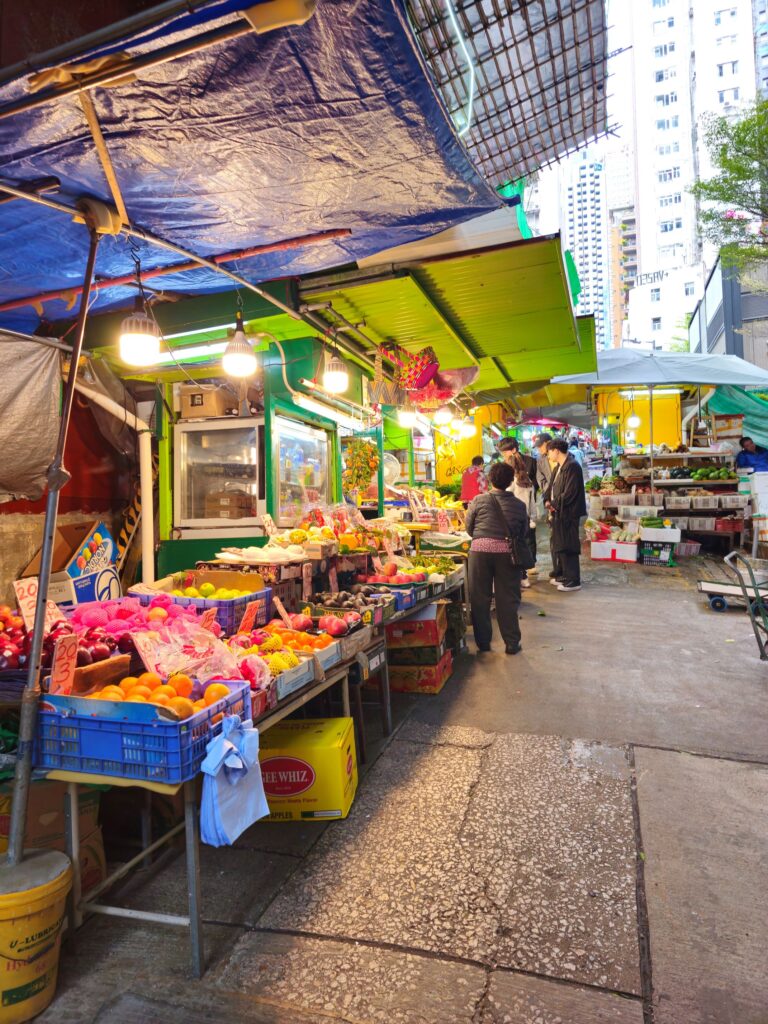
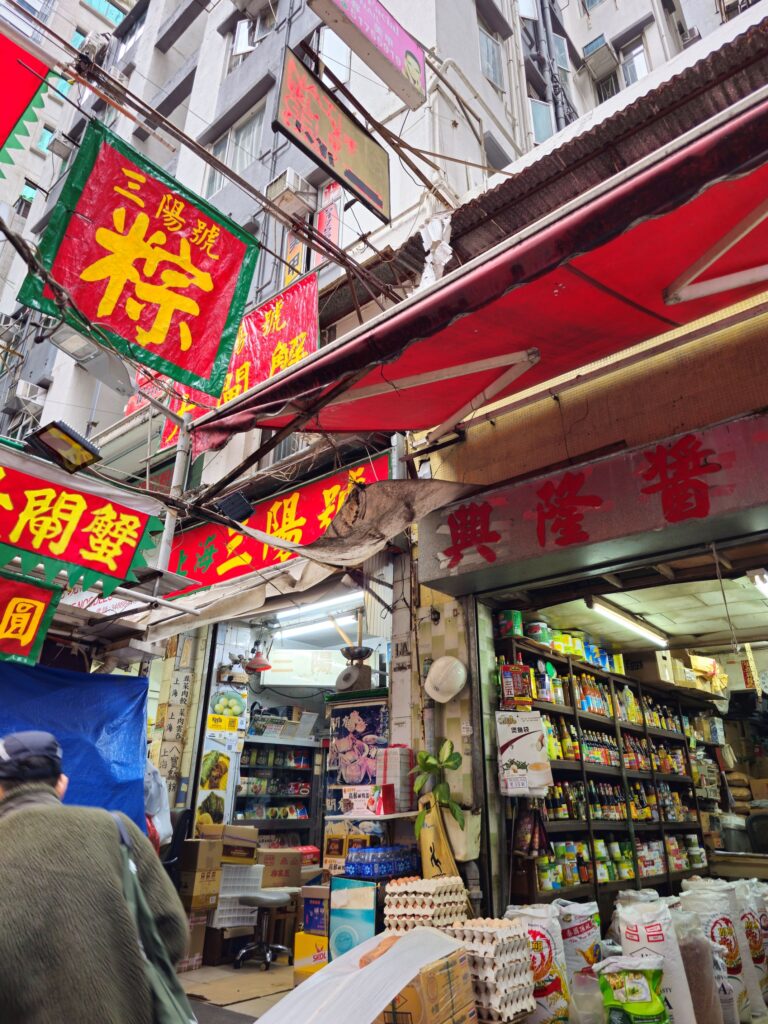
Graham Street Market occupies a specific urban geography that is increasingly rare in central Hong Kong — narrow lanes too small for vehicle traffic, lined on both sides with stalls that extend from the buildings onto the pavement, with the pavement between the stalls barely wide enough for two people to pass comfortably. The compression is the point: walking through the market requires moving at the pace of the vendors and the local shoppers rather than at tourist pace, and the physical closeness to the produce, the vendors, and the other shoppers creates an intimacy that larger markets don’t have.
The lanes slope uphill from Queen’s Road Central — the market follows the natural topography of this part of Central’s hillside, with the stalls arranged along both sides of the ascending lanes. The effect of looking uphill through a narrow lane lined with produce stalls on both sides — the green of vegetables, the color of tropical fruits, the vendors’ voices, the smell of fresh produce — is one of the most specifically Hong Kong visual and sensory experiences available in the neighborhood.
The Produce
The market sells the full range of fresh produce that constitutes the daily shopping of Hong Kong’s residential population:
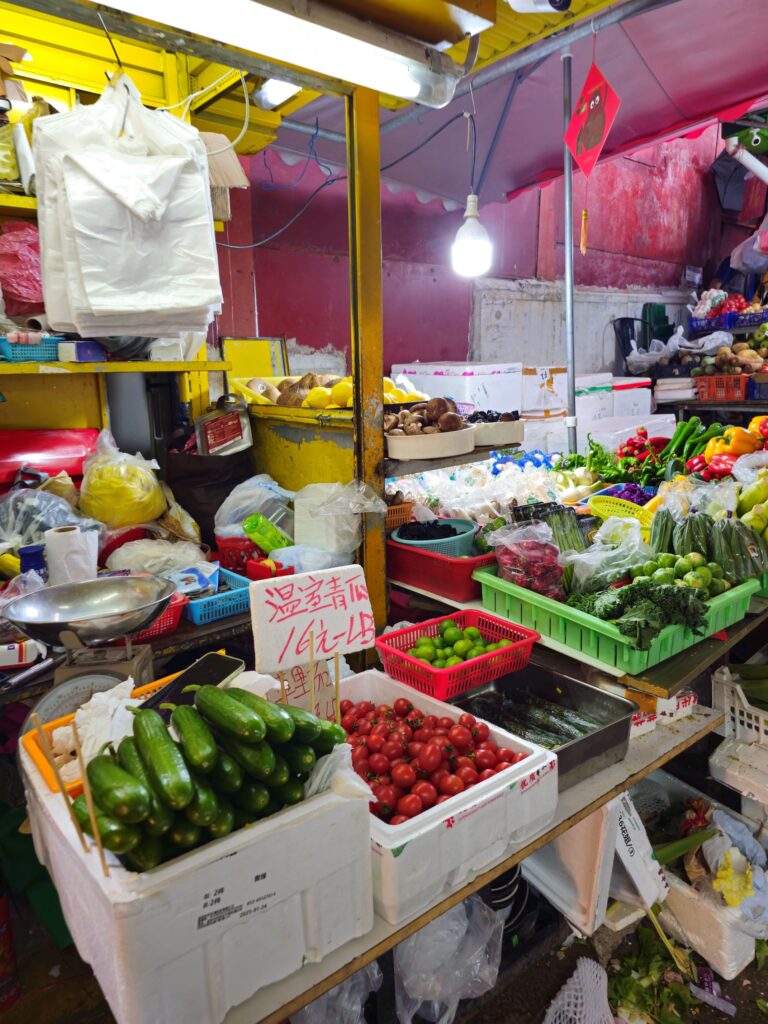
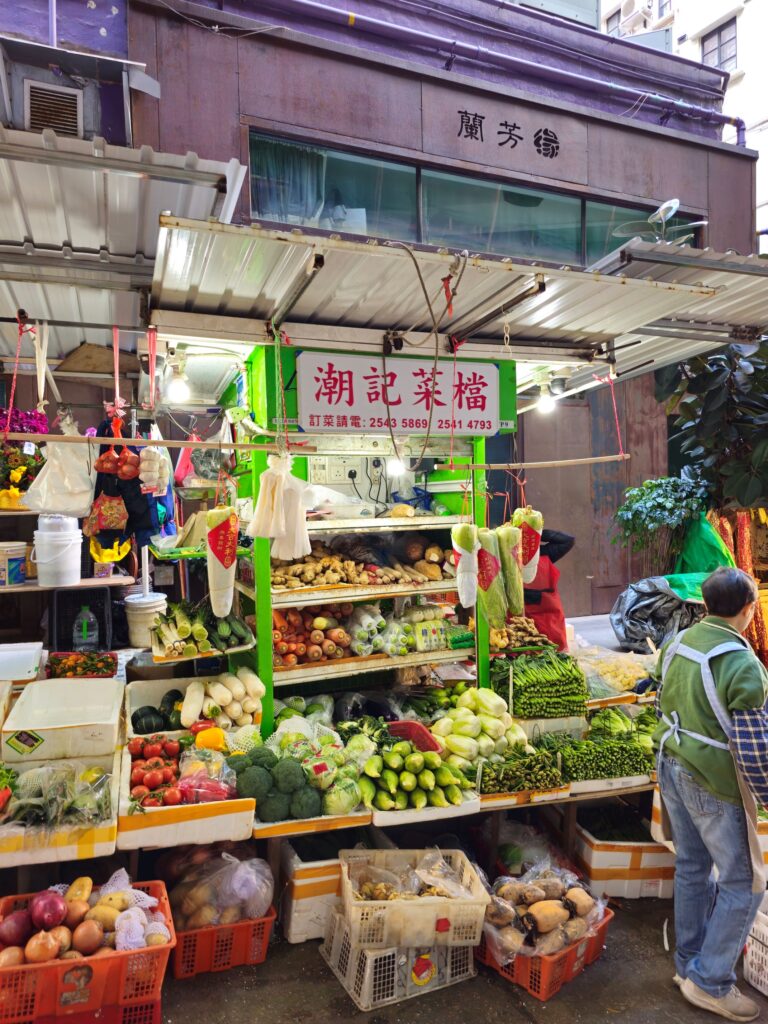
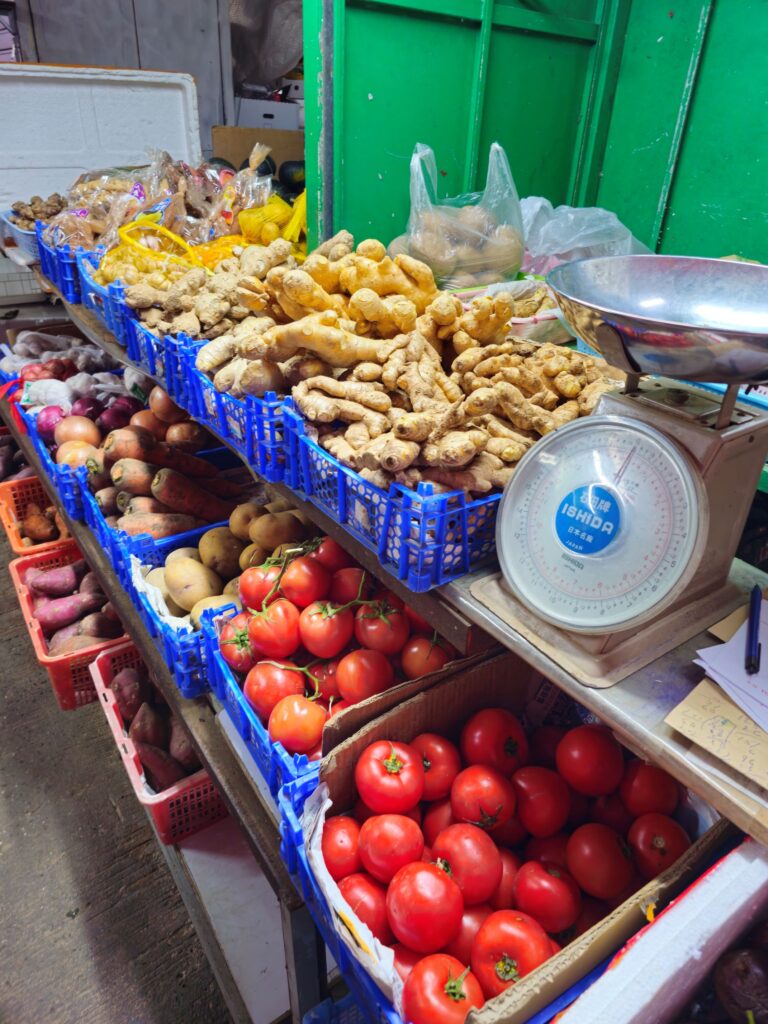
Vegetables: The produce section is the market’s visual core — vendors arranging fresh stock in the characteristic way of traditional Asian markets, the vegetables organized by type and size in open displays that prioritize visibility over packaging. The variety reflects Hong Kong’s Cantonese culinary tradition: morning glory (通菜), Chinese broccoli (芥蘭), bok choy (白菜), bitter melon (苦瓜), winter melon (冬瓜), and the various leafy greens that form the foundation of Cantonese vegetable cooking alongside more internationally familiar varieties.
The freshness is immediate and apparent — the vegetables have the particular bright green of recently harvested produce rather than the slightly dulled coloring of supermarket vegetables that have been refrigerated and transported over longer distances. Many of the vendors receive fresh stock daily, and the morning period is when the produce is at its peak.
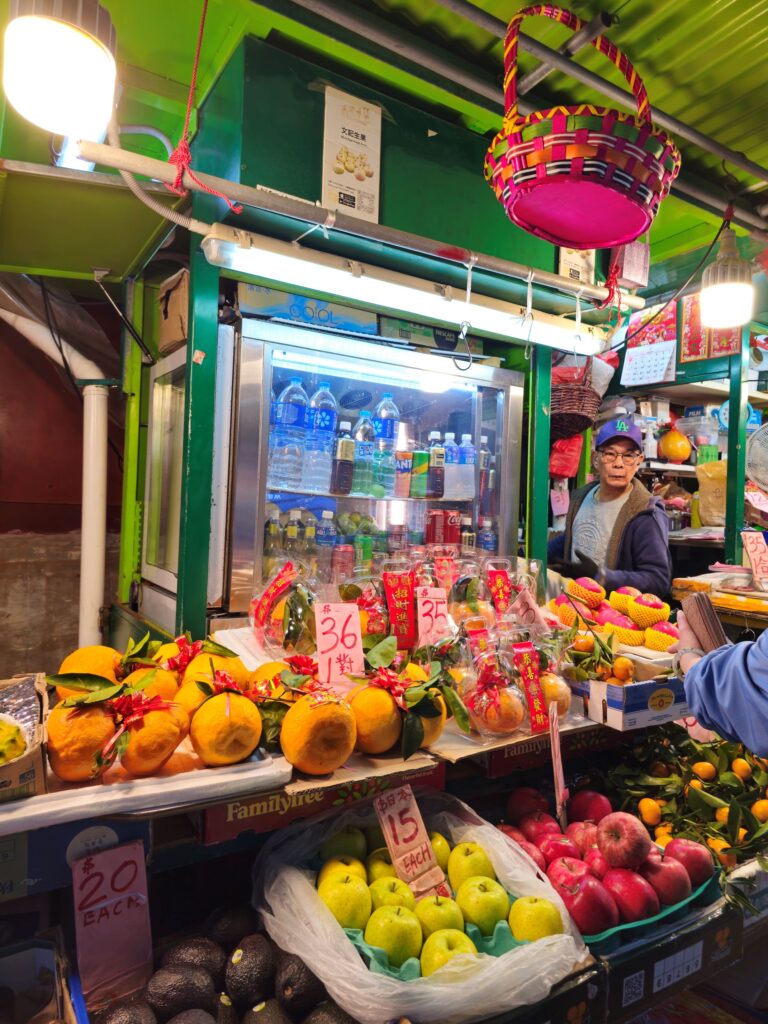
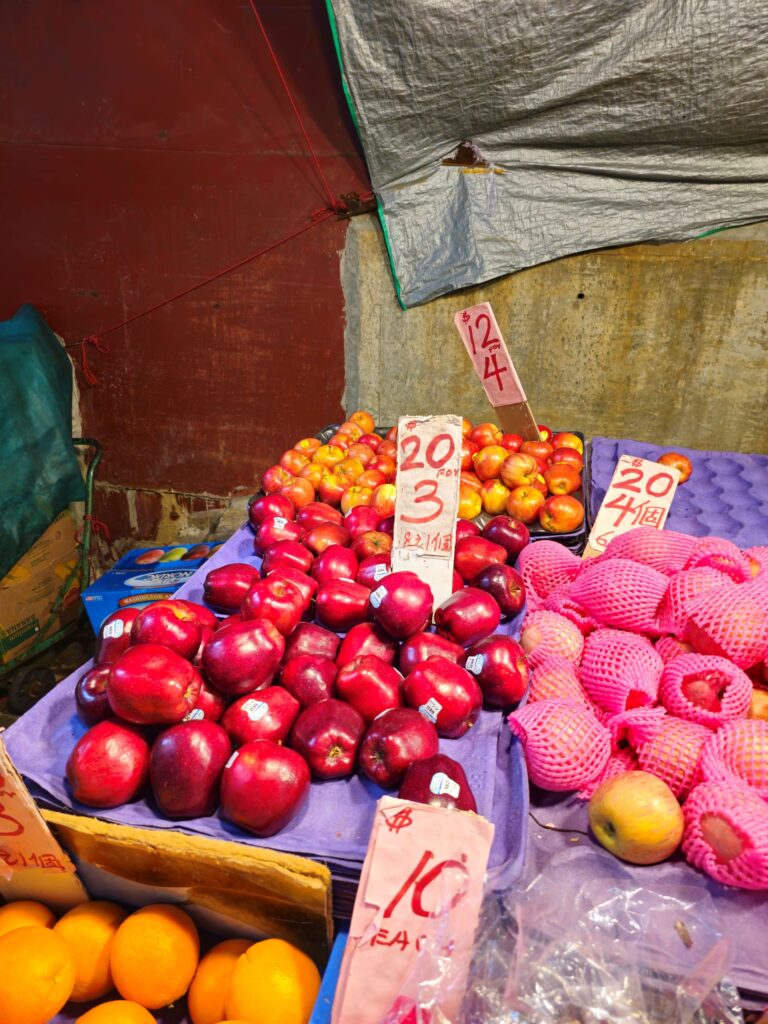
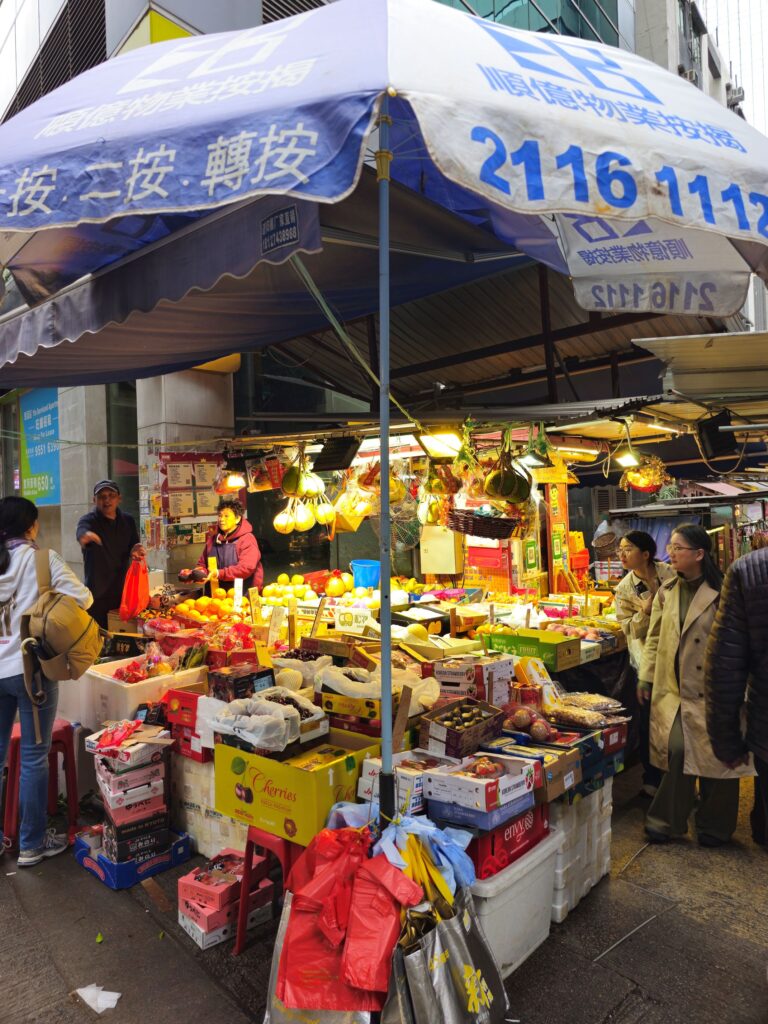
Fruit: The fruit stalls carry the full range of tropical and subtropical fruits available in Hong Kong’s climate and import market — mangoes, papayas, lychees (seasonal), longans, dragon fruit, alongside more familiar varieties. The color of the fruit stalls — the deep red of dragon fruit, the yellow of ripe mangoes, the green of guavas — gives the market its most photogenic quality.
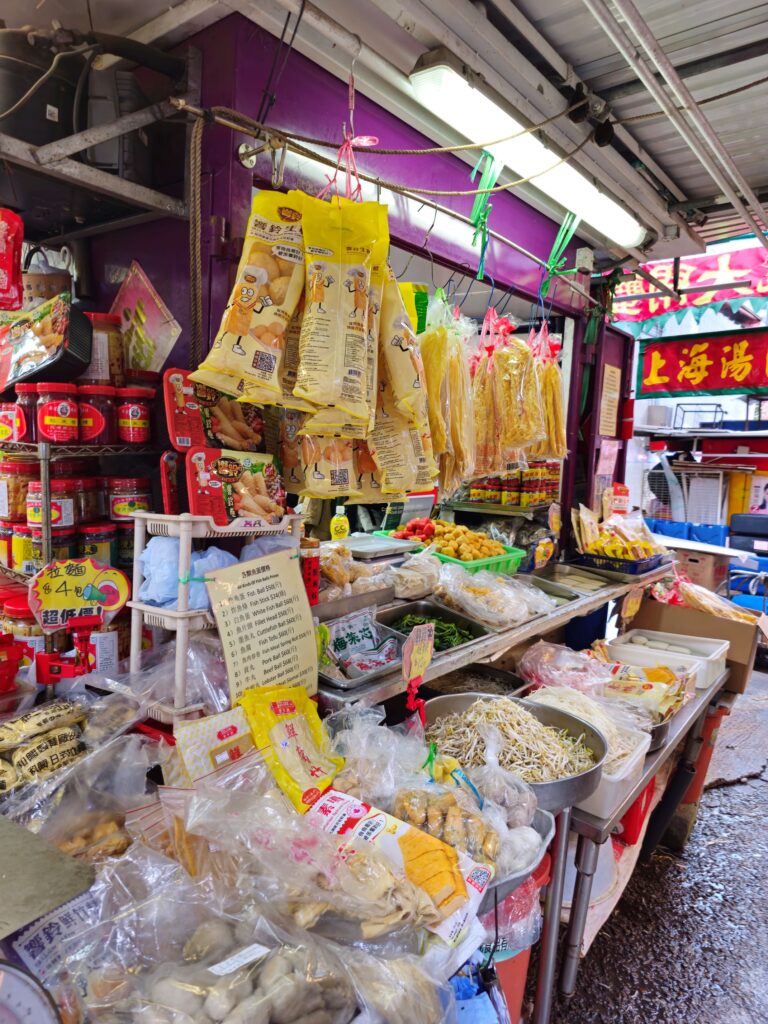
Tofu and Bean Curd: Fresh tofu vendors are among the market’s most specifically local dimension — the range of tofu products available (firm tofu, silken tofu, fried tofu puffs, fermented tofu) reflects the central role of tofu in Cantonese cooking and the tradition of buying it fresh from a dedicated vendor rather than packaged from a supermarket.
Eggs: Multiple varieties including the distinctive century eggs (皮蛋) and salted eggs (鹹蛋) that are specific to Chinese culinary culture alongside standard fresh eggs. The century eggs — their appearance startling to first-time visitors — are a regular purchase for the market’s local shoppers.
Dried goods: Some stalls carry dried goods alongside fresh produce — dried mushrooms, dried seafood, preserved vegetables — reflecting the traditional Chinese pantry that complements the fresh market shopping.
The Vendors
The vendors at Graham Street Market are a mix of long-established stall operators — some of whom have been working this market for decades, inheriting the trade from previous generations — and newer arrivals who have taken up stalls as the market’s composition shifts. The relationship between the vendors and their regular customers is visible in the interaction: the rapid Cantonese exchange, the automatic preparation of a regular customer’s standard order, the brief conversation that’s part of the shopping ritual rather than incidental to it.
For visitors, the vendor interaction is primarily visual — watching the stall operation, observing the produce, and occasionally pointing at something to buy. Most vendors have sufficient experience with non-Cantonese visitors to manage basic transactions by pointing and showing prices; the exchange is functional rather than conversational.
The Market as Local Life
What struck me most about Graham Street Market — and what the experience of walking through it communicates most clearly — is the sense of local life continuing in the middle of one of the world’s most financially intensive urban environments.
Central is defined, at its surface level, by finance and tourism — the banks, the law firms, the hotels, the restaurants priced for expense accounts. One block behind this surface, Graham Street Market sells bok choy and dragon fruit to the residents of the surrounding buildings and the domestic workers who shop here for the households they work in. The market exists for the same purpose it has existed for 150 years: to provide fresh food to the people who live in the neighborhood.
The vendors arranging their stalls in the morning, the shoppers examining produce with the particular attention that daily market shopping produces, the narrow lanes slightly damp from the morning’s activity — these are the textures of ordinary Hong Kong life that the harbor view and the Symphony of Lights don’t show. Being present in Graham Street Market for 20 minutes gives access to a version of Central that feels more real, in some ways, than the financial district that surrounds it.
The Redevelopment Question
Graham Street Market has been the subject of ongoing redevelopment pressure — the land it occupies in Central is among the most valuable in the world, and the market’s traditional street market format occupies space that property development would use differently.
Parts of the original market area have already been redeveloped over recent decades, reducing the market’s footprint from its historical extent. The question of how much of the remaining market will survive further development — and what form the preservation of Hong Kong’s traditional wet market culture will take as the city’s real estate economics continue to transform its urban fabric — is one that the market’s presence raises without resolving.
Visiting Graham Street Market while it exists in its current form is, in this context, not just a tourist activity but an engagement with a dimension of Hong Kong that is actively in the process of changing. The market that exists today may not exist in the same form in ten years.
Best Time to Visit
Morning (7–11am)
The optimal visiting period — the produce is freshest, the vendors are at their most active, and the market atmosphere is at its most concentrated. The morning shopping peak (8–10am) is when the market is busiest with local shoppers and most atmospheric as a visitor experience.
The morning light in the narrow lanes — particularly on clear days when sunlight reaches into the alleys at low angles — gives the most photogenic conditions for the produce stalls.
Midday (11am–2pm)
The market continues operating through midday, with some vendors closing as their stock runs out. The midday version is quieter than the morning peak — still active but less concentrated. Acceptable for a visit if morning timing isn’t possible.
Afternoon
Some stalls remain open through the afternoon, but the market is significantly quieter and the produce selection is reduced from the morning peak. The afternoon market gives a quieter experience but a less complete one.
Photography at Graham Street Market
The market is one of Central’s most photographically rewarding locations — the combination of colorful produce, the narrow lane geometry, and the local activity creates images that capture something about Hong Kong that the more famous viewpoints don’t.
The best angles:
- Looking uphill through a produce-lined lane — the compression of stalls on both sides with the Central hillside visible above
- Close-up details of produce arrangement — the color of tropical fruit, the texture of vegetables
- Vendors at work — arranging stock, serving customers, the daily operation of the market in motion
- The lane geometry itself — the particular width of the alleys, the overhead signage, the urban texture of this specific part of Central
Approaching photography respectfully: The market is a working commercial space. Photographing the produce and the general market scene is entirely appropriate. Photographing individual vendors or customers at close range without implicit permission requires more care — a moment of eye contact and a gesture toward the camera is sufficient acknowledgment.
Combining Graham Street Market with a Central Food Walk
Graham Street Market connects naturally to several other Central food experiences — the morning walk that combines the market with other neighborhood stops is one of the most rewarding ways to spend a Central morning:
Early morning:
Lan Fong Yuen (Gage Street)
→ Milk tea and pineapple bun on the pavement

Mid-morning:
Graham Street Market
→ Walk uphill through the produce lanes
→ Observe the vendors and shoppers
→ Buy fruit to eat while walking

Late morning:
Mid-Levels Escalator
→ Ride uphill through the Soho area

Midday:
Soho restaurants for lunch
This sequence — milk tea, market, escalator, lunch — covers the full range of Central’s layered character in a single morning without requiring transport.
Graham Street Market vs Other Hong Kong Markets
| Graham Street | Temple Street | Ladies Market | Wet Market (Sheung Wan) | |
|---|---|---|---|---|
| Type | Fresh produce (wet market) | Night market | Street market | Traditional wet market |
| Hours | Morning primarily | Evening | Afternoon/evening | Morning |
| Produce | ✅ Fresh food | Goods/souvenirs | Clothing/goods | Fresh food/seafood |
| Atmosphere | ✅ Most local | Tourist-facing | Tourist-facing | Very local |
| Location | Central (HK Island) | Yau Ma Tei | Mong Kok | Sheung Wan |
| Best for | Local life experience | Atmosphere + food | Shopping | Serious produce shopping |
Graham Street Market occupies a specific position among Hong Kong’s markets — the most accessible traditional wet market for visitors staying in Central, with the highest concentration of local-life authenticity relative to its location in the tourist circuit.
Practical Tips
Arrive in the morning: The market is at its best before 11am — freshest produce, most active vendors, most concentrated atmosphere.
Walk slowly: The narrow lanes reward slow walking rather than purposeful transit. The market is small enough that rushing through it misses the point.
Buy something: Even a small purchase — a piece of tropical fruit, a handful of vegetables — connects the visit to the market’s actual purpose rather than leaving it as pure observation. The fruit in particular is worth buying and eating while walking.
Photography: The uphill lane view is the most characteristic image. Morning light in the lanes is the best photography condition.
Combine with Lan Fong Yuen: The two are within a few minutes of each other — milk tea at Lan Fong Yuen followed by a market walk is one of Central’s best consecutive experiences.
Respect the working environment: The market operates for the benefit of its regular customers first. Moving through it at a pace that allows the normal flow of shopping to continue — rather than stopping in the middle of a narrow lane to photograph — is the appropriate approach.
Final Thoughts
Graham Street Market is the place where Central’s surface — the financial district, the luxury retail, the Michelin-starred restaurants — gives way to the layer underneath: the ordinary daily life of a neighborhood that has been buying fresh produce in these lanes for 150 years.
The narrow lanes, the vendors’ voices, the green of fresh vegetables and the color of tropical fruit piled in open displays — these are the textures of a Hong Kong that exists alongside the famous skyline rather than being defined by it. Walking through Graham Street Market in the morning, carrying a piece of dragon fruit bought from a stall that has probably occupied the same spot for decades, gives a dimension of the city that no harbor view provides.
Find the market from Queen’s Road Central. Walk uphill through the lanes. Buy some fruit. Walk to the Mid-Levels Escalator afterward.
It takes 20 minutes. It’s worth every one of them.
Lan Fong Yuen Review: The Hong Kong Milk Tea That Started It All
Central Hong Kong Neighborhood Guide: Everything You Need to Know