

If Tsim Sha Tsui is where you go to look at Hong Kong, Central is where you go to be inside it. I moved from my Kowloon hotel to the AKVO Hotel in Central on the third day of my January trip, crossing on the Star Ferry, and the difference was immediate — the energy shifted from the wide harbor-front promenade of Tsim Sha Tsui to something denser and more layered, with hillside escalators climbing above the streets, narrow lanes packed with restaurants and bars, and the kind of vertical city life that Central delivers better than anywhere else in Hong Kong.
This guide covers Central from the perspective of someone who actually spent two days living in it — the sights, the food, the neighborhoods within the neighborhood, and the practical details that make it work as a base.
Where Is Central?
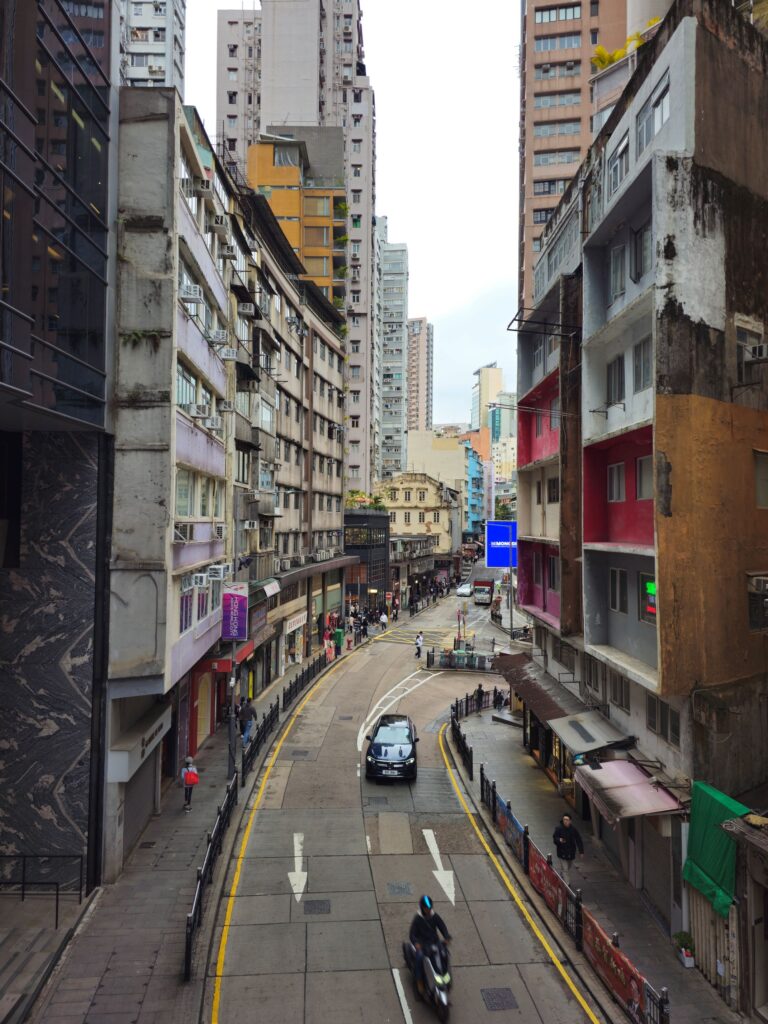
Central (中環) occupies the northern waterfront of Hong Kong Island — directly across Victoria Harbour from Tsim Sha Tsui, and the financial and commercial heart of the city. The neighborhood extends from the Star Ferry pier westward through Sheung Wan, and climbs the steep hillside above through the Mid-Levels toward Victoria Peak.
The geography of Central is vertical as much as horizontal. The flat land along the waterfront — reclaimed from the harbor over successive decades — holds the financial towers and major transport hubs. Behind them, the streets climb steeply through Soho and the Mid-Levels, connected by the famous escalator system. Above everything, the Peak rises to 552 meters, visible from almost anywhere in Central on a clear day.
Understanding this vertical geography — waterfront, mid-level, peak — helps organize Central’s neighborhoods and makes navigating them considerably more intuitive.
Getting to Central
Star Ferry from Tsim Sha Tsui
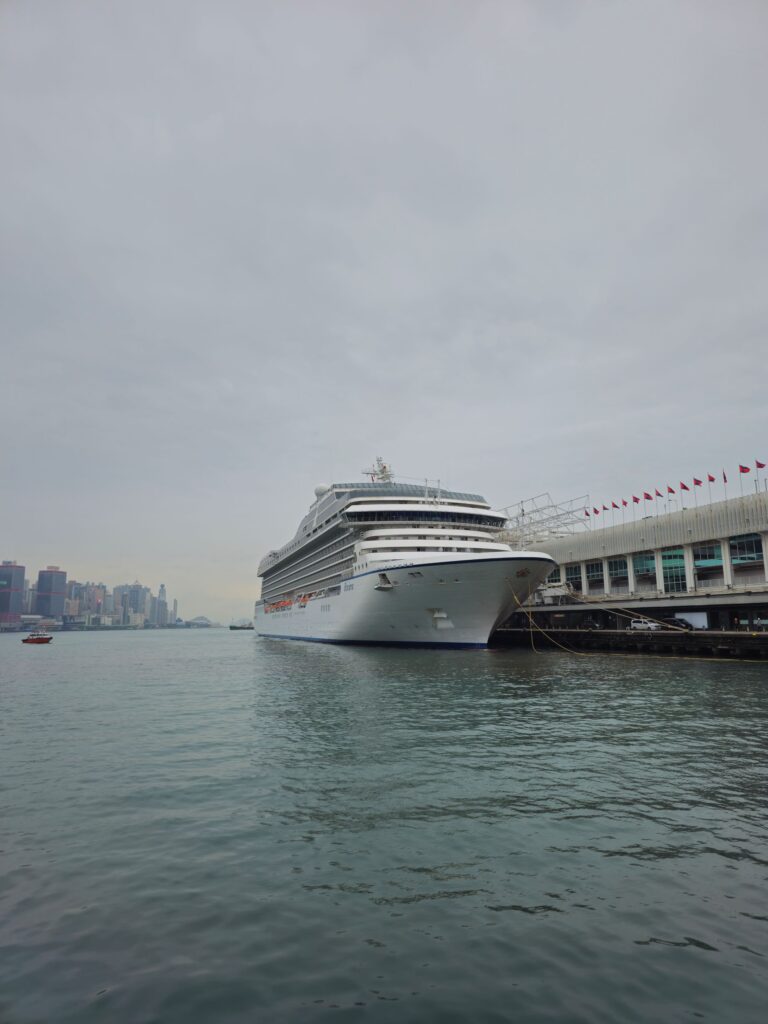
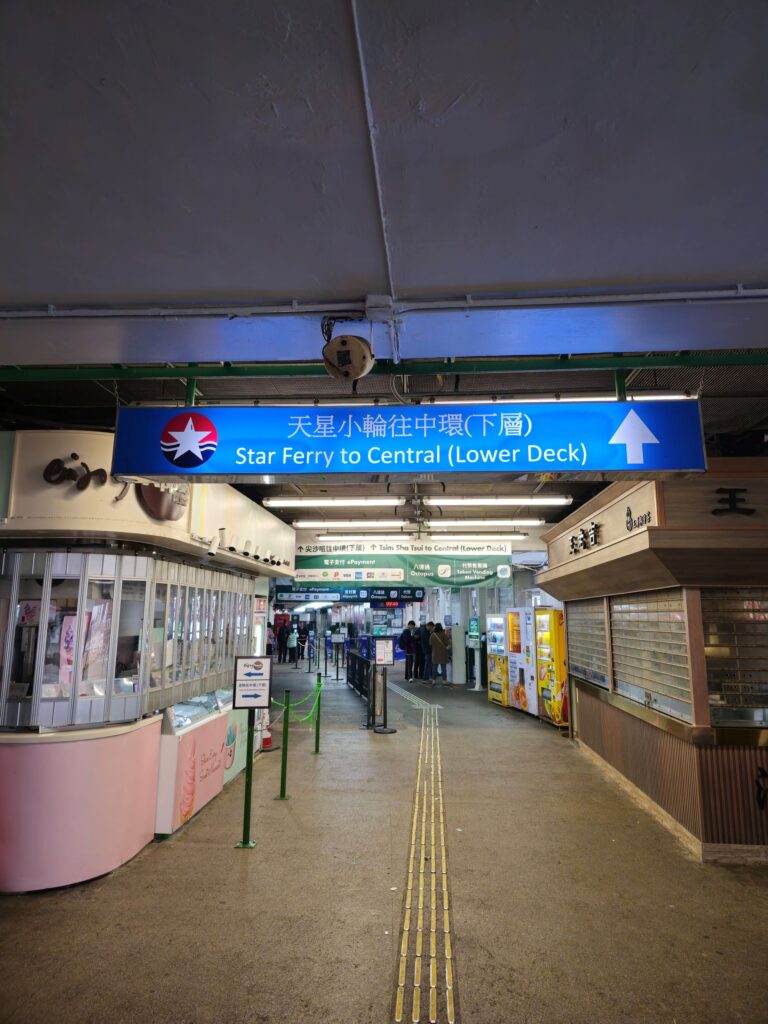
The Star Ferry from Tsim Sha Tsui Pier to Central Pier 7 is the most atmospheric way to arrive in Central — a 10-minute crossing that delivers you directly to the waterfront with the towers of the financial district rising immediately ahead. The ferry has been running since 1888 and remains one of Hong Kong’s most iconic experiences. Always take the upper deck. The fare is minimal and the journey is one of the best value experiences in the city.
The Star Ferry runs frequently from early morning until approximately 11:30pm. For visitors crossing from Tsim Sha Tsui to Central during their stay, the ferry is almost always preferable to the MTR cross-harbour tunnel — it costs a similar amount, takes a similar time, and delivers you to the waterfront rather than underground.
MTR
The MTR Hong Kong Station (Tung Chung and Airport Express lines) and Central Station (Island and Tsuen Wan lines) both serve the neighborhood, connecting to the full MTR network. The cross-harbour tunnel between Tsim Sha Tsui and Central takes under 5 minutes by MTR — practical for late nights when the Star Ferry has stopped running.
Getting from the Airport
The Airport Express terminates at Hong Kong Station in Central — the most direct connection between the airport and the neighborhood, taking 24 minutes from the airport. Check-in for departing flights is available at Hong Kong Station the day before departure, which is one of the most genuinely useful travel conveniences in Asia.
Where to Stay in Central
AKVO Hotel
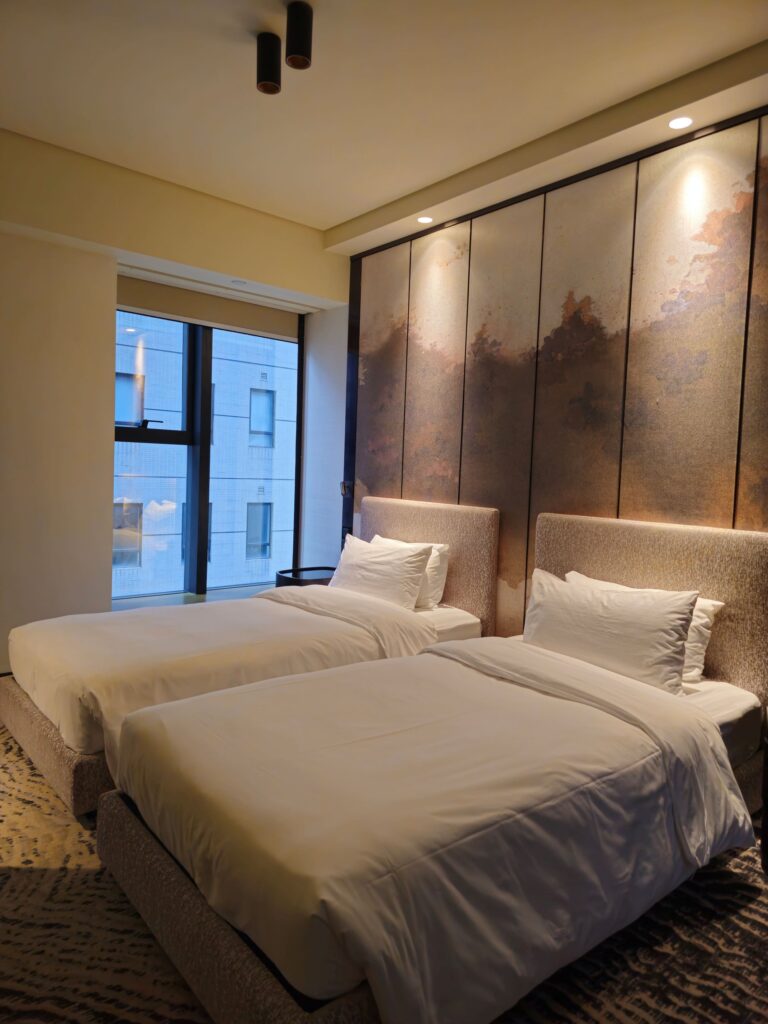
The AKVO Hotel is a boutique property that represents a particular type of Central accommodation — design-conscious, compact, and positioned to make the most of the neighborhood rather than compensate for a peripheral location. Staying here placed me within walking distance of the Mid-Levels Escalator, Soho, and the Central Market, with the Star Ferry pier reachable in about 10 minutes on foot.
The rooms reflect Hong Kong’s standard compact dimensions but are well-designed within those constraints. The neighborhood position is the primary selling point — Central boutique hotels at this price point trade room size for location, which is consistently the right trade-off in Hong Kong.
Other Central Options
Central’s hotel landscape ranges from international business hotels near the MTR stations to boutique properties in the Soho and Sheung Wan areas. The Mandarin Oriental on Connaught Road represents the traditional luxury end — one of Hong Kong’s landmark hotels, with the harbor views and service standards that justify the price for the right visitor. Mid-range options cluster around the Central and Sheung Wan MTR stations, with the Soho area having the most interesting boutique properties.
For visitors choosing between Tsim Sha Tsui and Central as a base, the key difference is perspective: Tsim Sha Tsui faces the island skyline; Central puts you inside it. Both are right, depending on what kind of Hong Kong experience you’re after.
Getting Around Central
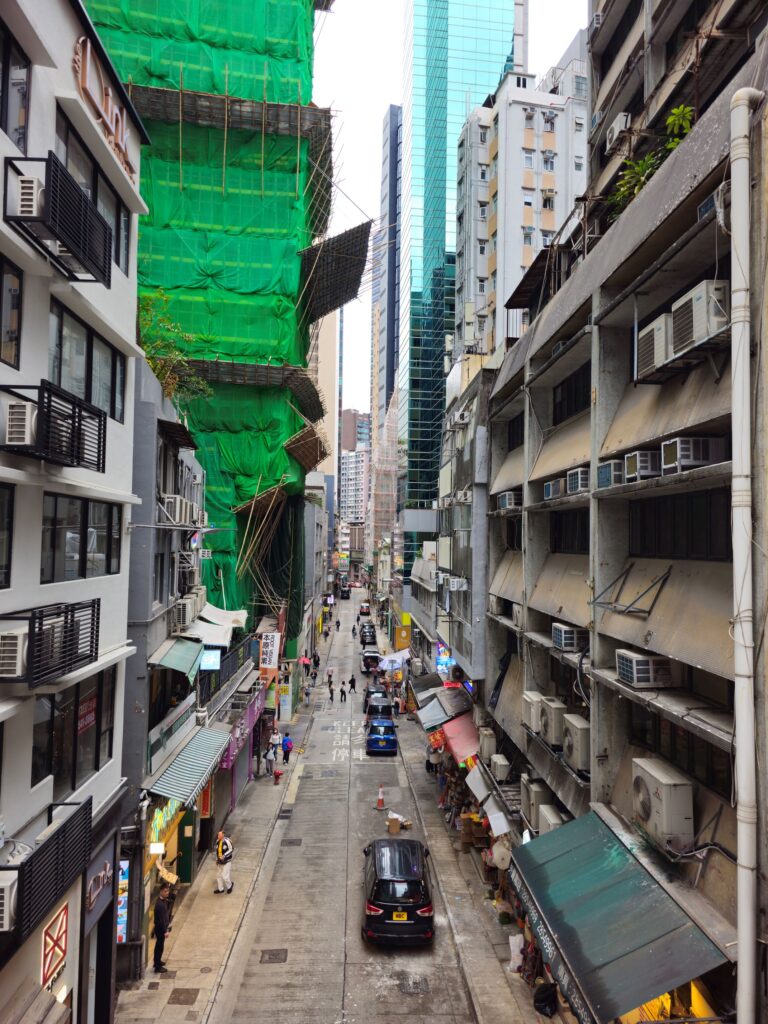
Central’s geography makes it uniquely walkable in some directions and genuinely steep in others.
On the flat: The waterfront promenade, the streets between the MTR stations, and the blocks around Lan Kwai Fong and the Central Market are easily walkable at street level. Most errands and short journeys in the flat part of Central don’t require any transport.
Going uphill: The Mid-Levels Escalator (covered below) handles the climb from Central to Soho and the Mid-Levels. For destinations further up the hill, buses run from Central Bus Terminus up to the Peak and through the Mid-Levels neighborhoods.
Going to the Peak: Bus 15 from the Central Bus Terminus runs to the Peak Tram lower terminus and beyond — a slower but more scenic alternative to the tram for the upward journey. The Peak Tram itself departs from Garden Road, a short walk from the MTR.
Taxis: Readily available in Central, particularly around the major hotels and MTR exits. Useful for late nights and for reaching destinations like the Hong Kong Observation Wheel on the harbourfront that are a longer walk from the main Central area.
What to See and Do in Central
Mid-Levels Escalator and Soho
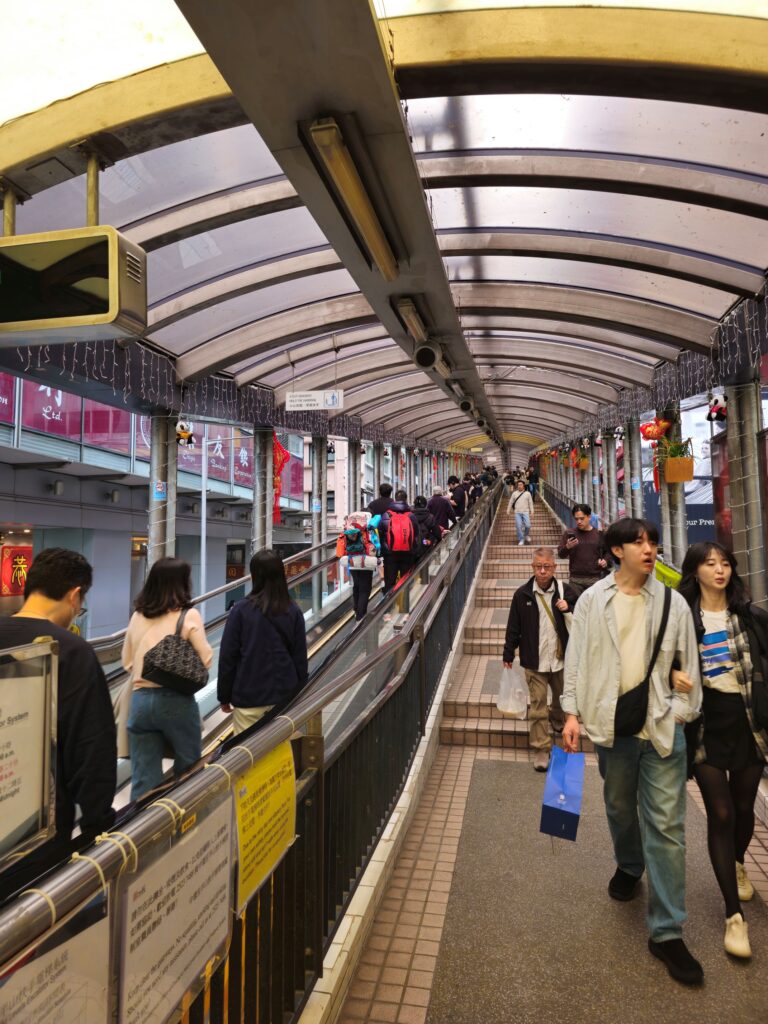
The Mid-Levels Escalator (中環至半山自動扶梯) is the world’s longest outdoor covered escalator system — a series of moving walkways and escalators stretching 800 meters from Central’s Queens Road up through the Soho dining district and into the Mid-Levels residential neighborhoods above. It carries approximately 55,000 people daily and is a genuine piece of daily infrastructure that locals depend on for commuting.
For visitors, riding the escalator is both practical and experiential. The ascent takes you through changing layers of the city — at street level through the Central Market area, then up past the traditional wet markets and herbalist shops of the lower section, through the international restaurant-lined streets of Soho, and into the quieter residential Mid-Levels above. The city reveals itself differently at each level, and the 20-minute ride from bottom to top is one of the more interesting ways to understand Central’s vertical geography.
Direction note: The escalator runs uphill only from 10am to midnight. From 6–10am it runs downhill for morning commuters. If you want to go up before 10am, walk or take a bus — then ride the escalator down.
Soho (the neighborhood South of Hollywood Road, served by the escalator) is Central’s most internationally diverse dining and bar district — the streets between Hollywood Road and Elgin Street lined with restaurants covering every cuisine from Japanese to Lebanese to Italian, at price points from casual to fine dining. It’s the neighborhood that most reflects Hong Kong’s international character and the one most worth exploring on foot without a specific destination.
The side streets off the escalator route reward slow exploration. Shelley Street, Staunton Street, and the lanes connecting them have the most interesting concentration of independent cafés, bars, and restaurants — including Amo·Ago, a café worth stopping at for coffee and pastries during an escalator walk. The kind of place that fits Central’s creative, design-conscious side perfectly.
Central Market
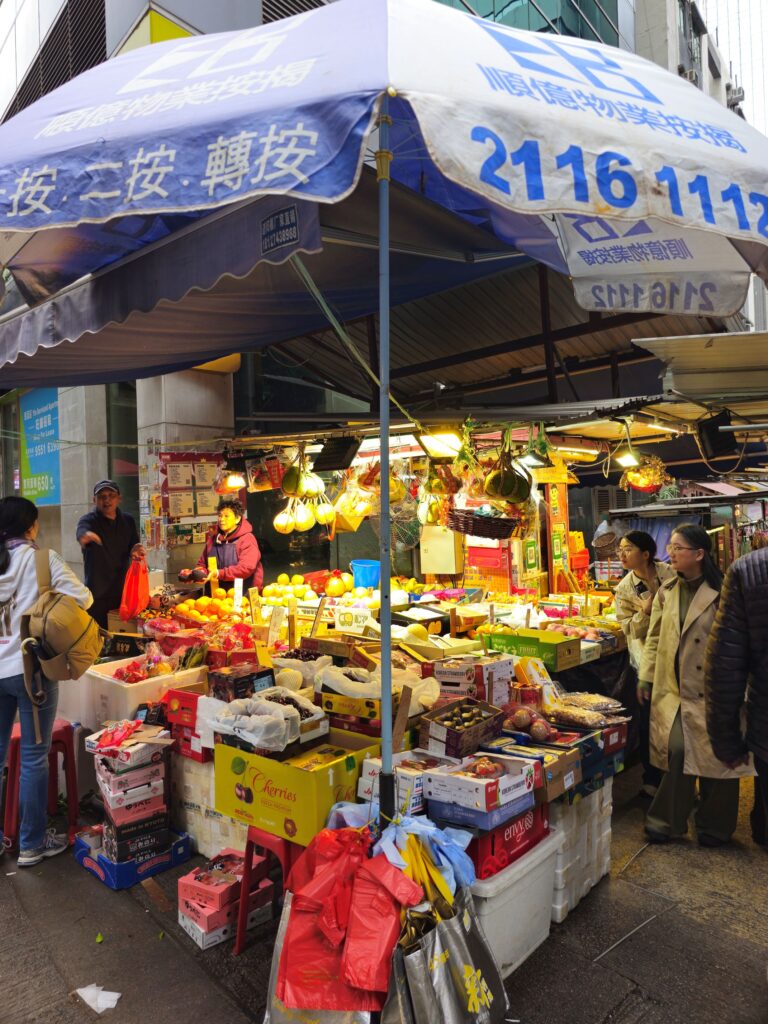
The Central Market (中央街市) occupies a four-story Art Deco building from 1939 on Queen Victoria Street — recently revitalized after years of disuse into a mixed-use space combining food stalls, independent retailers, craft vendors, and open common areas. The building’s renovation preserved its original structure while adding contemporary elements, and the result is one of Central’s more interesting spaces for an hour of browsing.
The ground floor food hall has a range of local and international options. The upper floors mix retail with workspace and event areas. The building’s history — as a working wet market for decades — is referenced throughout the renovation, giving the space more character than a standard mall conversion.
For visitors, Central Market works well as a midday stop between the escalator area and the waterfront — a place to browse, eat, and rest in a building that represents Hong Kong’s ongoing negotiation between preservation and development.
Victoria Peak
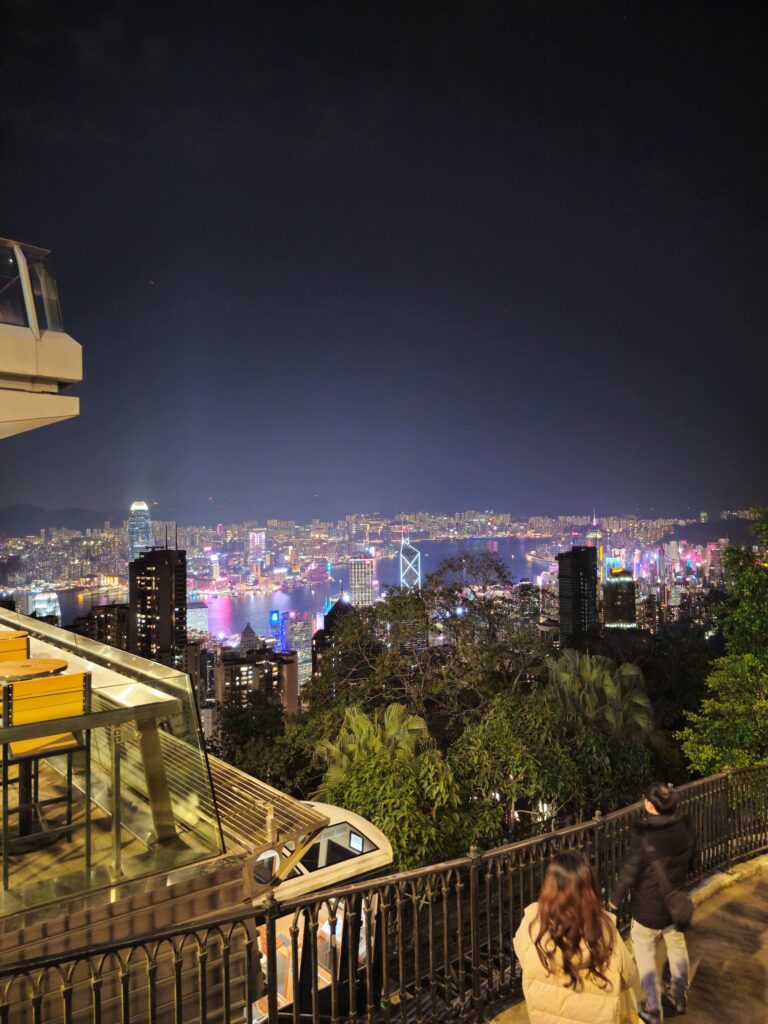
Victoria Peak (太平山) is the most essential sight on Hong Kong Island — and Central is the departure point for the Peak Tram (山頂纜車), the funicular railway that has been climbing the hillside since 1888. The ride itself is half the experience: the tram climbs at a steep angle through the densely forested hillside, buildings tilting at dramatic angles as you ascend, before arriving at the Peak Tower at the top.
I visited the Peak in the evening of my second day in Central, taking the 56 bus from Causeway Bay to the tram terminus rather than walking from Central — a useful route that avoids the walk from the MTR and deposits you directly at the lower tram station. The tram then carries you to the Peak Tower in about 7 minutes.
Victoria Peak at night is the experience I’d most strongly recommend. The city at night — seen from 396 meters above the harbor, with the full sweep of Central, Wan Chai, and the Kowloon skyline beyond laid out below — is one of the most impressive urban views available anywhere. The scale and density of the illuminated towers, reflected in the harbor, hits differently after dark than it does during the day. The evening crowds are smaller than the afternoon peak, and the combination of cooler air and illuminated cityscape makes the visit genuinely memorable.
The Lugard Road Loop — a circular walking path around the peak — takes about 45 minutes and provides shifting views as you walk, including angles on the harbor that the main lookout doesn’t offer. In the evening, sections of the loop that face the city give particularly dramatic perspectives on the lit skyline below.
Getting back: Bus 15 runs from the Peak back down to Central Bus Terminus, taking a winding route through the hillside residential areas before descending to street level. The late-night bus is a reliable option after an evening visit — the tram also runs until midnight.
Hong Kong Observation Wheel and AIA Vitality Park
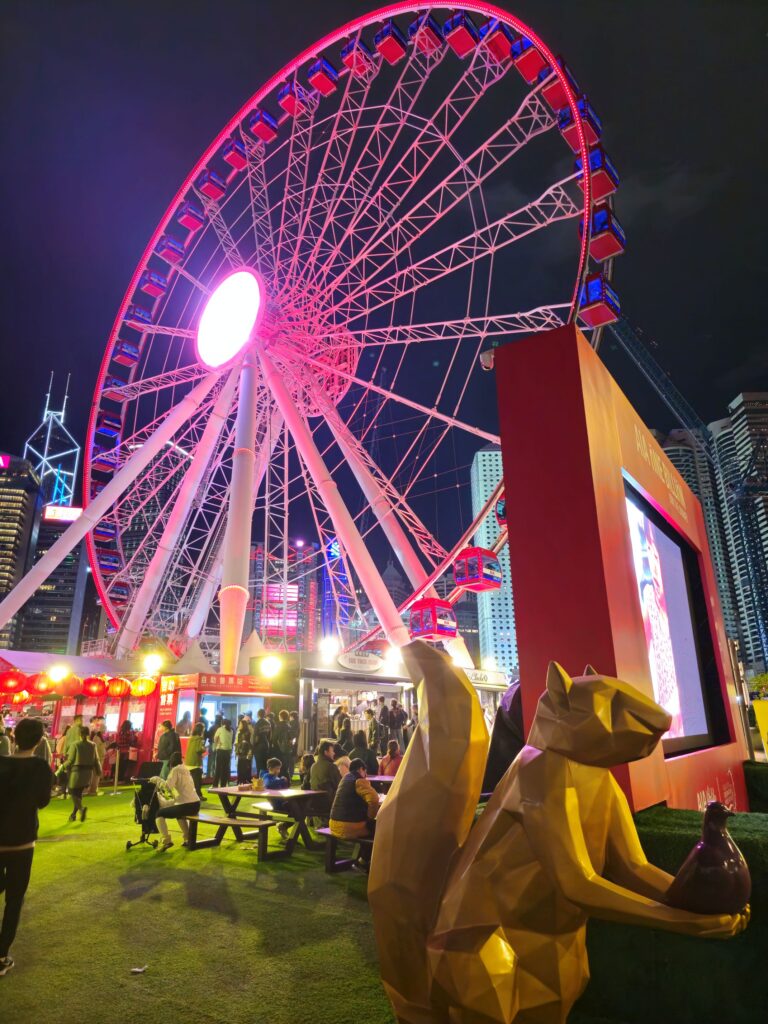
The Hong Kong Observation Wheel (香港摩天輪) sits on the Central Harbourfront — a 60-meter Ferris wheel giving a slowly rotating 360-degree view of Victoria Harbour from a perspective completely different from the Peak. Where the Peak looks down on the city from above, the Observation Wheel puts you at water level, rotating slowly while the harbor moves around you and the towers of Central rise immediately behind.
Each gondola is fully enclosed and air-conditioned, making it comfortable in any season. One full rotation takes 15–20 minutes — enough time to complete the full view without feeling rushed. The gondola windows give clean sightlines in every direction, and the harbor view from the water-facing side of the rotation — with Tsim Sha Tsui and the Kowloon skyline directly across — is the best angle.
I reached the Observation Wheel by taxi from the Soho area — a short journey that avoided the 15-minute walk from Central MTR. The AIA Vitality Park adjacent to the wheel is a pleasant open waterfront space with views of the harbor on both sides — worth a short walk before or after the wheel.
Timing: The early evening visit (just before sunset, staying through the first hour of darkness) gives you the transition from golden afternoon light to full city illumination in a single rotation — the most rewarding version of the experience.
Lan Kwai Fong
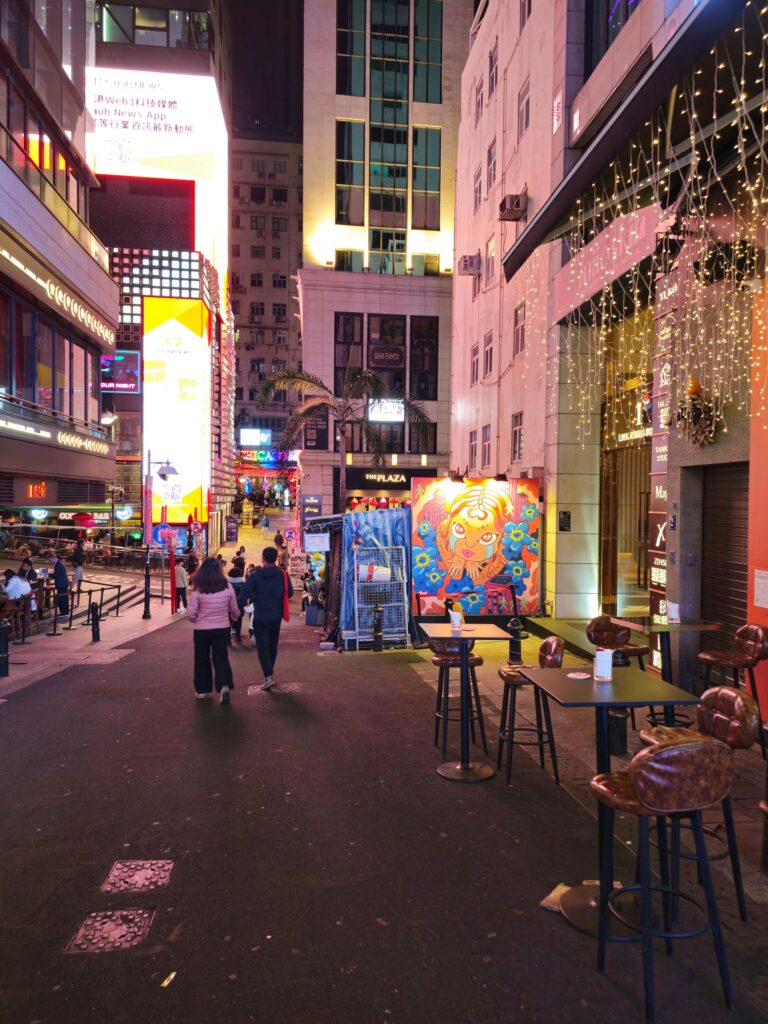
Lan Kwai Fong (蘭桂坊) — a cluster of bars, restaurants, and clubs packed into a few steep, narrow streets just uphill from Central’s business district — is Hong Kong’s most famous nightlife area and one of the most consistently lively parts of the city after dark. The streets are narrow enough that the sound and atmosphere from the bars spills out into a single continuous experience, and on any night of the week from around 9pm the area has an energy that’s specific to it.
For visitors, Lan Kwai Fong works best as an evening endpoint — a place to end the day with a drink after dinner in Soho or a visit to the Observation Wheel, rather than a destination in its own right. The bar selection covers everything from Hong Kong craft beer to international cocktail bars to the kind of loud, crowded venue that defines the area’s reputation. In January the outdoor terraces are comfortable in the cool evening air — considerably more pleasant than the same streets in August heat.
Sheung Wan and Hollywood Road
Immediately west of Central, Sheung Wan (上環) offers a quieter, more historically layered version of the neighborhood. The streets around the Western Market and climbing up toward Hollywood Road have antique shops, art galleries, traditional Chinese medicine practitioners, and dried seafood vendors operating alongside contemporary cafés and restaurants — a mix that reflects Sheung Wan’s position as one of the oldest parts of the city.
Hollywood Road itself is worth a slow walk for the antique shops and galleries that line it — furniture, ceramics, jade, and art from various periods of Chinese history, alongside contemporary Hong Kong art. The Man Mo Temple partway along Hollywood Road is one of Hong Kong’s oldest temples — small, atmospheric, perpetually filled with incense smoke, and free to enter. A genuine contrast to the financial district energy a few blocks downhill.
Where to Eat in Central
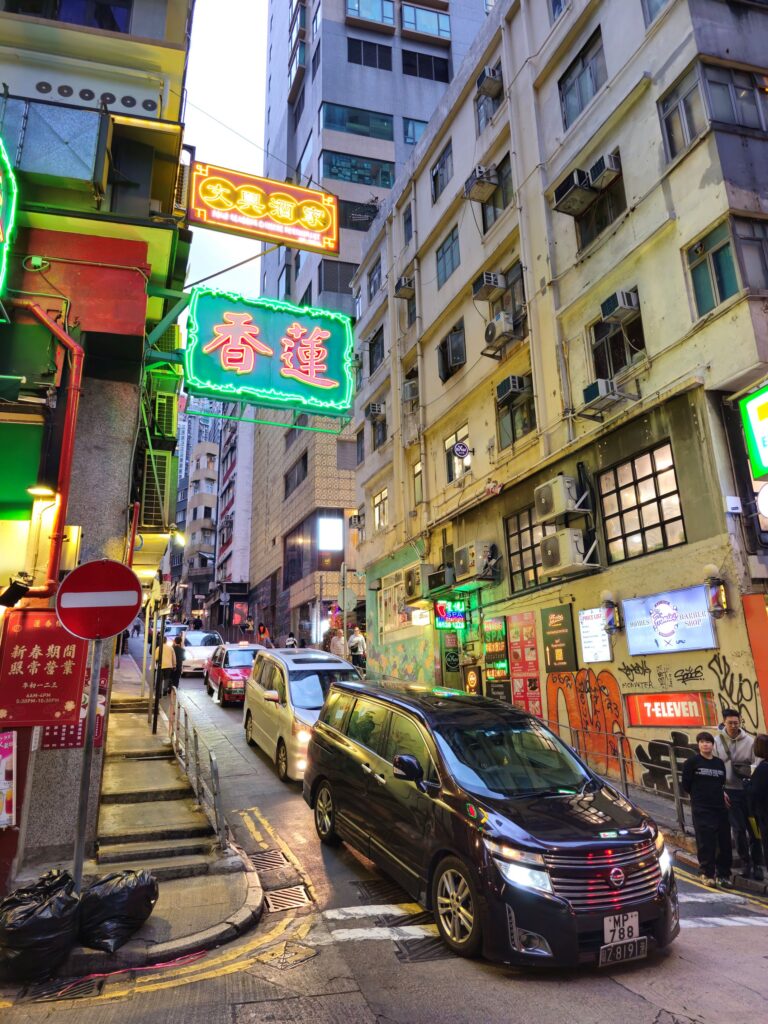
Lin Heung Tea House (蓮香樓)
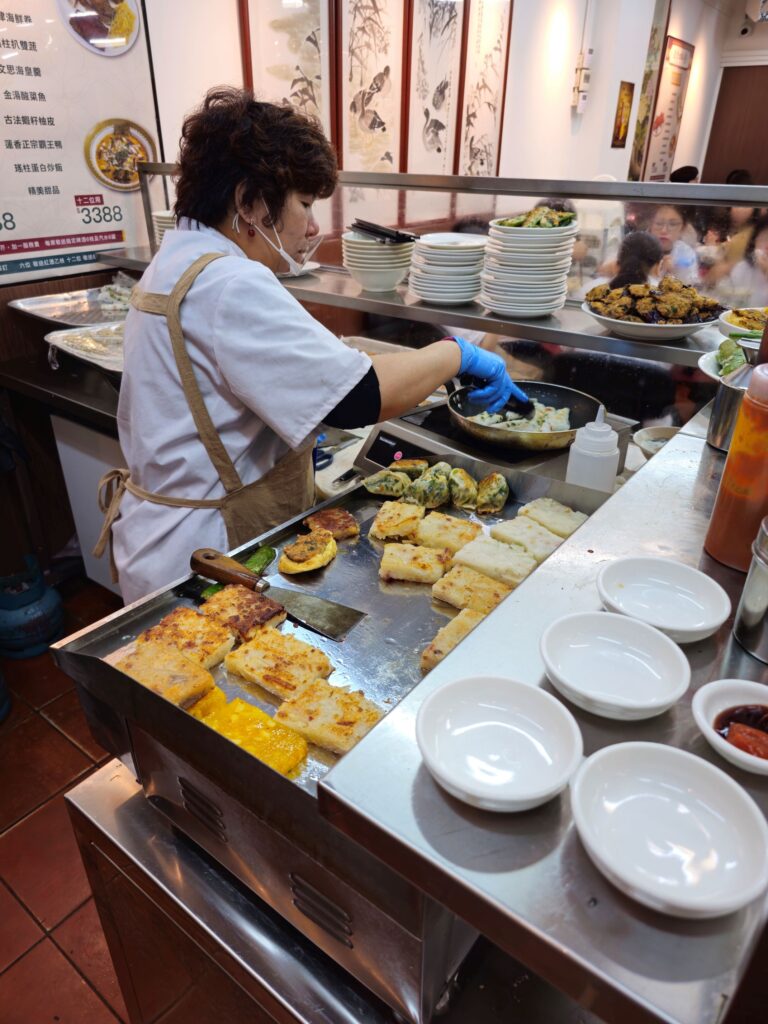
Lin Heung Tea House in Sheung Wan — a short walk west from Central — is one of Hong Kong’s oldest and most traditional dim sum institutions, operating since 1926 with a trolley service and a dining room atmosphere that has changed little in decades. The experience is as much about the history and the setting as the food itself: sharing tables with local regulars, flagging down trolleys, eating dim sum in the way it’s been eaten in Hong Kong for a century.
For lunch on the first day in Central, Lin Heung delivers an experience that more modern dim sum restaurants — however good their food — can’t replicate. The har gow, siu mai, and char siu bao are the reliable orders; the lo mai gai (lotus leaf sticky rice) from the trolley is worth waiting for.
Tsim Chai Kee (沾仔記)
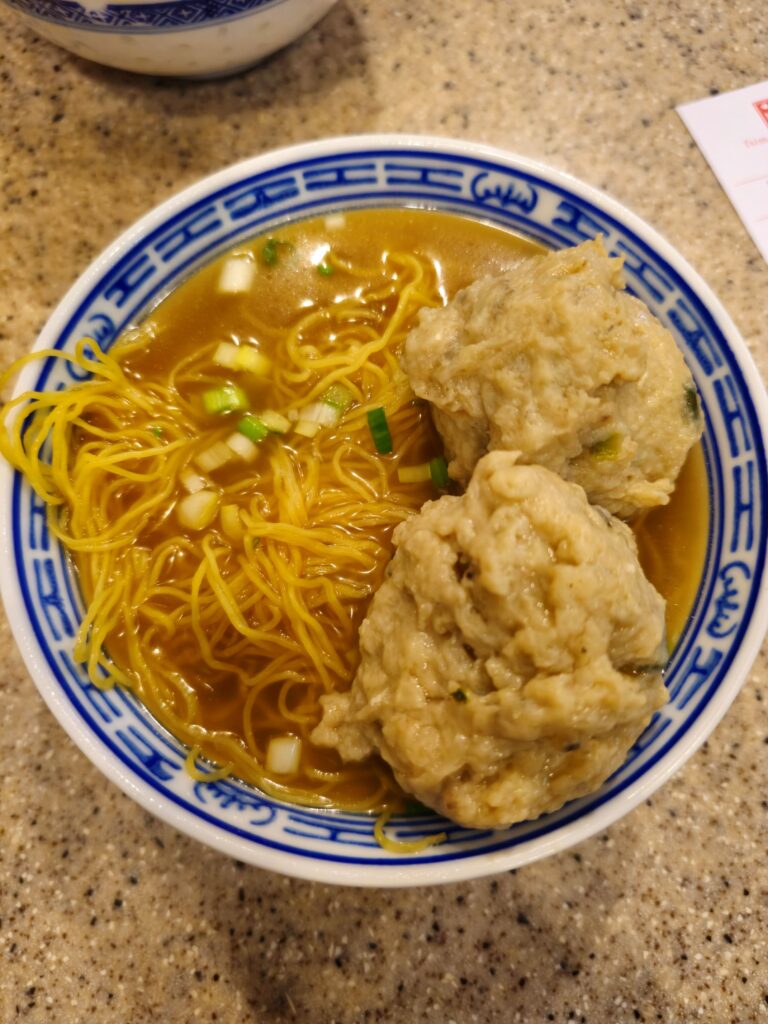
Tsim Chai Kee on Wellington Street is one of Central’s most celebrated wonton noodle shops — a tiny, standing-room-only operation that has been serving the same bowl of springy egg noodles in shrimp-and-pork broth, topped with large whole-prawn wontons, for decades. The quality is consistent, the price is low, and the experience — eating a perfect bowl of wonton noodles at a counter in a small Central shophouse — is one of the most authentically Hong Kong meals available in the neighborhood.
Order the wonton noodle soup and nothing else. Eat quickly. The queue outside moves steadily and turnover is fast — the whole operation takes about 20 minutes from joining the line to finishing the bowl.
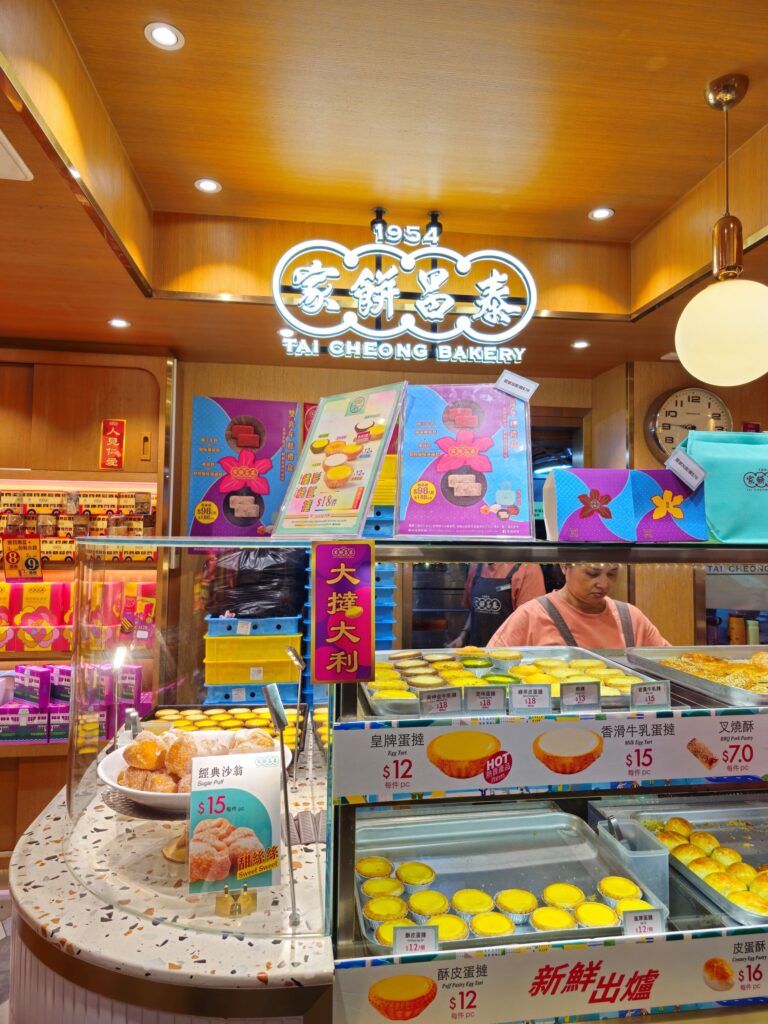
Tai Cheong Bakery (泰昌餅家)
Tai Cheong Bakery near the former Government House on Lyndhurst Terrace has been making Hong Kong egg tarts since 1954 — the shortcrust pastry version, crumbly and buttery, with smooth egg custard filling. The tarts are best eaten warm, immediately after purchase, standing outside the shop. The queue is usually short and moves quickly.
For visitors doing an egg tart comparison — Tai Cheong’s traditional shortcrust version against Bakehouse’s contemporary flaky pastry version (available in Causeway Bay) — this is the first stop. The two styles are genuinely different and comparing them directly is one of the more enjoyable small food projects available in Hong Kong.
Lan Fong Yuen (蘭芳園)
Lan Fong Yuen on Gage Street in the SoHo area claims to have invented Hong Kong milk tea in 1952, and the original shophouse location — narrow, with outdoor seating on the pavement — is one of Central’s most atmospheric food stops. The silk stocking milk tea here is the benchmark version: thick, smooth, intensely flavored, with the evaporated milk and tea balanced at a ratio that feels definitive. Order it with a pineapple bun with butter, eat standing outside on Gage Street, and understand why this combination has been a Hong Kong morning ritual for decades.
Amo·Ago
Amo·Ago on the Mid-Levels Escalator route is the kind of café that Central does particularly well — design-conscious, quality-focused, and positioned to serve the neighborhood’s creative and professional population. Good coffee, well-made pastries, and a comfortable space for a mid-morning or afternoon break during an escalator walk. The kind of stop that doesn’t require a destination justification — just sit, drink good coffee, and watch Central go past.
Central vs Tsim Sha Tsui: The Honest Comparison
Having stayed on both sides of the harbor on the same trip, the difference is real and worth articulating.
Tsim Sha Tsui gives you the harbor view — you’re looking at Hong Kong Island across the water, and the skyline is the constant backdrop. The neighborhood has a slightly more working-class, Kowloon energy, and the tourist infrastructure is more visible.
Central puts you inside the city — the harbor is still accessible but you’re surrounded by towers rather than facing them. The neighborhood energy is more international and more varied, with the Soho and Mid-Levels adding a dimension that Tsim Sha Tsui doesn’t have. The dining options are broader and the bar scene is more developed.
Neither is objectively better — they’re different experiences of the same city. The ideal first Hong Kong visit includes both.
Practical Tips for Central
- Octopus Card: Essential for the Star Ferry, MTR, and buses — top up at any 7-Eleven
- Mid-Levels Escalator direction: Uphill from 10am to midnight only — plan morning uphill journeys by bus or on foot
- Peak Tram queues: Book online to skip the ticket queue; evening visits have shorter waits than afternoon
- Taxi to Observation Wheel: Short taxi ride from Soho faster than walking from MTR
- Lan Kwai Fong: Busy from 9pm — earlier visits feel empty; later visits feel right
- Star Ferry last service: Approximately 11:30pm from Central to Tsim Sha Tsui — check current schedule
Final Thoughts
Central is the neighborhood that makes Hong Kong feel like itself — the financial towers, the hillside escalator, the markets and temples of Sheung Wan, the bars of Lan Kwai Fong, and the Peak rising above everything. Two days here gives you the essential Central experience: the harbor crossing by Star Ferry, the escalator climb through Soho, the wonton noodles at a counter on Wellington Street, the Peak at night, and a final morning coffee at Lan Fong Yuen before heading to the airport.
It’s a neighborhood that rewards walking more than any transport, and wandering more than any itinerary. Give it time and it delivers.
Hong Kong 4-Day Itinerary: The Perfect First-Timer’s Guide
Temple Street Night Market, Hong Kong: The Ultimate Guide to Kowloon’s Most Iconic Night Market