

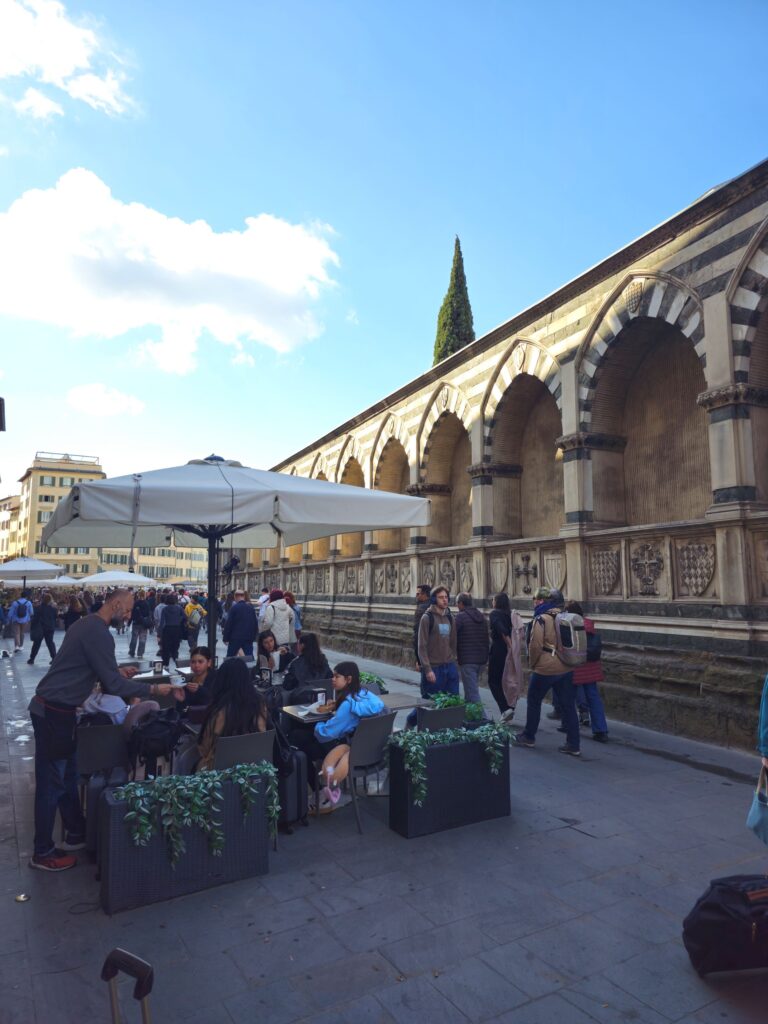
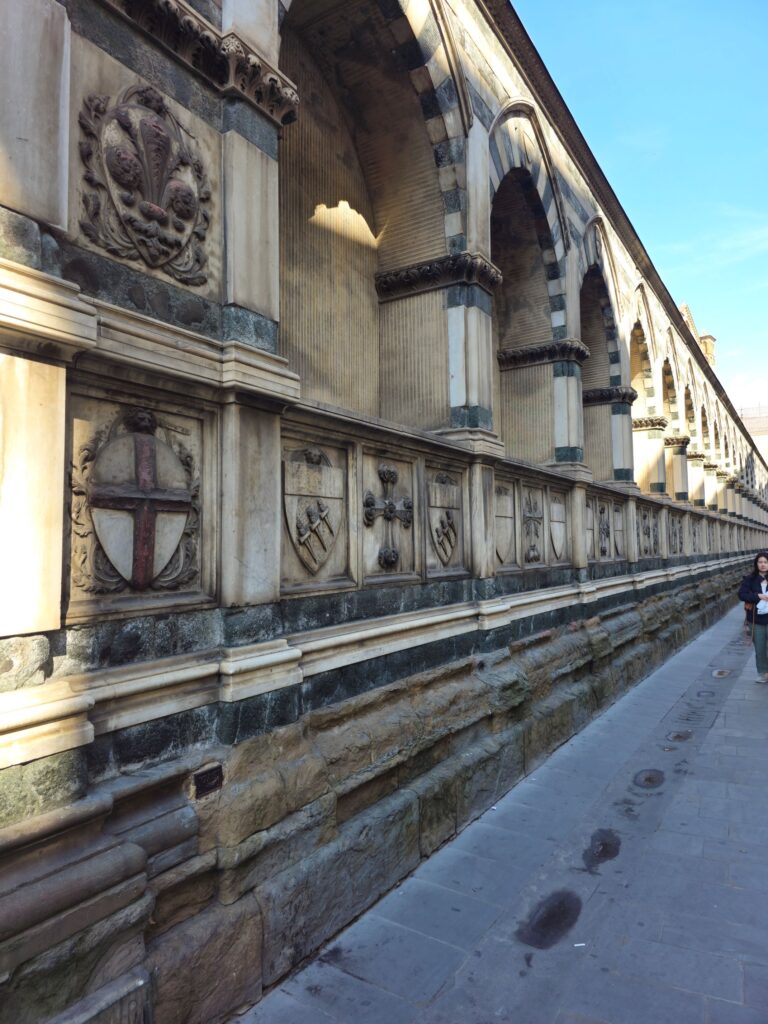
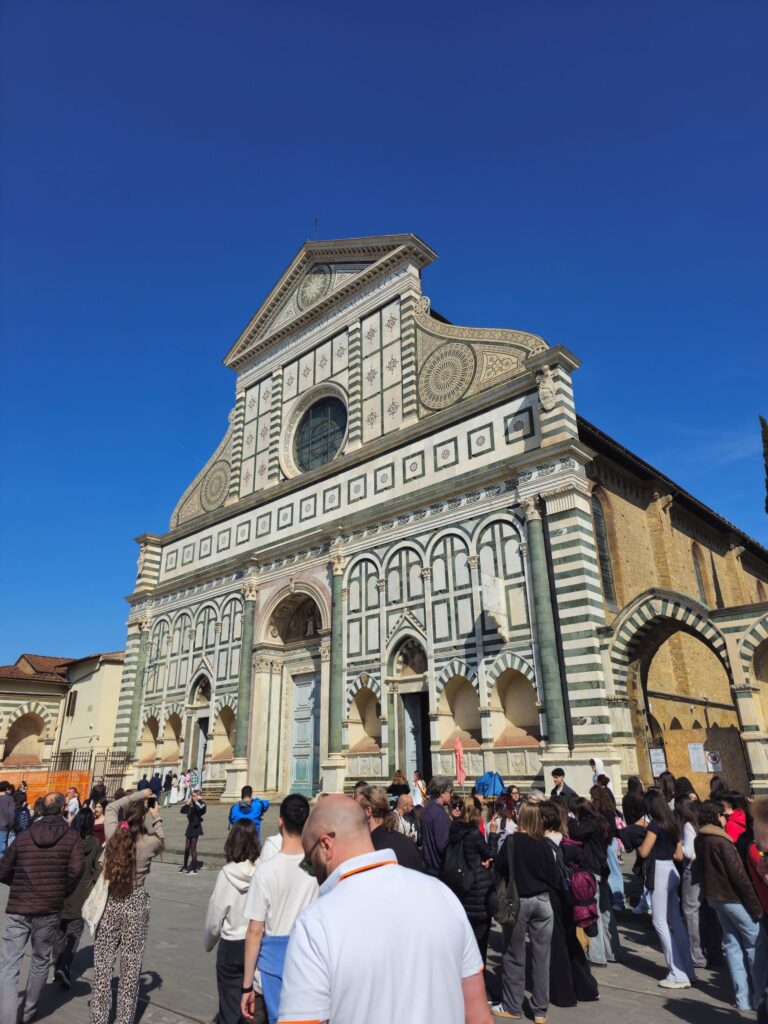
Florence welcomes visitors with timeless charm, and among its first grand impressions is the Basilica of Santa Maria Novella. Located just a 10-minute walk from the city’s main railway station (Firenze S.M.N.), this architectural gem stands as a gateway into the Renaissance capital’s rich artistic and spiritual traditions. Its iconic façade, intricately adorned with green and white marble, and the expansive piazza before it, create a breathtaking welcome. The surrounding walls feature carefully sculpted reliefs, adding detail and elegance to the basilica’s presence. As both a spiritual sanctuary and historical landmark, it bridges centuries of faith, art, and Florentine identity.
Historical Background and Origins
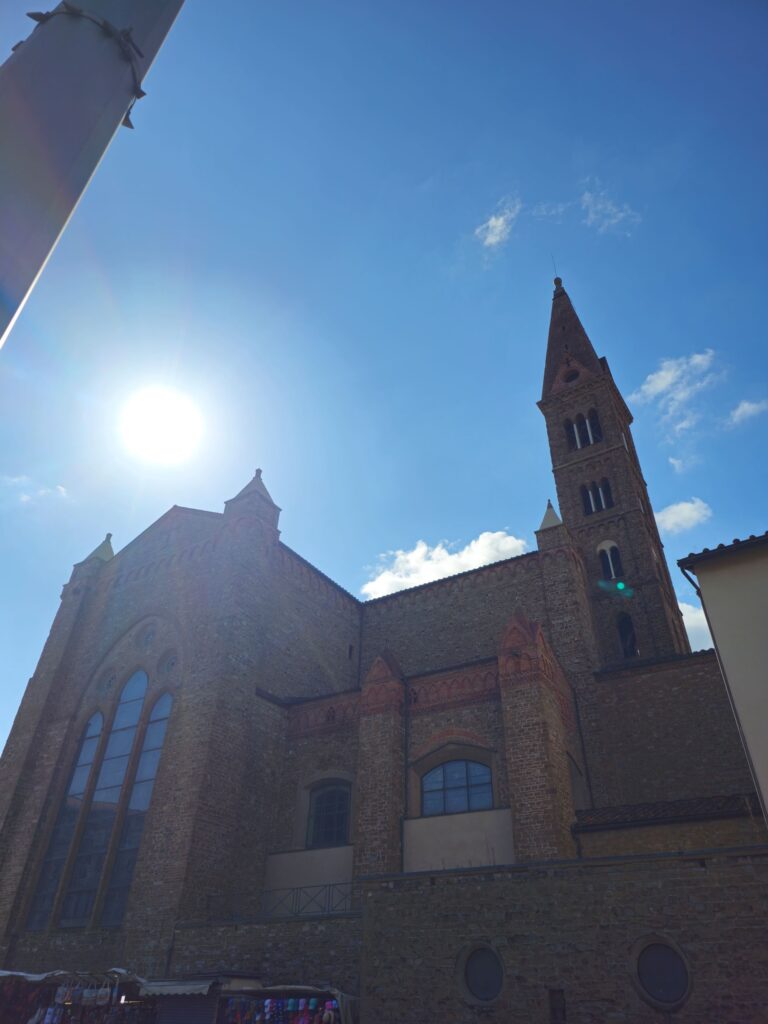
The origins of Basilica of Santa Maria Novella back to the 9th century when a small oratory known as Santa Maria delle Vigne (“Saint Mary of the Vineyards”) stood on the site. In 1221, the Dominican order took over the space and began constructing a much larger church and convent complex. The Dominicans sought to create a spiritual and intellectual center for Florence. Construction began in 1279 under the guidance of two Dominican friars, Fra Sisto and Fra Ristoro, and was substantially completed by the mid-14th century.
In the 15th century, Basilica of Santa Maria Novella’s façade was completed by the Renaissance architect Leon Battista Alberti, who blended classical elements with the existing Gothic foundation. Commissioned by the wealthy Rucellai family, Alberti’s design brought symmetry and proportion that were revolutionary for the time. His use of white and green marble, Roman-inspired motifs, and a central rose window created a façade that remains one of Italy’s most refined. The term “Novella” (new) was added to distinguish it from the older Santa Maria Maggiore church nearby.
Artistic Treasures Within
Inside Basilica of Santa Maria Novella lies a wealth of Renaissance masterpieces. One of the most celebrated is Masaccio’s “Holy Trinity,” a pioneering fresco that demonstrates one of the earliest uses of linear perspective in Western art. The fresco’s trompe-l’œil effect gives the illusion of three-dimensional space, and its depiction of the Father, Son, and Holy Spirit remains a powerful theological and artistic statement.
Another significant feature is the Tornabuoni Chapel, painted by Domenico Ghirlandaio and his workshop—including a young Michelangelo. The frescoes narrate the lives of the Virgin Mary and St. John the Baptist through detailed scenes filled with contemporary Florentine figures, costumes, and architecture. These works not only served as religious inspiration but also immortalized the Tornabuoni family’s social status.
Elsewhere, visitors will find works by Filippino Lippi in the Strozzi Chapel, Giotto’s school, and Brunelleschi’s wooden crucifix. The combination of delicate stained-glass windows, high vaulted ceilings, and pointed arches creates an environment of solemn majesty and artistic brilliance. Around the perimeter of the basilica, even the sculpted reliefs embedded into the walls reflect thoughtful iconography and careful execution.
The Cloisters and Convent Complex
The convent adjoining Basilica of Santa Maria Novella contains some of Florence’s most tranquil cloisters. The Green Cloister (Chiostro Verde) takes its name from the greenish tones used by Paolo Uccello in his fresco cycle of Old Testament scenes, painted using the fresco secco technique. The cloister’s silent corridors invite contemplation and offer a beautiful contrast to the busy city outside.
The Spanish Chapel, once a chapter house, is richly decorated with frescoes by Andrea di Bonaiuto. These works illustrate the role of the Dominican order in guiding souls toward salvation, with allegorical scenes of education, missionary work, and triumph over heresy. The scenes are filled with symbolic elements that showcase the intellectual ambitions of the Dominicans.
The Museum of Santa Maria Novella, also part of the complex, houses various liturgical artifacts, sculptures, and artwork spanning centuries. The museum helps visitors understand the Dominican role in Florence’s religious, political, and educational life.
Visitor Experience and Atmosphere
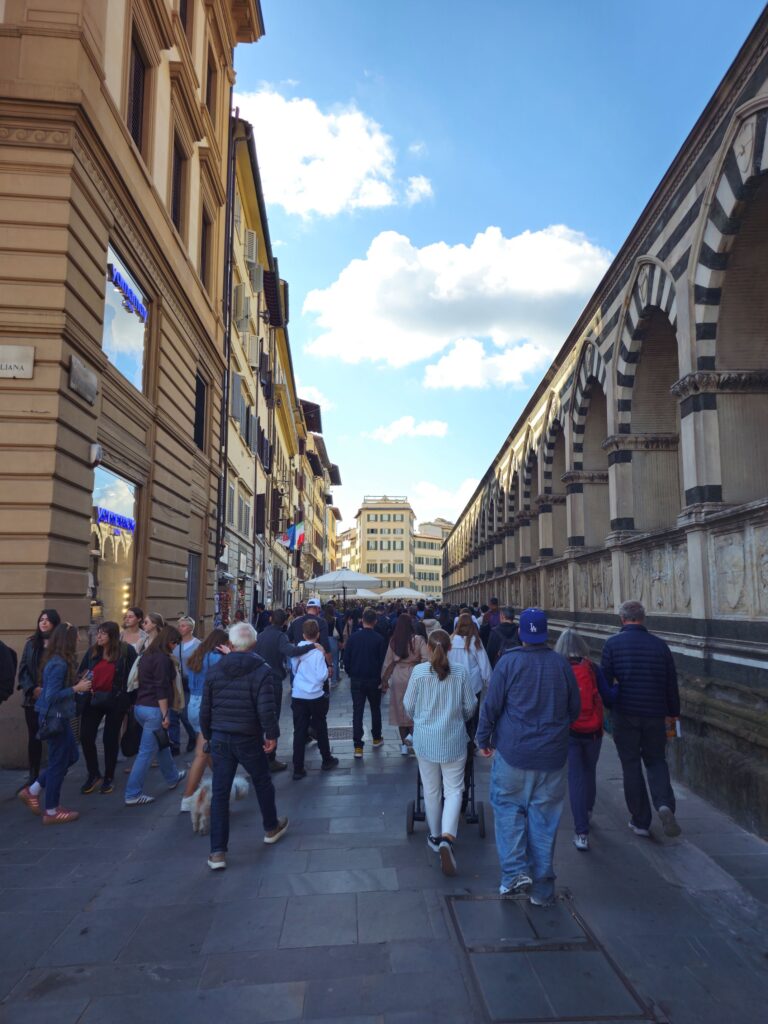
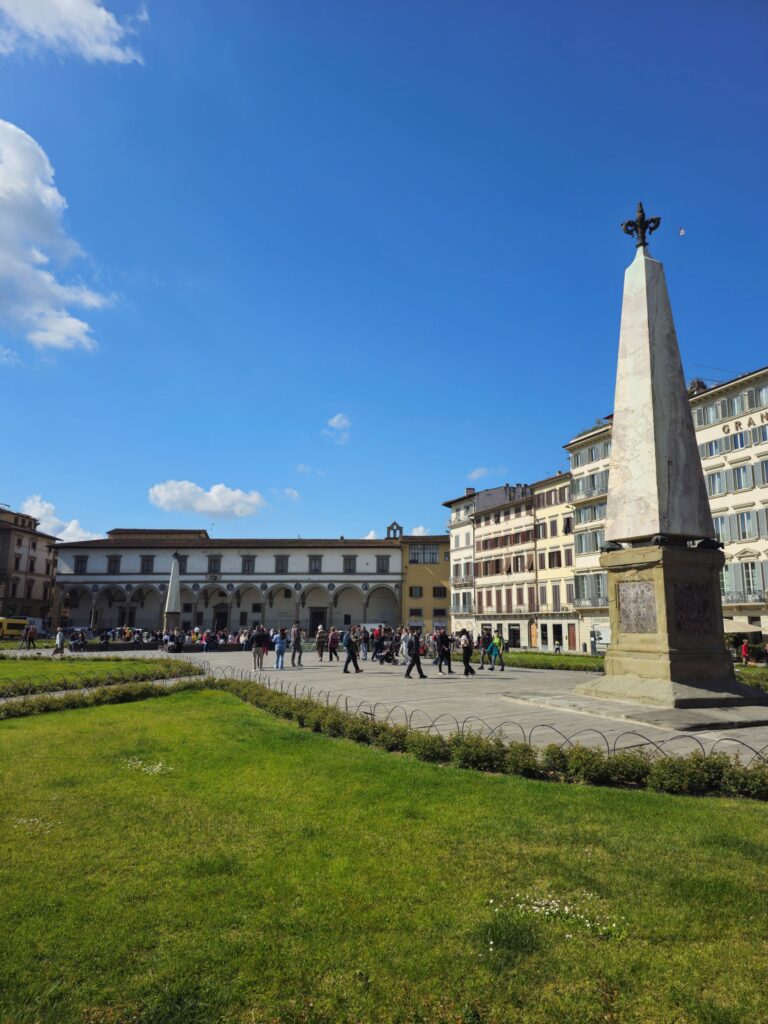
Visiting Basilica of Santa Maria Novella is a calming experience. The Piazza Santa Maria Novella in front of the basilica offers space to pause and admire the architectural symmetry before stepping inside. Though located near Florence’s central station, Basilica of Santa Maria Novella maintains a quiet and reflective environment. Inside, the lighting is subdued and primarily filtered through colored stained glass, enhancing the spiritual ambiance. Visitors often comment on the emotional contrast between the lively square outside and the serene, meditative space within.
Informational panels and audio guides provide rich context for the artworks, allowing both casual tourists and art historians to gain insights into Basilica of Santa Maria Novella’s layered past. Just steps away is the Officina Profumo-Farmaceutica di Santa Maria Novella, the world’s oldest operating pharmacy, founded by Dominican monks in the 13th century. Here, centuries-old traditions of crafting perfumes, balms, and herbal remedies are still alive today—a perfect cultural detour that complements your visit to the basilica.
This area is also rich with shops and boutiques selling magnets, miniature replicas, postcards, and other souvenirs, making it easy to take a small piece of Florence home with you. Whether you’re browsing artisan stalls or refined boutiques, it’s a delightful opportunity to explore the city’s artisanal culture.
Must-See Highlights
Masaccio’s “Holy Trinity”
This fresco revolutionized Renaissance art with its scientific approach to perspective. Masaccio’s innovative use of vanishing points gives the illusion of architectural depth, making it one of the most studied works in art history.
The Tornabuoni Chapel
Ghirlandaio’s masterpiece is a colorful, narrative-rich sequence of scenes that bring biblical stories into Florentine reality. The inclusion of contemporary citizens and cityscapes blurs the line between sacred story and civic pride.
The Spanish Chapel
Andrea di Bonaiuto’s frescoes here are filled with allegorical representations of the Church Triumphant, Dominican virtues, and intellectual pursuits, making it a vital spot for understanding medieval theology and symbolism.
The Green Cloister
Though many frescoes suffered damage over time, Uccello’s depictions of Noah’s Ark, the Flood, and other biblical tales remain compelling examples of early Renaissance narrative painting.
Practical Information
- Location: Piazza di Santa Maria Novella, Florence, Italy 50123
- Opening Hours: Monday to Saturday 9:00 AM – 5:30 PM; Sunday 1:00 PM – 5:30 PM
- Admission: €7.50 (includes access to the museum and cloisters)
- Website: https://www.smn.it/
Karlskirche in Vienna: A Baroque Masterpiece and Spiritual Landmark
Foro Romano, The Heart of Ancient Rome in Ruins