
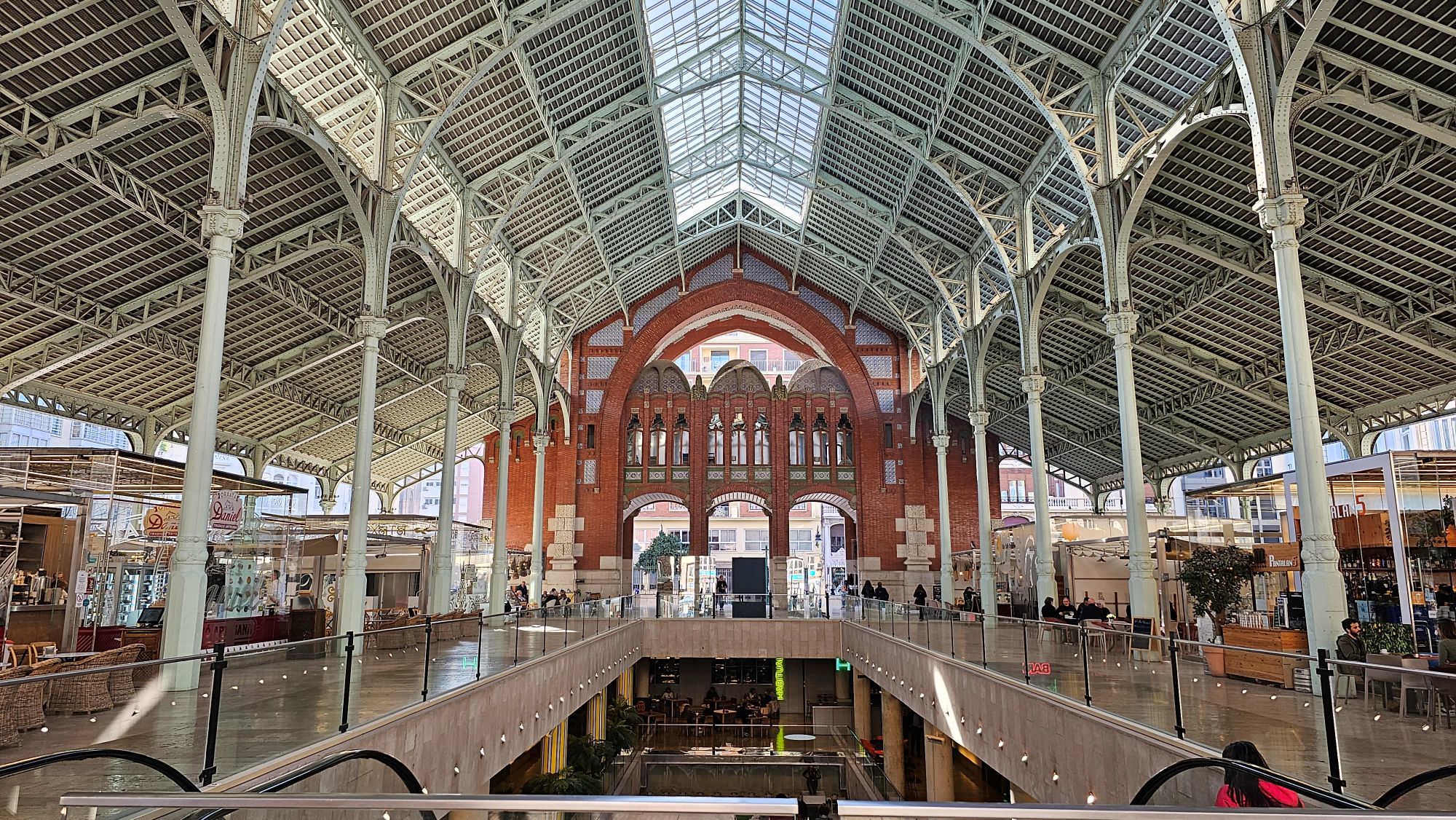
Mercado de Colón is not the kind of market you rush through with a shopping list. Instead, it is a place you arrive at slowly, look around instinctively, and decide to stay longer than planned. Located in the elegant Ensanche (Eixample) district of Valencia, this architectural masterpiece reflects a moment in the city’s history when public space, beauty, and everyday life were intentionally woven together. Today, Mercado de Colón stands as one of Valencia’s most refined urban landmarks—a former market reborn as a social, cultural, and gastronomic hub.
Unlike the bustling Central Market, which remains deeply rooted in daily commerce, Mercado de Colón offers a different experience. It invites visitors to observe, relax, and participate in the rhythm of local life rather than simply consume it. From the moment you approach the building, it is clear that this is a space designed not only for function, but for pleasure.
Valencia at the Turn of the 20th Century
To understand Mercado de Colón, it helps to understand Valencia at the beginning of the 20th century. The city was expanding beyond its medieval walls, driven by industrial growth, new urban planning ideals, and a rising middle class. Public architecture became a powerful symbol of civic pride and progress, and markets were among the most important public buildings of the time.
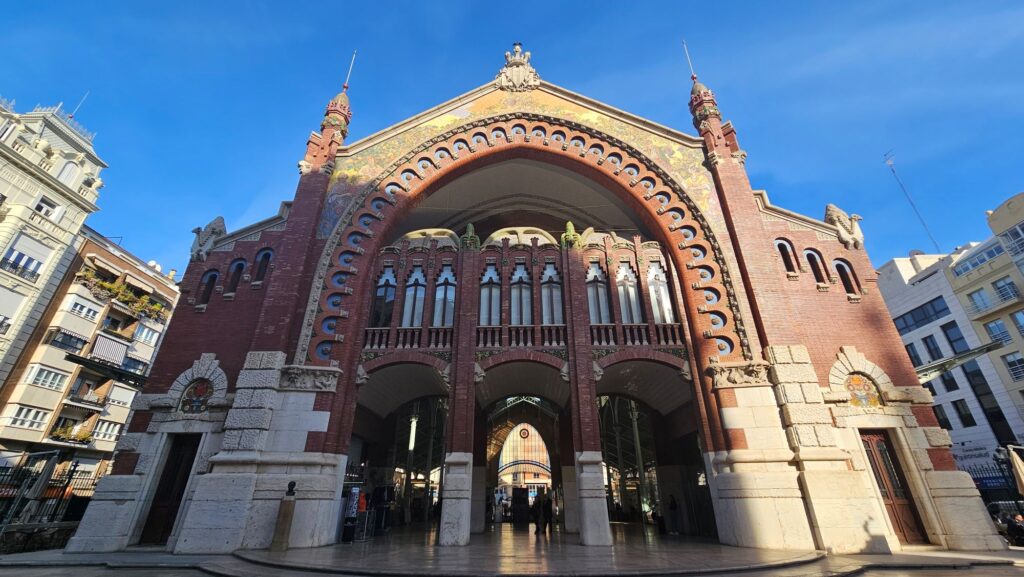
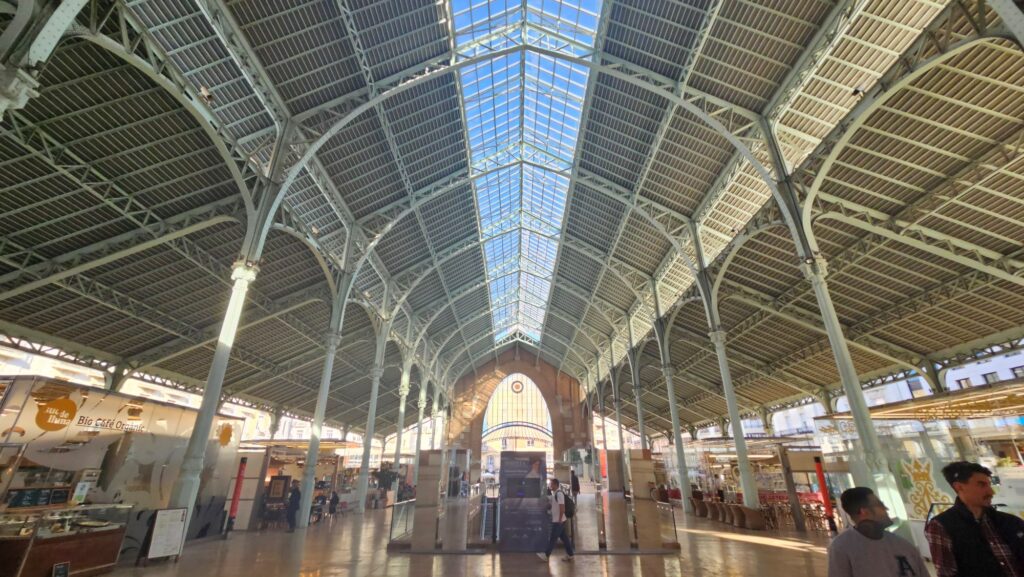
Mercado de Colón was conceived as a modern, hygienic, and aesthetically uplifting space to serve the residents of the newly developed Ensanche district. Designed by architect Francisco Mora Berenguer, a student of the renowned architect Domènech i Montaner, the market was completed in 1916. It represented Valencia’s interpretation of the Modernisme movement—an architectural language that celebrated craftsmanship, natural forms, and artistic expression while embracing modern materials like iron and glass.
Architectural Elegance: Valencian Modernisme at Its Best
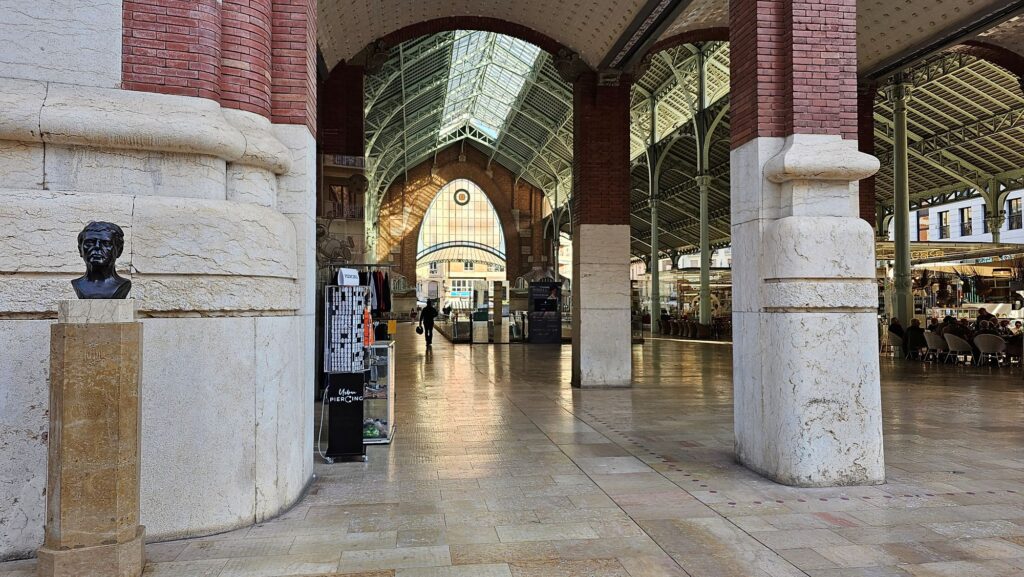
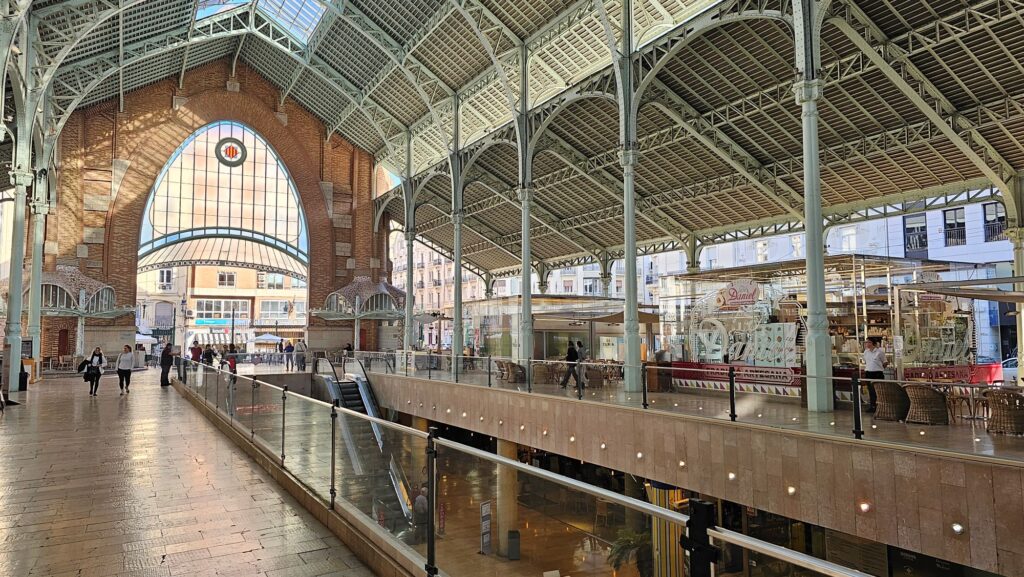
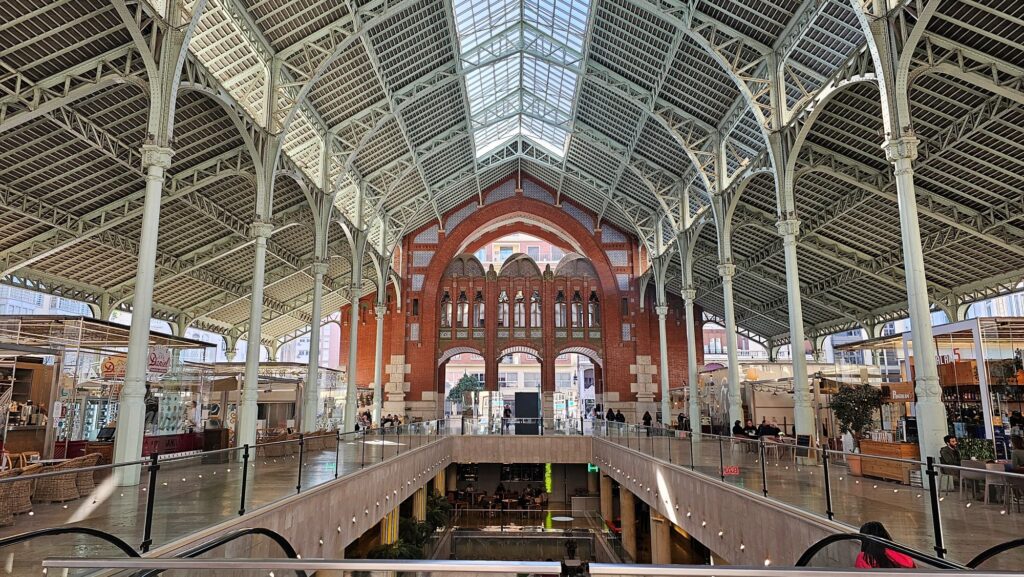
What immediately distinguishes Mercado de Colón is its architecture. The building is not monumental in scale, yet it commands attention through detail, proportion, and harmony. The exterior is constructed primarily of red brick and stone, accented by colorful ceramic mosaics that shimmer in the Mediterranean light. These tiles are not merely decorative; they reflect Valencia’s long tradition of ceramic craftsmanship and regional identity.
Large horseshoe-shaped arches define the façades, framed by delicate ironwork and floral motifs. Above them, ornamental panels depict agricultural themes, symbolizing abundance, fertility, and prosperity—core values tied to Valencia’s historical relationship with its surrounding farmland. Every element feels intentional, balanced, and human in scale.
Inside, the structure opens into a spacious hall supported by slender iron columns. Natural light filters in from multiple directions, creating a sense of openness that feels both airy and intimate. Unlike enclosed markets, Mercado de Colón allows the city to breathe through it. Sounds, light, and movement flow naturally, reinforcing the idea that this is a space meant to be lived in rather than merely visited.
From Decline to Revival
As shopping habits changed in the second half of the 20th century, Mercado de Colón gradually lost its original function as a traditional food market. Supermarkets and changing consumer behavior led to its decline, and for a time, the building faced the risk of abandonment.
Rather than allowing this architectural gem to fade into obscurity, Valencia chose preservation through adaptation. A comprehensive restoration project was undertaken, carefully respecting the original design while reimagining the interior for contemporary use. When Mercado de Colón reopened in the early 2000s, it was transformed into a space dedicated to gastronomy, leisure, and social interaction.
This transformation did not strip the building of its identity. On the contrary, it allowed Mercado de Colón to regain relevance in modern urban life while preserving its historical and architectural soul.
A Contemporary Gathering Place
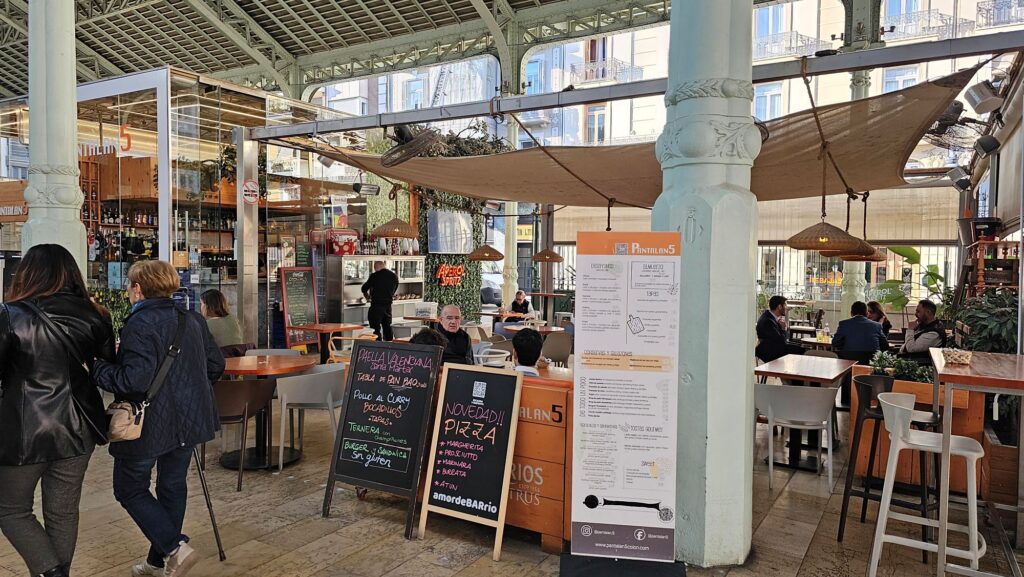
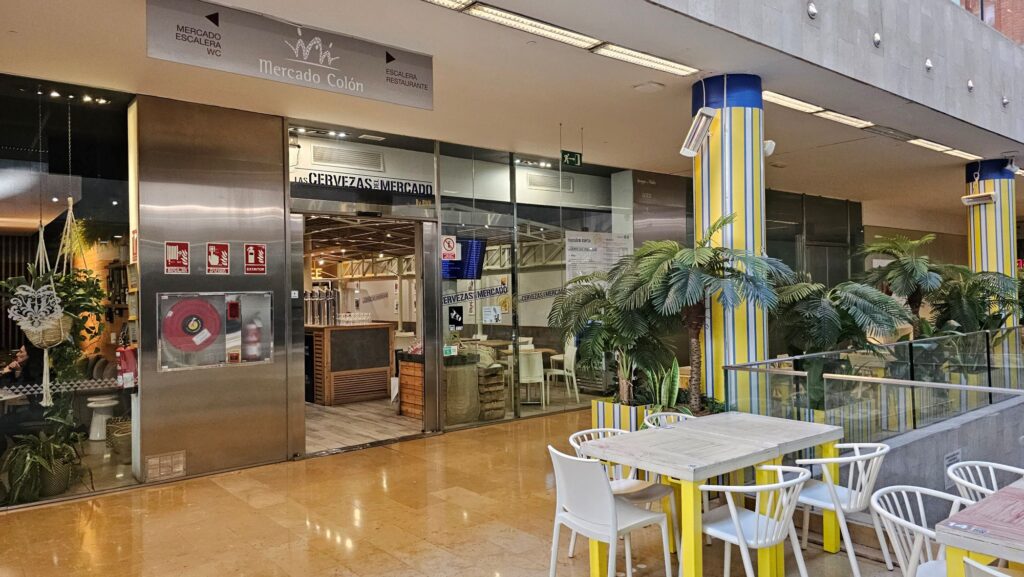
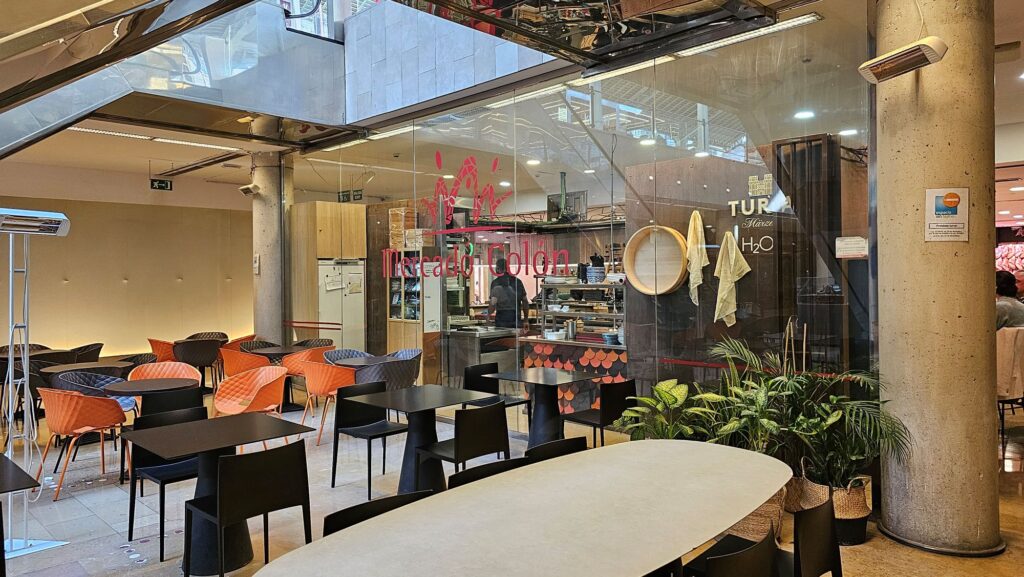
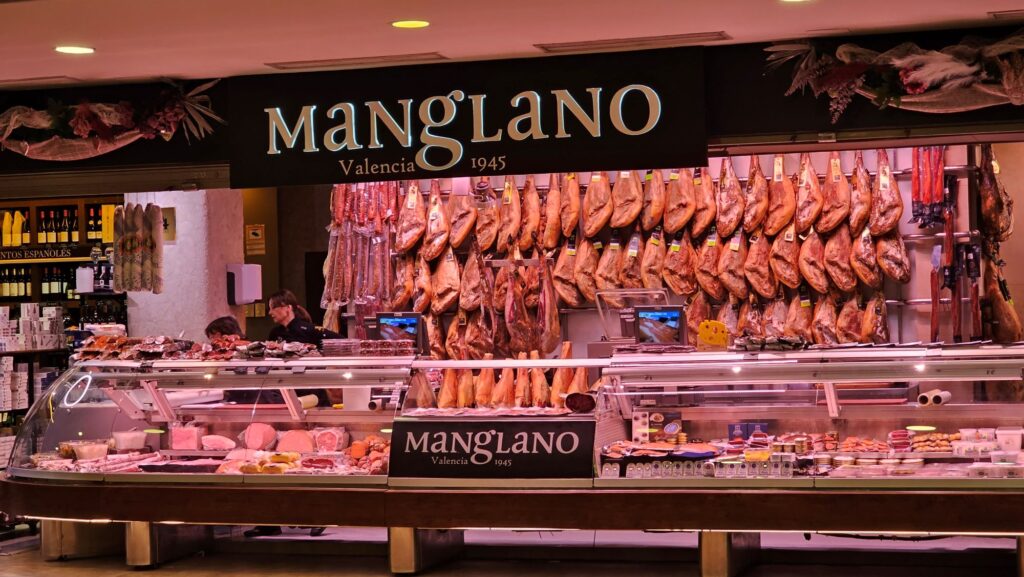
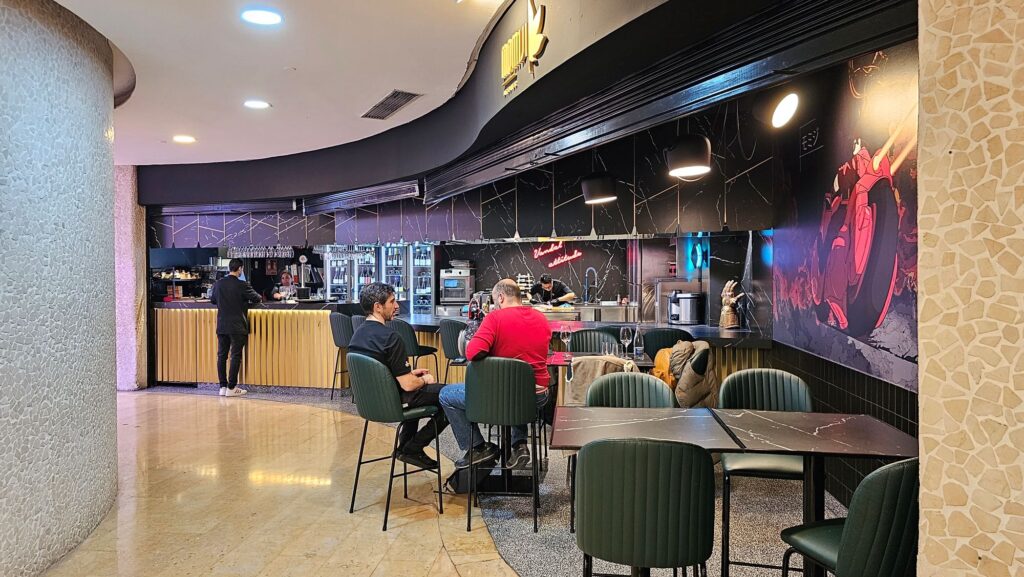
Today, Mercado de Colón functions as a refined meeting point for locals and visitors alike. The interior hosts a curated selection of cafés, bakeries, wine bars, and restaurants, many of which emphasize quality ingredients and relaxed dining experiences. Rather than fast turnover, the atmosphere encourages lingering—sitting with a coffee, meeting friends, or enjoying a quiet moment alone.
During the daytime, the space feels bright and calm. Locals stop by after shopping along Calle Colón, professionals meet for casual lunches, and travelers rest their feet while soaking in the architecture. As evening approaches, the mood subtly shifts. Warm lighting highlights the iron structures, conversations grow livelier, and the market becomes a social hub without ever feeling loud or chaotic.
The Atmosphere: Refined, Social, and Unhurried
What sets Mercado de Colón apart is its atmosphere. It is elegant without being pretentious, lively without being overwhelming. The building itself shapes the experience—its open layout, natural light, and acoustic softness create a sense of comfort that encourages conversation and reflection.
Unlike more tourist-heavy attractions, Mercado de Colón feels authentic. It is used by locals not as a spectacle, but as part of their daily routines. Observing this interaction between people and space reveals how architecture can influence behavior, encouraging slower rhythms and more meaningful social connections.
A Pause Within the City
Mercado de Colón’s location enhances its appeal. Situated between Valencia’s main shopping artery and quieter residential streets, it acts as a natural pause point in the city. It is the kind of place you visit between activities—not as a destination that exhausts you, but as one that restores energy.
From here, it is easy to continue on foot toward the Turia Gardens, the historic center, or nearby cultural institutions. Yet many visitors find themselves lingering longer than planned, drawn in by the gentle balance of beauty and everyday life.
Why Mercado de Colón Matters
Mercado de Colón is not about buying produce or ticking off a landmark. It represents a philosophy of urban living—one that values beauty in everyday spaces and believes that public architecture should enrich daily life. It shows how historic buildings can be preserved not as static monuments, but as living environments that evolve with the city.
For travelers, it offers a deeper understanding of Valencia beyond its famous beaches and medieval streets. It reveals a city that has long valued design, community, and quality of life.
Practical Information
Name: Mercado de Colón
Location: Carrer de Jorge Juan, Ensanche, Valencia, Spain
Architect: Francisco Mora Berenguer
Year Completed: 1916
Architectural Style: Valencian Modernisme
Current Use: Cafés, restaurants, social and cultural space
Admission: Free
Best Time to Visit: Late morning for light, early evening for atmosphere
Valencia Cathedral: Where Faith, History, and the Holy Grail Meet
Mercado Central de Valencia: Where the Soul of the City Lives in Every Stall