

There is a moment that happens to almost every visitor at the Tower of London, usually somewhere between the Crown Jewels and the Bloody Tower, when you stop walking and just stand still for a second. It’s not the weight of the stones or the darkness of the stairwells, though both are considerable. It’s the accumulation of everything you’ve learned in the past hour — the queens who lost their heads here, the princes who vanished, the men who plotted and were broken here, the treasure locked inside this same building for six centuries — pressing down on you all at once. You look up at the walls and realise that what you’re standing inside is not a museum pretending to be a castle. It is the castle. It actually happened here. All of it.
The Tower of London is one of those rare places in the world where the gap between expectation and reality runs in exactly the right direction. Most famous attractions underwhelm. The Tower does not. It is bigger, darker, richer, and stranger than the photographs suggest, and it rewards every minute you give it with something you didn’t expect to find.
What Is the Tower of London?
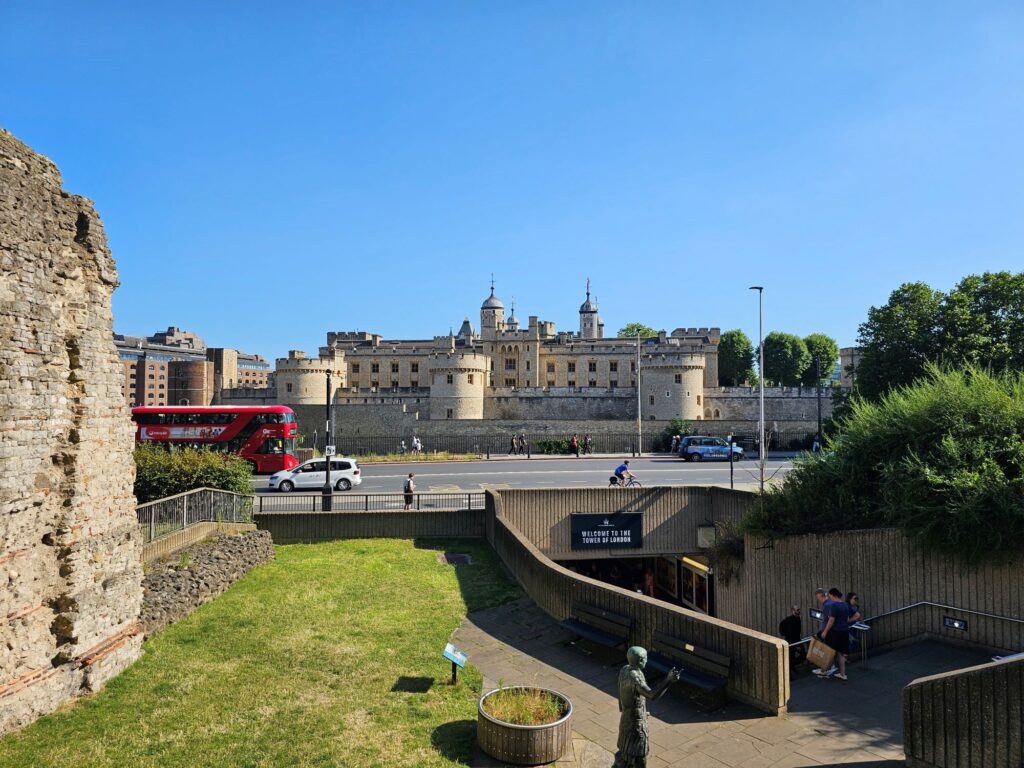
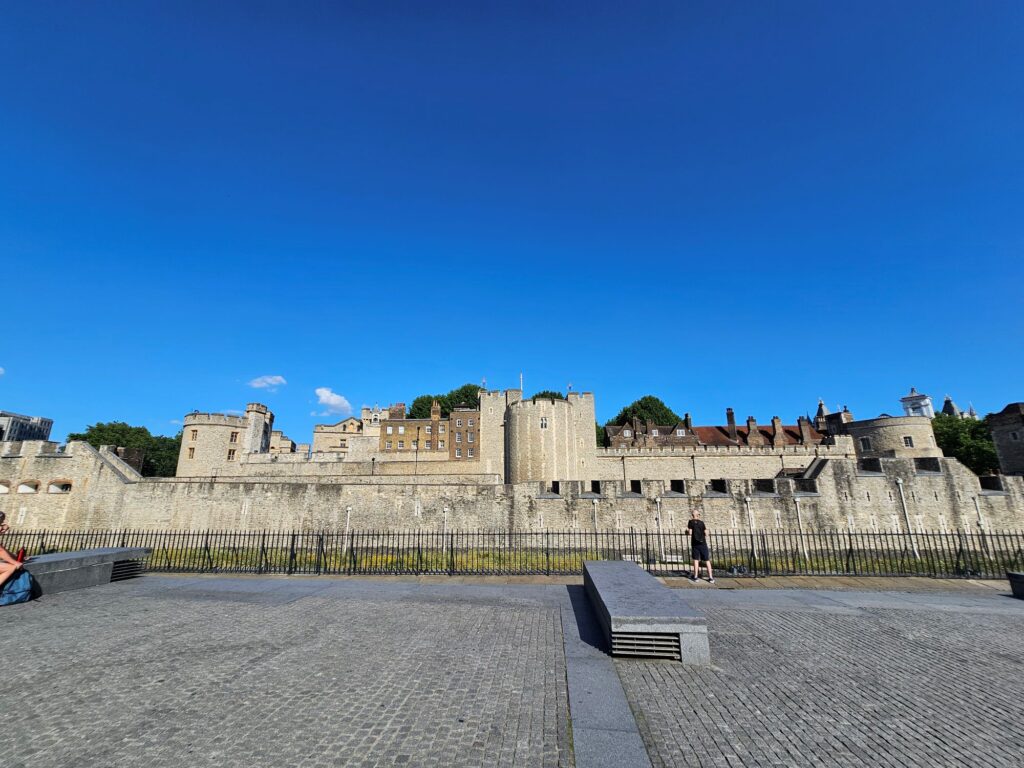
The Tower of London — officially His Majesty’s Royal Palace and Fortress of the Tower of London — is a historic castle on the north bank of the Thames in central London, founded in the immediate aftermath of the Norman Conquest of 1066. It is one of the most visited tourist attractions in the United Kingdom, a UNESCO World Heritage Site since 1988, and one of the best-preserved medieval fortresses in Europe.
What makes the Tower genuinely extraordinary is not any single thing it contains but the sheer range of roles it has played across nearly a thousand years of British history. It has served simultaneously and successively as a royal palace, a military fortress, a prison for the most dangerous and high-profile figures in the kingdom, a place of execution, a treasury, a repository for the Royal Mint, an armoury, a menagerie that housed lions and elephants, and — today — the permanent home of the Crown Jewels of the United Kingdom. Very few buildings anywhere in the world have been as many different things to as many different people across as many different centuries, and the result is a layering of stories that makes an afternoon here feel genuinely inexhaustible.
A Brief History: Nearly a Thousand Years in One Building
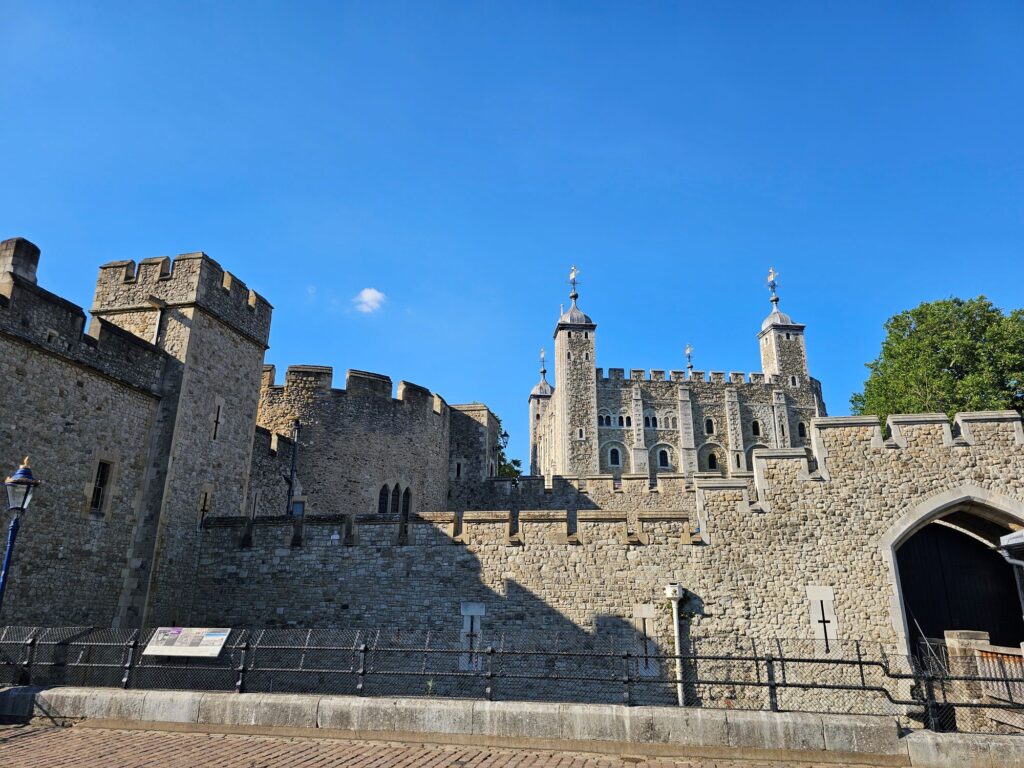
The Tower’s founding structure, the White Tower, was begun by William the Conqueror in approximately 1078, in the years following his conquest of England in 1066. Its purpose was explicitly political: a display of Norman power and permanence, dominating the skyline of the city that William had claimed. Built of Caen stone imported from Normandy, the White Tower remains one of the finest and best-preserved examples of Norman military architecture in existence, and it still stands at the heart of the complex today, recognisable from a distance by its four corner turrets.
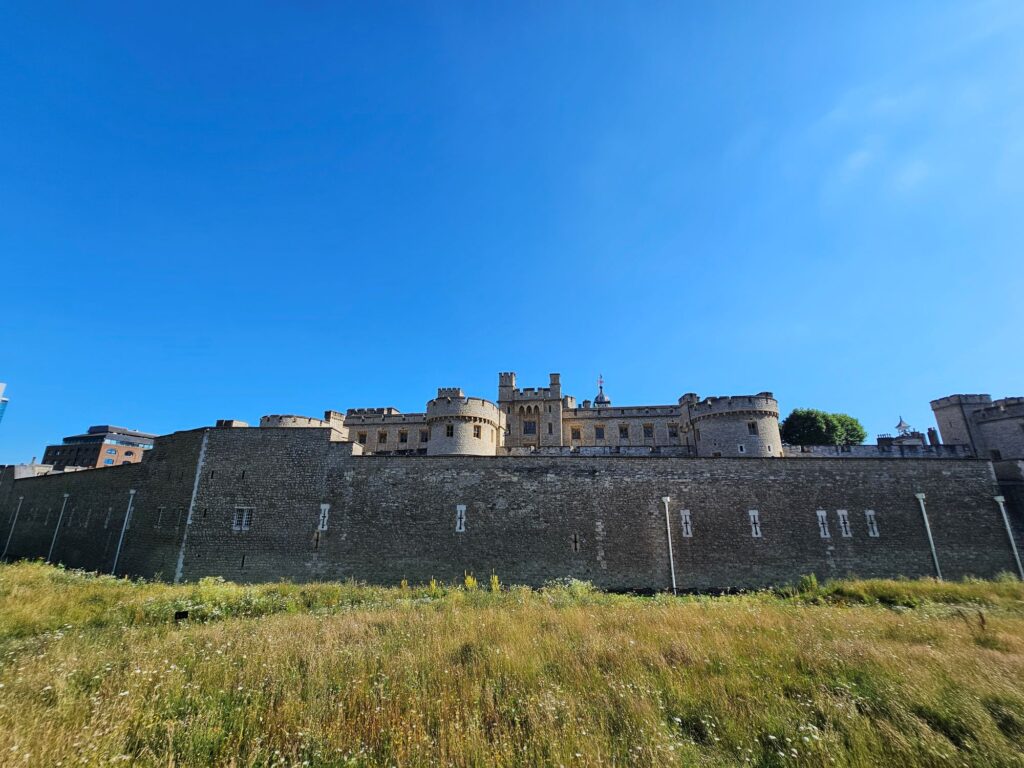
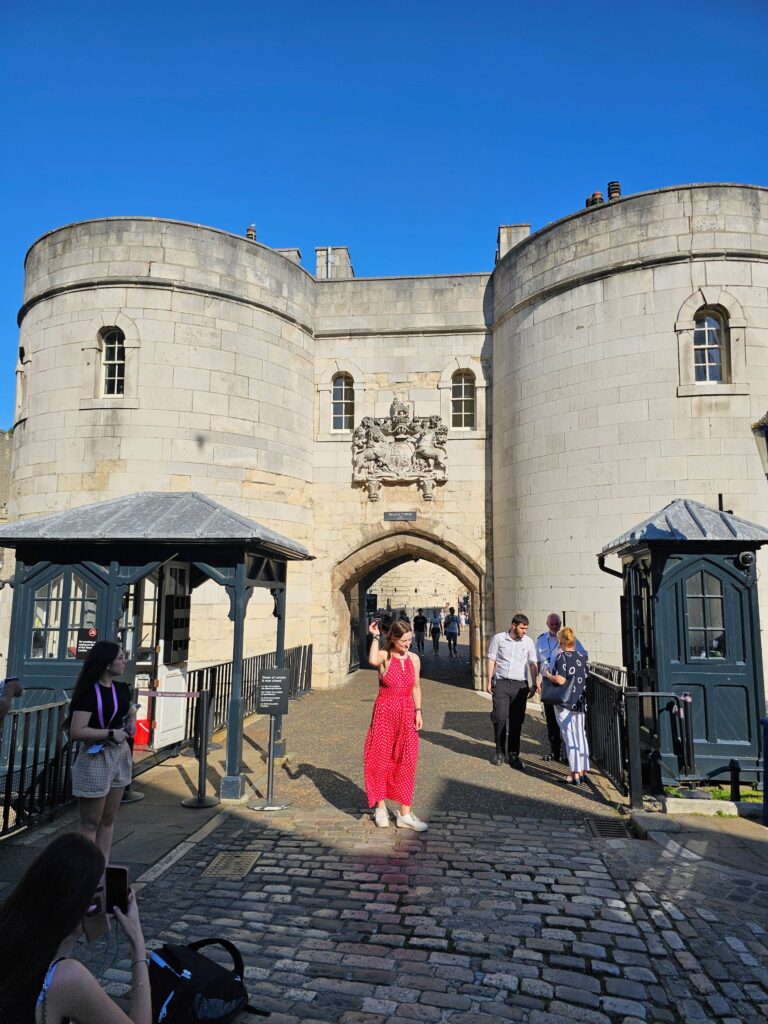
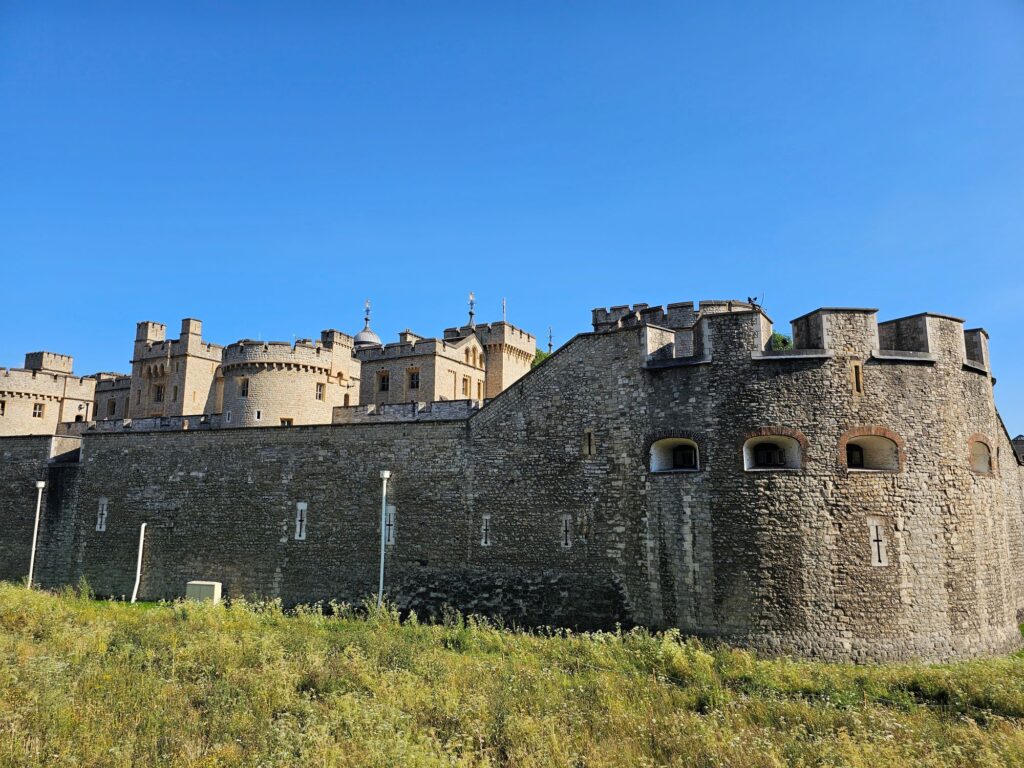
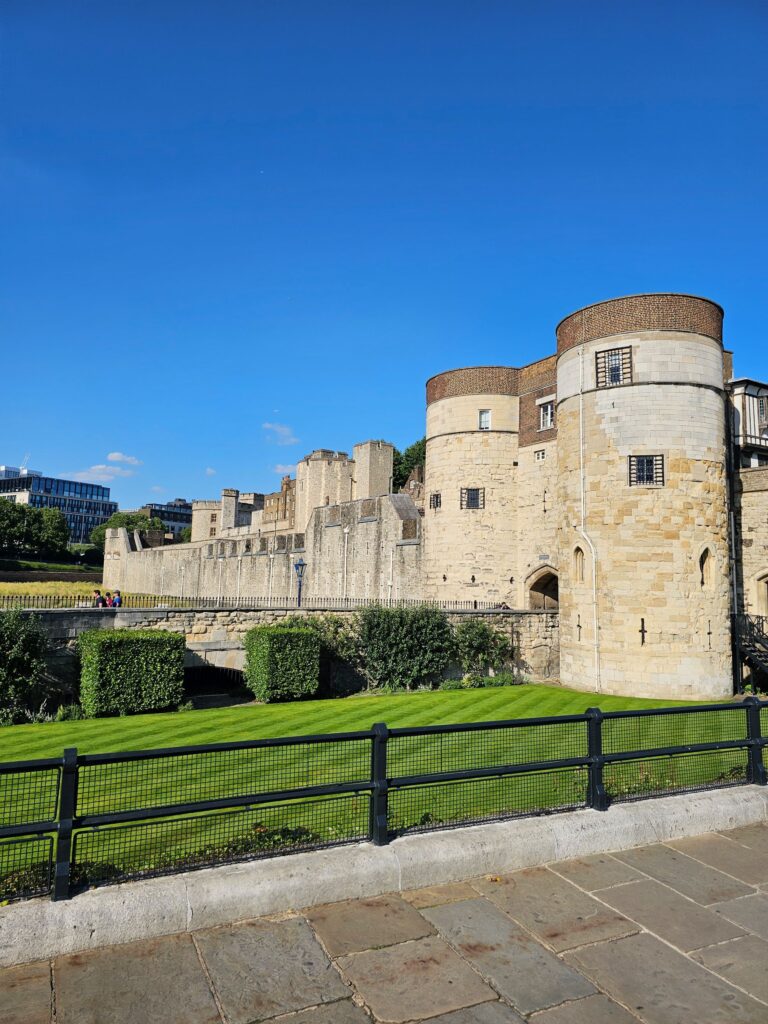
Over the following centuries, successive monarchs expanded the complex significantly. Henry III and Edward I in particular transformed the single tower into the concentric castle that visitors see today — a sequence of inner and outer walls, towers, gatehouses, and waterways that made the Tower virtually impregnable. The moat, now dry and grassed over, was filled with Thames water; access was controlled through the infamous Traitors’ Gate, a water gate through which prisoners arrived by barge from the river, having been transported from the law courts at Westminster. The name was not contemporary — it was applied later, with the benefit of hindsight about who had passed through it — but the physical structure is original, and standing at its edge today is one of the more quietly chilling experiences the Tower offers.
As a prison, the Tower held some of the most significant figures in English history. Anne Boleyn, second wife of Henry VIII, was imprisoned here in 1536 before her execution on Tower Green. Catherine Howard, Henry’s fifth wife, followed in 1542. Lady Jane Grey, the nine-day queen, was held here before her execution in 1554. Sir Walter Raleigh spent thirteen years imprisoned in the Bloody Tower, where he conducted experiments, wrote his History of the World, and was allowed to keep a small garden. Guy Fawkes was tortured in the Tower until he signed his confession following the Gunpowder Plot of 1605. Even the young Princess Elizabeth — later Elizabeth I — was held here under her sister Mary’s orders, arriving by barge through Traitors’ Gate in 1554, convinced she was being brought to her execution. She survived, and went on to reign for 45 years.
The Tower’s most enduring mystery is the fate of the Princes in the Tower: twelve-year-old Edward V and his younger brother Richard, Duke of York, who were held here in 1483 under the authority of their uncle, later Richard III, and subsequently disappeared. Their fate has never been conclusively established, and the debate over what happened to them — and who was responsible — continues among historians to this day. The Bloody Tower, where they were last reliably sighted, still carries the weight of that unresolved story.
The Tower was last used as a prison during the Second World War, when Rudolf Hess was held here briefly following his mysterious solo flight to Scotland in 1941. The last execution at the Tower — of German spy Josef Jakobs — took place on 14 August 1941, making the Tower’s history as a place of confinement and execution one that stretches almost to living memory.
What’s Inside: Everything Included in Your Ticket
The Crown Jewels
Nothing at the Tower of London draws longer queues or provokes stronger reactions than the Crown Jewels, and after seeing them, you understand why. The Jewel House holds over 100 objects incorporating more than 23,000 gemstones, and the experience of seeing them in person — behind glass, dramatically lit, paraded past you on a slow-moving walkway — is one of those travel moments that earns the word extraordinary without any qualification.
The centrepiece of the collection is the Imperial State Crown, worn by the monarch at the State Opening of Parliament. It contains the 317-carat Stuart Sapphire in its rear band, the 104-carat Black Prince’s Ruby at its front (which is technically a spinel rather than a ruby, a distinction the Black Prince was presumably not troubled by), and the 317-carat Cullinan II diamond — the second largest stone cut from the Cullinan diamond, the largest gem-quality diamond ever found. The total number of stones in the Imperial State Crown alone exceeds 2,900.
Also in the collection: St Edward’s Crown, used only at coronations and last worn by King Charles III in May 2023; the Sovereign’s Sceptre with Cross, set with the 530-carat Cullinan I — the largest clear-cut diamond in the world; and the Coronation Spoon, the oldest piece in the collection, dating to the 12th century and the only item to survive the destruction of the original Crown Jewels during the Civil War in the 1640s.
The current collection was largely assembled for the coronation of Charles II in 1661, after the original regalia was melted down and sold during the Interregnum. The survival story includes the famous 1671 theft attempt by Colonel Blood, who very nearly made off with the orb and crown before being apprehended at the gate. Charles II, apparently impressed by the audacity of the attempt, subsequently pardoned him — one of the more baffling acts of royal clemency in the historical record.
The Jewel House operates on a moving walkway system that carries visitors past the main displays. The walkway is deliberately slow, allowing a close view of every major piece, and visitors are permitted to step off to one side for a longer look at the display cases. Most people complete the walkway once and immediately rejoin the queue for a second pass — something the guards actively allow and encourage. Allow at least 20 to 30 minutes for the Jewel House alone, longer during peak periods when the queue can add significantly to that time.
The White Tower
The original Norman keep at the heart of the complex is the oldest and most architecturally significant structure on the site, and after nearly a thousand years it remains one of the most impressive buildings in London. Its walls are 4.6 metres thick at their base. Its interior now houses the Royal Armouries collection, one of the finest collections of arms and armour in the world, presented across four floors of the tower.
The highlights are numerous. The Line of Kings exhibition displays the armour of successive English monarchs, including a famous suit of armour made for Henry VIII that illustrates, with merciless physical precision, exactly how his physique changed between his athletic early years and his later reign — the waistline of the later suit is a full 54 inches. The Block and Axe, now displayed in the basement of the White Tower, is a genuine 18th-century execution block accompanied by an axe that may date to the Tudor period — an understated and quietly shocking object that rewards a moment of reflection.
The Chapel of St John the Evangelist, tucked into the upper floors of the White Tower, is one of the finest surviving examples of early Norman ecclesiastical architecture anywhere in England and one of the most atmospheric spaces in the building. Its rounded arches, undecorated stone, and the quality of light that filters through its small windows create a space that feels wholly removed from the noise of the wider complex. It is easy to spend fifteen minutes here without noticing.
The Armoury in Action interactive section allows visitors — particularly younger ones — to try their hand at medieval archery, assemble replica firearms, and handle replica swords. It’s a genuinely enjoyable section that transforms what might otherwise be a room of static objects into something physically engaging.
The Yeoman Warder Tours: Don’t Miss These
The Yeoman Warders — universally known as Beefeaters, a nickname whose precise etymology is disputed but which has been in use since at least the 17th century — are among the most distinctive figures in London’s landscape. There are around 37 of them at any given time, each a former warrant officer of the British Armed Forces with a minimum of 22 years of service and the Long Service and Good Conduct Medal to their name. They live within the Tower’s walls — some, remarkably, within the walls themselves — making the Tower a functioning community as well as a tourist attraction.
Their guided tours, which are included in the admission ticket at no extra cost, are one of the best free guided experiences available anywhere in London. Tours depart from near the main entrance every 30 minutes, with the first tour at 10:00 AM (Tuesday to Saturday) and run for approximately one hour. The tours are conducted in English only; visitors who prefer other languages should collect an audio guide device.
The content of a Yeoman Warder tour is not scripted in any standardised way — each Warder brings their own personality, emphases, and storytelling approach to the material, which means two tours with different guides can feel quite different in tone. What they share is an extraordinary command of the stories of this building: the execution of Anne Boleyn, the imprisonment of Raleigh, the mystery of the Princes, the bizarre fate of Colonel Blood, the nightly Ceremony of the Keys. The Warders deliver these stories with a theatrical flair and evident personal investment that makes the history feel immediate and alive in a way that no audio guide can replicate.
One practical note: the tours are conducted without microphones, in the open air, and can accommodate very large groups. Position yourself as close to the front as possible to hear clearly. Arriving at the departure point a few minutes early is strongly recommended, particularly during peak season.
The Bloody Tower
The Bloody Tower is named for its association with some of the darkest episodes in the Tower’s history, and it lives up to its name. It was here that the young Princes in the Tower were last reliably documented, and the room where they slept has been preserved and interpreted as it might have looked in 1483, with a quiet, poignant staging that makes the mystery of their fate feel newly urgent.
The tower also contains a recreation of Sir Walter Raleigh’s study as it would have appeared during his thirteen-year imprisonment — his books, his scientific instruments, his maps. Raleigh was allowed extraordinary latitude for a prisoner: he kept a garden, conducted chemical experiments, and wrote prolifically. The physical space of the room, combined with what you know of the man who occupied it, makes for one of the most unexpectedly moving experiences the Tower offers.
The Medieval Palace
Tucked within St Thomas’s Tower and Wakefield Tower, the Medieval Palace reconstruction is one of the most undervisited sections of the complex, which is a genuine shame because it is one of the most thoughtfully realised. The rooms have been recreated as they might have appeared during the reign of Edward I in the late 13th century, using evidence from archaeological investigation and historical records, with painted walls, replica furnishings, and costumed interpretation on certain days. It offers the most direct sensory experience of what it might have actually felt like to inhabit this fortress in its medieval prime, and it deserves far more time than most visitors give it.
The Ravens
By Royal Decree — or, more accurately, by custom and legend that has accreted around an alleged decree — at least six ravens must be kept at the Tower of London at all times. The legend holds that if the ravens ever leave, the White Tower will crumble and the Crown will fall. Whether Charles II actually issued such a decree is disputed by historians, but the ravens are very much real, very much present, and very much a highlight of any visit.
Each raven has a name and a distinct personality, and their keeper — the Ravenmaster, one of the Yeoman Warders who holds this additional title — tends to them with a dedication that has inspired books, documentaries, and a devoted Instagram following. The ravens are housed in individual enclosures at night and roam parts of the Tower’s grounds during the day. Their wing feathers are clipped to prevent flight (they can still fly short distances and occasionally do), and they are fed a diet that includes raw meat, biscuits soaked in blood, and the occasional egg. They have been known to steal packed lunches, intimidate tourists, and conduct long-term grudges against specific visitors. Seeing them up close — large, glossy, and disconcertingly intelligent — is one of those small moments of delight that make the Tower feel genuinely alive.
The Wall Walk and Other Towers
The outer wall of the Tower connects a series of smaller towers that can be explored as part of the general admission. The Salt Tower, Broad Arrow Tower, Constable Tower, and others contain a mixture of exhibitions, original medieval stonework, and — most movingly — prisoner inscriptions carved into the walls over the centuries. These carvings, made by men and women waiting for trial or execution, range from intricate heraldic devices to simple names and dates, and they constitute one of the most direct forms of human communication across five centuries that you will encounter anywhere.
Current Closures: What to Know Before You Visit
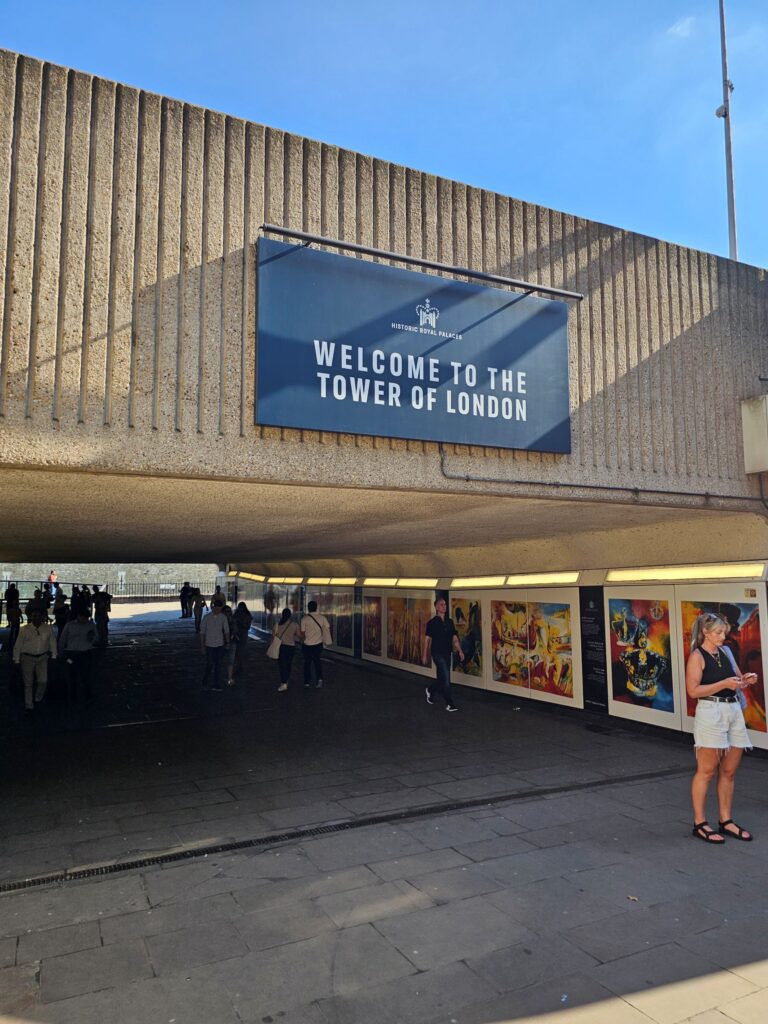
The Chapel Royal of St Peter ad Vincula — the church within the Tower’s walls where Anne Boleyn, Catherine Howard, Lady Jane Grey, Thomas Cromwell, and dozens of other executed figures are buried — is closed until the end of March 2026 for conservation and excavation work. This is a significant temporary loss, as the chapel is one of the most historically resonant spaces in the complex. Check the official website (hrp.org.uk) for the latest status before your visit, as the reopening date may be subject to change.
Additionally, some rooms and routes within the complex have reduced access due to ongoing conservation work. The Tower of London is a genuinely living heritage site that requires constant maintenance, and temporary closures are a regular feature. The official website lists current restrictions clearly.
Opening Hours
| Day | Summer Hours (Mar–Oct) | Winter Hours (Nov–Feb) |
|---|---|---|
| Tuesday – Saturday | 9:00 AM – 5:30 PM | 9:00 AM – 4:30 PM |
| Sunday – Monday | 10:00 AM – 5:30 PM | 10:00 AM – 4:30 PM |
Last admission is one hour before closing. The last Yeoman Warder tour departs at 3:30 PM. The Tower is open on most public holidays, including bank holidays, with regular hours. It is closed on 24–26 December and 1 January.
Tickets and Prices
Standard Admission
As of March 2026, adult admission purchased online in advance is £34.80. Buying on the day at the gate costs £37.00 — a meaningful difference, particularly for families. Children under 5 enter free. Full access to the permanent collection including the Crown Jewels, White Tower, Bloody Tower, Medieval Palace, wall walk, and all Yeoman Warder tours is included in all ticket types.
| Ticket Type | Online (Advance) | On the Day (Gate) |
|---|---|---|
| Adult | £34.80 | £37.00 |
| Child (5–15) | — | £18.50 |
| Child under 5 | Free | Free |
| Concession (senior / student) | — | £29.50 |
| Family (2 adults + 3 children) | — | £82.10 |
Online advance prices for children and concessions should be confirmed at hrp.org.uk at the time of booking, as pricing tiers are updated periodically.
Saving Money
Book online in advance through the official Historic Royal Palaces website (hrp.org.uk). Online booking saves £2.20 per adult ticket compared to purchasing on the day at the gate, and it allows you to skip the ticket queue entirely, which on a busy summer morning can save 20–30 minutes.
The London Pass includes Tower of London admission and may represent good value for visitors planning to see multiple London attractions across several days. The Historic Royal Palaces Membership (£67 per year for an individual) provides unlimited entry to the Tower of London plus Hampton Court Palace, Kensington Palace, Banqueting House, and Kew Palace — an excellent investment for anyone staying in London for a week or more, or planning to return.
Audio Guide
Audio guides are available for hire at the Beefeater Shop near the entrance for an additional fee. They are available in English, French, German, Spanish, Italian, Russian, Dutch, Portuguese, Japanese, Korean, and Chinese (Mandarin) — a notably comprehensive list that reflects the Tower’s status as one of Europe’s most internationally visited sites. A British Sign Language digital visitor guide is also available, free of charge.
River Tour Add-On
The Tower of London’s official River Tour by Thames Clippers is available as a combined ticket, including Tower admission plus a sightseeing cruise along the Thames. Tours depart every hour from 10:45 AM daily. This is a pleasant way to extend your visit and see the city from the water, and it’s particularly well suited for visitors who have already spent a full afternoon at the Tower and want to finish the day on the river.
Practical Information
Address
Tower of London, Tower Hill, London EC3N 4AB
Phone
+44 (0)20 3166 6000 (from outside the UK) 0844 482 7777 (from within the UK)
visitorservices_TOL@hrp.org.uk
Official Website
hrp.org.uk/tower-of-london
What to Bring (and What to Leave Behind)
There are no left luggage facilities at the Tower of London, and this is a non-negotiable policy. Suitcases, large rolling bags, and oversized luggage are not permitted inside. If you are visiting on a travel day, use a nearby luggage storage service — Stasher has several locations close to Tower Hill. Smaller bags and backpacks are fine; they will go through security screening at the entrance.
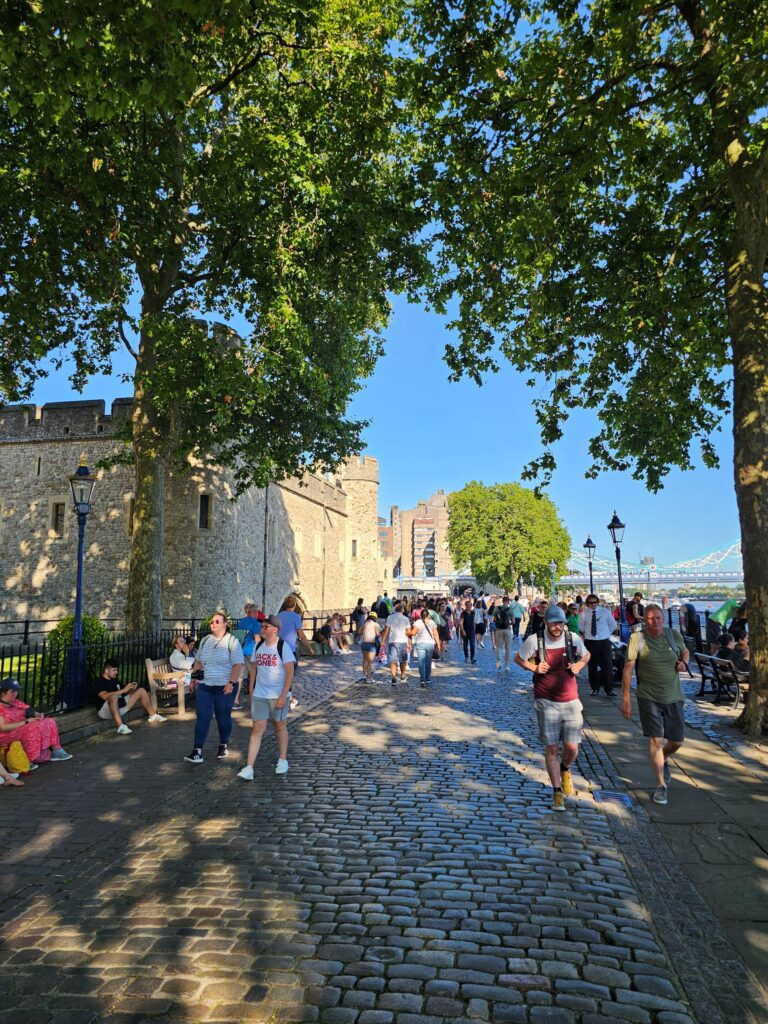
The Tower is an outdoor-heavy site with extensive cobblestone surfaces, uneven medieval walkways, and narrow staircases. Comfortable, flat shoes are essential — heels are genuinely not advisable. A light waterproof layer is recommended regardless of season; the Thames-side location means the weather can shift quickly.
Photography is permitted throughout most of the complex for personal use. It is not permitted in the Jewel House — a rule that is firmly enforced by staff posted throughout the space. All other areas, including the White Tower interiors, are generally fine for photography.
Accessibility
The Tower of London is a historic site with significant accessibility challenges. Uneven and worn paving, cobblestones, narrow staircases, and the general constraints of a 900-year-old building mean that wheelchair access is limited in parts of the complex. The Jewel House is fully wheelchair accessible, as is the New Armouries Café. Wheelchair hire is available, and dedicated accessibility facilities are provided. The British Sign Language digital guide is available free of charge, and concession tickets are available for carers. Visitors with specific accessibility requirements are encouraged to contact the Tower in advance.
Café and Food
The New Armouries Café, located inside the Tower near the Crown Jewels, serves sandwiches, hot meals, cakes, and drinks at prices that, for a site of this popularity and captivity, are reasonably fair. The courtyard seating area outside the café is one of the more pleasant spots in the complex for a rest. Food and drinks are not permitted inside the Tower’s historic buildings.
Toilets
Available in the ground floor lobby of the New Armouries building, including a Changing Places toilet accessible via a RADAR key.
How to Get There
By London Underground
Tower Hill Station on the District and Circle Lines is the most direct option, placing you within a 3-minute walk of the main entrance. From the station exit, follow the signs downhill toward the river — the Tower’s walls become visible almost immediately. This is the route the vast majority of visitors use, and it is by far the simplest.
Aldgate Station (Circle and Hammersmith & City Lines) is a 7-minute walk from the entrance, a useful alternative if you’re connecting from the east.
By DLR
Tower Gateway Station on the DLR (Docklands Light Railway) is a 4-minute walk from the Tower entrance and is a convenient option for visitors arriving from Canary Wharf, the Docklands, or Greenwich.
By London Overground / Elizabeth Line
Liverpool Street Station (Elizabeth Line, Overground, and multiple Underground lines) is approximately a 15-minute walk from the Tower, passing through the historic streets of Aldgate. Alternatively, change at Liverpool Street to the District or Circle Line for a single stop to Tower Hill.
By River
Thames Clipper river buses stop at Tower Pier, immediately adjacent to the Tower’s entrance. This is the most scenic arrival option by some distance, and for visitors coming from Westminster, Embankment, or Bankside (near Tate Modern), the river route is both practical and beautiful. Services run every 20–30 minutes throughout the day.
By Bus
Routes 15, 42, 78, 100, and RV1 all stop near the Tower. Bus 100 connects to Liverpool Street and the City; the RV1 connects to Waterloo and Bankside on the south bank.
On Foot
From London Bridge Station: cross London Bridge or Tower Bridge and walk along the north bank of the Thames — approximately 10 minutes. The walk across Tower Bridge itself is one of London’s finest short walks and doubles as excellent warm-up viewing for the Tower’s exterior from the river side.
From Liverpool Street Station: approximately 15 minutes walking south through Aldgate.
Tips for Getting the Most Out of Your Visit
Arrive at opening time and go directly to the Crown Jewels. This is the single most important logistical advice for a Tower visit. The queue for the Jewel House builds rapidly after 10:00–10:30 AM on busy days and can reach 30 to 60 minutes by midday. Arriving at 9:00 AM (Tuesday to Saturday) and walking directly to the Jewel House often means joining the moving walkway with virtually no wait. Reserve the other sections — the White Tower, the Bloody Tower, the wall walk — for after you’ve cleared the Jewel House.
Do the moving walkway twice. The guards permit and actively encourage visitors to exit the Jewel House walkway and immediately rejoin the queue for a second pass. The first time through, you’re absorbing the scale and spectacle. The second time, you know where to look and can position yourself for a closer view of specific pieces. It costs only the time of the queue, and the second pass is consistently more rewarding than the first.
Join the first Yeoman Warder tour of the day. The first tour (10:00 AM on Tuesday to Saturday) is typically smaller and more intimate than midday tours, and the Warder will have had less time to gauge the crowd, meaning the storytelling is often fresher. Get to the departure point near the main entrance at least five minutes early and position yourself toward the front — the tours are conducted without microphones.
Allow three to four hours minimum. Historic Royal Palaces recommends two hours as a baseline, but this will feel rushed for most visitors who want to engage meaningfully with the Crown Jewels, the White Tower, a Yeoman Warder tour, the Bloody Tower, and the wall walk. Three hours is more realistic for a thorough visit; four hours is comfortable if you’re taking a proper lunch break and exploring at your own pace.
Visit on a weekday in winter. Summer weekends and school holidays are the Tower’s busiest periods, and the crowds — particularly around the Jewel House — can significantly affect the quality of the experience. Tuesday to Thursday visits in autumn or winter, outside of school holidays, are dramatically quieter, and the Tower in November morning light, with the ravens and the stone walls and the Thames visible from the battlements, is a genuinely extraordinary place to be.
Check for the Ceremony of the Keys. The Ceremony of the Keys is the nightly locking of the Tower of London, a tradition that has taken place every single night without interruption for at least 700 years. It is a brief, formal, and genuinely moving ceremony that takes place at around 9:30–10:00 PM, witnessed by a limited number of visitors who have applied for tickets in advance — free but allocated by ballot through the official website. It is one of the most distinctive experiences London offers and well worth the effort of applying, particularly for visitors with a serious interest in royal and military tradition.
Don’t skip the prisoner inscriptions on the wall walk. Most visitors move through the smaller towers on the outer wall at pace, treating them as connective tissue between the major attractions. The carvings left by prisoners in the walls of the Salt Tower and Broad Arrow Tower in particular are worth slowing down for. Some are elaborate and skilled — the work of educated men with time to spare. Others are simple names and dates. All of them are direct, unmediated human communication across five centuries, and standing in front of them is one of the quieter highlights of the Tower.
Quick Reference
| Info | Details |
|---|---|
| Address | Tower of London, Tower Hill, London EC3N 4AB |
| Phone | +44 (0)20 3166 6000 |
| visitorservices_TOL@hrp.org.uk | |
| Hours (Tue–Sat, Mar–Oct) | 9:00 AM – 5:30 PM (last entry 4:30 PM) |
| Hours (Sun–Mon, Mar–Oct) | 10:00 AM – 5:30 PM (last entry 4:30 PM) |
| Hours (Tue–Sat, Nov–Feb) | 9:00 AM – 4:30 PM (last entry 3:30 PM) |
| Hours (Sun–Mon, Nov–Feb) | 10:00 AM – 4:30 PM (last entry 3:30 PM) |
| Closed | 24–26 December, 1 January |
| Adult Admission (Online) | £34.80 |
| Adult Admission (Gate) | £37.00 |
| Child (5–15, Gate) | £18.50 |
| Concession (Gate) | £29.50 |
| Family (Gate) | £82.10 |
| Under 5 | Free |
| Nearest Tube | Tower Hill (District & Circle Lines), 3 min walk |
| DLR | Tower Gateway, 4 min walk |
| River Bus | Tower Pier (Thames Clipper), adjacent |
| Official Website | hrp.org.uk/tower-of-london |
| Chapel Royal | Closed until end of March 2026 |
Big Ben and the London Eye: Timeless Icons of London