
When traveling through South Korea, some of the most memorable experiences come from wandering through local markets. In the town of Yeongwol (영월), tucked into the scenic mountains of Gangwon Province (강원도), lies one such place — Seobu Market (서부시장). Founded in 1959, this traditional market has been at the heart of Yeongwol’s daily life for over six decades, blending rich history, vibrant local flavors, and a warm community spirit.
The Historic Heartbeat of Yeongwol
Yeongwol is a small town famous for its natural beauty, serene landscapes, and historical significance. It’s known as the final resting place of King Danjong (단종), a young monarch whose tragic story still resonates today. While Yeongwol is often appreciated for its beautiful rivers, cliffs, and mountains, it is in places like Seobu Market where you truly get a glimpse into the life of its people.
The Story Behind Seobu Market
Seobu Market was first established in 1959 as a permanent, year-round market at the center of Yeongwol’s bustling downtown. During the coal mining boom of the 1960s and 1970s, Seobu Market thrived alongside the town’s economic prosperity. Vendors, farmers, and miners alike would gather here daily, trading goods, sharing news, and sustaining the local community.
An adjacent section called the Seobu Morning Market (서부아침시장) also developed organically. As its name suggests, this morning-only market began with local farmers who brought their freshly harvested produce before dawn. After a few hours of selling, they would return to their fields by midday, a rhythm of life dictated by the seasons and the soil.
In 1985, the Yeongwol General Shopping Complex (영월종합상가) opened nearby, adding another layer to the town’s commercial activity. Today, that building is known as the Kim Satgat Wanderer’s Market (김삿갓방랑시장), honoring one of Korea’s beloved poets.
Despite modernization, Seobu Market remains a vibrant cultural hub, continuing its role as a vital part of Yeongwol’s identity.
A Walk Through the Market: Vibrant and Full of Life
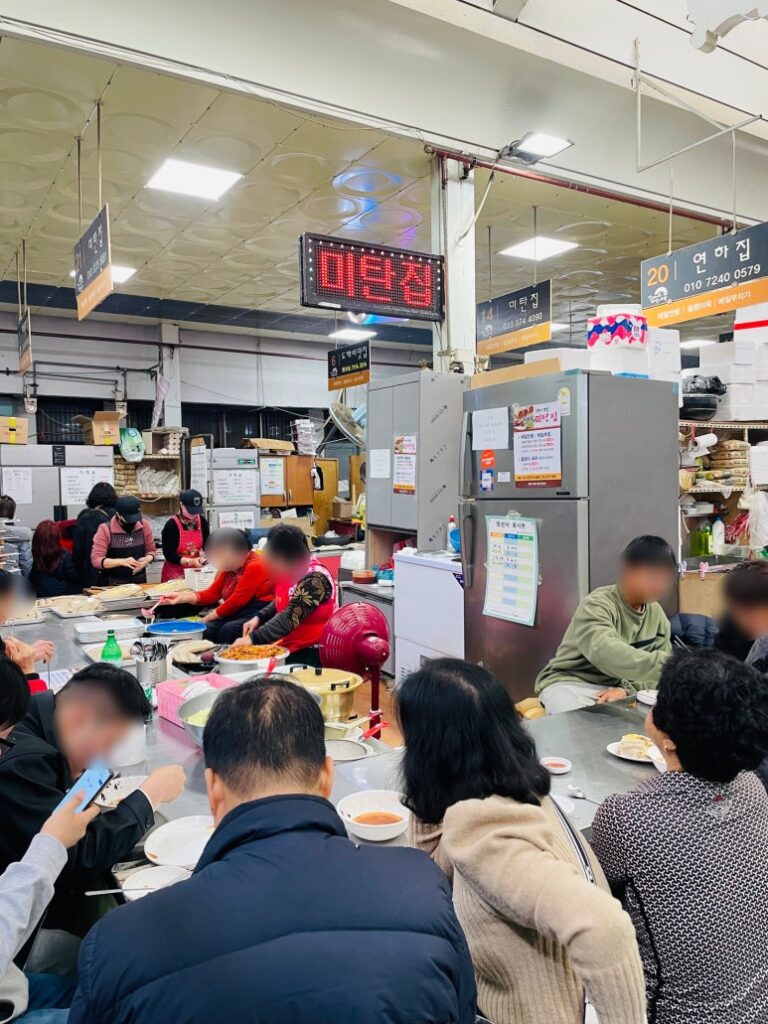
As you stroll through Seobu Market today, the atmosphere is a lively blend of the old and new. The market is divided mainly into two sections:
- Seobu Morning Market (서부아침시장): Operated by the Morning Market Merchants’ Association, this area specializes in local agricultural products, homemade buckwheat dishes, and freshly harvested vegetables. As of June 2021, 56 stalls operate here, primarily selling farm products and traditional foods.
- Seobu Public Market (서부공설시장): Managed by the Public Market Merchants’ Association, this sector offers a broader range of products, from fruits and vegetables to seafood and household goods, with 42 stalls run by 74 employees.
Unlike larger, more tourist-focused markets, Seobu retains its genuine character. Elderly vendors sit behind neatly arranged displays of cabbages, herbs, and root vegetables. The air is thick with the comforting scents of fresh rice cakes and sizzling pancakes.
There is a palpable sense of community: familiar greetings between buyers and sellers, local gossip exchanged over bundles of green onions, and handwritten signs offering friendly discounts for “regular customers.”
Culinary Highlights: Where to Eat and What to Try
For food lovers, Seobu Market is a true paradise. Some stalls and small eateries stand out for offering authentic local flavors:
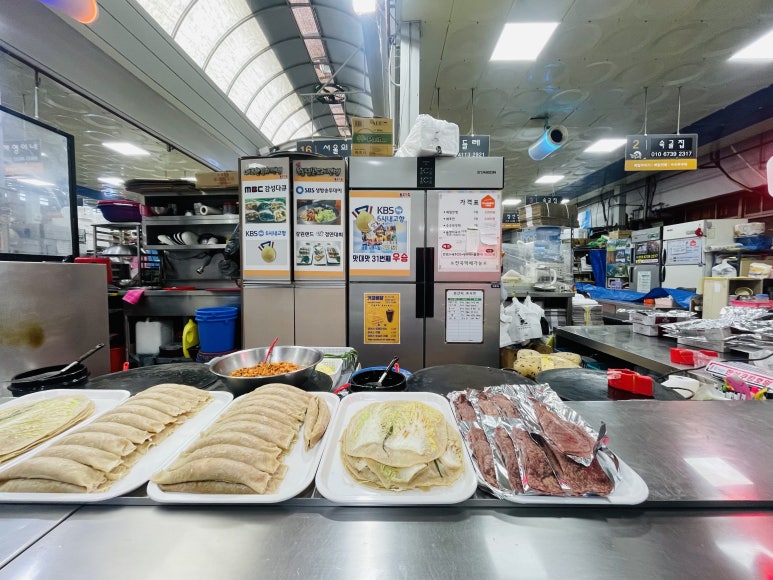
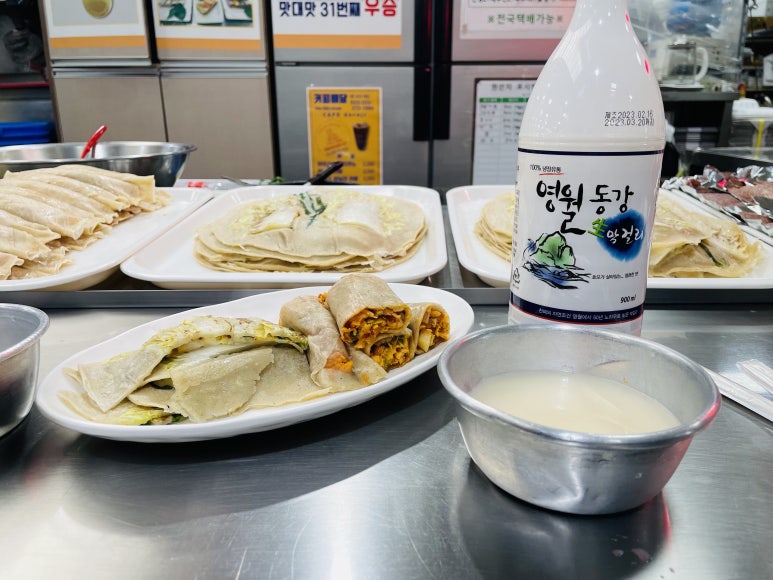
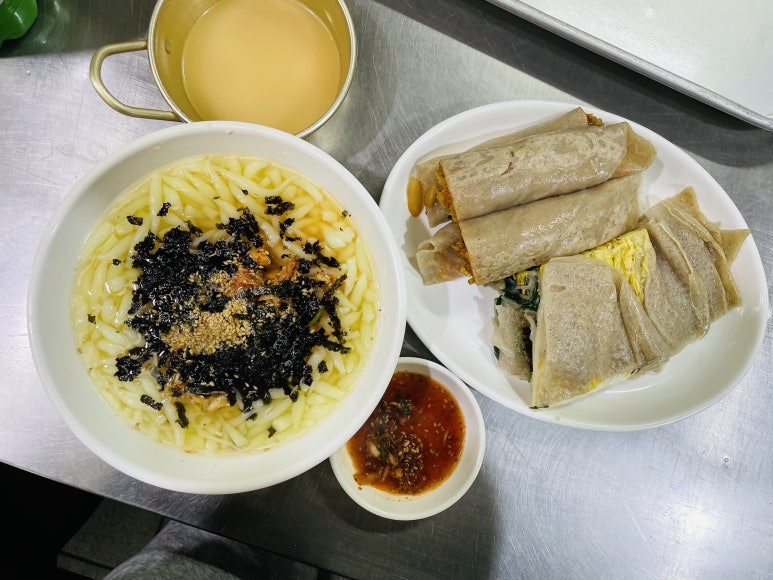
- Mitan House (미탄집): Specializing in Memil Jeonbyeong (메밀전병) and Memil Buchim (메밀부침), Mitan House serves some of the best buckwheat dishes in town. The savory crepes are thin, slightly chewy, and stuffed with seasoned cabbage and glass noodles — simple yet deeply satisfying.
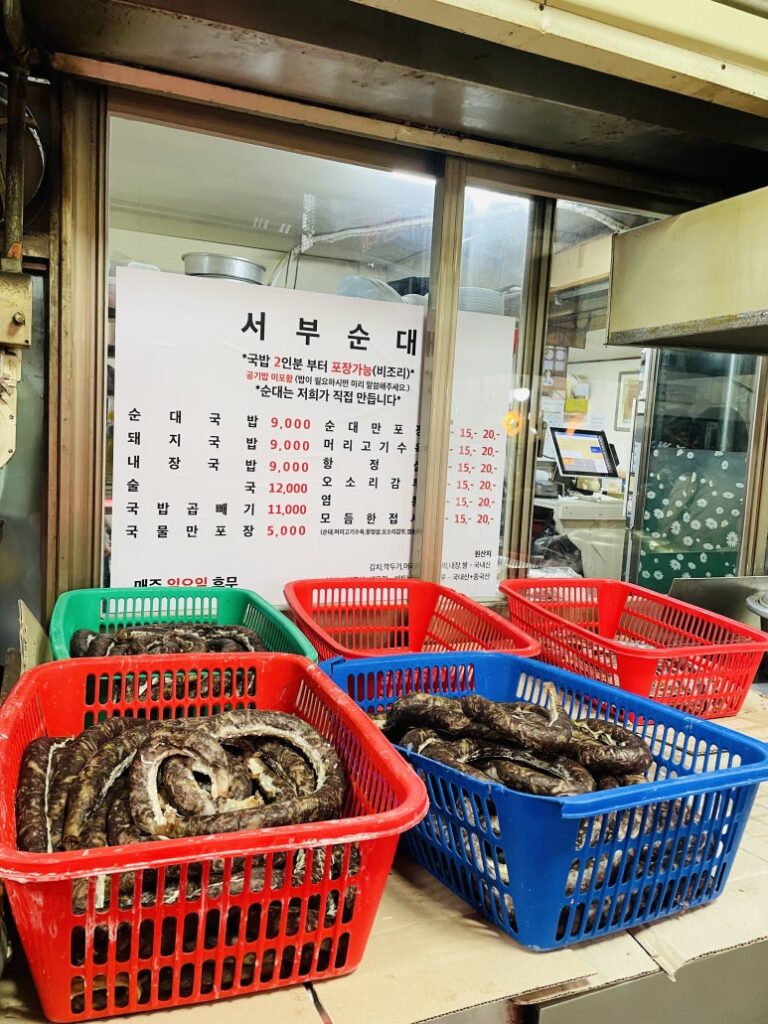
- Seobu Sundae House (서부순대집): Famous for its Sundae Gukbap (순대국밥), a rich blood sausage soup. The broth is deeply savory and enhanced with fragrant perilla seeds. The sundae itself is tender, flavorful, and made fresh daily.
- Ilmi Dakgangjeong (일미닭강정): Offering crispy, sticky-sweet fried chicken (Dakgangjeong), Ilmi’s version is coated in a glossy sauce that strikes the perfect balance between sweet, savory, and spicy.
Wandering the market, it’s impossible to ignore the allure of additional street foods: crispy hotteok (호떡), grilled fish cakes (어묵), handmade rice cakes (떡), and piping-hot odeng broth perfect for sipping on a cool morning.
Sampling these local dishes is more than just eating — it’s about experiencing a culinary tradition passed down through generations.
Seobu Market: A Living, Breathing Part of Yeongwol
One of the most remarkable aspects of Seobu Market is how closely it ties into the fabric of daily life in Yeongwol. While younger residents might favor supermarkets, the market remains a crucial space for older generations and a nostalgic touchstone for many.
During my visit, I was struck by the generosity of the vendors, who insisted on giving extra handfuls of produce or an extra rice cake with a smile. Even without speaking fluent Korean, the warmth was unmistakable — conveyed through gestures, laughter, and the universal language of hospitality.
Markets like Seobu are living museums, preserving regional identity in a rapidly modernizing world.
Nearby Attractions Worth Visiting
If you have time after visiting the market, Yeongwol offers several nearby attractions:
- Donggang River (동강): Known for its crystal-clear waters and rafting opportunities, perfect for nature lovers.
- Kim Satgat Culture Village (김삿갓문화촌): A picturesque site celebrating the life and works of poet Kim Satgat, featuring traditional houses and scenic walks.
- Yeongwol Danjong Historic Site (영월 단종 유적지): Offering a glimpse into one of Korea’s most poignant royal histories.
Each of these sites is easily accessible within a short drive from the market, making Seobu Market a perfect starting point for a day of exploration.
Final Thoughts: Why Seobu Market Stands Out
In a world where traditional markets are increasingly rare, Seobu Market in Yeongwol stands as a shining example of resilience and authenticity.
It’s not polished or designed for tourists — and that’s exactly its charm.
Visiting Seobu Market means immersing yourself in the real rhythms of Korean life.
It’s about chatting with grandmothers selling fresh produce, savoring a simple but perfect buckwheat pancake, and seeing how communities are kept alive through food, conversation, and connection.
If you’re looking for a destination that feels honest, warm, and unforgettable, a morning at Seobu Market is a must.
Practical Information
- Address: 30-1 Jungang-ro, Yeongwol-eup, Yeongwol-gun, Gangwon Special Self-Governing Province, South Korea (강원 영월군 서부시장길 12-4)
- Operating Hours: 8:00 AM – 8:00 PM (individual vendor hours may vary)
- Closed: Varies by vendor (some may close on Sundays or national holidays)
- Parking: Public parking lots available nearby
- More Info : 영월서부시장
Tops10 Resort Donggang Cistar (탑스텐리조트동강시스타): A Scenic Retreat Where Nature and Comfort Meet