

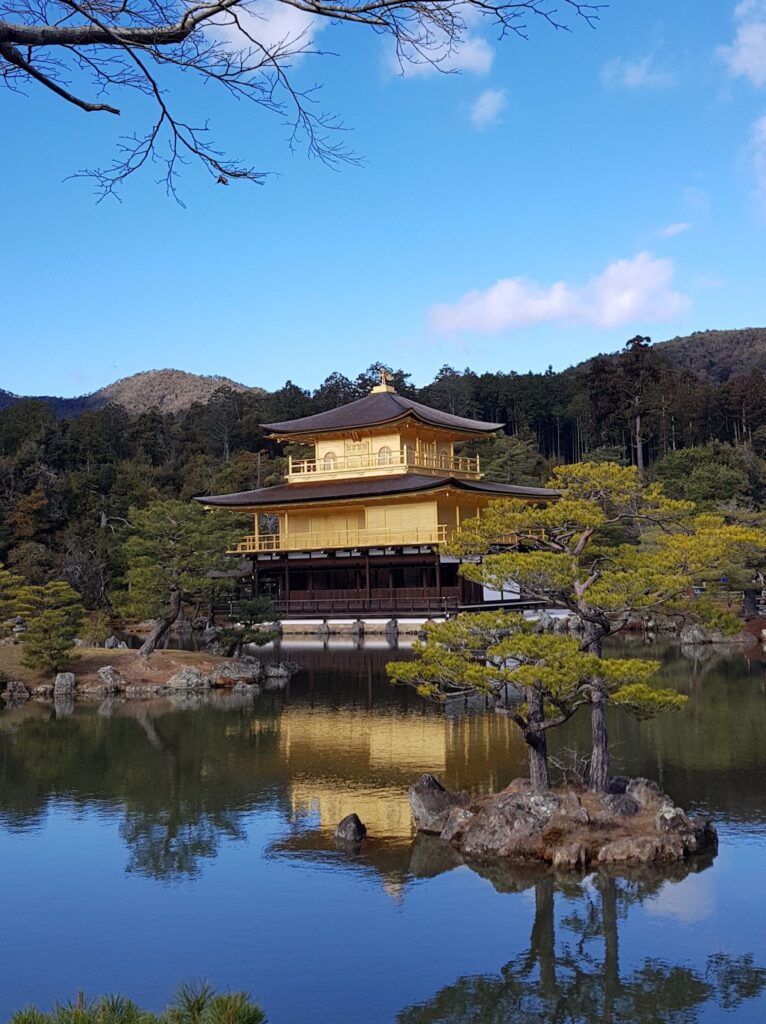
Kyoto is home to many historical landmarks, but few match the breathtaking beauty and cultural depth of Kinkaku-ji (金閣寺), also known as the Golden Pavilion. Officially named Rokuon-ji (鹿苑寺), this UNESCO World Heritage Site captivates visitors with its gleaming gold-leaf exterior, mirrored perfectly in a tranquil pond and framed by meticulously maintained gardens. A symbol of Zen elegance and Japanese aesthetics, Kinkaku-ji is a must-see destination for anyone exploring the ancient capital.
Historical Origins and Restoration
Kinkaku-ji traces its origins back to 1397, originally built as a lavish retirement villa for shogun Ashikaga Yoshimitsu. Following his death, it was converted into a Rinzai Zen Buddhist temple as per his will. The structure was intended to represent the Pure Land of the Buddha on earth, serving not only as a place of retreat but also a vision of spiritual paradise.
Over time, Kinkaku-ji has endured wars and disasters, including being burned down in 1950 by a novice monk. The current version, rebuilt in 1955, faithfully replicates the original design using traditional techniques and materials. This reconstruction preserves its historical significance while adapting it for modern preservation. Its resilience mirrors the tenacity of Japanese cultural memory.
Kinkaku-ji has since become an icon of Kyoto, appearing in countless artworks, films, and travel publications. Its golden facade continues to mesmerize generations of visitors, symbolizing not only aesthetic beauty but spiritual longing.

Architectural Splendor and Symbolism
The three-story pavilion is a striking combination of architectural styles:
- The first floor, called the Chamber of Dharma Waters, follows the Shinden-zukuri style of Heian aristocracy. Its natural wood and white plaster offer a serene foundation.
- The second floor, or Tower of Sound Waves, reflects Bukke-zukuri, used in samurai residences. It is covered in gold leaf, enhancing its opulence.
- The third floor, named Cupola of the Ultimate, adopts the Karayo (Zen) style and is fully gilded. Atop sits a golden phoenix, symbolizing renewal and spiritual enlightenment.
The lavish use of gold is not just decorative but intended to purify the mind and represent the Buddhist Pure Land. Depending on the light, the reflection of the pavilion changes, offering a spiritual experience rooted in nature’s impermanence.
Each architectural layer represents not only stylistic traditions but the shogun’s philosophical ideals. The fusion of secular and sacred elements creates a structure that transcends time.

The Gardens and Grounds
Visitors may not enter the pavilion, but the surrounding landscape offers a reflective, immersive journey. Designed as a strolling garden (kaiyū-shiki-teien), the path encircles Kyōko-chi (Mirror Pond), presenting ever-changing views of the temple’s golden façade.
Highlights include the Anmintaku Pond, which is said never to dry out, stone islands where coins are tossed for luck, and a teahouse where traditional confections and matcha are offered. The route also leads to Fudo Hall, home to a statue of Fudo Myoo, and Sekka-tei, an Edo-period tea hut offering a rustic contrast to the temple’s grandeur.
One cannot overlook the ancient Rikushu-no-matsu, a pine said to have been planted by Yoshimitsu himself. With weathered limbs and moss-covered roots, it lends the grounds a timeless, contemplative air. Sculpted trees, moss gardens, and careful placement of stones highlight the Zen influence, inviting visitors to walk slowly and mindfully.
Seasonal Transformations
Kinkaku-ji’s charm changes with the seasons. In spring, cherry blossoms frame the temple in soft pink; in summer, the greenery sets off the golden sheen. Autumn bathes the temple in rich reds and oranges, while winter brings a hushed beauty as snow caps the structure and surrounding trees.
The garden design amplifies these changes, with pathways and vantage points chosen to showcase seasonal highlights. Each season enhances the atmosphere, making return visits worthwhile to experience the changing moods of the temple and gardens.
Photographers especially flock here during the snow season, when the golden structure glows against a pure white backdrop—a scene so surreal that it resembles a painting.
Visitor Reflections
During my visit, the pavilion glistened under the late afternoon sun. I paused at Mirror Pond, entranced by the sight. The scene evoked mono no aware, the Japanese awareness of impermanence and beauty in transience. I put down my camera to simply absorb the moment—birds overhead, a breeze across the pond, and the soft murmurs of fellow travelers.
The golden reflections on the water reminded me of stories I had heard from others who had come before me—some as children with their parents, others returning decades later. Though it’s one of Kyoto’s most photographed sites, the true magic of Kinkaku-ji lies in its ability to still the mind. Visitors find not just a visual marvel but a space for introspection.
Nearby, I overheard a visitor whisper, “It feels like time stops here.” I felt the same. As the sunlight faded and shadows lengthened across the pond, the temple took on a softer hue, as if slowly retreating into memory.
Nearby Attractions and Recommended Route
A great way to experience northern Kyoto is to combine Kinkaku-ji with other notable sites such as Ryoan-ji and Ninna-ji, both within walking distance. These temples offer contrasting Zen rock gardens and sprawling pagodas, expanding the experience beyond just gold and reflection.
For those seeking a more thematic journey, a route through Kinkaku-ji to the Philosopher’s Path in eastern Kyoto provides a contemplative day steeped in temple lore and scenic tranquility. Public buses connect the sites easily, and signs are available in multiple languages.

Travel Tips and Visitor Etiquette
- Best Time to Visit: Mornings or late afternoons offer the best lighting and fewer crowds.
- Footwear: Wear comfortable shoes for walking on gravel and uneven paths.
- Photography: No flash or drone photography is allowed.
- Souvenirs: Shops sell matcha treats, gold leaf items, and Japanese calligraphy souvenirs.
- Accessibility: Main paths are generally accessible, but assistance may be needed for full access.
- Quiet Respect: Although the temple is not an active place of worship, maintaining a quiet demeanor respects the site’s sacred atmosphere.
Practical Information
- Official Name: Rokuon-ji (鹿苑寺)
- Common Name: Kinkaku-ji (金閣寺) / The Golden Pavilion
- Address: 1 Kinkakujicho, Kita Ward, Kyoto, 603-8361, Japan
- Opening Hours: Daily from 9:00 AM to 5:00 PM
- Admission Fee: ¥500 for adults, ¥300 for children
- Access: Kyoto City Bus #101 or #205 from Kyoto Station (approx. 40 minutes)
- Website: https://www.shokoku-ji.jp/kinkakuji/
Discovering Nijō Castle (Nijō-jō 二条城): A Journey into Kyoto’s Feudal Elegance
Richmond Hotel Premier Kyoto Shijo Review – A Thoughtful Stay in the Heart of Kyoto