

Located in the heart of Vienna, the Albertina Museum is one of Europe’s premier cultural institutions, offering visitors a rare blend of majestic imperial architecture and a world-class collection of art. Set within a historic palace that once served as a residence for the Habsburgs, the museum is a fascinating destination where centuries of European art, royal heritage, and architectural sophistication meet. Whether you are an art aficionado or a casual traveler, Albertina promises a rich and immersive experience that resonates far beyond the gallery walls.
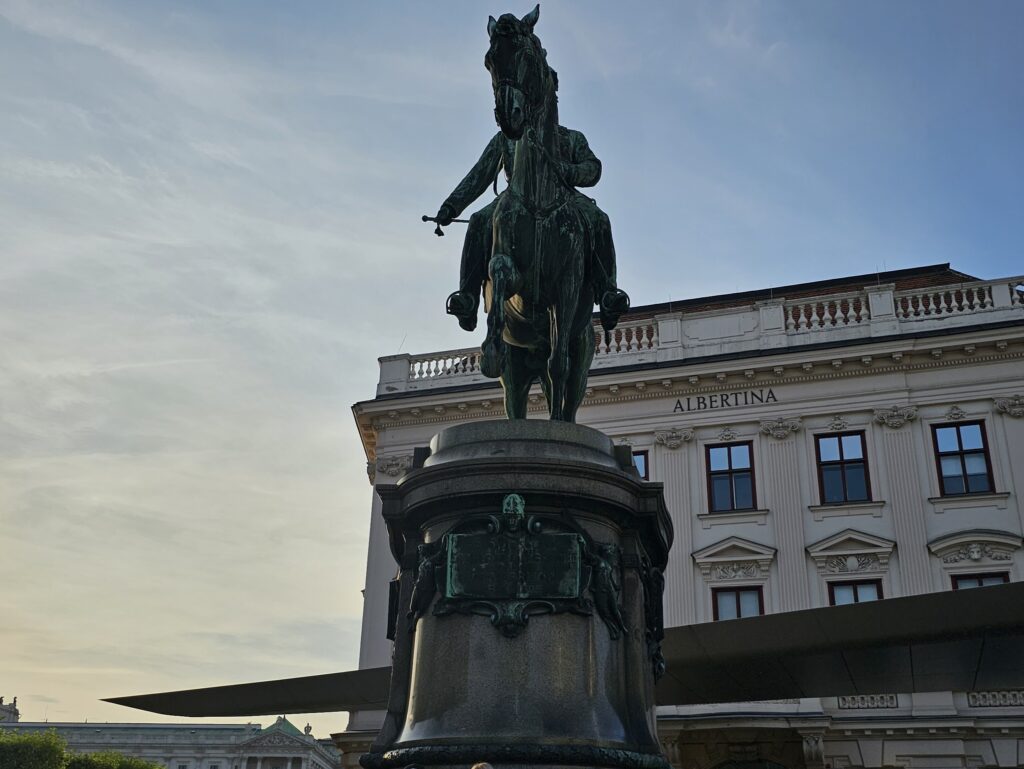
Imperial Origins and Architectural Legacy
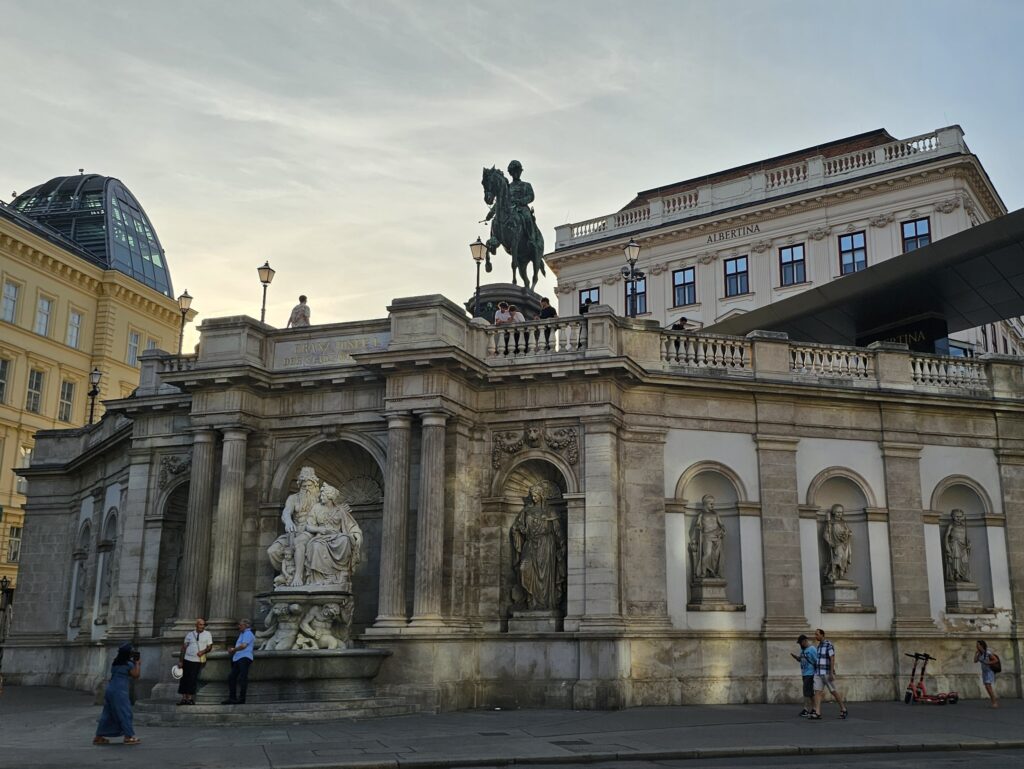
The Albertina Museum is housed in the Albertina Palace (Palais Erzherzog Albrecht), originally built in the 1740s on one of the last remaining sections of the city’s medieval fortifications. The building was extensively remodeled in the late 18th century for Duke Albert of Saxony-Teschen—son-in-law of Empress Maria Theresa—who established his renowned print and drawing collection here. This collection became the foundation of what would later be known as the Albertina Museum.
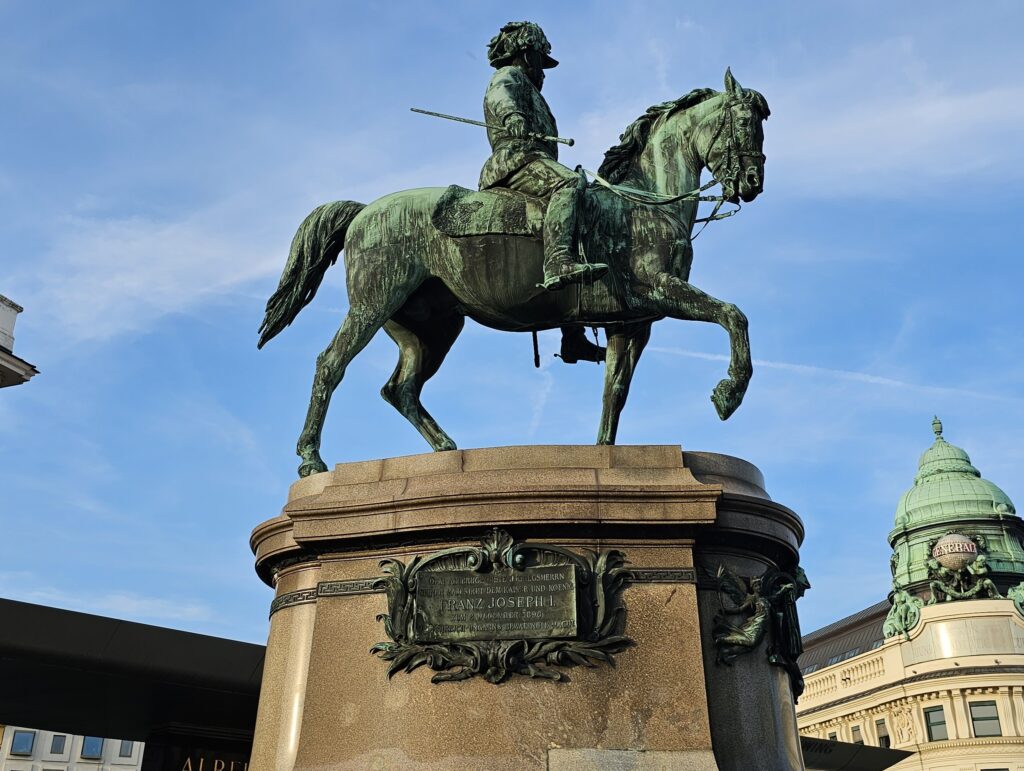
The palace underwent further transformation during the reign of Emperor Franz Joseph I, who turned it into an official Habsburg residence. It was lavishly appointed with elegant staterooms, grand staircases, and Neoclassical interiors designed to reflect imperial authority and sophistication. Franz Joseph, a pivotal figure in Austrian history, supported the arts as a way to reinforce cultural cohesion during his reign. Though known for his reserved demeanor, his patronage of the Albertina reflects his belief in the arts as a stabilizing and unifying force for the empire.
Today, visitors can explore many of these restored rooms, including the opulent Hall of Muses and the Gold Cabinet, which provide a vivid glimpse into royal life during Austria’s imperial heyday. The building’s classical lines and stately presence form a picturesque silhouette against the Ringstrasse, harmonizing with other imperial landmarks.
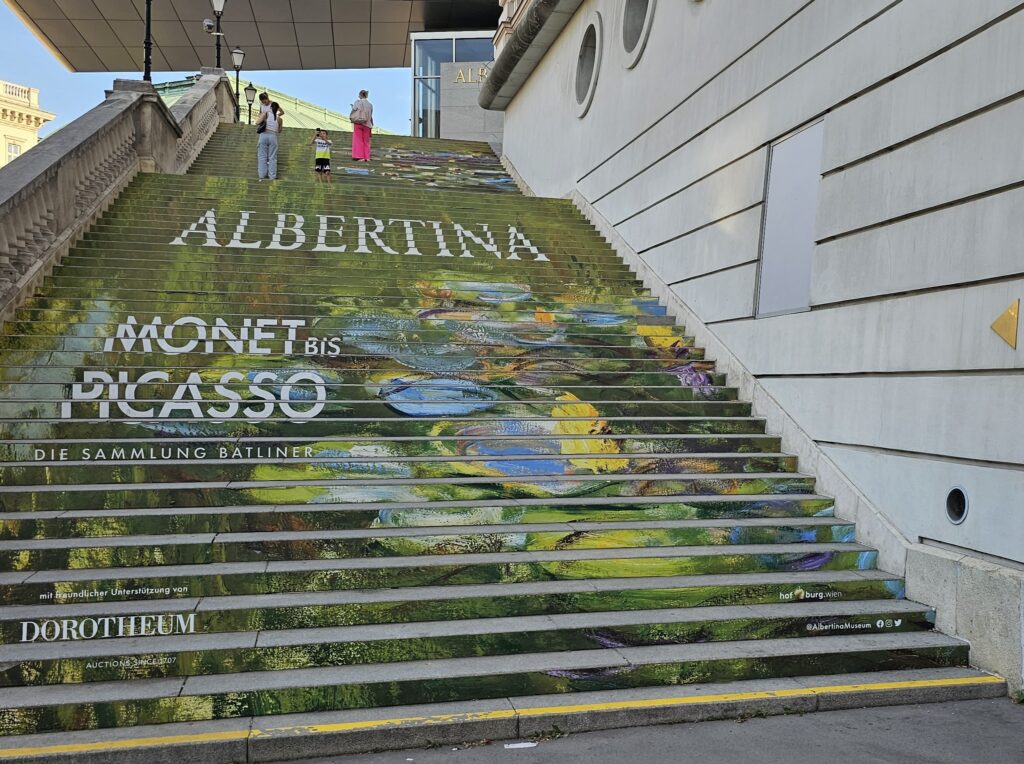
The Masterpieces Within
The Albertina’s permanent collection is among the most comprehensive in the world, featuring over a million prints and more than 60,000 drawings. Highlights include works by Renaissance masters such as Albrecht Dürer—his “Young Hare” is considered a crown jewel—Leonardo da Vinci, Michelangelo, Raphael, and Rembrandt. Visitors are often drawn to Dürer’s detailed studies, which blend scientific observation with poetic beauty.
Impressionist and Modernist galleries showcase masterpieces by Monet, Renoir, Cézanne, Picasso, Chagall, and Miró. A number of works by Austrian artists like Gustav Klimt and Egon Schiele are also prominently featured, providing insight into the distinctive evolution of Viennese modernism. The Albertina thus bridges classical and contemporary styles, allowing visitors to follow a rich visual narrative through centuries of artistic innovation.
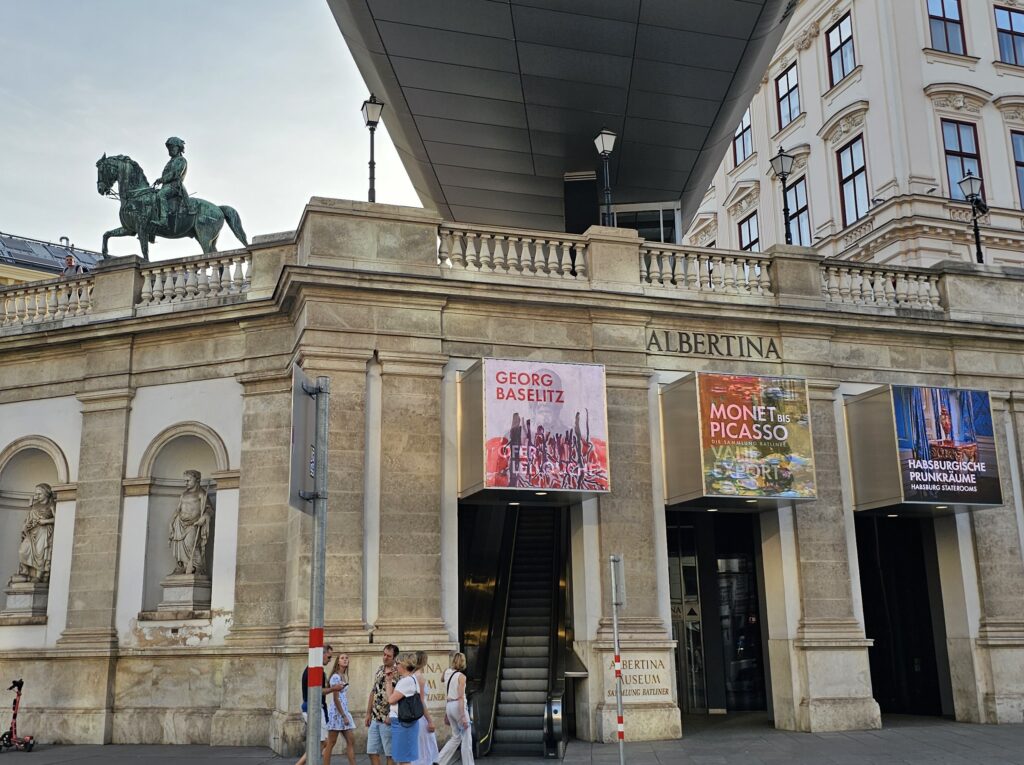
Temporary Exhibitions and Contemporary Art
Albertina regularly hosts major temporary exhibitions that draw international acclaim. These exhibitions often focus on pivotal movements, influential artists, or historical moments in art history. Past exhibitions have featured names such as Claude Monet, Egon Schiele, Keith Haring, and Roy Lichtenstein, and have explored themes ranging from surrealism to architectural drawing. Each temporary exhibit is accompanied by expert curatorial notes, multimedia installations, and detailed wall texts that enhance viewer engagement.
The Albertina Modern, an extension housed in the Künstlerhaus near Karlsplatz, further broadens the museum’s scope. It focuses on 20th- and 21st-century works, offering a dynamic counterbalance to the classical holdings of the main museum. Visitors can enjoy major exhibitions dedicated to contemporary movements such as Abstract Expressionism, Viennese Actionism, and digital art, all within an equally historic yet creatively reimagined space.
The Habsburg Staterooms
In addition to its vast art holdings, the Albertina also preserves 21 Habsburg Staterooms—meticulously restored to reflect their 19th-century appearance. These rooms once served as the private apartments of Archduke Albrecht and later Emperor Franz Joseph’s staff. Highlights include Rococo stucco ceilings, original silk wall coverings, and antique furniture that transport visitors to the height of Habsburg court life.
These staterooms are not merely decorative; they represent Austria’s historical intersection of culture, power, and identity. Walking through them provides insight into how art and architecture functioned as expressions of both personal taste and political ideology during the empire. For history lovers, they provide a sensory journey into a bygone world of imperial protocol and elegance.
Nearby Attractions to Complete Your Day
The Albertina’s central location makes it ideal for combining with visits to other iconic Viennese landmarks. Just steps away is the Vienna State Opera (Wiener Staatsoper), a global beacon of classical music and opera where Mozart and Strauss are regularly celebrated. Booking a performance or simply touring its grand interior adds cultural depth to your Vienna experience.
Adjacent to the museum is the Hofburg Palace, once the imperial seat of the Habsburg dynasty. The sprawling complex houses the Imperial Apartments, Sisi Museum, and the Austrian National Library, all of which are easily walkable from Albertina. Each site complements the imperial narrative started at the Albertina, offering deeper historical perspective.
A short stroll across the Ringstrasse leads to the Kunsthistorisches Museum Wien, one of the world’s foremost fine art museums. Its rich holdings include works by Caravaggio, Vermeer, Velázquez, and Rubens, along with stunning collections of Egyptian, Greek, and Roman antiquities. Together, these institutions form Vienna’s cultural golden triangle.
Visitor Tips and Recommendations
To make the most of your visit, plan to spend at least two to three hours exploring both the permanent collections and any current special exhibitions. Guided tours are available and recommended for those who wish to delve deeper into the museum’s history and treasures. The on-site café offers a pleasant break with Viennese pastries and coffee, and the gift shop features high-quality art books, prints, and unique souvenirs.
The museum is wheelchair accessible and provides lockers for bag storage. Photography is permitted in many areas, though flash and tripods are usually not allowed. Check the museum’s website in advance for current exhibitions, ticket pricing, and operating hours.
Practical Information
- Location: Albertinaplatz 1, 1010 Vienna, Austria
- Opening Hours: Daily, 10:00 AM – 6:00 PM (Wednesdays and Fridays until 9:00 PM)
- Admission Fee: General admission ~ €18; discounts available for students, seniors, and children
- Website: https://www.albertina.at/en
Brasserie Palmenhaus Wien: Dining in a Glasshouse Oasis in Vienna