
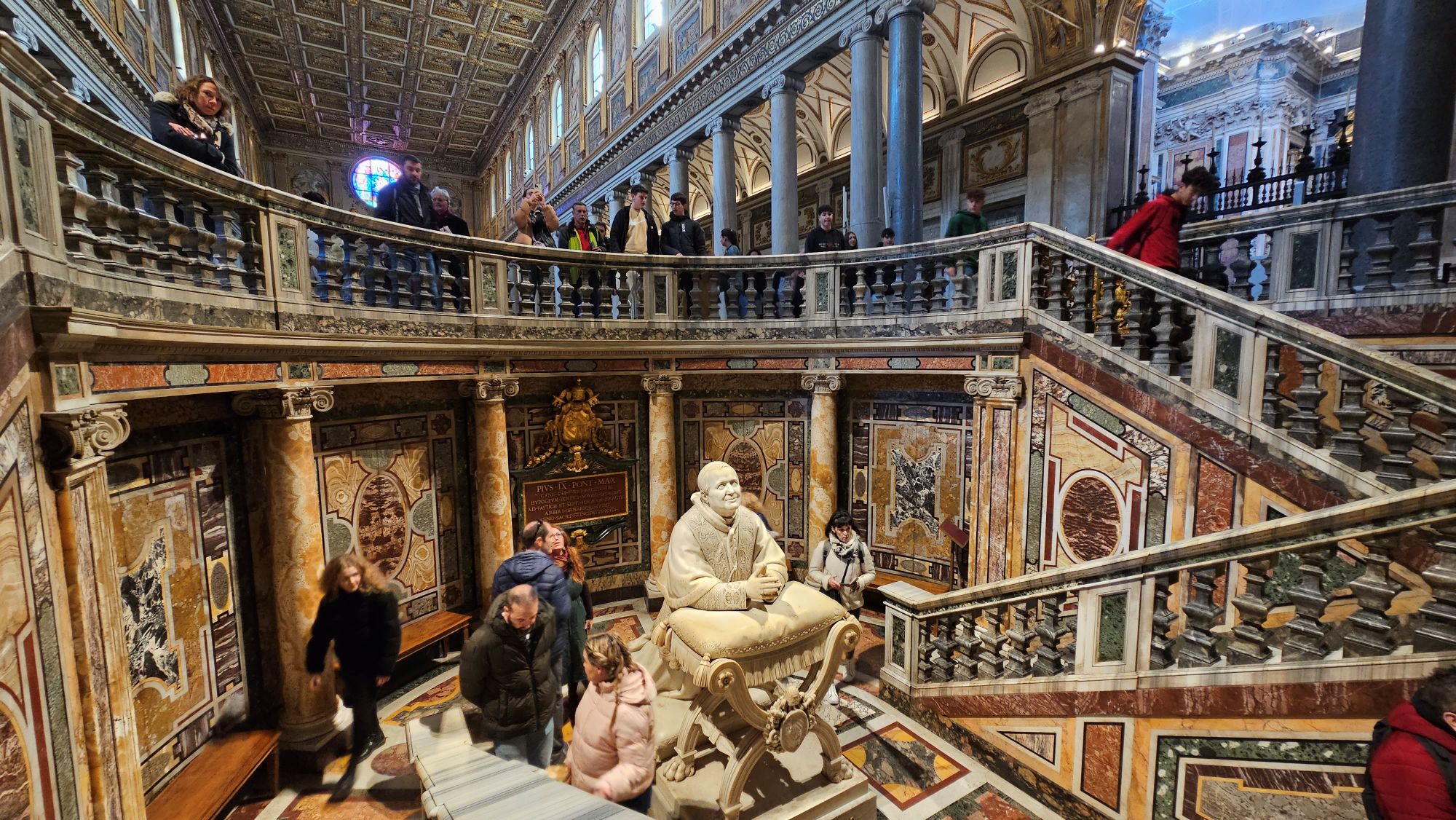
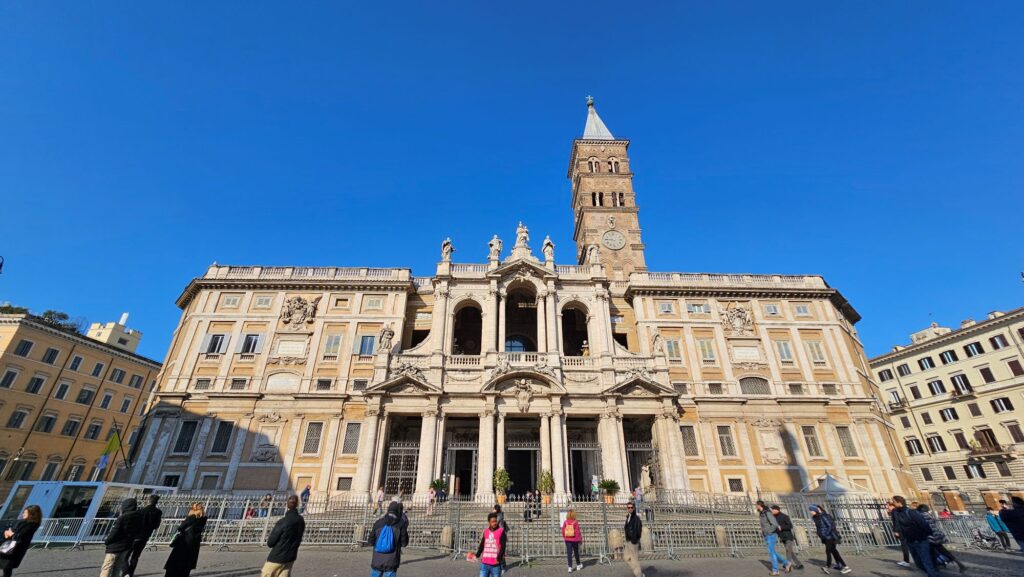
Santa Maria Maggiore is not only one of Rome’s four major papal basilicas, but also one of the most emotionally resonant churches in the city. Located on the Esquiline Hill, it stands slightly apart from the dense layers of ruins and forums that dominate central Rome, yet it remains deeply woven into the city’s spiritual and historical fabric. Approaching the basilica, you sense immediately that this is not simply another church on a long sightseeing list—it is a living monument, shaped by centuries of devotion, art, and continuity.
Unlike many Roman churches that reveal themselves gradually as you step inside, Santa Maria Maggiore feels monumental from the very beginning. Its broad façade and commanding presence reflect its status as Rome’s principal Marian church, dedicated to the Virgin Mary and cherished by pilgrims for more than sixteen centuries.
Origins and the Legend of the Miraculous Snow
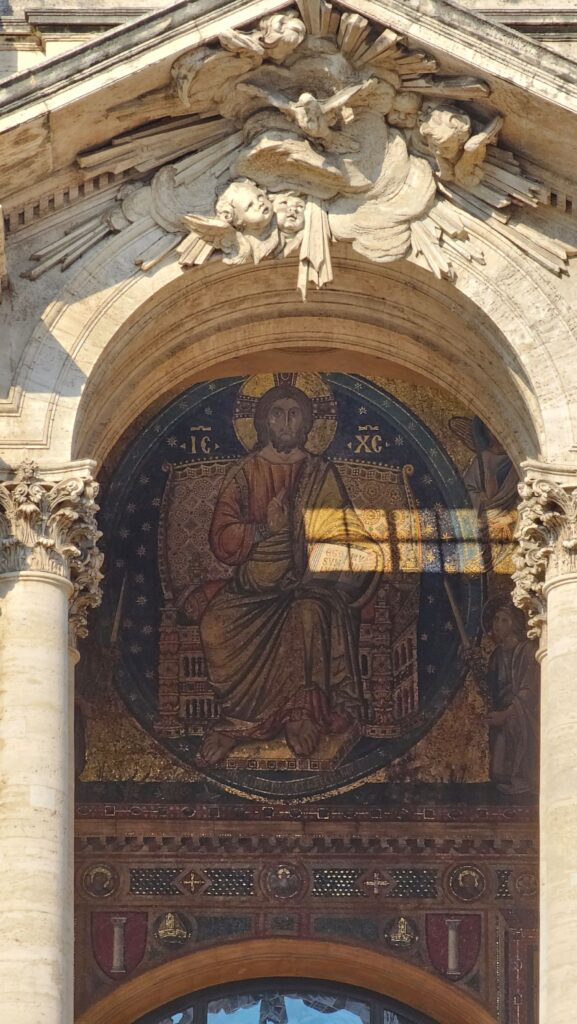
The founding of Santa Maria Maggiore is tied to one of Rome’s most enduring legends. According to tradition, in the year 352, the Virgin Mary appeared in a dream to Pope Liberius and a wealthy Roman couple, instructing them to build a church on the site where snow would miraculously fall. On the morning of August 5—at the height of the Roman summer—snow was said to have covered the Esquiline Hill, marking the location of the future basilica.
While the current structure dates primarily to the 5th century, under Pope Sixtus III, the legend remains central to the basilica’s identity. Even today, this story is commemorated annually on August 5 with a special celebration, during which white petals fall from the ceiling to symbolize the miraculous snowfall. This blend of legend and ritual gives Santa Maria Maggiore a uniquely poetic character within Rome’s sacred landscape.
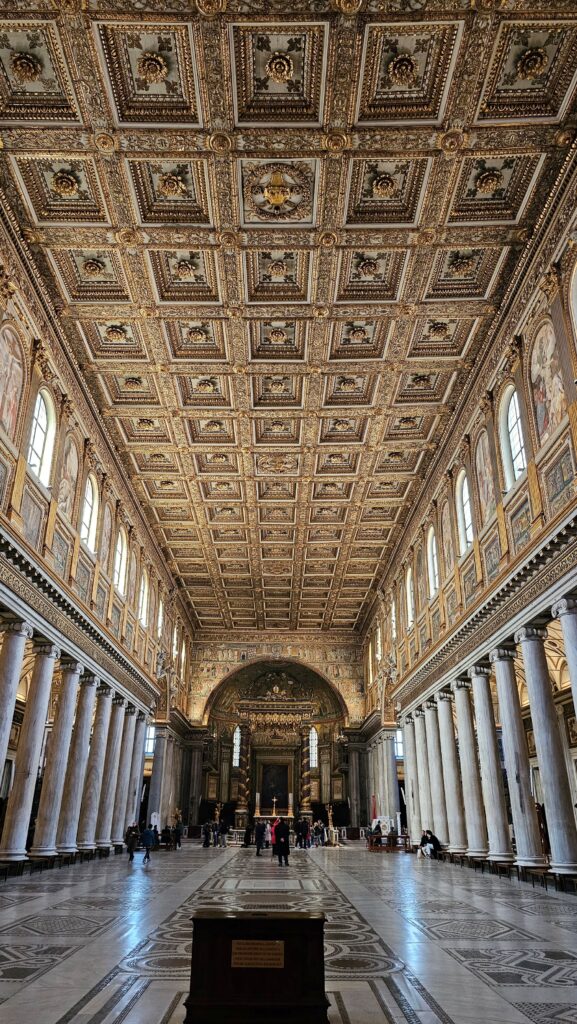
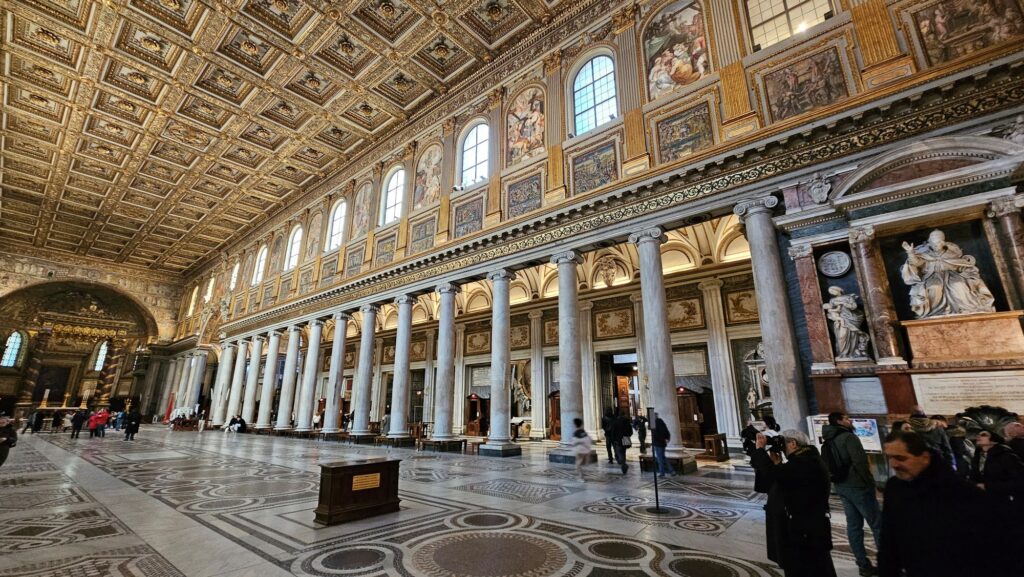
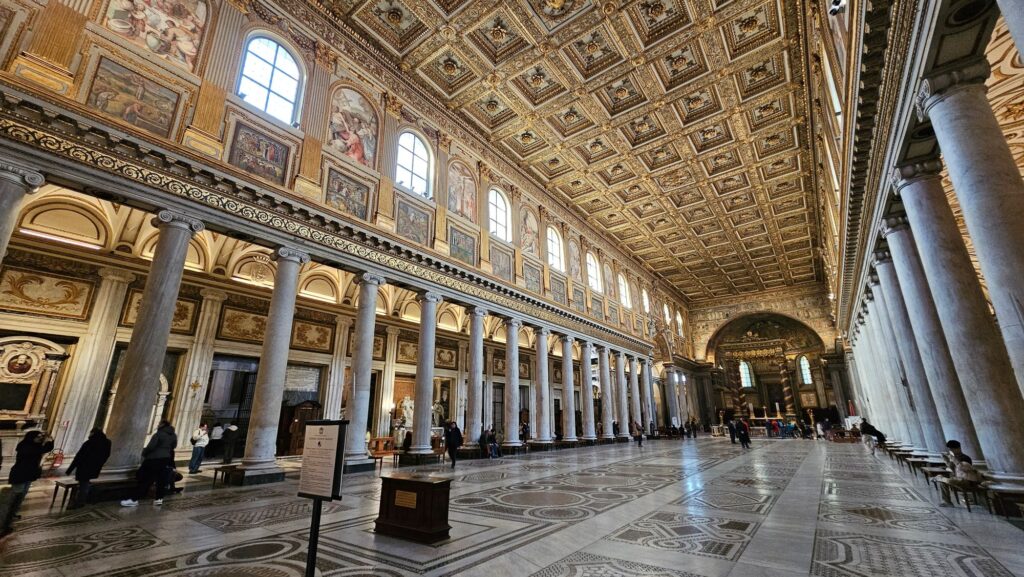
Architectural Layers Across the Centuries
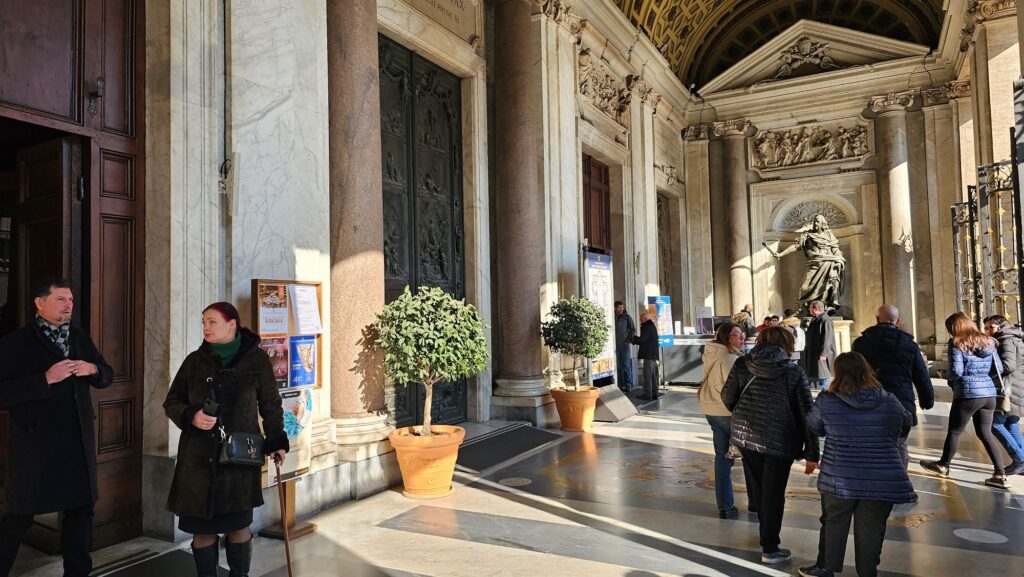
One of the most fascinating aspects of Santa Maria Maggiore is how clearly it displays Rome’s architectural continuity. The basilica preserves its early Christian basilican plan, a rarity among Rome’s major churches. The long nave, flanked by ancient Ionic columns repurposed from earlier Roman buildings, creates a strong sense of linear movement toward the altar.
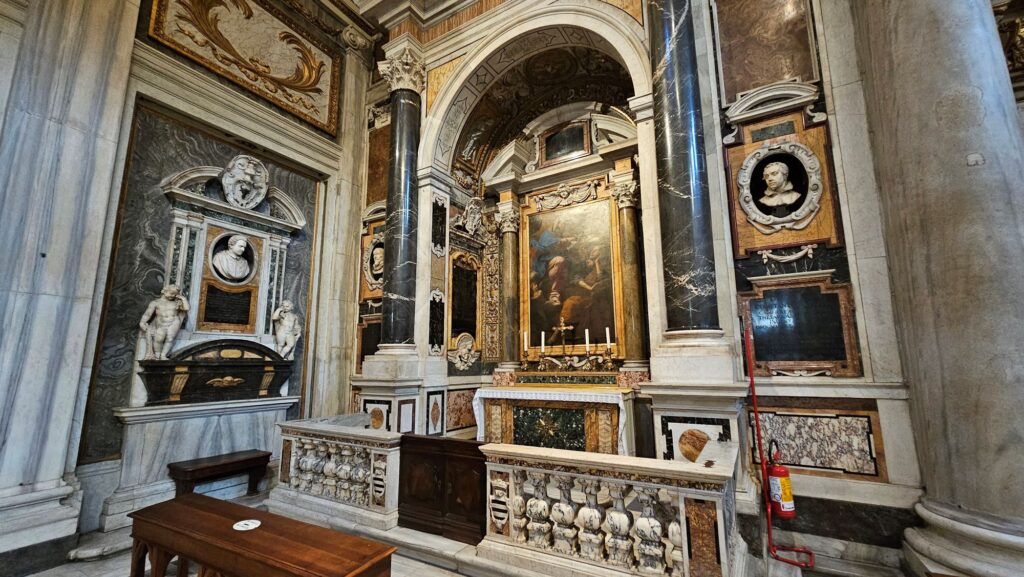
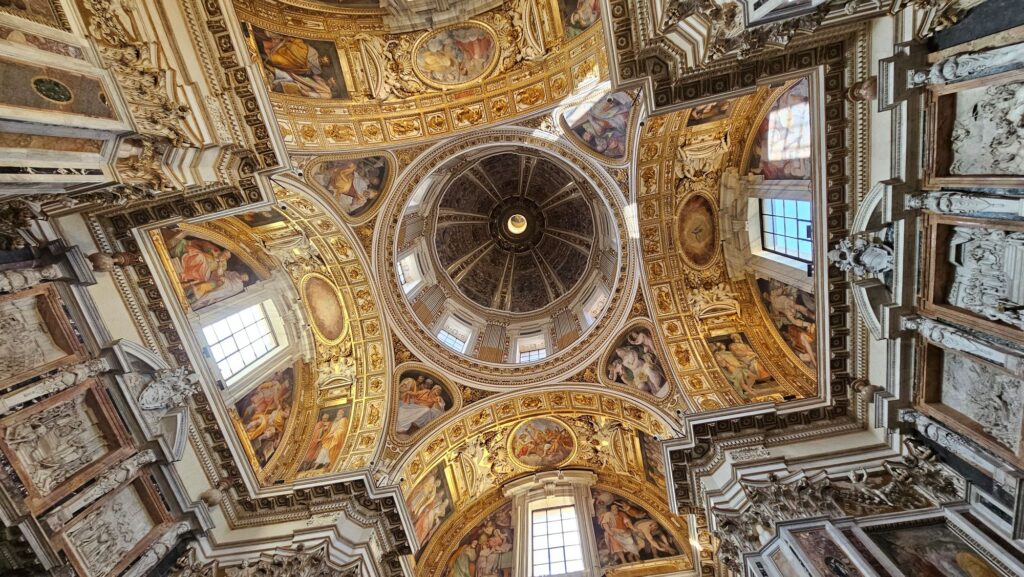
Over the centuries, successive popes added chapels, bell towers, and decorative elements, each reflecting the artistic language of its time. The result is not a single stylistic statement, but a carefully layered composition—early Christian structure, medieval mosaics, Renaissance chapels, and Baroque embellishments all coexisting in remarkable harmony.
The bell tower, the tallest in Rome, rises quietly above the surrounding neighborhood, serving as a subtle yet constant reminder of the basilica’s presence.
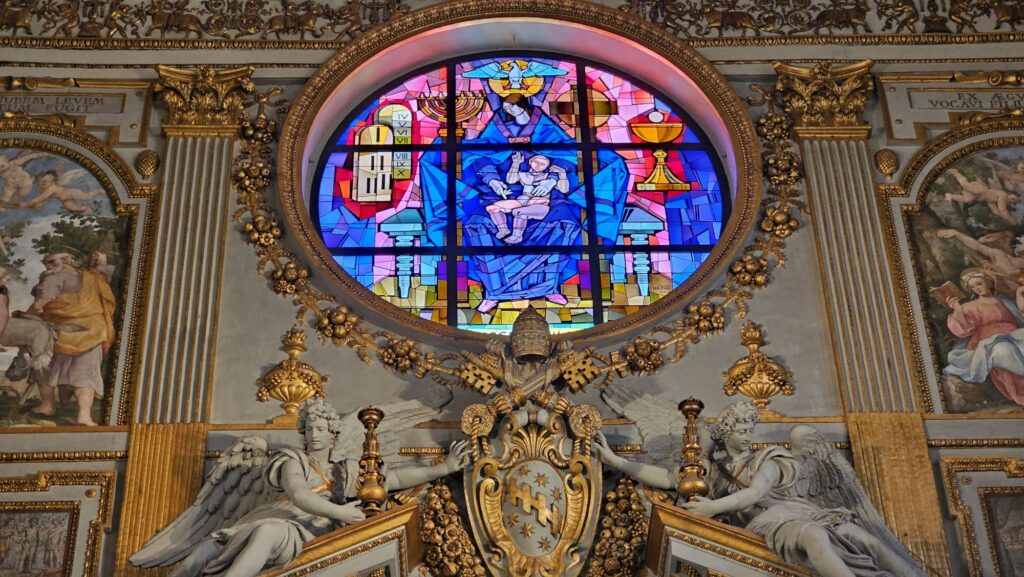
The Nave and Its Early Christian Mosaics
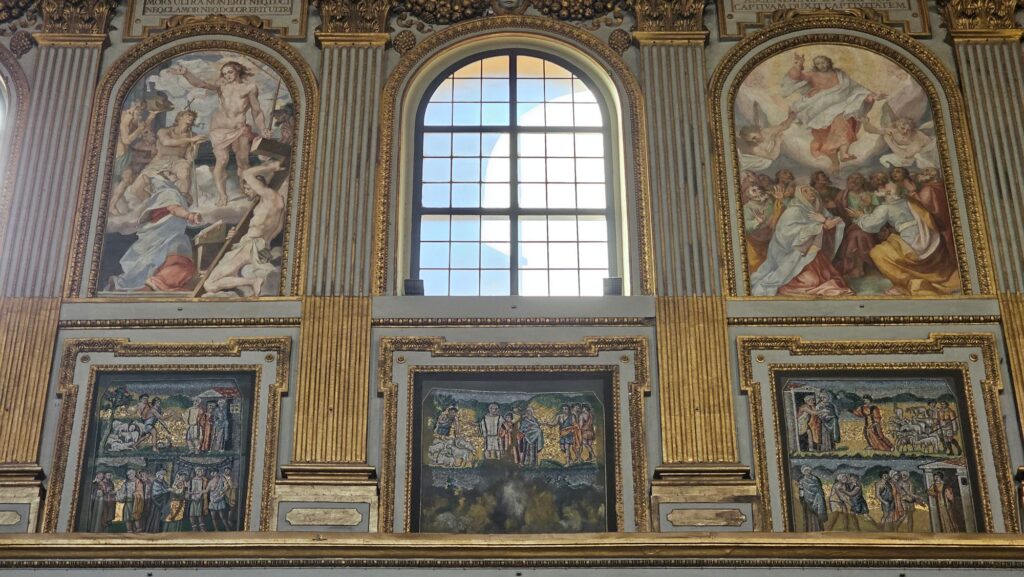
Walking down the nave of Santa Maria Maggiore is like stepping into the early centuries of Christianity. The most extraordinary feature here is the series of 5th-century mosaics lining the upper walls. These mosaics, among the oldest Christian mosaics in Rome, depict scenes from the Old Testament with vivid colors and narrative clarity.
Unlike later religious art that emphasizes emotional drama, these mosaics feel declarative and confident. They were created at a time when Christianity was becoming firmly established within the Roman Empire, and their imagery reflects a sense of theological certainty and triumph. Standing beneath them, you are not simply admiring decoration—you are witnessing visual theology from a formative moment in Western religious history.
The Triumphal Arch and the Birth of Marian Iconography
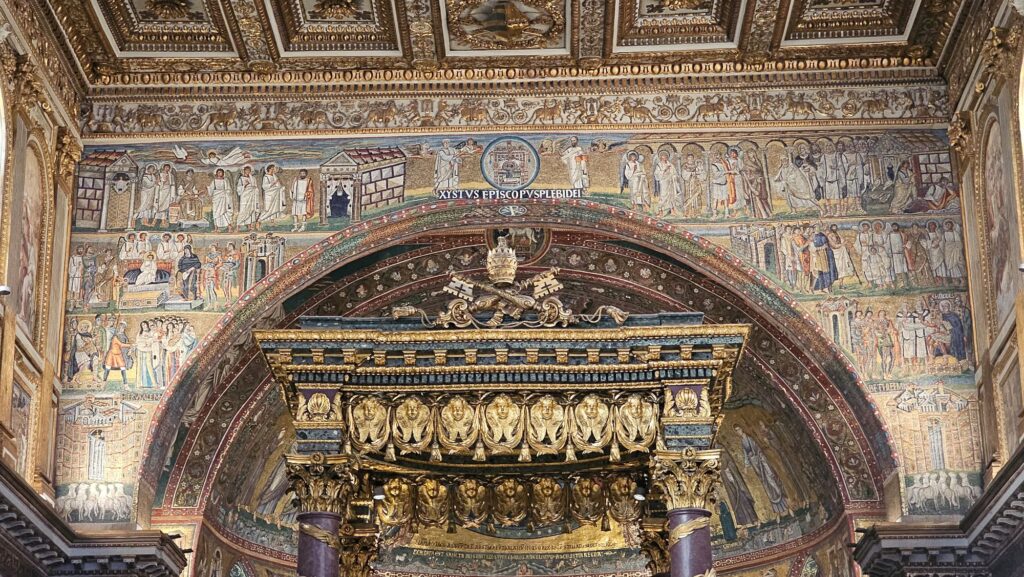
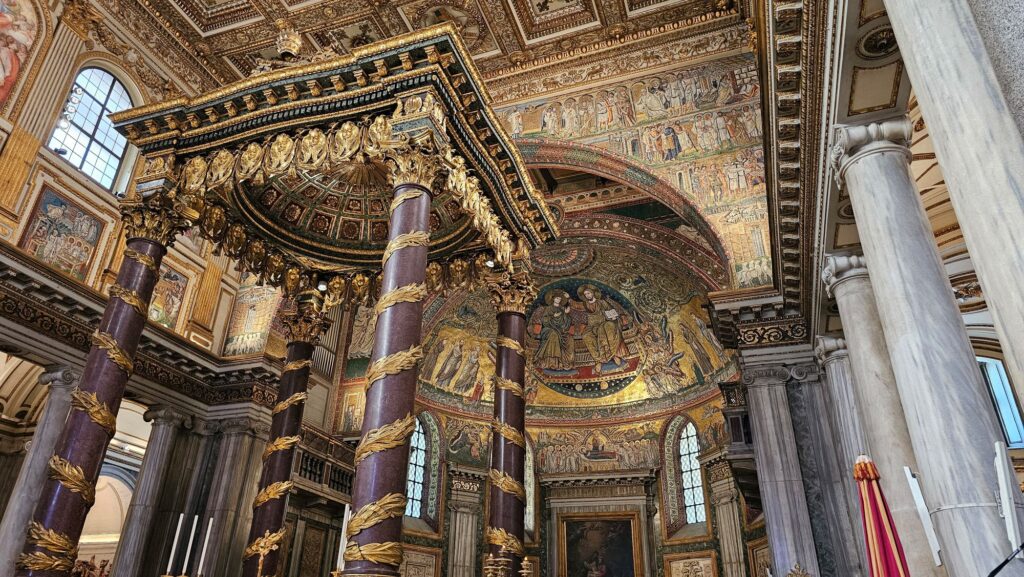
At the crossing between nave and apse, the triumphal arch is adorned with mosaics celebrating the Virgin Mary and the infancy of Christ. These mosaics are especially significant because they represent one of the earliest monumental visual programs dedicated to Mary in Christian art.
Here, Mary is not portrayed as a distant or abstract figure, but as a central participant in the story of salvation. This emphasis reflects theological developments following the Council of Ephesus in 431, which affirmed Mary’s role as Theotokos, the Mother of God. Santa Maria Maggiore thus becomes not only a place of worship, but also a statement of doctrine rendered in stone and gold.
The Apse and the Heavenly Vision
The apse mosaic, completed in the late 13th century by Jacopo Torriti, presents a majestic vision of Mary crowned as Queen of Heaven. Set against a shimmering gold background, the scene radiates serenity and authority. Unlike the earlier mosaics, which emphasize narrative clarity, this image focuses on transcendence and eternal order.
The contrast between the early Christian mosaics in the nave and the medieval apse mosaic subtly illustrates the evolution of Christian visual language—from storytelling to contemplation. Together, they create a complete spiritual journey from earthly history to heavenly fulfillment.
Chapels of Power, Patronage, and Devotion
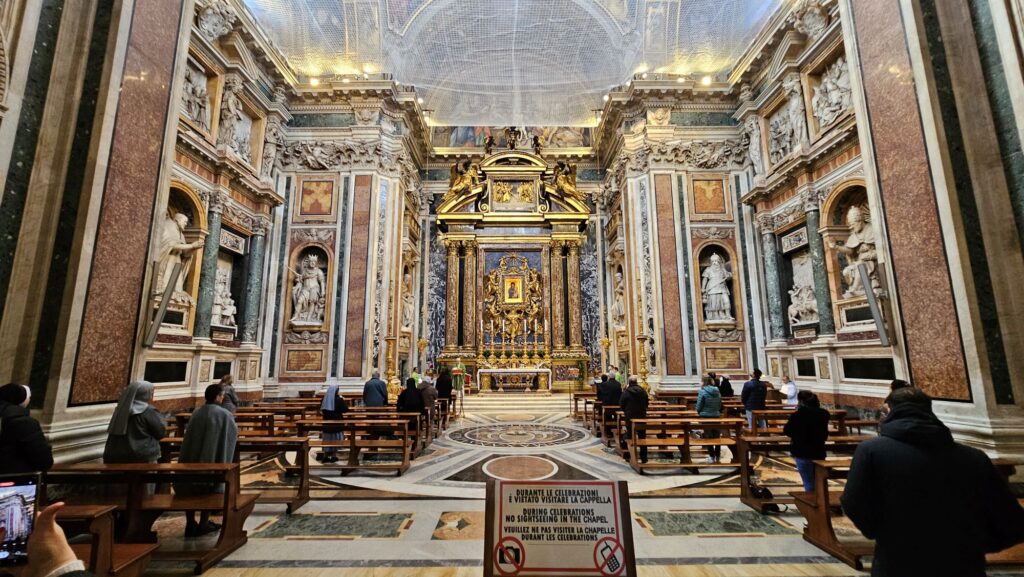
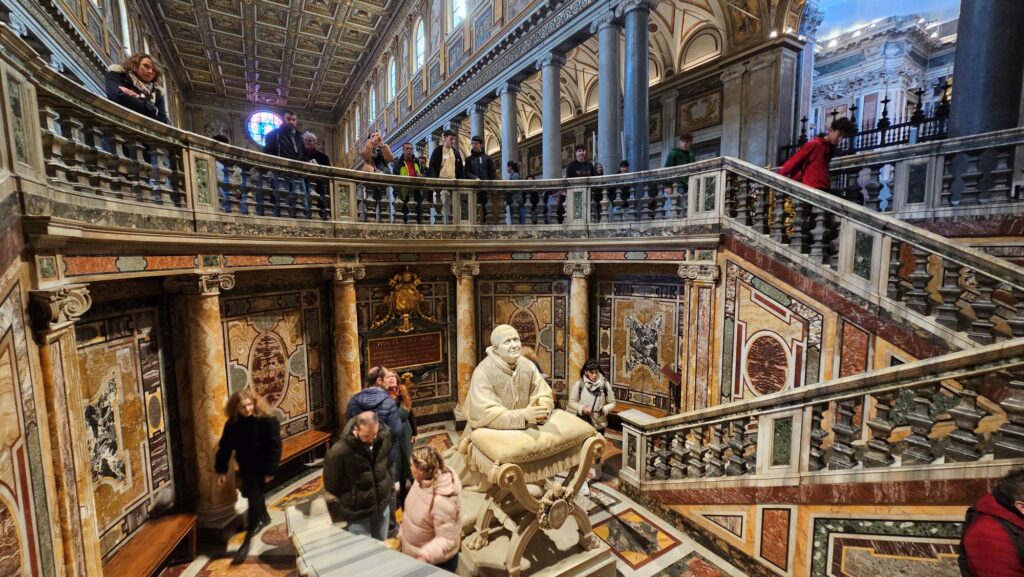
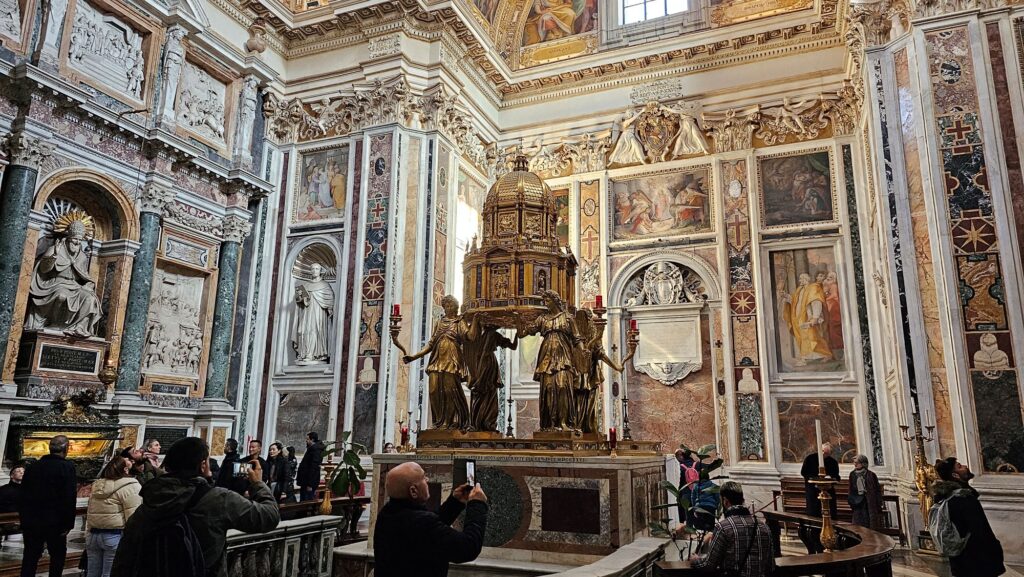
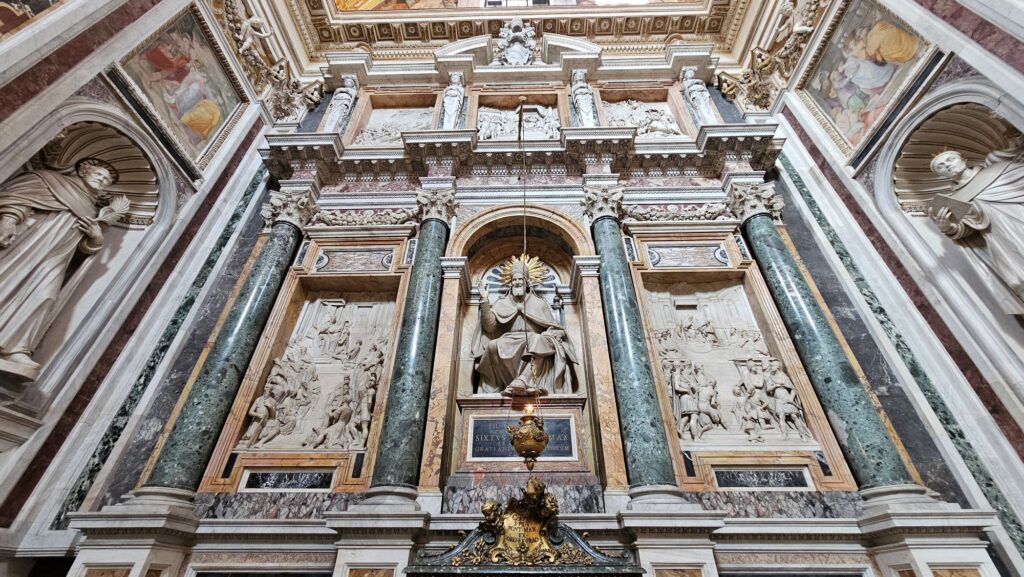
Santa Maria Maggiore houses several richly decorated chapels, each reflecting the ambitions and faith of their patrons. The Sistine Chapel (not to be confused with the Vatican’s Sistine Chapel) was commissioned by Pope Sixtus V and serves as his burial place. Its architecture and decoration express late Renaissance ideals of order and authority.
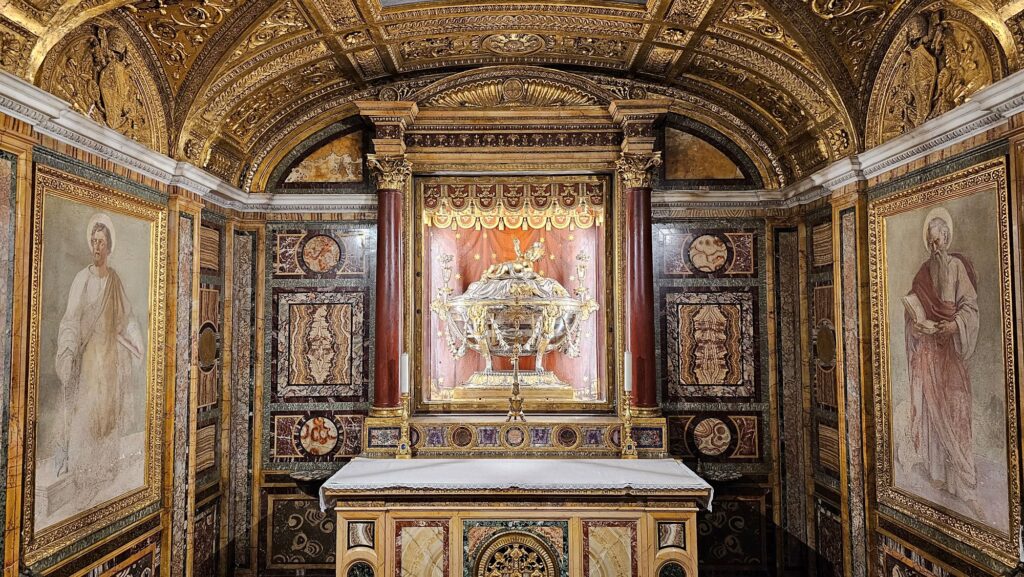
Equally impressive is the Pauline Chapel, built under Pope Paul V, which houses the revered icon of Salus Populi Romani. This ancient image of the Virgin Mary has long been associated with protection of the Roman people and has played a central role in times of crisis, including plagues and wars. Even today, it remains an object of deep devotion, attracting worshippers from around the world.
A Living Basilica in Contemporary Rome
Despite its age and artistic significance, Santa Maria Maggiore is not a museum. It is an active basilica where Masses, processions, and special liturgical events continue to take place. This living quality distinguishes it from many historic sites in Rome. You are likely to encounter worshippers praying quietly alongside tourists studying guidebooks, a coexistence that feels natural rather than forced.
In recent years, the basilica has gained renewed attention due to its close association with modern popes, including Pope Francis, who has frequently visited to pray before major journeys. This ongoing relevance reinforces the sense that Santa Maria Maggiore belongs as much to the present as to the past.
Experiencing the Basilica as a Visitor
Visiting Santa Maria Maggiore offers a calmer, more reflective experience than some of Rome’s more crowded landmarks. The space encourages slow movement and quiet observation. Light filters gently through the windows, illuminating mosaics that have absorbed centuries of prayer and incense.
Taking time to sit in one of the pews, looking upward, you become aware of the basilica’s true power—not in grandeur alone, but in continuity. Few places in Rome allow you to feel so clearly the unbroken thread between antiquity, the Middle Ages, and modern faith.
Practical Information
Name: Basilica di Santa Maria Maggiore
Location: Esquiline Hill, Rome, Italy
Founded: 5th century (under Pope Sixtus III)
Status: One of the four major papal basilicas
Highlights: Early Christian mosaics, triumphal arch, apse mosaic, Pauline Chapel
Admission: Free
Dress Code: Modest attire required
Vatican Museums, Rome: A Journey Through Faith, Power, and Eternal Beauty
Pincian Hill, Rome: Where the Sunset Paints the Eternal City