
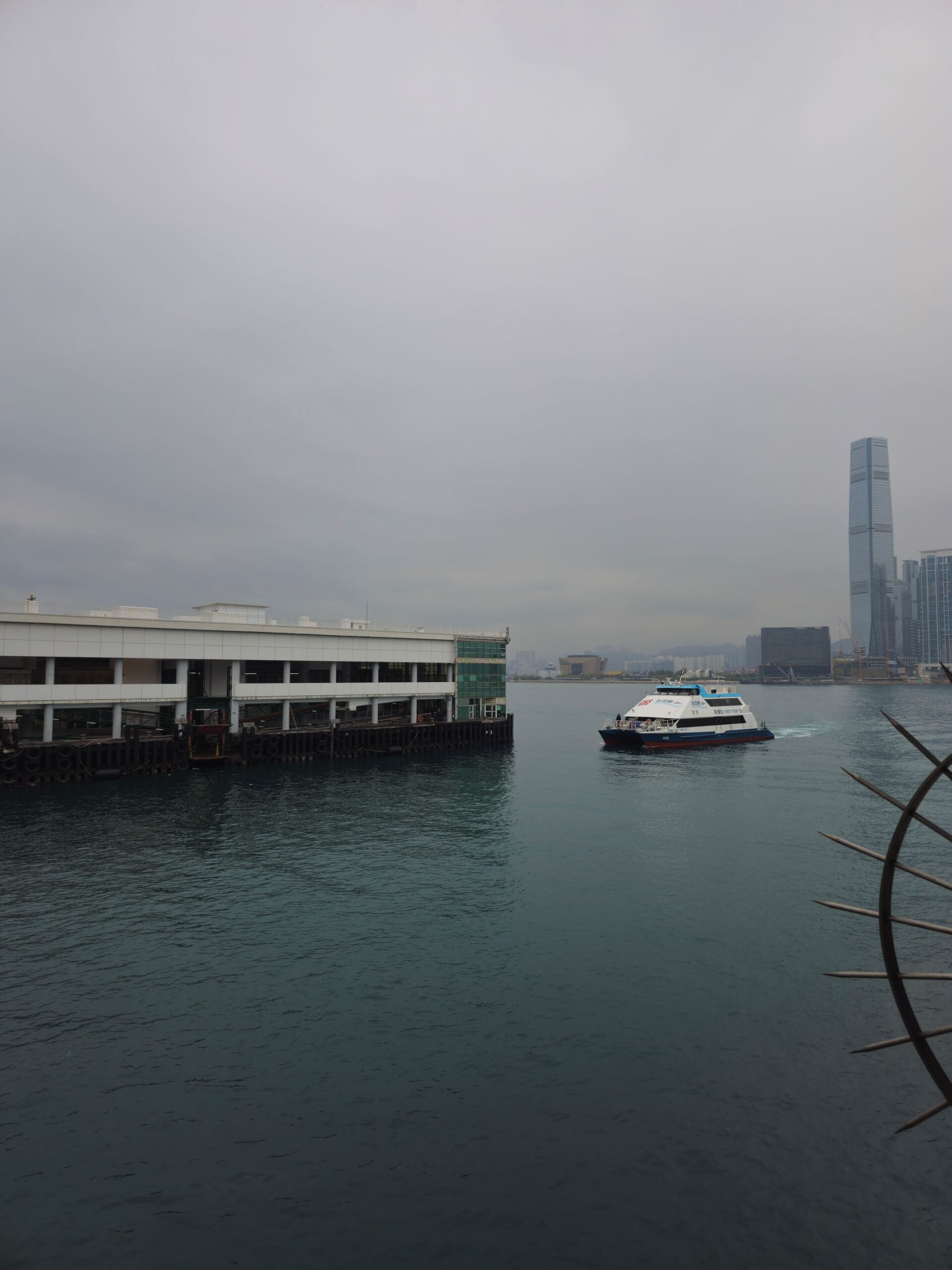
Some transport experiences are purely functional. The Star Ferry is not one of them. I crossed Victoria Harbour on the Star Ferry on the third morning of my January trip — from the Tsim Sha Tsui pier to Central Pier 7 — and the ten minutes on the water gave me a perspective on Hong Kong that no amount of time on the MTR or in a taxi could replicate. The harbor from water level, the skyline growing ahead, the particular green-and-white livery of the ferry itself — it’s one of those travel experiences that delivers exactly what it promises, every time.
This guide covers everything worth knowing about the Star Ferry: the routes, the piers, the history, the practical details, and why it remains one of the most essential Hong Kong experiences despite — or perhaps because of — being primarily a piece of daily commuter infrastructure.
A Brief History
The Star Ferry Company has been operating harbor crossings in Hong Kong since 1888 — originally as the Kowloon Ferry Company, renamed the Star Ferry Company in 1898. The distinctive green-and-white ferries, each named after a star (Morning Star, Twinkling Star, Night Star, and so on), have been crossing Victoria Harbour continuously through colonial rule, Japanese occupation, postwar reconstruction, and the handover to China in 1997.
For most of the 20th century, the Star Ferry was the primary connection between Kowloon and Hong Kong Island — the cross-harbour MTR tunnel didn’t open until 1979. Generations of Hong Kong residents made the crossing daily for work, and the ferry became woven into the city’s identity in a way that purely functional infrastructure rarely achieves.
Today the Star Ferry carries fewer commuters than before the MTR but remains heavily used — and for visitors, it offers something the MTR doesn’t: ten minutes on the harbor, at water level, with one of the world’s great urban skylines in both directions.
Routes and Piers
The Star Ferry currently operates two main routes relevant to visitors:
Tsim Sha Tsui ↔ Central (Pier 7)
The classic Star Ferry crossing — the most used, most scenic, and most historically significant route. The Tsim Sha Tsui Star Ferry Pier sits on the harbor promenade adjacent to the Avenue of Stars; Central Pier 7 is on the Hong Kong Island waterfront, a short walk from the MTR and the financial district.
Journey time: Approximately 8–10 minutes Frequency: Every 6–12 minutes during peak hours, slightly less frequent off-peak Operating hours: Approximately 6:30am to 11:30pm daily Fare: HK$3.00 (lower deck weekday) to HK$3.70 (upper deck weekend) — among the most affordable transport experiences in the city
Tsim Sha Tsui ↔ Wan Chai
A less-used but equally useful route connecting Tsim Sha Tsui directly to the Wan Chai area of Hong Kong Island — convenient for visitors whose accommodation or activities center on Wan Chai rather than Central.
Journey time: Approximately 10–12 minutes Operating hours: More limited than the Central route — check current schedules before planning
Upper Deck vs Lower Deck
This is not a difficult decision: always take the upper deck.
The fare difference between the upper and lower decks is a few Hong Kong dollars — genuinely negligible. The experience difference is significant. The upper deck offers unobstructed views over the harbor rail in all directions; the lower deck has partially obscured windows that reduce the view considerably. The upper deck also catches the harbor breeze — pleasant in any season, particularly refreshing on warm days.
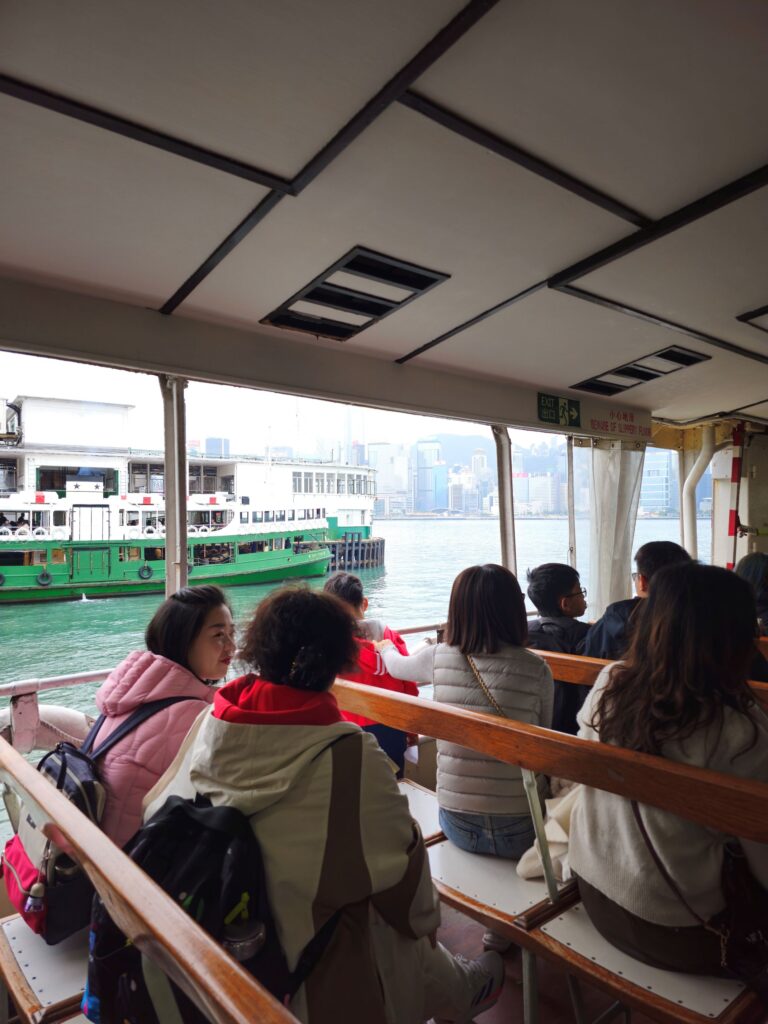
The upper deck seating consists of wooden benches running the length of the ferry on both sides — simple, functional, and unchanged in character from the ferries of decades past. The combination of the wooden benches, the harbor breeze, and the view gives the upper deck a particular atmosphere that the air-conditioned lower deck doesn’t replicate.
Best seats: The front of the upper deck on the side facing the direction of travel — the view ahead as the ferry crosses is the most dramatic angle. On the Tsim Sha Tsui to Central crossing, sit on the Hong Kong Island-facing side to watch the skyline grow ahead of you. On the return, sit on the Kowloon-facing side to watch the Tsim Sha Tsui promenade and the hills behind recede.
The Crossing: What to Expect
The crossing from Tsim Sha Tsui to Central takes approximately eight to ten minutes from pier to pier. Here’s what the journey looks like:
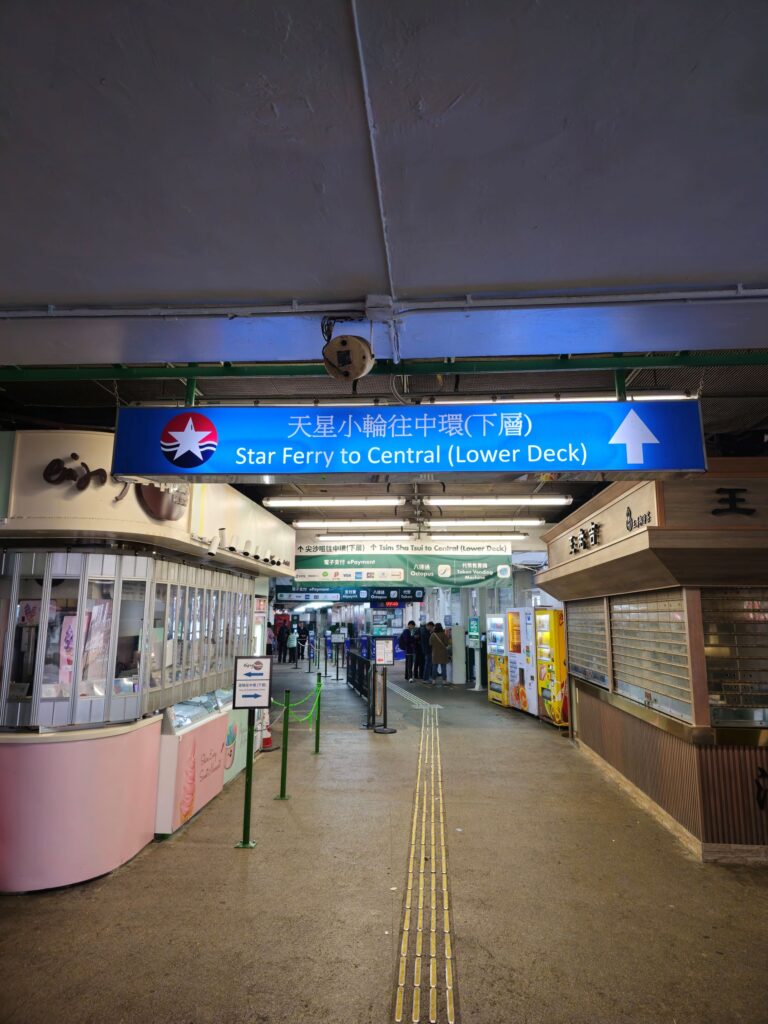
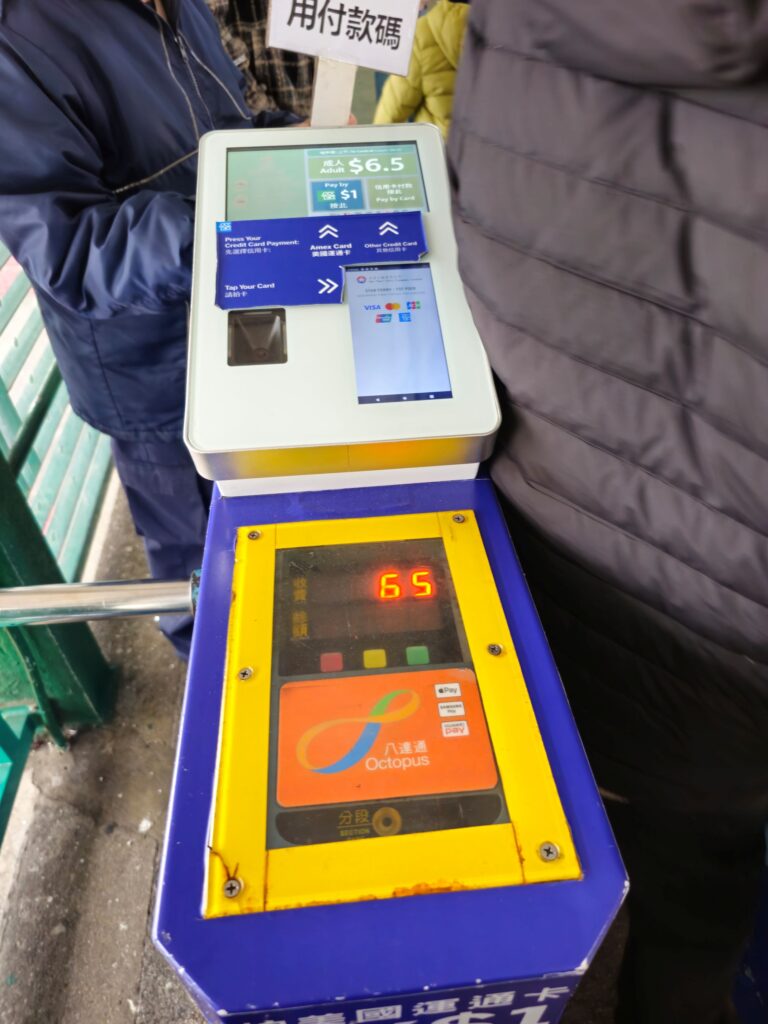
Boarding: The Tsim Sha Tsui pier has a small waiting area with turnstiles — tap your Octopus card or purchase a single ticket at the machine, then wait for the gangway to open when the ferry docks. Boarding is orderly and quick; the ferry loads and departs within a few minutes of arrival.
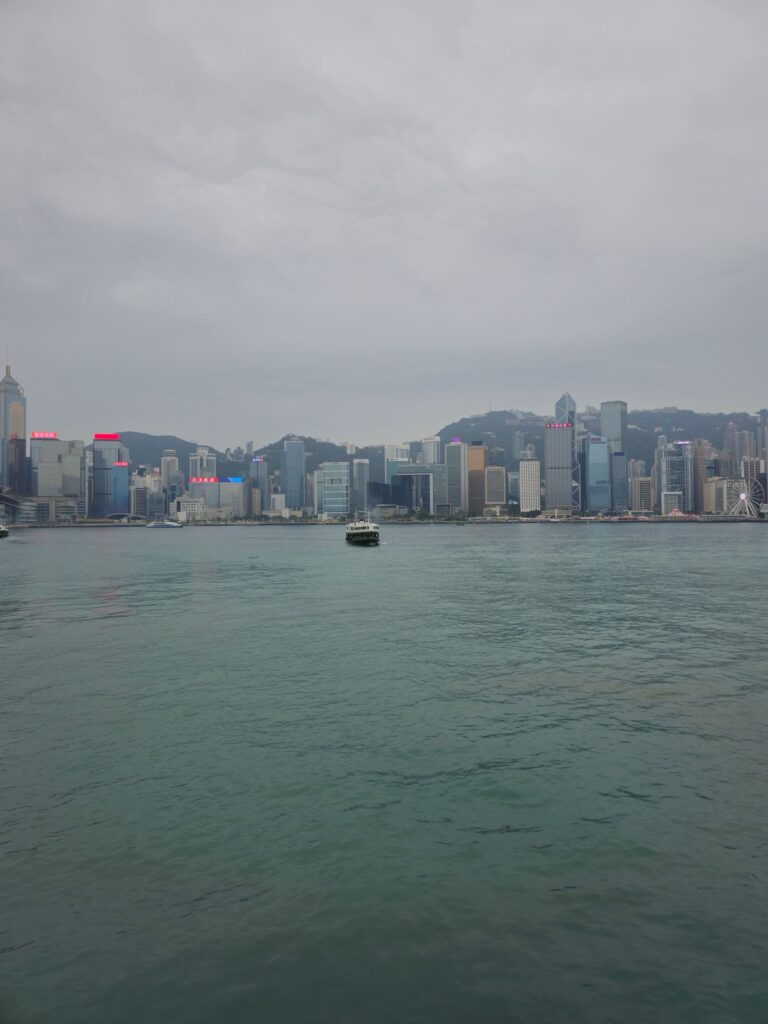
Leaving the pier: As the ferry pulls away from the Tsim Sha Tsui pier and turns to face Central, the full Hong Kong Island skyline opens ahead — a continuous wall of towers along the waterfront, rising steeply up the hillside behind. The density of the buildings, and the way they climb from the water’s edge without interruption, registers differently from water level than from the promenade. It’s a more immersive version of the same view.
Mid-crossing: In the middle of the harbor, both skylines are visible simultaneously — Kowloon behind, Hong Kong Island ahead, the harbor’s full width apparent on both sides. The scale of Victoria Harbour — wider than it appears from the shore — becomes clear from the water. Cargo ships, pleasure boats, and other ferries move across the harbor in both directions.
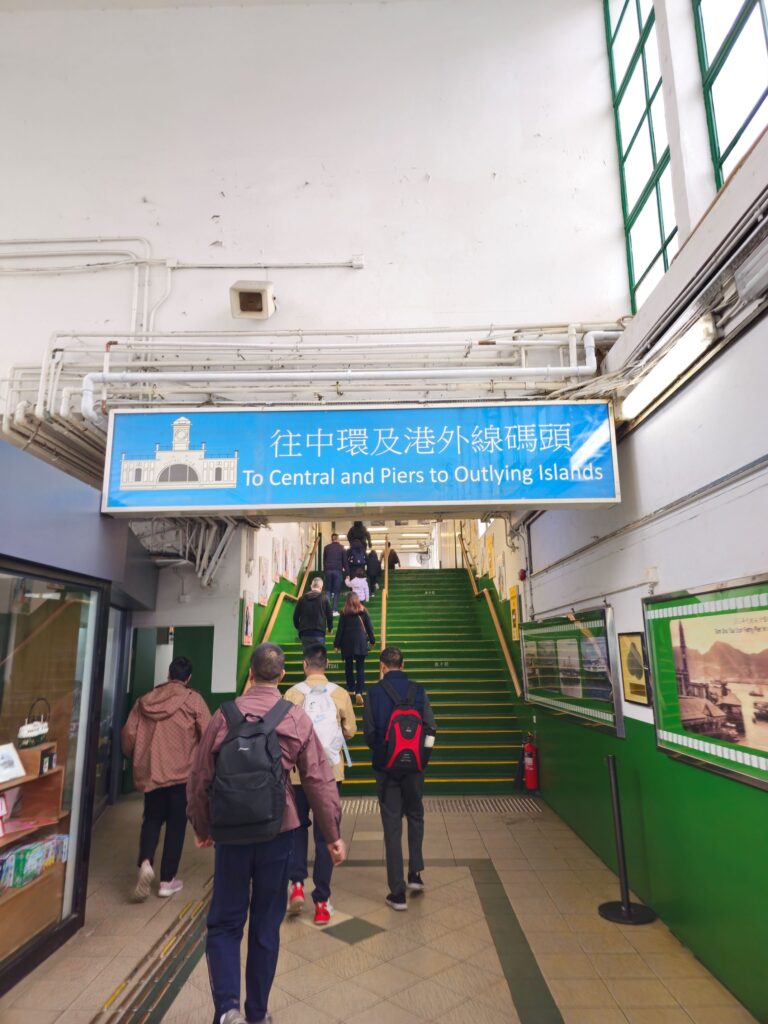
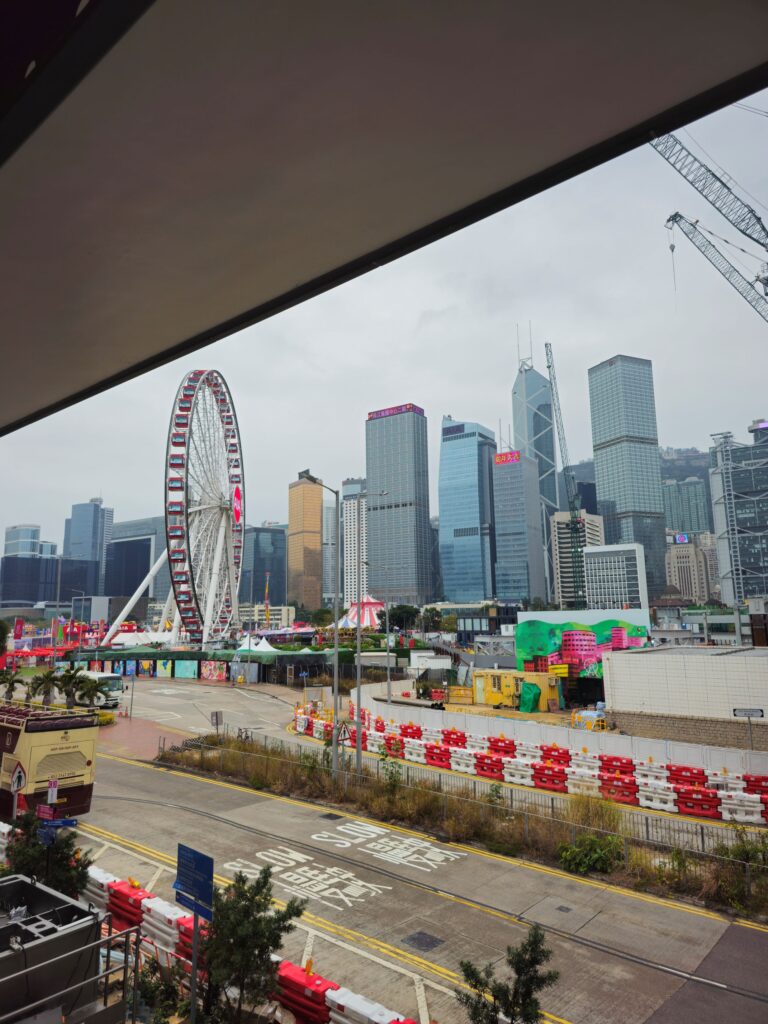
Arriving at Central: The ferry approaches Central Pier 7 from the water, giving a low-angle view of the Central waterfront — the Convention Centre, the IFC towers, and the older buildings along Connaught Road — that the MTR doesn’t provide. The pier itself is a modest structure; disembarking, you’re immediately on the Central harbourfront, a short walk from the Star Ferry Promenade and the MTR.
When to Take the Star Ferry
The Star Ferry is worth taking at multiple times of day because the experience changes significantly with the light and the time.
Morning (7–9am)
The morning crossing is the most local version of the ferry experience — commuters heading to work, the harbor relatively quiet, the light on the Central towers clean and direct. The Tsim Sha Tsui pier area before the tourist crowds arrive has a working-city atmosphere that disappears by mid-morning. If you’re staying in Tsim Sha Tsui and heading to Central for the day, the morning Star Ferry is the right way to start.
Daytime (10am–5pm)
The standard tourist experience — the ferry during the day is busier with visitors, the harbor is active with various vessels, and the light varies with cloud cover. Still excellent, but less atmospheric than morning or evening. The view of the Central skyline in full daylight is the sharpest and most detailed version.
Evening (6–9pm)
The evening crossing — particularly around sunset and the first hour of darkness — is the most dramatic version of the Star Ferry experience. The transition from golden afternoon light to full city illumination happens over approximately 45 minutes, and being on the water during this period gives a view of Hong Kong that no static vantage point quite matches. The towers begin to light up from the top floors downward as the sky darkens behind them; by the time the ferry docks, the full illuminated skyline is visible.
For visitors who can only take the Star Ferry once, the early evening crossing (departing Tsim Sha Tsui around 7:30–8pm, arriving in Central shortly before the Symphony of Lights at 8pm) combines the ferry experience with the harbor light show in a single sequence.
Night (after 8pm)
The nighttime ferry crossing — the harbor fully illuminated, the city lights reflected on the water, the towers of both shores visible simultaneously against the dark sky — is the most atmospheric version available. The ferry at night is quieter than daytime and the visual experience is complete in a different way from the daylight version. Worth taking at least once on any Hong Kong visit, even if you’ve already crossed during the day.
The Piers: What’s Around Them
Tsim Sha Tsui Star Ferry Pier
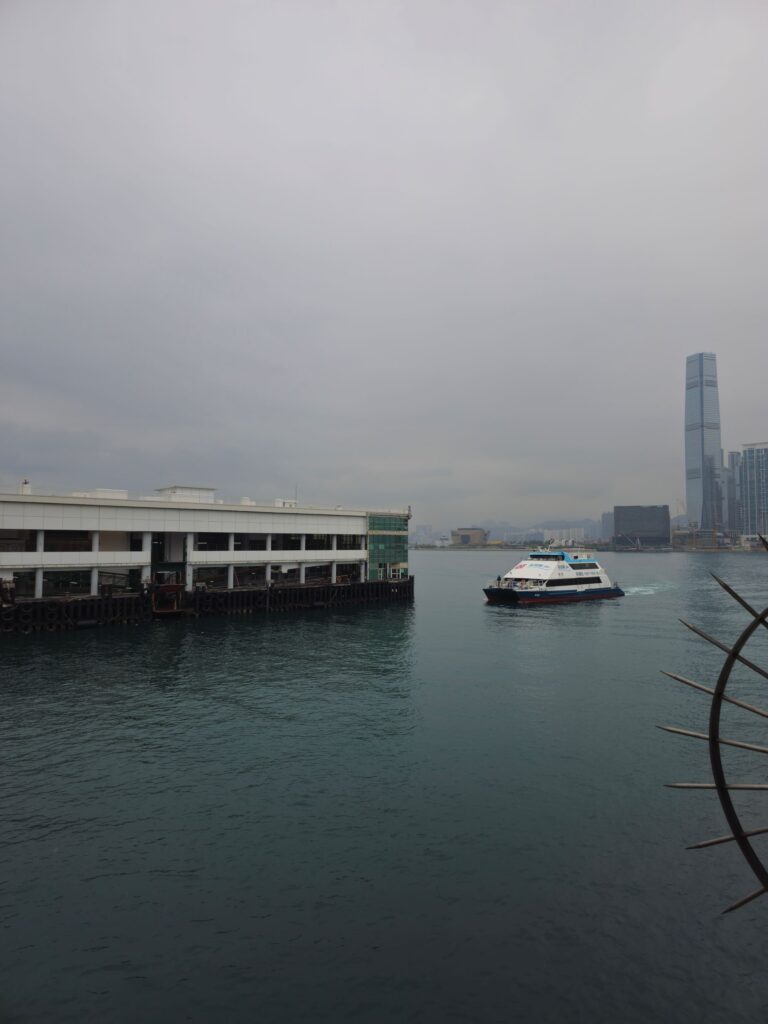
The Tsim Sha Tsui pier sits at the western end of the Avenue of Stars promenade — positioned to make the harbor walk a natural extension of the ferry arrival or departure. The pier area has a small retail section, public seating facing the harbor, and the Clock Tower — a remnant of the former Kowloon-Canton Railway terminus, the only surviving structure from the original station demolished in 1978. The Clock Tower is a useful landmark and photographic reference point for the pier area.
Within walking distance of the Tsim Sha Tsui pier:
- Avenue of Stars promenade (immediate)
- Hong Kong Museum of Art (5 minutes along the promenade)
- YMCA Salisbury Hotel (3 minutes)
- Tsim Sha Tsui MTR station (8 minutes)
- Temple Street Night Market (15 minutes north)
Central Pier 7
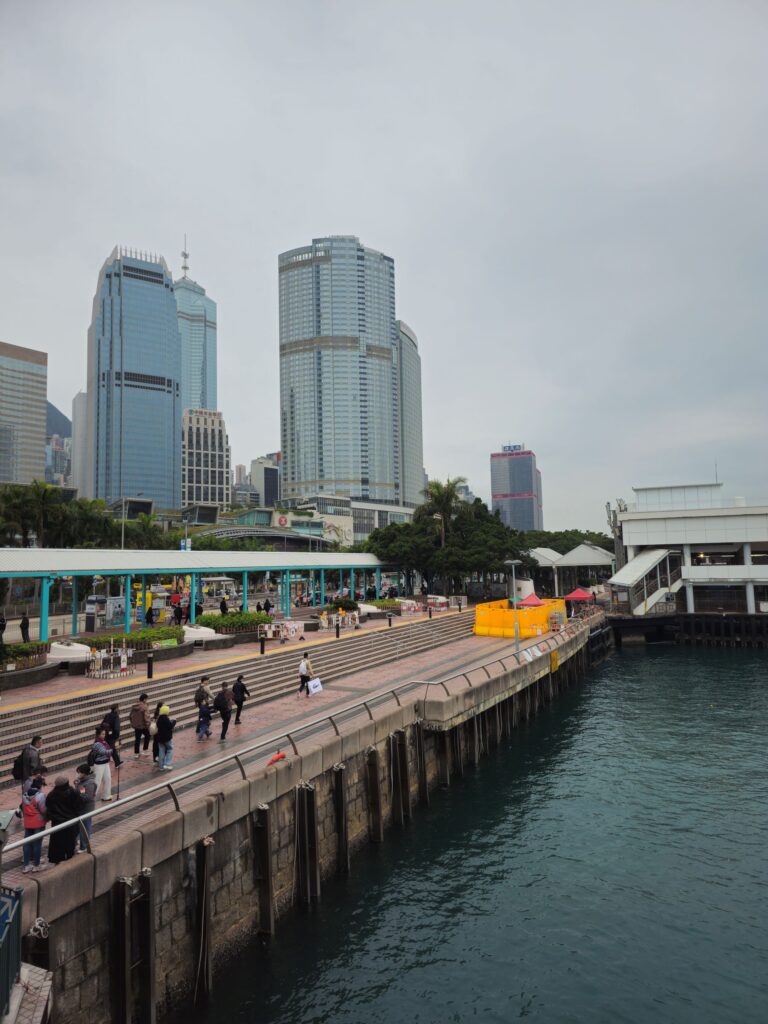
Central Pier 7 sits on the reclaimed land waterfront of Hong Kong Island, part of a complex of numbered piers that also serve the outlying island ferries. The pier is a short walk from several significant Central landmarks and transport connections.
Within walking distance of Central Pier 7:
- Hong Kong Observation Wheel (10 minutes along the waterfront)
- IFC Mall and MTR Hong Kong Station (8 minutes)
- Central Market (10 minutes)
- Lan Kwai Fong (15 minutes uphill)
- Star Ferry Promenade (immediate)
The Star Ferry Promenade extending from the Central piers along the waterfront offers harbor views from the Hong Kong Island side — a different perspective from the Tsim Sha Tsui promenade, looking north toward Kowloon rather than south toward the Island.
Star Ferry vs MTR Cross-Harbour: Which Should You Choose?
Both options cross Victoria Harbour between Tsim Sha Tsui and Central. The practical comparison:
| Star Ferry | MTR (Tsuen Wan Line) | |
|---|---|---|
| Journey time | 8–10 min on water | 5 min underground |
| Cost | HK$3–3.70 | HK$10–12 (Octopus) |
| Experience | Harbor views, open air | Underground, no views |
| Hours | 6:30am–11:30pm | ~6am–1am |
| Best for | The experience | Speed, late nights |
The honest answer: take the Star Ferry during the day and early evening when you want the harbor experience; use the MTR for late-night returns and when speed is the priority.
For most visitors, taking the Star Ferry at least once in each direction — Tsim Sha Tsui to Central in one direction, Central to Tsim Sha Tsui in the other — is the right approach. The two directions give different views (skyline ahead in one direction, Kowloon hills ahead in the other) and together provide a complete picture of the harbor crossing.
Practical Tips
Octopus Card: Tap on boarding — no tap required on exit. The fare is deducted automatically at the correct amount for the deck you board.
Cash: If paying cash, the fare machine at the pier accepts coins and small notes — have the approximate amount ready as the ferry loads quickly.
Photography: The upper deck offers the best photography angles — the harbor view is unobstructed and the ferry’s own structure (the funnel, the railings, the water below) provides foreground interest. Morning and evening light give the most dramatic results.
Crowds: The ferry is rarely uncomfortably crowded outside of major public holidays. Peak tourist times (weekend afternoons, public holidays) see fuller ferries but the crossing is short enough that standing for 10 minutes is manageable.
Last ferry: Approximately 11:30pm from Tsim Sha Tsui to Central, slightly earlier in the other direction — check current schedules for exact last departure times. The MTR continues after the ferry stops for late-night crossings.
The Clock Tower: The preserved Clock Tower beside the Tsim Sha Tsui pier is worth a closer look — the only remnant of the original Kowloon-Canton Railway terminus, it’s a small but significant piece of Hong Kong’s transport history in the shadow of the modern pier.
The Star Ferry as a Hong Kong Symbol
Beyond its practical function, the Star Ferry carries a symbolic weight in Hong Kong that’s worth understanding. The 1966 Star Ferry riots — triggered by a proposed fare increase and evolving into a broader expression of discontent with colonial governance — are a significant moment in Hong Kong’s political history, and the ferry has been a site of protest and demonstration at various points since. The proposed demolition of the old Tsim Sha Tsui pier in 2006 triggered a significant preservation campaign that, while ultimately unsuccessful in saving the original pier, marked an important moment in Hong Kong’s emerging heritage consciousness.
For visitors, this history gives the Star Ferry a depth that purely functional transport infrastructure rarely has. Crossing the harbor on a ferry that has been making the same journey for over 130 years — through everything Hong Kong has experienced in that time — adds a dimension to the ten-minute crossing that’s worth holding in mind.
Final Thoughts
The Star Ferry charges less than HK$4 for one of the finest short urban journeys available anywhere in the world. Ten minutes on the harbor, both skylines visible simultaneously, the city passing at water level — it’s an experience that summarizes Hong Kong more completely than any single landmark or neighborhood.
Take it in the morning for the working-city atmosphere. Take it in the evening for the light on the towers. Take it at night for the full illuminated harbor. And always, without exception, take the upper deck.
Getting from Hong Kong Airport to the City: Complete Transport Guide
Central Hong Kong Neighborhood Guide: Everything You Need to Know