
Hong Kong has one of the most developed Korean food scenes outside Korea itself — a reflection of the city’s large Korean expatriate community, its proximity to Korea, and the global wave of interest in Korean cuisine that has accelerated over the past decade. I ate Korean food on three separate occasions during my January trip — Outdark in Tsim Sha Tsui, 88 Soondubu in Central, and Maru Korean Restaurant Pub in Central — and found a scene that goes considerably deeper than the standard Korean BBQ and fried chicken circuit.
This guide covers the Korean food landscape in Hong Kong: the types of restaurants available, the neighborhoods where Korean food concentrates, the specific establishments I visited, and why Korean food in Hong Kong deserves attention alongside the city’s Cantonese food culture.

Why Korean Food in Hong Kong?
The question is worth addressing directly: why eat Korean food in Hong Kong when Cantonese cuisine is one of the finest in the world?
The honest answer is that Korean food in Hong Kong isn’t a consolation prize for people who can’t find good Cantonese food — it’s a genuine food scene that stands on its own merits. Hong Kong’s Korean restaurants serve food that is, in several respects, more accessible to certain visitors than the city’s Cantonese options: familiar flavors for visitors from Korea, a different spice and fermentation profile from Cantonese food, and in the case of soondubu (soft tofu soup) and Korean fried chicken, dishes that have built their own following among Hong Kong’s non-Korean population.
There’s also a practical dimension: after several consecutive days of Cantonese food — excellent Cantonese food, but consistently similar in flavor profile — a meal of Korean jjigae or Korean fried chicken provides a palate reset that makes returning to Cantonese food the next morning more pleasurable rather than less.

The Korean Food Landscape in Hong Kong
Neighborhoods
Korean restaurants in Hong Kong are concentrated in several areas:
Tsim Sha Tsui (Kowloon): The neighborhood with the highest concentration of Korean restaurants in the city — reflecting Tsim Sha Tsui’s historical role as a hub for Korean visitors and the Korean expatriate community. The streets around Kimberley Road and the blocks north of the MTR station have the densest cluster of Korean restaurants, ranging from Korean BBQ to fried chicken specialists to soondubu houses.
Causeway Bay (Hong Kong Island): A secondary concentration of Korean restaurants, reflecting the neighborhood’s general food diversity. Several well-regarded Korean establishments operate in the streets around the Times Square and Lee Garden areas.
Central/Soho (Hong Kong Island): A smaller number of Korean restaurants, typically positioned at the higher end of the price spectrum and aimed at a mixed expat and local clientele.
Wan Chai: A growing Korean food presence in the Wan Chai area, with several establishments that have built strong local followings.

Types of Establishments
Korean BBQ (삼겹살/갈비): The most internationally familiar format — meat grilled at the table over charcoal or gas, eaten with banchan (side dishes) and wrapped in lettuce. Several dedicated Korean BBQ specialists operate in Tsim Sha Tsui, typically at mid-range to higher price points.
Korean Fried Chicken (치킨): The format that has most successfully crossed over into Hong Kong’s mainstream food culture — Korean-style double-fried chicken, available in original, soy garlic, and spicy yangnyeom varieties, typically served with beer (the “chimaek” combination). Outdark represents this category.
Soondubu Jjigae (순두부찌개): Korean soft tofu soup — silky fresh tofu in a spiced broth with various additions (seafood, pork, vegetable). 88 Soondubu represents this category.
Korean Pub Food (포차/이자카야 스타일): Korean drinking establishments serving food alongside alcohol — a format that overlaps with Japanese izakaya but with a Korean flavor profile. Maru represents this category.
Korean Convenience Food: Several Korean convenience food concepts have established themselves in Hong Kong — Korean-style rice balls, tteokbokki (spicy rice cakes), and street food formats that have found an audience among Hong Kong’s younger population.

Outdark (Tsim Sha Tsui Branch)
The Restaurant
Outdark is a Korean restaurant concept with multiple Hong Kong locations, specializing in Korean fried chicken and Korean-influenced comfort food. The Tsim Sha Tsui branch — which I visited on the evening of January 25th — is convenient for visitors staying in the southern Kowloon hotel area and provides a reliable evening option when Cantonese food fatigue sets in.
The restaurant occupies a comfortable mid-range space — not the casual street-food format of a dedicated chicken shop, but not fine dining either. The atmosphere is lively without being overwhelming, and the menu is broad enough to accommodate various preferences while maintaining a clear Korean identity.

What I Ordered
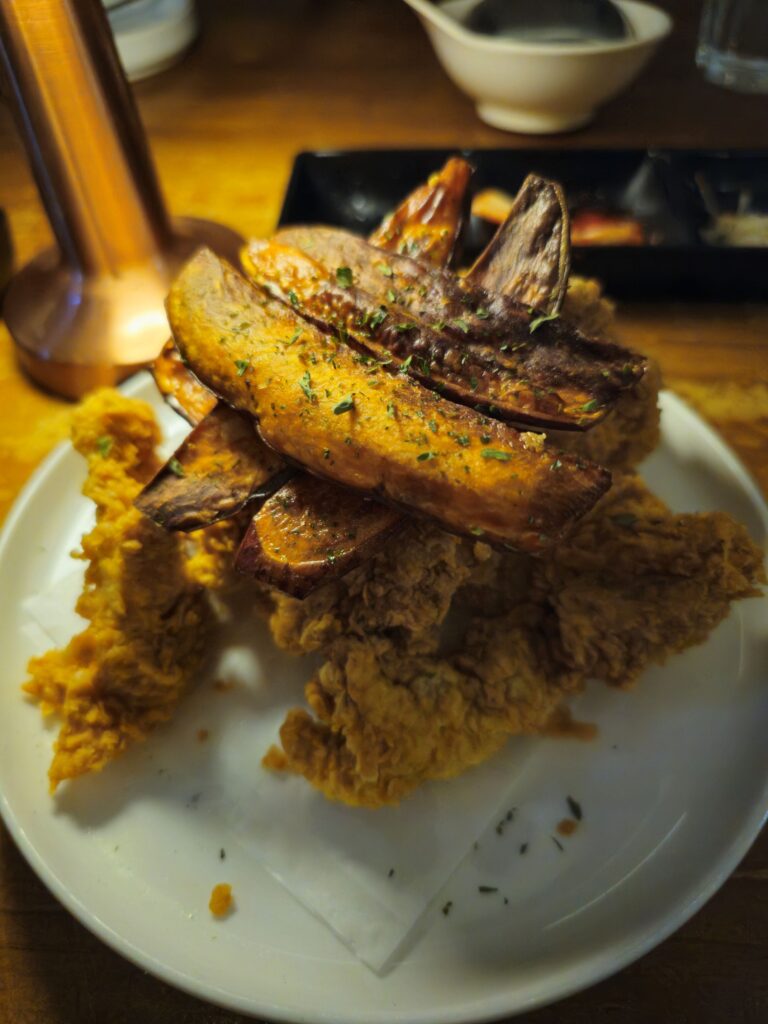
Korean fried chicken: The primary reason to visit Outdark. The chicken is double-fried — the first fry cooking the meat through, the second fry crisping the exterior to a crunch that holds up for the duration of the meal. The yangnyeom (sweet and spicy) sauce version coats the chicken in a lacquered glaze that is sticky, spiced, and deeply savory. The original (no sauce, lightly salted) version is the purer expression of the frying technique — the crunch is more apparent without the sauce coating.
The quality of Korean fried chicken at Outdark is notably higher than the standard Hong Kong imitations — the technique is correct, the chicken is fresh, and the sauce ratio is calibrated to coat without overwhelming. Eaten with Korean beer (Hite or Kloud) or soju, this is exactly the chimaek experience that has made Korean fried chicken a global phenomenon.

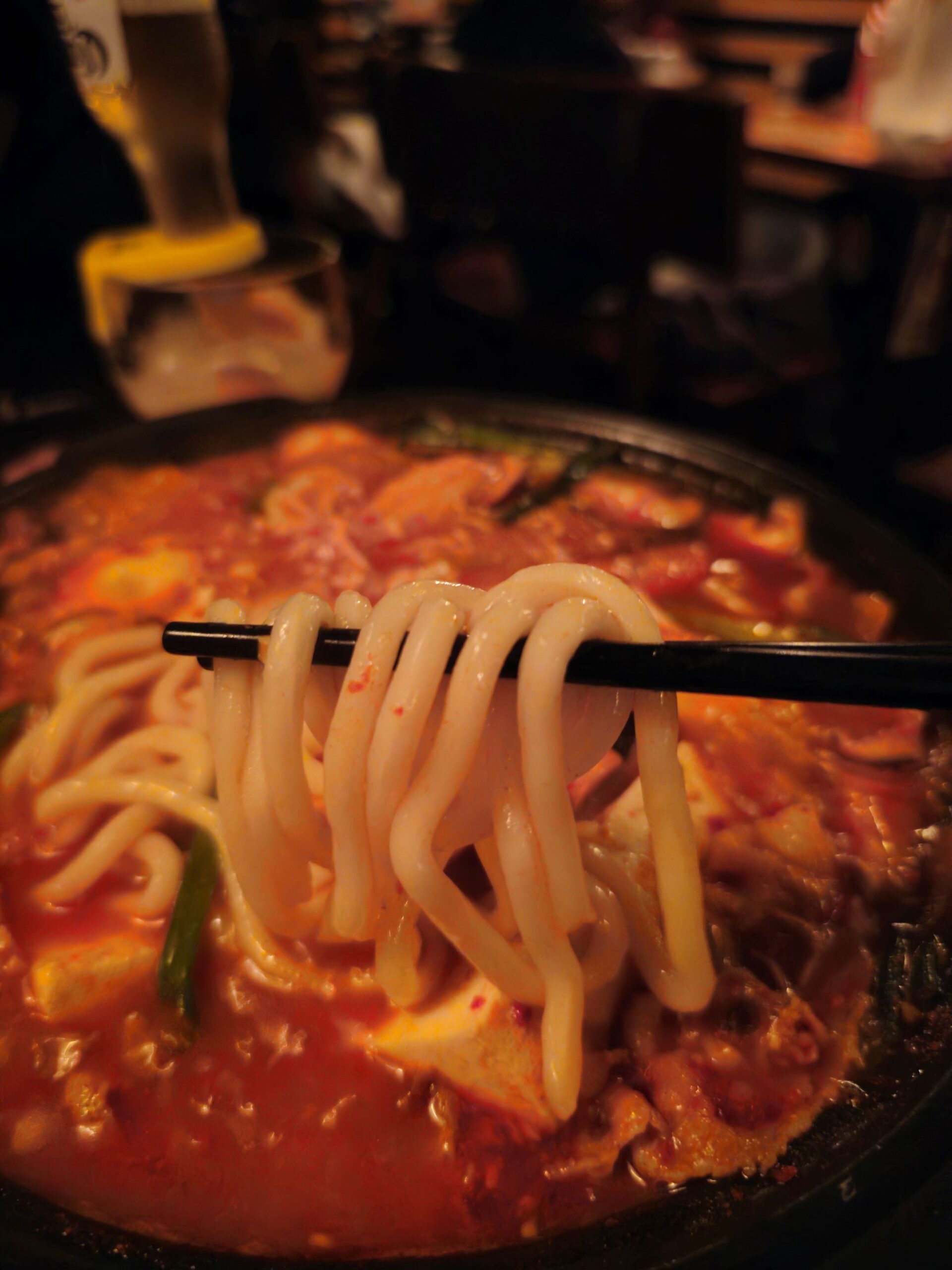
Spicy tofu udon (얼큰두부우동): A Korean-influenced udon noodle dish with soft tofu in a spiced broth — a hybrid that reflects Hong Kong Korean restaurants’ tendency to incorporate Japanese noodle forms into Korean flavor contexts. The broth is well-seasoned with gochujang (Korean chili paste) and doenjang (fermented soybean paste), giving it a depth that a straight Korean jjigae has and that Japanese udon broth doesn’t. The soft tofu is a generous addition that balances the spice.
Practical Information
Location: Tsim Sha Tsui — confirm the specific branch address on the Outdark website or Google Maps, as the chain has multiple locations across Hong Kong.
Hours: Dinner service from early evening — suitable as a post-harbor-walk dinner option for visitors staying in Tsim Sha Tsui.
What to know: The menu is available in English and Korean. The fried chicken is the standout; ordering multiple varieties (original and yangnyeom) for comparison is worthwhile if visiting with a group.

88 Soondubu (88순두부)
The Restaurant
88 Soondubu is a Korean restaurant in Central specializing in soondubu jjigae — Korean soft tofu soup — alongside a broader menu of Korean comfort food. I visited on the morning of January 27th for breakfast, making use of the restaurant’s early opening hours that make it one of the few Korean breakfast options in the Central area.
Soondubu jjigae for breakfast is a specifically Korean dining practice — the hot, spiced tofu soup is considered an appropriate morning meal in Korea, and restaurants that open early enough to catch the breakfast crowd are a feature of Korean food culture that has transplanted into Hong Kong’s Korean restaurant scene.
Soondubu Jjigae: The Dish
Soondubu jjigae (순두부찌개) is a Korean stew — a clay pot of silky fresh tofu in a spiced broth, served bubbling at the table with a raw egg cracked into the broth to cook in the residual heat. The broth is built from a gochugaru (Korean chili flake) base with various additions depending on the variety ordered: seafood (haemul), pork, mushroom, or kimchi.
The tofu is the defining element — soondubu (순두부) refers specifically to uncurdled, very soft tofu with a silky texture that distinguishes it from the firmer tofu used in other Korean dishes. The tofu breaks apart in the broth as you eat, absorbing the spiced liquid and providing a creamy contrast to the heat of the broth.
The dish is served with a bowl of steamed rice and banchan (side dishes) — typically kimchi, bean sprout namul (seasoned vegetables), and pickled vegetables. The combination of the hot broth, the soft tofu, the rice, and the banchan constitutes a complete and deeply satisfying meal at any time of day.

My January Visit
Arriving for breakfast at 88 Soondubu on the morning of January 27th — before heading to the Monster Building by bus — I ordered the seafood soondubu jjigae. The clay pot arrived still bubbling from the kitchen; I cracked the egg into the broth, stirred it through, and let it cook for a minute before starting.
The broth was well-balanced — the gochugaru heat present but not overwhelming, the seafood flavor from clams and shrimp giving the broth a maritime depth that the pork version doesn’t have. The tofu was properly silky, breaking apart into soft pieces in the broth. The rice absorbed the excess broth as I ate, creating the particular thick, spiced rice-broth combination that makes finishing a bowl of soondubu jjigae one of Korean food’s most satisfying experiences.
As a breakfast in the Central area before a day of Hong Kong Island exploration, 88 Soondubu provided exactly what was needed: hot, substantial, well-made Korean comfort food at a reasonable price.
Practical Information
Location: Central, Hong Kong Island — confirm the specific address on Google Maps before visiting as restaurant locations in Central can shift.
Hours: Early opening for breakfast service — one of the relatively rare Korean restaurants in Hong Kong that opens early enough for a proper morning meal.
What to know: Order by spice level (the menu typically offers mild, medium, and spicy options) and by protein (seafood, pork, mushroom, or combination). The seafood version is the most complex; the kimchi version adds fermented depth to the broth.

Maru Korean Restaurant Pub (마루)
The Restaurant
Maru in Central is a Korean restaurant pub — a format that sits between a restaurant and a bar, serving Korean food alongside a focused drinks menu in an atmosphere calibrated for a relaxed evening rather than a quick meal. I visited on the evening of January 27th, after returning from Victoria Peak by bus — stopping for a drink and late evening food before ending the night.
The Korean pub (포차) format is a distinct tradition in Korean food culture — establishments that open in the evening, serve food designed to accompany drinking, and operate at a pace and atmosphere that’s more relaxed than a standard restaurant. Maru translates this format to Hong Kong effectively: the food is well-made, the drinks selection is appropriate for Korean food pairing, and the atmosphere is genuinely enjoyable for a late evening stop.
What to Expect
The food: Korean pub food follows specific conventions — dishes that are shareable, that hold up to being eaten slowly over drinks, and that complement soju, makgeolli (Korean rice wine), or Korean beer. Common items include:
- Pajeon (파전): Korean green onion pancake — crisp at the edges, chewy at the center, served with a dipping sauce. The seafood version (haemul pajeon) adds shellfish and shrimp to the batter.
- Tteokbokki (떡볶이): Spicy rice cakes in gochujang sauce — the most popular Korean street food, served here in a restaurant version that’s more refined than the street stall original.
- Japchae (잡채): Glass noodles stir-fried with vegetables and beef — a relatively mild dish that provides balance to spicier options.
- Korean fried chicken: The standard pub food order, here served in smaller portions appropriate for sharing over drinks.
- Kimchi pancake (김치전): The kimchi version of pajeon — more intensely flavored, with the fermented funk of kimchi running through the batter.
The drinks: Maru’s drinks menu focuses on the standard Korean pub selection: soju (the ubiquitous Korean distilled spirit), makgeolli (cloudy rice wine, slightly sweet and fermented), Korean beer (Hite, Kloud, Terra), and various soju cocktails. The combination of soju with Korean beer (somaek — soju bomb) is the classic Korean pub drinking format.
My January Visit
Arriving at Maru after the Victoria Peak visit and the bus descent to Central, I ordered pajeon and a glass of makgeolli — the combination that most effectively signals a relaxed Korean pub evening. The pajeon was well-made: crisp edges, properly cooked through, the green onion dominant without being overwhelming. The makgeolli was cold and slightly effervescent — the right temperature and carbonation for the late evening.
Maru provided exactly what a Korean pub should provide at the end of a full day: good food, good drinks, and an atmosphere that doesn’t require any particular effort. The Central location made it a natural final stop before returning to the hotel.
Practical Information
Location: Central, Hong Kong Island — confirm the specific address on Google Maps.
Hours: Evening service, typically from early evening until late — suitable as a late dinner or after-dinner drinks stop.
What to know: The pub format means the atmosphere improves as the evening progresses. Arriving before 8pm gives a quieter experience; after 9pm the restaurant fills and the energy is higher.

The Broader Korean Food Scene: What Else Is Worth Knowing
Korean BBQ in Hong Kong
Hong Kong’s Korean BBQ scene is well-developed — several dedicated establishments in Tsim Sha Tsui and Causeway Bay offer the full charcoal BBQ experience with tableside grilling, quality meat selection, and the banchan spread that defines the format. For visitors specifically interested in Korean BBQ, the Tsim Sha Tsui concentration of Korean restaurants provides multiple options within walking distance of each other.
The key distinction in Hong Kong’s Korean BBQ scene is between charcoal-grilled (more authentic, better flavor) and gas-grilled (more common, more convenient) establishments. Charcoal BBQ restaurants typically charge a higher premium but provide a significantly better result.
Korean Fried Chicken Delivery
Hong Kong’s Korean fried chicken culture extends into delivery — several Korean chicken brands operate delivery-focused operations that serve the city’s residential areas. For visitors staying in apartment hotels or serviced apartments with kitchen facilities, Korean fried chicken delivery provides an accessible Korean food option without requiring a restaurant visit.
Korean Convenience Food
Several Korean convenience food concepts have established retail presences in Hong Kong — Korean-style convenience stores selling tteokbokki, Korean rice balls (samgak gimbap), Korean instant noodles, and Korean snacks. These offer a lower-price-point Korean food experience that’s accessible throughout the day.

Korean Food vs Cantonese Food: A Practical Guide
For visitors navigating Hong Kong’s food landscape, understanding when Korean food fits into the itinerary helps:
Korean food works well when:
- Cantonese food fatigue sets in after several consecutive days of similar flavor profiles
- A spicier, more fermented flavor profile is appealing
- The specific dishes (soondubu, Korean fried chicken, pajeon) are craved
- The pub format (Maru) is more appropriate than a restaurant for the evening
Cantonese food should remain primary because:
- Hong Kong’s Cantonese food culture is one of the finest in the world and the primary reason to engage seriously with the city’s food scene
- The best Cantonese experiences (dim sum, wonton noodles, roast goose, cha chaan teng) are specific to Hong Kong in a way that Korean food in Hong Kong is not
- The Korean food scene in Seoul is better than the Korean food scene in Hong Kong — the reverse is not true for Cantonese food
The practical approach: eat Cantonese food as the primary food experience throughout Hong Kong, and use Korean food as a deliberate palate change once or twice during a four-to-five day stay.

Practical Tips for Korean Food in Hong Kong
Language: Korean restaurant menus in Hong Kong are typically available in Korean, Chinese, and English — ordering in English is straightforward at most establishments.
Spice levels: Korean food in Hong Kong tends to be calibrated to Hong Kong palates — often slightly milder than the equivalent dishes in Korea. If you want Korean-level spice, specify “spicy (辣)” when ordering.
Pricing: Korean food in Hong Kong is moderately priced relative to the city’s restaurant scene — typically cheaper than Western restaurants, comparable to mid-range Cantonese, and more expensive than cha chaan tengs.
Neighborhoods: For the widest selection, Tsim Sha Tsui on the Kowloon side has the highest concentration of Korean restaurants. Central and Causeway Bay on the Island side have fewer but typically higher-quality options.
Timing: Korean restaurants in Hong Kong follow Korean dining hours more than Cantonese ones — dinner service starts earlier and the pub-format establishments run later. Most Korean restaurants are open by 6pm for dinner.

Final Thoughts
Korean food in Hong Kong is better than the city’s reputation as a Cantonese food destination might suggest. The Korean fried chicken at Outdark is the real thing — the double-frying technique, the yangnyeom sauce, the chimaek pairing. The soondubu jjigae at 88 Soondubu is properly made — silky tofu, balanced spiced broth, the raw egg finishing technique. And Maru’s Korean pub format provides the most relaxed and enjoyable evening dining experience of any restaurant I visited in January.
Eat Cantonese food as your primary Hong Kong food experience. Use Korean food strategically — once or twice during a four-or-five day stay — for the palate change that makes returning to Cantonese food the next morning more pleasurable. And eat the Korean fried chicken at Outdark on your last night in Tsim Sha Tsui.
Best Cha Chaan Teng in Hong Kong: A Guide to the City’s Most Iconic Diners