

There is no more Hong Kong institution than the cha chaan teng. Not the harbor view, not the night market, not even the dim sum — the cha chaan teng is where Hong Kong actually lives, every morning, every afternoon, and late into the evening. I visited three of the city’s most celebrated examples during my January trip — the Australian Dairy Company in Jordan, Lin Heung Tea House in Sheung Wan, and Lan Fong Yuen in Central — and each gave a completely different version of what a cha chaan teng can be.
This guide covers what a cha chaan teng is, why it matters, and the specific establishments worth visiting on a first or repeat Hong Kong trip.

What Is a Cha Chaan Teng?
Cha chaan teng (茶餐廳) — literally “tea restaurant” — is a Hong Kong-specific dining institution that developed during the postwar period as a local response to Western café culture. The colonial Hong Kong population wanted access to Western-style food and drinks without the prices of Western restaurants; the cha chaan teng emerged as the solution — a fast, cheap, local hybrid that served both Cantonese dishes and localized versions of Western food from a single menu.
The cha chaan teng menu is one of the most distinctive in the world precisely because of this hybrid origin. Hong Kong milk tea — strong Ceylon tea pulled through a cloth filter and combined with evaporated milk — sits alongside macaroni soup with ham (a localized version of Western pasta soup). Pineapple bun with butter (a local invention with no actual pineapple) occupies the same menu as wonton noodle soup. French toast (deep-fried, egg-dipped, served with butter and syrup) appears beside congee. The result is a menu that exists nowhere else and makes complete sense only in Hong Kong.
The physical environment of a cha chaan teng is as distinctive as the menu: shared tables, laminated menus, Cantonese pop from the radio or a wall-mounted television, orders shouted rather than written, and a pace of service that assumes you know what you want and are ready to yield your table when finished. They are emphatically not places to linger — except, paradoxically, at the establishments where lingering is the whole point.

Australian Dairy Company (澳洲牛奶公司)
The Experience
The Australian Dairy Company in Jordan is the most famous cha chaan teng in Hong Kong — and the most instructive introduction to what a cha chaan teng actually is. I visited for breakfast on the second morning of my January trip, walking north from the YMCA Salisbury Hotel to Jordan in the early morning.
The restaurant seats perhaps 40 people at closely packed tables. The queue outside — a constant feature regardless of the time of day — moves faster than it looks; the operation is calibrated for maximum throughput and tables turn in minutes. Inside, you will share a table with strangers. The server will take your order before you’ve fully processed the menu. Your food will arrive almost immediately. You will eat, you will finish, and you will leave — making room for the next customers who are already waiting outside.
This sounds brutal. In practice it’s exhilarating — the most concentrated version of Hong Kong’s relationship with time and efficiency, applied to breakfast.
What to Order
Scrambled egg toast (炒蛋多士) is the signature dish and the reason the Australian Dairy Company has the reputation it does. The scrambled eggs are prepared to a consistency that’s genuinely extraordinary — impossibly fluffy, almost custardy, achieving a texture that requires specific technique and practice to produce. Served on thick white toast, buttered. It costs almost nothing. It is better than scrambled eggs served in expensive hotels throughout the world.
Steamed milk pudding (燉奶) — silky steamed egg custard, served warm in a ceramic bowl — is the other essential order. The version here is the standard against which others are measured: smooth, barely sweet, with the particular wobble that indicates properly set custard.
Hong Kong milk tea (奶茶) completes the essential Australian Dairy Company order. Strong, silky, slightly sweet — the version here is one of the best in the city.
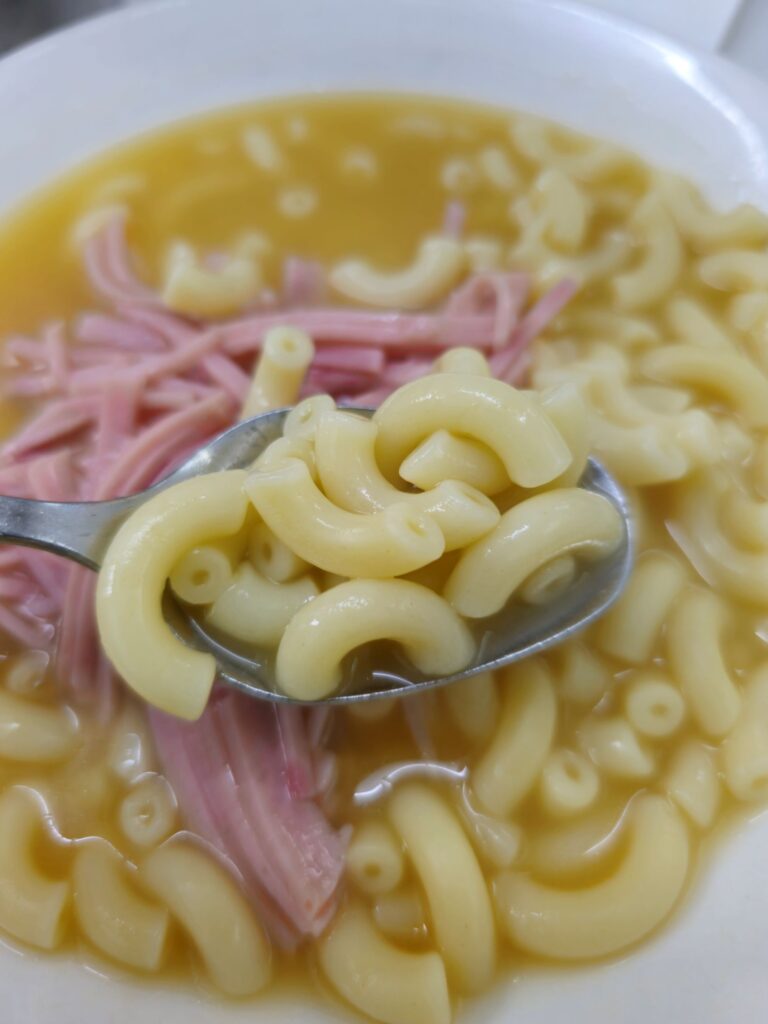
Macaroni soup (通粉湯) — macaroni in a clear broth with ham and vegetables — is the savoury breakfast alternative to the egg toast. It sounds underwhelming and is exactly right for a Hong Kong morning.

Practical Information
Location: 47–49 Parkes Street, Jordan — a short walk from Jordan MTR station (Exit A).
Hours: Opens early morning, closes mid-afternoon — specific hours vary. Arrive before 9am for the most manageable queue.
What to know: No reservations, shared tables, rapid service. Have your order ready before sitting down — the server will expect it immediately. Cash preferred.

Lin Heung Tea House (蓮香樓)
The Experience
Lin Heung Tea House in Sheung Wan is the oldest cha chaan teng on this list — and the most traditional. Operating since 1926 and largely unchanged in atmosphere since then, Lin Heung is the version of cha chaan teng culture that existed before modernization, renovation, and Instagram made it self-conscious.
I visited for lunch on the third day of my trip, walking from the AKVO Hotel in Central to Sheung Wan — about 15 minutes on foot. The restaurant occupies a large space on the second floor of a building on Wellington Street, reached via a staircase that sets the atmosphere before you’ve ordered anything.
The dining room is loud, packed, and operating at a pace that leaves no room for uncertainty. Shared tables are standard — you will sit with people you don’t know, and they will not speak to you, and this is completely normal. The trolley service — elderly staff pushing carts through the room, lifting bamboo steamer lids to show what’s available — is the authentic experience of dim sum service as it was done for decades before menus replaced carts in most establishments.
Lin Heung is the restaurant that most clearly shows the gap between experiencing a cha chaan teng as a tourist attraction and experiencing it as a functioning piece of Hong Kong daily life. The regulars who fill the tables every day are there because this is where they eat lunch, not because it has a good reputation on travel websites. Sitting among them, eating dim sum from a trolley, drinking tea that’s been refilled automatically three times — this is the real thing.

What to Order
The trolley service at Lin Heung operates on first-come-first-served logic — flag down the cart and take what’s available rather than ordering specific dishes. The essential categories are har gow (蝦餃), siu mai (燒賣), cheung fun (腸粉), and lo mai gai (糯米雞) — if the cart comes past with any of these, take them.
Char siu bao (叉燒包) — steamed barbecue pork buns — are the other essential at Lin Heung, where the version is traditional and well-made.
The tea: Lin Heung’s tea service is central to the experience. The tea is brought automatically and refilled regularly — place the teapot lid upside down on the pot to signal that you need a refill. The varieties available (chrysanthemum, pu-erh, jasmine) represent the traditional dim sum tea selection.

Practical Information
Location: 160–164 Wellington Street, Sheung Wan — a short walk west from Central MTR or a 15-minute walk from the heart of Central.
Hours: Opens early morning, most active during breakfast (7–10am) and lunch (11am–2pm) service periods.
What to know: Arrive early for the fullest trolley selection — later in the service period, fewer carts are available and the choices narrow. Cash only. Expect to share tables. The experience requires patience and flexibility.
Lan Fong Yuen (蘭芳園)
The Experience
Lan Fong Yuen on Gage Street in Central is the cha chaan teng that claims to have invented Hong Kong milk tea — a claim contested by other establishments but plausible given its history dating to 1952. Whether or not the claim is accurate, the milk tea here is the standard against which every other version in the city is measured, and it justifies the visit independently of everything else.
I visited on the final morning of my trip — the morning of January 28th, before taking the A11 bus to the airport — and the experience was exactly right as a Hong Kong farewell: standing on Gage Street with a milk tea and a pineapple bun, watching Central start its day, understanding something about the city that the harbor view and the Peak don’t convey.
The original Gage Street location is a narrow shophouse with outdoor seating extending onto the pavement — tables and plastic stools arranged on the street, the kitchen visible through the open front, the rhythm of orders and delivery operating at the cha chaan teng’s characteristic pace. It’s one of the most atmospheric cha chaan teng settings in Hong Kong precisely because it hasn’t been designed for atmosphere — it simply is what it is, in the same location it’s occupied since 1952.
What to Order
Silk stocking milk tea (絲襪奶茶) is the essential order — and the reason most visitors come. The name refers to the cloth filter (resembling a silk stocking) through which the strong Ceylon tea is pulled multiple times to achieve the silky, aerated texture that distinguishes proper Hong Kong milk tea from the merely adequate. The version at Lan Fong Yuen is thick, smooth, intensely flavored, and balanced at the ratio of tea to evaporated milk that feels definitive. Order it hot for the full effect; iced is also available and excellent in warmer weather.
Pineapple bun with butter (菠蘿油) is the natural accompaniment — the warm bun with its slightly sweet, crumbly top, split open and filled with a cold slab of butter that melts against the warmth of the bread. Eaten with the milk tea, standing outside on Gage Street, this combination is one of Hong Kong’s great simple pleasures.
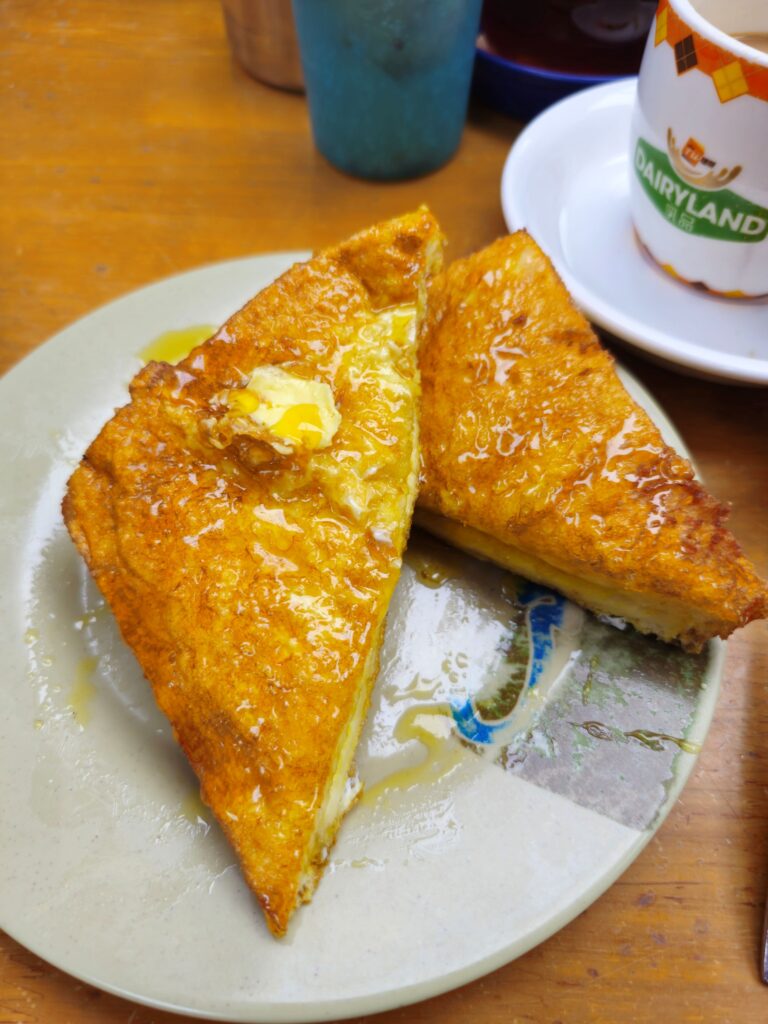
French toast (西多士) — thick white bread, egg-dipped and deep-fried, served with butter and syrup — is the other essential order. The Lan Fong Yuen version is well-made and substantial; a full breakfast of French toast and milk tea is more than adequate for a morning departure.
Practical Information
Location: 2 Gage Street, Central — a short walk from Central MTR (Exit D1) or a 5-minute walk from the Soho/Mid-Levels Escalator area.
Hours: Opens early morning (approximately 6:30am) through the afternoon. The breakfast and morning tea service (6:30–11am) is the busiest and most atmospheric period.
What to know: The Gage Street original location is the one worth visiting — other Lan Fong Yuen branches exist but don’t have the same atmosphere. Arrive early for the full experience; the outdoor pavement seating fills quickly on weekday mornings. Cash preferred.

Understanding the Menu: Cha Chaan Teng Essentials
Beyond the three establishments above, these are the dishes that define the cha chaan teng menu across Hong Kong — worth knowing before sitting down anywhere:
Drinks
Hong Kong milk tea (港式奶茶): The defining drink. Strong Ceylon tea blend, pulled through a cloth filter, combined with evaporated milk. Should be thick, silky, and intensely flavored. The benchmark for any cha chaan teng.
Yuanyang (鴛鴦): A 50/50 blend of Hong Kong milk tea and coffee — a uniquely local combination that sounds strange and tastes exactly right. Order it if you can’t decide between tea and coffee.
Iced lemon tea (凍檸茶): Strong tea with fresh lemon slices over ice — the cold weather alternative to milk tea, consumed year-round.
Horlicks (好立克): A malted milk drink that has become a cha chaan teng staple — available hot or cold, with milk.
Food
Pineapple bun with butter (菠蘿油): The bun (no actual pineapple) with its crumbly sweet top, filled with cold butter. A non-negotiable order at any cha chaan teng.
French toast (西多士): Deep-fried egg-dipped toast served with butter and syrup. Rich and substantial — a proper breakfast rather than a light start.
Scrambled egg toast (炒蛋多士): At the best establishments (primarily Australian Dairy Company), a revelation. At average establishments, competent breakfast food.
Macaroni soup (通粉湯): Macaroni in a light broth with ham, vegetables, and sometimes a fried egg. Hong Kong’s most comforting breakfast dish — specifically good on cool January mornings.
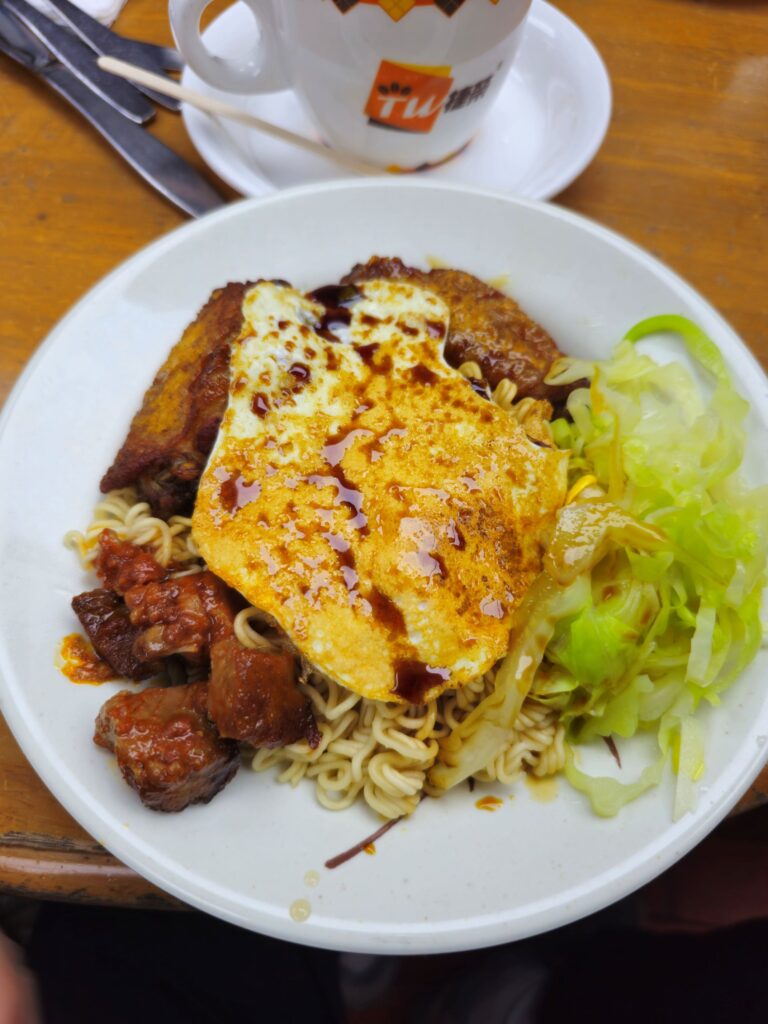
Instant noodles (公仔麵): Cup noodles elevated by the addition of various toppings — a lunchtime staple that represents the cha chaan teng’s utilitarian side.
Baked Portuguese egg tart (葡式蛋撻): The flaky-pastry version of Hong Kong’s signature pastry — different from the Cantonese shortcrust version and excellent at the better cha chaan tengs.

Cha Chaan Teng Etiquette: How to Behave
The cha chaan teng has its own social rules, and understanding them before you arrive produces a better experience:
Shared tables are normal: You will sit with strangers. This is not a failing of the establishment — it’s standard practice. A brief acknowledgment nod is appropriate; conversation is not expected.
Order quickly: The server will expect your order within moments of sitting down. Have the essentials in mind before you enter — milk tea, one food item, done. Deliberating at length is socially awkward in the cha chaan teng context.
Eat at pace: The cha chaan teng is not a place for long breakfasts. Eat your food, finish your tea, and leave when you’re done. Other people are waiting.
Tea refills: Most cha chaan tengs will refill your tea automatically or on request — waving the teapot gently is the standard signal. At Lin Heung, placing the lid upside down on the teapot signals a refill need.
Cash: Many traditional cha chaan tengs prefer or require cash — have small denominations ready. Some have adopted Octopus card payment; check before ordering if you have no cash.
Don’t take photos of other customers: The cha chaan teng is a regular dining environment for the people eating there. Photographing other customers without implicit permission is inappropriate regardless of how atmospheric the setting is.
Cha Chaan Teng vs Dim Sum: Understanding the Difference
Visitors sometimes conflate cha chaan teng with dim sum — they’re related but distinct:
| Cha Chaan Teng | Dim Sum (Yum Cha) | |
|---|---|---|
| Format | Café/diner, full menu | Tea service with small dishes |
| Meals covered | All day | Breakfast and lunch primarily |
| Service style | Fast, individual orders | Trolley or order form, shared |
| Price | Very cheap | Cheap to moderate |
| Atmosphere | Functional, fast | Social, leisurely |
| Best examples | Australian Dairy Company, Lan Fong Yuen | One Dim Sum, Lin Heung |
Lin Heung occupies an interesting middle ground — it operates as a cha chaan teng (tea restaurant, daily operation) but its primary service is yum cha (dim sum with tea), making it a bridge between the two categories.

Beyond the Famous Three: Other Cha Chaan Tengs Worth Knowing
The three establishments covered above are the most celebrated, but Hong Kong has hundreds of cha chaan tengs ranging from neighborhood institutions to tourist-facing operations. A few pointers for finding good ones independently:
Look for queues: A queue of local customers is the best indicator of quality. A cha chaan teng with no queue at 8am is either too new to have built regulars or not good enough to retain them.
Avoid tourist-facing laminated menus with photographs: These indicate an establishment oriented toward visitors rather than locals — the food will be adequate but not the real thing.
Follow the workers: Cha chaan tengs near office buildings and industrial areas that fill with workers at 7:30am and noon are reliable — the customer base requires consistency and value.
Price check: A milk tea and pineapple bun at a local cha chaan teng should cost under HK$40 together. Significantly higher prices indicate tourist premium.
Final Thoughts
The cha chaan teng is where you understand Hong Kong’s relationship with time, efficiency, and food — which is to say, its relationship with life. The Australian Dairy Company’s scrambled eggs arrive in minutes and are eaten in less. Lin Heung’s dim sum trolleys have been running the same route through the same dining room for decades. Lan Fong Yuen’s milk tea has been pulled through the same cloth filter since 1952.
None of these things are remarkable in Hong Kong. All of them are, from the outside, extraordinary.
Eat at all three if you can. Stand outside Lan Fong Yuen on a January morning with a milk tea and a pineapple bun. Understand that this is what Hong Kong actually is.
Hong Kong Food Guide: What to Eat and Where