

Hong Kong’s egg tart is one of the city’s most beloved food objects — a pastry that exists in a specific form nowhere else in the world, the product of a particular local history and a particular local taste. I ate egg tarts at two of Hong Kong’s most celebrated establishments during my January trip: Tai Cheong Bakery in Central on the evening of my third day, and Bakehouse in Causeway Bay on the afternoon of my fourth. The two versions are genuinely different — different pastry, different custard, different philosophy — and comparing them directly is one of the most enjoyable small food projects available in the city.
This guide covers the egg tart in full: its history, the two main styles, the specific establishments worth visiting, and everything worth knowing before eating your way through Hong Kong’s most iconic pastry.
What Is a Hong Kong Egg Tart?
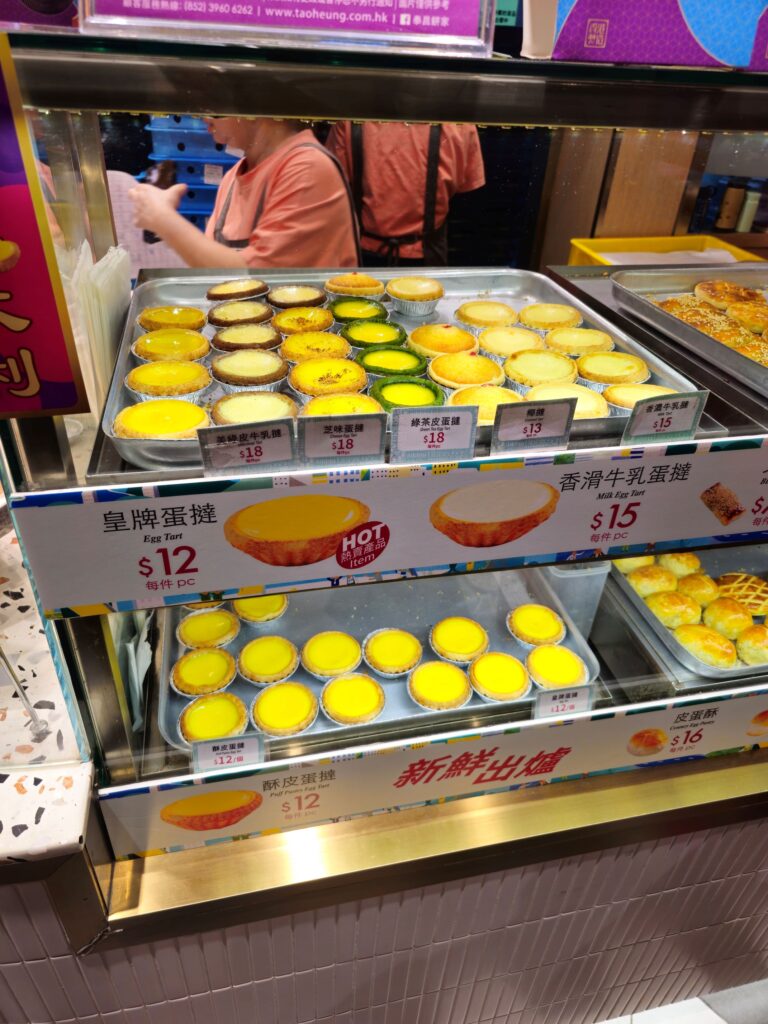
The Hong Kong egg tart (蛋撻, daan taat) is a small pastry — typically 7–8cm in diameter — consisting of a pastry shell filled with a smooth, lightly sweetened egg custard, baked until the custard is just set with a slight wobble at the center. It is served at room temperature or warm, depending on the establishment and the time since baking.
The egg tart is available throughout Hong Kong — in cha chaan tengs, dim sum restaurants, dedicated bakeries, and convenience stores — but the versions at dedicated bakeries represent the form at its best, and the difference between a mediocre egg tart and an excellent one is immediately apparent to anyone who has eaten both.
The Two Styles: Shortcrust vs Flaky Pastry
The most important distinction in Hong Kong egg tart culture is the pastry shell — the two main styles use fundamentally different pastry techniques that produce genuinely different eating experiences.
Shortcrust Pastry (酥皮)
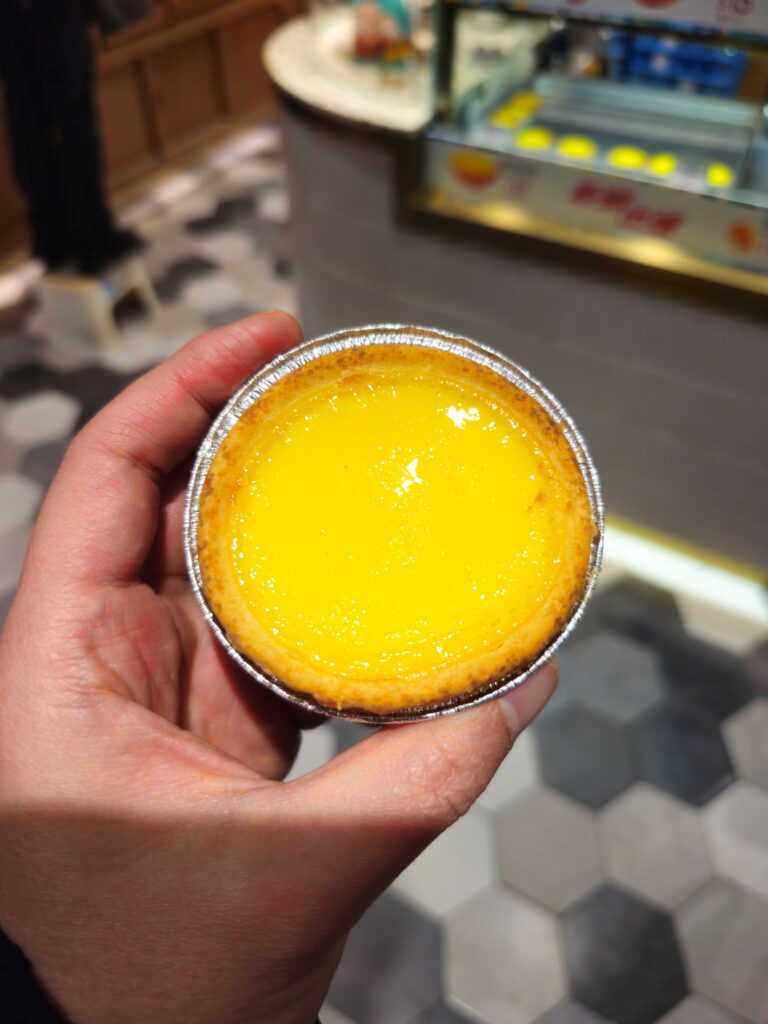
The shortcrust pastry version — sometimes called the Hong Kong style — uses a butter-based shortcrust dough that bakes into a firm, crumbly shell. The texture is dense and buttery, with a slight sweetness from sugar in the dough. It holds its shape well and provides a substantial base for the custard.
This is the older, more traditional style in Hong Kong — associated with the Cantonese bakery tradition and the cha chaan teng culture that developed in the postwar period. Tai Cheong Bakery is the most celebrated practitioner of the shortcrust style.
Flaky Pastry (酥皮 — Macanese style)
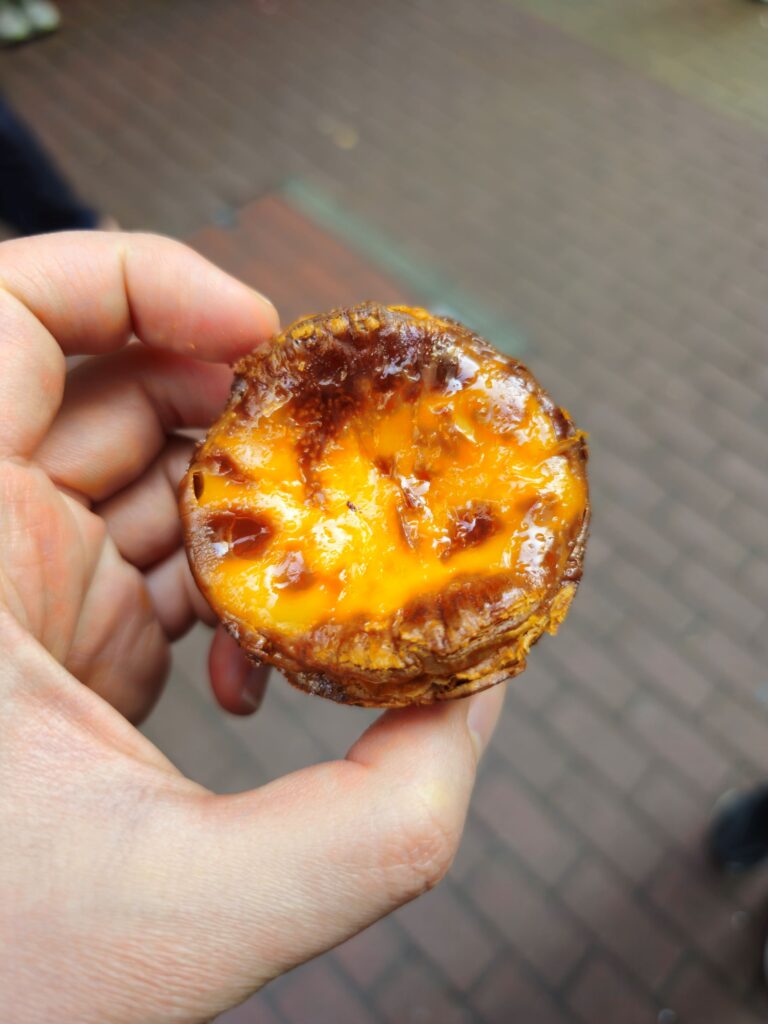
The flaky pastry version — influenced by the Portuguese pastel de nata via Macau — uses a laminated dough technique similar to puff pastry. The result is a lighter, more delicate shell with visible layers that shatter slightly on the first bite, releasing a buttery fragrance that the shortcrust version doesn’t have.
The flaky pastry style is associated with Macau’s Portuguese colonial heritage and has been adapted and refined in Hong Kong’s contemporary bakery scene. Bakehouse is the most celebrated current practitioner.
Which is better? Neither — they’re genuinely different experiences, each excellent on its own terms. The shortcrust version is more substantial and buttery; the flaky version is more delicate and technically complex. Eating both on the same trip — which requires minimal effort given Hong Kong’s geography — is the correct approach.
Tai Cheong Bakery (泰昌餅家)
History and Reputation
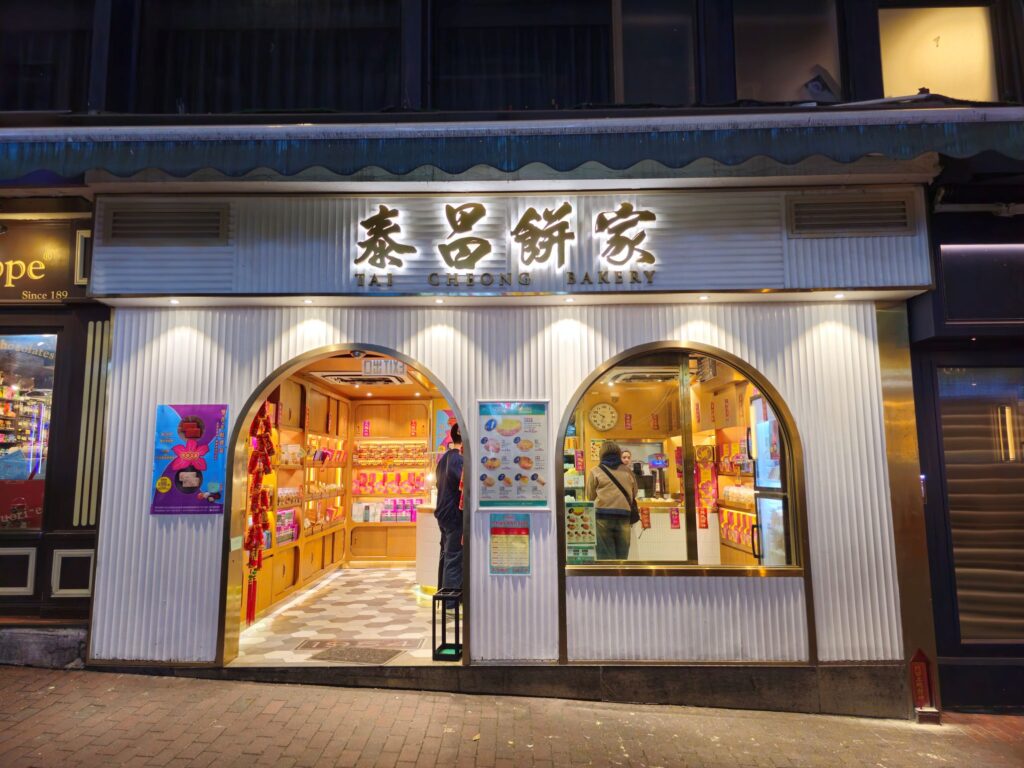
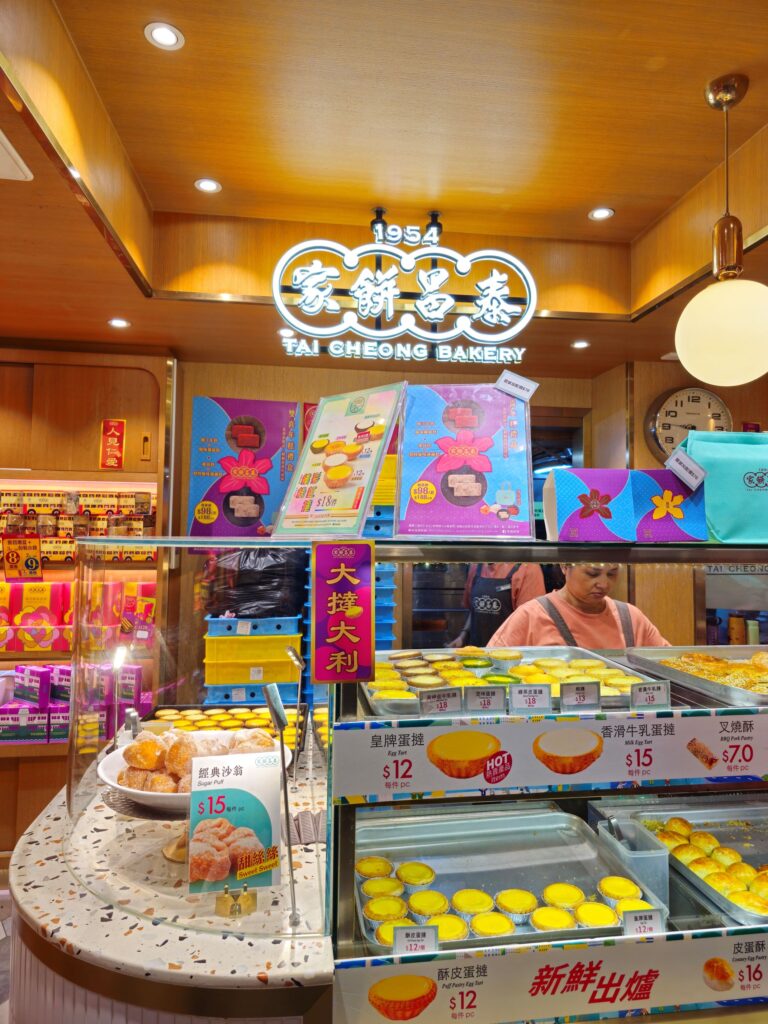
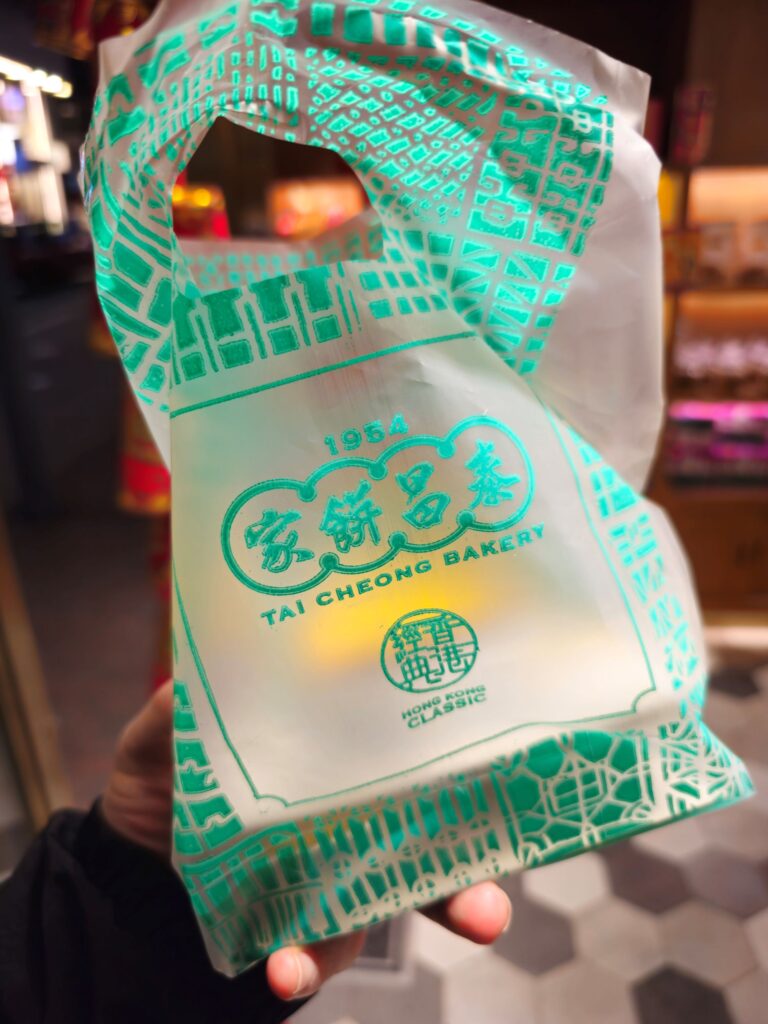
Tai Cheong Bakery has been making Hong Kong egg tarts since 1954 — over 70 years of continuous production from its original Central location. The bakery became internationally known in the 1990s when the last British Governor of Hong Kong, Chris Patten, was photographed buying egg tarts here — an association the bakery has maintained carefully ever since. A photograph of Governor Patten is displayed prominently in the shop.
Despite the tourist attention this history has generated, Tai Cheong remains genuinely excellent rather than resting on its reputation — the egg tarts are made fresh throughout the day, and the version bought warm from the shop is as good as it has ever been.
The Location
The most famous Tai Cheong location is at 35 Lyndhurst Terrace in Central — a narrow street running between Hollywood Road and Wellington Street, a short walk from the MTR and the Central Market area. The shop is small — a serving counter with display cases of fresh baked goods, the kitchen visible through the back — and the queue, when present, extends onto the pavement outside.
I visited on the evening of January 26th, after dinner at Tsim Chai Kee nearby — the timing was fortuitous, as the queue was manageable and a fresh batch of tarts had recently come out of the oven.
The Egg Tart
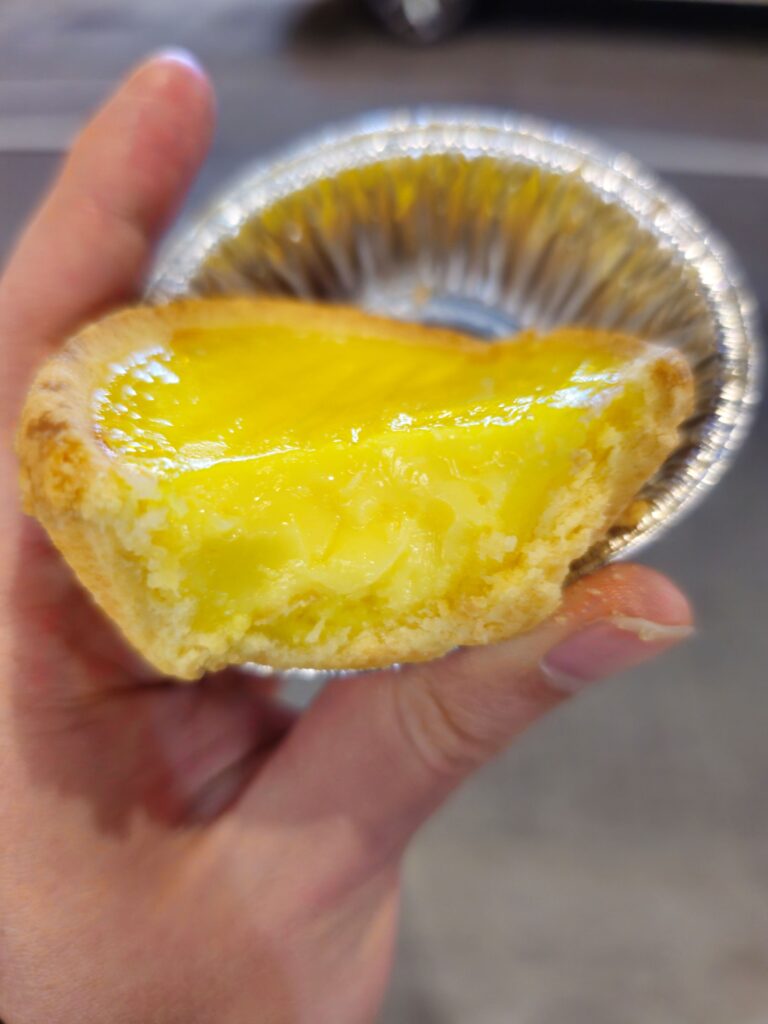
Tai Cheong’s shortcrust egg tart is the benchmark version of the style. The pastry shell is golden-brown, firm, and crumbly — pressing lightly on the side produces a clean break rather than shattering. The butteriness is pronounced but not overwhelming; the slight sweetness of the dough complements rather than competes with the custard.
The custard filling is smooth and uniformly colored — a pale golden yellow that indicates fresh eggs and proper technique. The set is firm enough to hold its shape when the tart is lifted but soft enough to have a slight wobble at the center when fresh. The flavor is clean and eggy with restrained sweetness — the custard tastes of eggs and milk rather than sugar.
Eaten warm, immediately after purchase: This is when Tai Cheong’s egg tart is at its best — the pastry still slightly warm from the oven, the custard at the temperature that makes its texture most apparent. The contrast between the firm pastry and the soft custard is most pronounced when warm; at room temperature the two elements become harder to distinguish.
Price: Modest — one of the better food values in Hong Kong relative to quality.
What Else to Buy
Beyond the egg tart, Tai Cheong’s broader pastry range is worth attention:
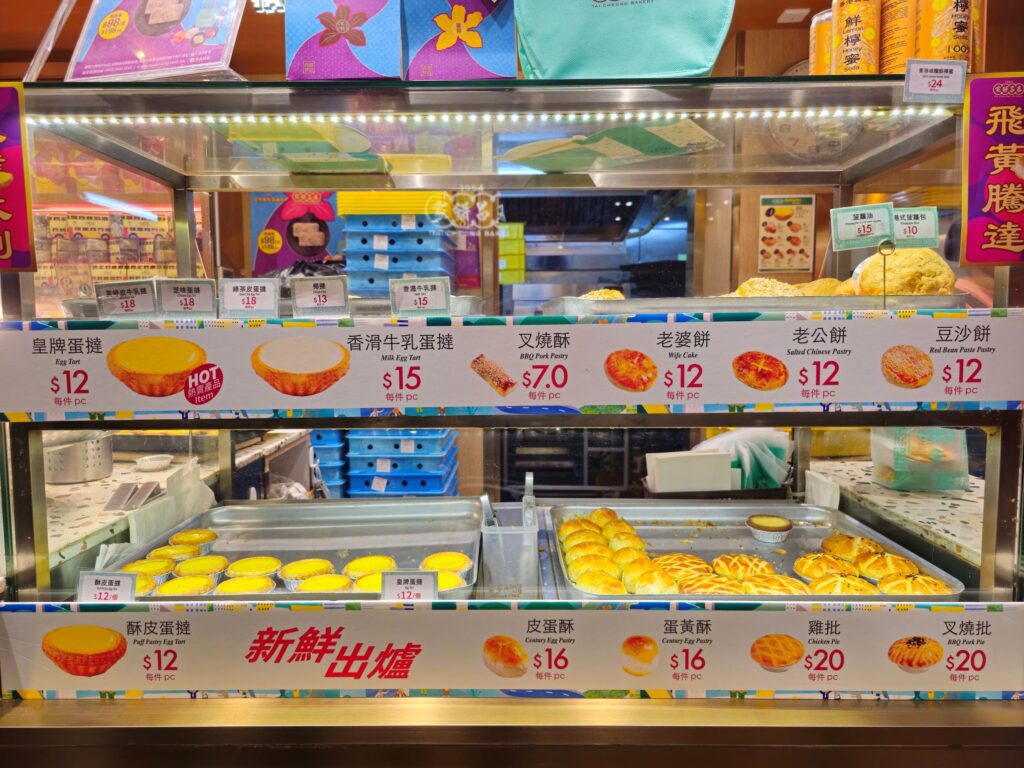
Wife cake (老婆餅): A flaky pastry filled with winter melon paste, sesame, and almond — a traditional Cantonese pastry that Tai Cheong makes well. Good for taking home as a gift (it keeps for several days).
Cocktail bun (雞尾包): A soft bun filled with coconut and butter cream — another Hong Kong bakery classic available fresh at Tai Cheong.
Pineapple bun (菠蘿包): Less distinctive here than at dedicated cha chaan tengs, but available and fresh.
Bakehouse (焙房)
The Bakery and Its Philosophy
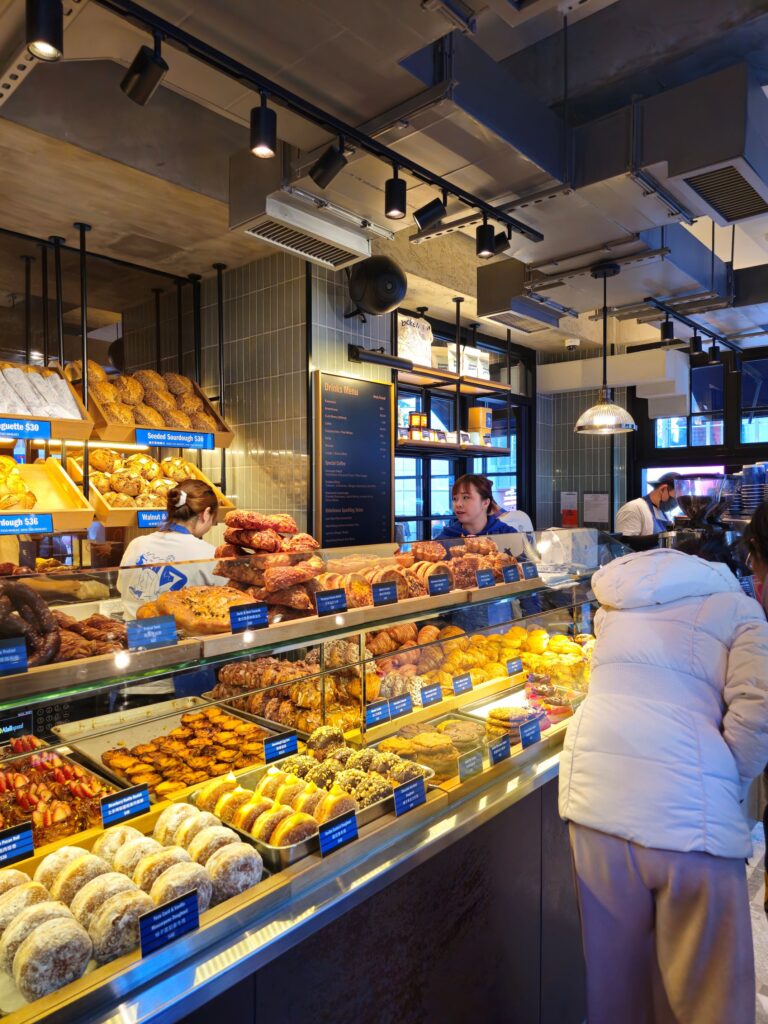
Bakehouse was founded by Gregoire Michaud, a Swiss pastry chef with serious European training who chose to apply precision technique to Hong Kong’s traditional bakery forms rather than import European pastry wholesale. The result is a bakery that is recognizably Hong Kong in its products — the egg tart, the pineapple bun, the cocktail bun are all present — but elevated by a technical approach and ingredient quality that the traditional establishments don’t pursue.
The philosophy is explicit: Michaud has spoken in interviews about wanting to honor Hong Kong’s bakery tradition while applying the rigor of professional pastry training to it. The egg tart is the clearest expression of this approach — the Macanese flaky pastry style adapted and refined to a level of consistency and quality that makes it the most technically accomplished version of the form available in the city.
The Causeway Bay Location
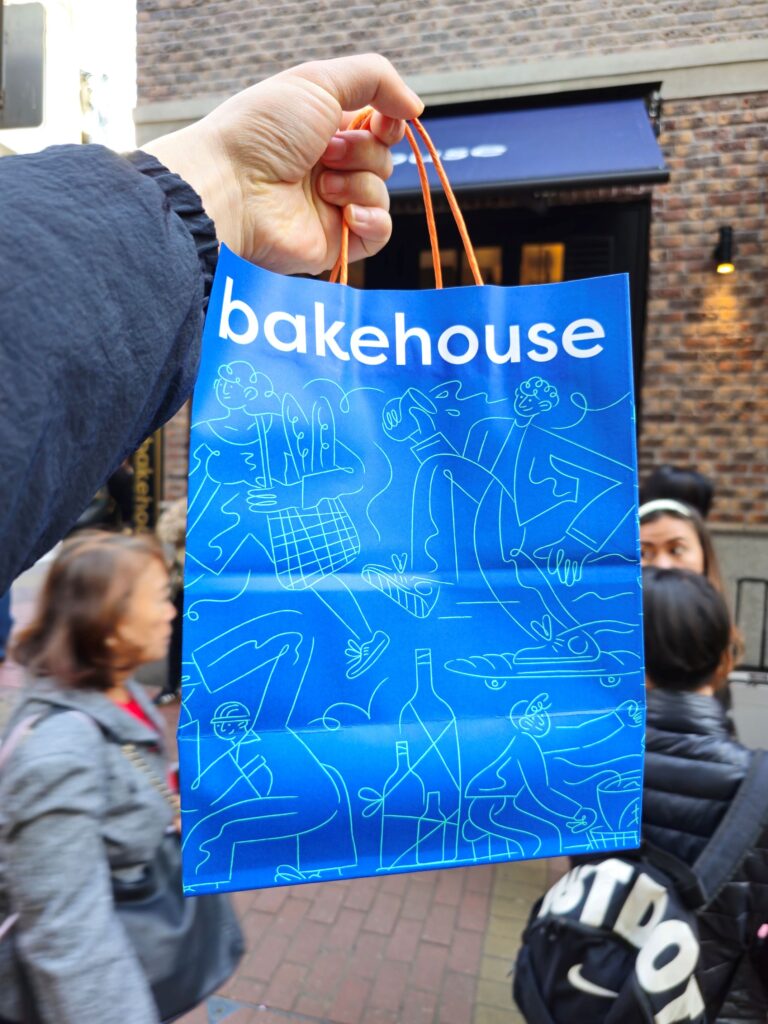
Bakehouse has multiple locations across Hong Kong. The Causeway Bay branch — which I visited on the afternoon of January 27th, after arriving from the Monster Building via MTR — is one of the most convenient for visitors based on Hong Kong Island. The shop is clean and well-designed, with the baked goods displayed to show their quality rather than their quantity.
I arrived in the mid-afternoon — the egg tarts fresh from a recent baking, the queue short. The tart was in my hand and eaten on the pavement outside within 10 minutes of arriving.
The Egg Tart
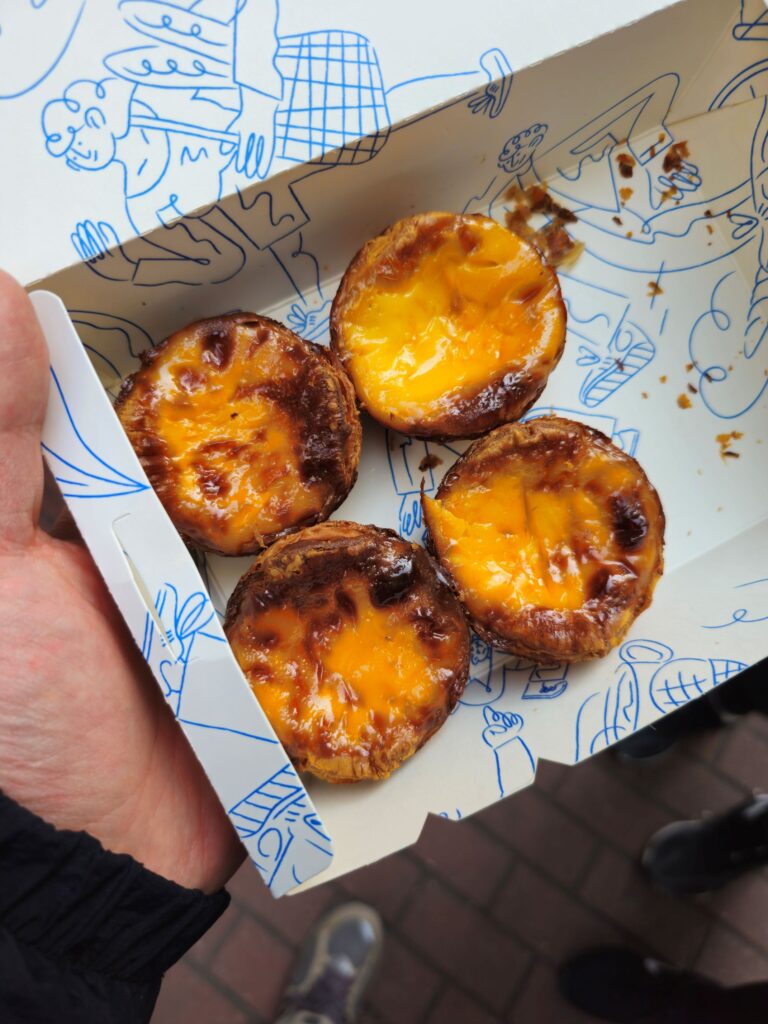
Bakehouse’s flaky pastry egg tart is, from the first visual impression, clearly different from Tai Cheong’s version. The shell has visible layers of laminated pastry — a spiral pattern on the base that indicates the puff pastry technique — and a darker, more caramelized color on the exposed pastry edges. The shell is lighter in weight when held.
Biting into the Bakehouse tart, the pastry shatters lightly — the layers separating with a delicate crunch that releases a strong butter fragrance. The custard inside is silkier than the Tai Cheong version — a slightly creamier, more refined consistency that reflects the tighter control of the baking process. The sweetness is similarly restrained; the egg flavor comes through clearly.
The comparison in practice: Eating a Bakehouse tart immediately after a Tai Cheong tart (or vice versa) makes the differences stark. The Bakehouse version is lighter, more fragrant, and more technically accomplished; the Tai Cheong version is more substantial, more traditional in character, and more immediately satisfying in the way that simpler, less refined food often is. Neither is objectively better — they represent different approaches to the same form.
What Else to Buy
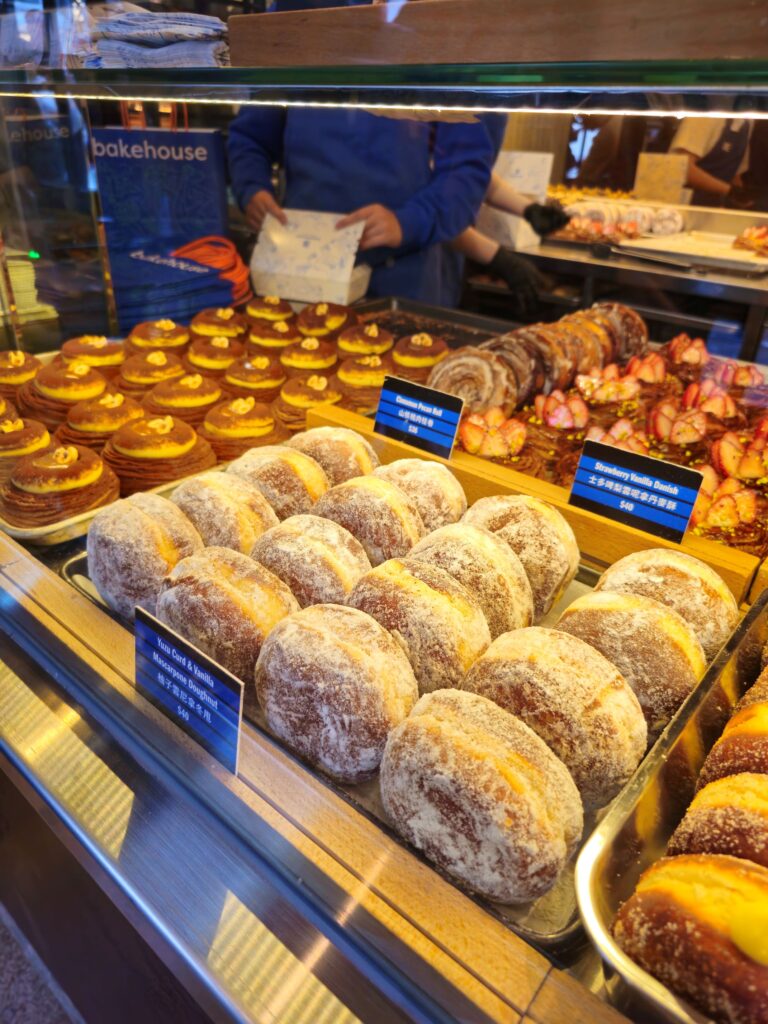
Pineapple bun (菠蘿包): Bakehouse’s version uses better butter and a more refined technique than the standard — the crumbly top is more pronounced and the bun texture is lighter. Worth buying alongside the egg tart.
Cocktail bun (雞尾包): The coconut cream filling at Bakehouse is more refined than the average — less sweet, with a cleaner coconut flavor.
Portuguese custard tart (pastel de nata): The Macanese version of the egg tart — a slightly more caramelized, looser custard in a smaller flaky pastry shell. Available at some Bakehouse locations and worth trying as a direct comparison with the Hong Kong version.
The Egg Tart at Dim Sum Restaurants
Beyond the dedicated bakeries, the egg tart appears regularly on dim sum menus — and the version served at dim sum restaurants deserves its own consideration.
At One Dim Sum near Prince Edward and at Lin Heung Tea House, the egg tart served as part of the dim sum selection uses the shortcrust pastry style — smaller than the bakery versions, slightly less refined in technique, but fresh and well-made within the context of a dim sum service.
The dim sum egg tart is a different product from the dedicated bakery version — its role is as one component of a larger meal rather than as a standalone pastry, and its quality reflects that context. Good rather than exceptional — but eaten warm, immediately after it comes off the cart or out of the kitchen, it’s a completely satisfying version of the form.
Where to Find Good Egg Tarts Throughout Hong Kong
Beyond Tai Cheong and Bakehouse, egg tarts are available throughout the city at various quality levels:
Reliable options:
- Kee Wah Bakery (奇華餅家): A major Hong Kong bakery chain with locations throughout the city including the airport — the egg tarts are consistent and good, making this a reliable option for last-minute purchases before departure.
- Garden Bakery (嘉頓): Another established chain with broadly available egg tarts at a reliable standard.
- Most cha chaan tengs: Variable quality but often better than expected — particularly at established cha chaan tengs with high turnover.
Avoid:
- Convenience store egg tarts: Available but significantly inferior to fresh bakery versions — the pastry loses its texture after sitting.
- Tourist trap bakeries near major attractions: The egg tarts at shops positioned to catch tourist foot traffic near the Peak Tram or the harbor tend toward mediocrity — the captive audience doesn’t require quality.
The Perfect Egg Tart: What to Look For
Whether buying from Tai Cheong, Bakehouse, or anywhere else, these are the indicators of a good egg tart:
The pastry:
- Shortcrust: golden-brown, firm, not soggy at the base
- Flaky: visible layers, light caramelization on edges, delicate crunch on first bite
The custard:
- Pale golden-yellow (fresh eggs, not artificial coloring)
- Slight wobble at the center when fresh
- Smooth surface without cracks or bubbling
- Clean egg flavor with restrained sweetness
Freshness:
- The best indicator of quality — an egg tart eaten within 30 minutes of baking is always better than one that has been sitting for hours
- Ask when the next batch will be ready if the current display looks old
- Visible steam from the custard indicates very fresh — ideal
Temperature:
- Warm is better than room temperature for both styles
- Cold egg tarts (from refrigerators, sometimes at convenience stores) are a last resort
Hong Kong Egg Tart vs Macanese Pastel de Nata vs Portuguese Pastéis de Belém
For visitors familiar with the Portuguese pastel de nata (and its Macanese adaptation), understanding how the Hong Kong egg tart relates to these forms gives useful context:
| HK Egg Tart (shortcrust) | HK Egg Tart (flaky) | Macanese Pastel | Portuguese Pastéis de Belém | |
|---|---|---|---|---|
| Pastry | Shortcrust | Flaky/laminated | Flaky/laminated | Flaky/laminated |
| Custard set | Firm | Slightly looser | Loose, caramelized | Loose, heavily caramelized |
| Size | ~8cm | ~8cm | ~6cm | ~6cm |
| Sweetness | Restrained | Restrained | Moderate | Moderate |
| Character | Substantial, buttery | Delicate, fragrant | Rich, eggy | Rich, caramelized |
The Hong Kong versions (both styles) have a firmer, less caramelized custard than the Portuguese and Macanese originals — reflecting a local preference for a cleaner, less sweet custard. The Bakehouse version comes closest to the Macanese style while remaining distinctly Hong Kong in character.
Practical Tips for the Egg Tart Experience
Eat immediately: The egg tart is at its best within 30 minutes of baking — don’t buy ahead and carry around the city.
Ask about freshness: At both Tai Cheong and Bakehouse, staff can tell you when the next batch will be ready if you arrive between batches. Waiting 10 minutes for a fresh tart is always worth it.
Do the comparison: Eating at both Tai Cheong and Bakehouse on the same trip requires minimal effort — they’re on Hong Kong Island, served on different days of my itinerary but easily combined into a single afternoon if desired.
Temperature matters: If given the choice between warm and room temperature, always choose warm.
Don’t buy too many: The egg tart doesn’t travel well — the pastry softens after a few hours and the custard firms up in a way that reduces the experience. Buy what you’ll eat immediately rather than stocking up.
Final Thoughts
The Hong Kong egg tart is one of those food objects that appears simple and reveals complexity on closer attention. The difference between a mediocre version and an excellent one — the shortcrust shell at Tai Cheong versus the flaky pastry at Bakehouse, either versus the convenience store version — is immediately apparent. The custard set, the pastry texture, the temperature at consumption: all of these matter, and attending to them produces a considerably better experience than simply picking up whatever’s available.
Eat at Tai Cheong in Central. Eat at Bakehouse in Causeway Bay. Eat both warm, immediately after purchase, standing on the pavement outside each shop. Compare them directly. And understand that a city that has spent 70 years refining a small pastry to this degree of specificity has its priorities exactly right.
Best Cha Chaan Teng in Hong Kong: A Guide to the City’s Most Iconic Diners
Causeway Bay Travel Guide: Hong Kong’s Best Shopping Neighborhood