

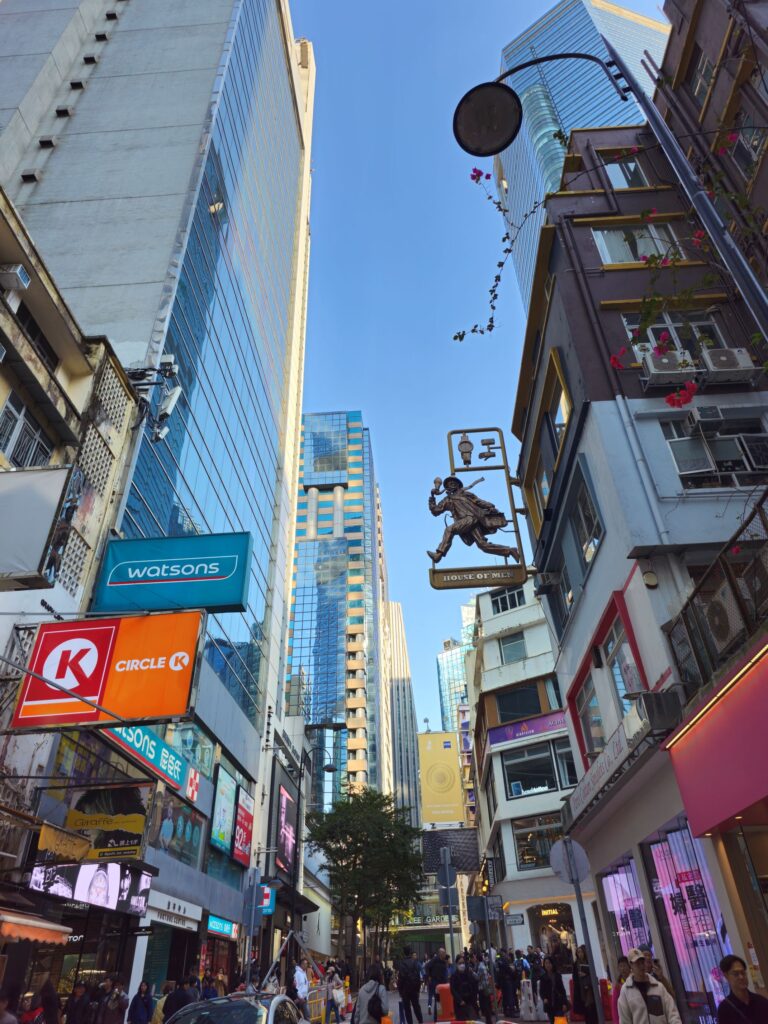
Causeway Bay (銅鑼灣) is where Hong Kong goes to shop. Not the tourist shopping of Tsim Sha Tsui’s Nathan Road or the luxury retail of Central — something more democratic and more local than either. The neighborhood on Hong Kong Island’s northern shore, a short MTR ride east of Central, has the highest retail density in the city and one of the highest retail rents in the world, and the result is a shopping and eating neighborhood that operates at full intensity from morning until well past midnight.
I visited in January on the third day of my Hong Kong trip — taking the MTR from Quarry Bay (after visiting the Monster Building) to Causeway Bay, spending the afternoon working through the neighborhood’s main shopping centers and market streets before heading to Victoria Peak in the evening. Half a day gave me the highlights; the neighborhood has enough depth to absorb considerably more time.
Where Is Causeway Bay?
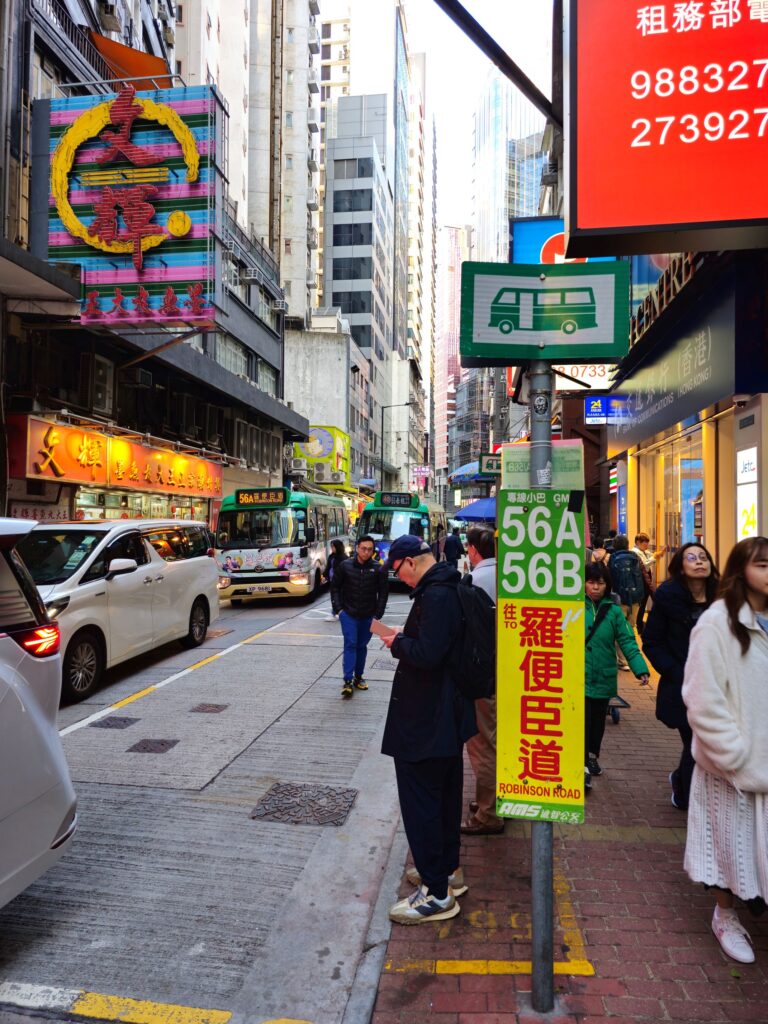
Causeway Bay sits on the northern shore of Hong Kong Island, east of Wan Chai and west of Tin Hau — two MTR stops east of Central on the Island Line. The neighborhood is bounded by Victoria Park to the east, the Causeway Bay Typhoon Shelter (a harbor inlet) to the north, and the hillside of Happy Valley to the south.
The MTR Causeway Bay station sits at the heart of the retail district, with exits feeding directly into Times Square mall and onto Yee Wo Street — the main shopping street. The density of retail within a few hundred meters of the station is remarkable even by Hong Kong standards.
Getting to Causeway Bay
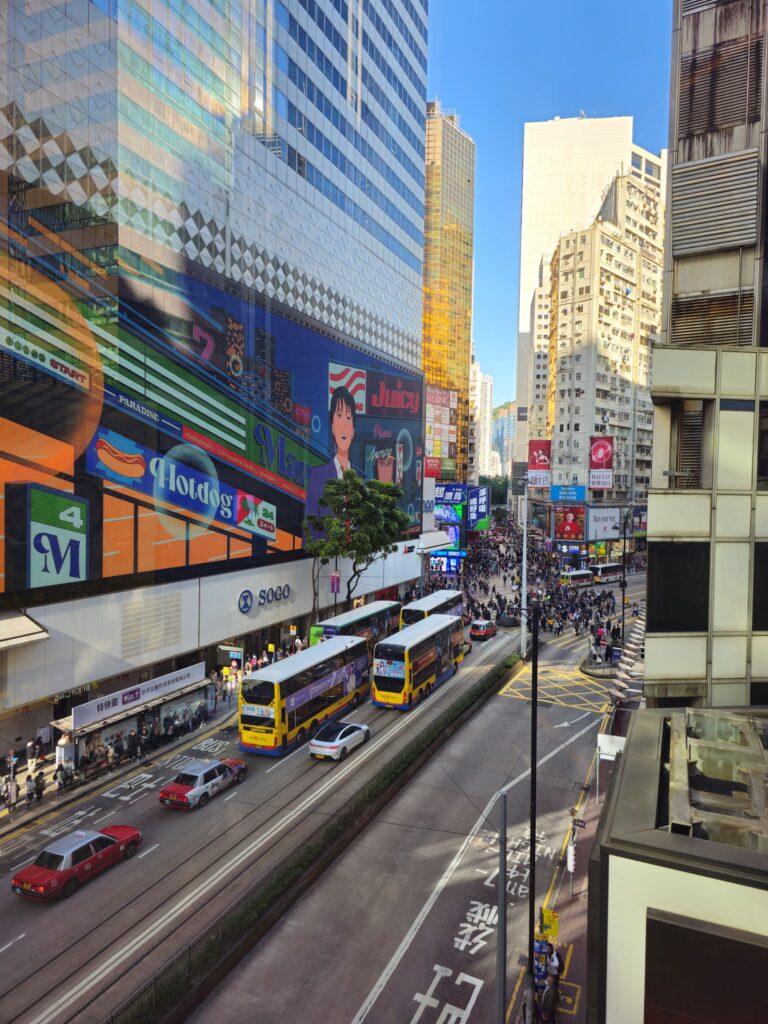
By MTR: The Island Line Causeway Bay station is the primary access point — direct connections from Central (two stops, approximately 5 minutes) and from Tsim Sha Tsui via the cross-harbour tunnel (approximately 15 minutes). Exit D4 for Times Square; Exit E for Jardine’s Crescent and the market area.
By tram: Hong Kong’s iconic double-decker trams run along the northern shore of the Island, stopping at Causeway Bay. Slower than the MTR but a genuine Hong Kong experience — the tram gives a street-level view of the journey between Central, Wan Chai, and Causeway Bay that the underground MTR doesn’t provide.
By bus: Multiple bus routes connect Causeway Bay to other parts of the Island and to Kowloon via the cross-harbour tunnel. The 56 bus from Causeway Bay to the Peak Tram terminus is a useful route for combining a Causeway Bay afternoon with an evening Peak visit — the route I took in January.
Hysan Place (希慎廣場)
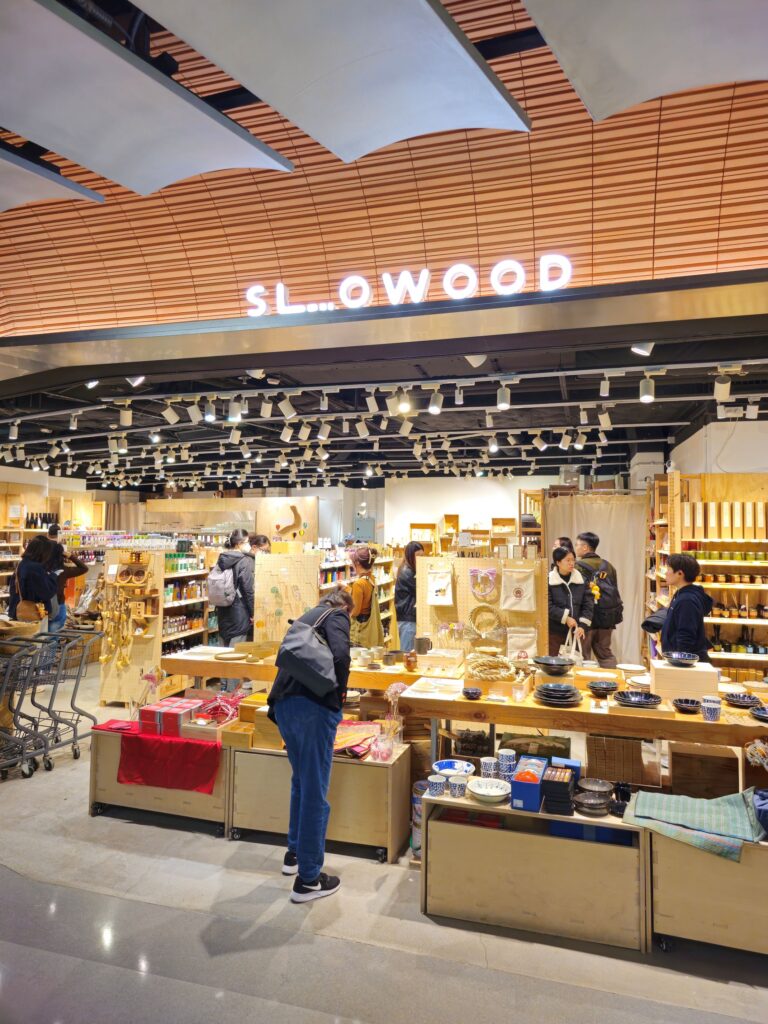
Hysan Place is Causeway Bay’s most architecturally interesting mall — a 17-floor tower on Hennessy Road combining retail, dining, and a significant public art program that elevates it above the standard Hong Kong mall experience. The building’s exterior features large-scale public art installations, and the interior design is more considered than most retail spaces in the city.
The retail mix skews toward contemporary fashion, lifestyle, and beauty brands — a combination of international names and local Hong Kong designers that gives the mall a more curated character than the larger Times Square next door. The food offerings across multiple floors cover everything from quick casual options to more considered restaurant dining.
What makes Hysan Place worth visiting beyond shopping: The rooftop public space and the external terraces on the upper floors give views over the Causeway Bay street grid and toward the harbor that are accessible to anyone regardless of shopping intention. The art installations throughout the building reward attention — several are site-specific works commissioned for the building rather than generic retail decoration.
For visitors who find Hong Kong’s mall culture relentless, Hysan Place represents the more interesting end of the spectrum — worth 45 minutes to an hour of browsing even without a specific purchase agenda.
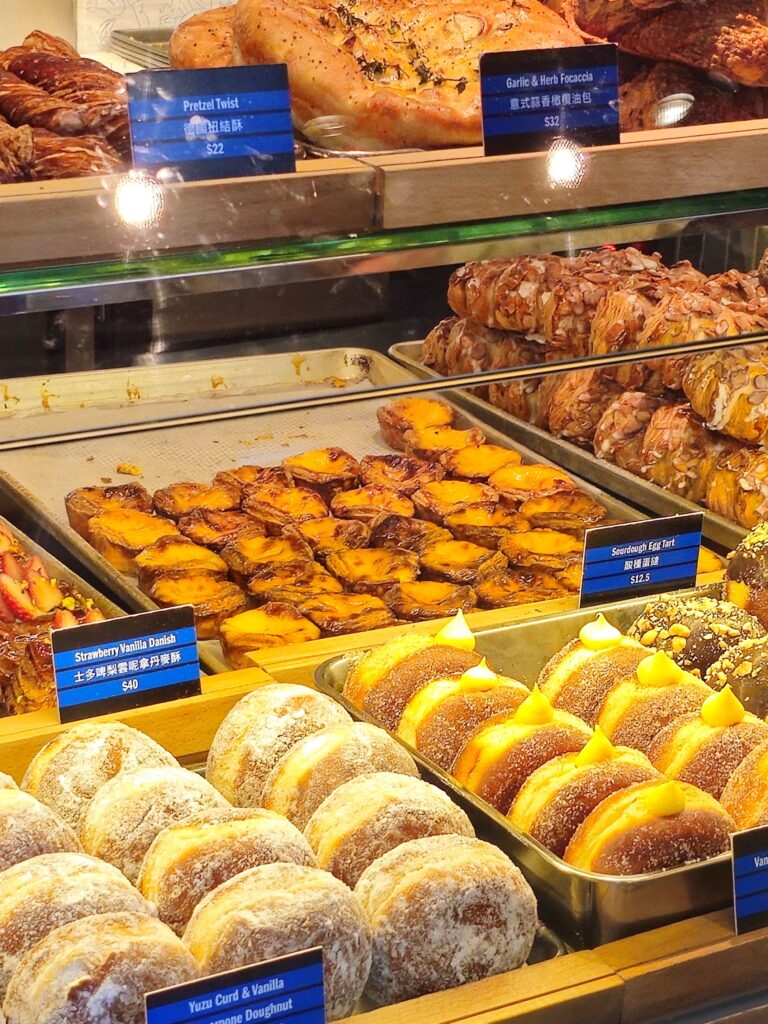
Bakehouse (焙房): The Causeway Bay Egg Tart
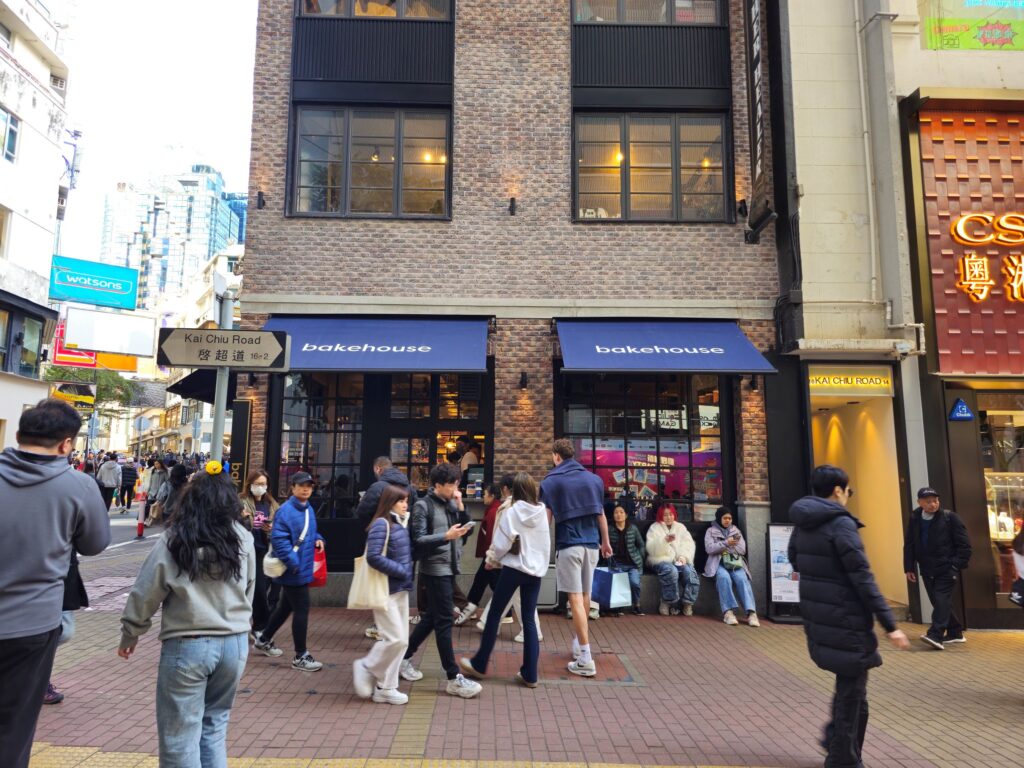
Bakehouse has multiple locations across Hong Kong but is most conveniently visited from Causeway Bay — and visiting here, ideally after having eaten at Tai Cheong Bakery in Central, provides the most complete version of Hong Kong’s egg tart comparison.
Where Tai Cheong uses a shortcrust pastry shell — crumbly, buttery, dense — Bakehouse works with a flaky puff pastry shell in the Macanese style: lighter, with visible layers that shatter slightly on the first bite. The custard filling at Bakehouse is silkier and more refined, the result of rigorous technique applied to a traditional form.
The bakery was founded by a pastry chef with serious European training who chose to apply precision technique to Hong Kong’s most beloved pastry tradition rather than import European pastry forms wholesale. The result is recognizably a Hong Kong egg tart — the flavors are right, the format is right — but elevated by the technical approach in ways that are immediately apparent when eating it warm, immediately after purchase.
What else to order: Beyond the egg tart, Bakehouse’s broader pastry range reflects the same approach — traditional Hong Kong bakery items made with better technique and better ingredients than the standard. The pineapple bun here is worth trying if you haven’t already eaten one elsewhere; the cocktail bun (雞尾包) filled with coconut cream is a Hong Kong bakery classic that Bakehouse does particularly well.
The egg tart comparison: If you’ve already eaten at Tai Cheong Bakery in Central, the comparison between the two styles is one of the more enjoyable small food projects available across the two neighborhoods. The shortcrust versus flaky pastry distinction is genuine and immediately apparent; the custard quality at Bakehouse is slightly higher; Tai Cheong has the history and the institution status. Both are excellent in different ways — the comparison is the point.
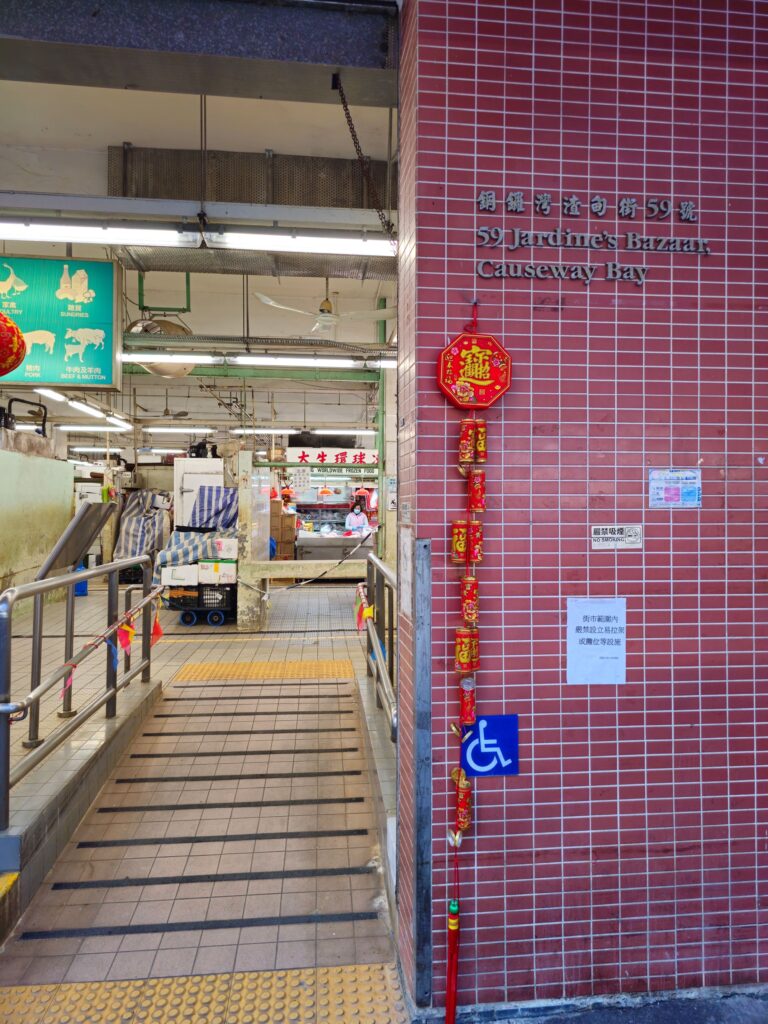
Jardine’s Crescent (渣甸坊)
Jardine’s Crescent — a curved pedestrian market street running between Yee Wo Street and Jardine’s Bazaar — is one of Causeway Bay’s most atmospheric local market areas and one of the clearest contrasts available between the neighborhood’s high-end mall retail and its street-level everyday life.
The market operates primarily in clothing and accessories — stalls selling affordable fashion, basic clothing, and everyday items to the local residential population that surrounds the neighborhood’s commercial core. The quality and price points are practical rather than aspirational; this is where the neighborhood’s residents shop for daily needs rather than where visitors come for souvenirs.
The street’s curved shape gives it a particular enclosed atmosphere — covered by awnings that create a continuous shaded corridor, with stalls on both sides and the pedestrian flow moving through the middle. It’s active throughout the day and most animated in the late afternoon when local shoppers are most numerous.
Adjacent: Jardine’s Bazaar (渣甸街) Running parallel to Jardine’s Crescent, Jardine’s Bazaar is a slightly wider street market covering a similar range of everyday goods — fresh produce, household items, and clothing alongside a few food stalls. Together, the two streets form Causeway Bay’s most local market area and provide the clearest sense of the neighborhood as a place people actually live rather than just visit.
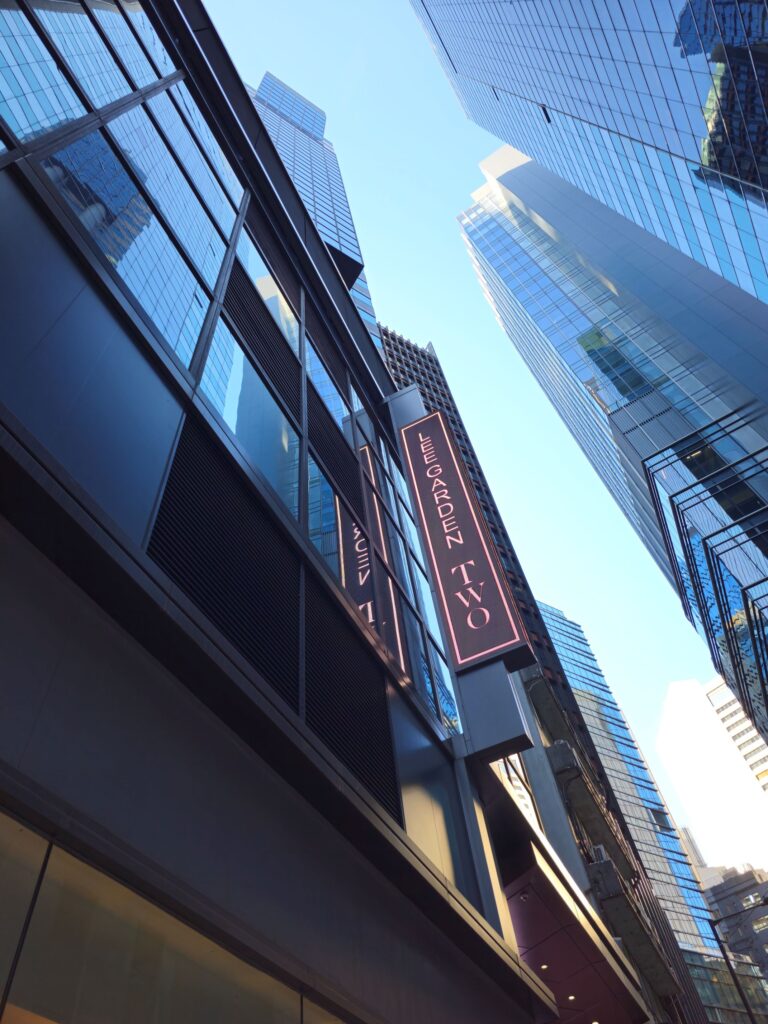
Lee Garden (利園)
The Lee Garden complex — a cluster of connected mall buildings between Hysan Avenue and Cleveland Street — represents Causeway Bay’s luxury retail offering, anchored by international fashion brands, high-end cosmetics, and fine dining restaurants that cater to the neighborhood’s more affluent resident and visitor population.
Lee Garden One and Lee Garden Two are the primary buildings — connected by a pedestrian bridge and collectively housing a concentration of luxury brands that reflects Causeway Bay’s position as one of the highest-value retail locations in the world. The atmosphere is more relaxed than the busier mass-market malls; the air conditioning is reliable; the food options on the upper floors include some of Causeway Bay’s better restaurant dining.
For visitors not specifically interested in luxury retail, Lee Garden is worth noting primarily for its restaurant floors — a practical option for lunch or dinner in the neighborhood when the street food and casual options feel like too much effort.
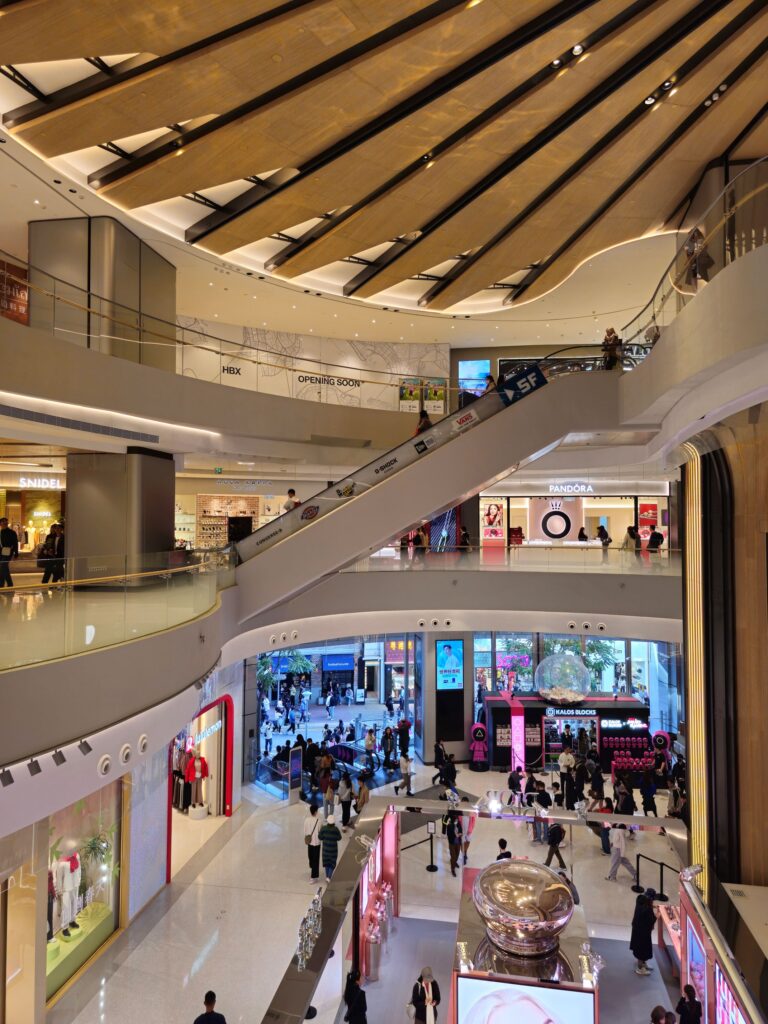
Times Square (時代廣場)
Times Square is Causeway Bay’s largest and most commercially active mall — a 16-floor tower directly above the MTR station exit, anchored by a large atrium and covering the full spectrum of retail from fast fashion to mid-range international brands. It’s less architecturally interesting than Hysan Place and less exclusive than Lee Garden, but its scale and the volume of retail it contains make it unavoidable as a Causeway Bay reference point.
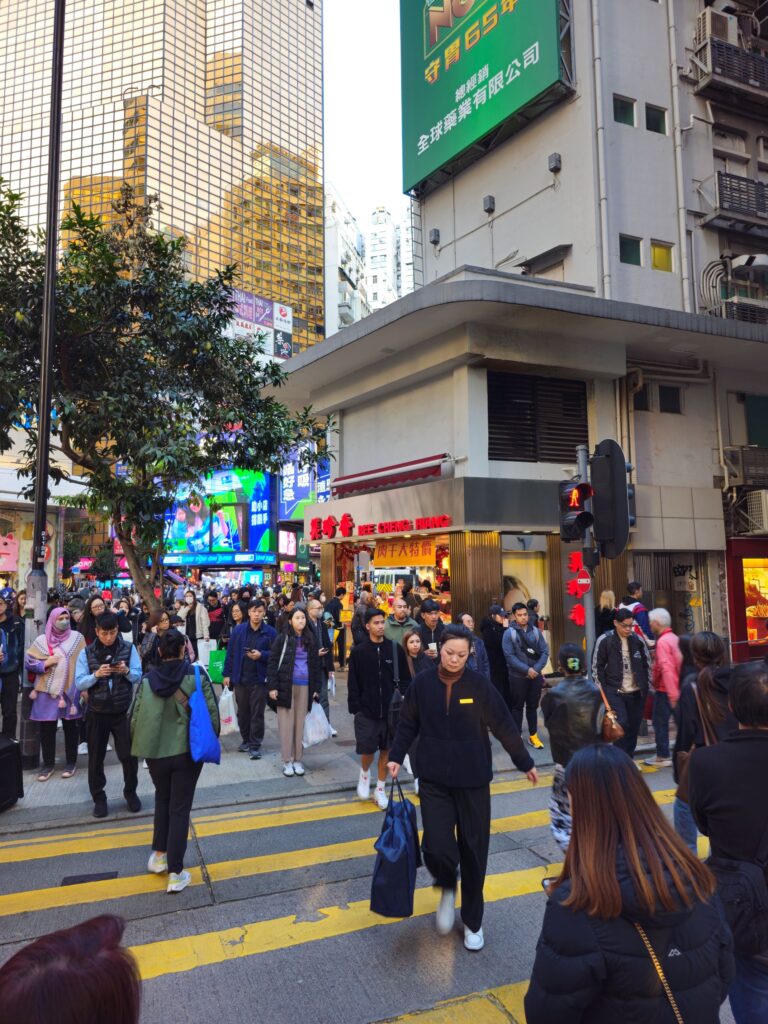
The food hall in the basement and the restaurant floors in the upper section cover most eating needs at various price points. The ground-floor atrium and the streets immediately outside Times Square are Causeway Bay’s most commercially active area — the density of people, particularly on weekends, is at its most intense here.
For visitors, Times Square functions primarily as a practical orientation point and a reliable option for any retail need that hasn’t been met elsewhere in the neighborhood.
Victoria Park (維多利亞公園)
Victoria Park on the eastern edge of Causeway Bay is Hong Kong Island’s largest urban park — a significant green space that provides the most accessible outdoor relief from the neighborhood’s retail intensity. The park contains sports facilities, a swimming pool complex, a jogging path, and open lawns that fill with local residents in the morning and evening hours.
For visitors based in Causeway Bay or passing through, Victoria Park offers a useful 30–45 minute decompression walk between shopping sessions — the scale of the park, and the contrast between its relative quiet and the streets immediately outside, makes the transition feel significant even over a short visit.
Chinese New Year Flower Market: In the days immediately before Chinese New Year, Victoria Park hosts one of Hong Kong’s largest and most atmospheric flower markets — stalls filling the park’s open areas with seasonal plants, decorations, and festive goods. If your January visit coincides with the New Year preparation period, the Victoria Park flower market is one of the best places in Hong Kong to experience the season.
The Monster Building: A Quarry Bay Detour
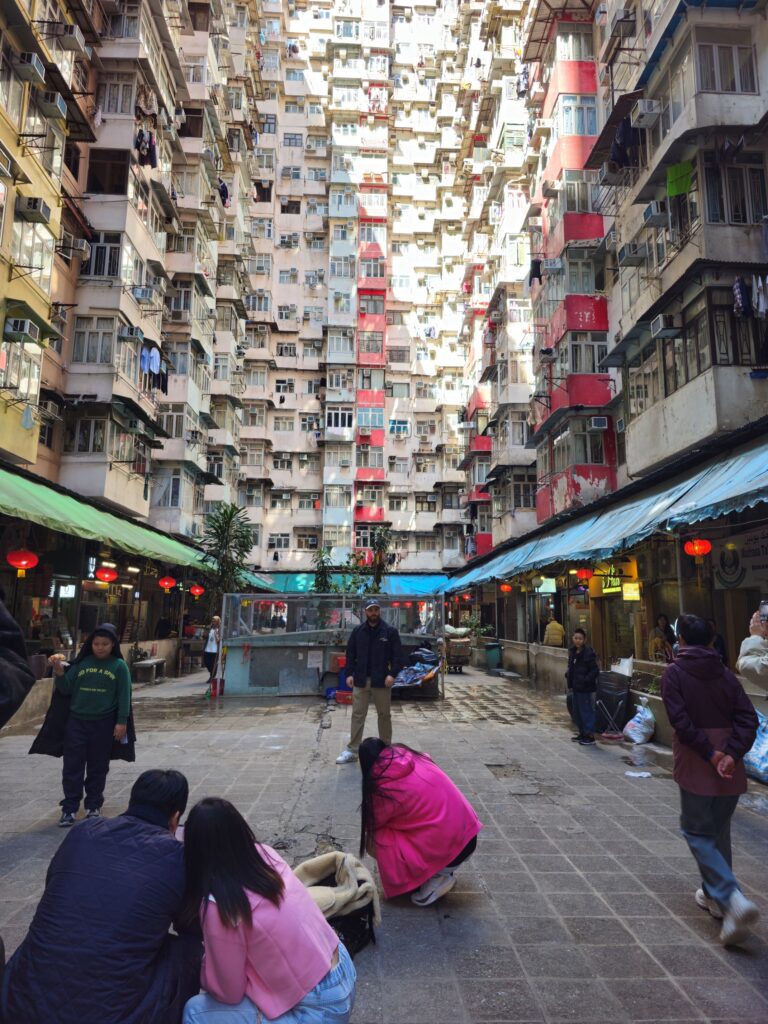
While not in Causeway Bay proper, the Monster Building (Montane Mansions) in Quarry Bay — one MTR stop east on the Island Line — is conveniently combined with a Causeway Bay visit, and the January itinerary did exactly this: Monster Building first, then MTR west one stop to Causeway Bay.
The Monster Building is a complex of five interconnected residential towers that, when viewed from the inner courtyard, creates one of the most visually striking architectural sights in Asia. The stacked layers of apartments, walkways, and windows climbing impossibly high above the courtyard have made it one of the most photographed places in Hong Kong — and the experience in person communicates a scale that photographs consistently underrepresent.
Getting there: MTR to Tai Koo station (one stop east of Causeway Bay), then a five-minute walk to Fook Cheung Street. Enter the inner courtyard and look up.
Visiting respectfully: The Monster Building is an active residential complex — people live here. Keep noise to a minimum, stay in the open courtyard areas, and be considerate of residents. Most visitors spend 20–30 minutes.
Combining with Causeway Bay: The natural sequence is Monster Building first (morning or early afternoon when the light comes into the courtyard), then MTR one stop west to Causeway Bay for the afternoon. This is the route I took in January and it works well as a half-day circuit.
Where to Eat in Causeway Bay
Bakehouse
Covered above — the essential Causeway Bay food stop for egg tart enthusiasts and anyone interested in the better end of Hong Kong’s bakery culture.
Dim Sum at the Neighborhood’s Restaurants
Causeway Bay has numerous dim sum restaurants ranging from casual local operations to more formal establishments in the mall complexes. The streets immediately around the MTR station and in the Lee Garden area have several reliable options. For the best value dim sum in the broader neighborhood, One Dim Sum in nearby Prince Edward remains the benchmark — but Causeway Bay’s own options are adequate for anyone who doesn’t want to travel further.
Street Food on Jardine’s Crescent and Bazaar
The market street area around Jardine’s Crescent has street food stalls operating alongside the clothing vendors — curry fish balls, egg waffles, and grilled meats from carts that have been in consistent locations for years. The quality follows the Hong Kong street food rule: busiest stalls with highest turnover are most reliable.
The Mall Restaurant Floors
Hysan Place, Times Square, and Lee Garden all have substantial restaurant offerings on their upper floors covering Japanese, Chinese, Western, and various Asian cuisines at mid-range to higher price points. Convenient, reliable, and air-conditioned — practical options for any meal during a shopping day.
Getting from Causeway Bay to Victoria Peak
The combination of a Causeway Bay afternoon followed by an evening at Victoria Peak is one of the best sequences available in Hong Kong — the neighborhood provides an active afternoon, and the Peak provides an atmospheric evening endpoint.
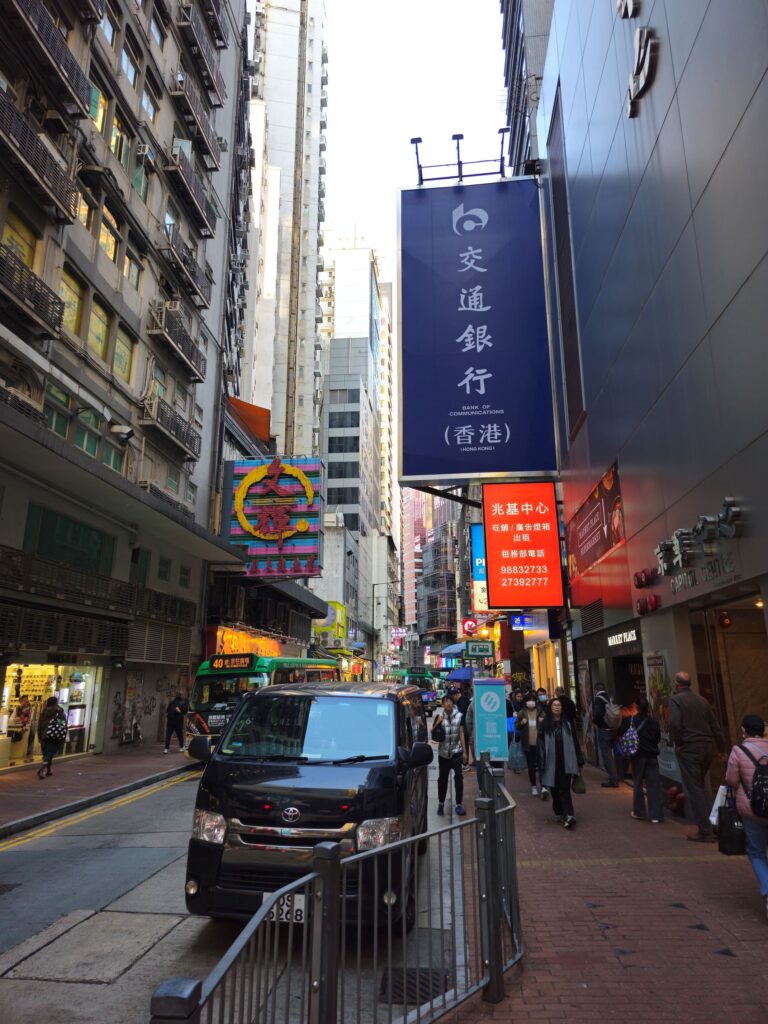
Bus 56 runs from Causeway Bay directly to the Peak Tram lower terminus — a scenic ride through the Mid-Levels that takes approximately 20–25 minutes and deposits you at the tram station without requiring a transfer in Central. I took this route in January and found it straightforward — the bus stop is clearly signed and the route is reliable.
The Peak Tram then carries you to the Peak Tower in about 7 minutes. Evening visits (from around 6pm onward) offer the transition from golden afternoon light to full city illumination — the most impressive version of the Peak experience. Bus 15 returns from the Peak to Central Bus Terminus after the visit.
A Half-Day Causeway Bay Itinerary
Based on the actual January visit, here’s the most efficient half-day sequence:
Afternoon arrival (post-lunch from elsewhere)

1:00pm   MTR from Quarry Bay (Tai Koo)
          to Causeway Bay
          (or arrive directly if not doing
          Monster Building)

1:15pm   Hysan Place — upper floors,
          art installations, terrace views,
          browse retail (45 minutes)

2:00pm   Bakehouse — egg tart purchase
          and immediate consumption outside

2:15pm   Jardine's Crescent and Bazaar —
          full street walk, street food,
          local market atmosphere (30 minutes)

2:45pm   Lee Garden — browse, lunch/coffee
          if needed (30–45 minutes)

3:30pm   Victoria Park — short walk,
          decompression from mall intensity
          (30 minutes)

4:15pm   Bus 56 from Causeway Bay
          to Peak Tram terminus

5:00pm   Peak Tram to Peak Tower

          Evening at Victoria Peak —
          sunset and night view

8:30pm   Bus 15 back to Central
Causeway Bay vs Other Hong Kong Shopping Areas
| Causeway Bay | Tsim Sha Tsui | Central | |
|---|---|---|---|
| Shopping volume | ✅ Highest | ✅ High (tourist) | ⚠️ Luxury focus |
| Local character | ✅ Strong | ⚠️ Tourist-facing | ⚠️ International |
| Street markets | ✅ Jardine’s area | ✅ Temple Street | ❌ Limited |
| Food variety | ✅ Excellent | ✅ Good | ✅ Best range |
| Harbor views | ⚠️ Limited | ✅ Excellent | ✅ Good |
| Best for | Shopping + eating | First-timer base | Culture + dining |
Practical Tips for Causeway Bay
- MTR exit: Exit D4 for Times Square and the main retail area; Exit E for Jardine’s Crescent and the market streets
- Weekday vs weekend: Weekend Causeway Bay is significantly more crowded — weekday afternoons are more manageable for shopping
- Bakehouse timing: The egg tarts are best eaten immediately after purchase — plan the Bakehouse stop as a standalone moment rather than buying to eat later
- Bus 56 to Peak: Confirms departure from the Causeway Bay bus stop on Yee Wo Street — check the stop location before heading there
- Victoria Park: Most atmospheric in the early morning and late afternoon — a midday visit in summer heat is less rewarding
- Tram option: The Hong Kong tram running along Hennessy Road through Causeway Bay is worth taking at least once — slow, cheap, and gives a street-level perspective unavailable from the MTR
Final Thoughts
Causeway Bay is the neighborhood that demonstrates Hong Kong’s retail culture at its most concentrated — the mall towers, the market streets, the bakeries, and the street food all operating simultaneously within a few blocks. It’s not the most atmospheric neighborhood in the city, and it doesn’t have the harbor views of Tsim Sha Tsui or the layered history of Central. What it has is an energy and a completeness of shopping culture that rewards a half-day of purposeful exploration.
Eat the egg tart at Bakehouse immediately after buying it. Walk Jardine’s Crescent for the local market atmosphere. Take bus 56 to the Peak in the evening. And understand that Causeway Bay at full Saturday intensity — every mall entrance busy, every street full, the neighborhood operating at its designed capacity — is itself a Hong Kong experience worth having once.
Tsim Sha Tsui Travel Guide: The Best Neighborhood in Hong Kong for First-Timers
Hong Kong Food Guide: What to Eat and Where