
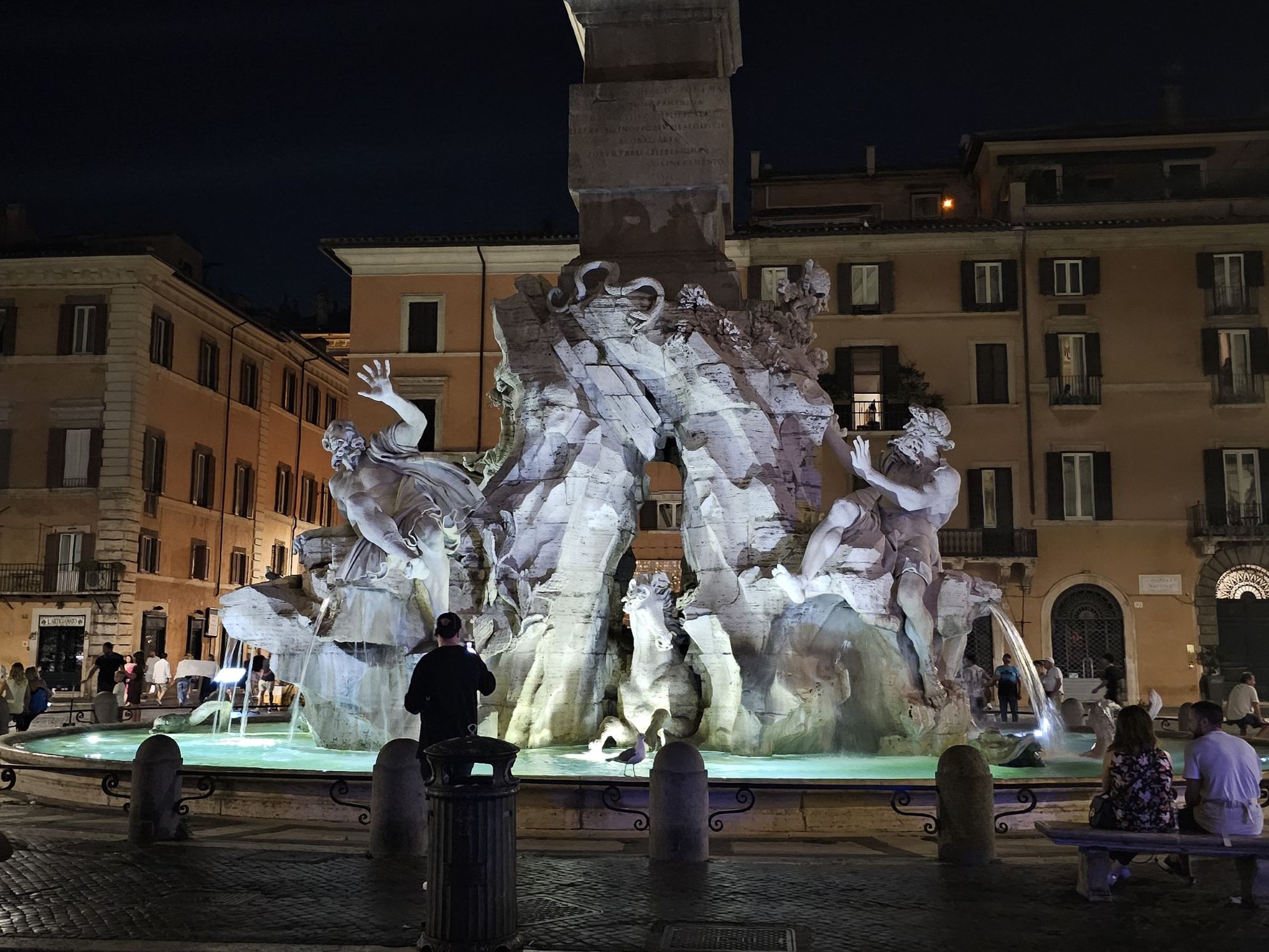
Few public spaces in Rome rival the charm and historical layering of Piazza Navona. Located in the heart of the city’s Centro Storico (historic center), this bustling, oblong-shaped square is a celebration of Baroque art, architecture, and Roman life itself. With its trio of magnificent fountains, vibrant atmosphere, and centuries of cultural evolution, Piazza Navona is a place where history, beauty, and local color converge in spectacular fashion.
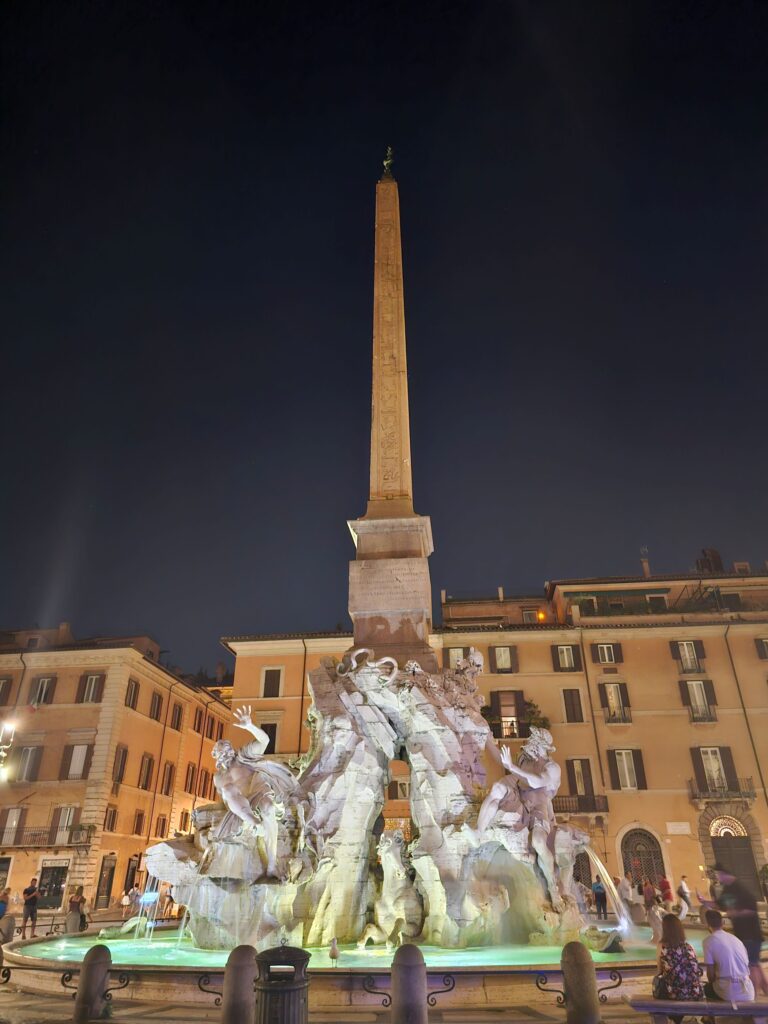
Origins and Historical Evolution
Piazza Navona stands atop the ancient Stadium of Domitian (Stadio di Domiziano), commissioned in 80 AD by Emperor Domitian as a venue for athletic contests, known as agones. The stadium was a massive structure that could hold around 30,000 spectators and played a central role in Roman public life. The current elliptical shape of the piazza follows the contours of the original stadium, and some remnants of the ancient structure can still be viewed beneath the surface through guided tours.
Following the fall of the Roman Empire, the stadium fell into disuse, and during the medieval period, the site transformed into a lively market square. In the 15th century, it became one of Rome’s main marketplaces and retained this function until the late 19th century. It was during the Baroque period, particularly under Pope Innocent X in the 17th century, that Piazza Navona took on its modern form. He aimed to glorify his family name, Pamphilj, and commissioned grand architectural additions such as the Church of Sant’Agnese in Agone and the Fountain of the Four Rivers by Gian Lorenzo Bernini.
Piazza Navona soon evolved into a ceremonial and cultural centerpiece of Baroque Rome. At one point, the square would even be flooded during summer weekends for staged naval battles (naumachiae), highlighting the piazza’s use as both a public and theatrical space. These events ceased in the 19th century, but the tradition of public gathering and celebration continues to this day.

The Three Fountains: Artistic Highlights
The most celebrated feature of Piazza Navona is its trio of ornate fountains, each representing different moments in Rome’s artistic legacy.
- Fontana dei Quattro Fiumi (Fountain of the Four Rivers): Designed by Bernini in 1651, this theatrical centerpiece represents the four great rivers of the known continents at the time—the Nile (Africa), Ganges (Asia), Danube (Europe), and Rio de la Plata (Americas). Each river is personified by a muscular figure, surrounded by animals and plants symbolizing its native region. Atop the fountain rises an Egyptian-style obelisk, symbolizing Rome’s imperial grandeur and divine authority.
- Fontana del Moro: Located at the southern end, this fountain features a central figure of a Moor (African man) wrestling a dolphin, surrounded by four tritons. Originally designed by Giacomo della Porta in the late 1500s, the central figure was later added by Bernini. The playful interaction of water and figures gives the fountain a sense of dynamic energy.
- Fontana del Nettuno: At the northern end, the Fountain of Neptune depicts the sea god locked in battle with a sea monster, flanked by water nymphs and cherubs. While della Porta created the basic structure in the 16th century, it remained unfinished until 1878, when sculptors Antonio della Bitta and Gregorio Zappalà completed it to bring symmetry to the square.

The Church of Sant’Agnese in Agone
Directly facing Bernini’s grand fountain is the Church of Sant’Agnese in Agone, a Baroque masterpiece attributed to architects Girolamo Rainaldi, Carlo Rainaldi, and later Francesco Borromini. Built on the site where Saint Agnes is believed to have been martyred in the ancient stadium, the church’s name “in Agone” refers to the ancient games (agones) once held in the arena.
The church’s concave façade and twin bell towers exemplify Borromini’s flair for dynamic and harmonious design. The interior is equally impressive, adorned with marble columns, gilded stucco work, and frescoes that enhance the spiritual and artistic ambiance. The dome, which soars above the nave, is painted with a glorious depiction of the Holy Trinity and the glorification of Saint Agnes.
Beneath the church lies the crypt, said to be the exact site of Agnes’s martyrdom. Pilgrims and art enthusiasts alike are drawn to the intimate scale of the church’s chapels, which feature remarkable sculptures and paintings from the Baroque period. The church not only functions as a place of worship but also stands as a symbol of faith, architectural innovation, and the religious fervor of the 17th century.

A Hub of Life and Culture
Today, Piazza Navona is a magnet for artists, street performers, musicians, and vendors. Painters line the square offering portraits and landscapes, while musicians fill the air with classical and contemporary tunes. The square is also a popular gathering spot for both tourists and locals, with outdoor cafes and restaurants providing the perfect spot to relax and soak in the vibrant atmosphere.
Throughout the year, Piazza Navona plays host to various events and festivals, most notably the Christmas Market in December, where stalls sell handmade crafts, sweets, and decorations. The square’s festive lights and traditional carousel add an enchanting charm during the holiday season.

Cinematic and Literary Fame
The cinematic appeal of Piazza Navona has made it a favorite setting for filmmakers. It has appeared in numerous Italian and international films, including “Angels & Demons” based on Dan Brown’s novel, where the Fountain of the Four Rivers becomes a dramatic location. Its romantic and dramatic aura also finds frequent mention in literature and travel writing, reinforcing its iconic status.
Practical Tips for Visitors
While the square is free to access and open at all times, it’s best enjoyed in the early morning or late evening when the crowds are thinner and the light bathes the fountains and buildings in a golden glow. Visitors are encouraged to explore the surrounding alleys and streets, which are full of artisan boutiques, historic gelaterias, and tucked-away churches.
Nearby attractions include the Pantheon, Campo de’ Fiori, and the Church of San Luigi dei Francesi, which houses stunning Caravaggio paintings. From Piazza Navona, many of Rome’s landmarks are within walking distance, making it a great starting point for a historical walking tour of the Eternal City.

Final Thoughts
Piazza Navona is more than a public square—it’s an immersive experience of Roman history, Baroque artistry, and contemporary vibrancy. Whether you’re admiring Bernini’s dramatic sculptures, sipping espresso in a nearby café, or enjoying the performance of a street artist, this historic piazza invites you to pause and appreciate the timeless charm of Rome.
Practical Information
- Address: Piazza Navona, 00186 Rome, Italy
- Opening Hours: Open 24/7; public space
- Entrance Fee: Free
- Website: https://www.turismoroma.it/it/luoghi/piazza-navona
Trevi Fountain, Rome: A Timeless Masterpiece of Baroque Art
Discover the Charm of Piazza di Spagna, Spanish Steps and Trinità dei Monti in Rome