
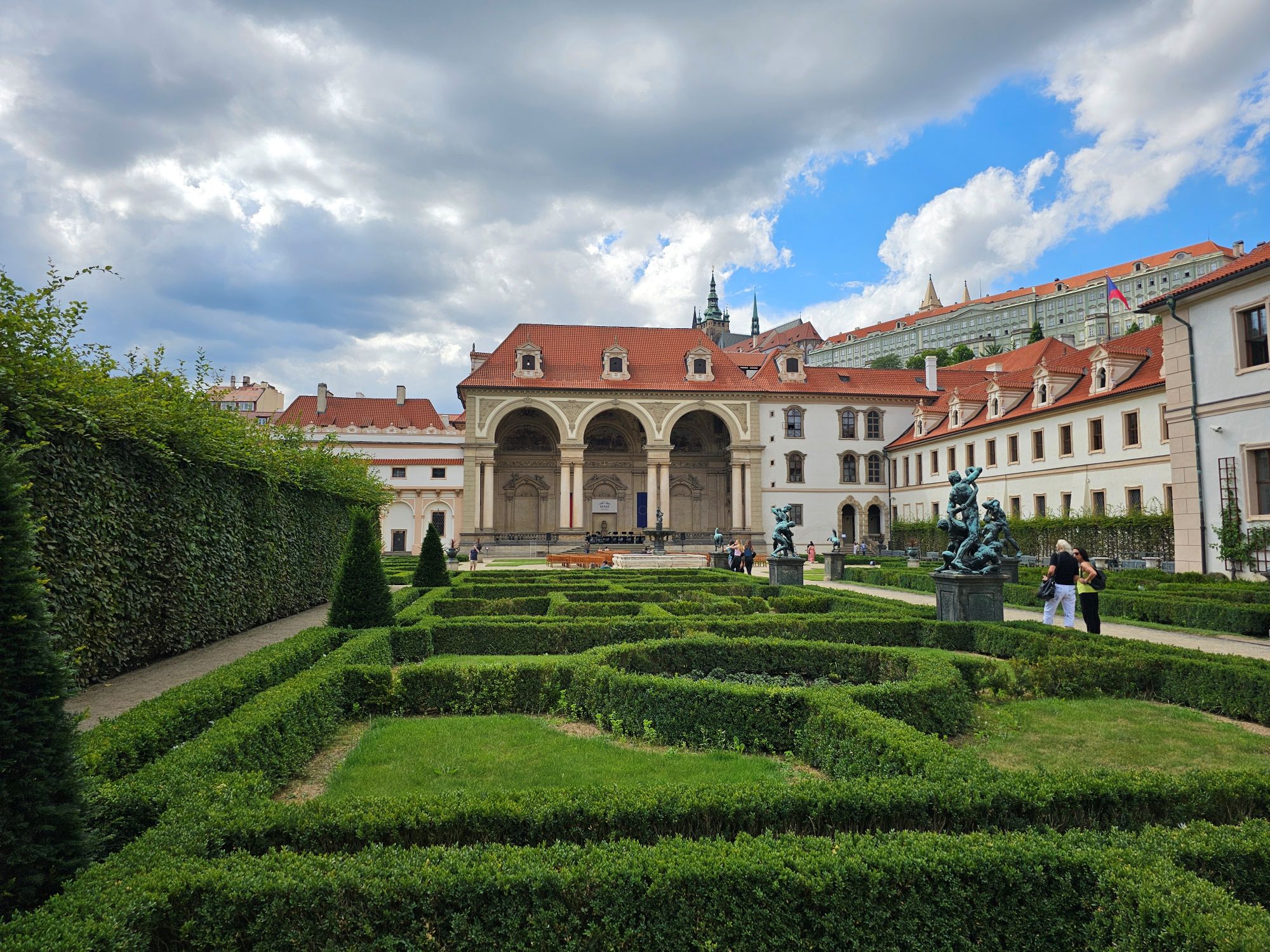
When you walk through Prague’s Malá Strana (Lesser Town), nestled between cobbled alleys and historic facades, you may stumble upon a lesser-known yet awe-inspiring site: Wallenstein Palace (Valdštejnský palác). Though overshadowed by the towering Prague Castle nearby, this early Baroque masterpiece holds a unique place in Czech history—not only for its ornate architecture and grand gardens, but also as the current seat of the Czech Senate. More than just a political building, it is a public treasure blending art, history, and tranquility.

Origins Rooted in Ambition and Power
Wallenstein Palace was constructed between 1623 and 1630 by Albrecht von Wallenstein, a powerful Bohemian nobleman and military commander during the Thirty Years’ War. Following a meteoric rise to prominence through land acquisitions and loyalty to the Habsburgs, Wallenstein envisioned a residence so grand it could rival—and symbolically counterbalance—the imperial Prague Castle itself.
To realize his ambitious dream, he purchased and demolished 25 houses, multiple gardens, and even a part of the city’s fortification walls. This large-scale redevelopment allowed him to construct what became one of the first large Baroque complexes in Prague. His intention wasn’t just residential—he wanted the palace to be a demonstration of might, taste, and cultural sophistication.
Designed by Italian architect Andrea Spezza and featuring the contributions of several other Italian artists, including Giovanni Pieroni and Nicolo Sebregondi, the palace’s design combined Italian Baroque aesthetics with local artistic traditions. Tragically, Wallenstein was assassinated in 1634—just a few years after the palace’s completion—on suspicions of political ambition and treachery.

Architectural Highlights
Wallenstein Palace’s architecture is bold and theatrical. Dominated by the Sala Terrena, a magnificent three-arched open-air pavilion with painted ceilings and massive Corinthian columns, the building reflects the Baroque era’s love for symmetry, illusion, and grandeur.
The interior is equally rich in detail. The Main Hall features elaborate ceiling frescoes that glorify Wallenstein, painted by Baccio Bianco. Other highlights include the Knight’s Hall and the St. Wenceslas Chapel, adorned with stucco and symbolic art that reflect both martial strength and divine protection.
The overall layout was revolutionary for its time, inspired by the Italian villa model, blending indoor and outdoor spaces seamlessly. Frescoes, sculptures, and decorative elements all worked in concert to promote the power and legacy of its ambitious patron.

A Garden of Sculptural Beauty
Adjacent to Wallenstein Palace is the Wallenstein Garden (Valdštejnská zahrada), a perfectly manicured oasis in the heart of Malá Strana. Laid out in the Italian Baroque style, the garden features symmetrical hedges, tree-lined paths, and elegant fountains. Particularly captivating is the artificial grotto wall, with its mysterious stalactite-like forms and hidden animal sculptures.
Today, visitors can walk freely through the garden during the warmer months, typically April through October. The peaceful surroundings are enhanced by the presence of white peacocks, chirping birds, and the gentle splash of water from a large ornamental pond. It’s the perfect place to reflect or enjoy a casual lunch.
I personally found the garden to be an unexpected highlight. On my visit, the weather was perfect, and I sat under a linden tree, watching families wander and artists sketch the symmetrical beauty around them. The harmony between nature and structured form was both soothing and artistically impressive.

A Living Palace: Senate and Cultural Events
Since 1996, Wallenstein Palace has been home to the Czech Senate, the upper chamber of Parliament. It is not just an administrative building—it opens its doors to the public regularly for cultural enrichment. Free guided tours of selected rooms are available on Fridays and Mondays, by prior registration.
Even more striking is the palace’s commitment to the arts. When I visited, preparations were underway for an evening chamber music concert in the Sala Terrena. The palace hosts regular musical performances, concerts, and art events, taking advantage of its acoustically rich pavilions and scenic gardens. It felt deeply rewarding to witness a historical site remain vibrant and relevant in the city’s modern cultural life.
If you’re in Prague during the summer, check the Senate’s cultural program—there’s a good chance you’ll catch a live concert in one of the most atmospheric venues the city has to offer.

Practical Visiting Advice
- Entry: The garden is free and open to the public from April through October. Wallenstein Palace interiors are accessible on Saturdays or during Open Days (May 8 and October 28).
- Best Time to Visit: Weekdays in the early morning or late afternoon offer quieter experiences. Summer months are particularly beautiful in the garden.
- Photography: Allowed in the garden; no tripods. The Sala Terrena and pond are especially photogenic.
- Nearby Attractions: Combine your visit with Prague Castle, Charles Bridge, or Lennon Wall, all within walking distance.

Final Thoughts
While Prague is filled with towering Gothic churches and royal residences, Wallenstein Palace offers a more contemplative, artistic alternative. With its blend of political history, architectural splendor, cultural vitality, and serene gardens, it is a destination that speaks to both the mind and the soul.
If you visit Prague and want to escape the crowds while still immersing yourself in history and beauty, make time for Wallenstein Palace. And don’t skip the garden—it’s one of the most peaceful and photogenic places in the city.
Essential Information
Name: Wallenstein Palace (Valdštejnský palác)
Location: Valdštejnské náměstí 4, 118 01 Malá Strana, Prague, Czech Republic
Opening Hours:
- Palace: Saturdays (April–October), 9:00 AM – 4:00 PM
- Garden: April–October
- Mon–Fri: 7:30 AM – 7:00 PM
- Sat–Sun: 10:00 AM – 7:00 PM
Admission: Free
Access: Malostranská Metro Station (Line A), 5-minute walk
Website: www.senat.cz
Powder Tower (Prašná brána), A Gothic Gateway to Prague’s Glorious Past
Restaurace U Dvou velbloudů: Where Classic Czech Flavors Shine in the Heart of Prague