

In the heart of Valencia’s old town, between Plaza de la Reina and Plaza de la Virgen, stands one of Spain’s most fascinating and spiritually charged landmarks — the Valencia Cathedral (Catedral de Santa María de Valencia).
This monumental church is more than a place of worship; it is a living chronicle of European history, a dialogue between faith and architecture, and the legendary home of the Holy Grail — the cup said to have been used by Jesus Christ at the Last Supper.
When I first approached the cathedral, the sunlight reflected off its golden limestone walls, casting a warm glow on the intricate Gothic carvings. The air was filled with the sound of bells from the nearby Miguelete Tower, echoing through the narrow streets of Valencia’s historic center. It was one of those rare moments when history and the present seemed to merge completely.
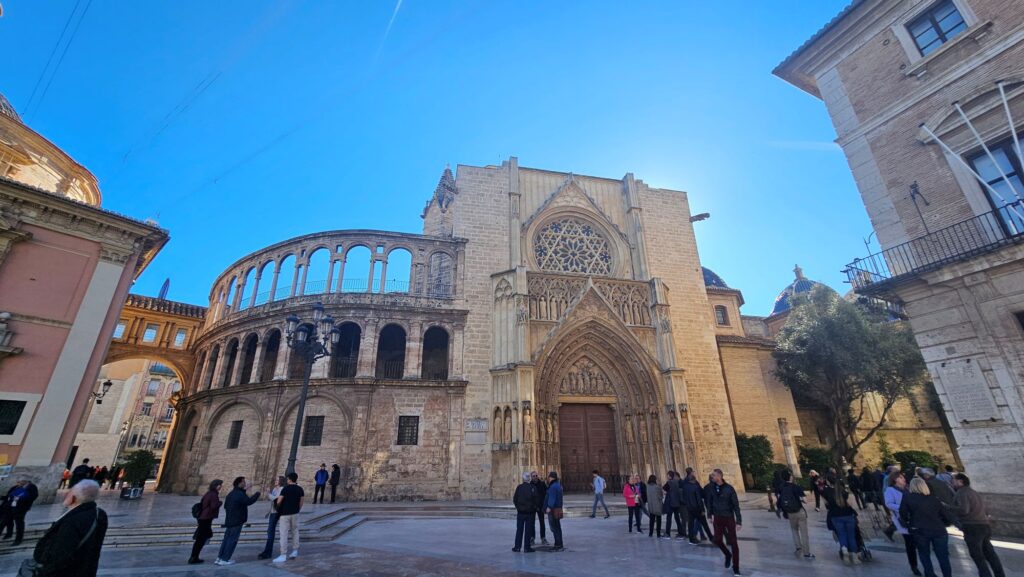
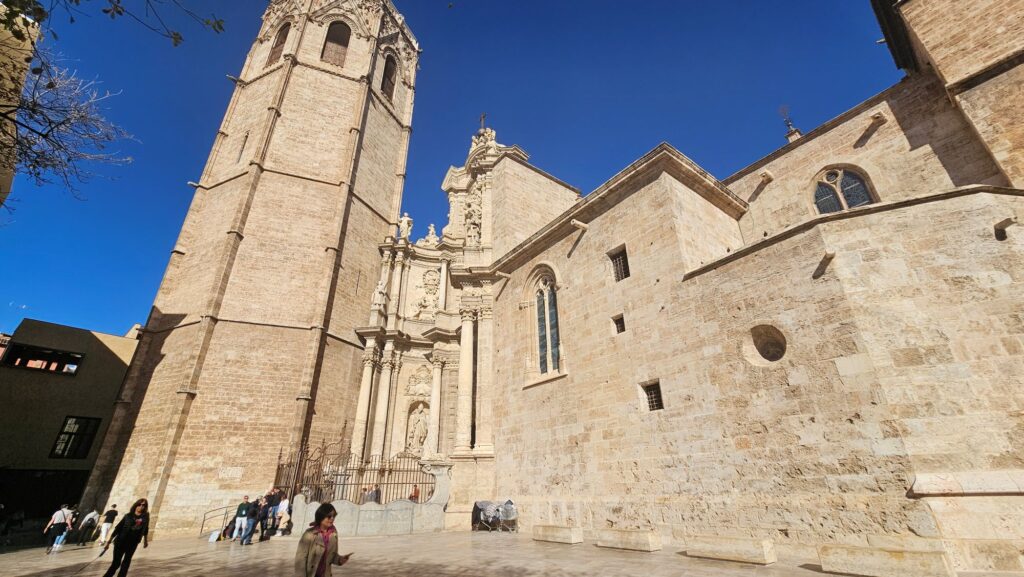
A Sacred Site with Deep Roots
The story of the Valencia Cathedral begins long before its foundation stone was laid in the 13th century. The site has always been sacred ground. In ancient Roman times, it housed a temple dedicated to Jupiter. Later, during the Visigothic era, a Christian church was built here, only to be replaced by a mosque after the Moors conquered the Iberian Peninsula.
When King James I of Aragon recaptured Valencia from Moorish rule in 1238, he ordered the mosque to be consecrated as a Christian church. Construction of a new cathedral began soon after, officially starting in 1262. Over the centuries, additions and renovations introduced elements of Romanesque, Gothic, Renaissance, Baroque, and Neoclassical architecture — turning the building into a visual timeline of European styles.
Today, Valencia Cathedral is primarily Valencian Gothic, a regional interpretation of the broader Gothic movement characterized by slender columns, ribbed vaults, and ornate facades that soar toward the heavens. Yet, its eclectic layers tell a story of faith evolving through time.
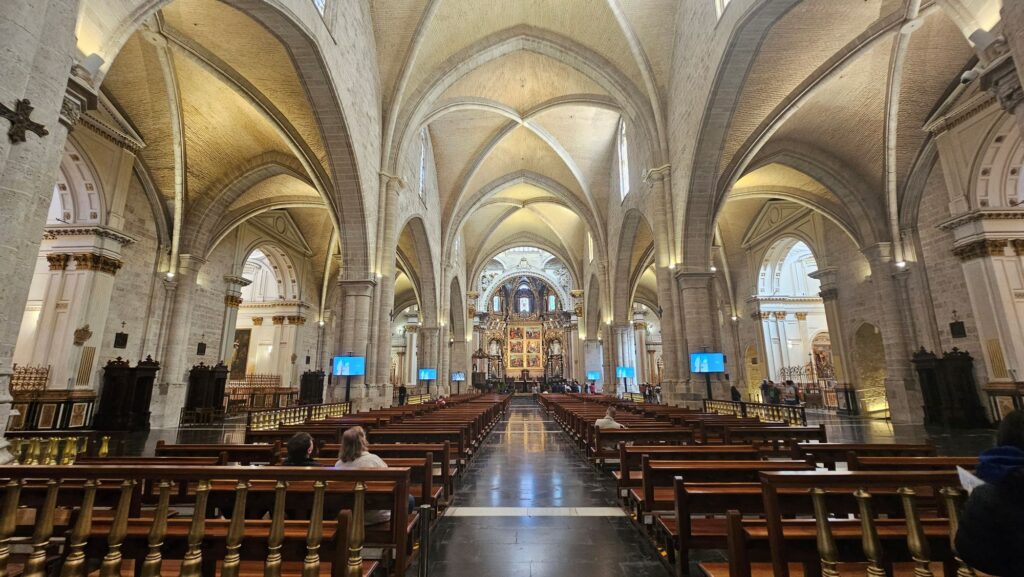
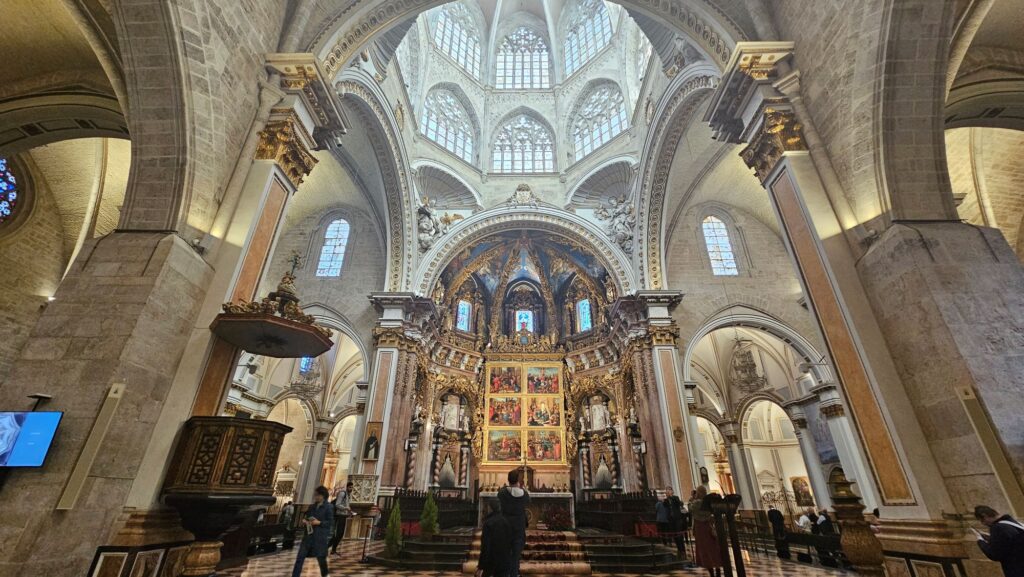
Architectural Wonders
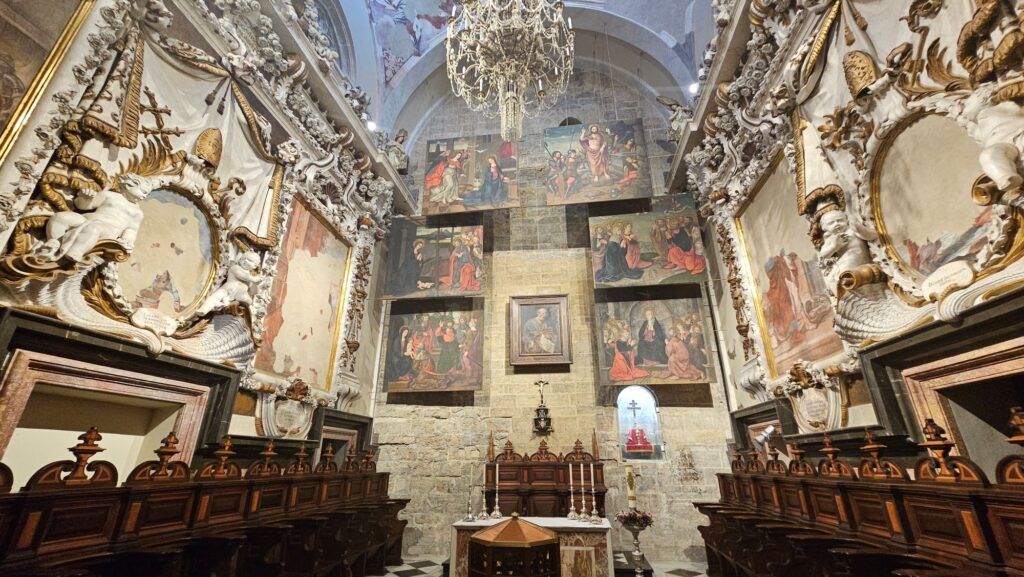
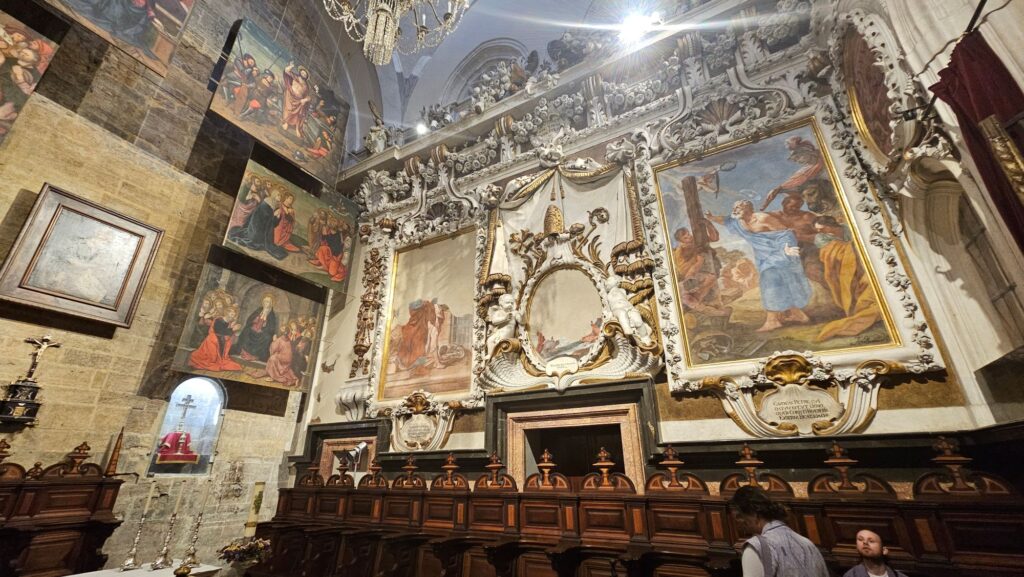
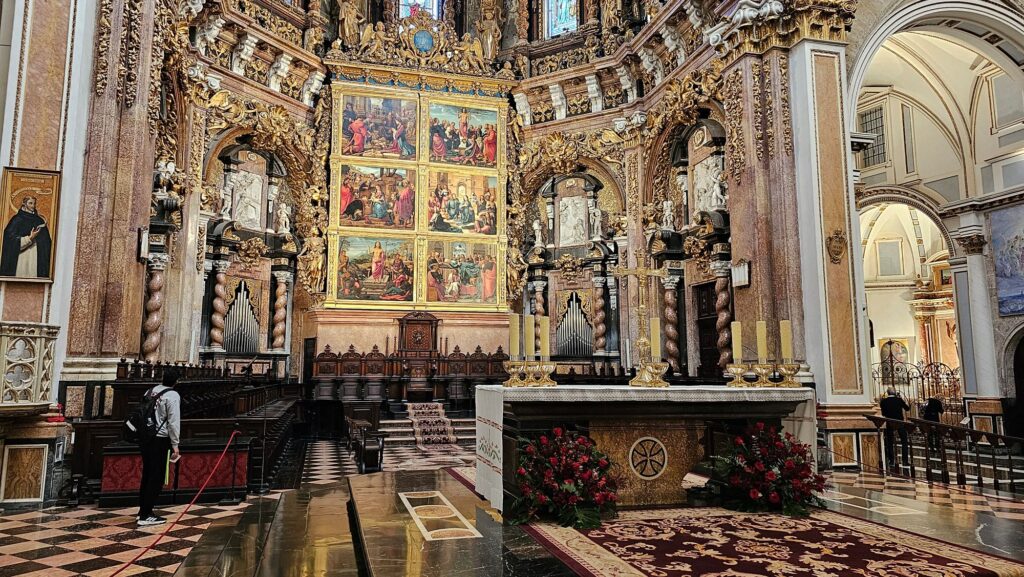
Stepping inside the cathedral feels like entering a vast museum of sacred art and architecture. The building’s Latin-cross plan leads visitors through a maze of chapels, frescoes, and altarpieces.
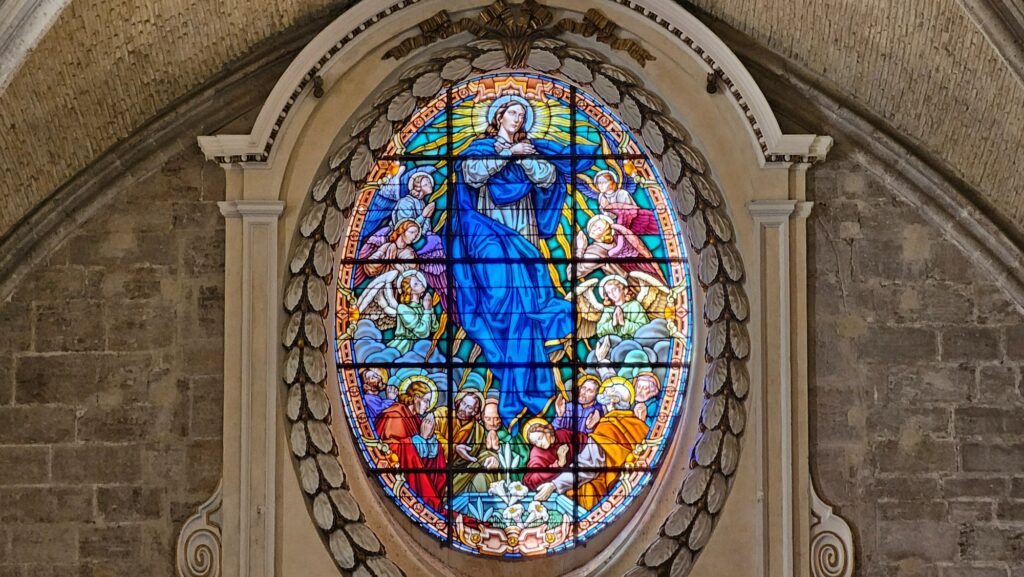
Each corner reveals something different — a Renaissance archway here, a Baroque altar there — all harmonized by the steady rhythm of light filtering through the stained-glass windows.
The main façade on Plaza de la Reina features Baroque ornamentation that contrasts dramatically with the Romanesque Door of the Palau on the east side and the Gothic Apostles’ Door (Puerta de los Apóstoles) on the west, which opens onto Plaza de la Virgen. This mix of styles doesn’t feel inconsistent; rather, it embodies Valencia’s multicultural past, where every century left its signature.
Perhaps the most iconic feature is the Miguelete Tower (known locally as El Micalet), the cathedral’s bell tower. Constructed between 1381 and 1429, the octagonal tower rises 63 meters above the city. Climbing its 207 spiral steps rewards you with breathtaking panoramic views over Valencia — from the shimmering Mediterranean Sea to the rooftops of the historic district. When the bells toll, you can feel their vibrations through the stone itself — a sound that seems to connect the entire city.
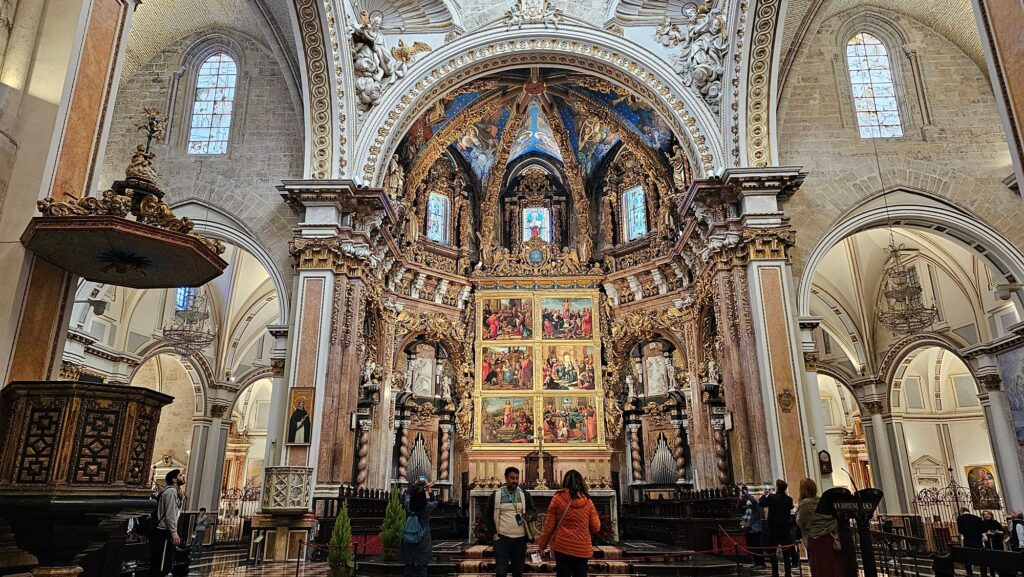
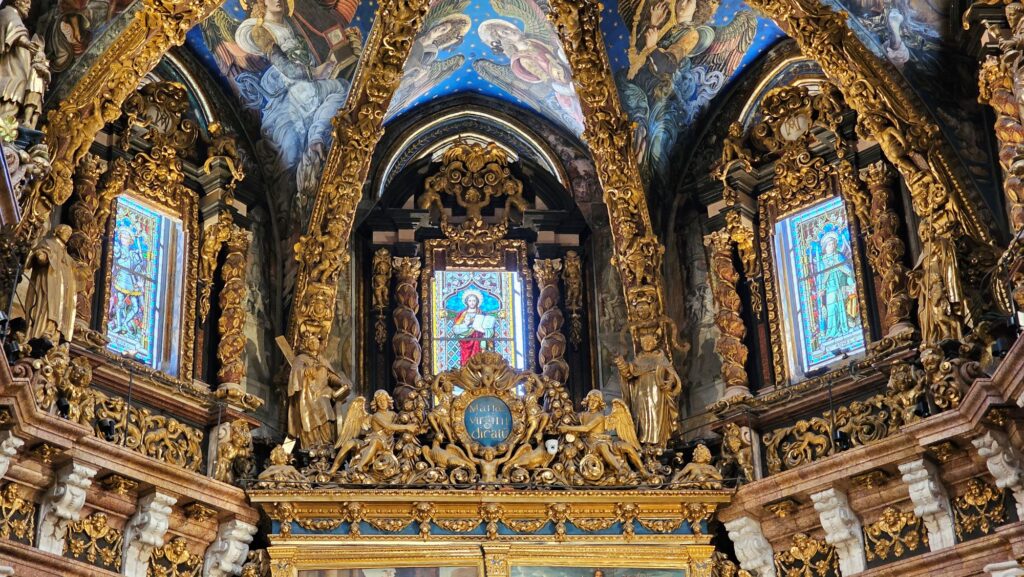
Inside, the high altar dazzles with golden light. Behind it, intricate paintings by Fernando Yáñez de la Almedina and Fernando de los Llanos, both disciples of Leonardo da Vinci, depict scenes from the life of the Virgin Mary. The delicate detailing of their Renaissance brushwork is a reminder that art here was not merely decoration but devotion.
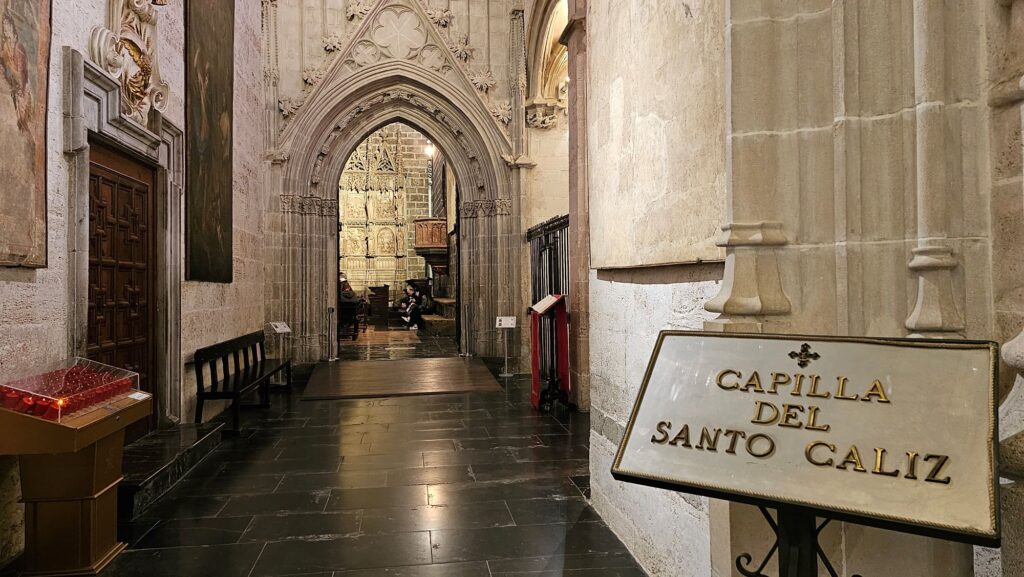
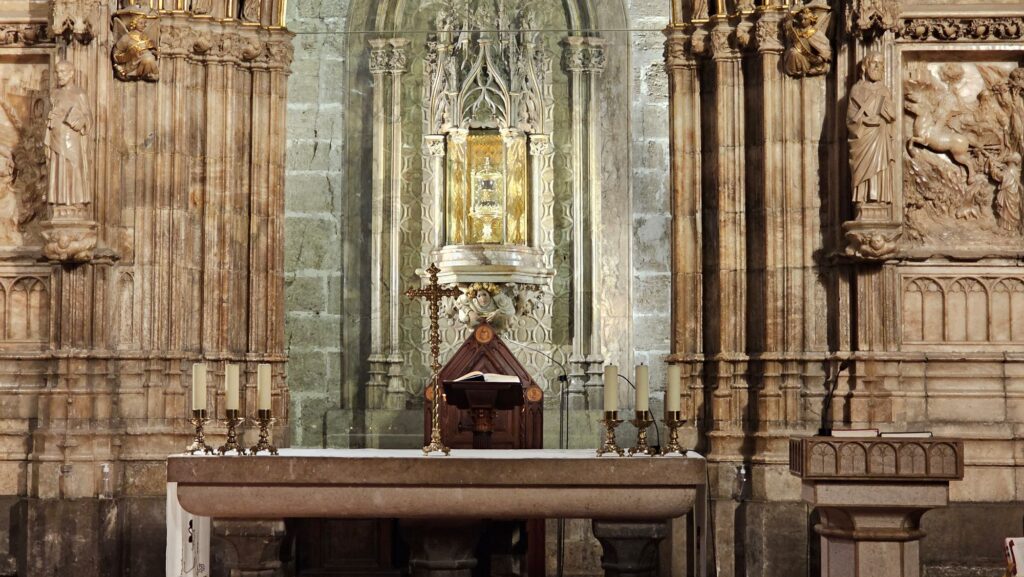
The Chapel of the Holy Chalice
For many visitors, the most awe-inspiring moment comes when stepping into the Capilla del Santo Cáliz — the Chapel of the Holy Chalice.
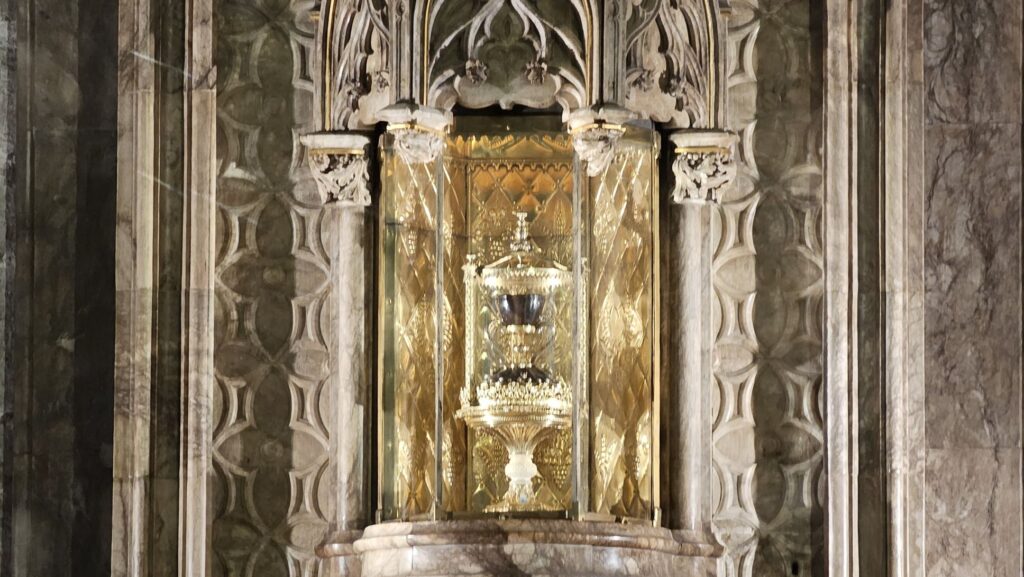
Within its vaulted, star-shaped ceiling, lit by soft rays of filtered sunlight, rests a small but extraordinary relic: a dark red agate cup mounted on an ornate gold stem. Tradition holds that this is the Holy Grail, the cup used by Christ during the Last Supper and later brought to Spain by St. Peter and St. Lawrence.
The chalice itself has been examined by historians and archaeologists. The cup portion dates back to the 1st century BCE and originates from the Middle East, while the base and handles were added later during the Middle Ages. While its authenticity as the Holy Grail cannot be proven beyond doubt, the object’s antiquity and provenance have convinced many believers — including several popes, such as Benedict XVI, who celebrated Mass with it in 2006.
Whether or not one believes in the legend, standing before the chalice feels profoundly moving. It symbolizes continuity — a tangible link between the earliest Christians and the faithful who fill the cathedral today.
The Atmosphere and My Experience
When I entered Valencia Cathedral in the late afternoon, sunlight streamed through the high windows, creating a mosaic of color across the stone floor. The interior was quiet except for the echo of footsteps and the faint murmur of prayer. I sat for a while beneath the dome, where angels painted centuries ago seemed to hover weightlessly in the golden light.
Visiting the Chapel of the Holy Chalice was an unforgettable experience. The atmosphere was reverent but peaceful — the kind of stillness that invites reflection. I watched as pilgrims and tourists alike stood silently before the relic, each person caught between history and faith.
Later, I climbed the Miguelete Tower. The steps were narrow and worn smooth by centuries of use, but the reward was extraordinary. From the top, the entire city unfolded like a tapestry: terracotta rooftops, the turquoise dome of the Basilica de la Virgen, and, in the distance, the glimmering Mediterranean. The sound of the bells above me was both thunderous and soothing — as if the city itself were breathing.
As the sun began to set, the sky turned to soft orange and lavender. The cathedral’s façade glowed warmly against the twilight, and the square outside filled with laughter and chatter. It was easy to imagine how countless generations had ended their days this way — gathering near the same stone walls, watching the same fading light.
Cultural and Spiritual Significance
The Valencia Cathedral isn’t just a monument of stone; it’s a living symbol of the city’s identity. It reflects Valencia’s history as a crossroads of civilizations — Roman, Muslim, and Christian — and embodies the coexistence of art, faith, and community.
Each architectural style marks a new chapter in that story: the Gothic ambition of the Middle Ages, the Renaissance curiosity for human beauty, the Baroque passion for divine emotion, and the Neoclassical longing for order. Together, they form a symphony of devotion and artistry that transcends time.
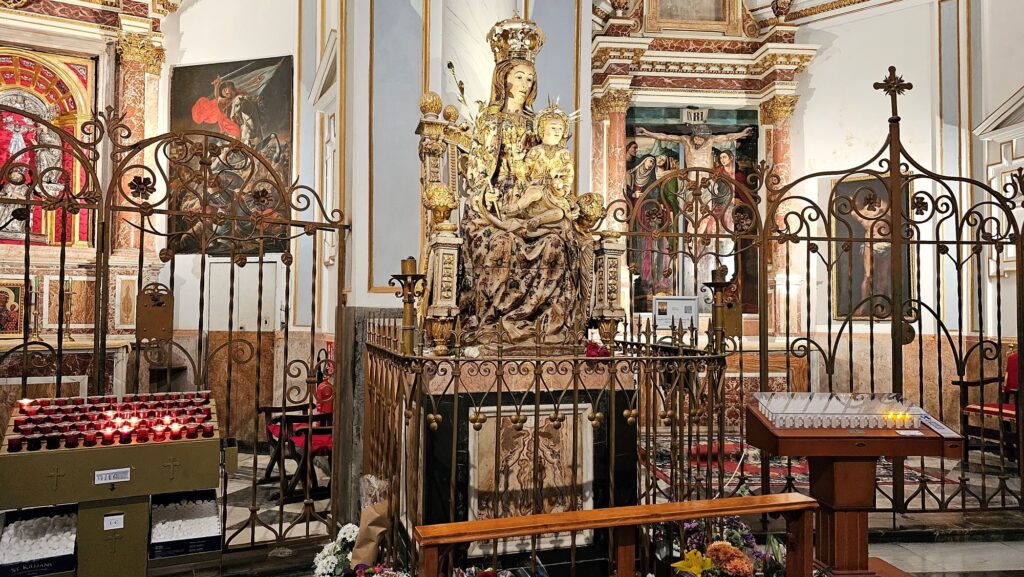
Moreover, the cathedral remains a place of active worship. Locals attend Mass here daily, and religious festivals like the Feast of the Holy Chalice draw thousands each year. Yet even for non-religious visitors, the building offers something universal: an encounter with history, light, and silence that feels profoundly human.
Tips for Visiting
Best Time to Visit: Morning visits are ideal for photography and quiet reflection, while late afternoon light highlights the Gothic details. Sunset from the Miguelete Tower is breathtaking.
Dress Code: Shoulders and knees should be covered — the cathedral is an active place of worship.
Tickets: Entrance includes access to the main cathedral, museum, and tower. Expect to spend at least 1–1.5 hours inside.
Accessibility: The main level is accessible to visitors with limited mobility, though the tower requires climbing stairs.
Nearby Attractions: Plaza de la Reina, Plaza de la Virgen, Basilica de la Virgen de los Desamparados, and the Central Market are all within a few minutes’ walk.
Practical Information
Name: Valencia Cathedral (Catedral de Santa María de Valencia)
Address: Plaza de la Almoina, s/n, 46003 Valencia, Spain
Notable Features: The Holy Chalice, Miguelete Tower, Gothic Apostles’ Door, Baroque main façade
Architectural Styles: Valencian Gothic with Romanesque, Renaissance, Baroque, and Neoclassical elements
Opening Hours: Monday–Saturday 10:00–18:30; Sunday and holidays 14:00–18:30 (may vary seasonally)
Admission: Around €8 including tower and museum access
Nearest Metro: Colón or Xàtiva (both about 10–12 minutes on foot)
Website: www.catedraldevalencia.es
Mercado Central de Valencia: Where the Soul of the City Lives in Every Stall
Reial Basílica de la Mare de Déu dels Desemparats, Valencia: A Sanctuary of Mercy and Devotion