
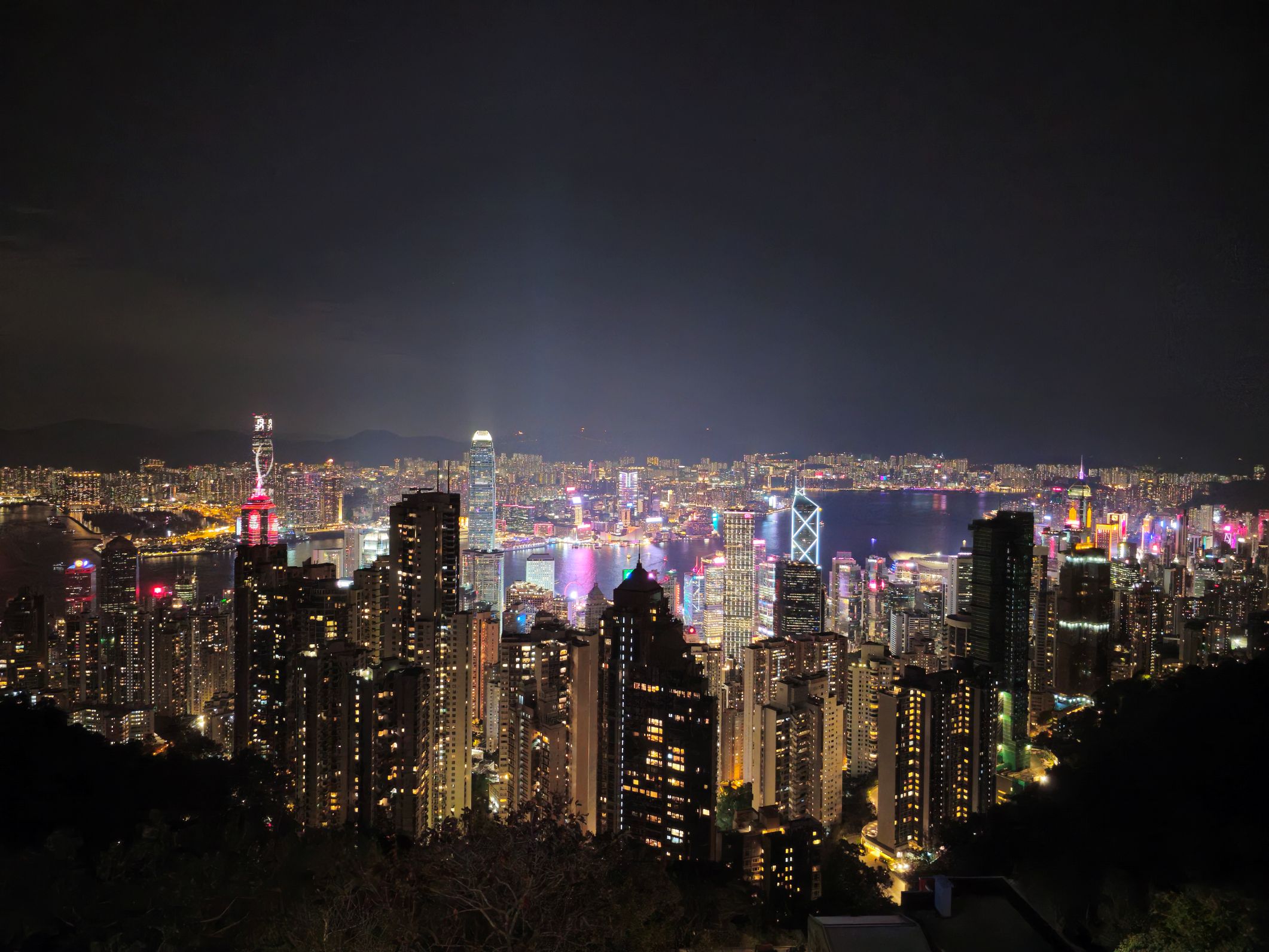
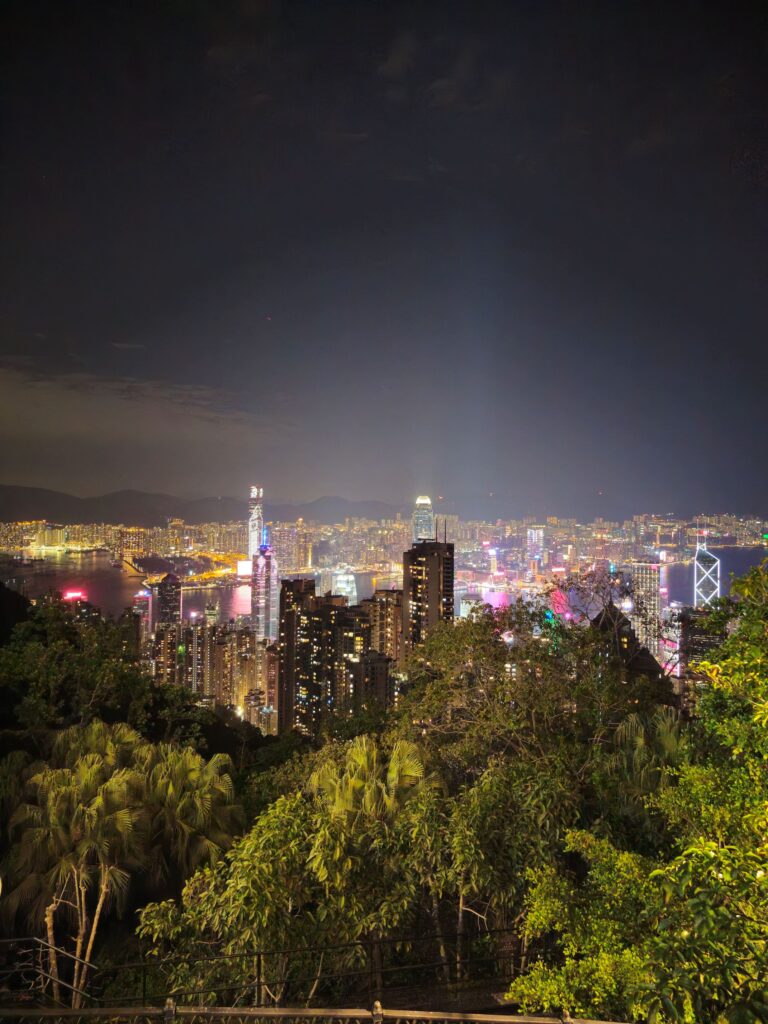
There are things you think you know about Hong Kong before you visit, and Victoria Peak at night is one of them. The photographs are everywhere — the illuminated skyline spread below, the harbor reflecting the tower lights, the density of the city visible from above in a way that makes it look almost unreal. I visited on the evening of my fourth day in Hong Kong, taking the 56 bus from Causeway Bay to the Peak Tram terminus and ascending as the city was moving from late afternoon into full evening illumination. The view from the top, in January’s clear winter air, was more impressive than the photographs suggested — and the photographs set a high bar.
This guide covers the evening Peak experience specifically — how to get there, when to go, what to expect, and the practical details that make the difference between a good visit and an exceptional one.
Why Visit the Peak at Night?
Victoria Peak is worth visiting at any time of day, but the evening visit is the most rewarding version for most people. The reasons are specific and worth understanding before planning your timing.
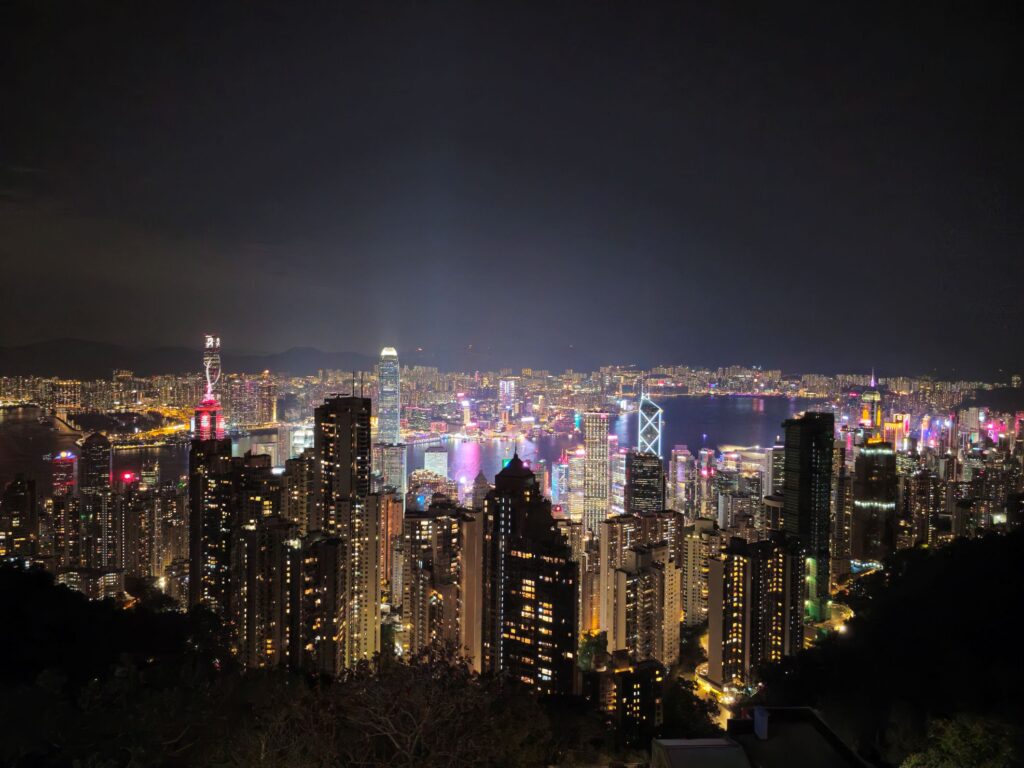
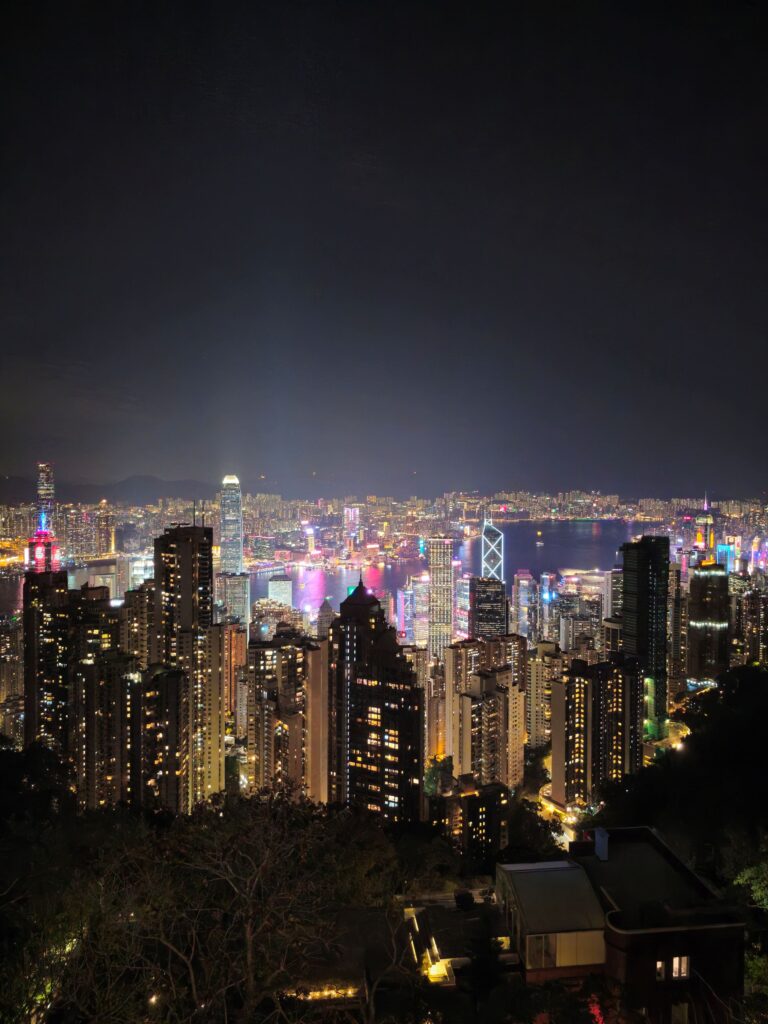
The city illumination: Hong Kong’s skyline is impressive in daylight — the density and scale of the towers is apparent in any light. After dark, with every building illuminated and the harbor reflecting the lights from below, the view takes on a different quality. The city becomes legible in a new way: individual towers identifiable by their light patterns, the harbor’s width apparent from the reflections, and the full sweep of the urban area visible from Tsai Sha Tsui in the north to the hillside neighborhoods in all directions.
The winter clarity: My January visit benefited from conditions specific to winter — clear, dry air with excellent visibility that summer’s heat and humidity don’t provide. The winter skyline from the Peak is sharper and more detailed than the summer version, and the cooler evening temperatures make extended outdoor viewing comfortable rather than exhausting. The combination of winter clarity and evening illumination produces the most impressive version of the Peak view available.
The crowd timing: The Peak’s busiest period is the afternoon — tour groups and day visitors filling the tram and the viewing platforms from roughly 11am to 5pm. Evening visits, particularly on weekdays, are significantly less crowded. By 7pm the day-trip crowds have largely dispersed, and the viewing areas feel manageable rather than overwhelming.
The golden hour transition: Arriving at the Peak before sunset and staying through the first hour of darkness gives you the full transition — the city in warm afternoon light, the gradual onset of the illumination as the sky darkens, and the fully lit night view. This sequence, experienced from a single vantage point over about 90 minutes, is one of the most visually complete Hong Kong experiences available.
Getting to the Peak: The January Route
Bus 56 from Causeway Bay
The route I used in January — Bus 56 from Causeway Bay to the Peak Tram lower terminus — is one of the most practical options for reaching the Peak from the Hong Kong Island side, and considerably less well-known than the standard MTR-to-Peak Tram sequence.
The 56 bus runs from Causeway Bay through the Mid-Levels residential neighborhoods, climbing the hillside above Central before depositing passengers directly at the Peak Tram lower terminus on Garden Road. The journey takes approximately 25 minutes and the route through the hillside streets — narrow roads lined with apartment buildings and occasional glimpses of the harbor below — gives a sense of the residential Hong Kong that sits between the commercial waterfront and the Peak itself.
Departure point: The 56 bus stop in Causeway Bay is on Yee Wo Street near the Causeway Bay MTR station — check Google Maps for the exact stop location, as bus stops in this area can be close together and easy to confuse.
Why this route works: After an afternoon in Causeway Bay, the 56 bus provides a direct connection to the Peak Tram without requiring a return to Central and a separate connection — saving time and avoiding the Causeway Bay rush-hour crowds on the MTR.
From Central: Walking or Bus 15C
For visitors starting from Central, the most direct options are:
Walking to the Peak Tram lower terminus: From Central MTR station (Exit J2), the walk to the Garden Road tram terminus takes approximately 10–12 minutes — a gentle uphill walk through the government buildings area. Straightforward and the most economical option.
Bus 15C from Central Star Ferry Pier: A short shuttle bus running between the Central Star Ferry Pier and the Peak Tram lower terminus — useful for visitors arriving by Star Ferry who want a direct connection to the tram without walking through Central.
The Peak Tram
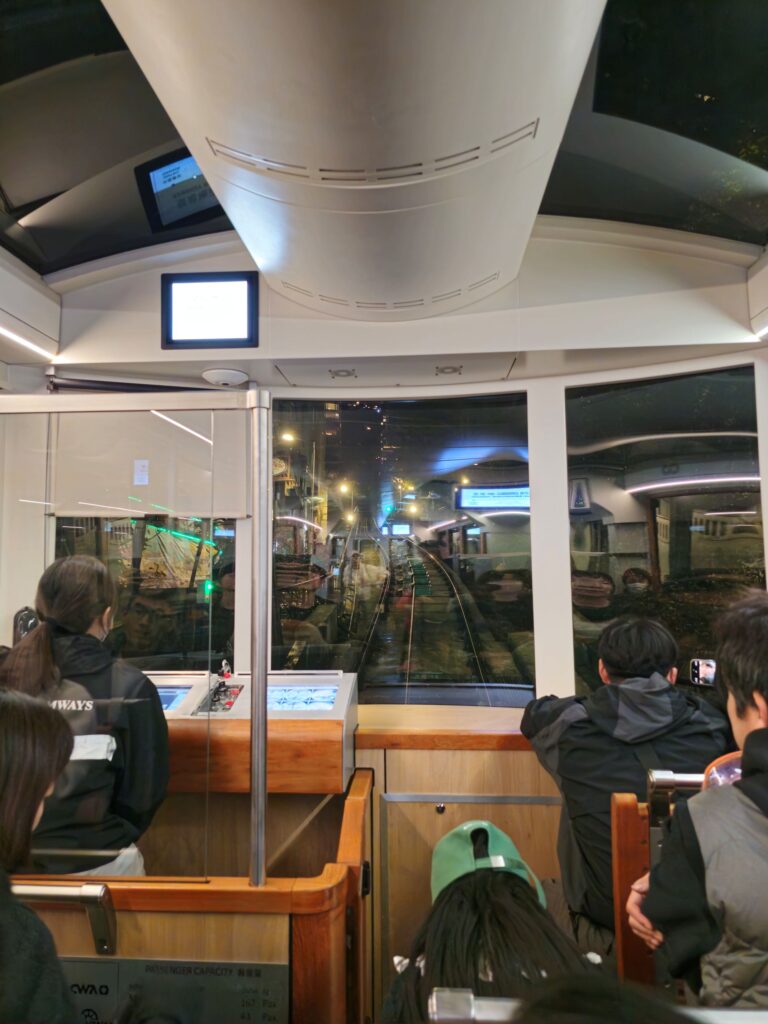
The Peak Tram (山頂纜車) departs from the Garden Road lower terminus and climbs to the Peak Tower in approximately 7 minutes. The tram has been operating since 1888 and the funicular ascent — at a maximum gradient of approximately 27 degrees — remains one of the most distinctive transport experiences in Hong Kong.
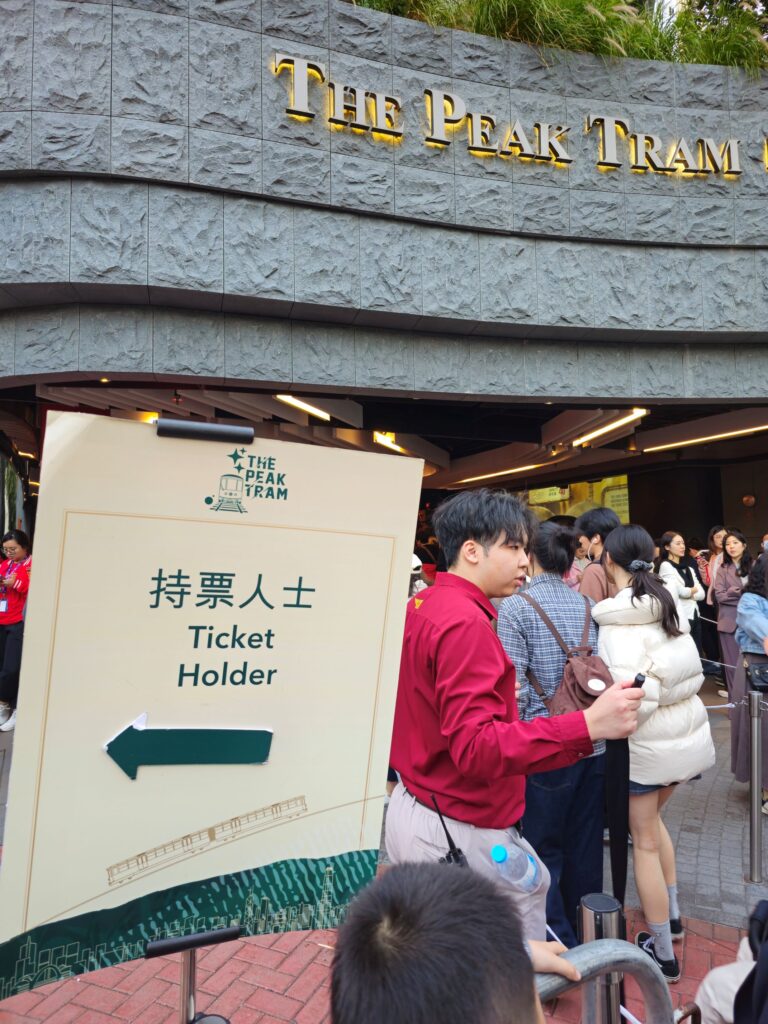
Tickets: Purchase at the lower terminus or book online in advance. Online booking is strongly recommended for weekend and peak season visits — the queue for same-day tickets can reach 45–60 minutes during busy periods. My January weekday evening visit involved a manageable wait without advance booking, but booking ahead eliminates the uncertainty.
The ascent: The tram climbs through the dense vegetation of the Peak hillside, with the city dropping away below as the gradient increases. Buildings alongside the track appear to tilt at impossible angles as the tram climbs — an effect that is disorienting and dramatic simultaneously. The front windows of the tram give the clearest view of the ascent; positions near the front are worth taking if available.
At the Peak: What to Do
The Peak Tower and Sky Terrace 428
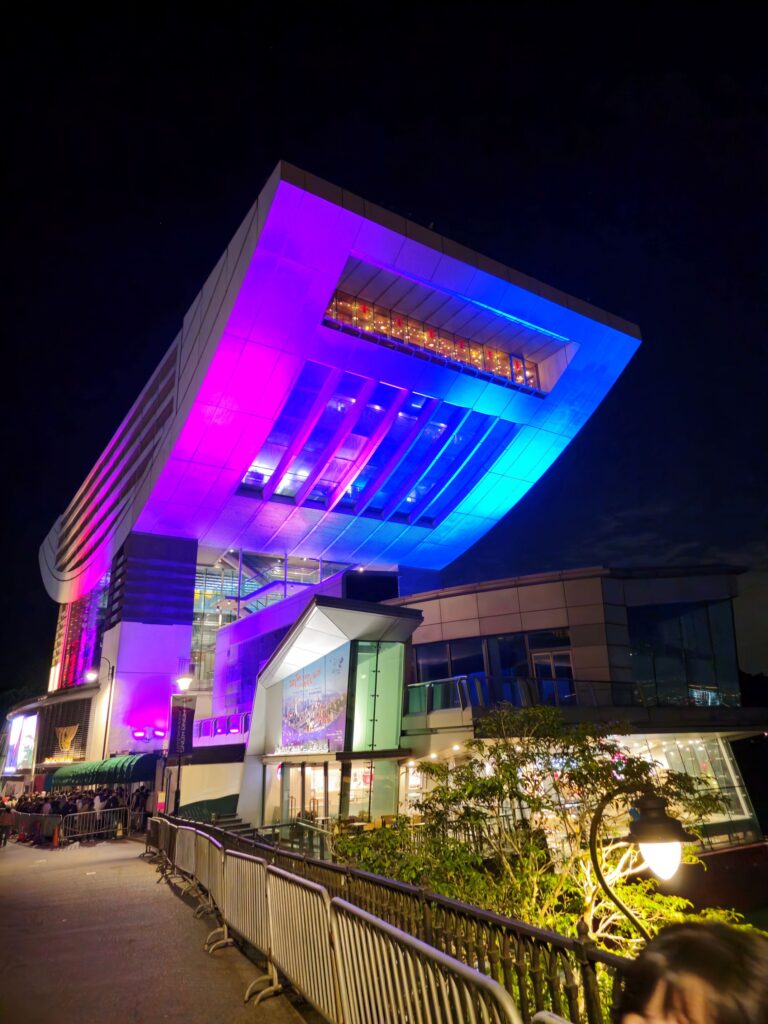
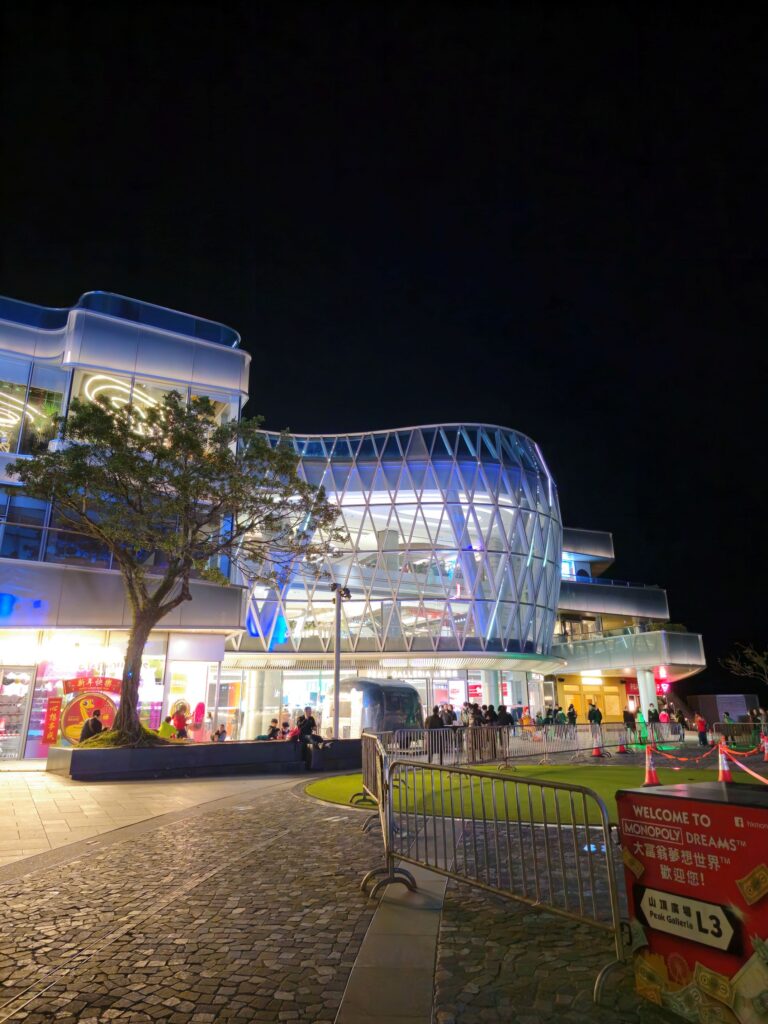
The Peak Tram deposits passengers at the Peak Tower — a commercial complex at 396 meters above sea level containing shops, restaurants, and the Sky Terrace 428 observation deck. The observation deck (named for its 428-meter elevation at the highest accessible point) requires a separate ticket from the tram and provides the primary viewing platform for the night view.
The Sky Terrace is an open-air deck wrapping around the upper levels of the Peak Tower — a 360-degree viewing platform with unobstructed views in all directions. The north-facing view, looking across the harbor to Kowloon and beyond, is the primary orientation for most visitors.
The view from Sky Terrace 428:
Looking north: The Central and Wan Chai waterfront immediately below, Victoria Harbour crossing to Tsim Sha Tsui and the Kowloon skyline beyond, with the hills of the New Territories visible in the far distance on a clear day.
Looking east: Causeway Bay and the eastern districts of Hong Kong Island, with the harbor curving eastward toward Quarry Bay and beyond.
Looking west: The western districts of Hong Kong Island, the harbor narrowing toward the western approaches, and the hills of Lantau visible in the distance.
Looking south: The residential neighborhoods of the Peak district below, Happy Valley, and the southern districts of Hong Kong Island extending toward Stanley and the South China Sea.
The Lugard Road Loop
For visitors with the time and energy, the Lugard Road Loop — a circular walking path starting from near the Peak Tower and circumnavigating the Peak — provides a different experience from the static observation deck. The loop takes approximately 45 minutes at a relaxed pace and gives shifting views as you walk: the harbor from different angles, the residential areas of the Peak district, and sections of the path where the city is visible below through gaps in the vegetation.
At night, the loop is less practical than during the day — sections of the path are unlit or dimly lit, and the views through the vegetation are less clear than from the open observation deck. The loop is best experienced in the late afternoon before sunset, transitioning to the observation deck for the evening illumination.
Peak Tower Facilities
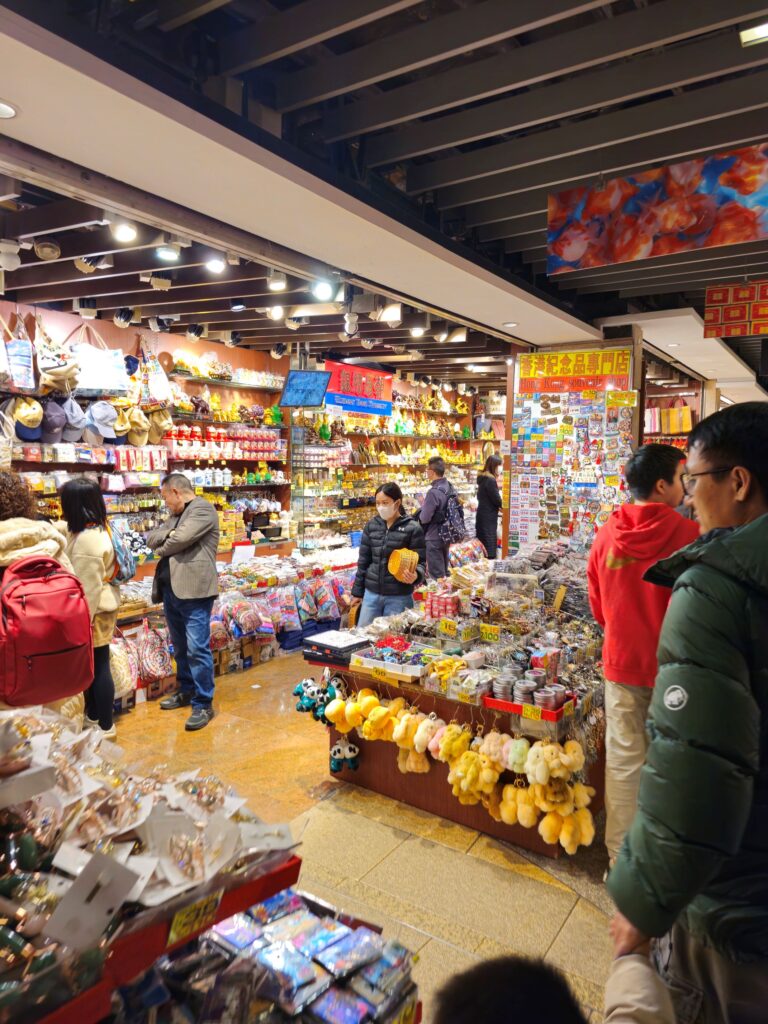
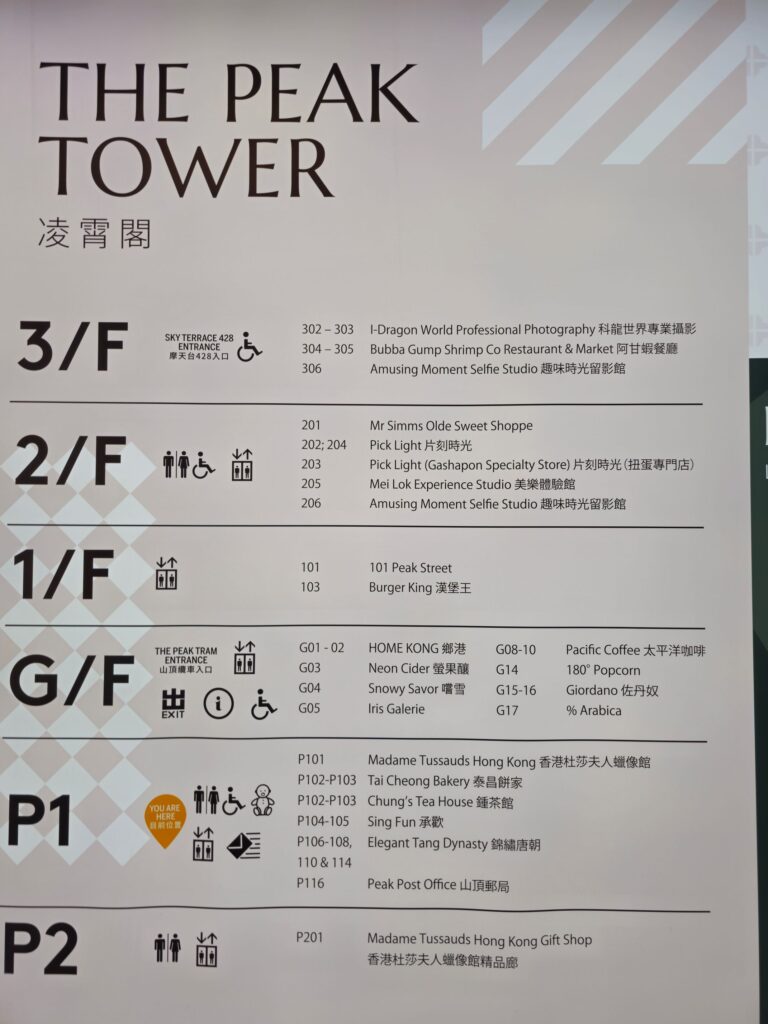
The Peak Tower’s commercial floors have restaurants and cafés at various price points — useful for a dinner or drinks while at the Peak, though prices reflect the captive audience of a tourist destination. The Bubba Gump Shrimp Co. and several other restaurants operate here; the café options on the upper levels provide harbor-view dining that justifies the premium for a special evening.
For most visitors, spending time on the observation deck rather than eating at the Peak is the right priority — the view is the reason to be there, and the dining options in Central (Soho, Lan Kwai Fong) are considerably better than the Peak Tower restaurants.
The View: What January’s Clear Air Provides
My January visit benefited from conditions specific to the winter months that are worth understanding before deciding when to visit.
Visibility: January in Hong Kong has some of the best atmospheric visibility of the year — the dry, cool air allows for clear views that extend far into the distance. From the Peak on a clear January evening, the Kowloon skyline is sharp and detailed, individual buildings identifiable by their illumination patterns. The New Territories hills beyond Kowloon are visible. On the clearest days, you can see into Shenzhen across the border.
Contrast this with summer: June through September in Hong Kong brings heat, humidity, and haze — a combination that softens the Peak view into a blurred version of itself. The skyline is still visible, the harbor still identifiable, but the sharpness and detail that make the winter view exceptional are largely absent. Many summer visitors to the Peak are disappointed by the haze; winter visitors consistently find the view exceeds expectations.
Temperature at the Peak: January evenings at the Peak are noticeably cooler than at sea level — the elevation difference means temperatures can be 3–5°C lower than in the city below, and the wind exposure on the observation deck adds a further chill factor. A jacket or warm layer is essential for extended observation deck time in winter. This is a comfort issue rather than a serious weather concern — the cool air makes the outdoor viewing more pleasant than uncomfortable, but arriving without a layer means leaving the deck sooner than you’d want.
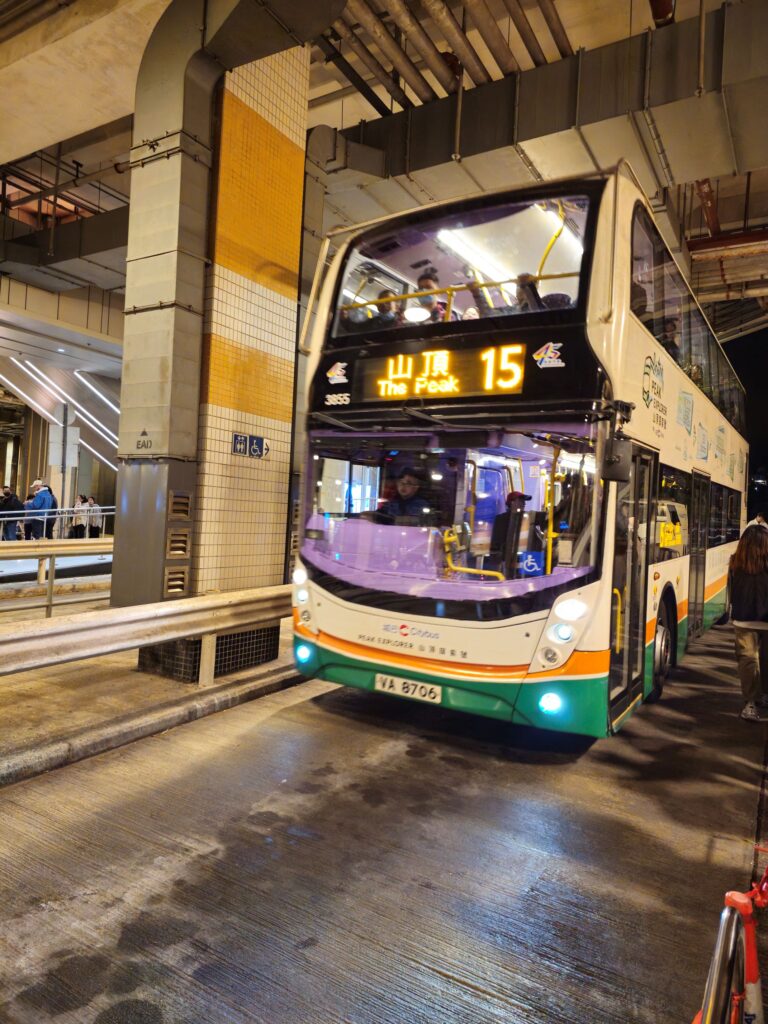
Getting Back: Bus 15 to Central
The Bus 15 from the Peak back to Central Bus Terminus is the return route I used in January — and the route I’d recommend for the descent over the Peak Tram return.
The bus descends through the hillside residential neighborhoods of the Peak district — winding roads lined with some of Hong Kong’s most expensive real estate, the city visible through the trees as the bus works its way down. The descent takes approximately 30–40 minutes and gives a very different perspective on the Peak district than the tram ascent — the residential streets, the gated estates, and the gradual transition from the hilltop to the urban density below.
At night, sections of the descent give views of the illuminated harbor and city that are glimpsed through gaps in the vegetation and between buildings — brief but atmospheric. The bus deposits passengers at the Central Bus Terminus near the Star Ferry Pier, which is well-positioned for continuing into Lan Kwai Fong, the waterfront, or the MTR.
Bus 15 departure: From the bus terminus adjacent to the Peak Tower — look for the bus stop marked with the 15 route number. The bus runs until approximately midnight, making it viable for evening visits that extend later into the night.
Peak Tram descent as alternative: The tram descent is faster (7 minutes vs 30–40 minutes) and gives the dramatic downhill version of the funicular experience — the city dropping away ahead of the tram as it descends. Worth doing at least once. For visitors who want the full tram experience in both directions, descending by tram and then walking or taking a taxi to Lan Kwai Fong is a reasonable sequence.
Evening Itinerary: A Complete Peak Night
Based on the January visit, here’s the complete evening sequence that works best:
4:00pm:  Bus 56 from Causeway Bay
         to Peak Tram lower terminus
         (or walk/bus 15C from Central)

4:30pm:  Peak Tram ascent
         (afternoon light, shorter queues)

5:00pm:  Lugard Road Loop (optional)
         45 minutes, shifting harbor views
         Time the loop to finish near sunset

5:45pm:  Return to Sky Terrace 428
         Golden hour — city in warm light
         Transition to evening illumination

6:30pm:  Full night view from observation deck
         City fully illuminated
         Best photography conditions

7:30pm:  Bus 15 from Peak to Central
         (~35 minutes descent)

8:15pm:  Arrive Central Bus Terminus
         Continue to Lan Kwai Fong
         or Soho for evening drinks/dinner
This sequence — arriving before sunset, experiencing the full light transition, and descending after dark — is the most complete version of the Peak evening experience.
Victoria Peak Day vs Night: The Honest Comparison
| Daytime | Evening/Night | |
|---|---|---|
| View quality | Good | ✅ Best |
| Crowds | ❌ Peak congestion | ✅ More manageable |
| Photography | Good | ✅ City illumination |
| Lugard Road | ✅ Better for walking | ⚠️ Some sections dark |
| Weather comfort | ⚠️ Hot in summer | ✅ Cool and pleasant |
| Tram queues | ❌ Longest in afternoon | ✅ Shorter after 6pm |
| Golden hour | ✅ Available late afternoon | ✅ Best transition view |
The evening visit wins on almost every criterion for most visitors. The one advantage of a daytime visit is the Lugard Road Loop — better walked in daylight when the views through the vegetation are clearest. The compromise is arriving in the late afternoon, doing the loop, and staying for the evening transition — which is exactly the sequence recommended above.
Practical Tips
Book Peak Tram tickets online: Avoids the ticket queue, which can be significant on weekends. The tram runs frequently so the wait for the tram itself is short once you have a ticket.
Dress for the elevation: A jacket or warm layer is essential at the Peak in January — the temperature and wind chill at 396 meters is noticeably cooler than at sea level. Arriving without a layer means leaving the observation deck sooner than you’d want.
Bus 56 from Causeway Bay: Less well-known than the Central route but direct and practical for visitors spending the afternoon in Causeway Bay. Confirm the bus stop on Google Maps before heading there.
Photography: Wide-angle for the full panorama; portrait orientation for the harbor and Kowloon view; the Sky Terrace 428 north-facing railing gives the clearest sightlines for the classic shot.
Return timing: Bus 15 runs until approximately midnight — no rush to leave early. The observation deck experience in the later evening, when the day-trip crowds have gone, is worth extending.
Combine with Causeway Bay: Bus 56 from Causeway Bay makes a natural afternoon-to-evening sequence: Hysan Place and Bakehouse in the afternoon, bus 56 to the Peak for the evening view, Bus 15 back to Central for Lan Kwai Fong.
Final Thoughts
Victoria Peak at night delivers. That’s the simple summary — the view from the observation deck on a clear January evening, with the full illuminated skyline of Hong Kong spread below and the harbor reflecting the lights of both shores, is one of the finest urban views available anywhere in the world. The photographs don’t quite prepare you for it, despite being everywhere.
Go in the late afternoon. Stay through the light transition. Dress for the elevation. Take Bus 56 from Causeway Bay if that’s where you’re spending the afternoon. And take Bus 15 back to Central when you’re done — the winding descent through the hillside residential streets is a good way to end the Peak experience.
The city looks different from above. Hong Kong looks more itself.
Causeway Bay Travel Guide: Hong Kong’s Best Shopping Neighborhood
Tsim Sha Tsui Travel Guide: The Best Neighborhood in Hong Kong for First-Timers