
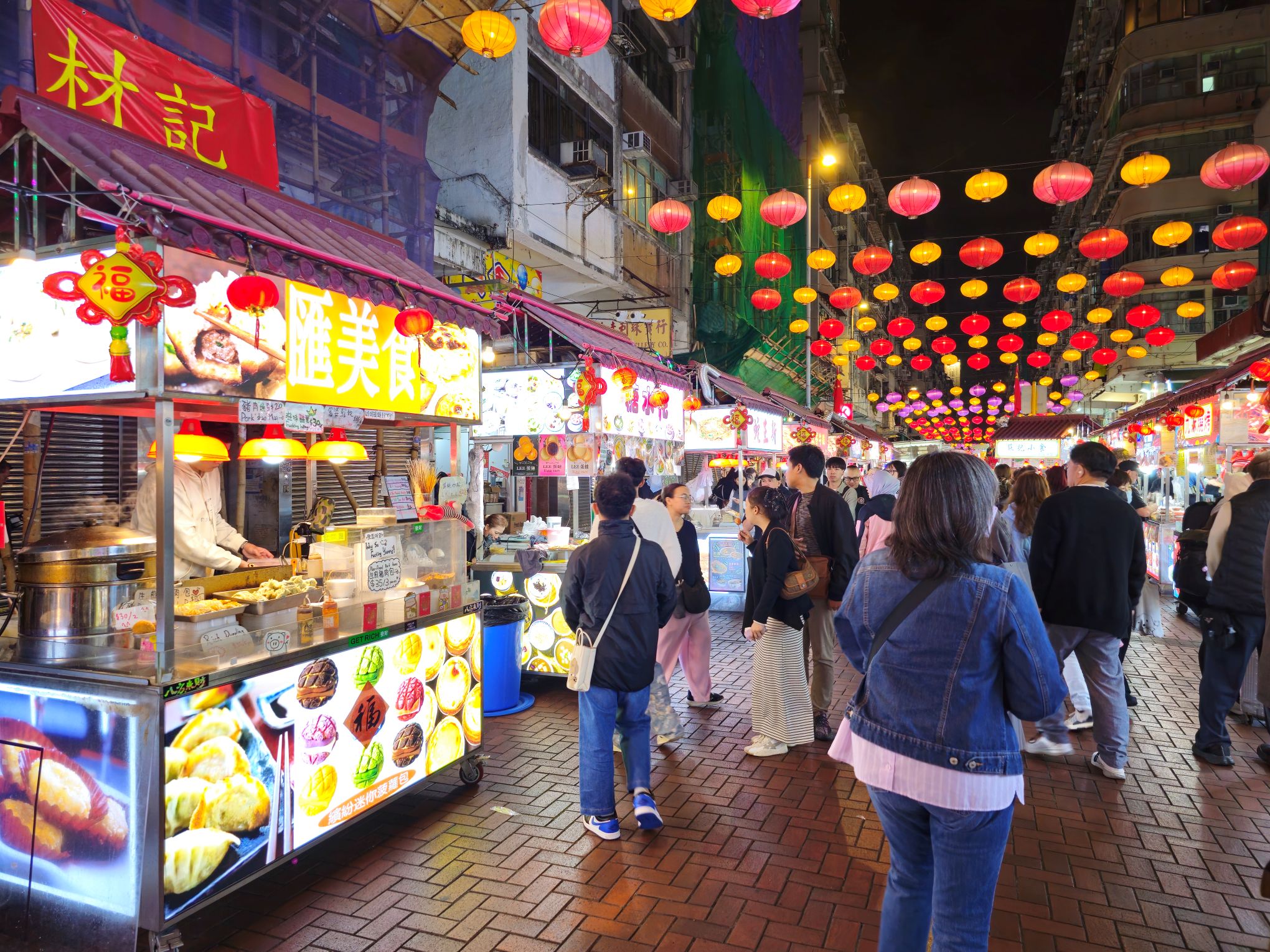
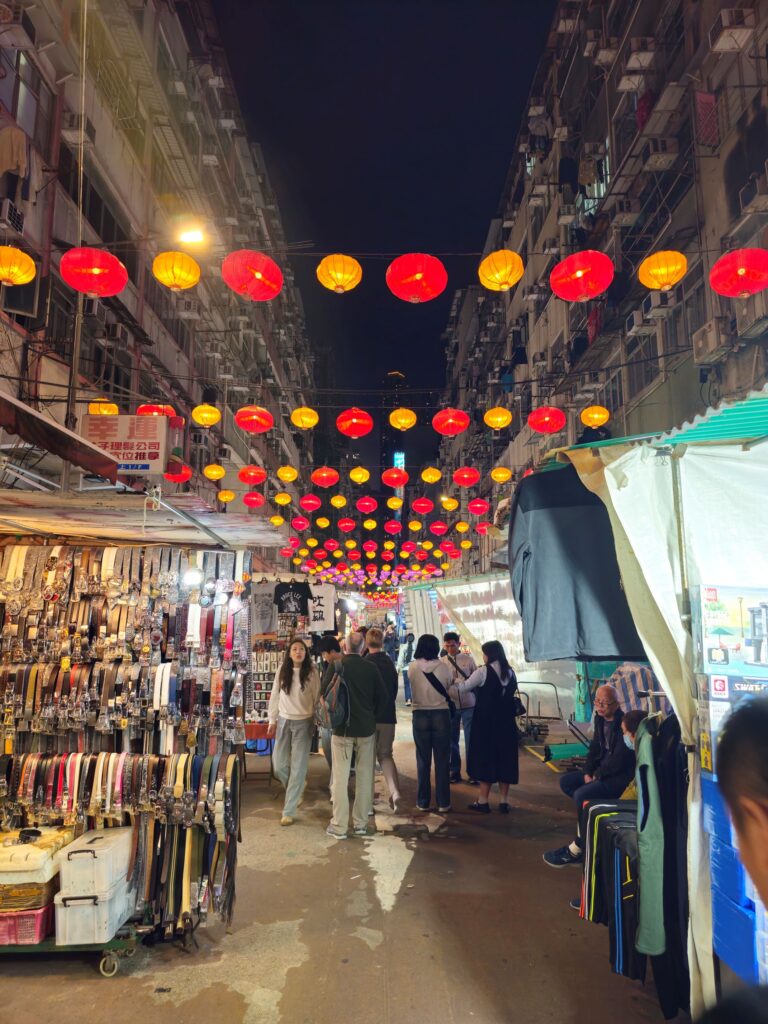
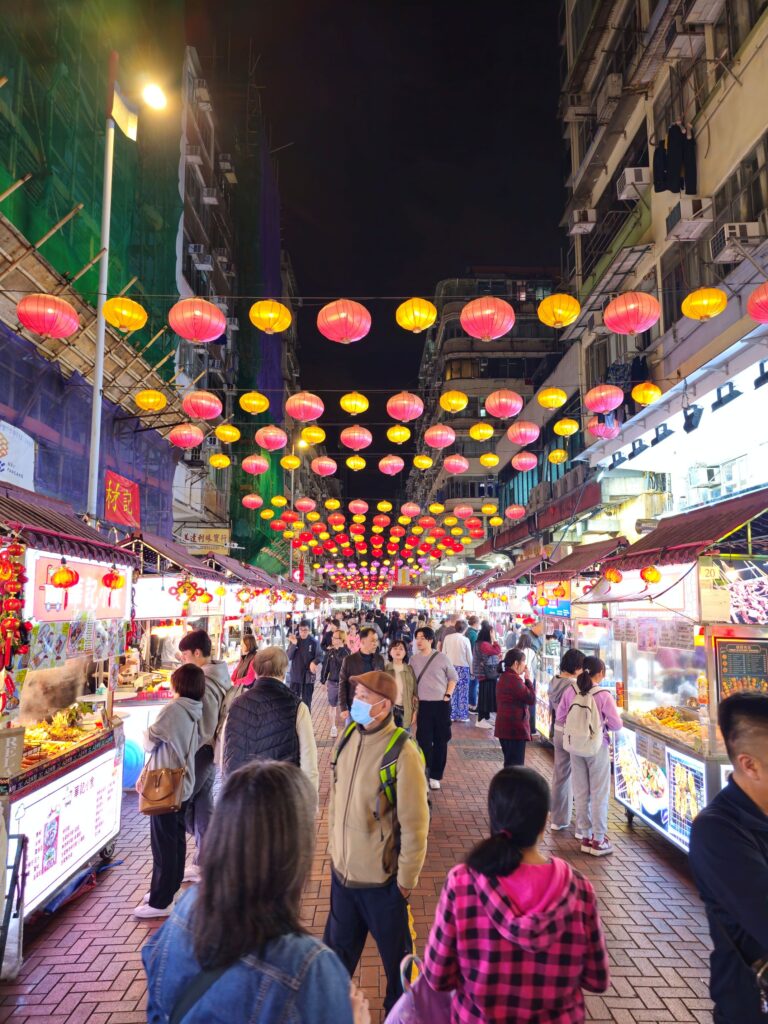
Temple Street arrives in layers. The first thing you notice is the smell — grilled meats and incense mixing in the narrow lanes before you’ve seen a single stall. Then the noise — vendors calling, Cantonese opera from somewhere deeper in the market, the general compression of sound that a covered street market at full capacity produces. Then the light — strings of bare bulbs over the stalls, the colored neon of the surrounding shophouses, the whole scene lit from within in a way that feels specific to this street and this city.
I visited on the evening of my first day in Hong Kong — arriving from the airport, checking into the YMCA Salisbury Hotel in Tsim Sha Tsui, and walking to Temple Street as the market was coming to life. It was the first real Hong Kong experience of the trip, and it set the tone for everything that followed.
This guide covers everything worth knowing before visiting Temple Street Night Market — the atmosphere, the stalls, the food, the fortune tellers, the practical logistics, and why it remains one of the most essential Hong Kong experiences despite being thoroughly on the tourist circuit.
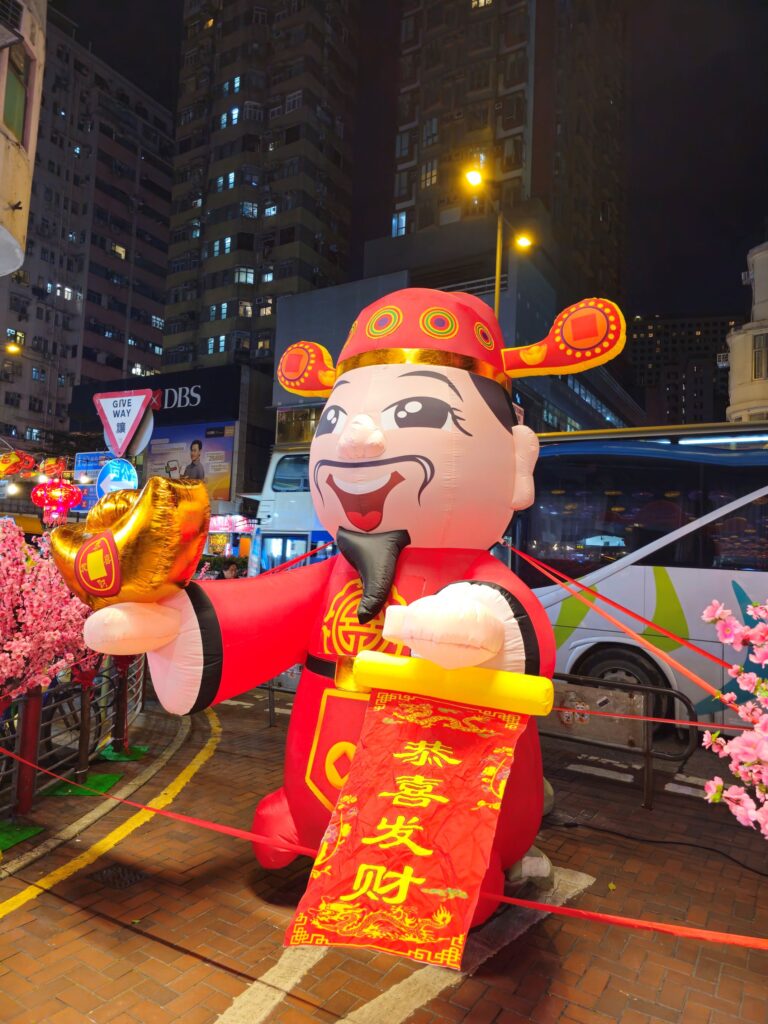
What Is Temple Street Night Market?
Temple Street Night Market (廟街夜市) is a nightly outdoor market running along Temple Street in the Yau Ma Tei neighborhood of Kowloon — approximately 15 minutes’ walk north of Tsim Sha Tsui, or one MTR stop from Jordan station. The market operates from approximately 5–6pm until midnight or later, occupying several blocks of Temple Street and spilling into the adjacent lanes.
The market takes its name from the Tin Hau Temple at its center — a Taoist temple dedicated to the goddess of the sea, which has stood on this site since the 19th century and around which the market originally developed. The temple remains active and can be visited as part of the market walk.
Temple Street has been operating as a night market since the 1920s and has been one of the most visited destinations in Kowloon for decades. Despite — or because of — its status on the tourist circuit, it retains a character and atmosphere that many more recently developed attractions don’t have. The market feels earned rather than manufactured.
Getting There
Walking from Tsim Sha Tsui
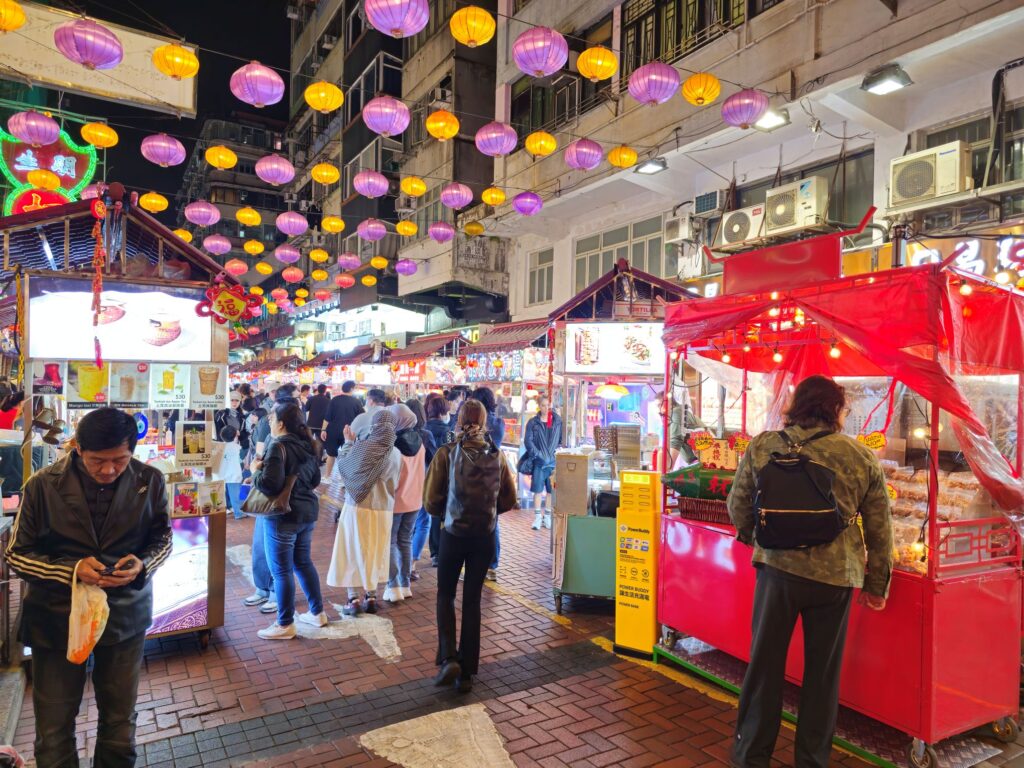
The most natural approach from Tsim Sha Tsui — and the one I used on arrival day — is walking north along Nathan Road from the hotel area. The walk takes approximately 15–20 minutes and passes through the changing character of Kowloon’s main commercial artery: the tourist-facing shops of Tsim Sha Tsui giving way to the more local commercial strip of Jordan, with Temple Street turning off to the left once you’re in the Yau Ma Tei area.
Walking to the market rather than taking the MTR gives a better sense of how the neighborhoods connect — the transition from Tsim Sha Tsui to Yau Ma Tei is gradual and visible at street level in a way the underground MTR doesn’t show.
By MTR
Jordan station (Tsuen Wan Line, Exit A) is the most convenient MTR access point — a 5-minute walk from the station to the southern end of the market. One stop from Tsim Sha Tsui, making it quick and straightforward for visitors based in the southern Kowloon hotel area.
Yau Ma Tei station (Tsuen Wan Line, Exit C) accesses the northern section of the market — useful if you want to start from the Tin Hau Temple end and walk south through the market.
From Hong Kong Island
From Central, the cross-harbour MTR to Jordan takes approximately 12 minutes — a straightforward evening excursion for visitors based on the Island side. The Star Ferry to Tsim Sha Tsui followed by a walk north is the more atmospheric option, though slower.
When to Arrive
Early Evening (5:30–6:30pm)
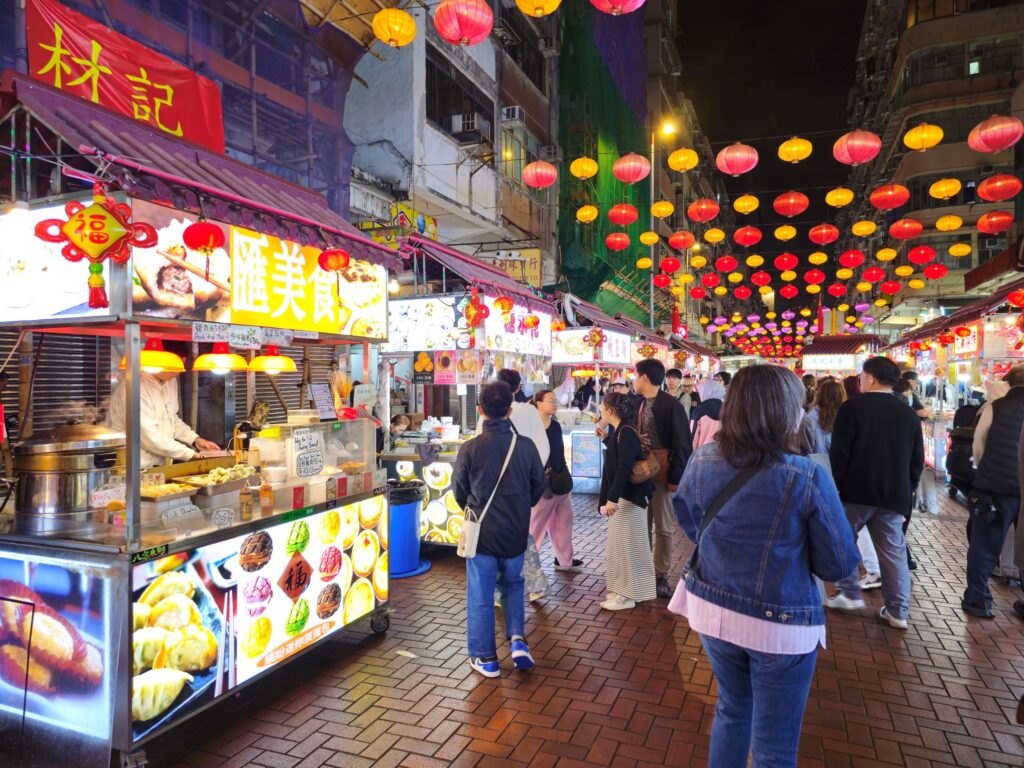
Arriving as the market is setting up gives a different experience from peak hours — vendors arranging their stalls, the first customers browsing, and the market building toward its evening energy rather than already at full intensity. The light at this time, with the sky still partially illuminated and the stall lights coming on, gives the market a particular atmosphere that full darkness doesn’t replicate.
For photography, the early evening transition — market lights against a darkening sky — produces the most visually interesting conditions.
Peak Hours (7:30–10pm)
The market at full evening intensity is the most atmospheric version — every stall operating, the lanes packed with people, the fortune tellers busy, and the occasional Cantonese opera performance audible from the side streets. This is Temple Street as most people picture it, and the experience delivers.
The trade-off is density — navigating the narrow lanes at peak hours requires patience and a willingness to move at the pace of the crowd rather than your own.
Late Evening (after 10pm)
The market begins to thin after 10pm as stalls close and the crowd disperses. For visitors who want the atmosphere without the full peak-hour density, arriving around 9:30–10pm gives the market in its later, quieter phase — still operating, still atmospheric, but more navigable.
What’s in the Market
Jade and Jewelry
The southern section of Temple Street, near the Jordan MTR end, is historically associated with jade trading — stalls selling jade pieces ranging from small ornaments to elaborate carved sculptures, alongside other jewelry and accessories. The jade market operates primarily in daylight hours at the nearby Jade Market on Kansu Street, but jade items are available throughout Temple Street in the evening.
Jade quality and value varies enormously — from genuine antique pieces at significant prices to mass-produced tourist items at minimal cost. Unless you have specific knowledge of jade valuation, treating the jade stalls as browsing rather than investment shopping is the practical approach.
Clothing and Accessories
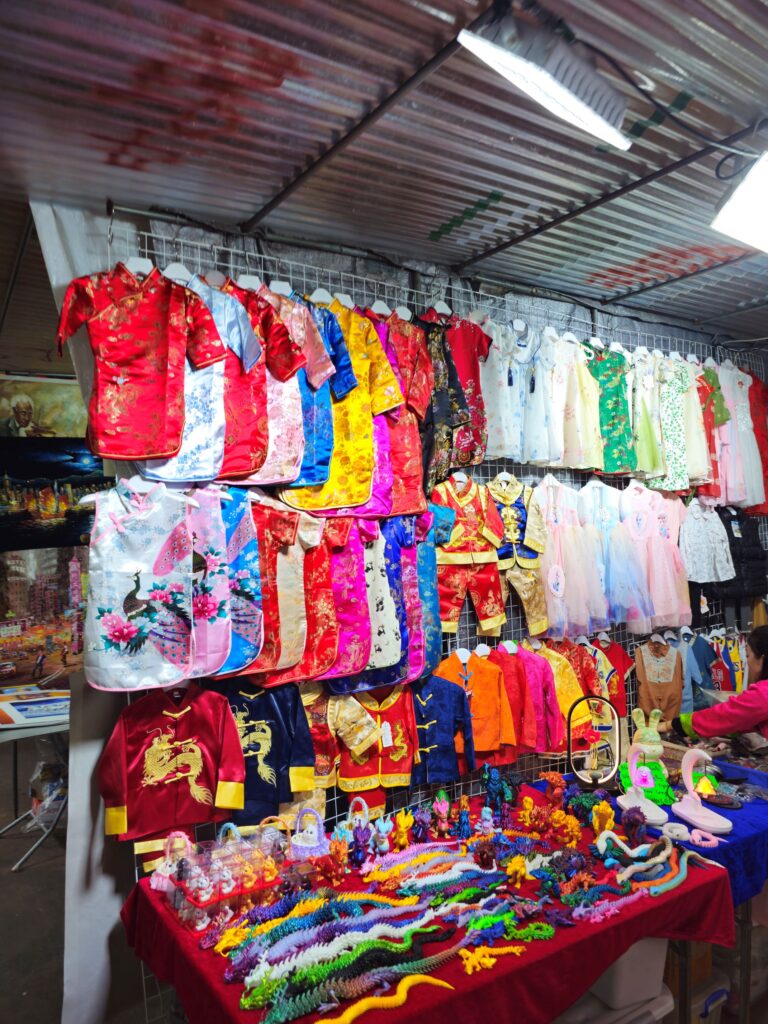
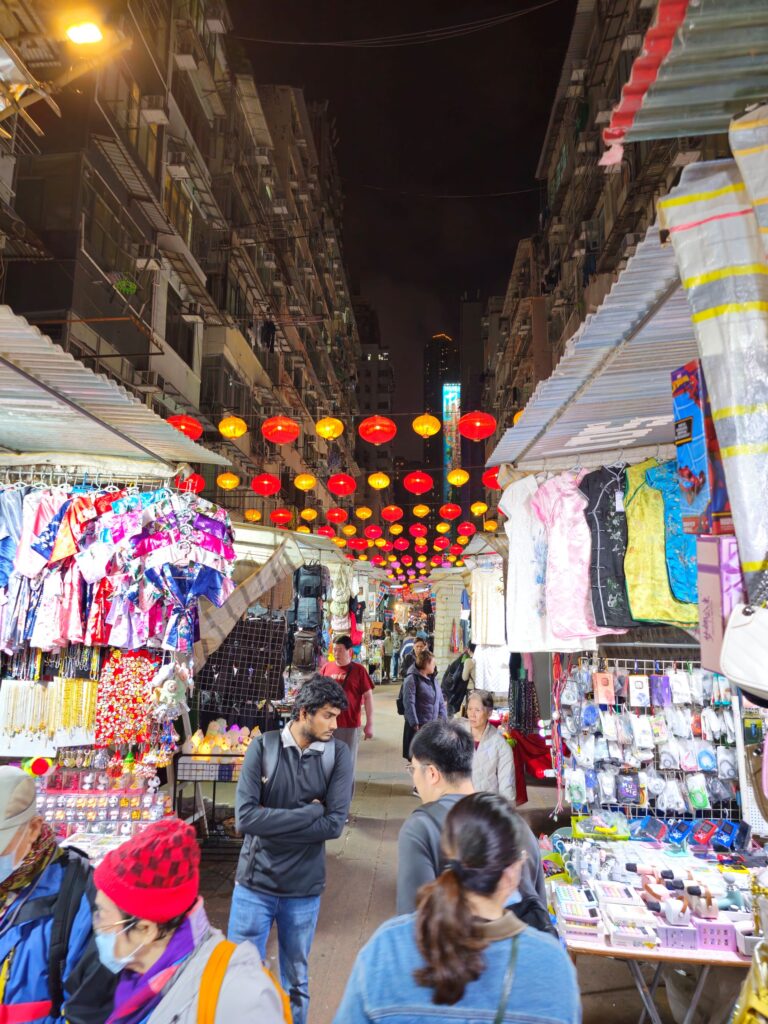
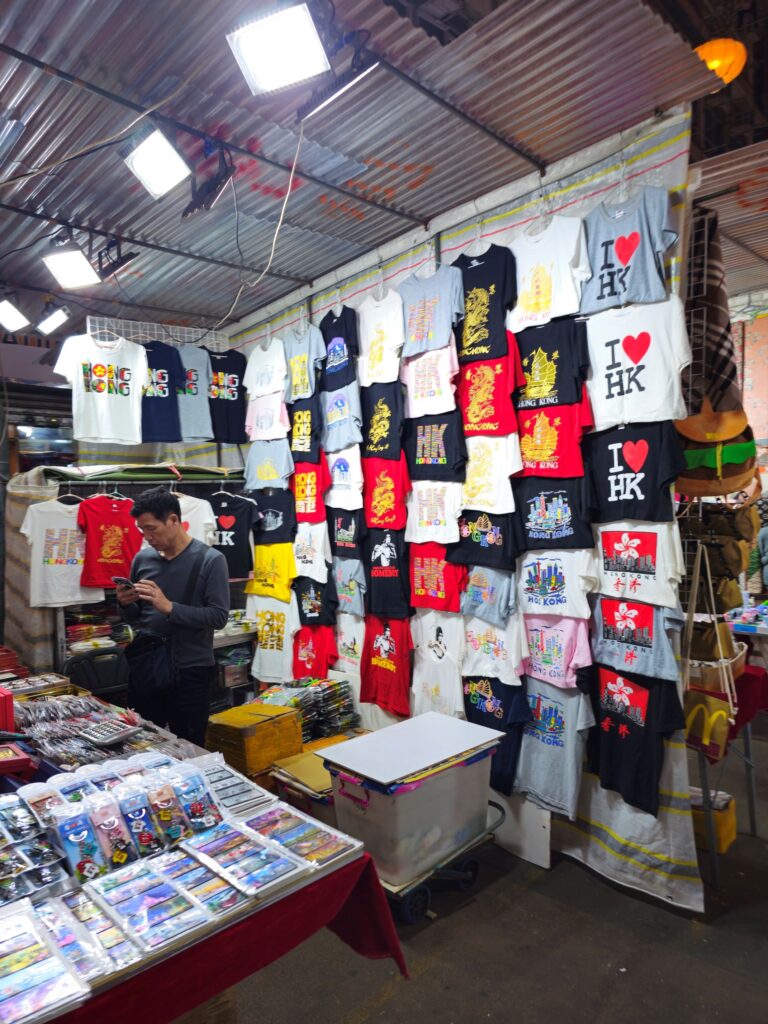
The majority of Temple Street stalls sell clothing, accessories, handbags, and everyday items at prices aimed at local shoppers as much as tourists. The range covers everything from basic t-shirts and everyday clothing to more distinctive pieces reflecting Hong Kong’s street fashion sensibility.
Bargaining is expected throughout the market — the opening price at any stall is a starting point for negotiation rather than a fixed offer. A polite counter-offer of 50–60% of the asking price is a reasonable starting position; most transactions settle somewhere between the two.
Electronics and Accessories
Phone cases, charging cables, earphones, and various electronics accessories are available throughout the market at competitive prices. The quality of electronics accessories varies — inspection before purchase is worth doing for anything you’ll actually use.
Watches
Temple Street has traditionally been associated with watch trading — everything from budget fashion watches to vintage pieces and, historically, counterfeit luxury brands (now less openly displayed due to enforcement). The watch stalls are concentrated in the middle section of the market.
Souvenirs
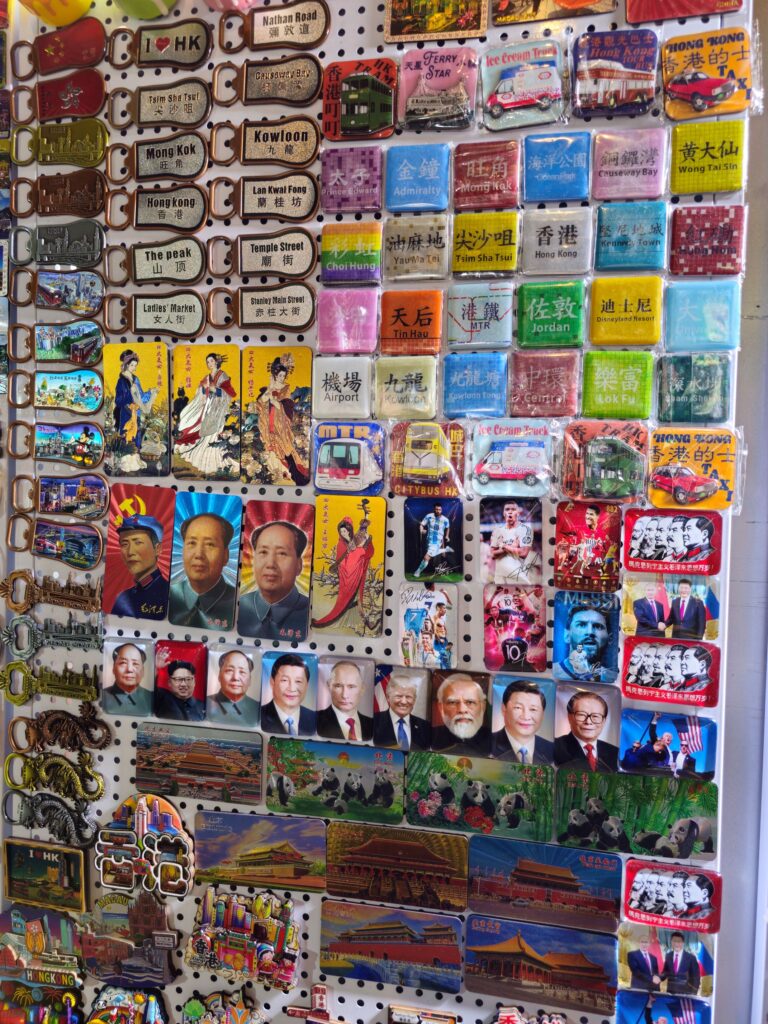
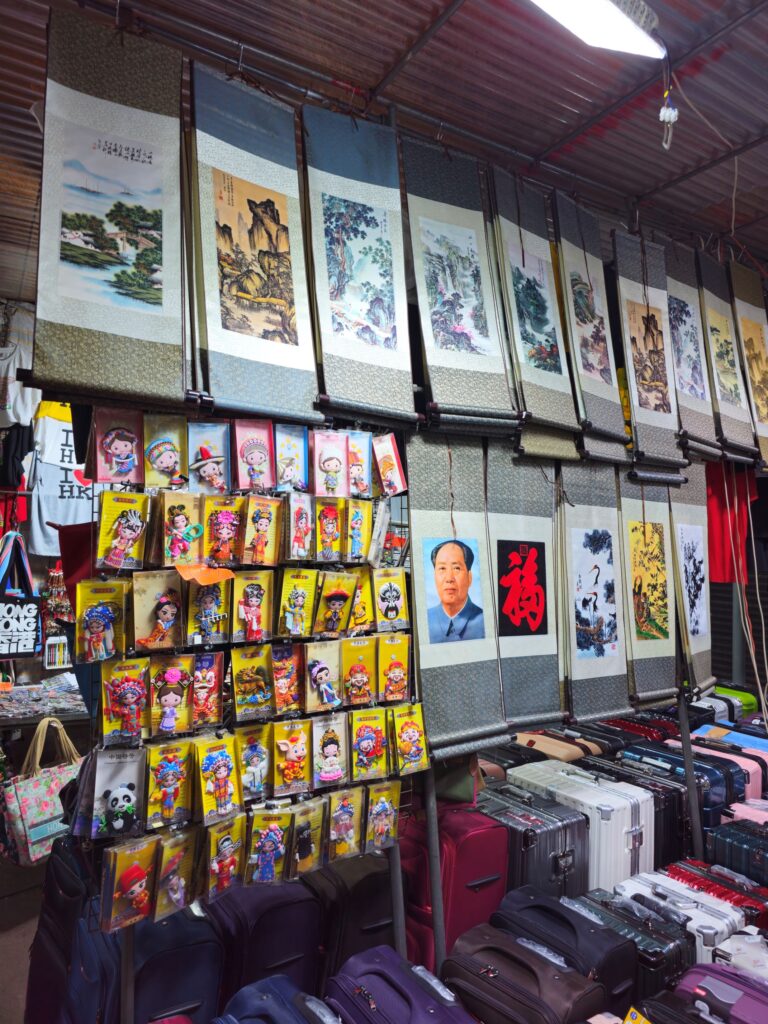
The full range of Hong Kong souvenir items — refrigerator magnets, keychains, postcards, decorative items — is available throughout the market. For visitors looking for gifts to take home, Temple Street offers better prices than most tourist shops and a more atmospheric shopping experience than any mall.
The Fortune Tellers
One of Temple Street’s most distinctive features — and the element that most differentiates it from a standard street market — is the concentration of fortune tellers operating within and alongside the market.
Fortune tellers set up in the lanes between the stalls and along the adjacent side streets — some operating from simple folding tables under bare bulbs, others from more established setups with chairs and privacy screens. The methods offered include palm reading, face reading, Chinese astrology, and tarot card interpretation. Most practitioners offer readings in Cantonese with some English capability, and many have laminated menus of services and prices.
The fortune-telling culture is genuine — these practitioners serve local clients as much as tourists, and the tradition of seeking fortune readings before significant life decisions (marriage, business ventures, major purchases) is embedded in Hong Kong’s cultural life. Visiting Temple Street in the evening and observing the fortune tellers at work — whether or not you choose a reading — gives insight into this dimension of Hong Kong life that few other tourist experiences offer.
For visitors considering a reading: Prices are negotiable, the experience is approximately 15–20 minutes for a standard reading, and English-language readings are available from practitioners who display English signage. Managing expectations — treating the experience as cultural engagement rather than predictive guidance — produces the most enjoyable outcome.
Cantonese Opera Performances
On certain evenings — particularly weekends and during festival periods — informal Cantonese opera performances take place in the area around the Tin Hau Temple at the center of the market. Groups of performers and enthusiasts gather in the open space near the temple, setting up sound systems and performing excerpts from the traditional operatic repertoire.
Cantonese opera is one of Hong Kong’s most significant traditional art forms — a combination of music, vocal performance, acrobatics, and elaborate costume that has been performed in the Cantonese-speaking world for centuries. The temple square performances are informal rather than staged — practitioners performing for the love of the art form and the gathered crowd rather than for tourist consumption.
Encountering a performance in progress is a matter of timing and luck — there’s no fixed schedule for the informal temple square performances. Arriving between 7:30–9pm on a weekend gives the best chance.
The Tin Hau Temple
The Tin Hau Temple (天后廟) at the center of the market is an active Taoist temple dedicated to Tin Hau — the goddess of the sea and patron deity of fishermen, sailors, and anyone who depends on the water for their livelihood. The temple has been on this site since the 19th century, predating the surrounding market, and remains a place of genuine worship.
Entering the temple during the market hours gives a quiet contrast to the activity outside — the smell of incense, the altars and offerings, and the occasional worshipper praying in a space that exists in a completely different register from the market stalls surrounding it.
Visiting respectfully: The temple is a functioning place of worship. Remove hats, speak quietly, and avoid photography of worshippers. Brief visits (10–15 minutes) that observe the space without disrupting the worshippers are welcomed.
Food at Temple Street
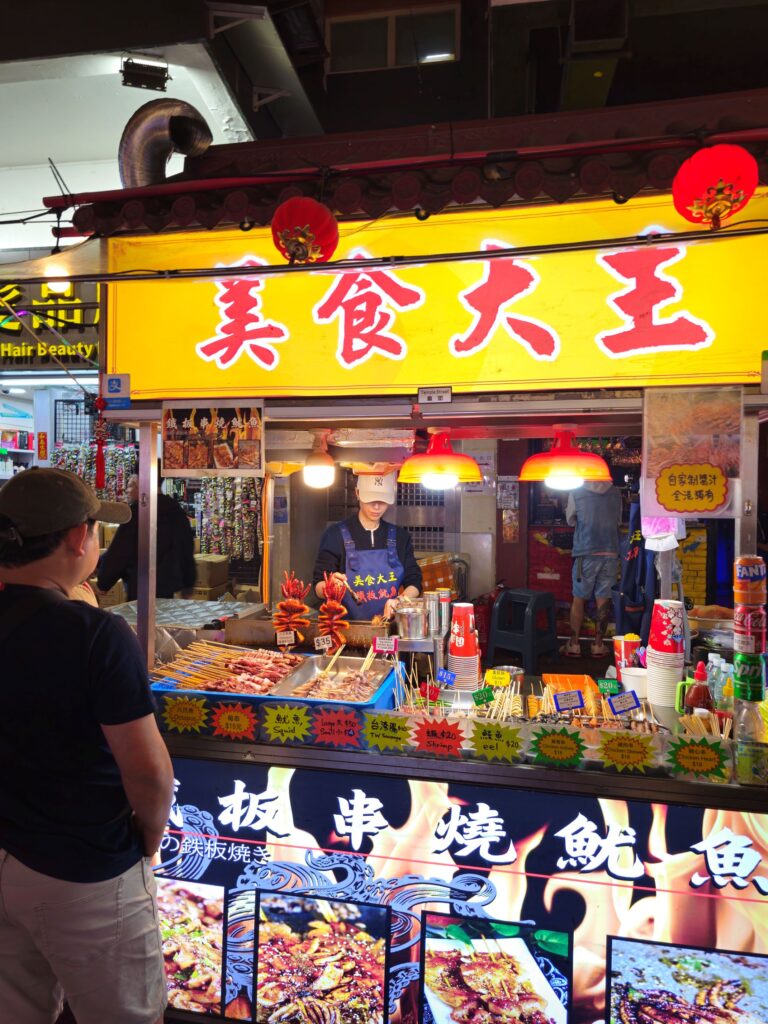
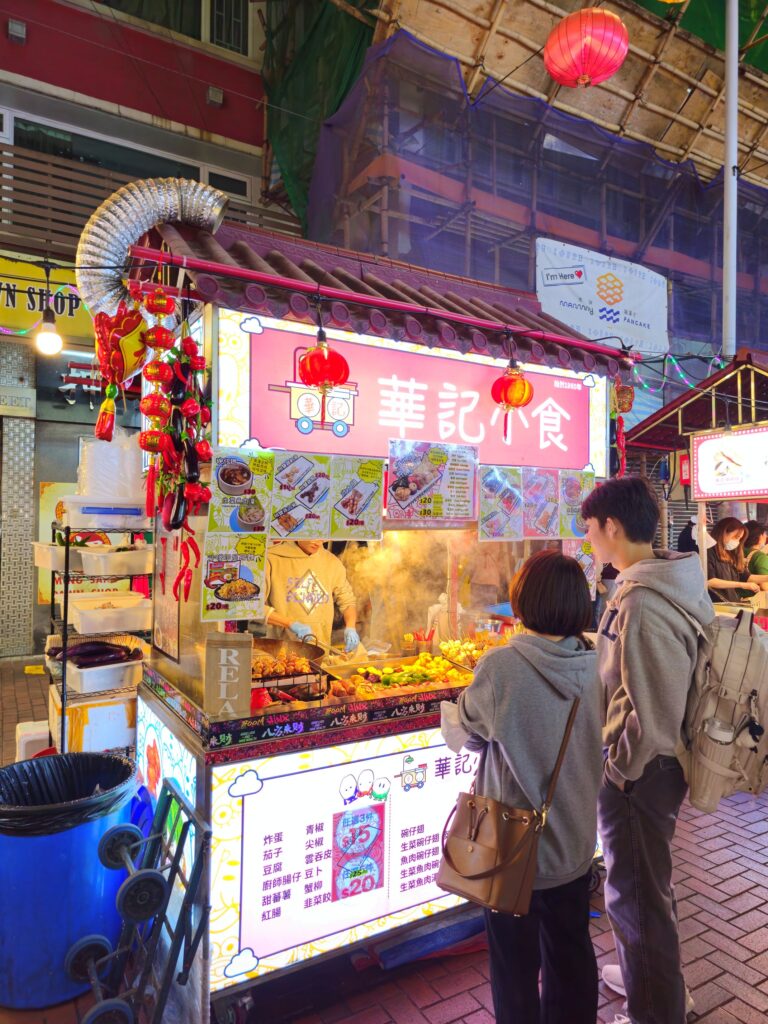
Temple Street’s food dimension is significant — a cluster of outdoor restaurants and dai pai dong (open-air food stalls) operating along the market’s length, with the most concentrated food area in the middle section near the Tin Hau Temple.
Dai Pai Dong (大牌檔)
The dai pai dong — Hong Kong’s traditional open-air cooked food stalls — are the authentic Temple Street food experience. Tables and plastic chairs set up in the lanes, woks firing on gas burners, and menus covering the full range of Cantonese street food: steamed seafood, stir-fried vegetables, clay pot dishes, and the various preparations of tofu, pork, and noodles that constitute the core of the Cantonese street food repertoire.
The quality at Temple Street dai pai dong varies — busier stalls with higher turnover are more reliable than quieter ones. Pointing at what other tables are eating is a valid ordering strategy; most menus have photographs.
What to order:
- Steamed seafood: Clams, prawns, and crab prepared simply with garlic and ginger — fresh and well-executed at the better stalls
- Claypot dishes: Various combinations of meat, tofu, and vegetables cooked in clay pots over low heat — warming and substantial
- Stir-fried morning glory (炒通菜): A simple vegetable dish that’s a reliable side order at any dai pai dong
- Seafood congee (海鮮粥): Thick rice porridge with fresh seafood — a good choice for a late evening meal
Street Food Stalls
Beyond the sit-down dai pai dong, Temple Street has street food stalls selling portable snacks throughout the market:
- Grilled squid (魷魚): Whole squid grilled over charcoal and served with sauce — one of the market’s most characteristic smells and tastes
- Curry fish balls (咖喱魚蛋): The Hong Kong street food staple — fish paste balls simmered in curry sauce, served on skewers
- Stinky tofu (臭豆腐): Fermented tofu with a powerful smell that’s detectable from some distance — an acquired taste that’s worth trying once
- Egg waffles (雞蛋仔): Available from stalls at the market edges — best eaten immediately
Temple Street vs Mong Kok Markets: Which Should You Visit?
Both are essential Hong Kong market experiences and both are within easy reach of Tsim Sha Tsui. The differences are worth understanding:
| Temple Street | Mong Kok (Ladies Market, Fa Yuen) | |
|---|---|---|
| Atmosphere | ✅ Most atmospheric | Good |
| Operating hours | Evening only | Afternoon and evening |
| Fortune tellers | ✅ Yes | No |
| Cantonese opera | ✅ Occasional | No |
| Food | ✅ Dai pai dong | Street food only |
| Jade/antiques | ✅ Some | No |
| Crowds | High (evening) | High (afternoon/evening) |
| Best for | Cultural experience | Shopping |
The honest answer: both are worth visiting, and they complement each other rather than competing. Temple Street in the evening for the atmosphere, fortune tellers, and food; Mong Kok during the day for the Flower Market, Bird Garden, and Ladies Market shopping.
Practical Tips
Timing: Arrive between 6:30–7:30pm for the best combination of atmosphere and manageability — the market is fully operational but not yet at peak density
Cash: Most stalls are cash-only — small denominations of Hong Kong dollars are essential for both purchases and bargaining
Bargaining: Always negotiate — the opening price is a starting point, never the final price. Polite, good-humored negotiation is expected and vendors are generally experienced at it
Photography: The market is highly photographic — the combination of stall lights, neon, and the compressed lane atmosphere produces strong images. Street-level shooting from within the market gives the most immersive results
Fortune tellers: Prices are negotiable; English readings are available from practitioners displaying English signage; treat as cultural experience rather than serious guidance
Cantonese opera: No fixed schedule for the temple square performances — presence depends on the evening and the season
Safety: Temple Street is safe; standard market awareness (watch your belongings in crowds, be aware of pickpocketing in dense sections) applies
Return journey: Walk back to Tsim Sha Tsui along Nathan Road (15–20 minutes) or take the MTR from Jordan station — the walk is worth doing at least once to see the neighborhood at night
Combining Temple Street with a Full Evening
Temple Street fits naturally into a broader Tsim Sha Tsui evening itinerary — the market is most atmospheric in the evening, and the surrounding neighborhood has enough to fill the hours before and after.
A complete Temple Street evening:
6:00pm:  Walk north from Tsim Sha Tsui
          along Nathan Road to Temple Street

6:30pm:  Temple Street market — early arrival,
          stalls setting up, initial browse

7:00pm:  Tin Hau Temple visit
          Fortune teller (optional)

7:30pm:  Dai pai dong dinner
          Seafood, claypot, street food

8:45pm:  Return south along Nathan Road
          to Tsim Sha Tsui promenade

8:00pm:  Symphony of Lights
          (if timing works)

9:00pm:  Promenade walk and harbor view
This sequence — Temple Street for dinner and atmosphere, Symphony of Lights for the harbor view — is one of the better complete Tsim Sha Tsui evenings available.
Final Thoughts
Temple Street Night Market is one of those places that appears on every Hong Kong travel list and still manages to justify the inclusion. The atmosphere is genuine — the fortune tellers serve local clients, the dai pai dong cook for regulars as much as visitors, and the Tin Hau Temple has been here since before the market existed. The tourist presence doesn’t dilute this; if anything, it adds a layer to the already-layered experience of the street.
Go in the evening. Eat at a dai pai dong. Walk slowly through the fortune teller section regardless of whether you stop. And notice the Tin Hau Temple at the center — the reason the street exists in the first place.
Tsim Sha Tsui Travel Guide: The Best Neighborhood in Hong Kong for First-Timers