

If you’re planning a trip to Hong Kong in winter and wondering whether the timing is right, here’s the short answer: it’s one of the best times to go. I visited in January and came back with a clear view — not just of the city, but literally. The winter sky in Hong Kong is sharp and clean in a way that the summer months simply can’t match, and that single factor changes the experience of the city’s most iconic sights more than anything else.
Here’s everything I noticed about Hong Kong in winter — the weather, what to wear, what’s better in the cold season, and what (if anything) you’re giving up by not going in summer.
What’s the Weather Actually Like in January?
Let me set expectations correctly, because Hong Kong in winter is not what most people imagine when they hear “winter.”
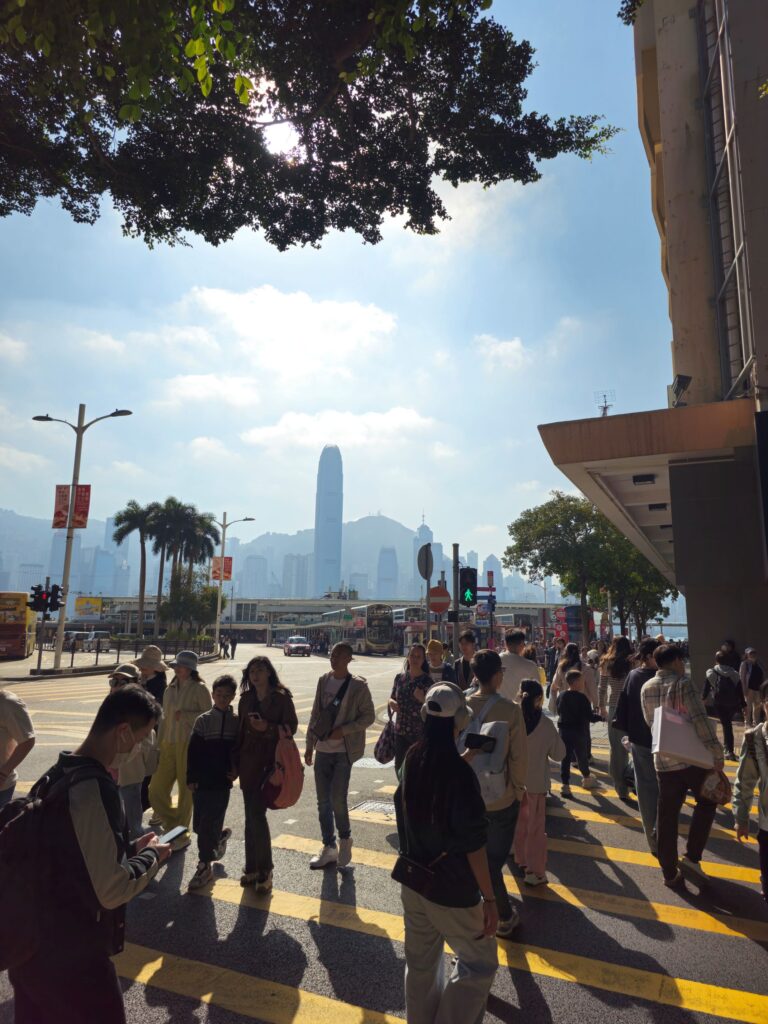
January in Hong Kong sits around 15–20°C during the day, occasionally dropping to 12–13°C in the evenings, particularly near the harbor where the wind picks up. There is no snow. There is no frost. There are no heavy coats required. What there is, most days, is clear blue sky, low humidity, and excellent visibility — a combination that’s genuinely rare in a subtropical city that spends much of the year under a haze of heat and moisture.
The honest summary: Hong Kong in January feels more like a mild European spring than what most people think of as winter. If you’re coming from a country with real winters, you may find yourself slightly overdressed on the warmer days.
Was It Cold? My Honest Experience
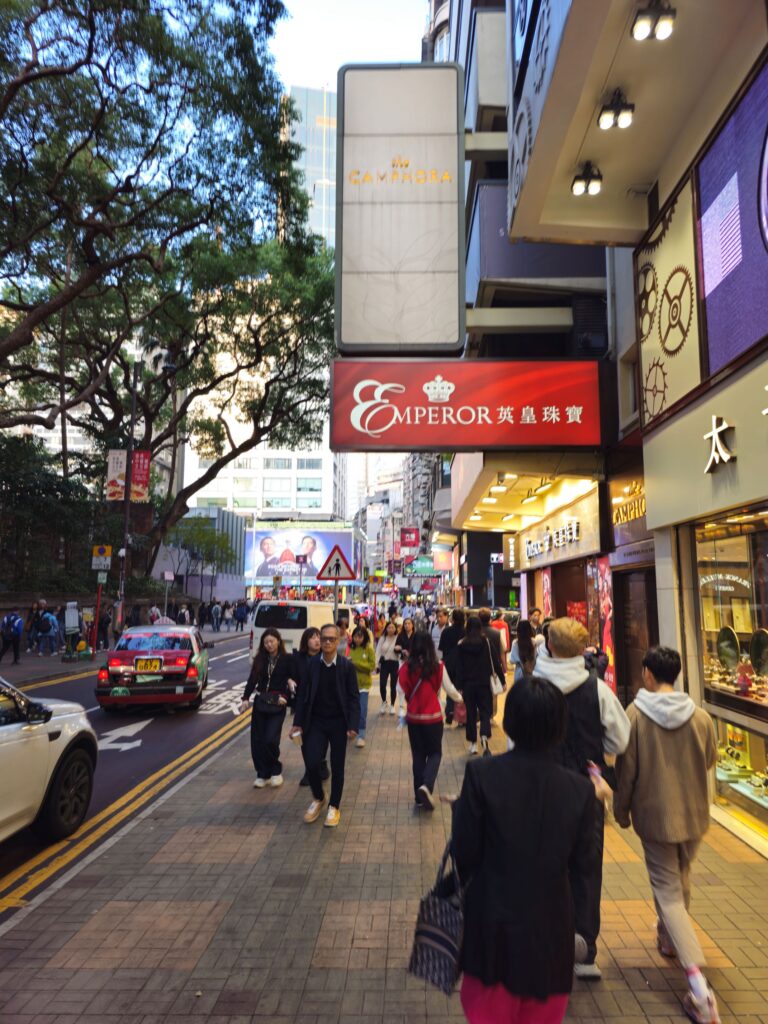
I went expecting to need layers and ended up in a light padded jacket for most of the trip — and even that felt like too much on the warmer afternoons. The days I spent walking the Tsim Sha Tsui promenade or climbing up to Victoria Peak were comfortable in a single jacket layer. Evenings near the harbor were cooler, with a consistent breeze coming off the water, but nothing that required significant bundling up.
The one exception was indoor spaces. Hong Kong’s air conditioning runs aggressively year-round — restaurants, shopping malls, the MTR, and hotel lobbies are often cooled to temperatures that feel genuinely cold when you step in from the mild outdoor air. A light layer you can put on indoors is more useful than a heavy coat for the street.
The bottom line: I was warmer than I expected, more comfortable than I would have been in summer, and never once wished I’d brought heavier clothing.
What to Pack for Hong Kong in Winter
Based on actual January experience, here’s what works:
The core layer A light padded jacket or quilted jacket is the sweet spot for January in Hong Kong — warm enough for cooler evenings and harbor breezes, light enough to carry when the afternoon warms up. A heavyweight winter coat is overkill and will leave you sweating on any walk longer than 20 minutes.
Indoor layer A thin cardigan, light fleece, or long-sleeve layer for restaurants and shopping malls. Hong Kong’s indoor air conditioning runs cold regardless of the season outside — this layer gets more use than anything else.
Footwear Comfortable walking shoes are the priority. Hong Kong involves a lot of walking on varied terrain — flat harbor promenades, steep hillside streets on Hong Kong Island, cobblestone areas around heritage districts. Trainers or comfortable walking shoes handle everything. No need for boots.
What you don’t need
- Heavy winter coat
- Thermal underlayers
- Gloves or scarves (unless you run very cold)
- Umbrella — January is one of Hong Kong’s driest months
Packing summary
✅ Light padded or quilted jacket
✅ Thin indoor layer (cardigan/fleece)
✅ Comfortable walking shoes
✅ T-shirts and light tops for daytime
❌ Heavy coat
❌ Thermal layers
❌ Umbrella (low rain probability)
The Biggest Advantage of Visiting in Winter: The Views
This is the thing I didn’t fully appreciate until I was standing on the Tsim Sha Tsui promenade looking across at the Hong Kong Island skyline on a clear January morning: winter visibility in Hong Kong is exceptional.
Summer in Hong Kong brings heat, humidity, and haze — a combination that softens views across the harbor and from Victoria Peak into a blur of grey. The skyline is still impressive, but you’re seeing it through a filter. In January, the air is dry and clear, and the city reveals itself in full detail. Individual buildings are sharp. You can trace the harbor’s full width. From the Peak, you can see all the way across to Kowloon and beyond with a clarity that summer visitors simply don’t get.
For a city whose most famous experiences are view-dependent — the harbor skyline, Victoria Peak, the Symphony of Lights — visiting in winter is a genuine advantage that’s easy to underestimate until you’re there.
What’s Better in Winter vs Summer
| Experience | Winter (Jan) | Summer (Jul–Aug) |
|---|---|---|
| Harbor views | ✅ Sharp and clear | ⚠️ Often hazy |
| Victoria Peak views | ✅ Excellent visibility | ⚠️ Frequently hazy |
| Walking comfort | ✅ Pleasant | ❌ Hot and humid |
| Crowd levels | ✅ Slightly lower | ⚠️ Peak season |
| Photography | ✅ Clear light | ⚠️ Haze affects distance shots |
| Outdoor dining | ✅ Very comfortable | ⚠️ Uncomfortably hot |
| Swimming/beach | ❌ Too cool | ✅ Ideal |
| Typhoon risk | ✅ None | ❌ Typhoon season |
The trade-off is clear: if your trip centers on the harbor, the skyline, and outdoor exploration — which most Hong Kong itineraries do — winter is the better season. If beach time or water activities are a priority, summer wins.
Crowds and Costs in January
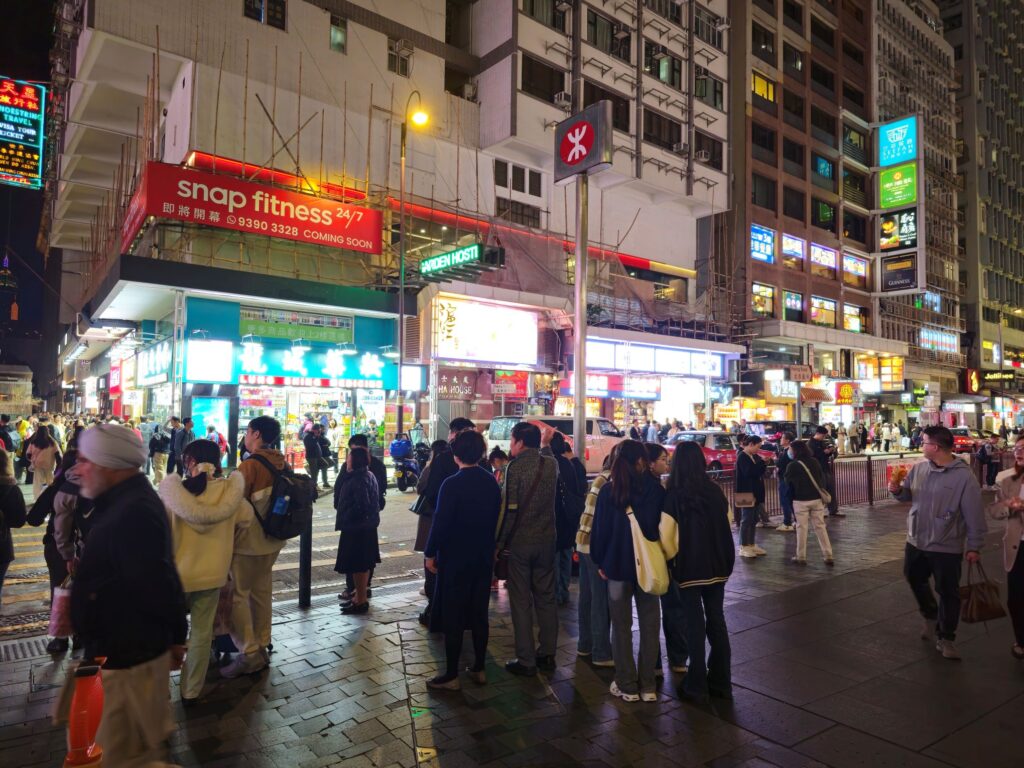
January is not peak tourist season in Hong Kong, which means two practical advantages: slightly shorter queues at major attractions and generally better hotel availability than the busiest periods.
The exception is Chinese New Year, which falls in late January or February depending on the year. The weeks immediately before and during Chinese New Year see significant increases in both visitors and local travel — accommodation prices rise, and the city has a festive, busy atmosphere that’s worth experiencing if you’re there for it, but worth knowing about if you’re trying to avoid crowds.
A standard January visit outside the Chinese New Year period is one of the calmer times to be in Hong Kong, without the summer heat and typhoon risk or the Easter and Golden Week crowds.
Winter-Specific Things Worth Knowing
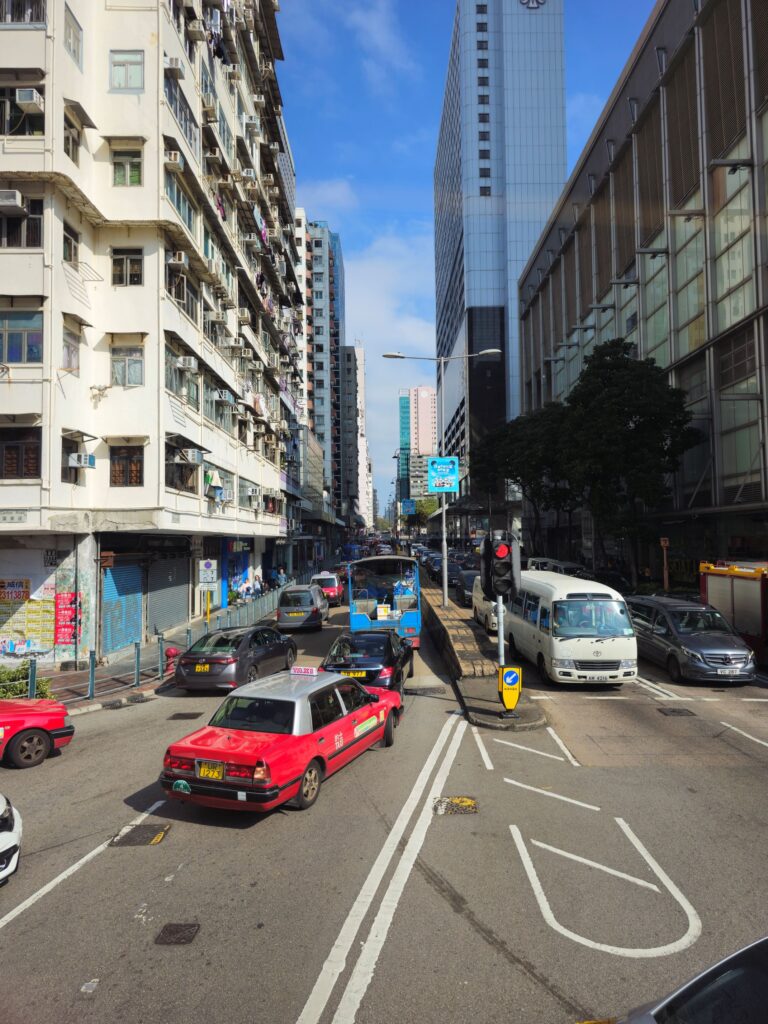
Christmas and New Year atmosphere If you’re visiting in late December or early January, Hong Kong puts on an impressive festive display. The harbor area, major shopping malls, and streets in Tsim Sha Tsui and Central are decorated through the Christmas and New Year period, and the Symphony of Lights has occasional special editions around the holidays.
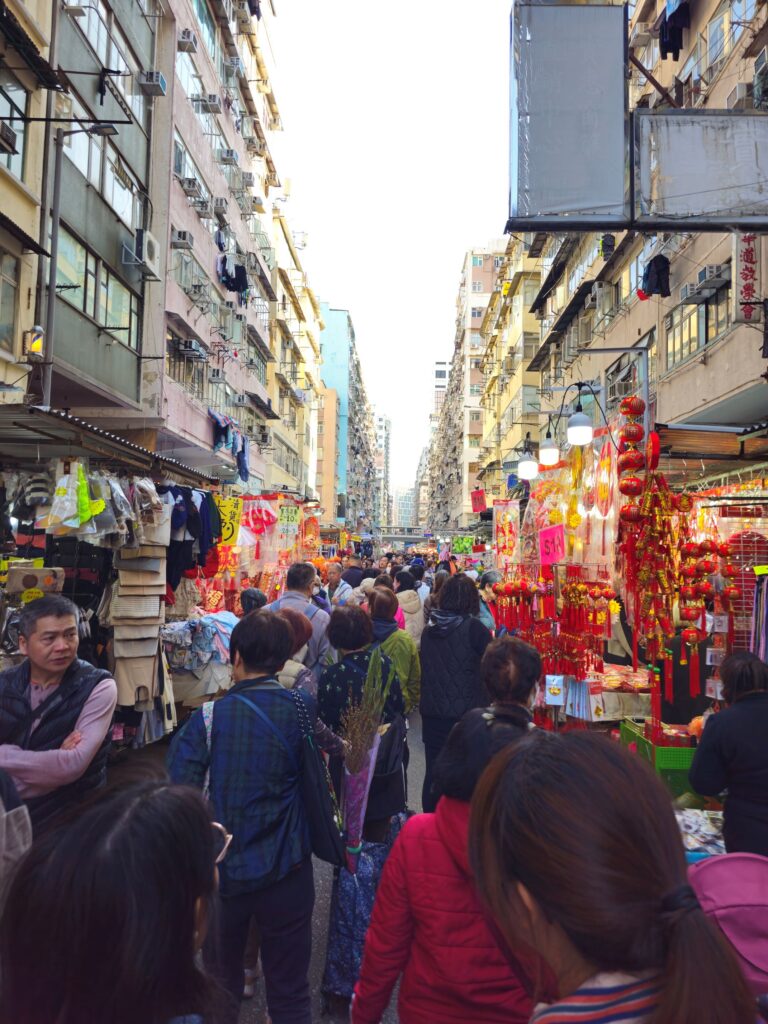
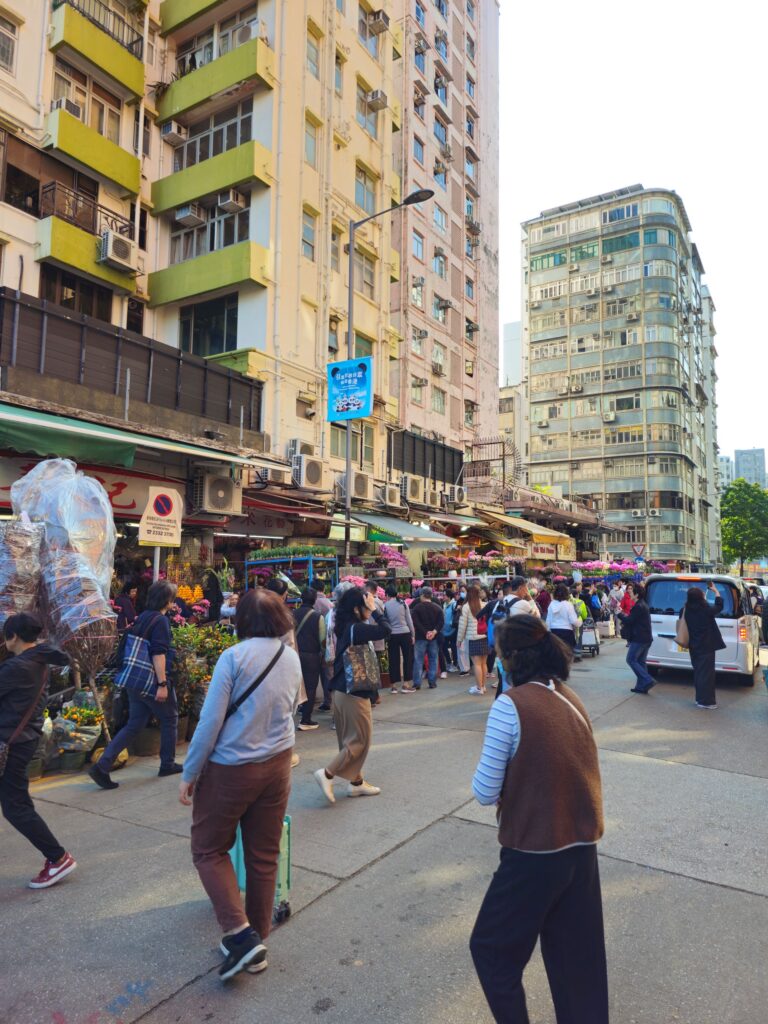
Lunar New Year Even if you’re not there for Chinese New Year itself, the lead-up period sees decorations appearing across the city from mid-January onward — flower markets, lanterns, and red decorations in shopfronts and public spaces. It adds a layer of visual interest to the city that’s specific to this time of year.
Sunset timing In January, sunset in Hong Kong falls around 5:45–6:00pm — earlier than summer. For Victoria Peak visits, this means you can combine a late afternoon visit with the sunset transition without staying particularly late. The Symphony of Lights at 8pm gives you a comfortable gap between sunset and the show.
Restaurant and attraction hours Most major attractions and restaurants operate normal hours throughout winter — there’s no significant seasonal closure pattern in Hong Kong the way there might be in colder destinations. The city operates at full capacity year-round.
Is Winter a Good Time to Visit Hong Kong?
Yes — and in several ways it’s the best time for a first visit. The visibility advantage alone makes a significant difference to the quality of the city’s most iconic experiences. Add comfortable walking temperatures, lower humidity, minimal rain, and slightly quieter crowds compared to peak summer, and January sits comfortably among the best months on the Hong Kong calendar.
The city doesn’t shut down, scale back, or become less interesting in winter. It just becomes more comfortable to move through — and clearer to see.
Hong Kong 4-Day Itinerary: The Perfect First-Timer’s Guide