
There is a version of dim sum in Hong Kong that exists primarily for tourists — hotel restaurants with English menus, tableside explanations of each dish, and prices that reflect the convenience of not having to find the real thing. One Dim Sum is emphatically not that version. I visited the Prince Edward location on the afternoon of my second day in Hong Kong, taking the MTR two stops north from Tsim Sha Tsui, and found a restaurant that operates entirely on its own terms: loud, fast, packed with local families, and producing dim sum that justifies every superlative applied to it.
This review covers One Dim Sum honestly — the food, the experience, the practical logistics, and why it belongs on any Hong Kong food itinerary regardless of budget.
Background: What Is One Dim Sum?
One Dim Sum (一點心) is a dim sum restaurant near Prince Edward station in Kowloon — not the most central location by tourist geography, but two MTR stops from Tsim Sha Tsui and entirely straightforward to reach. The restaurant has been operating long enough to build a reputation that extends well beyond the local neighborhood: food writers, Hong Kong residents, and visiting food enthusiasts consistently cite it as one of the best value dim sum experiences in the city.
The restaurant’s appeal is specific: it produces dim sum of a quality normally associated with significantly more expensive establishments, at prices that reflect a local rather than tourist clientele, in an environment that operates exactly as a proper Hong Kong dim sum restaurant should.

Getting There
MTR from Tsim Sha Tsui: Take the Tsuen Wan Line north two stops to Prince Edward station. Exit B2. Walk approximately 3 minutes to the restaurant — One Dim Sum is well-known enough that locals in the immediate area can direct you if needed.
From Central: MTR Tsuen Wan Line from Central (cross-harbour) to Prince Edward — approximately 15 minutes. The journey is straightforward; Google Maps handles the routing well.
Walking from Mong Kok: Prince Edward is one MTR stop north of Mong Kok — visitors combining One Dim Sum with the Flower Market and Bird Garden can walk between the two areas easily.
Arrival and Queuing
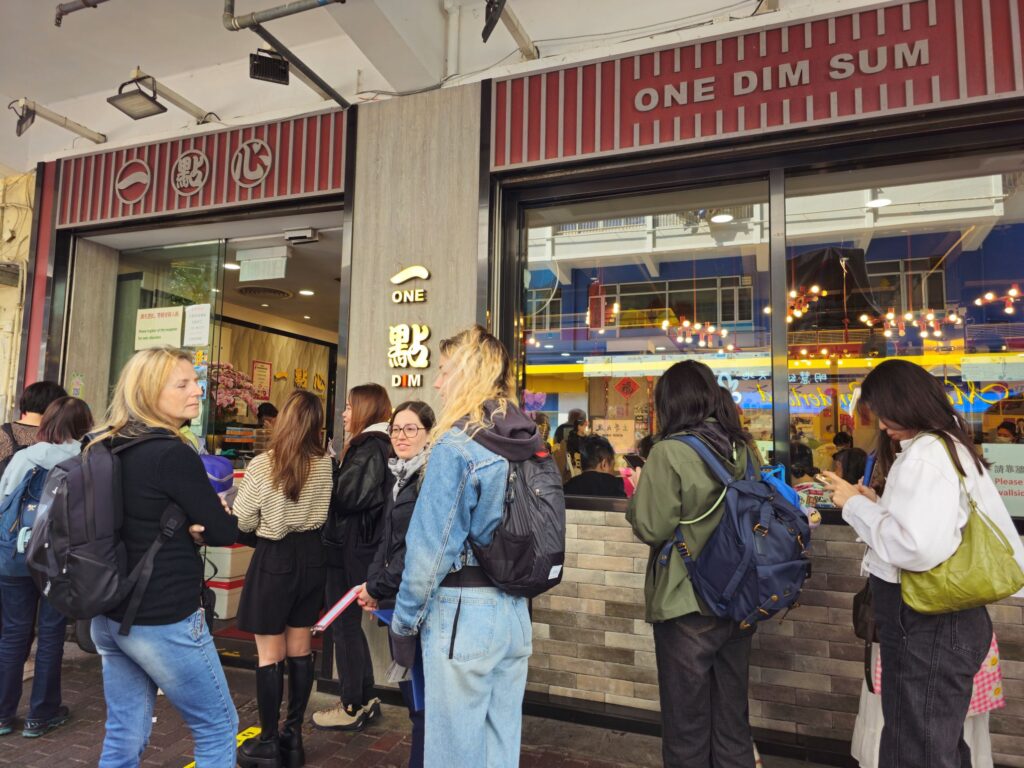
One Dim Sum does not take reservations. The queue management system is simple: arrive, add your name to the waiting list at the entrance, and wait for your table to be called. The wait time depends on the time of arrival — arriving at opening is the most reliable strategy for a short wait.
I arrived at One Dim Sum on a January weekday at approximately 12:30pm — not at opening, which meant a queue was already present. The wait was approximately 20 minutes, which moved faster than the length of the queue suggested. The restaurant’s turnover is rapid; tables clear and reset quickly.
The waiting area is at the entrance — no seats, standing room only. This is standard for popular Hong Kong restaurants and not a reflection of poor organization; it reflects the restaurant’s approach to maximizing seating capacity for paying customers rather than waiting customers.
Timing recommendation: Arrive at opening (approximately 10am for weekend dim sum service, check current hours for weekday service) for the shortest wait and the fullest trolley selection. Midday arrival on a weekday involves a wait but is manageable. Weekend lunch arrivals without timing discipline can involve a significant wait.
The Space
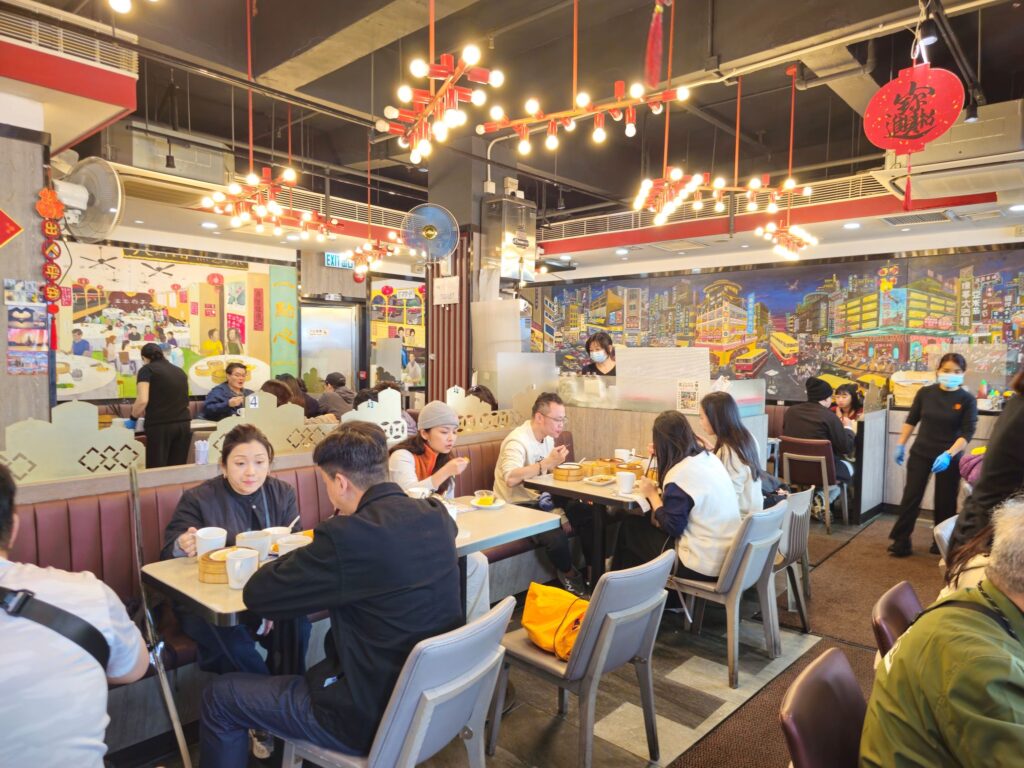
One Dim Sum occupies a large dining room — round tables seating 8–10 people, bright lighting, and the particular noise level that characterizes a Hong Kong dim sum restaurant operating at full capacity. The acoustic environment is loud: the clatter of bamboo steamers, the calls of the servers, the conversation of dozens of tables simultaneously, and the background noise of a kitchen working at pace.
This is not a criticism. The noise level of One Dim Sum is inseparable from its authenticity — a quiet dim sum restaurant is either empty or not doing what dim sum is supposed to do.
Shared tables: Standard practice at One Dim Sum — you will likely share a table with other diners. This is normal and expected; no conversation is required or anticipated.
Ordering
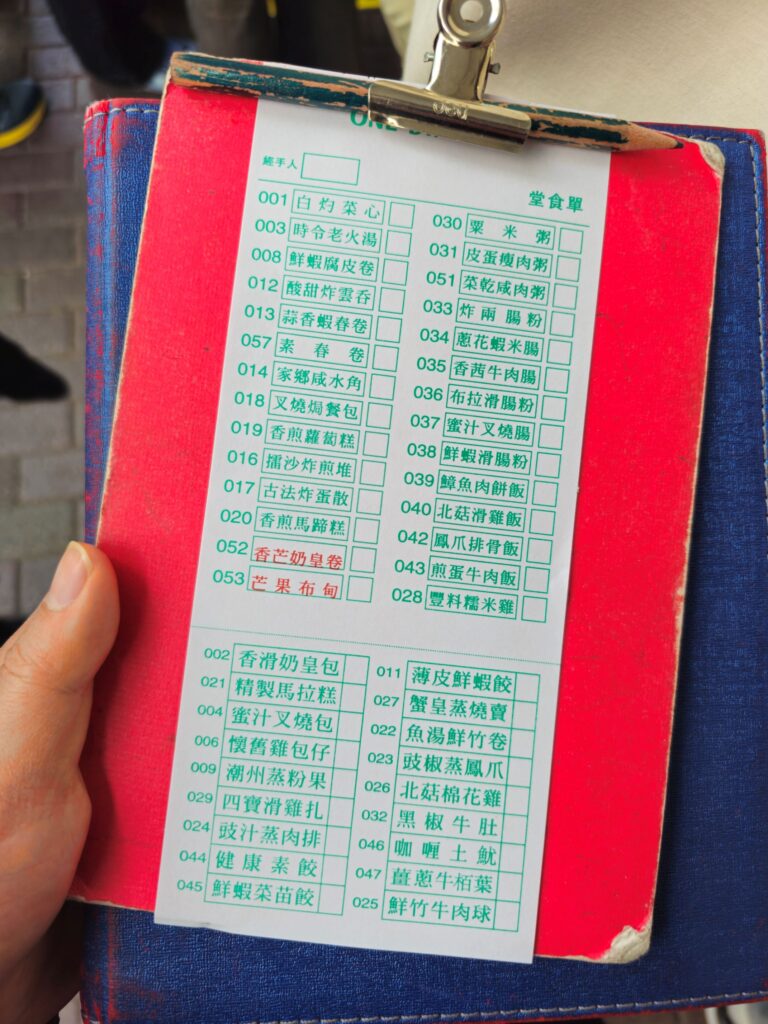
One Dim Sum uses a combination of trolley service and written order forms depending on the time of day and the volume of service. The trolley service — servers pushing carts through the room with bamboo steamers and plates of various dim sum — is the more traditional format and provides the most interactive ordering experience. The written order form is more efficient for specific dish selection.
For first-time visitors: The trolley service is the more enjoyable format — flag down carts as they pass, lift lids to see what’s available, and order on the spot. The servers can indicate what’s available in English if needed, though the interaction is primarily visual (lifting lids and pointing) rather than verbal.
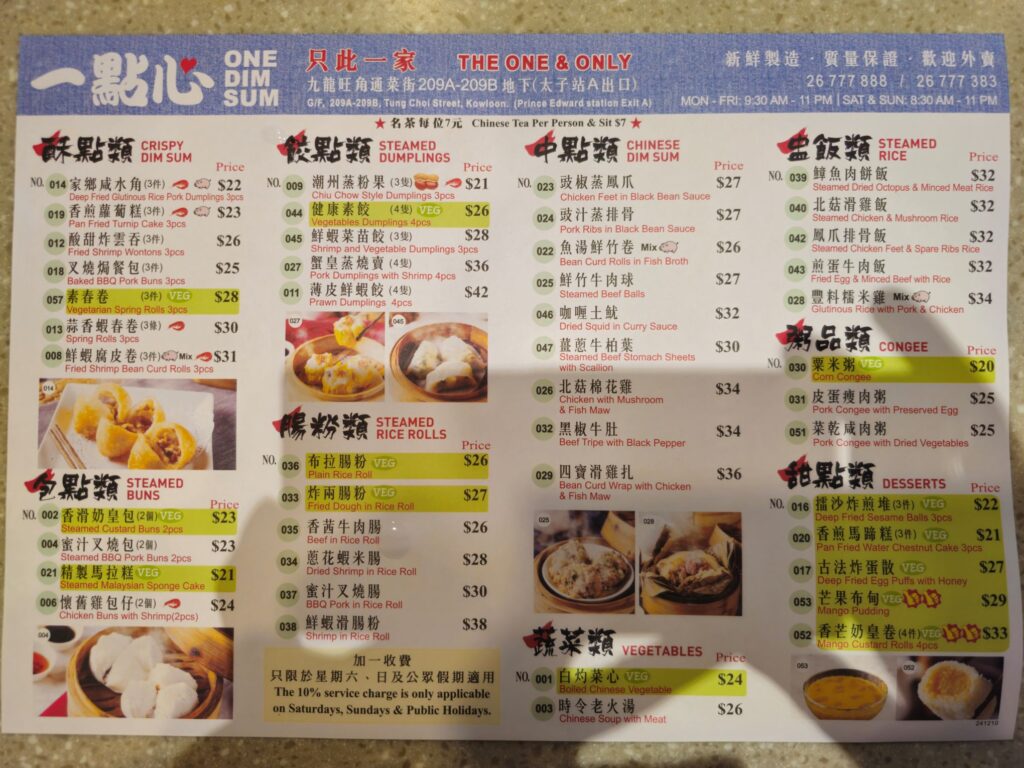
The order form lists all available dishes in Chinese and English — useful for visitors who want specific dishes and don’t want to rely on what happens to come past on the trolley.
The Food
Har Gow (蝦餃) — Steamed Prawn Dumplings
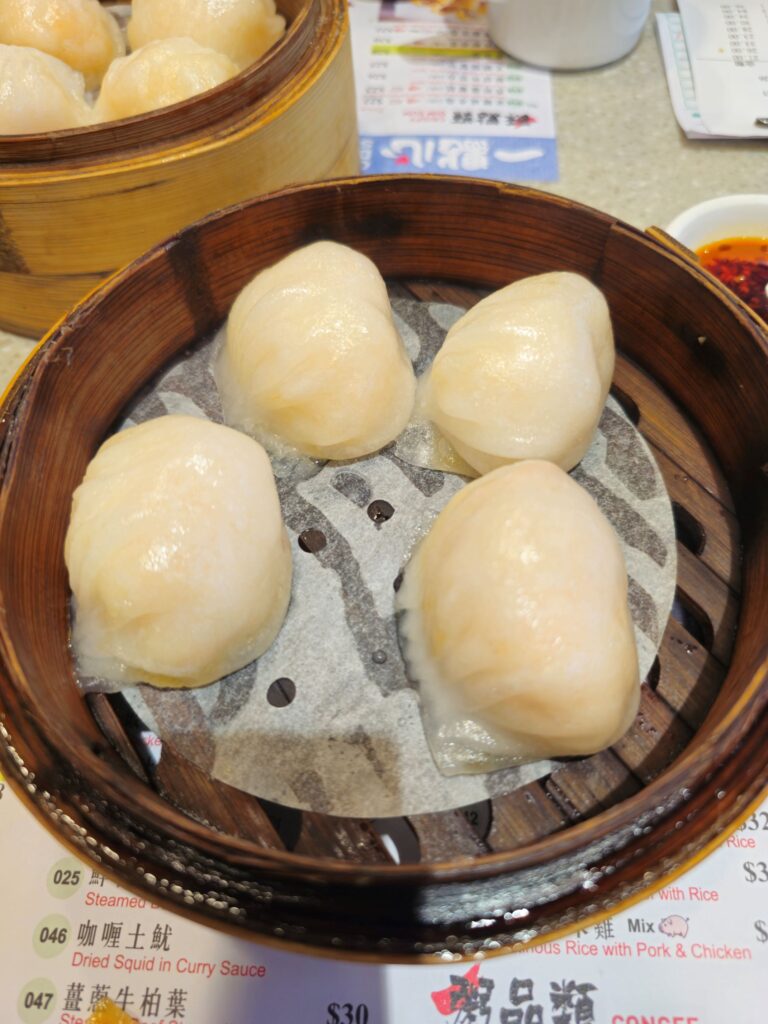
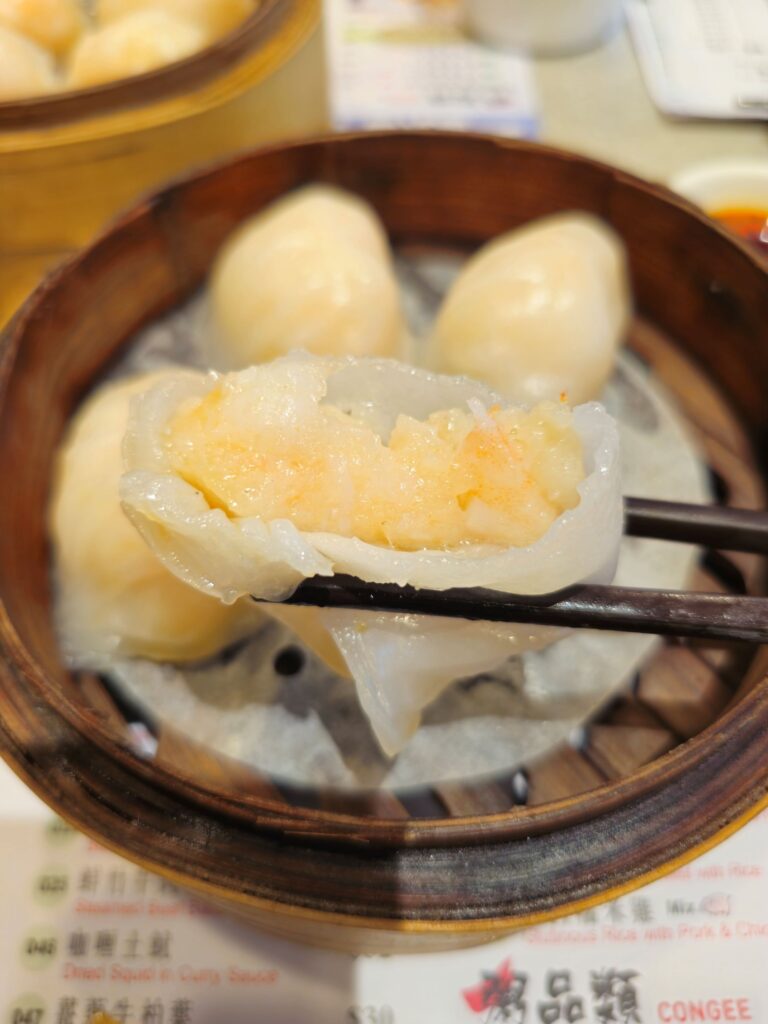
The benchmark dish for any dim sum restaurant, and the first thing to order at One Dim Sum. The har gow here is excellent — the wrapper is thin and properly translucent, indicating good technique in both dough preparation and steaming. The filling is generous and clearly fresh prawn rather than the cheaper prawn paste that lesser establishments use; the texture is firm and clean, the flavor unmistakably prawn.
Eating the har gow at One Dim Sum in comparison to hotel dim sum or tourist-facing restaurants makes the quality difference immediately apparent. This is what har gow is supposed to taste like.
Order: Two portions minimum. The har gow is the reason to come.
Siu Mai (燒賣) — Pork and Prawn Dumplings
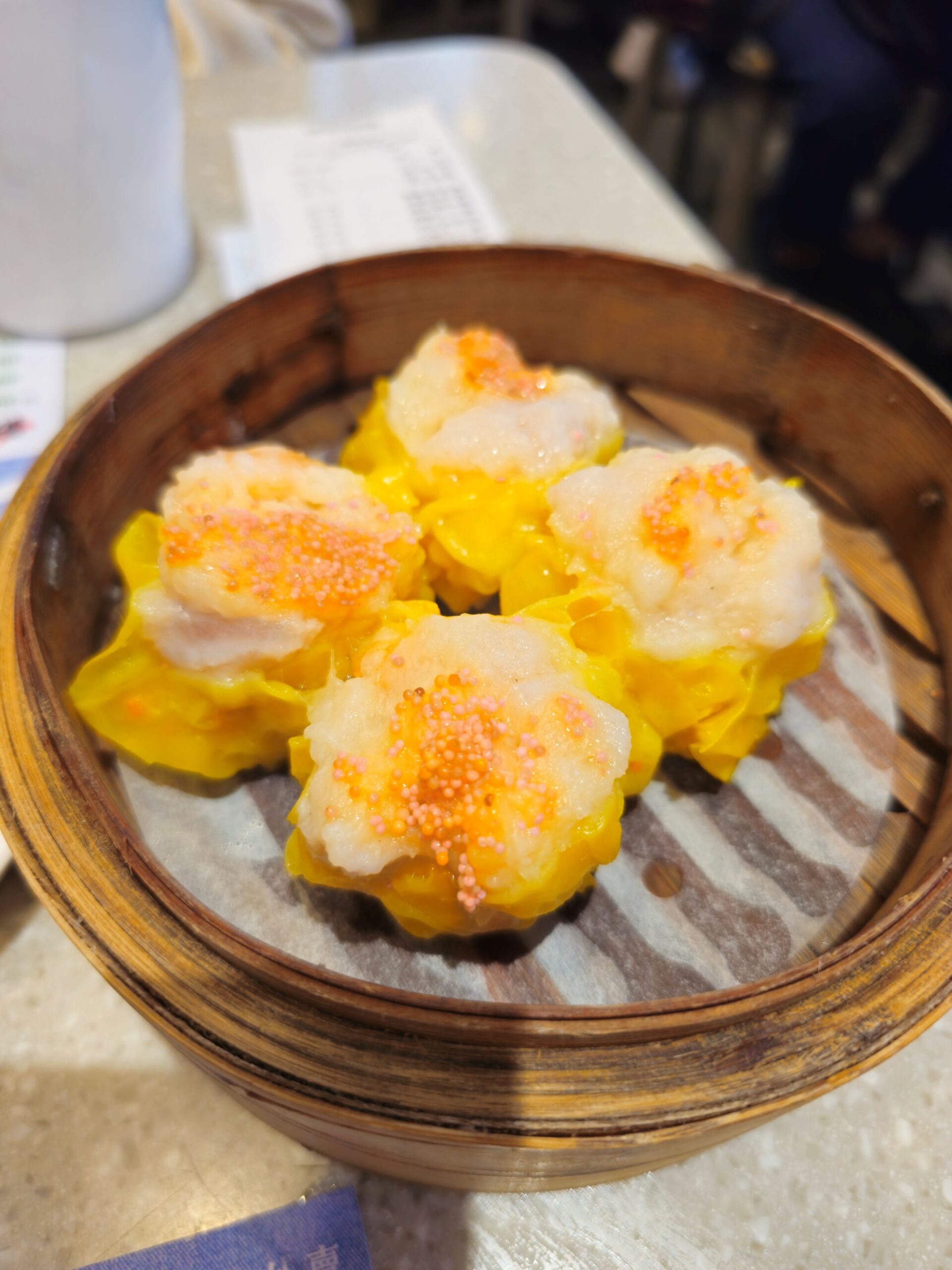
Open-topped dumplings with a pork and prawn filling, topped with fish roe or carrot. One Dim Sum’s siu mai is well-made — the filling ratio between pork and prawn is correct, the wrapper holds its shape without becoming tough, and the garnish is a detail rather than a distraction. A reliable and satisfying order alongside the har gow.
Cheung Fun (腸粉) — Rice Noodle Rolls
Smooth, silky rice noodle rolls filled with prawn, beef, or char siu (barbecue pork), served with sweet soy sauce. The cheung fun at One Dim Sum is one of the better versions available at the restaurant’s price point — the noodle sheet is properly smooth and slightly translucent, the filling is generous, and the sauce ratio is calibrated rather than drowned.
Order: The prawn version for the clearest flavor; the char siu version for the most distinctly Cantonese character.
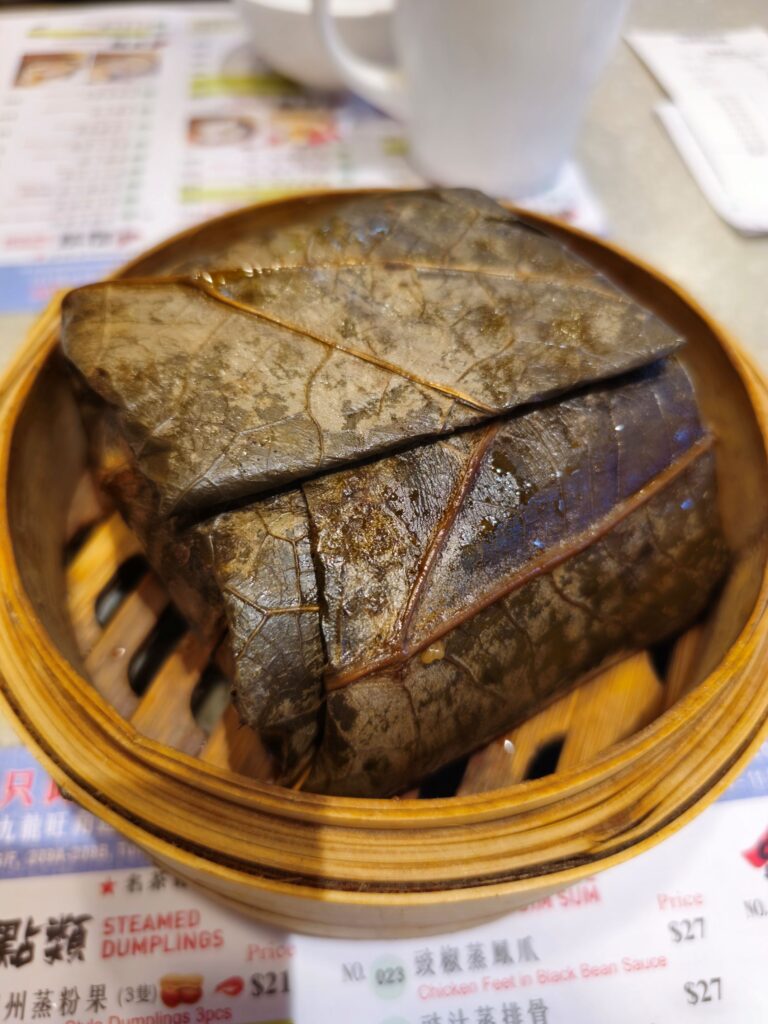

Lo Mai Gai (糯米雞) — Lotus Leaf Sticky Rice
Glutinous rice with chicken, mushroom, and Chinese sausage wrapped in lotus leaf and steamed — one of dim sum’s most substantial dishes and one of the most satisfying when made well. One Dim Sum’s lo mai gai is generous in filling and properly steamed — the rice is sticky without being gluey, and the lotus leaf imparts the distinctive fragrance that makes this dish specific.
Order: One per two people — it’s filling.
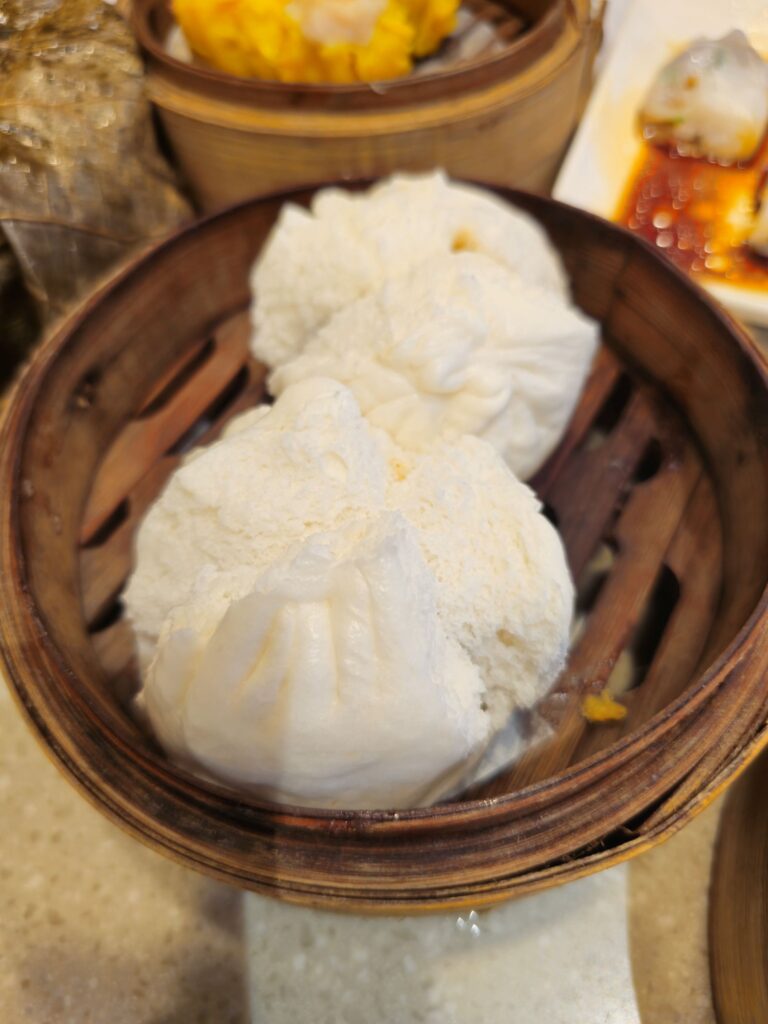
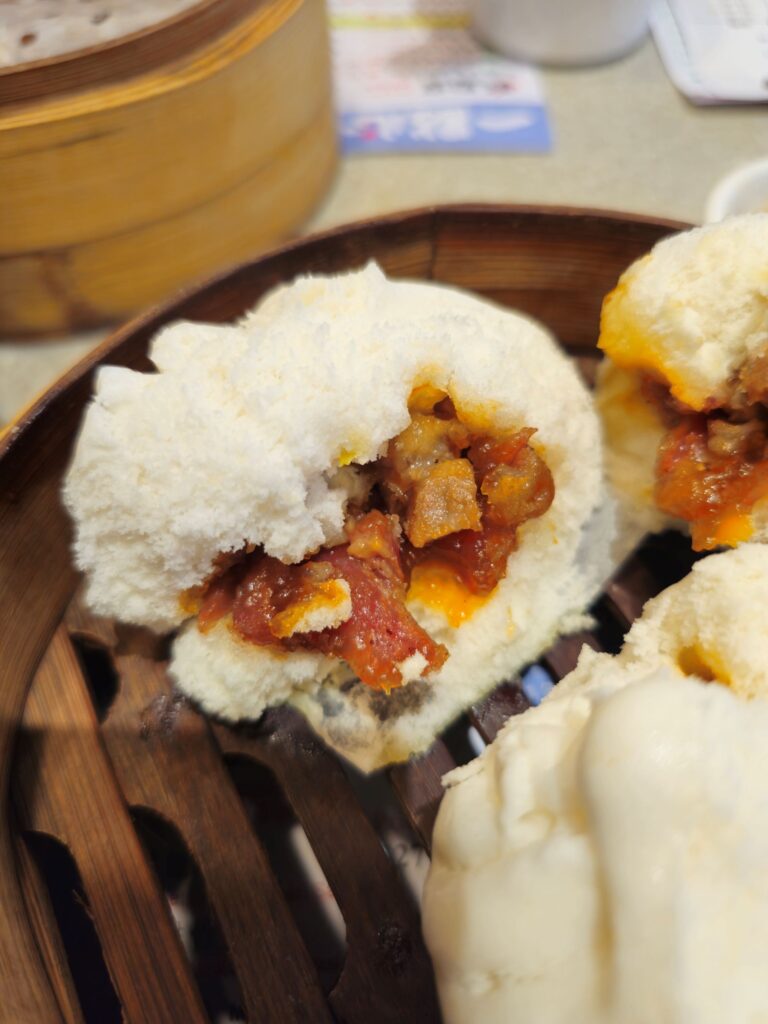
Char Siu Bao (叉燒包) — Barbecue Pork Buns
Available in both steamed (fluffy white bun) and baked (glazed, slightly sweet exterior) versions. The steamed version at One Dim Sum is the more traditional and well-executed: the bun is soft and fluffy, the char siu filling is properly seasoned and not overly sweet. The baked version has a caramelized exterior that provides a different textural experience.
Turnip Cake (蘿蔔糕) — Pan-Fried Radish Cake
A dim sum staple that’s often overlooked in favor of more prominent dishes. One Dim Sum’s turnip cake is pan-fried to a crisp exterior with a soft, slightly sweet interior — the radish flavor is present without being overwhelming, and the texture contrast between the crisp outside and soft inside is well-executed.
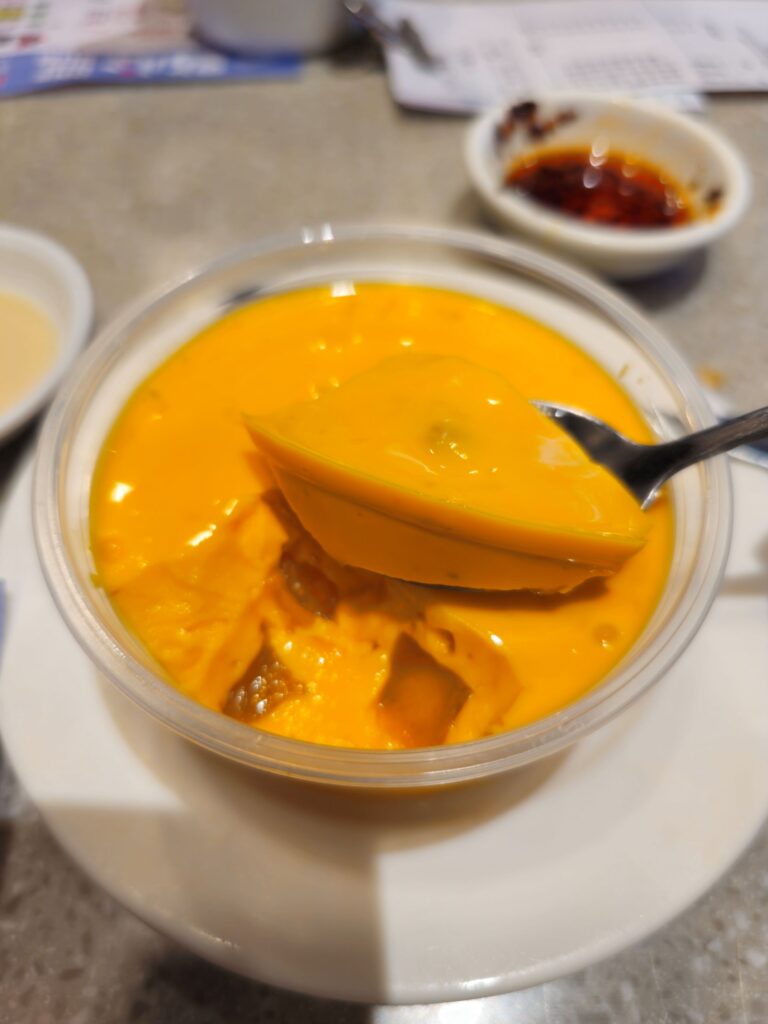
Egg Tart (蛋撻)
The dim sum egg tart — smaller than the dedicated bakery versions but fresh and well-made. One Dim Sum’s egg tart has a proper shortcrust shell and a smooth custard filling that’s correctly set. A good version of the form within the dim sum context; not the benchmark against Tai Cheong or Bakehouse but a satisfying finish to the meal.
The Bill
One Dim Sum’s pricing is one of its most distinctive features — the bill at the end of a full dim sum meal for two people, covering har gow, siu mai, cheung fun, lo mai gai, char siu bao, and an egg tart each, comes to a total that would represent a single dish at a hotel dim sum restaurant.
The pricing reflects a local rather than tourist clientele and the restaurant’s position as a neighborhood institution rather than a destination dining experience. It is one of the best food values in Hong Kong — quality that competes with significantly more expensive establishments at prices that don’t.

One Dim Sum vs Other Hong Kong Dim Sum Options
| One Dim Sum | Lin Heung Tea House | Hotel Dim Sum | |
|---|---|---|---|
| Quality | ✅ Excellent | ✅ Traditional | ✅ Consistent |
| Price | ✅ Best value | ✅ Cheap | ❌ Premium |
| Atmosphere | Local, loud | Historic, authentic | Formal, quiet |
| Accessibility | Easy (English menu) | Chinese-only menu | ✅ Tourist-facing |
| Trolley service | Partial | ✅ Full traditional | Varies |
| Best for | Quality + value | Authentic experience | Comfort + English |
One Dim Sum occupies the ideal position for most visitors — quality comparable to the best Hong Kong dim sum at prices that make repeat visits practical, in an environment that’s authentic without requiring the navigation challenges of the most traditional establishments.

Practical Tips
Timing: Arrive at opening for shortest wait and fullest trolley selection. Midday on weekdays is manageable; weekend lunch requires patience.
Party size: One Dim Sum’s round tables seat 8–10 — larger groups may be seated faster than pairs or solo diners, who are more likely to be placed at shared tables.
Ordering strategy: Start with har gow and siu mai (the benchmarks), add cheung fun and lo mai gai for variety, finish with egg tart. Don’t over-order — the dishes arrive in quick succession and the table fills fast.
Tea: Tea is served automatically and refilled throughout the meal. A small tea service charge is typically added to the bill — standard practice at Hong Kong dim sum restaurants.
Cash vs card: Check current payment options before visiting — cash has historically been preferred at traditional dim sum restaurants, though card acceptance has improved throughout Hong Kong’s restaurant scene.
Combining with the Flower Market: The One Dim Sum → Flower Market → Bird Garden sequence is one of the best half-day itineraries available from the Prince Edward MTR station area.

Final Thoughts
One Dim Sum is the answer to a specific question: where can I eat genuinely excellent dim sum in Hong Kong without paying hotel prices or navigating the most challenging traditional establishments? The answer is consistent across years of recommendations from visitors and Hong Kong residents alike: Prince Edward station, two stops from Tsim Sha Tsui, no reservations, arrive early.
The har gow is the reason to come. The price is the reason to come back. The experience — loud, fast, authentic, surrounded by Hong Kong families doing exactly what they do every weekend — is the reason to understand that this is what dim sum is supposed to be.
Best Cha Chaan Teng in Hong Kong: A Guide to the City’s Most Iconic Diners
Wonton Noodles in Hong Kong: A Complete Guide