
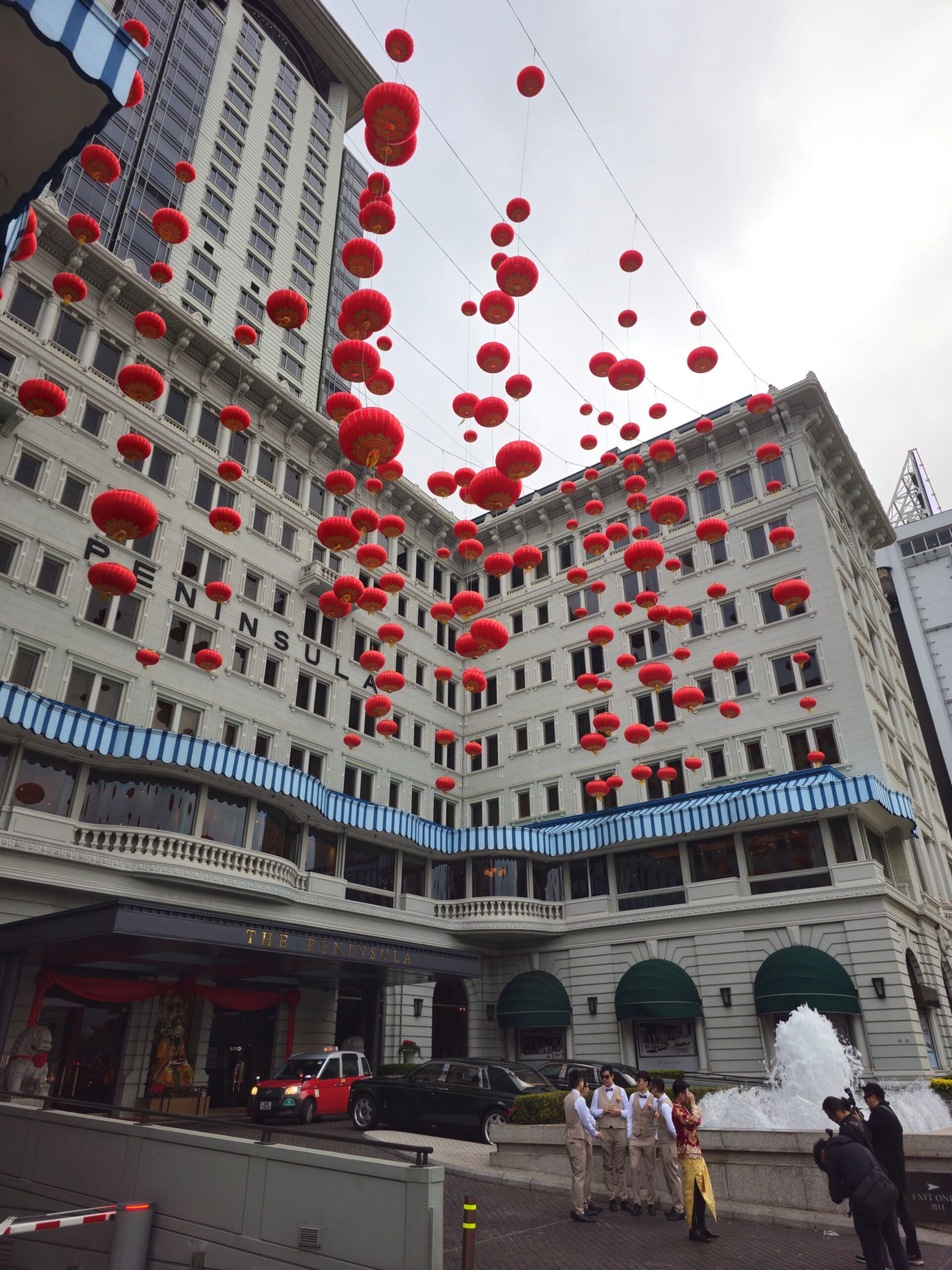
Choosing where to stay in Hong Kong is one of the most consequential decisions of the trip — the city’s geography means that your base determines how you experience everything else. Stay in Tsim Sha Tsui and Hong Kong Island is a harbor crossing away; stay in Central and Kowloon requires the same crossing in the other direction. I stayed in both during my January trip — two nights at the YMCA Salisbury Hotel in Tsim Sha Tsui, then two nights at the AKVO Hotel in Central — and the difference between the two experiences was significant enough to inform a clear perspective on what each side of the harbor offers.
This guide covers every major area worth considering for accommodation in Hong Kong, with honest assessments of what each provides and who each suits best.

Understanding Hong Kong’s Geography First
Before covering specific areas, the fundamental geographic distinction worth understanding is the harbor crossing — the divide between Kowloon (the mainland peninsula side) and Hong Kong Island (the island side).
Kowloon Side:          Hong Kong Island Side:
- Tsim Sha Tsui         - Central / Sheung Wan
- Jordan                  - Wan Chai
- Mong Kok             - Causeway Bay
- Hung Hom            - Tin Hau
                            - Aberdeen / Stanley
The Star Ferry and MTR cross-harbour tunnel connect the two sides in minutes, so neither is truly inconvenient from the other. But the character of each side is genuinely different — Kowloon is older, denser, and more working-class in character; Hong Kong Island is more polished, more international, and more vertical in its geography.
The view also reverses depending on which side you’re on: from Tsim Sha Tsui, you look at the Hong Kong Island skyline; from Central, you look at the Kowloon skyline. Both views are excellent. They’re different views.

Tsim Sha Tsui (Kowloon)
Who It’s For
Tsim Sha Tsui is the right base for most first-time visitors to Hong Kong. It combines the city’s most iconic harbor view with excellent transport connections, the widest range of accommodation prices, and enough sights and restaurants within walking distance to keep a two-day itinerary fully occupied without leaving the neighborhood.
What It Offers
The neighborhood’s primary advantage is the Victoria Harbour promenade — a 20-minute waterfront walk with the Hong Kong Island skyline across the water that represents the most iconic visual experience in Hong Kong. The YMCA Salisbury Hotel sits directly on this promenade, two minutes from the Star Ferry pier and the Avenue of Stars.
Transport connectivity is excellent: the MTR Tsim Sha Tsui station (Tsuen Wan Line) connects to Mong Kok in three stops, to Central via the cross-harbour tunnel in eight minutes, and to the Airport Express interchange at Kowloon Station for airport connections. The Star Ferry provides the most atmospheric harbor crossing. Multiple bus routes cover the areas the MTR doesn’t reach directly.
The accommodation range covers every price point — from the budget guesthouses of Chungking Mansions at the extreme low end to the Peninsula Hong Kong at the extreme high end, with a comprehensive mid-range selection along Nathan Road and its side streets.
The Trade-offs
Tsim Sha Tsui is one of Hong Kong’s most tourist-facing neighborhoods — the streets around Nathan Road have a visible tourist premium on goods and food, and the area is busy with visitors year-round. The streets immediately around the MTR station and the tourist shopping areas are less atmospheric than the harbor promenade and the quieter residential blocks behind.
The YMCA Salisbury Hotel represents the best value-to-location ratio in the neighborhood — the harbor-facing position at a YMCA price point is genuinely exceptional and unlikely to be matched by any other property at a similar price.
Recommended For
First-time visitors, couples, families, anyone for whom the harbor view is a priority, visitors with a limited budget who want a well-connected location.
Jordan (Kowloon)
Who It’s For
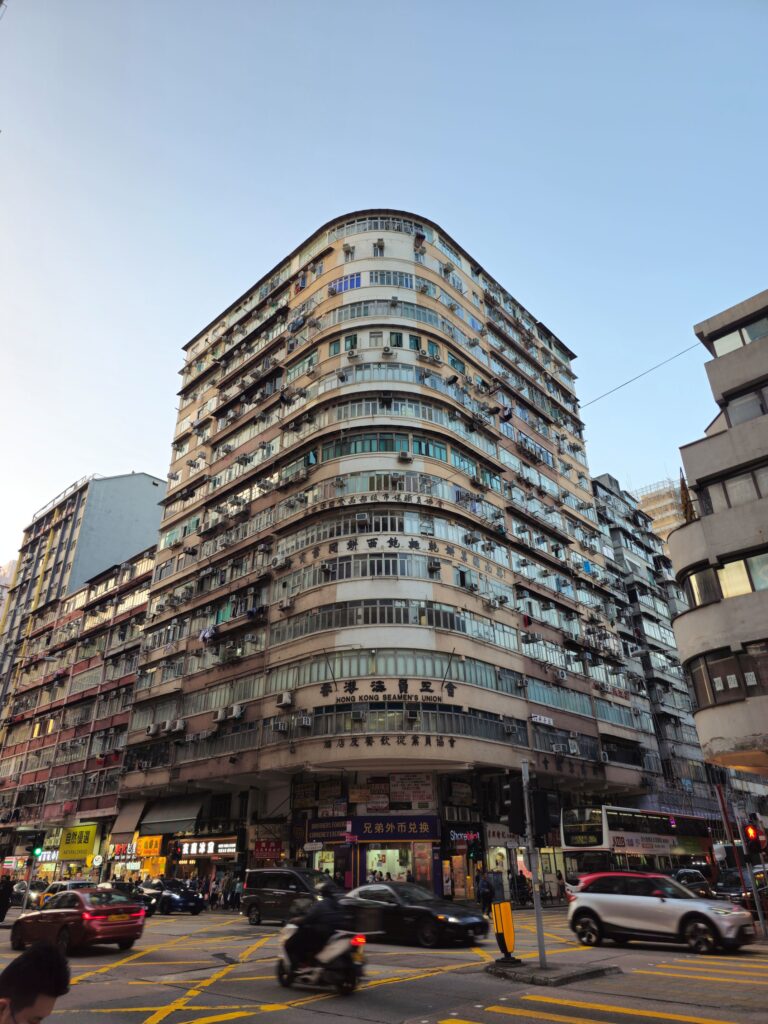
Jordan — immediately north of Tsim Sha Tsui — offers lower accommodation prices than its southern neighbor while maintaining most of the same transport connectivity. The neighborhood has a more working-class, local character than Tsim Sha Tsui and provides a slightly more immersive Hong Kong residential experience.
What It Offers
Australian Dairy Company — one of Hong Kong’s most celebrated cha chaan tengs — is in Jordan, making the neighborhood the right base for visitors who want to walk to the institution for breakfast without planning a journey. Temple Street Night Market is an easy walk north.
The MTR Jordan station (Tsuen Wan Line) provides the same connectivity as Tsim Sha Tsui station — Mong Kok two stops north, cross-harbour to Central three stops south. The accommodation prices along the Jordan Road and Nathan Road corridor are noticeably lower than equivalent properties in Tsim Sha Tsui.
The Trade-offs
Jordan doesn’t have Tsim Sha Tsui’s harbor promenade — the waterfront view requires a walk south to the TST area. The neighborhood is less polished than Tsim Sha Tsui and the area around the MTR station can feel chaotic.
Recommended For
Budget-conscious visitors who want Kowloon connectivity without Tsim Sha Tsui prices; visitors whose primary interests are the local markets and street food rather than the harbor view.

Mong Kok (Kowloon)
Who It’s For
Mong Kok is the right base for visitors whose primary interests are Hong Kong’s market culture — the Flower Market, Ladies Market, Bird Garden, and Fa Yuen Street are all within the neighborhood. It’s also the most economical major accommodation area in Hong Kong.
What It Offers
The Mong Kok and Prince Edward MTR stations provide direct connections to Tsim Sha Tsui (three stops south) and to the cross-harbour tunnel for Hong Kong Island. The neighborhood’s market density is unmatched — more different market experiences within walking distance than any other Hong Kong neighborhood.
Accommodation prices in Mong Kok are the lowest of any major Hong Kong neighborhood — budget guesthouses and mid-range hotels are available at prices that reflect the less tourist-facing character of the area.
The Trade-offs
Mong Kok is dense, loud, and operates at a pace and intensity that some visitors find overwhelming for an extended stay. The harbor view requires a journey south to Tsim Sha Tsui. The neighborhood is less atmospheric for evening walking than Tsim Sha Tsui or Central.
Recommended For
Budget-conscious visitors; repeat visitors who know the city and want a more local experience; visitors specifically interested in Hong Kong’s market culture.

Central (Hong Kong Island)
Who It’s For
Central is the right base for visitors who want to be inside the Hong Kong Island experience — the Mid-Levels Escalator, Soho, Lan Kwai Fong, the hillside neighborhoods, and the financial district all immediately accessible. I stayed at the AKVO Hotel in Central for the second half of my January trip and found it a significantly different experience from Tsim Sha Tsui — more layered, more interesting at street level, and more rewarding for walking without a specific destination.
What It Offers
The AKVO Hotel — a boutique property in the Central area — positioned me within walking distance of Lin Heung Tea House, Tsim Chai Kee, Tai Cheong Bakery, the Mid-Levels Escalator, and Lan Kwai Fong. The Star Ferry pier was a 10-minute walk for harbor crossings; the MTR Hong Kong Station was slightly closer for underground connections.
The neighborhood’s primary advantage is its layered character — the flat waterfront district, the hillside Soho area connected by the escalator, the historic streets of Sheung Wan to the west, and the financial towers of the CBD all within the same walkable area. Central rewards exploration on foot more than any other Hong Kong neighborhood.
The Airport Express terminates at Hong Kong Station in Central — the most convenient airport connection available, including the in-town check-in service that allows departing passengers to check luggage the day before flight.
The Trade-offs
Central is generally more expensive than Kowloon-side accommodation at equivalent quality levels. The harbor view from Central looks north toward Kowloon rather than at the Hong Kong Island skyline — a different and slightly less dramatic view than from Tsim Sha Tsui. The financial district character of the neighborhood’s core means it can feel quiet and corporate outside business hours.
Recommended For
Repeat visitors who have already experienced Tsim Sha Tsui; visitors whose primary interests are Hong Kong Island’s food, nightlife, and cultural scenes; business travelers using the Airport Express in-town check-in; anyone who prioritizes walkability and neighborhood depth over harbor views.
Sheung Wan (Hong Kong Island)
Who It’s For
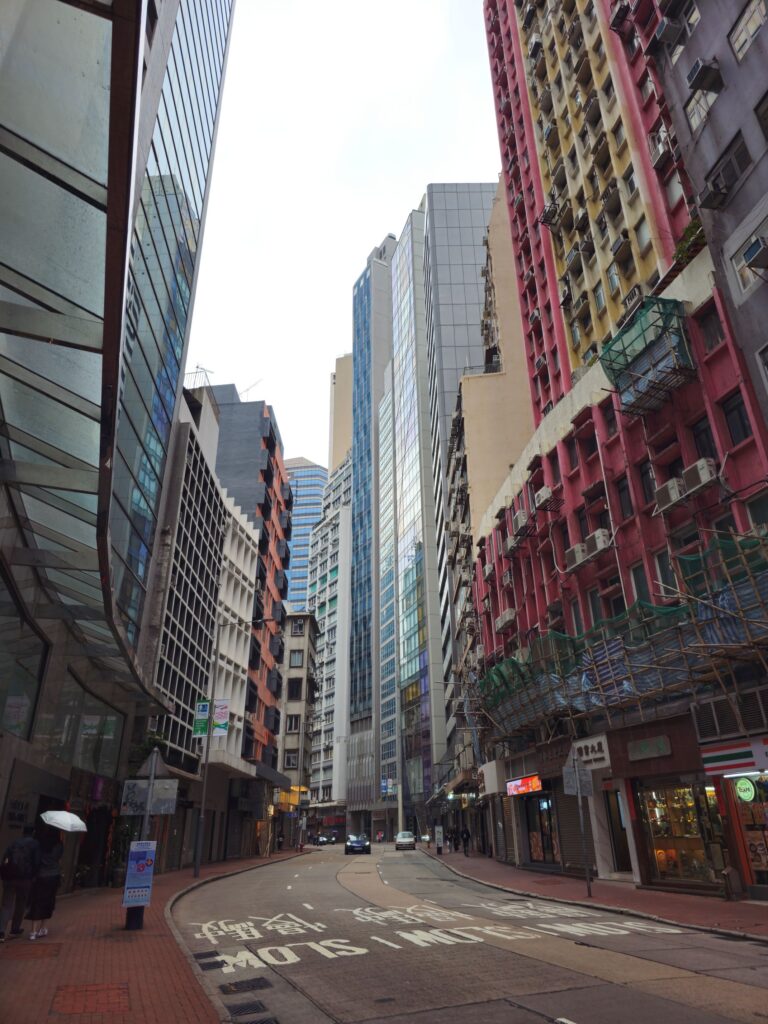
Sheung Wan — immediately west of Central, where the financial district gives way to older commercial and residential streets — is the most interesting and historically layered part of Hong Kong Island for visitors who want to experience the city beyond the tourist circuit.
What It Offers
The streets around Hollywood Road, the dried seafood district, and the antique shops of Sheung Wan give the neighborhood a character that Central’s financial core doesn’t have. Lin Heung Tea House — one of Hong Kong’s oldest and most traditional cha chaan tengs — is in Sheung Wan, making the neighborhood the right base for visitors who want to walk to the institution for breakfast.
The MTR Sheung Wan station (Island Line) provides connections to Central (one stop east) and the broader Island Line network. Accommodation prices are slightly lower than Central proper while maintaining the same Island-side character.
The Trade-offs
Sheung Wan is less connected than Central for visitors whose itinerary extends to Kowloon — the additional MTR stop adds minimal time but the harbor crossing from Sheung Wan (via the Central pier) requires more walking than from the heart of Central.
Recommended For
Visitors interested in Hong Kong’s historical layers; food-oriented visitors who want to be close to Lin Heung Tea House and the Sheung Wan market areas; visitors who want a slightly lower price point than Central proper.
Wan Chai (Hong Kong Island)
Who It’s For
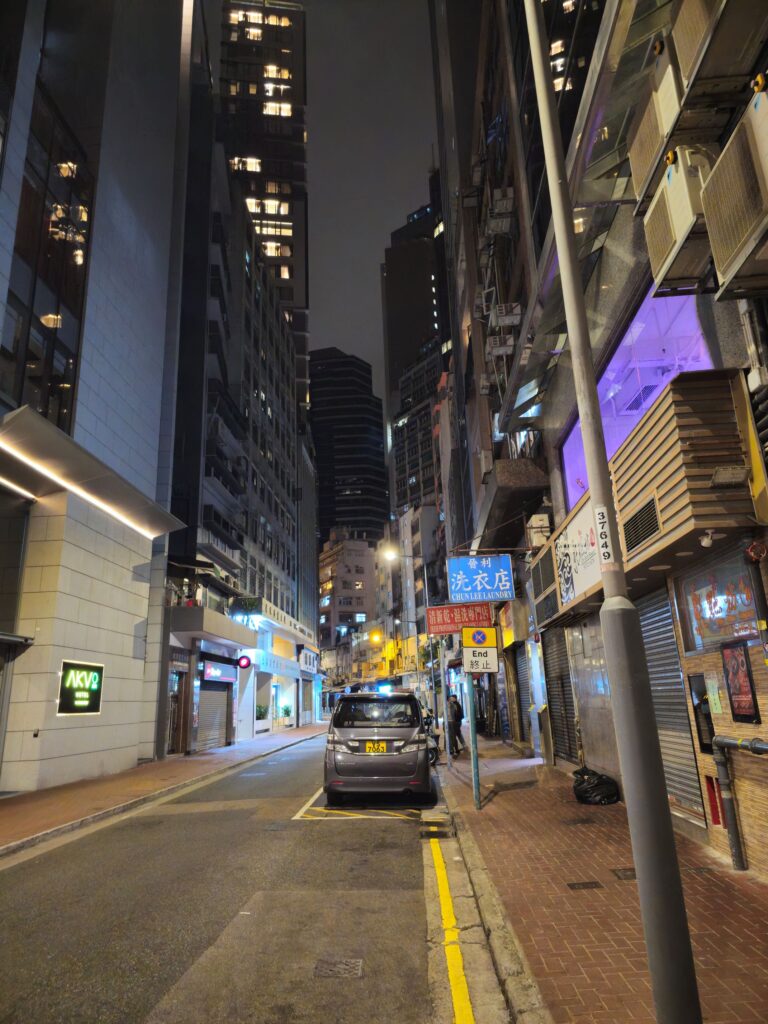
Wan Chai — east of Central and west of Causeway Bay — is a neighborhood in transition: historically Hong Kong’s most famous entertainment district (and the inspiration for Richard Mason’s novel The World of Suzie Wong), now a mix of business hotels, residential towers, traditional street markets, and the Convention Centre.
What It Offers
The Wan Chai MTR station (Island Line) provides direct connections to Central (two stops west) and Causeway Bay (one stop east). The neighborhood has a reasonable range of mid-range business hotels at competitive prices, and the Spring Garden Lane and Wan Chai market area give the neighborhood a traditional street market character that Central doesn’t have.
The Hong Kong Convention and Exhibition Centre in Wan Chai is the venue for many major Hong Kong events — visitors attending conferences or exhibitions will find Wan Chai the most practical base.
The Trade-offs
Wan Chai lacks the clear identity of either Central (financial district character) or Causeway Bay (shopping destination) — it occupies a middle ground that serves its residents and business visitors well but provides less distinctive character for leisure visitors.
Recommended For
Business travelers attending Convention Centre events; visitors who want Island-side convenience at lower prices than Central; transit visitors who want a mid-point between Central and Causeway Bay.

Causeway Bay (Hong Kong Island)
Who It’s For
Causeway Bay is the right base for visitors whose primary Hong Kong interest is shopping — the neighborhood has the highest retail density in the city and the widest range of shopping options, from the Korean cosmetics of the main shopping streets to the local markets of Jardine’s Crescent.
What It Offers
The Causeway Bay MTR station (Island Line) provides direct connections to Central (two stops west) and Tin Hau (one stop east). The neighborhood’s shopping concentration — Times Square, Hysan Place, Lee Garden, and the surrounding market streets — is unmatched in Hong Kong. The 56 bus from Causeway Bay to the Peak Tram terminus makes the Victoria Peak visit straightforward without returning to Central.
Victoria Park — Hong Kong Island’s largest urban park — is immediately east of Causeway Bay, providing the most accessible green space on the Island.
The Trade-offs
Causeway Bay is Hong Kong’s busiest shopping neighborhood and operates at the intensity that implies — particularly on weekends. The harbor view requires a journey to the waterfront (not within walking distance of most Causeway Bay hotels). Accommodation prices reflect the neighborhood’s commercial prominence.
Recommended For
Shopping-oriented visitors; visitors specifically interested in Korean cosmetics and Japanese retail; anyone combining a Causeway Bay afternoon with a Victoria Peak evening via bus 56.
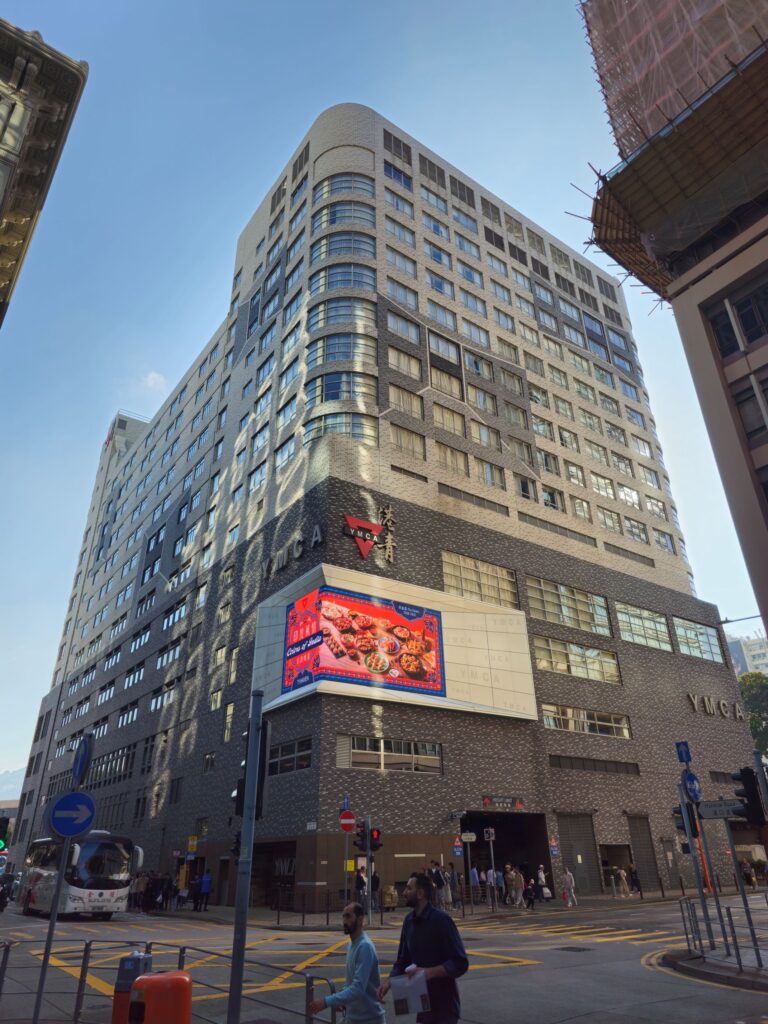
Specific Hotel Recommendations
YMCA Salisbury Hotel (Tsim Sha Tsui) ★★★
The best value-to-location ratio in Hong Kong for visitors whose priority is harbor access. Two minutes from the Star Ferry pier, directly on the Tsim Sha Tsui promenade, adjacent to the Avenue of Stars. Rooms are functional rather than luxurious but clean and well-maintained. The harbor-view rooms justify the premium for at least one night.
Best for: First-time visitors, anyone for whom harbor proximity is the priority, value-conscious travelers who don’t want to compromise on location.
AKVO Hotel (Central) ★★★
A well-positioned boutique property in the Central area — design-conscious, compact, and within walking distance of the neighborhood’s best food and cultural experiences. The location trades room size for neighborhood depth, which is consistently the right trade-off in Hong Kong.
Best for: Repeat visitors, food and culture-oriented travelers, anyone who wants to experience Central’s layered street life rather than just the harbor view.

The Peninsula Hong Kong (Tsim Sha Tsui) ★★★★★
One of the great historic hotels in Asia — the correct choice for visitors for whom the hotel experience itself is a significant part of the trip. The fleet of Rolls-Royce house cars, the lobby afternoon tea service, and the Felix rooftop restaurant and bar are the Peninsula’s signature experiences. Afternoon tea in the lobby is accessible to non-guests.
Best for: Special occasion visitors, anyone for whom the hotel experience is as important as the city exploration.
Mandarin Oriental Hong Kong (Central) ★★★★★
The Island-side equivalent of the Peninsula — a landmark hotel in the Central financial district with the harbor views, service standards, and historical prestige that justify the price for the right visitor.
Best for: Business travelers, luxury-oriented visitors staying on the Island side.

The Split Stay Strategy
For visitors with four or more nights in Hong Kong, splitting the stay between Tsim Sha Tsui and Central — as I did in January — is the most complete way to experience both sides of the harbor.
Recommended split stay:
Nights 1–2: YMCA Salisbury or equivalent
            in Tsim Sha Tsui
            → Harbor promenade, Temple Street,
              Museum of Art, Mong Kok day trips

Nights 3–4: AKVO Hotel or equivalent
            in Central
            → Mid-Levels Escalator, Soho,
              Lan Kwai Fong, Victoria Peak,
              Causeway Bay and Monster Building
The Star Ferry crossing between the two accommodations — carrying your luggage on the upper deck, watching the skyline shift from Kowloon to Hong Kong Island — is itself one of the more atmospheric moments of a Hong Kong trip.
The practical consideration: most hotels in Hong Kong allow luggage storage on check-out day, allowing you to explore the city without carrying bags before transferring to your second hotel in the afternoon.

Practical Tips for Hong Kong Accommodation
Book well in advance: Hong Kong’s hotel market is competitive and popular properties fill quickly — particularly during Chinese New Year, Golden Week, and the major international events that fill the Convention Centre. Booking 2–3 months ahead is recommended for peak periods.
Harbor view vs city view: Harbor view rooms command a significant premium across all Hong Kong hotels. The view is genuinely worth it for at least part of a stay — particularly in Tsim Sha Tsui where the harbor view faces the Hong Kong Island skyline directly.
Room size expectations: Hong Kong hotel rooms are universally smaller than equivalent-priced rooms in most other cities — this is a function of the city’s land costs and is consistent across price points. Adjust expectations accordingly and prioritize location over room dimensions.
Check-in timing: Most Hong Kong hotels have standard 3pm check-in and 12pm check-out. Luggage storage is available at virtually all hotels for days when you arrive early or need to explore after check-out.
Noise: Hong Kong is a loud city. Rooms facing main streets — particularly Nathan Road in Tsim Sha Tsui — can be noisy. Request a higher floor or a room facing away from the main street if noise sensitivity is a concern.
Airport Express: For visitors staying in Central or Kowloon Station area, the Airport Express in-town check-in service (available at Hong Kong Station and Kowloon Station) is one of the most useful travel conveniences available — check bags the day before departure and travel to the airport without luggage.
Final Thoughts
The best Hong Kong accommodation decision is the one that positions you correctly for the experiences you’ve prioritized. For the harbor view and the most iconic first impression, Tsim Sha Tsui — specifically the YMCA Salisbury’s location — is difficult to beat. For the layered, walkable, food-rich character of Hong Kong Island, Central and its immediate neighbors reward the choice.
If you have the nights for it, stay on both sides. The harbor crossing between them — twice, in different directions — is as much a part of the Hong Kong experience as any single attraction.
Best Cha Chaan Teng in Hong Kong: A Guide to the City’s Most Iconic Diners