

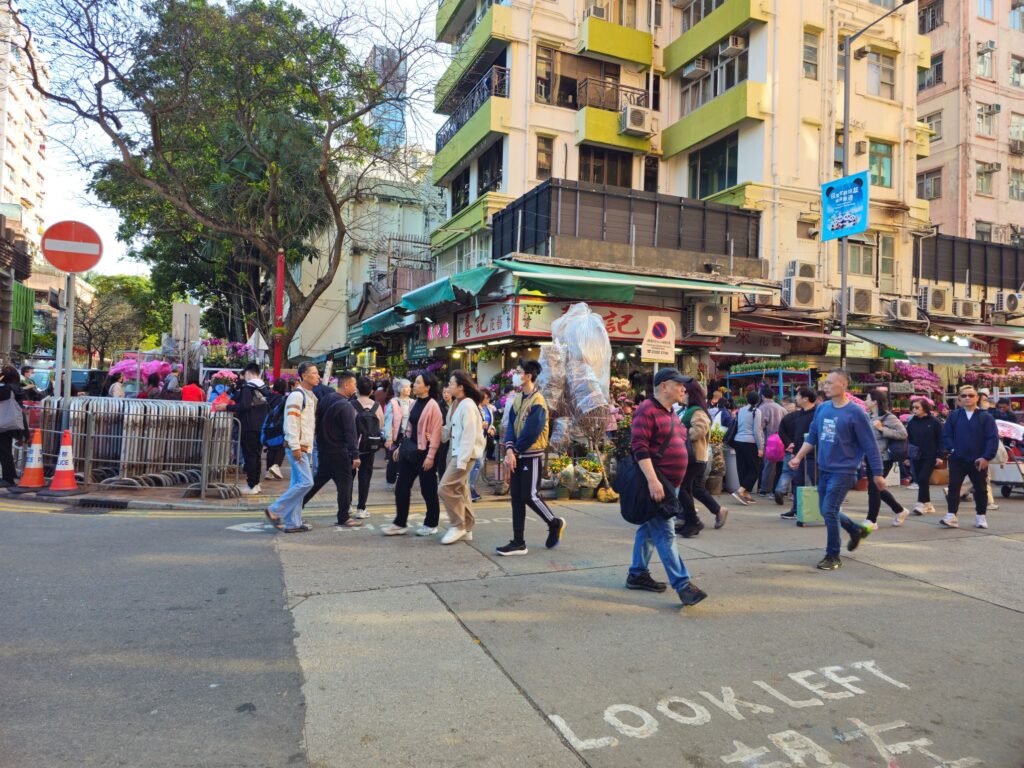
Mong Kok doesn’t ease you in. From the moment you come up from the MTR and hit the street level, the neighborhood announces itself — the density of people, the noise of competing music from adjacent shops, the smell of street food mixing with the exhaust of buses on Nathan Road, the vertical stacking of signs in Chinese and English climbing the building facades above. It’s a lot, all at once, and it’s completely intentional.
Mong Kok (旺角) is one of the most densely populated urban areas on earth — a distinction it wears without apology. Where Tsim Sha Tsui is polished and tourist-facing, and Central is international and financial, Mong Kok is working Kowloon at full volume: markets, street food, electronics, fashion, and the daily life of a neighborhood that operates at its own pace regardless of who’s watching.
I visited in January as part of a longer Tsim Sha Tsui base — taking the MTR two stops north from Tsim Sha Tsui to Prince Edward, eating dim sum at One Dim Sum, then walking the neighborhood’s main markets before returning south. Half a day was enough to cover the highlights; a full day would have revealed considerably more. This guide covers what’s worth your time.
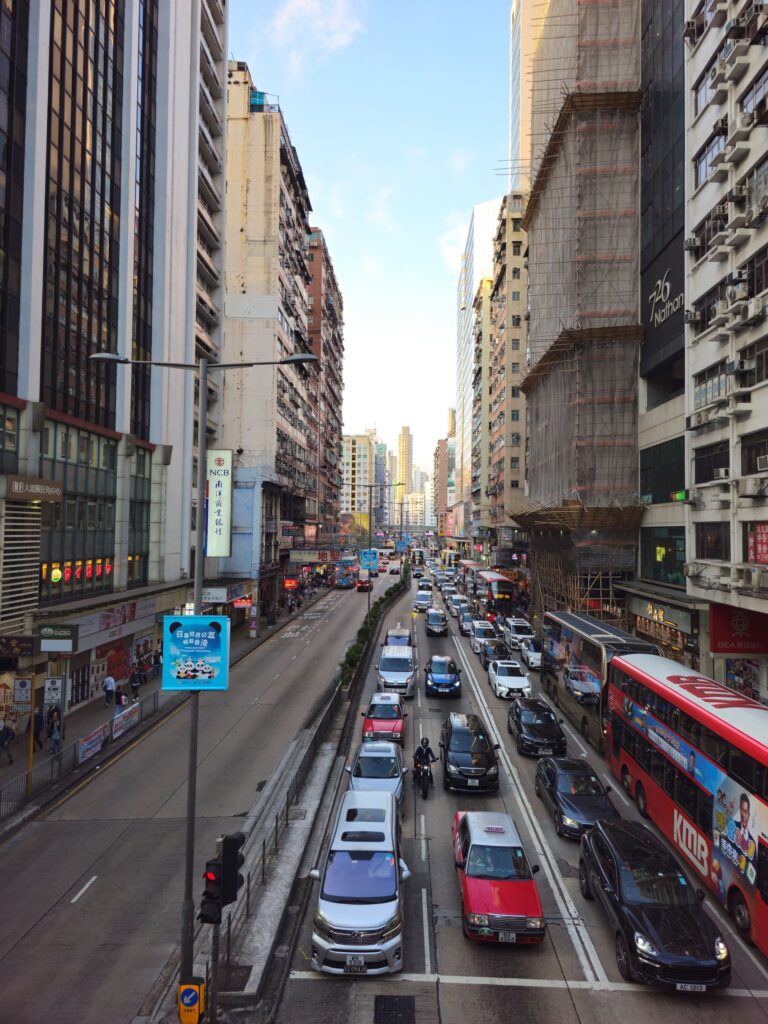
Where Is Mong Kok?
Mong Kok occupies a stretch of the Kowloon Peninsula roughly between Jordan to the south and Prince Edward to the north — served by the MTR Mong Kok station (Tsuen Wan and Kwun Tong lines) and the adjacent Prince Edward station (Tsuen Wan line) at the northern end.
The neighborhood’s geography is straightforward: Nathan Road runs north-south through the center, lined with commercial towers and shops. The markets and specialist streets run parallel to or crossing Nathan Road on both sides — each concentrated in specific blocks, giving Mong Kok its distinctive character as a neighborhood of themed zones within a larger whole.
From Tsim Sha Tsui, Mong Kok is two MTR stops north — a five-minute journey that delivers you into a completely different atmosphere. From Central, the journey takes about 15 minutes via the cross-harbour MTR tunnel.
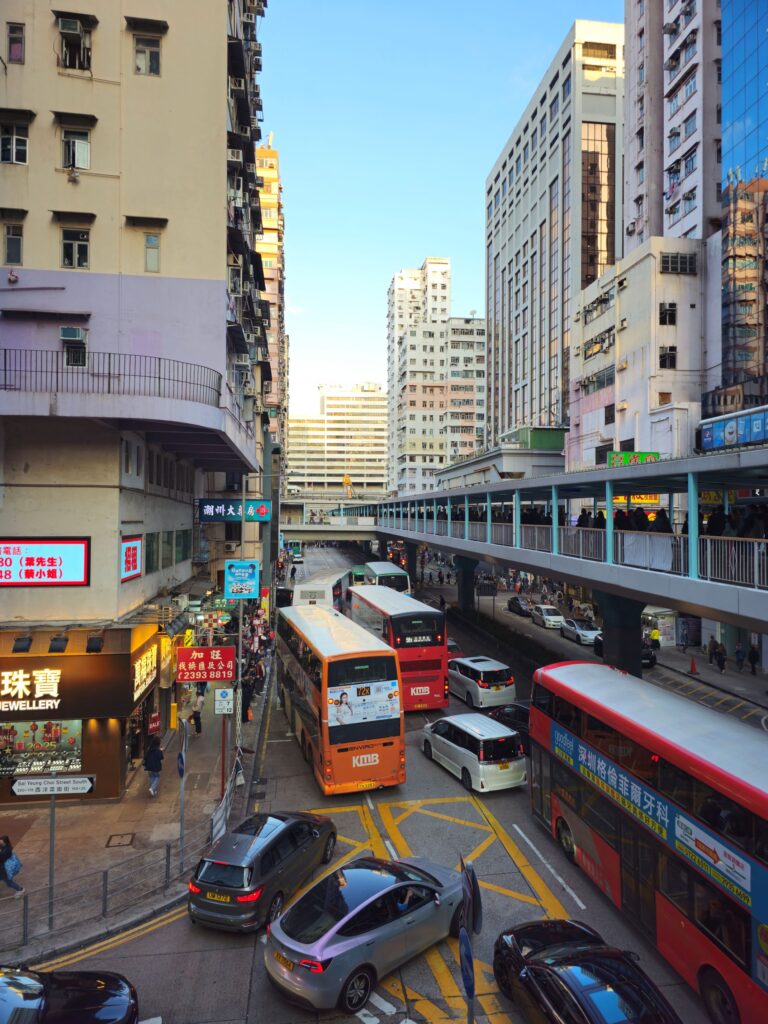
Getting to Mong Kok
By MTR: The most practical option. Mong Kok station (exit D3 for Ladies Market, exit E2 for Flower Market and Bird Garden) and Prince Edward station (exit B2 for One Dim Sum and Fa Yuen Street) are both well-positioned for the neighborhood’s main attractions. The stations are one stop apart on the Tsuen Wan line.
By bus: Multiple bus routes run along Nathan Road through Mong Kok — useful for returning to Tsim Sha Tsui or continuing south without backtracking to the MTR.
Walking from Tsim Sha Tsui: Nathan Road runs directly from the Tsim Sha Tsui hotel area north through Jordan and into Mong Kok — a 20–25 minute walk that passes through the changing character of Kowloon’s main commercial artery. Worth doing at least once for the street-level experience.
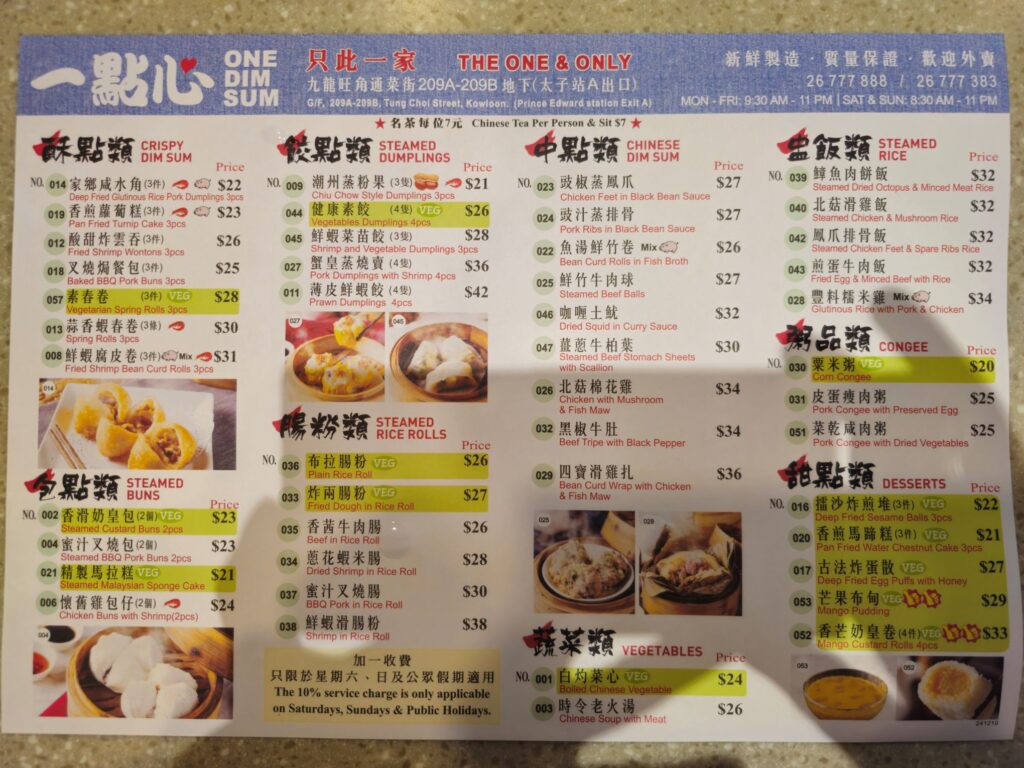
One Dim Sum (一點心): The Best Reason to Go to Prince Edward
Before covering the markets, One Dim Sum near Prince Edward station deserves its own section because it’s the most compelling eating reason to make the journey to this part of Kowloon.
One Dim Sum has been operating near Prince Edward for years and has built a reputation as one of the best value dim sum experiences in Hong Kong — not just in the neighborhood but across the city. The restaurant is unpretentious in the extreme: a large, bright space packed with round tables, operating at the kind of pace and volume that characterizes Hong Kong’s best local dim sum establishments.
What makes it worth the trip: The quality-to-price ratio is genuinely exceptional. Dishes that would cost significantly more in a hotel dim sum restaurant or a Central establishment are served here at prices that reflect a local rather than tourist clientele. The har gow in particular — the steamed prawn dumpling that serves as the benchmark dish for any dim sum kitchen — is made with fresh prawns in thin, properly translucent skin, and represents the standard by which other dim sum is measured.
How it works: No reservations are taken. Arrive at opening time (typically 10am for lunch service, though breakfast dim sum may start earlier — check current hours) to get ahead of the queue. The wait at peak times is real but moves steadily. Inside, you may share a table with other diners — standard practice at busy Hong Kong dim sum restaurants and part of the experience rather than an inconvenience.
Ordering is done by ticking items on a paper order form or, at busier times, from the trolley service — bamboo steamers and plates brought around the room by staff. Point at what you want, indicate the quantity, and the dishes arrive quickly.
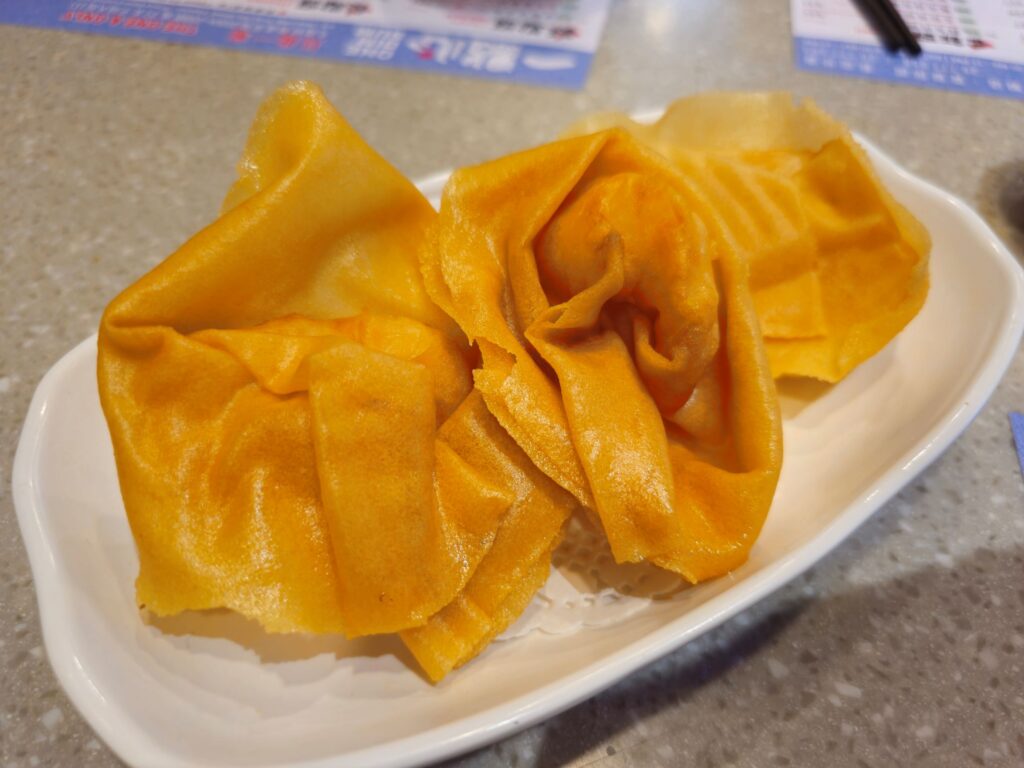
Essential orders:
- Har Gow (蝦餃) — steamed prawn dumplings. Order two portions.
- Siu Mai (燒賣) — pork and prawn open-topped dumplings topped with fish roe
- Cheung Fun (腸粉) — smooth rice noodle rolls with prawn, beef, or char siu filling; served with sweet soy sauce
- Lo Mai Gai (糯米雞) — sticky glutinous rice with chicken, mushroom, and Chinese sausage wrapped in lotus leaf and steamed. Rich and filling.
- Char Siu Bao (叉燒包) — steamed barbecue pork buns; fluffy, slightly sweet dough with savory filling
- Egg Tart (蛋撻) — the dim sum version of Hong Kong’s signature pastry; order one per person to finish
Practical notes: The restaurant is located a short walk from Prince Edward MTR station exit B2. The surrounding streets have additional food options if the wait at One Dim Sum is prohibitive, but given the quality, the wait is generally worth it.
The Flower Market (花墟)
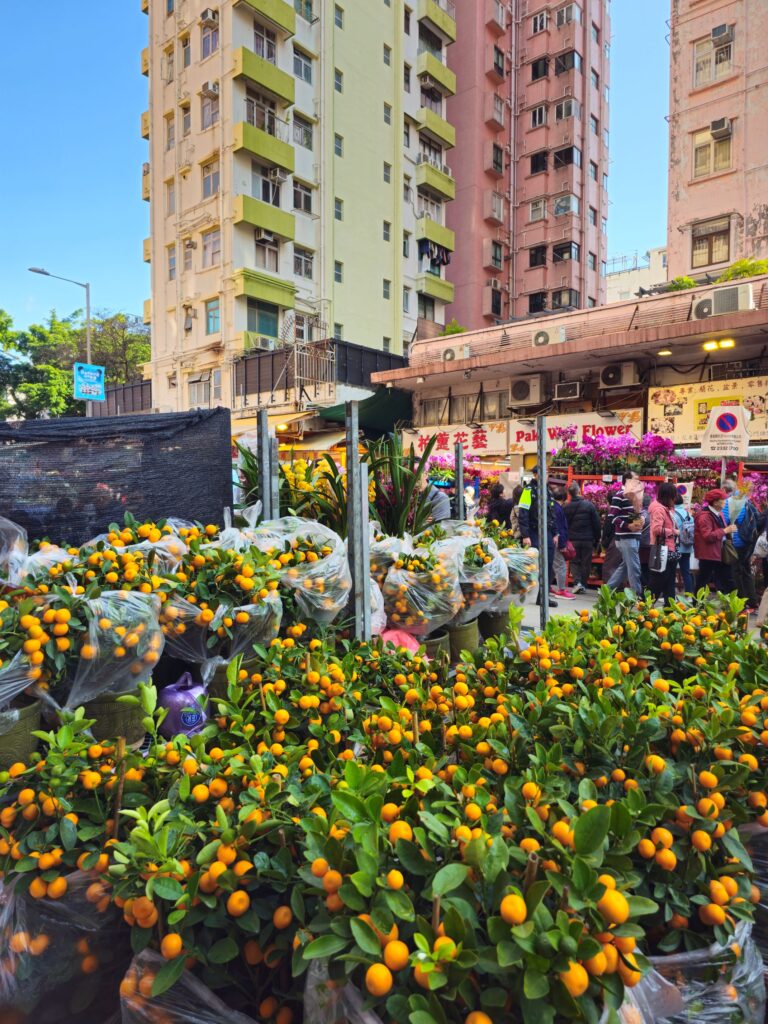
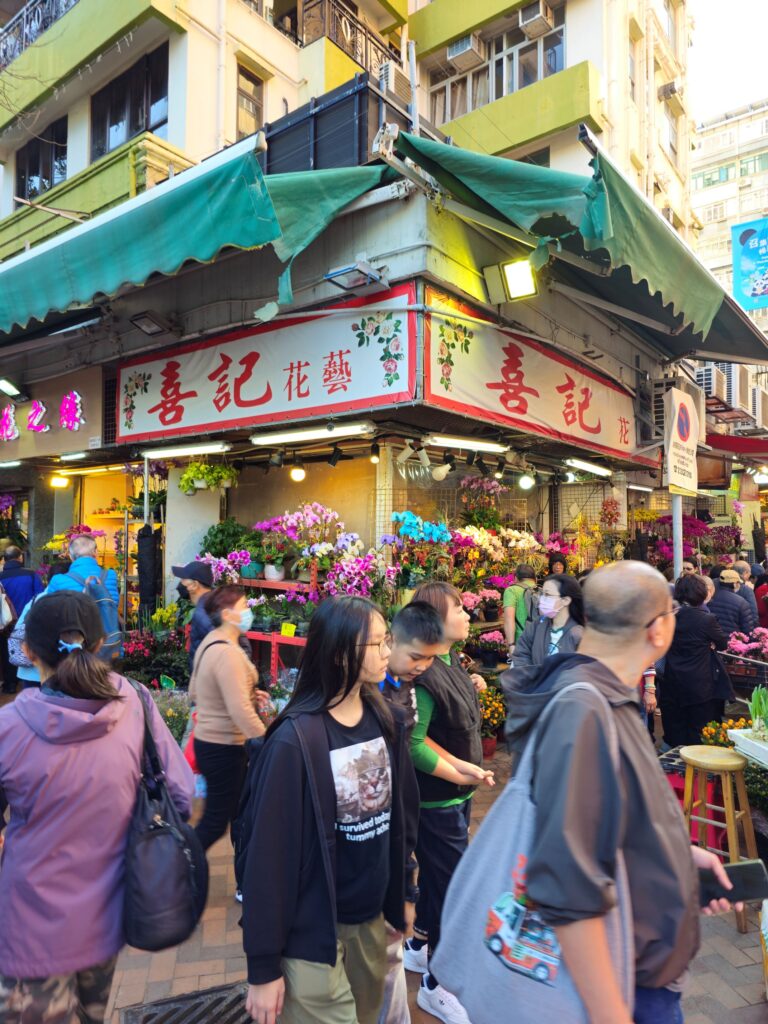
The Flower Market on Flower Market Road (花墟道) is one of Hong Kong’s most photogenic and genuinely local market experiences — a long street of wholesale and retail flower vendors operating from open-fronted shops and pavement stalls, selling fresh cut flowers, potted plants, orchids, and seasonal arrangements at prices that reflect trade rather than tourist economics.
The market operates daily and reaches its most photogenic state in the morning — vendors arranging fresh stock, the street filling with color before the day’s trade begins. Visiting on a weekday morning gives the most authentic atmosphere; weekends bring more local shoppers and a livelier energy that’s also worth experiencing.
The variety is the first thing that registers — not just roses and standard cut flowers but unusual tropical varieties, elaborate orchid arrangements, bonsai, and plants specific to Hong Kong’s climate and the Chinese cultural significance attached to certain species. The bird of paradise, anthurium, and massed arrangements of chrysanthemum and carnation fill the stalls with color that photographs well in the natural light of the open street.
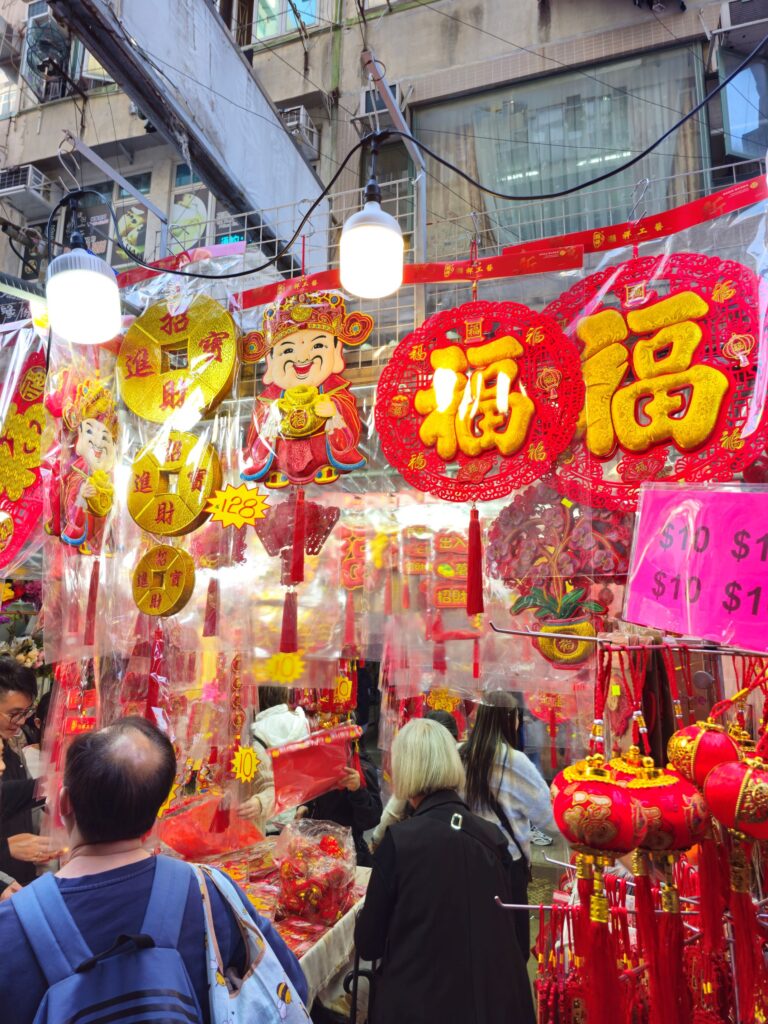
Chinese New Year significance: In the weeks before Chinese New Year (late January or February depending on the year), the Flower Market transforms completely. Peach blossom (桃花) — associated with luck and prosperity — fills the stalls alongside kumquat trees (金桔), narcissus (水仙), and other auspicious seasonal plants. The market becomes one of the most atmospheric places in Hong Kong during this period, crowded with locals buying decorations for their homes. If your visit falls in January, the New Year preparations may already be visible.
Practical notes: The market is walkable from Mong Kok MTR station (exit B2, approximately 10 minutes north) or from Prince Edward MTR station (exit A, approximately 5 minutes south). The street is one-way for vehicles; walking the full length from south to north and back covers all the stalls. Most vendors are open to casual browsing without obligation to purchase.
The Bird Garden (雀鳥花園)
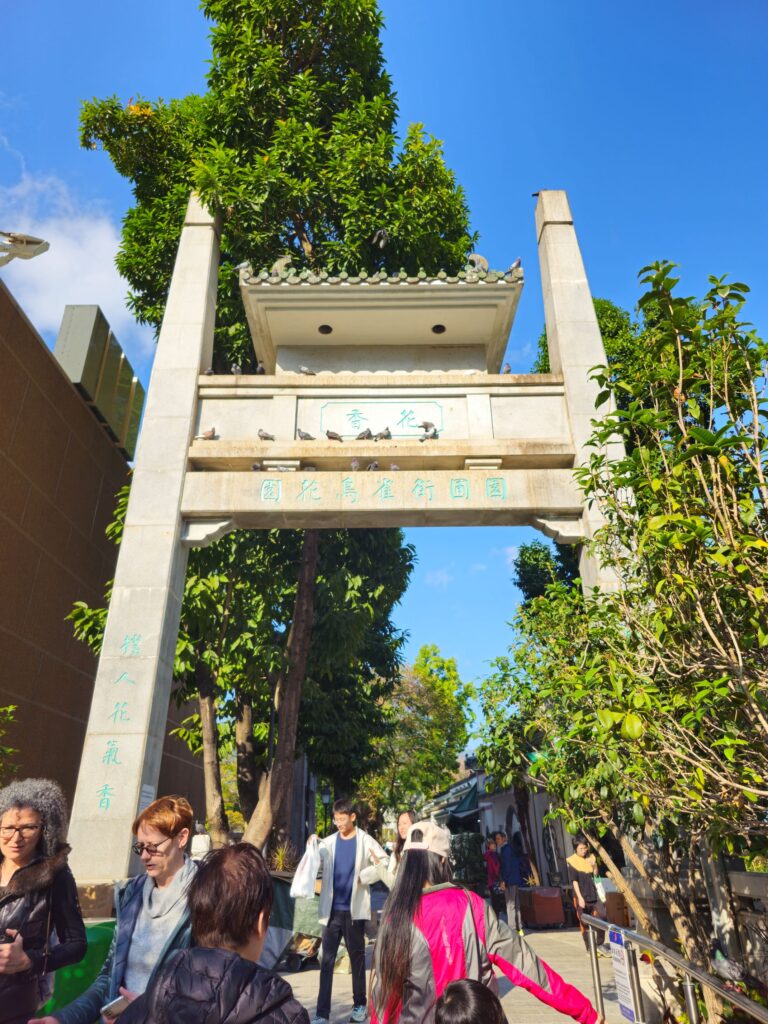
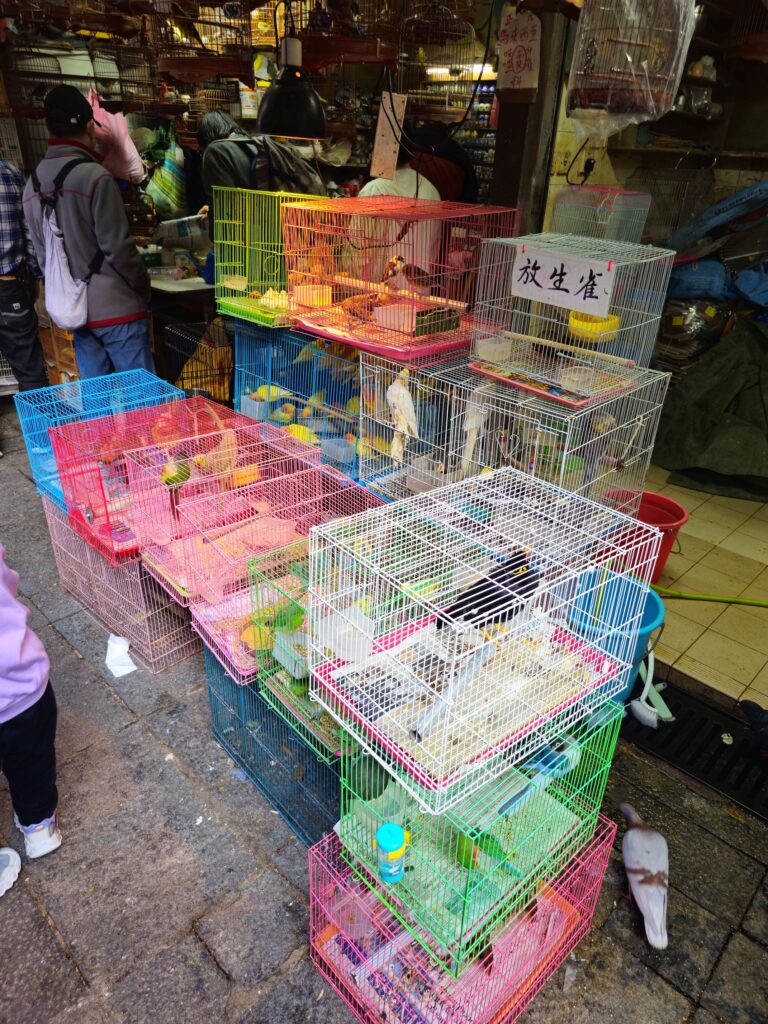
Immediately adjacent to the Flower Market on Yuen Po Street, the Bird Garden (雀鳥花園) is a covered arcade of bird vendors, cage makers, and accessory sellers — a traditional Chinese institution that has been part of Mong Kok’s social fabric for generations and remains one of the most distinctive and genuinely local experiences in Hong Kong.
The bird-keeping tradition in Hong Kong — and the broader Cantonese culture — involves keeping song birds as companions, bringing them to gardens and parks to sing in the company of other birds, and investing significant care in their housing and feeding. The Bird Garden is where this culture concentrates: vendors selling Java sparrows, white-eyes, mynahs, and various finches alongside the elaborately carved wooden cages, porcelain feeding cups, and live food (crickets, mealworms) that the hobby requires.
The most affecting aspect of the Bird Garden is not the vendors but the regulars — elderly men who arrive in the morning with their caged birds, hang them on the hooks provided along the arcade, and spend time letting their birds sing alongside others. It’s a social ritual as much as anything else, and observing it quietly gives insight into a dimension of Hong Kong life that has nothing to do with finance, tourism, or the city’s international reputation.
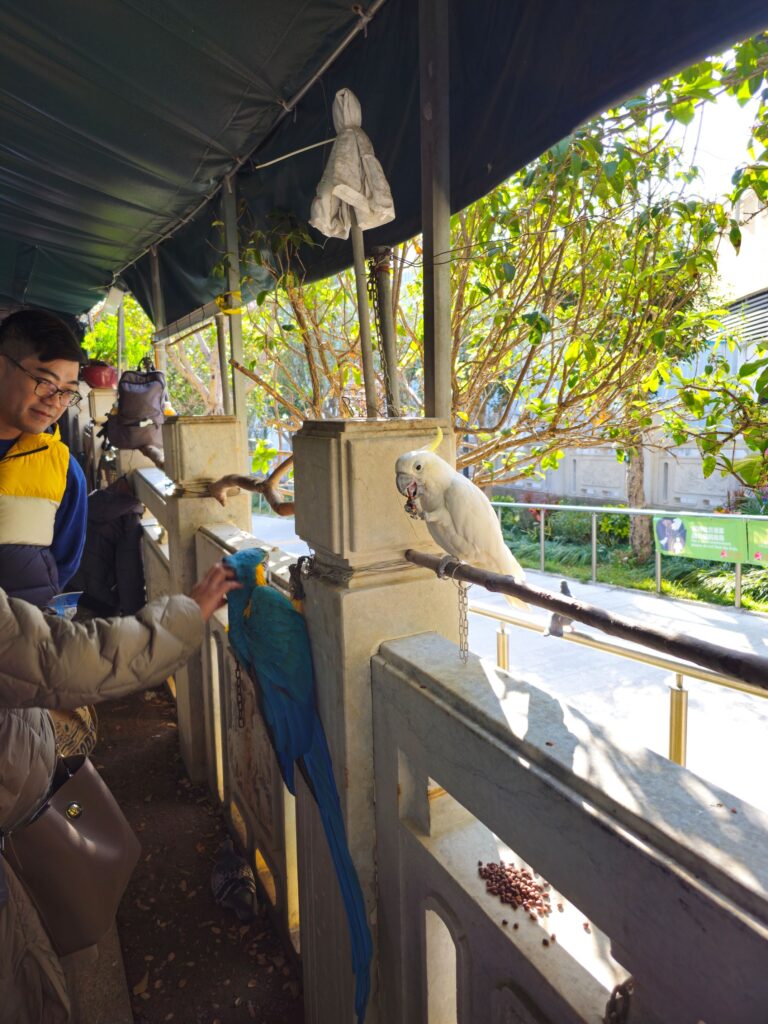
What to know before visiting: The Bird Garden is a working commercial and social space, not a tourist attraction. Visit with appropriate quietness and respect — speaking at normal volume, browsing without touching the cages, and not photographing individual birds or their owners without implicit permission. The vendors are generally accustomed to visitors and don’t require purchases; a simple acknowledgment of interest is sufficient.
The garden is small — the full arcade takes about 15–20 minutes to walk through properly. Combining it with the Flower Market immediately adjacent makes for a natural hour-long circuit before moving on to the other Mong Kok markets.
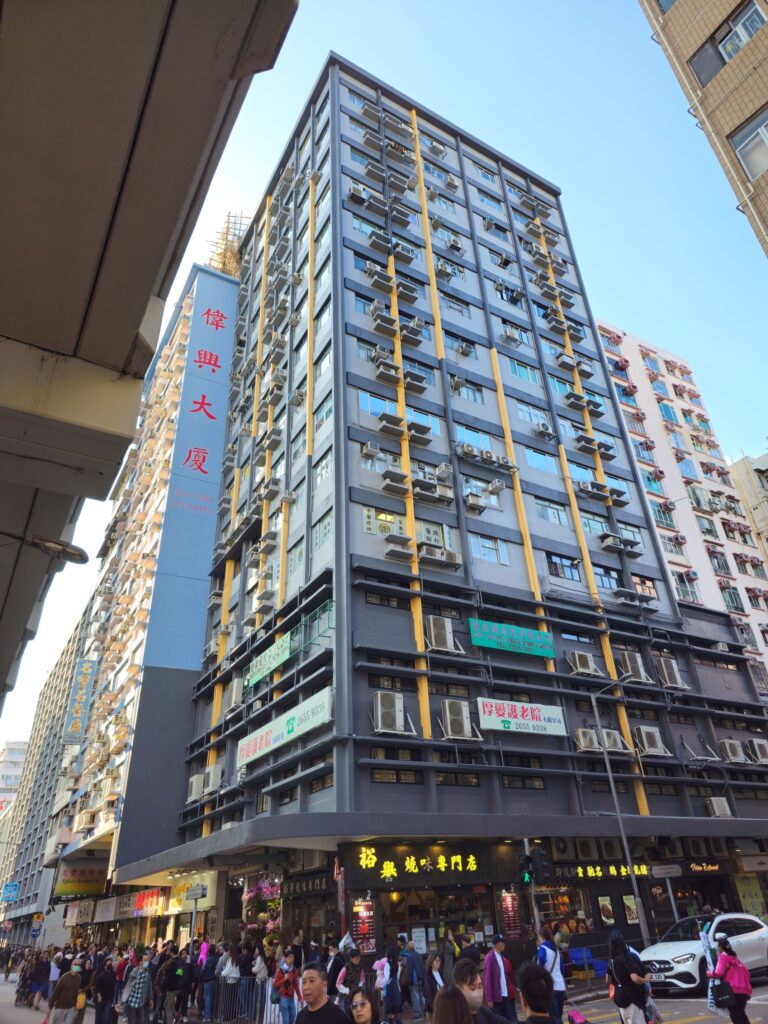
Fa Yuen Street Market (花園街)
Fa Yuen Street (花園街) — known informally as Sneaker Street — is a long market street running parallel to Nathan Road with a distinct split character that makes it one of Mong Kok’s more interesting walks.
The lower section (sportswear and sneakers): The southern portion of Fa Yuen Street specializes in athletic footwear and sportswear — local and international brands, including limited-edition and vintage sneakers, at prices that can be competitive with or below retail depending on what you’re looking for. The density of sports shoe shops is remarkable; the street has built a reputation among sneaker enthusiasts in Hong Kong and visitors from mainland China as a destination for specific finds.
For visitors without a specific sneaker agenda, the street is still worth a walk for the shopping culture it represents — serious collectors comparing notes outside shops, staff with genuine product knowledge, and the particular energy of a market street that has developed a specialist identity over time.
The upper section (wet market): Moving north along Fa Yuen Street, the sneaker shops give way to a traditional wet market — fresh vegetables, meat, fish, and produce sold from open stalls to the local residents who rely on it for daily shopping. The transition from athletic retail to fresh fish happens over the space of a few hundred meters and is one of those Hong Kong neighborhood juxtapositions that feels entirely natural once you’ve been in the city for a few days.
The wet market section in the morning — when the produce is freshest and the local shoppers are most active — gives a clear sense of how Mong Kok functions as a residential neighborhood as much as a market destination.
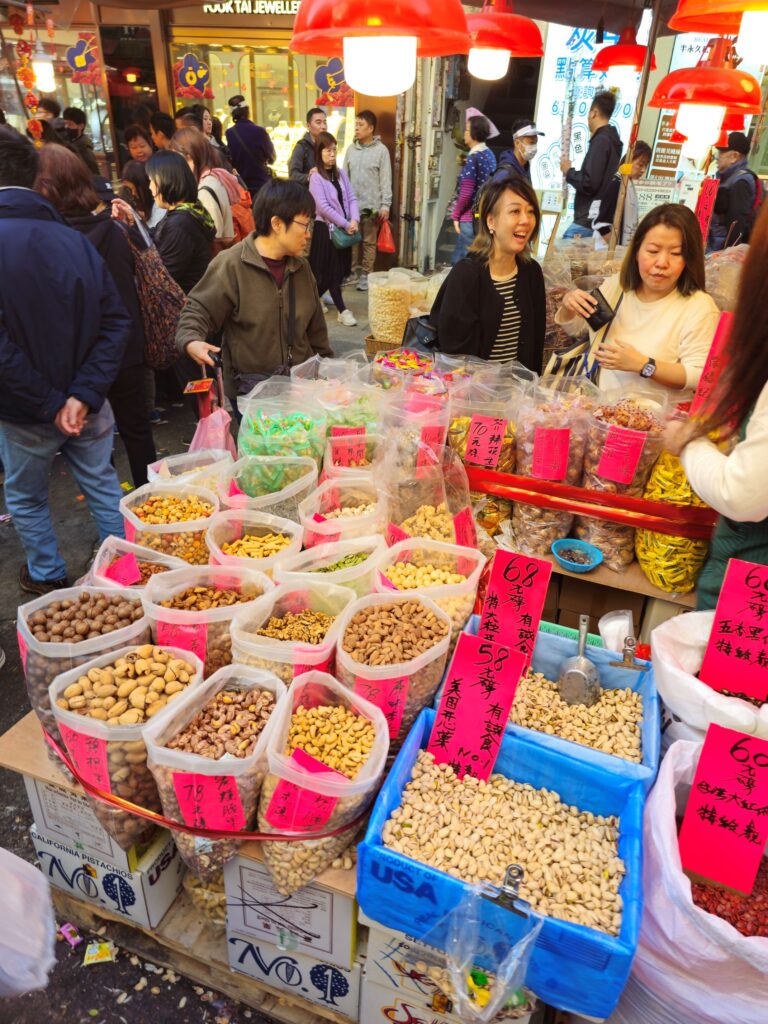
Ladies Market (女人街)
Ladies Market on Tung Choi Street (通菜街) is Mong Kok’s most tourist-facing market — a long covered street market running parallel to Nathan Road, selling clothing, accessories, handbags, toys, and souvenirs at prices that start high and respond well to negotiation.
The name is historical rather than descriptive — the market sells to anyone and the range of goods is broadly similar to other Hong Kong street markets. What distinguishes it is the scale (the market stretches for several blocks and has hundreds of stalls) and the concentration of souvenir and gift items that makes it the most practical shopping stop for visitors looking for Hong Kong gifts to take home.
What to buy: Souvenir items (refrigerator magnets, postcards, keychains) are genuine value. Clothing quality varies considerably — inspect before buying. Electronics accessories (phone cases, cables, adaptors) are available at competitive prices. Counterfeit goods are present; the standard legal caveat applies.
How to buy: The opening price at any Ladies Market stall is a starting point. Polite, good-humored negotiation to 50–70% of the opening offer is generally achievable. Buying multiple items from the same vendor improves the negotiating position. Cash in small denominations is preferred.
When to visit: The market operates from approximately noon onwards, reaching its busiest in the late afternoon and evening. The evening atmosphere — the market lit by stall lights, the street packed with people — is the most atmospheric version.
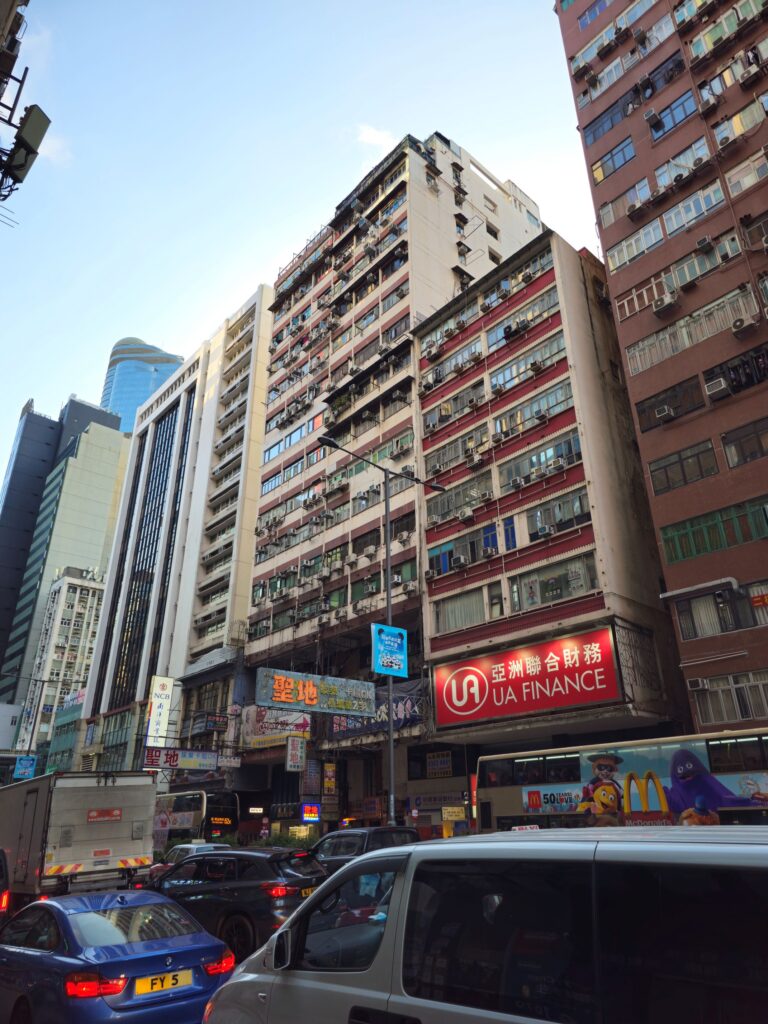
Nathan Road: The Golden Mile
Nathan Road (彌敦道) runs the full north-south length of Mong Kok and provides the neighborhood’s commercial backbone — a wide, busy road lined with shopping towers, electronics vendors, jewelers, and fast food outlets that has been the main artery of Kowloon commerce since the early 20th century.
The stretch through Mong Kok has a density and energy that the Tsim Sha Tsui section doesn’t quite match — more local-facing, with the mix of businesses reflecting a neighborhood clientele rather than a purely tourist one. Walking Nathan Road from Prince Edward south through Mong Kok to Jordan gives a good ground-level sense of how the neighborhood functions as a living commercial district.
Electronics and shopping: Mong Kok’s electronics market — concentrated in the Sino Centre and the computer malls around Nelson Street — is more specialist and local-facing than the tourist electronics shops of Tsim Sha Tsui. Components, second-hand equipment, and niche electronics categories are better represented here than anywhere else in the neighborhood.
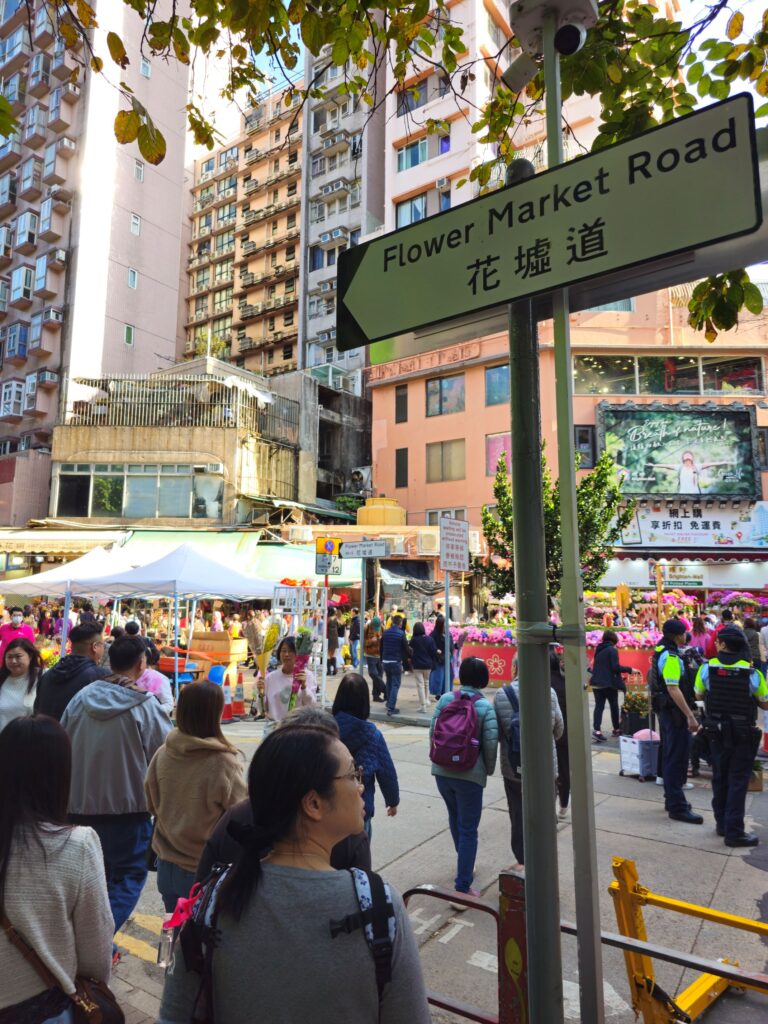
Where to Eat in Mong Kok
One Dim Sum (covered above)
The standout eating reason to visit this part of Kowloon — covered in full above. Essential.
Street Food on and around Fa Yuen Street
The market streets of Mong Kok have good street food running alongside the shopping — vendors selling curry fish balls, grilled squid, egg waffles, and taro balls from carts along Fa Yuen Street and the surrounding lanes. The quality follows the standard Hong Kong street food rule: busier stalls with high turnover are more reliable than quieter ones.
Cha Chaan Tengs on Nathan Road
Multiple cha chaan tengs operate along Nathan Road and its side streets in Mong Kok — local diners serving the standard breakfast and lunch menus of milk tea, toast, macaroni soup, and rice dishes at prices that reflect the local rather than tourist clientele. Less famous than the Tsim Sha Tsui or Central institutions, but equally authentic and considerably less crowded.
A Half-Day Mong Kok Itinerary
Based on the actual January visit, here’s the most efficient way to cover Mong Kok’s highlights in half a day:
Arrive: MTR to Prince Edward station (exit B2)

10:00am  One Dim Sum — arrive at opening,
          eat har gow, siu mai, cheung fun,
          lo mai gai

11:30am  Walk south to Flower Market Road
          Flower Market — full street walk,
          north to south and back

12:30pm  Bird Garden (Yuen Po Street)
          15–20 minutes, quiet and respectful

1:00pm   Fa Yuen Street — walk from
          Prince Edward end southward
          Sneaker section + wet market section

2:00pm   Ladies Market (Tung Choi Street)
          Browse, negotiate, buy souvenirs

3:00pm   MTR from Mong Kok back to
          Tsim Sha Tsui or onward
This sequence minimizes backtracking and covers the neighborhood’s main markets in a logical geographic order. The dim sum lunch at One Dim Sum anchors the visit and provides the energy for several hours of market walking.
Mong Kok vs Other Hong Kong Neighborhoods
| Mong Kok | Tsim Sha Tsui | Central | |
|---|---|---|---|
| Atmosphere | Local, intense | Tourist-facing | International |
| Markets | ✅ Best in Hong Kong | ✅ Temple Street | ⚠️ Central Market |
| Food | ✅ Authentic local | ✅ Good range | ✅ Best variety |
| Harbor views | ❌ None | ✅ Excellent | ✅ Good |
| Shopping | ✅ Best value | ⚠️ Tourist premium | ⚠️ High-end |
| Crowds | High (local) | High (tourist) | Moderate |
Mong Kok is not the neighborhood for harbor views or fine dining or the polished international side of Hong Kong. It’s the neighborhood for understanding how the city actually works at street level — the markets, the density, the pace, the people. It belongs in any first Hong Kong itinerary not as the main event but as the essential counterpoint to the harbor and the peak.
Practical Tips for Mong Kok
- MTR exits matter: Mong Kok station has multiple exits — D3 for Ladies Market, E2 for Flower Market. Check before ascending.
- One Dim Sum: No reservations, arrive at opening, expect a queue that moves faster than it looks
- Flower Market morning: Best before 10am when stock is freshest and crowds are thinner
- Bird Garden: Quiet and respectful visiting — this is a social space for locals, not a tourist attraction
- Ladies Market negotiation: Start at 50% of asking price, be polite and good-humored, walk away if the price doesn’t move
- Cash: Most market vendors prefer cash — small denominations for market shopping
- Safety: Mong Kok is safe; standard city awareness applies in crowded market areas
Final Thoughts
Mong Kok is the neighborhood that most visitors to Hong Kong either love immediately or find overwhelming — sometimes both simultaneously. The density, the noise, the sensory intensity of the markets and streets are genuinely unlike most urban experiences in Asia and certainly unlike anything in the more polished parts of Hong Kong.
What makes it worth visiting is precisely that difference. The Flower Market, the Bird Garden, One Dim Sum, and the market streets of Fa Yuen Street give a Hong Kong experience that no harbor view or rooftop bar can provide — the city at street level, operating on its own terms, indifferent to whether you’re keeping up.
Go for the dim sum. Stay for the markets. Leave with a better understanding of what Hong Kong actually is beneath the skyline.
Central Hong Kong Neighborhood Guide: Everything You Need to Know
Tsim Sha Tsui Travel Guide: The Best Neighborhood in Hong Kong for First-Timers