

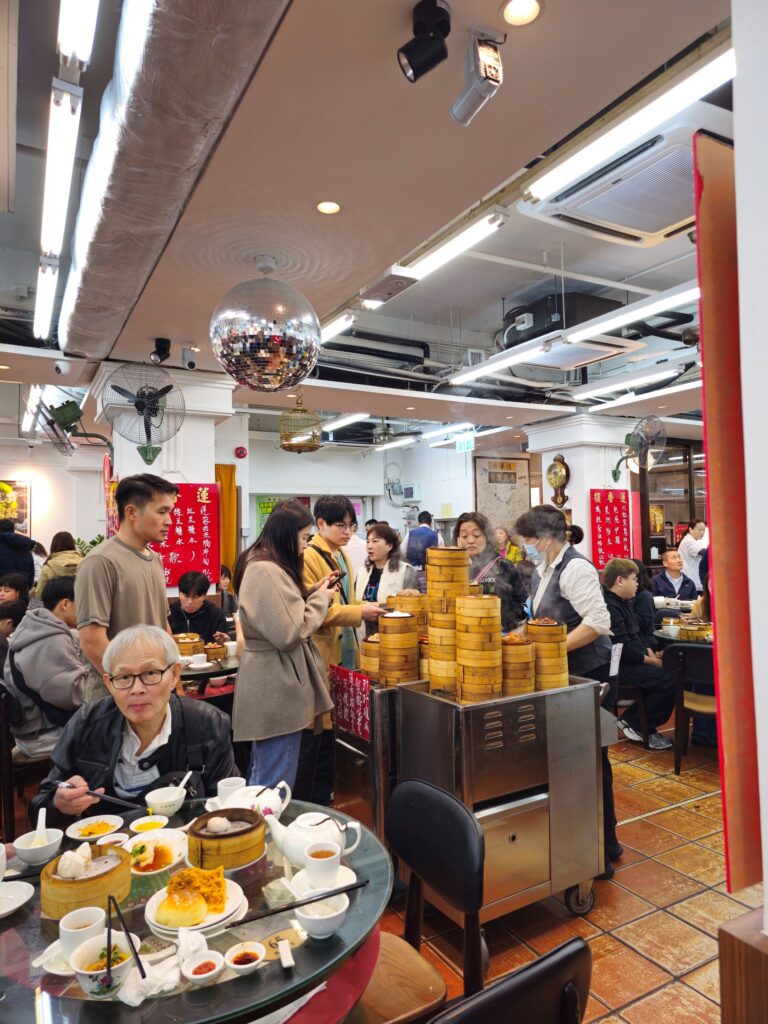
Hong Kong has one of the most distinctive food cultures in Asia — a city where a bowl of wonton noodles served in a ten-seat shophouse can be as carefully considered as anything in a Michelin-starred restaurant, and where the morning ritual of yum cha (dim sum with tea) is taken as seriously as any formal dining experience. I ate my way through the city over four days in January, and the food was consistently one of the best parts of the trip.
This guide covers the essential Hong Kong eating experiences — from the cha chaan teng (Hong Kong-style diners) that locals use as their daily canteen, to the dim sum institutions that have been perfecting their craft for decades, to the street food and bakeries that make walking the city’s streets a constant temptation.
Understanding Hong Kong Food Culture
Before diving into specific dishes and restaurants, it helps to understand how Hong Kong’s food culture is structured — because it operates differently from most cities.
Cha Chaan Teng (茶餐廳) The cha chaan teng — literally “tea restaurant” — is Hong Kong’s defining food institution. These are fast-paced, casual diners that serve a hybrid menu of Cantonese and Western dishes developed during the colonial era: milk tea, toast with butter and jam, macaroni soup, pork chop buns, and a rotating menu of rice and noodle dishes that changes by meal period. They’re cheap, efficient, and operate at a speed that reflects Hong Kong’s general pace of life. Most locals eat in a cha chaan teng at least once a day.
Yum Cha and Dim Sum (飲茶/點心) Yum cha — “drinking tea” — is the Cantonese tradition of gathering for tea and dim sum, typically for breakfast or lunch. The small steamed and fried dishes served during yum cha are collectively called dim sum. In Hong Kong, yum cha is a social ritual as much as a meal — families gather on weekends, business is discussed over har gow, and the trolley service (in traditional establishments) creates a particular atmosphere that’s specific to Hong Kong and the broader Cantonese diaspora.
Wonton Noodles and Noodle Culture Hong Kong has a serious noodle culture — wonton noodle soup in particular is considered an art form, with dedicated shops competing on the quality of their broth (typically made from dried flounder and shrimp roe), the texture of their noodles (springy, alkaline egg noodles), and the size and filling of their wontons. A good bowl is one of the most satisfying things you can eat in the city.
Bakeries and Street Food Hong Kong’s bakery culture produces some of the most distinctive pastries in Asia — pineapple buns, egg tarts, cocktail buns filled with coconut cream — available from traditional bakeries that have been in operation for decades. Street food operates in parallel: egg waffles, curry fish balls, and siu mai from street carts are the portable version of Hong Kong eating.
Dim Sum: The Essential Hong Kong Experience
One Dim Sum (一點心)
One Dim Sum near Prince Edward station is the dim sum experience I’d recommend to any first-time visitor to Hong Kong — not because it’s the most famous or the most historic, but because it represents exactly what makes Hong Kong dim sum special: exceptional quality at prices that reflect local rather than tourist economics, in an environment that feels like the real thing rather than a performance of it.
The restaurant is loud, efficient, and packed — primarily with local families and groups who’ve been coming here for years. Arrive when it opens to avoid the queue; no reservations are taken. The trolley service (at peak times) and order sheet system both operate depending on the day and hour.
What to order:
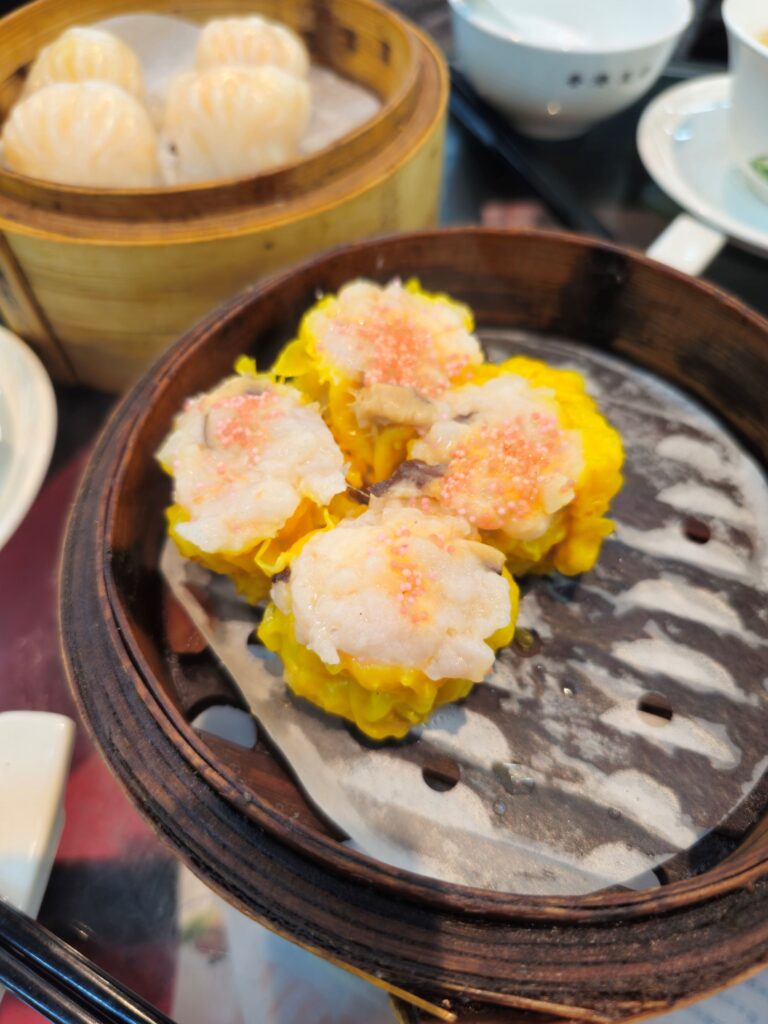
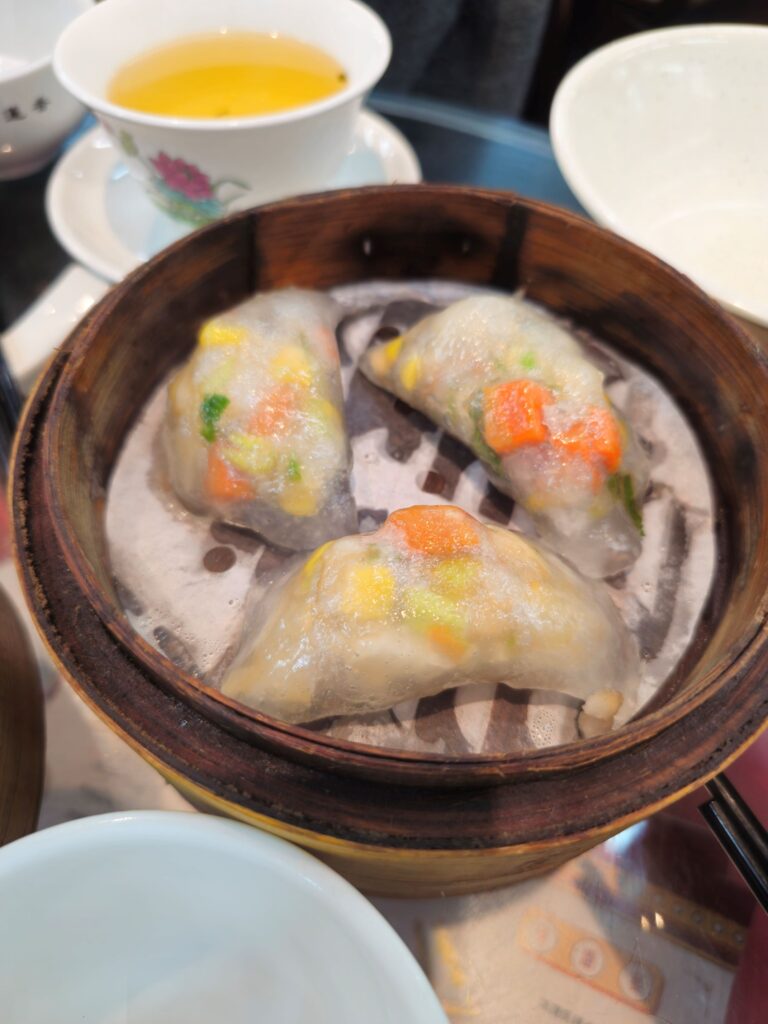
- Har Gow (蝦餃) — steamed prawn dumplings in thin, translucent skin. The benchmark dish for any dim sum restaurant; the version here is excellent
- Siu Mai (燒賣) — open-topped pork and prawn dumplings, topped with fish roe or carrot
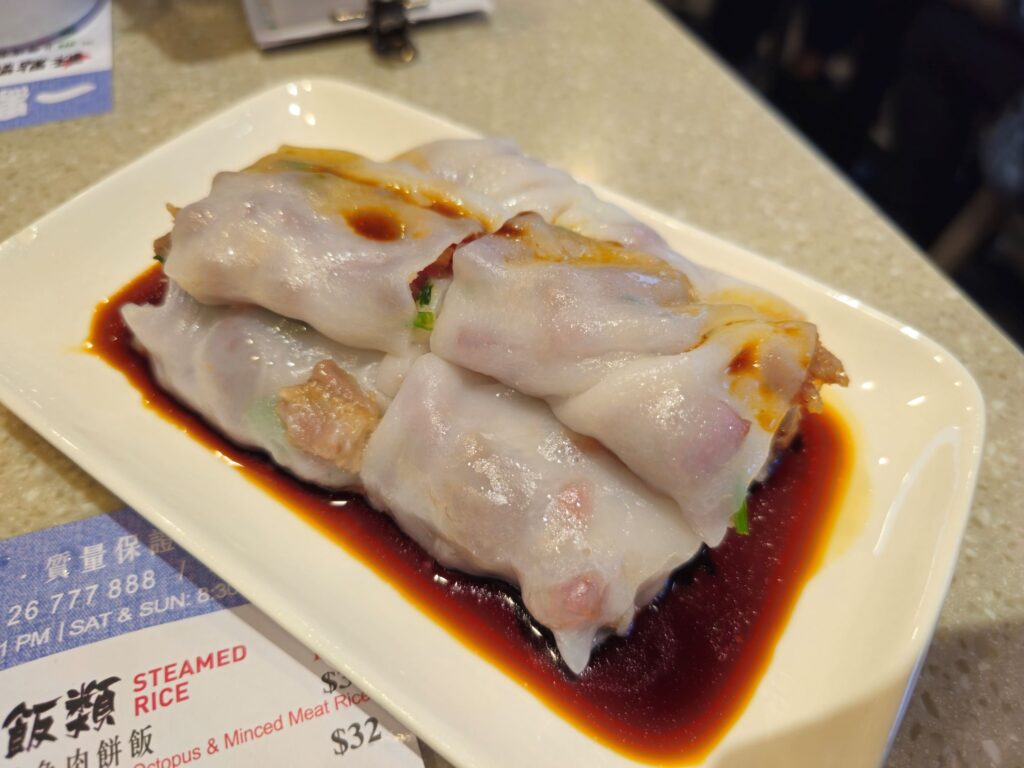
- Cheung Fun (腸粉) — smooth rice noodle rolls, available with prawn, beef, or char siu (barbecue pork) filling
- Lo Mai Gai (糯米雞) — sticky rice with chicken and mushroom, wrapped in lotus leaf and steamed
- Egg Tart (蛋撻) — flaky pastry shell with smooth egg custard filling; the dim sum version is one of the best in the city
- Turnip Cake (蘿蔔糕) — pan-fried radish cake, crisp outside and soft inside
Getting there: MTR to Prince Edward station, Exit B2. A short walk from the station.
Lin Heung Tea House (蓮香樓)
Lin Heung Tea House in Sheung Wan is one of Hong Kong’s oldest and most traditional dim sum restaurants — a genuine institution that has been operating since 1926 and remains stubbornly unchanged in an era when most comparable establishments have modernized or closed. The trolley service here is the real thing: elderly aunties pushing carts through a dining room packed with regulars, lifting bamboo steamer lids to show what’s available.
It’s an experience as much as a meal — the noise level, the pace, the regulars who’ve been coming for decades, the complete absence of any concession to tourist comfort. You may need to share a table with strangers. You may need to flag down a trolley aggressively. The dim sum itself is traditional and well-made, if not always as refined as newer establishments.
Go for the atmosphere and the history as much as the food. Lin Heung is one of the clearest windows into how Hong Kong has eaten for a century.
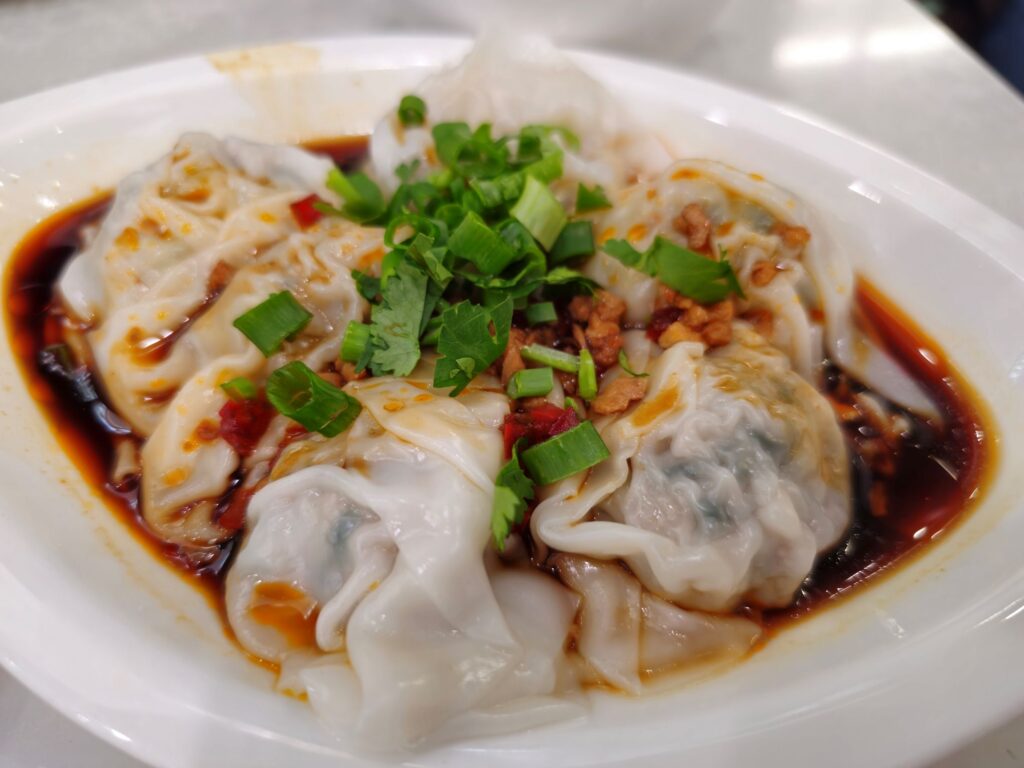
Crystal Jade Dim Sum (翡翠拉麵小籠包)
Crystal Jade is a Singapore-origin chain with multiple Hong Kong locations that occupies the middle ground between traditional teahouse and modern restaurant — more comfortable and accessible than Lin Heung, with a broader menu and higher consistency than many local operations.
The dim sum quality is reliably high, the environment is pleasant, and the service is considerably more straightforward than traditional establishments — menus in English, order by form, no aggressive trolley competition required. A good option for visitors who want excellent dim sum without the full traditional teahouse experience.
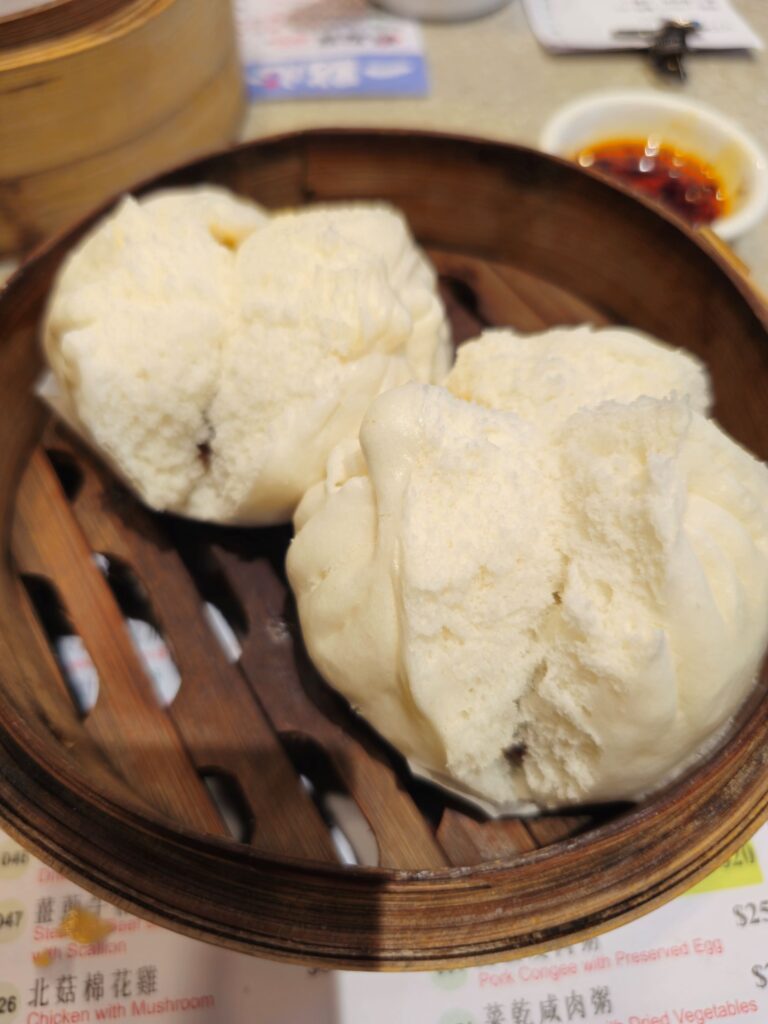
Standout dishes: The xiao long bao (Shanghai soup dumplings) are among the best available in Hong Kong outside dedicated Shanghainese restaurants, and the char siu bao (barbecue pork buns, both baked and steamed versions) are consistently excellent.
Cha Chaan Teng: Hong Kong’s Daily Canteen
Australian Dairy Company (澳洲牛奶公司)
Australian Dairy Company in Jordan is one of Hong Kong’s most famous cha chaan tengs — and one of the most instructive experiences of what Hong Kong food culture actually is. The restaurant seats perhaps 40 people, operates at extraordinary speed, and serves a menu of perhaps a dozen items executed to a consistent standard that has made it legendary.
The experience begins before you sit down — the queue outside is a constant feature, moving quickly as tables turn over in minutes. Inside, shared tables, shouted orders, and plates arriving almost immediately after ordering define the pace. It is not relaxing. It is exhilarating.
What to order:
- Milk Tea (奶茶) — Hong Kong’s signature drink, made by pulling strong black tea through a cloth filter and combining with evaporated milk. Silky, strong, slightly sweet. The version here is one of the best in the city.
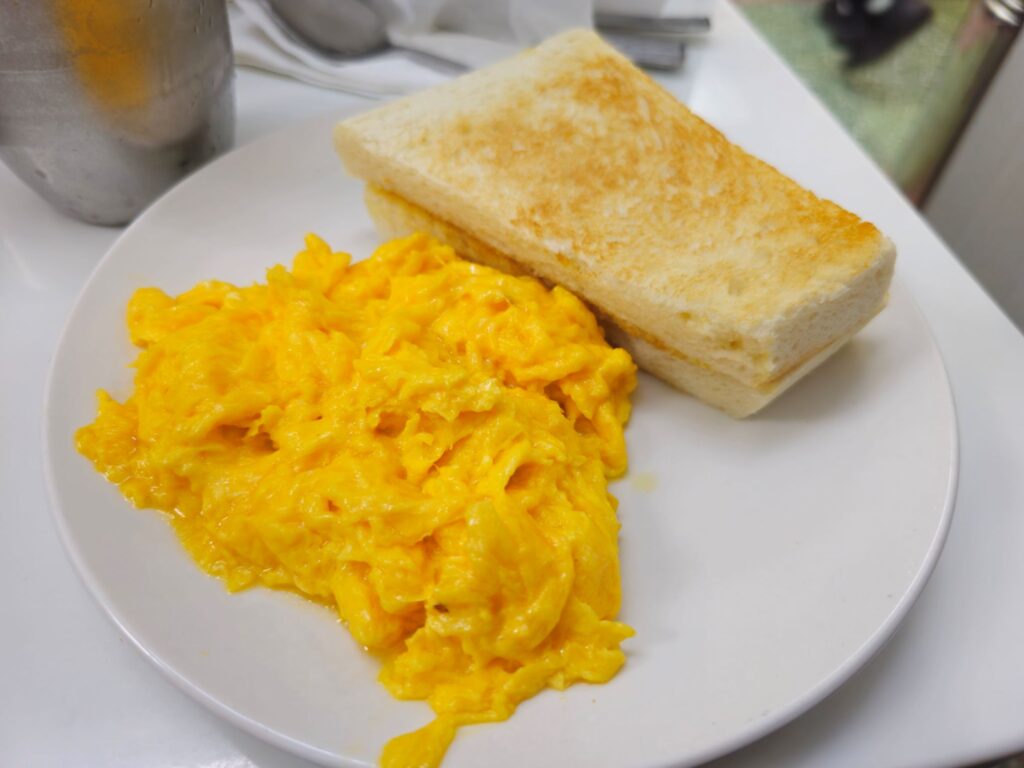
- Scrambled Egg Toast (炒蛋多士) — impossibly fluffy scrambled eggs on thick toast. Deceptively simple and genuinely extraordinary — the texture of the eggs is unlike anything achievable at home.
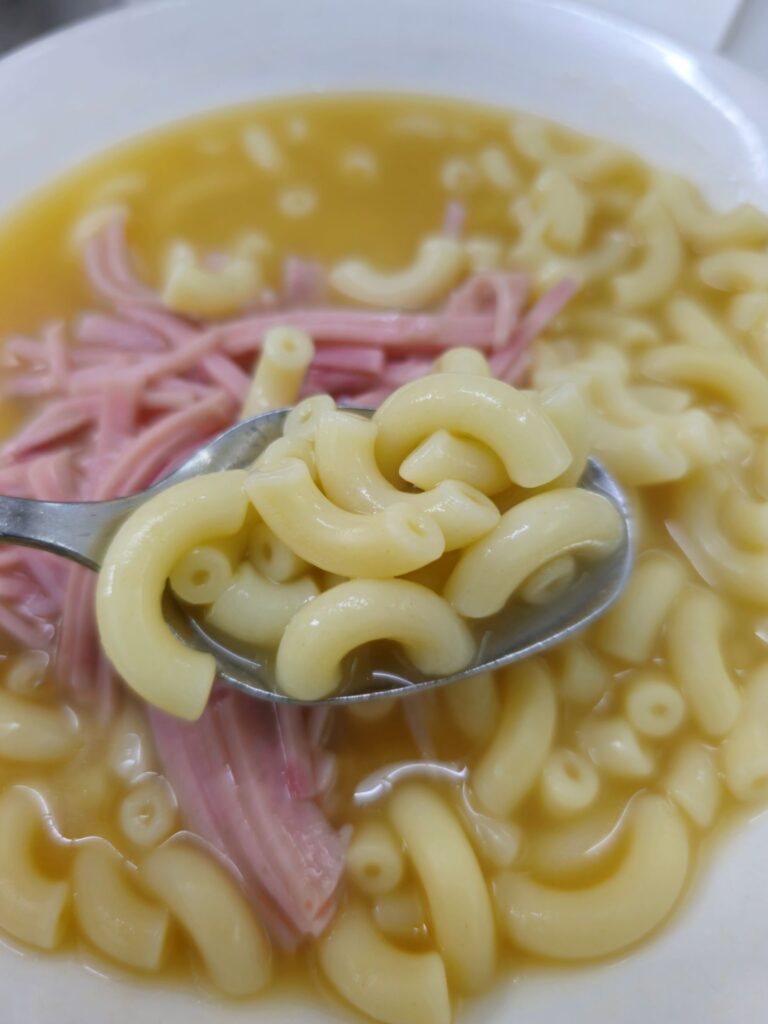
- Macaroni Soup (通粉湯) — macaroni in a clear broth with ham and vegetables. A Hong Kong breakfast staple that sounds underwhelming and tastes exactly right for the morning.
- Steamed Egg Pudding (燉蛋) — silky steamed egg custard, served warm. One of the best things on the menu and a Hong Kong classic.
Getting there: MTR to Jordan station, Exit A. Short walk to Parkes Street.
Lan Fong Yuen (蘭芳園)
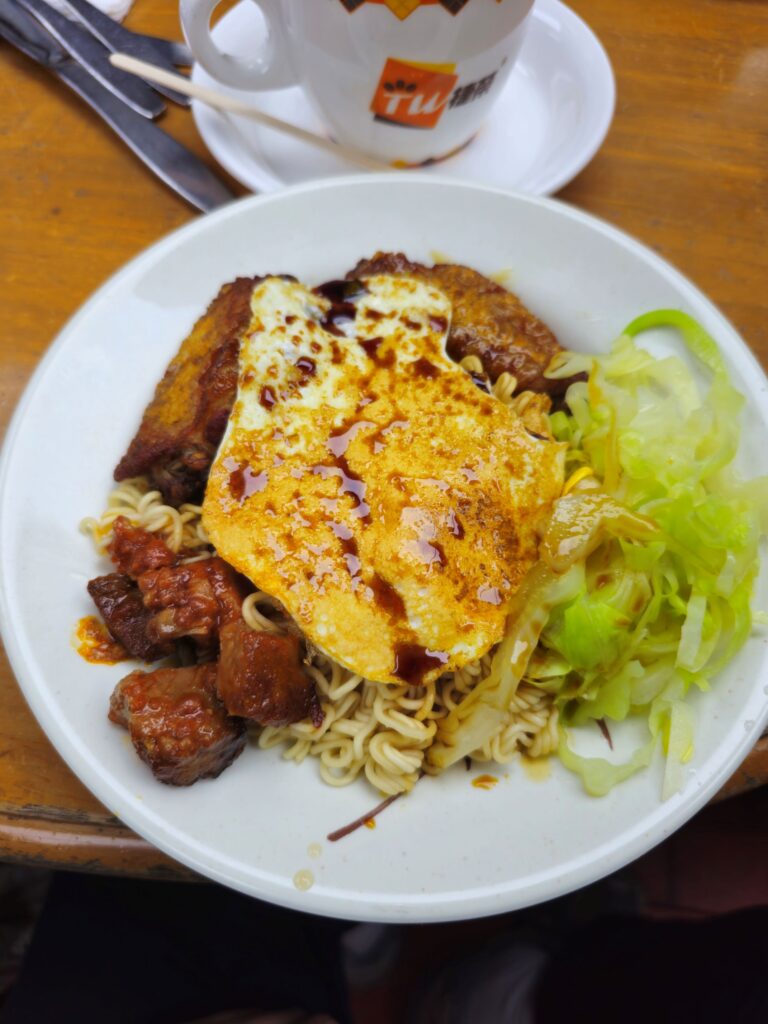
Lan Fong Yuen in Central claims to have invented Hong Kong milk tea — a claim contested by other establishments, but plausible given its history dating to 1952. The original location on Gage Street is a narrow shophouse with outdoor seating spilling onto the pavement, operating with the particular organized chaos of a cha chaan teng that’s been in the same spot for over 70 years.
The silk stocking milk tea (絲襪奶茶) — so named because the cloth filter used resembles a silk stocking — is the thing to order. It’s the standard against which every other Hong Kong milk tea is measured: thick, smooth, intensely flavored, with the evaporated milk and tea balanced at a ratio that feels definitive.
The pineapple bun with butter (菠蘿包) is also excellent — the bun fresh and slightly sweet, the butter thick and generous. Eat it with the milk tea, standing outside on Gage Street, and understand why this combination has been a Hong Kong morning ritual for generations.
Getting there: MTR to Central station. Walk to Gage Street in the SoHo area.
Wonton Noodles: A Hong Kong Art Form
Tsim Chai Kee (沾仔記)
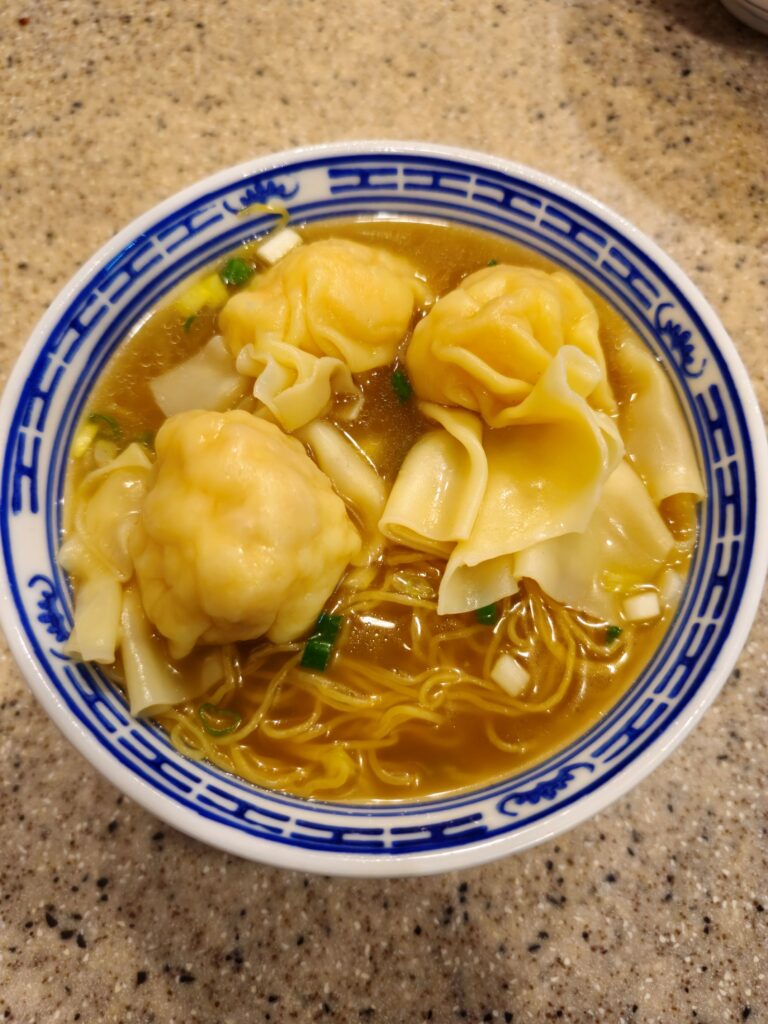
Tsim Chai Kee on Wellington Street in Central is one of Hong Kong’s most celebrated wonton noodle shops — a tiny, standing-room-only operation that has been serving the same bowl for decades and has attracted a following that includes food critics, celebrity chefs, and the lunchtime office workers of Central who queue outside daily.
The bowl is simple: springy egg noodles in a clean, intensely flavored shrimp-and-pork broth, topped with large wontons filled with whole prawns. The wonton skins are thin, the filling is generous, and the broth has the depth that comes from long simmering of quality ingredients. It costs a fraction of what an equivalent level of craft would cost in London or Tokyo.
Order the wonton noodle soup (雲吞麵) and nothing else — the restaurant does one thing and does it definitively. The queue moves fast; turnover is rapid. Eat quickly and efficiently, which is the correct way to eat wonton noodles in Hong Kong.
Bakeries and Egg Tarts: A Tale of Two Styles
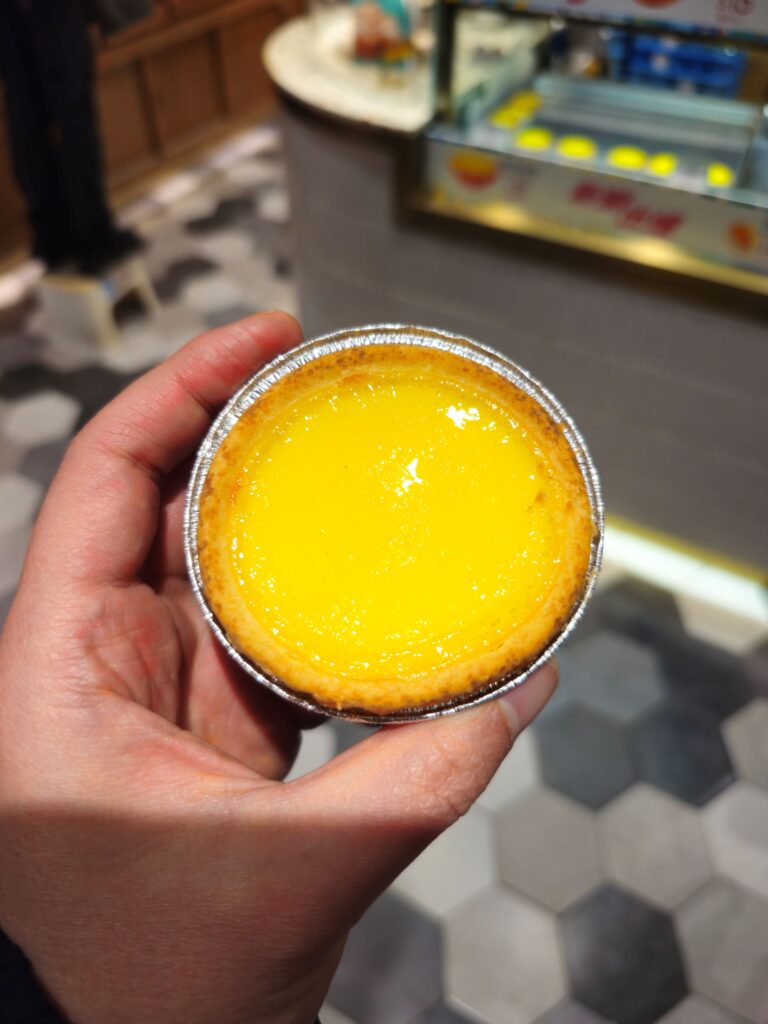
Hong Kong’s egg tart (蛋撻) comes in two distinct styles — and experiencing both is one of the more enjoyable small food projects available in the city.
Tai Cheong Bakery (泰昌餅家)
Tai Cheong Bakery — with its most famous location near the former Government House in Central — is the institution most associated with Hong Kong egg tarts. The version here uses a shortcrust pastry shell (酥皮): crumbly, buttery, and slightly denser than the alternative. The custard filling is smooth, lightly sweet, and set to a wobble that indicates proper technique.
The bakery has been operating since 1954 and was famously patronized by the last British Governor of Hong Kong, Chris Patten, whose enthusiasm for the egg tarts brought international attention to the shop in the 1990s. The tarts are best eaten warm, immediately after purchase.
Bakehouse (焙房)
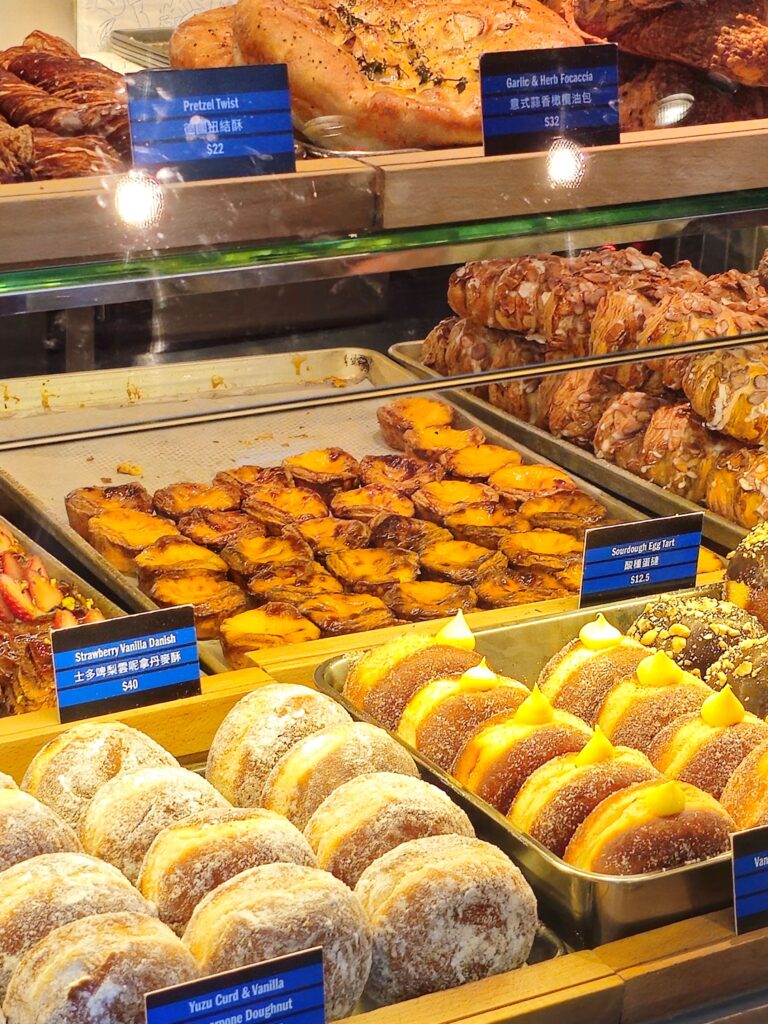
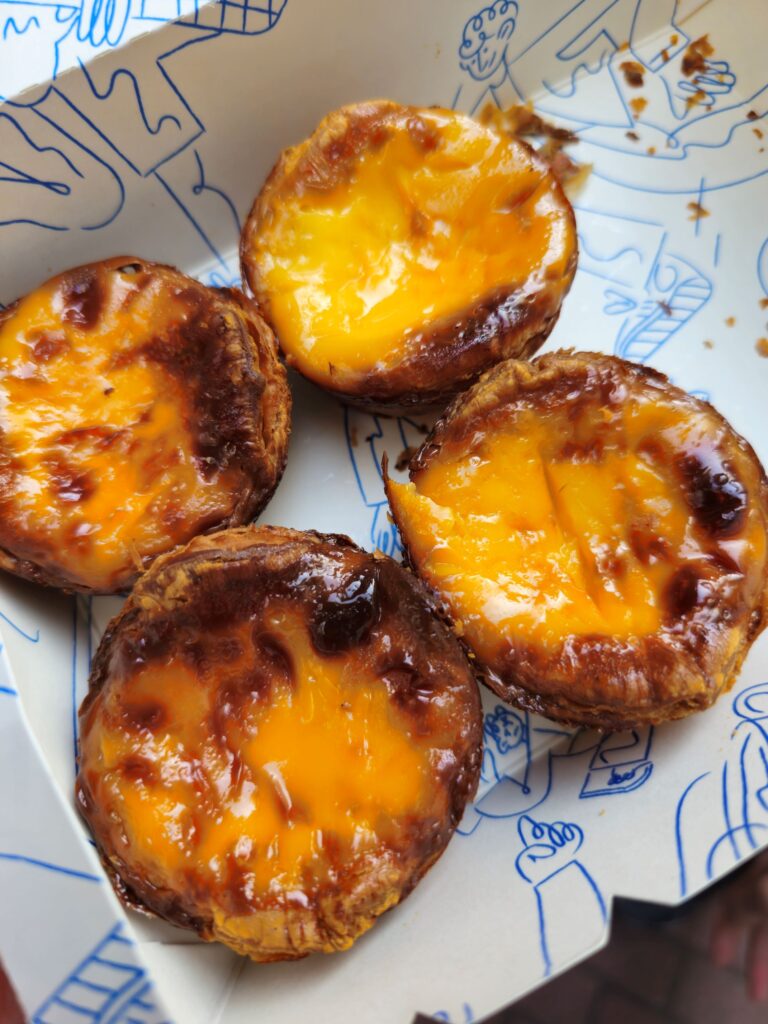
Bakehouse represents the newer wave of Hong Kong bakeries — founded by a pastry chef with serious European training, applying precision technique to traditional Hong Kong pastry forms. The egg tart here uses a flaky puff pastry shell (酥皮 in the Macanese style): lighter, more delicate, with visible layers that shatter slightly on the first bite.
The custard is silkier and more refined than the traditional version — still recognizably a Hong Kong egg tart but elevated by the technical approach. Multiple locations across Hong Kong Island; the lines move quickly.
The verdict: Both are excellent in different ways. Tai Cheong is the classic; Bakehouse is the refined contemporary version. Eating both on the same day — which requires almost no effort given the caloric modesty of a single egg tart — is the correct approach.
Street Food: Hong Kong’s Portable Pleasures
Egg Waffles (雞蛋仔)
Hong Kong’s egg waffles — bubble waffles, as they’re sometimes called internationally — are one of the city’s most distinctive street foods: a batter cooked in a special honeycomb mold, producing a waffle covered in small spherical bubbles, crisp on the outside and slightly chewy within. They’re sold from street stalls and small shops throughout the city, best eaten immediately while hot.
The plain version — slightly sweet, eggy, fragrant — is the classic. Various filled and flavored versions (matcha, chocolate, cheese) have become popular in recent years. The original is the benchmark.
Look for stalls with a visible queue and a high turnover rate — freshness is everything with egg waffles, and a stall that’s constantly making them will always beat one where the waffles sit waiting.
Curry Fish Balls (咖喱魚蛋)
Curry fish balls are Hong Kong street food at its most elemental: processed fish paste formed into balls, simmered in a curry sauce, served on bamboo skewers from street carts. They’re the snack that Hong Kong schoolchildren have eaten for generations and that adults continue to eat without apology.
The curry sauce is mild, slightly sweet, and deeply savory — calibrated specifically to complement the neutral, bouncy fish balls rather than overwhelm them. You’ll smell the carts before you see them. Get a skewer and eat walking.
Pineapple Bun (菠蘿包)
The pineapple bun (no actual pineapple involved — the name comes from the cracked, sugary topping that resembles a pineapple’s surface) is Hong Kong’s most beloved bakery item: a soft, slightly sweet bun with a crumbly, buttery sugar crust on top. Available from any Hong Kong bakery, best from establishments that bake throughout the day rather than displaying yesterday’s batch.
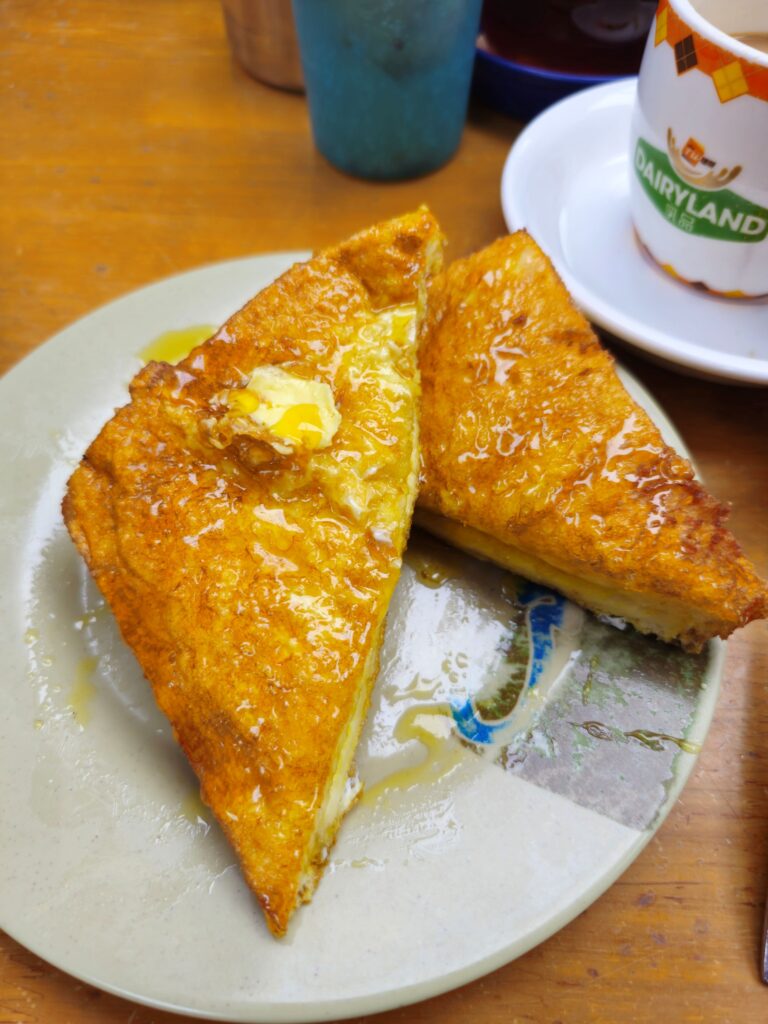
The pineapple bun with butter (菠蘿油) — split open and filled with a cold slab of butter that melts slightly against the warm bun — is the version to order. It’s available at cha chaan tengs and traditional bakeries throughout the city. The combination of warm bread, cold butter, and the slightly crunchy top is one of Hong Kong’s great simple pleasures.
Hong Kong Milk Tea: The Definitive Guide
Hong Kong milk tea deserves its own section because it’s one of the most distinctive and carefully developed drinks in the world — and the difference between a good version and a mediocre one is immediately apparent.
The base is strong black tea — typically a blend of several Ceylon teas — brewed at high concentration. This is then pulled repeatedly through a cloth filter (the “silk stocking”) to produce a smooth, aerated texture. Evaporated milk (not fresh milk, not condensed milk) is added at a ratio calibrated to the specific tea blend.
The result should be: intensely flavored, silky in texture, slightly sweet from the evaporated milk, with no bitterness despite the strength of the tea. It should coat the mouth rather than feel thin. It should be served at the correct temperature — hot enough to drink comfortably but not scalding.
Where to drink it: Lan Fong Yuen for the historic claim; Australian Dairy Company for the most celebrated current version; any busy cha chaan teng with high turnover for a reliable everyday version. Avoid hotel lobby versions and tourist-facing establishments — the milk tea in a local cha chaan teng will consistently be better and cost a fraction of the price.
Practical Tips for Eating in Hong Kong
Timing
- Breakfast (7–10am): Cha chaan tengs and dim sum restaurants. The city is at its most local during morning meal hours.
- Yum cha/Dim sum (10am–2pm): Peak dim sum hours. Arrive early at popular establishments to avoid long waits.
- Lunch (12–2pm): Wonton noodle shops and cha chaan tengs see their busiest period. Expect queues at popular spots.
- Dinner (6–10pm): Broader options open up. Roast meat restaurants, seafood, and larger Cantonese restaurants.
Ordering
- Many traditional restaurants use order sheets rather than verbal ordering — tick what you want and hand to the server
- Point at what others are eating if menus are Chinese-only — staff in most restaurants will understand
- Tea is typically served automatically at dim sum restaurants — there may be a small tea charge (茶位費) added to the bill
Payment
- Cash is still widely used in traditional establishments — carry HKD at all times
- Octopus card works at some chain restaurants and convenience stores but not traditional cha chaan tengs
- Tipping is not expected in casual establishments; 10% is standard at more formal restaurants
Queue culture
- Queuing is taken seriously in Hong Kong — join the line and wait your turn
- At dim sum restaurants, write your name (or have the host write it) on the waiting list when you arrive
- Turnover at busy establishments is fast — the wait is rarely as long as the queue suggests
Final Thoughts
Hong Kong’s food culture is one of the most rewarding in Asia precisely because it operates at every level simultaneously — from the ₩30 fish ball on a skewer to the Michelin-starred Cantonese restaurant, the same attention to ingredient quality and technique runs through everything. The wonton noodle shop that’s been in the same location for 40 years and the modern bakery applying European pastry technique to traditional forms exist in the same city, a few streets apart, and both are worth your time.
Eat early. Follow the queues. Order the milk tea everywhere and compare. And don’t leave without eating an egg tart warm from the oven — it’s one of the small, simple things that Hong Kong does better than anywhere else.
Hong Kong 4-Day Itinerary: The Perfect First-Timer’s Guide
Hong Kong in Winter: What to Expect (A January Visitor’s Honest Guide)